

Review · TEXAS TOURS
Austin and Hill Country Panoramic Sightseeing Tour
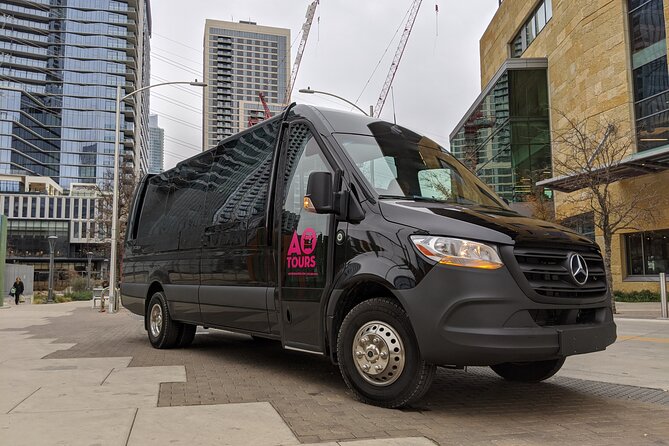
Austin goes panoramic in a comfy sprinter. This guided ride around the Texas capital blends quick city history with real photo-time, using an open-air Mercedes-Benz sprinter style vehicle and English and Spanish headsets. I love that the pace is easy, you still feel the city, and the route hits big names like the Driskill and Barton Springs Pool without you needing a car.
The one catch is seat views. This tour aims for panoramas, but not every seat gets the same sightlines, and the front can be more limited depending on where you sit. Also, the route can swap locations, so think of it as a plan built for variety, not a rigid checklist.
What really makes it work is the people. I’ve seen guides like Doug, Chad, and Jaye turn the facts into local stories, and keep things moving with a smooth, safe drive. With a maximum of 14 travelers, you get a small-group feel while still covering a lot in about 2.5 hours.
In This Review
- Key highlights to look for
- Why this sprinter-van format is the smartest way to start in Austin
- Meeting at 103 E 5th St and settling in for a 2.5-hour loop
- Zilker Metropolitan Park and Barton Springs, the “Austin reset button”
- Congress Avenue Bridge bats and the skyline you can’t fake
- Downtown walkaround: 2nd Street District, Auditorium Shores, and music-world landmarks
- Mount Bonnell viewpoint: worth it for the view, not for the short stop
- Wild Basin Wilderness Preserve and the Hill Country feel in under a day
- Percy V. Pennybacker Jr. Bridge and the scenic drive idea made real
- Culture stop: Long Center and the kinds of performances Austin builds
- UMLAUF Sculpture Garden and Museum for a calmer, artsy break
- Laguna Gloria Art Museum, Mayfield Park, and historic Austin by feel
- East Sixth Street Historic District and the Driskill for old-school Austin drama
- Austin Central Library: modern architecture you can actually hang out in
- How to get the best photos and the most out of limited time
- So, is it worth $73 for Austin and Hill Country panoramic sightseeing?
- Should you book this Austin and Hill Country tour?
- FAQ
- How long is the Austin and Hill Country panoramic sightseeing tour?
- Where does the tour start?
- What’s included in the ticket price?
- Is food included?
- Does the guide provide narration in more than one language?
- Are there any admission fees during stops?
- How many people are on the tour?
- Do kids need a child safety seat?
- What should I do if the weather is bad?
Key highlights to look for
- Bilingual narration on headsets so you can tune in in English or Spanish without huddling near a guide
- Iconic Austin photo stops like Congress Avenue Bridge, Auditorium Shores, and the Driskill
- Barton Springs Pool details including that spring-fed, 68 to 70 degree water
- Congress Avenue Bridge bat spectacle with an urban colony that can reach 750,000 to 1.5 million bats in summer
- Scenic viewpoints outside downtown such as Mount Bonnell and the Percy V. Pennybacker Jr. Bridge
- A small-group tour format with a roomy, air-conditioned ride and time to actually take pictures
Why this sprinter-van format is the smartest way to start in Austin
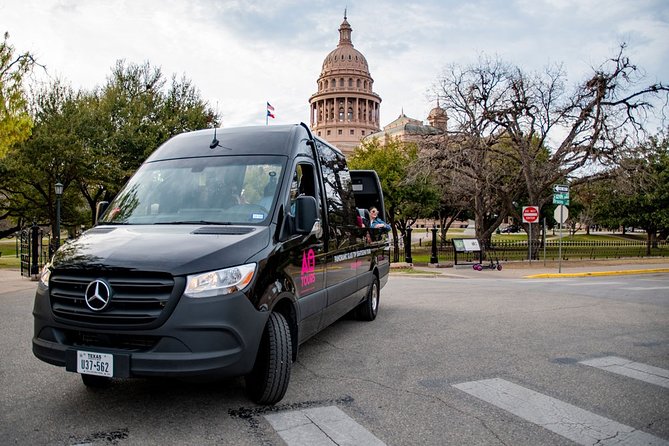
Austin is spread out. If you try to cover it solo by rideshare, you spend half your day in traffic and the other half deciding where to start. This is built for a faster first look, using a roomy Mercedes-Benz style vehicle and headsets so you can follow along while enjoying the scenery.
The big practical win is that you get both city and Hill Country vibes in one go. You’ll see downtown landmarks built for history and music, then shift outward toward Lake Austin and native Hill Country habitat. In about 2.5 hours, you’re getting context for where to go next.
Another underrated value is that it’s designed for a range of visitors. It’s not just for history buffs. If you’re here for the outdoors, you get parks and greenbelts. If you’re here for architecture, you’ll get stops like the Austin Central Library and historic hotel interiors. If you’re here for weird and wonderful wildlife, yes, the bats are part of the deal.
Meeting at 103 E 5th St and settling in for a 2.5-hour loop
Your tour starts at 103 E 5th St, Austin, TX 78701, which puts you close to downtown action. That matters because it lowers the “logistics tax.” You’re not spending your morning crossing the city just to find the pickup.
Once onboard, you’ll get earbuds/headsets tied to the narration, with English and Spanish language options. You can also use your own earbuds if you prefer. The goal here is simple: you shouldn’t miss the story just because you’re turned toward a skyline view or taking a photo.
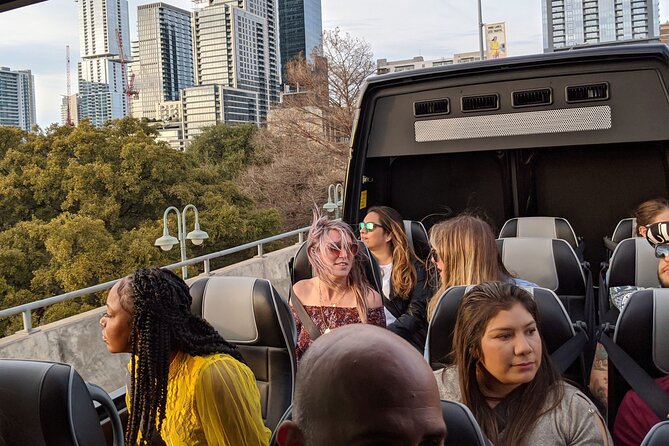
The vehicle is described as open-air, and you’ll still be in a comfort-focused, air-conditioned ride. Translation: you get fresh views without roasting. In Austin, that hybrid comfort is a big deal.
Other Texas Tours we have written up across Austin

Zilker Metropolitan Park and Barton Springs, the “Austin reset button”
The tour begins with Zilker Metropolitan Park, often called Austin’s most-loved park. It’s huge at 351 acres, and the vibe is very Austin: families, picnics, runners, casual strolls. This is one of those stops that instantly tells you what the city does for fun, outside of music venues and food lines.
From there, you head to Barton Springs Dry Goods as a point for the Barton Springs Pool area inside Zilker. Here’s the key detail that makes this stop feel special: Barton Springs Pool is spring-fed from underground water sources, and the temperature averages about 68 to 70 degrees year-round. Even if you don’t swim, that fact alone helps you understand why locals treat it like a constant, not a summer-only attraction.
Photo-time is built in, and that’s the sweet spot for this kind of tour. You get enough time to orient yourself, snap a few shots, and move on before your legs start protesting.
Practical note: shoes matter. Parks mean uneven ground in spots, and your walk from viewing areas to photo points may involve curbs and small transitions.
Congress Avenue Bridge bats and the skyline you can’t fake

Downtown Austin is centered on Lady Bird Lake, and the tour uses that geography well. One of the most memorable stops is the Ann W. Richards Congress Avenue Bridge, famous for the world’s largest urban bat colony.
This is not vague wildlife tourism. The bridge’s gaps and structures under the deck provide the roosting spots. The colony is migratory, summers in Austin and winters in Mexico. In summer, the numbers are often cited as roughly 750,000 to 1.5 million bats underneath the bridge.
Even if you’re not timing the exact bat moment, the stop is worth it because it ties together Austin’s real identity: outdoors, wildlife, and downtown living in the same frame.
You’ll also get the “bridge-to-lake-to-city” perspective. That view helps you understand where all the best downtown walks and viewpoints sit along the water.
Downtown walkaround: 2nd Street District, Auditorium Shores, and music-world landmarks

Next comes a downtown mix that’s made for quick wandering. The 2nd Street District is one of Austin’s best blends of local retail, restaurants, and entertainment, and it’s easy to see on foot. The tour also connects this area to music heritage, with references to places like Moody Theater, where Austin City Limits is recorded, plus landmarks like City Hall and a short hop to Lady Bird Lake.
Then you shift south to Auditorium Shores on the shores of Lady Bird Lake, formerly Town Lake. This is where the skyline really shows off. You’ll also find the Town Lake Hike and Bike Trail running nearby, so if you want to extend your day after the tour, this stop gives you a natural starting line.
Another standout detail here is the memorial statue of Stevie Ray Vaughan at Auditorium Shores. If you’ve only heard Austin from a distance, this is the stop that reminds you the city builds culture into its public spaces.
Time note: this portion is not meant to replace a full walking tour. It’s a “get your bearings” stop, with photo opportunities and enough time to feel the layout.
Mount Bonnell viewpoint: worth it for the view, not for the short stop
Mount Bonnell, also known as Covert Park, is a classic Austin lookout. It sits along the Lake Austin portion of the Colorado River, and it has been a tourist destination since the 1850s. That long history matters because it means the viewpoint has been refined over time as a place to look out.
The practical reward is a panoramic view of Austin, Lake Austin, and the surrounding hills. On a short stop schedule, that kind of payoff is exactly what you want.
This is the kind of stop where you might find yourself standing longer than planned, because the view keeps giving. Bring a camera, and consider a moment where you just watch the horizon line. It makes the rest of the tour feel more connected.





Wild Basin Wilderness Preserve and the Hill Country feel in under a day

After downtown and lake views, the tour swings toward a more natural Austin. Wild Basin Wilderness Preserve is 227 acres of native Texas Hill Country habitat in Westlake Hills, with about 2.5 miles of hiking trails.
This is not a full hiking expedition, but it’s a meaningful taste of the region. Even a brief stop here helps you understand why so many people base day trips around the Hill Country. The vegetation and terrain look different than the city, and you can feel the shift in how Austin defines itself.
If you like outdoor time, pack the mindset that this is a short introduction. If you’re not into walking much, you’ll still get plenty from the setting, just keep an eye on trail surfaces and uneven ground.
Percy V. Pennybacker Jr. Bridge and the scenic drive idea made real
The tour also includes the Percy V. Pennybacker Jr. Bridge, which crosses Lake Austin and connects parts of Loop 360. It’s widely known as part of one of the most scenic urban drives in Texas, and the bridge itself is a key visual anchor thanks to its arched weathering-steel design.
For your trip planning, this stop is a big mental map builder. You’ll see how the city edges into rolling hills and how roads turn into viewpoints. That helps if you want to do driving routes later, whether by rental car or with a friend who insists they know “one perfect road.”
Culture stop: Long Center and the kinds of performances Austin builds
The Joe R. and Teresa Lozano Long Center for the Performing Arts sits along Lady Bird Lake, and it’s one of those places that keeps Austin’s identity in view. It’s a venue setting that reinforces the “Austin is art and music on public display” idea.
This stop is a short cultural pause. Don’t expect a full performance schedule in the middle of a sightseeing loop. But it’s valuable because it shows how the city uses landmark spaces for arts, events, and community gathering.
If you’re the type who likes to pair a view with a story, this is a good match.
UMLAUF Sculpture Garden and Museum for a calmer, artsy break
The UMLAUF Sculpture Garden & Museum features work by American sculptor Charles Umlauf. Even if you are not a “museum person,” a sculpture garden can be a great reset.
The format is practical for a group tour. It offers something quieter than roadside viewpoints, with a different pace for your brain. If you’ve been taking photos and looking outward for most of the morning, this is a nice internal turn.
Laguna Gloria Art Museum, Mayfield Park, and historic Austin by feel
Two more stops help round out the historic-and-restful side of Austin.
Laguna Gloria is described as a Mediterranean style villa built in 1916 for Henry H. and Clara Driscoll Sevier, named for a nearby lagoon off the Colorado River. Later, in 1943, the property was conveyed to the Texas Fine Arts Association by Clara Driscoll, who is best known for her efforts to preserve the Alamo. Today it’s owned by the Laguna Gloria Art Museum.
Then there’s Mayfield Park and Preserve, presented to the city of Austin in 1971 by Mary Mayfield Gutsch for everyone to enjoy. It’s listed on the National Register of Historic Places and functions like an island of calm in the middle of the city.
Why these stops matter on a short tour is simple: they give you contrast. You’re not just collecting famous names. You’re collecting the feeling of Austin, ornate and artistic in one moment, peaceful and local in the next.
East Sixth Street Historic District and the Driskill for old-school Austin drama
To close the loop of “history you can point at,” you’ll hit the Austin Central Library and the Driskill, plus downtown historic zones.
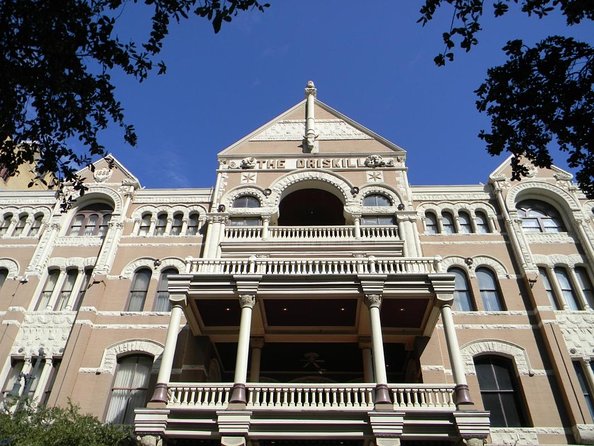
East Sixth Street, known locally as Dirty Sixth, is recognized as the Sixth Street Historic District. It’s a National Register area with two- or three-story masonry Victorian commercial architecture. Some major reference points include the Driskill Hotel (1886) and other historic buildings.
The Driskill itself is a showplace with deep cattle-era roots, built in 1886 for a cattle baron. The tour time lets you stroll the opulent lobby with marble floors, a stained-glass dome, corridors with museum-quality artwork, and the grand mezzanine view. Even if you don’t do a long hotel stay, the interior tells you how Austinites have treated hospitality as part of identity.
Austin Central Library: modern architecture you can actually hang out in
The Austin Central Library stop is short but memorable. The building is associated with design leadership from Lake Flato Architects and Shepley Bulfinch, which links it to sustainable, energy-efficient design principles and strong architecture traditions.
What you can look for during your visit: a living rooftop garden, reading porches, an indoor reading room, and a bicycle corral. There are also event spaces, an art gallery, and a café run by ELM Restaurant Group.
This is one of those stops that divides people. If you want maximum outdoor viewpoints and minimal building time, you might question it. If you like architecture and public spaces, you’ll enjoy it more than you expected. Either way, it adds balance to a tour that would otherwise lean heavily toward streets and roads.
How to get the best photos and the most out of limited time
This tour is about efficient sightseeing, so time management is the difference between “nice day” and “great day.”
For photo stops:
- Be ready before the vehicle pulls in. The best shots often depend on quick positioning.
- Prioritize your “must get” angles early, like Congress Avenue Bridge and Mount Bonnell.
- If you care about panoramic views, choose your seat carefully when boarding. Not all seats offer the same sightlines.
For the walkaround stops:
- Wear grippy shoes and stay aware on uneven surfaces.
- Bring a hat and sunscreen when the day is bright. You may be outside more than you think, especially at lake and lookout stops.
For your energy:
- Don’t plan a long hike right after. This tour already includes natural areas, and you’ll likely want recovery time.
So, is it worth $73 for Austin and Hill Country panoramic sightseeing?
At $73 per person for about 2.5 hours, this tour competes well with spending the same time bouncing around by rideshare plus museum tickets plus parking headaches. You’re paying for three things you’d otherwise struggle to coordinate:
- Transport with a comfort-focused vehicle that keeps you moving across neighborhoods
- Guided narration in English and Spanish so you understand what you’re seeing
- Iconic stops with photo-time that would take longer to string together solo
The value is strongest if you’re on your first visit and you want an orientation shot of the city: downtown landmarks, lakefront views, and Hill Country scenery in one package. The value weakens if you already know Austin well and you’re craving longer stays at each site instead of quick hits.
If you fall somewhere in the middle, you’ll probably like it best as a “first day” activity, then use what you learn to guide the rest of your trip.
Should you book this Austin and Hill Country tour?
Book it if you want to get your bearings fast, see the headline Austin locations, and enjoy short, well-timed stops with a guide who can make the city feel personal. The small group size and strong guide energy, with names like Doug, Chad, and Jaye showing up in the experience, are exactly what you want on a short schedule.
Skip it or reconsider if you’re extremely view-sensitive and plan to sit wherever the bus happens to place you. Since panoramic sightlines can vary by seat, treat the tour as a guided highlight reel, not a guarantee that every passenger has the same skyline view at all times.
FAQ
How long is the Austin and Hill Country panoramic sightseeing tour?
It lasts about 2 hours 30 minutes.
Where does the tour start?
The meeting point is 103 E 5th St, Austin, TX 78701. The tour ends back at the meeting point.
What’s included in the ticket price?
You get the guided tour in a luxury air-conditioned vehicle, iconic Austin site coverage, GST, earbuds, and a signature PinkTag partner souvenir luggage tag. You also receive a mobile ticket.
Is food included?
No. Food and beverage are not included, but you can bring your own.
Does the guide provide narration in more than one language?
Yes. The vehicle has headsets with both English and Spanish options.
Are there any admission fees during stops?
Some stops note admission ticket free, and the tour includes access to the iconic locations. Specific fees are not listed for every stop, but the itinerary includes multiple free admission stops.
How many people are on the tour?
The maximum group size is 14 travelers.
Do kids need a child safety seat?
If you have children under eight years old, you will need to bring a state required child safety seat unless the child meets the height requirement stated in the tour information.
What should I do if the weather is bad?
This experience requires good weather. If it’s canceled due to poor weather, you’ll be offered a different date or a full refund.
Texas Tours: more from our Austin desk
- Best of Austin Small-Group Driving Tour with Local Guide★ 5.0 · 2,275 reviews
- Austin Biker Gang E-Bike Tour★ 5.0 · 1,399 reviews
- Austin Food Tour with Local Flavors, Tacos & 6 Food Tastings★ 5.0 · 987 reviews
- Double Decker Austin Single Loop Sightseeing Tour★ 4.5 · 979 reviews
- From Austin: Hill Country BBQ & Wine Shuttle★ 5.0 · 954 reviews
Tours: the rest of the Austin file
- Best of Austin Small-Group Driving Tour with Local Guide★ 5.0 · 2,275 reviews
- Austin Biker Gang E-Bike Tour★ 5.0 · 1,399 reviews
- Austin Food Tour with Local Flavors, Tacos & 6 Food Tastings★ 5.0 · 987 reviews
- Double Decker Austin Single Loop Sightseeing Tour★ 4.5 · 979 reviews
- Austin and Hill Country Sightseeing Tour★ 4.5 · 928 reviews
Tour Reviews: more from our Austin desk
- Best of Austin Small-Group Driving Tour with Local Guide★ 5.0 · 2,275 reviews
- Austin Biker Gang E-Bike Tour★ 5.0 · 1,399 reviews
- Austin Food Tour with Local Flavors, Tacos & 6 Food Tastings★ 5.0 · 987 reviews
- Double Decker Austin Single Loop Sightseeing Tour★ 4.5 · 979 reviews
- From Austin: Hill Country BBQ & Wine Shuttle★ 5.0 · 954 reviews
Newest Austin reviews added to this site
- Austin Murder Walk
★ 5.0 · 310 reviews - The Escape Game: Epic 60-Minute Adventures in Downtown Austin
★ 5.0 · 358 reviews - Austin Guided Outdoor Climbing Experience
★ 5.0 · 386 reviews - Austin Good Vibes E-Bike Tours
★ 5.0 · 411 reviews - Austin Small Group Morning Walk
★ 5.0 · 412 reviews - Austin Live Music Crawl
★ 5.0 · 485 reviews - Austin in a Nutshell Bike Tour with a Local Guide
★ 5.0 · 529 reviews - Austin Electric Bike Tour: Let it Ride
★ 5.0 · 892 reviews - Haunted Austin Walking History Tour
★ 4.5 · 921 reviews - Austin and Hill Country Sightseeing Tour
★ 4.5 · 928 reviews
Texas Tours, side by side.
 ★ 4.6Houston: Space Center Houston Admission TicketFrom $293,274 reviews
 ★ 5.0Best of Austin Small-Group Driving Tour with Local GuideFrom $492,275 reviews
 ★ 5.0Top Waco Fixer Upper/City Tour: 5 Star, Award Winning, AffordableFrom $492,104 reviews
 ★ 5.0Baywatch Dolphin Tours – Pier 21 GalvestonFrom $321,860 reviews
 ★ 5.0The Historic Galveston Ghost TourFrom $331,524 reviews
 ★ 5.0Eco and Dolphin Watch Tour of South Padre IslandFrom $191,428 reviews
 ★ 4.0Space Center Houston Admission TicketFrom $321,403 reviews
 ★ 5.0Austin Biker Gang E-Bike TourFrom $851,399 reviews
This one is also listed in