
Review · GRAND CANYON RIM TRIPS
From South Rim: Grand Canyon Spirit Helicopter Tour
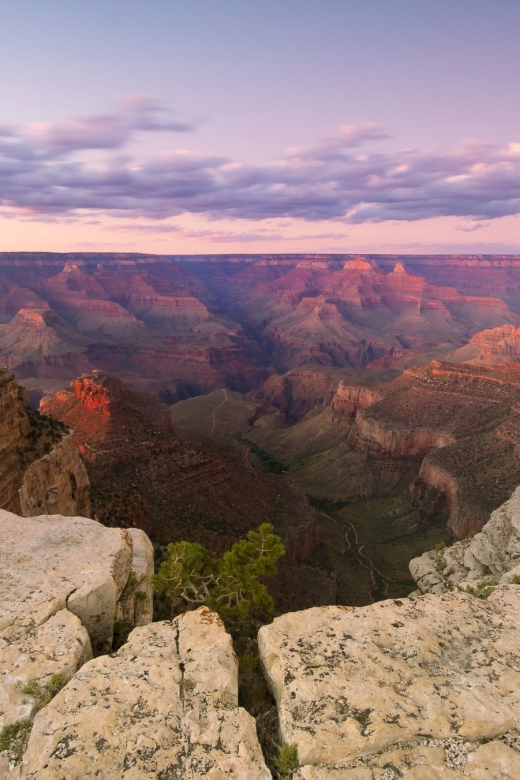
Flying the canyon feels like cheating gravity. From the South Rim area, this helicopter flight puts you above the Kaibab National Forest and right over the big canyon bends most people only see from the lookout points. You’ll get a rare aerial sense of scale as you track the Colorado River system and reach the canyon area called the Dragon Corridor.
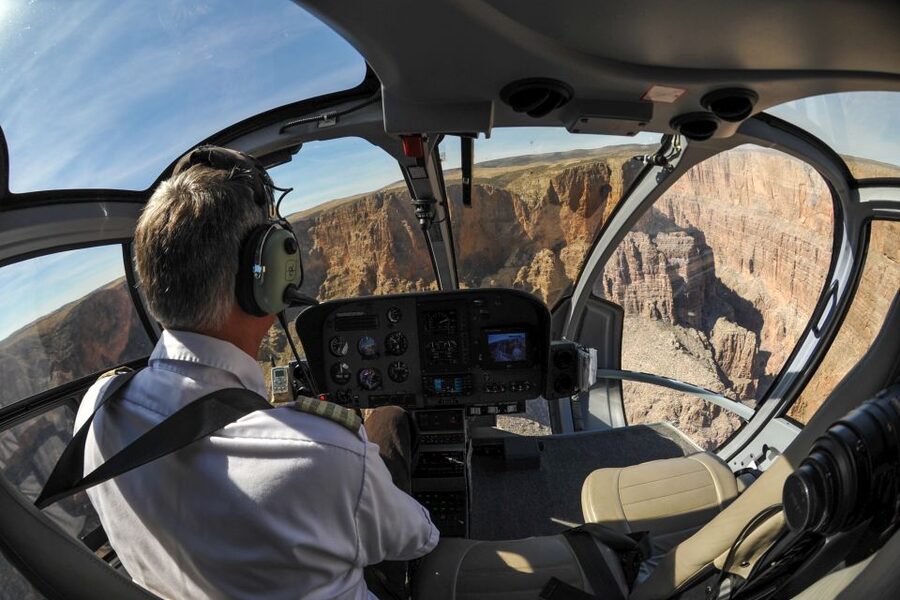
I love two things most: the wraparound glass gives you clear sightlines in almost every direction, and the pilots often bring the canyon to life with clear, easy-to-follow in-flight commentary. In the real world, that can mean names and details, like pilots Matt, Drew, Gabriel, Felix, Forest, and Dillon sharing stories and spotting features as you fly past.
One thing to think about before you spend $339 per person: the flight time is short enough that it can feel like it comes and goes fast, and the schedule can be tight for a strict itinerary. Also, seating is assigned by weight and balance, so you may not sit right next to someone you booked with.
In This Review
- Key things you’ll notice on the flight
- Where to start at Maverick Helicopters in Tusayan
- The ECO-Star cabin: why the view feels immediate
- Kaibab National Forest to the rim drop: the first real wow
- Following the Colorado River: Painted Desert and the confluence moment
- Point Imperial and Marble Canyon: the canyon map gets clearer
- The North Rim climb: seeing more than just the edge
- Dragon Corridor: the widest and deepest part from above
- Time in the air: what the 30-minute vs 45-minute info means for you
- Price and value: is $339 worth it?
- Comfort and photo tips that fit the rules
- Should you book this South Rim helicopter flight?
Key things you’ll notice on the flight
- Small group scale with a cap of 7 participants, so the experience feels personal.
- Kaibab National Forest takeoff views, with huge ponderosa pine country under you as you climb.
- Colorado River color changes, especially around the confluence where blue water meets darker green.
- Point Imperial and Marble Canyon sightings that help your brain map the canyon fast.
- Dragon Corridor flying through the widest and deepest portion for maximum canyon-perception.
- Assigned seating by weight, so your view depends on where the load-and-balance rules place you.
Where to start at Maverick Helicopters in Tusayan
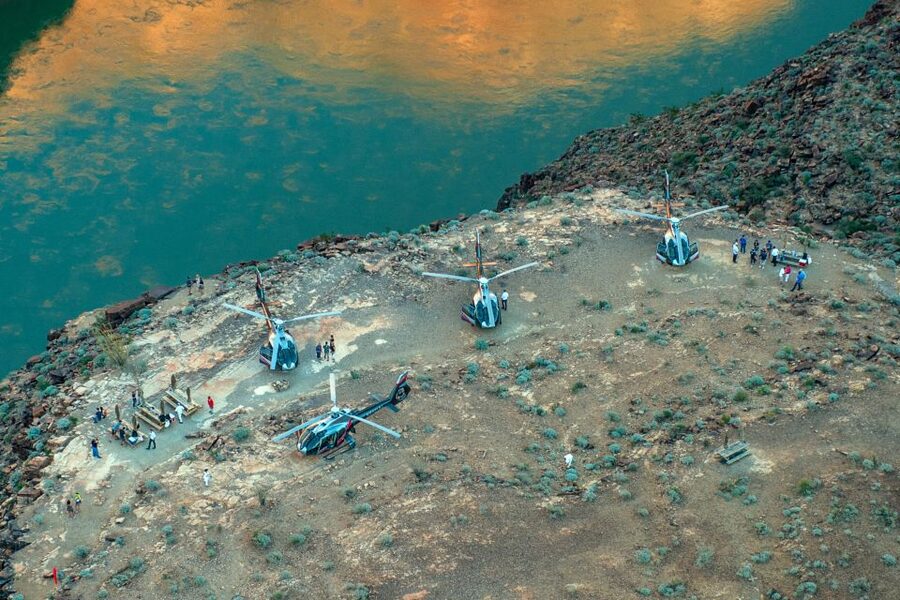
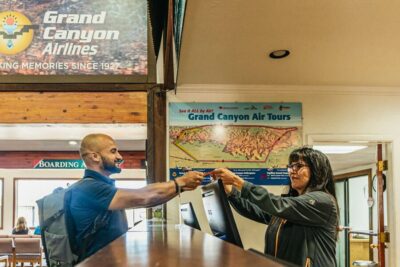
This tour runs from the Grand Canyon area airport in Tusayan, with check-in at Maverick Helicopters. Plan to arrive 30 minutes before your scheduled departure time, and bring a government-issued photo ID if you’re 18 or older.
Two practical things I appreciate here. First, you’re not dealing with long bus transfers from the South Rim. Second, the operation is set up for quick, organized turnover because the flight window depends on getting everyone checked in and ready on time.
What you should know about logistics that affect your day:
- Hotel shuttle transfers are not included, so you’ll need your own ride or transport plan.
- Pets are not allowed, and you can’t bring luggage or large bags.
- No smoking, and selfie sticks are not allowed, so keep it simple with a phone or camera in hand.
The ECO-Star cabin: why the view feels immediate
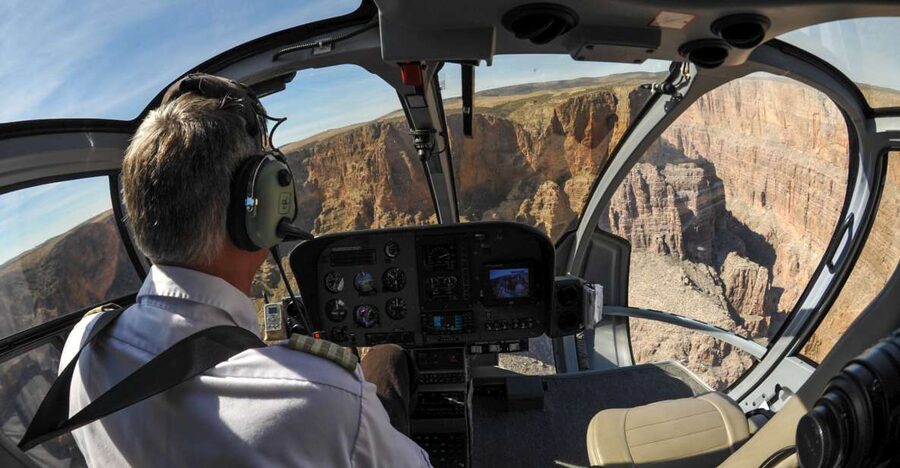
Once you’re inside, the biggest advantage is how the cabin is designed. The ECO-Star helicopter is described with individual leather seats and wraparound glass, which matters because the canyon is not just one direction. You’ll be looking forward, angled, and often out to the side as the pilot threads through different canyon sections.
Noise reduction is also part of the design, and that helps the pilot narration land clearly. One of the most repeated themes in the feedback I saw is that the flight feels smooth, and the crew communicates well, including giving people time to enjoy the view rather than talking nonstop the entire time.
If you’re sensitive to enclosed spaces, take that seriously. A passenger reported claustrophobia during their ride and said they had to leave, with no meaningful refund outcome described. I can’t predict how you’ll feel, but I do recommend you think ahead and choose this only if you’re comfortable in a small cabin with fixed seating.
Grand Canyon Rim Trips we have also been through in Tusayan
Kaibab National Forest to the rim drop: the first real wow
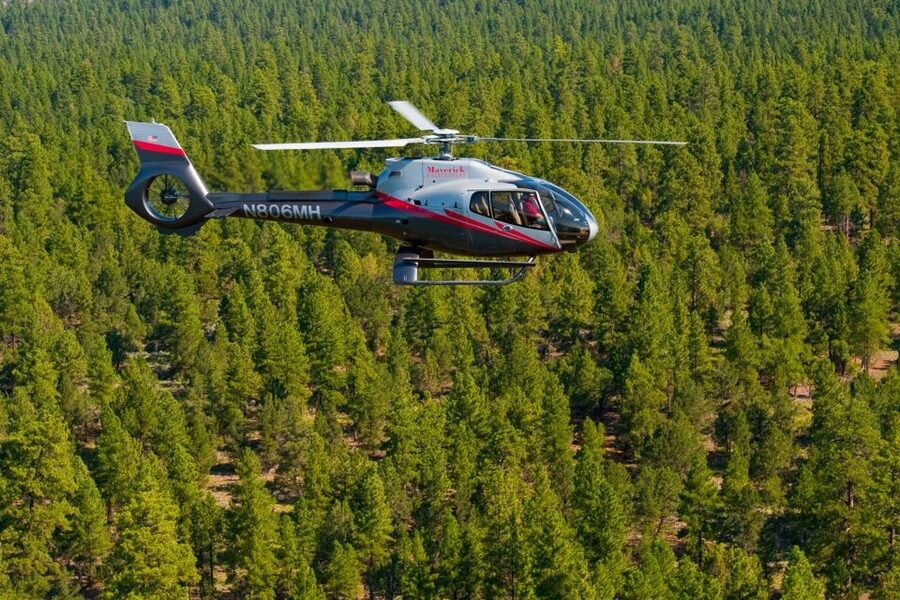
The flight starts with a climb over Kaibab National Forest. This is a smart opening, because it gives you context before the canyon opens up. As you ascend, you get views over the forest that’s known for massive ponderosa pine country, and it helps you understand you’re not just flying over a single landmark, you’re flying above a whole layered region.
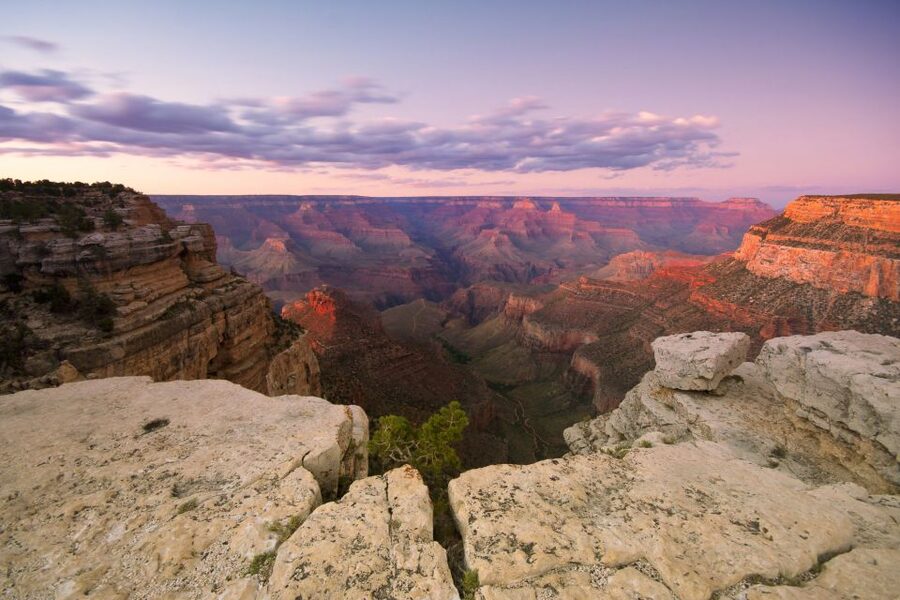
Then comes the key moment: the rim drops away and the Grand Canyon comes into full view. This is where most people’s brains shift from scenic to “whoa, that’s huge.” From above the forest, the canyon edges feel sharper, and the sudden change in terrain makes depth hit faster than it does from the rim paths.
Practical note: because seating is assigned based on weight and balance, your exact side-of-helicopter view may vary. If you care a lot about a specific view direction, still show up early and be polite during check-in, but don’t count on swapping seats once you’re loaded.
Following the Colorado River: Painted Desert and the confluence moment
After the initial reveal, you’ll follow the Colorado River from above. This segment is valuable because it connects the dots between what you’ve likely seen on the ground and what the canyon actually does over distance.
You can expect views of the Painted Desert and the Desert View Watchtower area in the distance. That distant landmark helps you orient yourself fast, especially if you’ve spent time driving between viewpoints earlier.
The standout natural detail here is the way the water colors change at the river meeting points. The description is clear about it: you’ll see crisp blue water swirls into dark green around where the Little Colorado and Colorado Rivers meet at the Confluence. From above, that boundary effect is one of the best “I finally understand this” moments of the whole flight.
Why this matters: canyon viewpoints can make you focus on cliffs and overlooks. This part makes you focus on flow and structure, and that’s a different way to understand the Grand Canyon.
Point Imperial and Marble Canyon: the canyon map gets clearer
Next, the route includes views of Point Imperial and Marble Canyon. These names aren’t just trivia. They act like anchor points you can later connect to what you saw from the rim.
Point Imperial is especially helpful because it’s tied to well-known South Rim geometry. Marble Canyon adds another layer because it reinforces that the canyon isn’t one uniform wall, it’s a sequence of sections with different textures and shapes.
A lot of pilots also use this time to talk about formation and what you’re looking at, and in the feedback you provided, people repeatedly praised pilots for being friendly hosts and for flying steadily enough to grab photos. So if you’re the kind of person who wants one or two photo chances without rush, this is usually one of those segments.
The North Rim climb: seeing more than just the edge
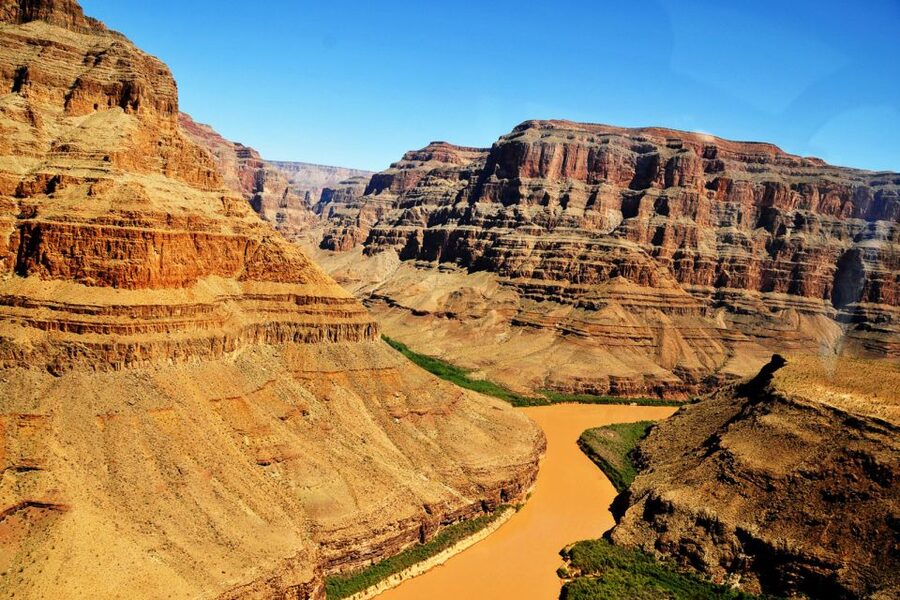
As the flight progresses, you’ll climb above the North Rim. Even if you’ve never driven that far, the helicopter view can still make the North Rim feel real and nearby. You’re no longer just seeing one dramatic edge, you’re seeing the canyon’s width and how the canyon cuts the continent.
This climb also sets up the final stretch. If you’re the type who likes a gradual build, this part feels like the canyon opens outward, then the flight starts steering you toward the deepest, most dramatic corridor areas.
Dragon Corridor: the widest and deepest part from above
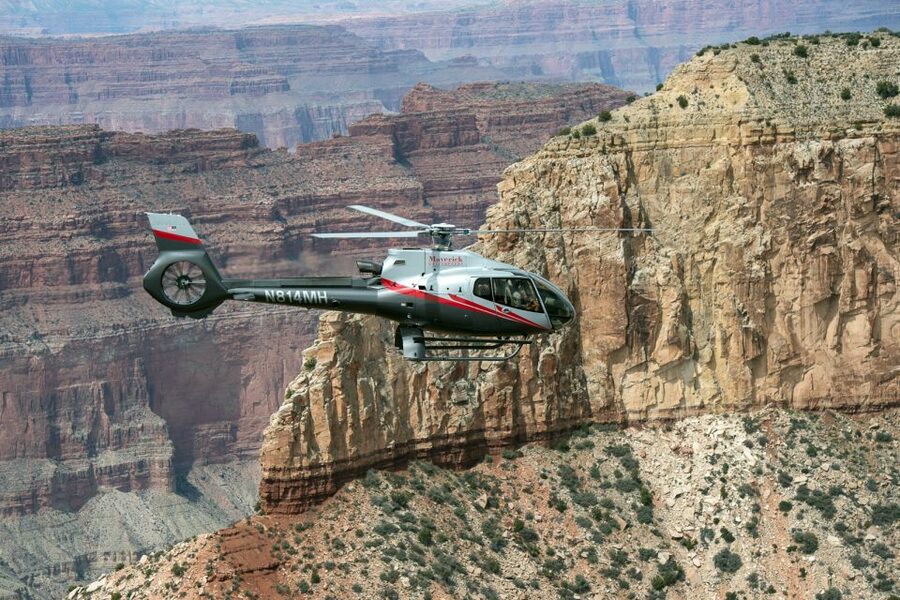
One of the big promised highlights is flying south through the Dragon Corridor, described as the widest and deepest portion of the Grand Canyon. This is the moment that sells itself for first-timers, because the canyon’s scale becomes hard to fake with photos.
From the air, you don’t just see depth, you see how the canyon’s walls hold shape, how the river line threads through, and how the canyon floor is far beyond the reach of casual walking routes. It’s not about landing, it’s about perception, and that’s exactly what helicopters are good at here.
If you’ve already done a lot of rim viewing, this portion is still worth it because it changes the question from “what do I see” to “how big is it, really.”
Time in the air: what the 30-minute vs 45-minute info means for you
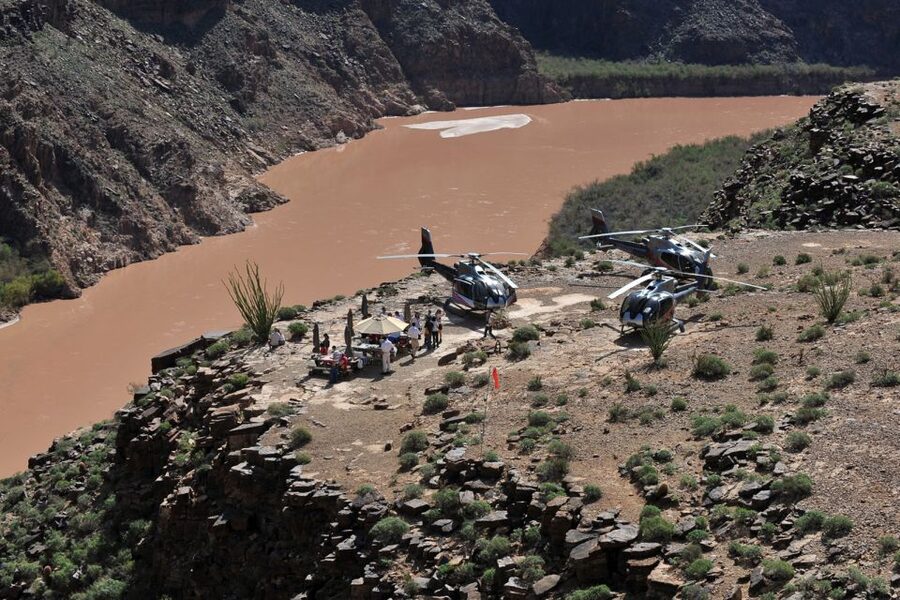
Here’s the one confusing part of the details you shared: the summary lists duration as 30 minutes, but the flight description and included info say the helicopter flight is 45 minutes. That means your safest move is to confirm the exact flight length in your booking confirmation and reconfirm before you go.
Either way, don’t treat this as a long lounge-time activity. Helicopter canyon tours are short by design. The upside is you’re not losing half a day to transport and waiting. The downside is you can run out of time to savor it.
One review noted a wish the ride lasted 60 to 90 minutes, which matches how many people feel after the initial shock wears off. You’ll probably leave thinking, I want one more pass. That’s not a complaint, it’s a sign the canyon does that to people.
Price and value: is $339 worth it?
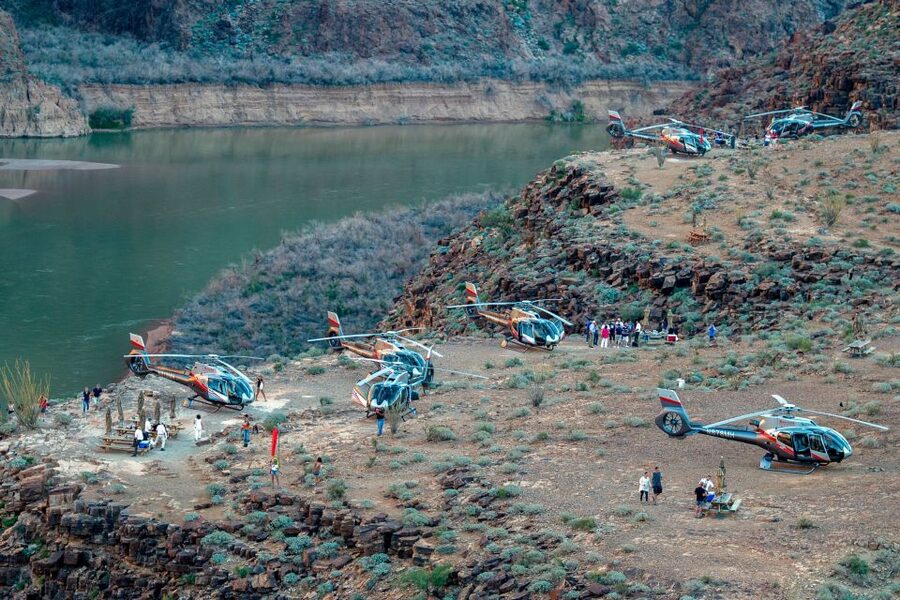
At $339 per person, this isn’t a cheap add-on. So I look at value in a few practical ways.
First, you’re paying for something the rim can’t give you: true overhead perspective. Standing at the South Rim, you can only guess depth. In the air, depth becomes visible.
Second, it’s small group. Limited to 7 participants, so you’re not packed into a huge cattle-car cabin. That matters for conversation, comfort, and how much attention you can get from the pilot during the flight.
Third, time efficiency. You can cover a lot of named canyon areas in a single trip. One common theme in the feedback is that people see more than they expected for the flight length.
Now the balanced part. Some people feel the flight is too short for the price, especially if they’re expecting a longer canyon exploration. Also, seating isn’t guaranteed together, and a rider at 275 lbs or more must purchase an additional seat, which can change the cost if you’re planning as a group.
My take: if this is a bucket-list choice for your trip, $339 can be money well spent because it transforms your understanding of the canyon fast. If you’re on a tight budget, skip it and spend that money on one extra day of classic rim viewpoints instead.
Comfort and photo tips that fit the rules
A few simple habits can make the flight nicer without violating the helicopter rules:
- Wear comfortable clothes you can move in. You don’t want to fight an outfit while you’re in a compact seat position.
- Skip selfie sticks. They’re not allowed.
- Think light on belongings. No luggage or large bags.
- If you’re prone to anxiety, plan ahead. The cabin is smaller than people expect, even with wraparound glass and noise reduction.
For photos, aim to get your camera ready when the canyon reveal is happening. That’s when you’ll want to capture the rim drop, the river line, and the corridor segment. The pilots are typically flying smoothly enough for photos, but you still want to avoid fumbling during the most dramatic seconds.
Should you book this South Rim helicopter flight?
Book it if:
- You want a fast, high-impact way to understand the Grand Canyon’s scale.
- You care about aerial viewpoints of Kaibab Forest, the Colorado River, and named spots like Point Imperial and Marble Canyon.
- You appreciate good pilot hosting and clear in-flight explanation. Multiple riders highlighted pilots like Matt, Drew, Gabriel, Felix, Forest, and Dillon for making the flight feel safe and fun.
Skip it or reconsider if:
- You hate the idea of a short flight, especially at this price point.
- You need wheelchair accessibility, since it’s listed as not suitable for wheelchair users.
- You have issues that could flare in a small cabin environment. Helicopters can feel intense for some people, and the rules about safety matter.
If you’re deciding, my practical advice is this: schedule it with a relaxed buffer on your Grand Canyon day. The flight is reconfirmed 72 hours prior to departure, and operations can require minimum passenger counts, so you want flexibility if plans get shifted. Done right, this is one of the most efficient ways to get a true aerial Grand Canyon view from the South Rim.
Elsewhere under Grand Canyon Rim Trips in Tusayan
- Grand Canyon Village: Helicopter Tour & Hummer Tour Options★ 4.7 · 2,586 reviews
- Grand Canyon Village: Grand Canyon South Rim Airplane Tour★ 4.8 · 1,383 reviews
Tours: the rest of the Tusayan file
- Grand Canyon Village: Helicopter Tour & Hummer Tour Options★ 4.7 · 2,586 reviews
- Grand Canyon Village: Grand Canyon South Rim Airplane Tour★ 4.8 · 1,383 reviews
Tour Reviews: more from our Tusayan desk
- Grand Canyon Village: Helicopter Tour & Hummer Tour Options★ 4.7 · 2,586 reviews
- Grand Canyon Village: Grand Canyon South Rim Airplane Tour★ 4.8 · 1,383 reviews
Newest Tusayan reviews added to this site
- Grand Canyon Village: Grand Canyon South Rim Airplane Tour
★ 4.8 · 1,383 reviews - Grand Canyon Village: Helicopter Tour & Hummer Tour Options
★ 4.7 · 2,586 reviews
Grand Canyon Rim Trips, side by side.
 ★ 5.0Grand Canyon West, Hoover Dam Stop and Optional Lunch and SkywalkFrom $10919,535 reviews
 ★ 5.0Grand Canyon West, Hoover Dam Stop, Breakfast, Lunch & SkywalkFrom $9412,194 reviews
 ★ 4.0Grand Canyon West Bus Tour with Hoover Dam and Optional SkywalkFrom $857,224 reviews
 ★ 4.6Vegas: Grand Canyon, Hoover Dam, Lunch/Skywalk Options, WiFiFrom $905,521 reviews
 ★ 5.0Grand Canyon + Hoover Dam View + WiFi (Skywalk/lunch options)From $1195,222 reviews
 ★ 4.5Grand Canyon West + Hoover Dam Photo Stop + Optional Skywalk TourFrom $954,269 reviews
 ★ 4.5Grand Canyon National Park South Rim Bus Tour from Las VegasFrom $713,071 reviews
 ★ 5.0Small Group Grand Canyon, Hoover Dam, 7 Magic Mountains VIP TourFrom $1892,964 reviews
This one is also listed in