
Review · FOOD & DRINK
Hawaii Off The Beaten Path Food Tour
Eat your way through old Honolulu. This small-group walking tour is a straight shot into Oahu’s multicultural food story, from a 125-year-old Japanese Shinto mission to the seafood counter and fruit stands around Chinatown. I especially like the amount of food you get for the price, and I also like that guides like Victor and TJ connect each bite to the people and history behind it.
One thing to plan for: this is mostly standing and walking, and some stops are set up so you eat on the go. The pace is manageable for most people, but come wearing comfortable shoes and arrive hungry.
In This Review
- Key highlights you will feel fast
- A food tour that actually maps to Oahu’s food roots
- Price and what makes the $150 feel fair
- Pickup, timing, and the walking part you should not ignore
- Stop 1: Izumo Taishakyo Mission, a temple that sets the tone
- Stop 2: Manapua in Downtown Honolulu, savory meets sweet
- Stop 3 and 4 in Chinatown: Turon and chicken adobo
- Stop 5: Deep-water prawns, a Hawaii seafood detour
- Stop 6: Seasonal local fruit tastings you will remember
- Stop 7: Oahu Fish Market, chutoro sashimi and tako poke
- Stops 8: Roast meats, Chinese-style duck and pork
- Stop 9: Vietnamese pandan cake, soft and fragrant
- Stop 10: Hawaiian style poke, the final flavor finale
- How Victor and TJ turn a market walk into a story
- What to eat, what to pace, and how not to feel miserable later
- Who this tour fits best, and who should adjust expectations
- Should you book Hawaii Off The Beaten Path Food Tour?
Key highlights you will feel fast
- Small group, max 16 for a more personal walk through local food spots
- Big variety across Japanese, Filipino, Chinese, Vietnamese, Korean-style flavors, plus Hawaiian poke
- Fresh seafood focus, including tuna belly style and tako poke at the market
- Seasonal local fruit tastings that can include truly unusual picks
- Plenty of food, plus drinks, so you are not rationing bites for later
- Hotel pickup in Waikiki and Honolulu makes the start easy
A food tour that actually maps to Oahu’s food roots
Honolulu is a melting pot, but a lot of visitors eat like they are in one country at a time. This tour does something better. It lines up stops that reflect how Japanese, Filipino, Chinese, Vietnamese, Korean, and Hawaiian food made Oahu what it is today.
You will walk through markets and neighborhood eateries and spend your time where food is part of daily life, not a stage set. That matters because you get flavor context, not just a list of dishes. You also learn how certain foods made it onto plates in Hawaii and why those combinations make sense here.
The feel is part culture walk, part food crawl. And when you are done, you likely will not want another full meal for the rest of the day.
Price and what makes the $150 feel fair
At $150 per person for about 3 hours, the question is not just cost. It is whether you leave full and educated without chasing extra meals.
Here’s what the price covers: a private transportation option with hotel pickup and drop-off in the Waikiki and Honolulu area, plus a sequence of tastings that includes main dishes and seafood. Drinks are included too, with local juice options like lilikoi, lychee, guava, or pineapple (or bottled water).
The biggest value driver is volume and variety. You get manapua, Filipino snacks, braised chicken adobo, prawns, multiple seafood bites, roast meats, fruit tastings, and a Vietnamese pandan cake. That is not a “few bites” situation, and the tour includes enough food that people often take extras home in containers.
Our remaining Food & Drink write-ups for Oahu
Pickup, timing, and the walking part you should not ignore
Your tour starts at 9:30 am and meets at 201 N Kukui St, Honolulu, HI 96817. If you are staying in Waikiki or the Honolulu area, they pick you up from your hotel lobby or Airbnb residence in a 9:00 to 9:30 am window depending on traffic.
Important if your base is outside that zone: the tour notes that you must meet at the first stop if you are on the far east side (Kailua or Kaneohe) or west side areas like Aulani, Ko Olina, or the Four Seasons. Even if that affects you, it is still straightforward because the first stop is a specific location you can plan to reach.
Now the real practical note: you should assume standing for most of the tour, with seating arranged when possible. Some stops require eating while standing, so bring patience and plan on comfy shoes. This is a walking tour, and that is part of why you get market energy instead of sitting through a slideshow.
Stop 1: Izumo Taishakyo Mission, a temple that sets the tone
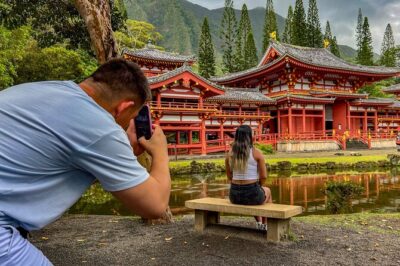
You begin at Izumo Taishakyo Mission of Hawaii, an active Japanese Shinto mission next to Nuuanu stream. Admission for this stop is listed as free, and the time here is short, around 15 minutes.
Why this first stop matters: it frames the Japanese influence that shows up later in food choices. You are not just jumping straight into eating. You start with a cultural landmark tied to community life, then you move into the food neighborhoods where those influences blend.
If you like learning by seeing, you will appreciate that the tour uses a real place, not just a lecture. It also helps break up the morning so you are not immediately hit with seafood and sweets.
Stop 2: Manapua in Downtown Honolulu, savory meets sweet
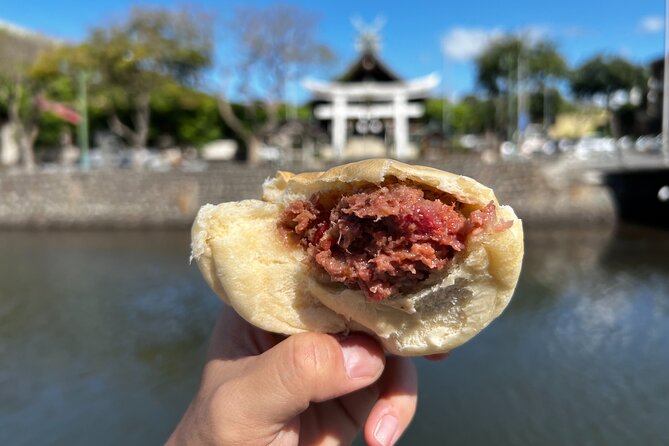
Next up is Downtown Honolulu, where you try Local Manapua. These are sweet bread buns with savory and smoky pork fillings, and the stop runs about 15 minutes.
Manapua is a perfect first “gateway” bite because it bridges flavors. It is comforting, easy to eat, and not intimidating if you are still adjusting to local food. It also prepares your taste buds for the rest of the Filipino and Japanese-inspired snacks that follow.
The takeaway for you: if you think you are only coming for the poke, start with an open mind. This tour builds in layers, and the small buns make a good warm start.
Stop 3 and 4 in Chinatown: Turon and chicken adobo
In Chinatown, you get two Filipino hits in back-to-back stops.
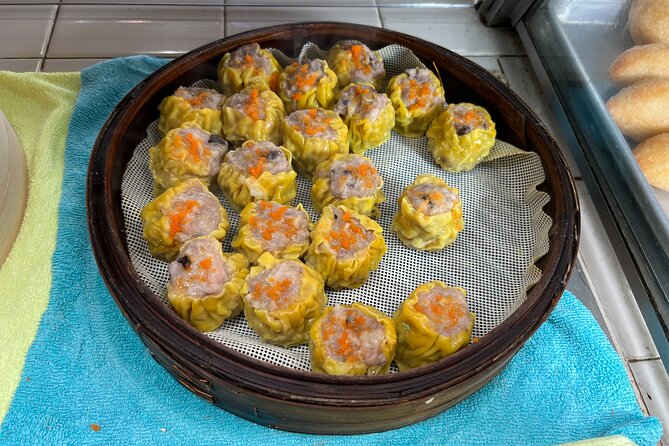
First, you try Turon (Banana Lumpia), a Filipino fried banana dessert. It is about 15 minutes here, and it is sweet and crispy, with banana as the main theme.
Then you move to Chicken Adobo, one of the most popular Filipino dishes. It is marinated and simmered in sauce, also around 15 minutes.
Why this pairing works: it gives you contrast. Sweet fried banana right after you just had savory pork buns helps you experience how flavor balance works across cultures. Then adobo lands as a deeper, saucier dish that feels more like a meal.
If you are watching your spice tolerance, adobo is generally flavorful rather than screaming heat, but everyone’s threshold differs. The bigger caution is simply that you are eating multiple dishes in a short window.


Stop 5: Deep-water prawns, a Hawaii seafood detour
Next is Kauai wild caught deep-water prawns, known as Ama Ebi or Boton shrimp. This stop is about 15 minutes.
Deep-water prawns are not the same as the shrimp you can grab off a generic salad menu. They tend to have a distinct texture and taste, and the tour’s inclusion here signals that they are aiming for seafood variety, not just sushi-style samples.
If you are a seafood fan, this is a highlight type of stop because it is specific, not vague. If you do not eat shrimp, you should contact the provider before booking, especially because the tour lists serious food allergies as something to discuss ahead of time.
Stop 6: Seasonal local fruit tastings you will remember
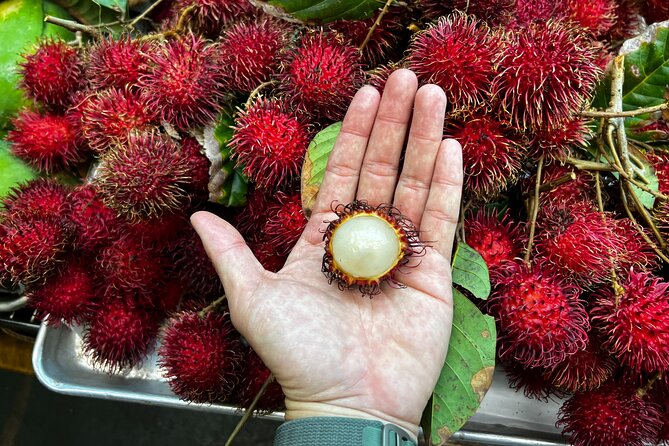
Now you move into fresh local fruits, roughly 20 minutes. The fruit lineup depends on what looks good and what is available, and you should expect 5+ tastings of exotic locally grown fruit.
This is where the tour becomes more than “food I ordered in a restaurant.” Some fruits are new to many people, and the sweetness and aroma can surprise you. One of the reviews specifically mentioned durian, which gives you an idea of the kind of range you might see if it is in season.
How to handle this part: taste slowly. Fruit can be intense, and you do not want to rush your way into a fruit you dislike before you even learn what you are actually tasting.
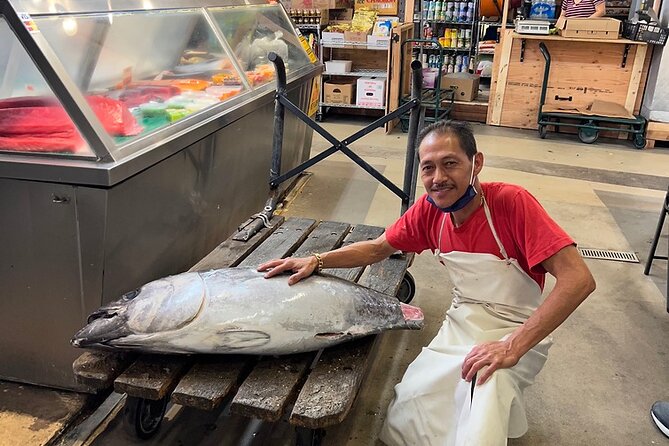
Stop 7: Oahu Fish Market, chutoro sashimi and tako poke
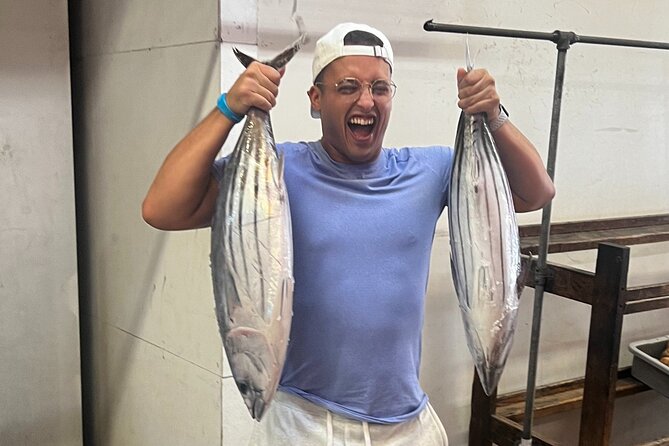
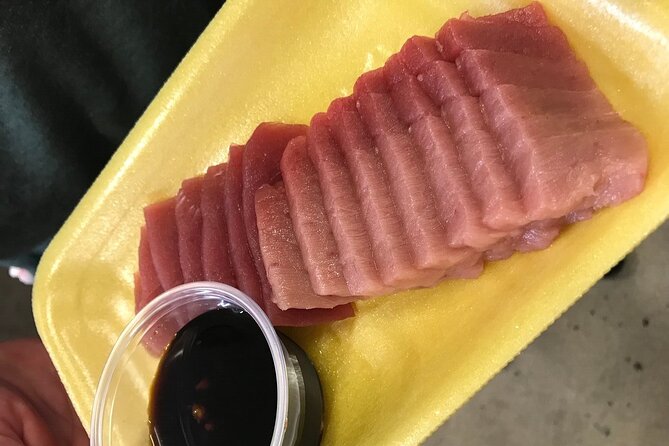
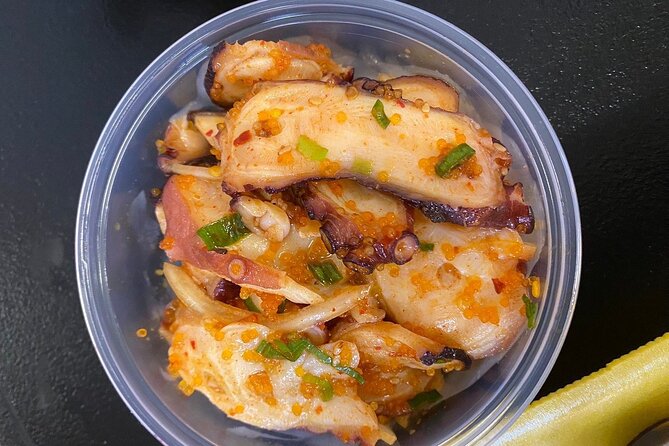
You then head to Oahu Fish Market for Japanese-style seafood, also around 20 minutes. What you try depends on availability, but the itinerary calls out Chuturo Sashimi (fatty tuna belly style) and Tako Poke.
A few important notes for your expectations:
- Chutoro sashimi is raw tuna, and it is chosen because tuna belly is rich and fatty.
- Tako poke here is described as cooked Japanese tako (madako) seasoned with a Korean spicy sauce, with flying fish eggs.
This is the stop for people who want the real deal on seafood. It is also the stop where you have to decide how you feel about raw fish. If raw fish is not your thing, you can still enjoy the other parts, but this is one of the reasons this tour sells out fast. Having a plan helps.
For first timers, this is also a smart place to ask your guide about how they like the flavor combinations. The guides often make sense of these dishes in a way you can repeat later.
Stops 8: Roast meats, Chinese-style duck and pork
In Chinatown again, you try roast meats, usually duck and/or roast pork depending on availability. The tasting window is about 15 minutes.
This stop balances the seafood and sweets you have already had. Roast meats bring a different kind of savory punch, with flavors that often lean toward Chinese-style BBQ techniques.
Practical tip: if you are full already, take smaller bites. Roast meat is rich, and it can tip you into “too full to enjoy the next dish” if you go big too early.
Stop 9: Vietnamese pandan cake, soft and fragrant
Your dessert stop is Vietnamese pandan cake, about 15 minutes. This is listed as Vietnamese green pandan cake, and it gives you a different style of sweetness than the banana dessert earlier.
Pandan flavor is hard to describe if you have never tried it, but it often reads as aromatic and gently sweet rather than heavy. It is a good dessert to keep your palate awake for the final poke stop.
If you have a sweet tooth, this part will hit. If you do not, it still works as a palate reset.
Stop 10: Hawaiian style poke, the final flavor finale
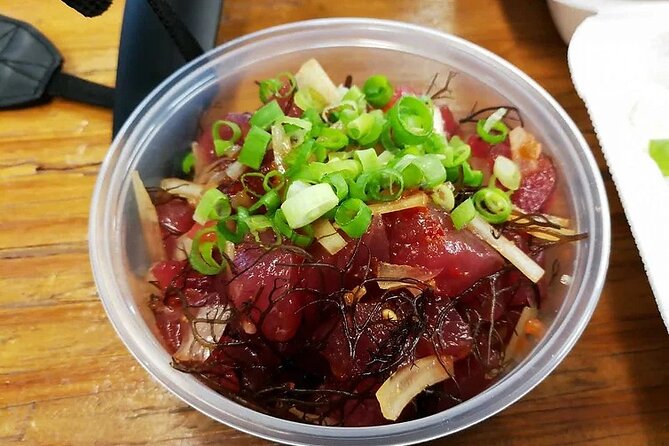
You end in Chinatown with Hawaiian style poke. The itinerary calls it Hawaiian Style Poke, and the sample menu mentions Hawaiian Style Ahi Limu Poke, with raw big eye tuna cubed and seasoned local style.
This final stop matters because poke is one of the most recognizable Hawaii foods, but it is easy to end up with bland poke from somewhere that does not handle fish with care. Here, the tour places poke at the end of a sequence that builds seafood appreciation and seasoning literacy.
If you like tuna, you will love the ending. If you are cautious with raw fish, you might want to take tiny bites and focus on seasoning and texture rather than chasing a big mouthful. You do not want one dish to ruin your enjoyment of the rest of the experience.
How Victor and TJ turn a market walk into a story
The food gets the headlines, but the tour’s real power is how guides connect the dots while you are standing in the middle of the action. Multiple comments highlight Victor and TJ for being fun, professional, and very good at answering questions.
Victor is described as born and raised on the island, which helps because he can explain how these foods feel in daily life, not just how they look on a menu. TJ shows up as a navigation and communication strength, especially when the group is a mix of ages and comfort levels.
Here is what you should expect from a guide-led food walk:
- They introduce you to the vendors and help you understand what you are tasting.
- They keep the pacing smooth so you are not sprinting between stops.
- They offer follow-up recommendations after the tour, which is useful when you want to eat well again on your own.
That last part is underrated. A great tour does not just end at the last stop. It hands you a mini map of where to go next.
What to eat, what to pace, and how not to feel miserable later
With this much food, pacing is the difference between a fun morning and an uncomfortable afternoon. The tour is designed as a sequence of tastings, but you are still responsible for your own stomach.
My best advice:
- Do not eat a full breakfast right before. Plan to arrive hungry.
- Drink water between savory stops. The included drinks are great, but you still want hydration.
- When you hit seafood and roast meats, slow down. Rich flavors stack fast.
- Save your favorites for small seconds if they offer it, because containers for extras are a common perk on this kind of tour.
Also plan for weather. The tour notes it requires good weather, which is typical for walking routes. On a hot day, your pace will feel different, so go easier than you think you need to.
Who this tour fits best, and who should adjust expectations
This is a good fit if you want authentic, multicultural food in a small group and you enjoy walking through neighborhood markets. It also fits well as an early-trip activity because it teaches you what to look for when you are choosing restaurants later.
It is especially good for seafood lovers. The tour includes deep-water prawns, tuna belly sashimi style, tako poke, and finished with Hawaiian poke.
Two groups should think carefully:
- If you have serious food allergies, contact the provider before booking. The tour explicitly asks you to do this.
- If raw fish is a hard no, you can still enjoy plenty, but the fish market and poke stops are central. You will want to tell your guide and plan your tastes accordingly.
For everyone else, come with an open mind. Even if you are not sure you will like one dish, the guide can usually steer you toward what is best in the moment.
Should you book Hawaii Off The Beaten Path Food Tour?
Book it if you want a high-impact food morning that goes beyond tourist lists. The included value is strong: hotel pickup where available, multiple cultures on one route, a real market feel, and enough food that you likely will leave with leftovers.
Do not book it if you hate walking, strongly dislike standing, or you cannot do raw fish or have serious allergies without careful customization. In those cases, the experience is likely to feel stressful rather than fun.
If you are the type who likes learning by tasting and you want to leave Honolulu with names, flavors, and vendor memories, this is one of the more practical ways to do it in a short window.
Food & Drink: more we have covered in Oahu
- Oahu Catamaran Waikiki Sunset on 40 Foot Catamaran: Food and BYOB★ 5.0 · 836 reviews
- Oahu in a Day: Waterfall – Food Trucks – Lookouts – Small Crowds★ 5.0 · 475 reviews
Tours: the rest of the Oahu file
- Waikiki Trolley Hop-On Hop-Off Tour of Honolulu★ 4.5 · 4,783 reviews
- Waikiki, Hawaii: Turtle Canyon Snorkel Excursion★ 5.0 · 4,656 reviews
- Oahu Circle Island Tour with Waimea Waterfall★ 5.0 · 3,912 reviews
- Hidden Gems of Oahu Circle Island Tour with Byodo In Temple★ 5.0 · 3,450 reviews
- Waikiki Trolley Red Line Heroes & Legends Hop-on Hop-off Tour★ 5.0 · 2,120 reviews
Tour Reviews: more from our Oahu desk
- Parasailing Experience in Waikiki, HI★ 5.0 · 7,692 reviews
- Waikiki Trolley Hop-On Hop-Off Tour of Honolulu★ 4.5 · 4,783 reviews
- Waikiki, Hawaii: Turtle Canyon Snorkel Excursion★ 5.0 · 4,656 reviews
- Paradise Cove Luau★ 4.5 · 4,498 reviews
- Waikiki Trolley Blue Line Coastline & Local Grindz Hop-on Hop-off★ 5.0 · 4,159 reviews
Newest Oahu reviews added to this site
- Go City: Oahu All-Inclusive Pass with over 45 Things To Do
★ 4.0 · 314 reviews - Waikiki Beach Glass Bottom Boat Cruise
★ 4.5 · 314 reviews - Surfing Lessons On Waikiki Beach
★ 4.5 · 317 reviews - Diamond Head Hiking and Oahu Island Experience feat. North Shore
★ 5.0 · 319 reviews - 3-Hour Honolulu Bottom Fishing Adventure
★ 4.5 · 320 reviews - West Oahu Dolphin Watch and Snorkel Sail with Lunch
★ 4.5 · 320 reviews - Premier Waikiki Sunset Party Cruise with Live DJ and Full Bar
★ 5.0 · 322 reviews - Oahu: Kualoa Ranch Hollywood Film Locations Tour
★ 4.5 · 323 reviews - Certified Diver: 2-Tank Deep Wreck and Shallow Reef Dive Off Oahu
★ 5.0 · 331 reviews - Small Group Turtle Canyon Snorkel in Waikiki (Boat Tour)
★ 5.0 · 333 reviews
Food & Drink, side by side.
 ★ 5.0Little Havana Food and Walking Tour in MiamiFrom $698,882 reviews
 ★ 5.0New Orleans Food Walking Tour of the French Quarter with Small-Group OptionFrom $756,118 reviews
 ★ 5.0NYC Bus Tour of Brooklyn, Bronx, Queens: Art, Food & SportsFrom $843,805 reviews
 ★ 5.0Chef Guided Food Tour of Pike Place MarketFrom $733,733 reviews
 ★ 5.0Savannah First Squares Culinary & Cultural Walking Food TourFrom $963,229 reviews
 ★ 5.0NYC: Chinatown & Little Italy Food Tour with 7 Flavorful TastingsFrom $992,733 reviews
 ★ 5.0Nashville: Food Tour with 5+ Tastings of Local DelicaciesFrom $982,704 reviews
 ★ 5.0Historic Ybor City Food Walking TourFrom $892,210 reviews
This one is also listed in