
Review · NEW ENGLAND COAST AND ISLANDS
Mystic Seaport Museum Adventure
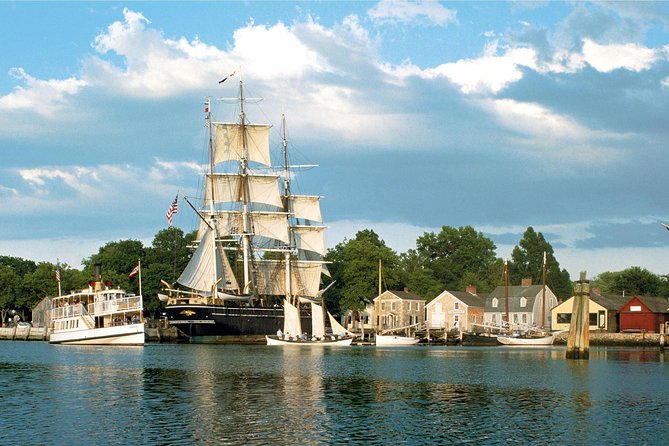
A living shipyard in Connecticut. What makes this outing work is the mix of real trades, real tall ships, and real time on the water’s doorstep at Mystic Seaport, with Charles W. Morgan as the headliner and skip-the-line entry baked in. I especially love wandering the working village side, because you can learn how 19th-century ship jobs were done, not just read about them. I also like that you can go at your own pace for a full day, which matters at a place this big. One possible drawback: expect lots of walking on gravel and steps, plus limited access in some historic buildings and on ships.
You get a voucher admission to the Museum of America and of the Sea in Mystic, Connecticut, and then you have the day to roam the seafaring village, galleries, and the harbor side. Staff and historians are on hand to answer questions, and the site keeps the story grounded in people and tools, not just boats in glass cases.
This is also a small-group experience, max 14, and it’s offered in English. Plan for an easy, self-paced day where you pick the parts that match your curiosity, whether that’s whaling-era life, ship restoration, or hands-on workshops.
In This Review
- Key points at Mystic Seaport and the Charles W. Morgan
- A Full-Day Ticket to America’s Seafaring Village and Galleries
- How the Cooperage, Ship-Smith, and Print Shop Make 1800s Work Feel Real
- Charles W. Morgan: The Square-Rigged Whaleship You Can Climb and Explore
- The Working Shipyard and the Included Tall Ships Experience
- Planning Your Time, From a 2-Hour Peek to a Full-Day Roam
- What the Galleries Teach You After the Ships and Village
- Food, Extra Attractions, and How to Avoid a Bad Lunch
- Getting There and Redeeming Your Voucher Without Stress
- Comfort, Steps, Gravel, and Rules for Dogs and Access
- When to Go: Hours, Seasons, and Weather Reality
- Should You Book Mystic Seaport and the Charles W. Morgan?
Key points at Mystic Seaport and the Charles W. Morgan
- Skip-the-line prebooking helps you start exploring faster once you arrive.
- Charles W. Morgan is the famous square-rigged whaling vessel you can climb and go below decks.
- 19 acres combine museum galleries, a 19th-century seafaring village, gardens, and a preservation shipyard.
- Hands-on trades like the cooperage, ship-smithing, print shop, and ship carver’s workshop bring the 1800s to life.
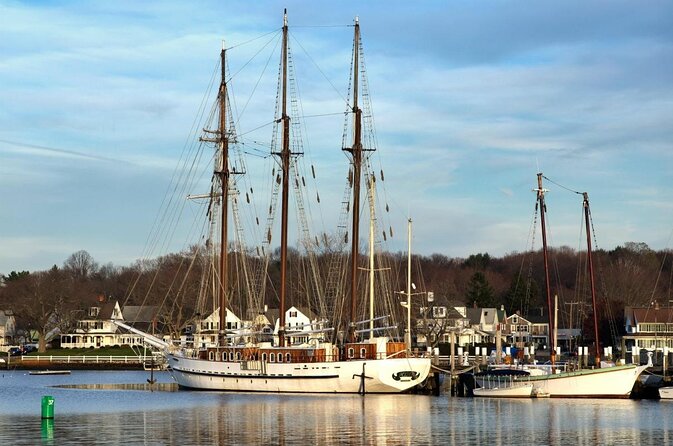
- Tall ships up close, with 3 included, makes this feel more like a working waterfront than a static museum.
- You control the time, so you can do a quick 2 to 3 hours or give it a full day.
A Full-Day Ticket to America’s Seafaring Village and Galleries
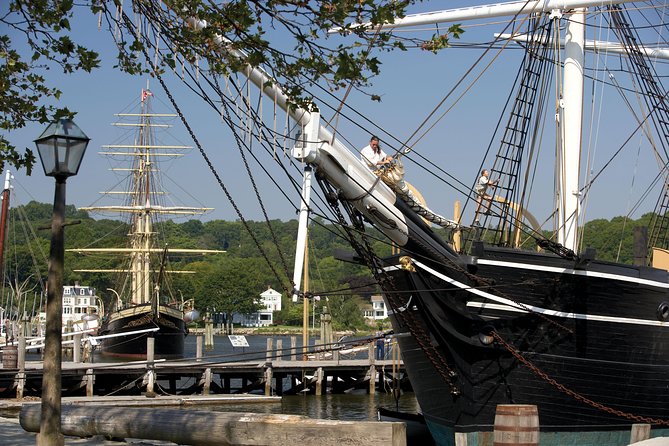
Mystic Seaport is laid out like a small world. You’re not just visiting a building with exhibits. You’re walking around 19 acres where ship work, village life, and museum display all share the same grounds.
I like how the day is structured around options. You can start with the harbor and shipyard side, then shift into the formal galleries when you want more explanation and photo archives. Or you can do it the other way. The value here is the flexibility. It’s much easier to get a satisfying visit when you can slow down for the stuff you care about and skip what doesn’t hold your attention.
The museum grounds also include reproduction historic gardens that connect to the 19th-century setting and the Industrial Age. It’s a small thing, but it helps you feel like you’re in a complete environment, not a checklist.
If you’re coming at a time when the site runs shorter hours, like late fall, that matters. You’ll want to arrive early enough to see the main ships and the village buildings before you run out of daylight. One thing I’d watch for is that some buildings can be closed seasonally, so if you’re traveling in the offseason, set your expectations accordingly and keep your schedule flexible.
How the Cooperage, Ship-Smith, and Print Shop Make 1800s Work Feel Real
A lot of maritime museums stop at “look.” Mystic Seaport goes after “understand,” especially through trades you can visit and talk to people at.
This is where the experience gets personal. You can learn about the lives and skills of ship smiths, coopers, and riggers, plus stop by other related workshops such as a print shop and a ship carver’s workshop. In plain terms, you’re seeing how different jobs fit together to keep ships working and communities running.
One name you’ll hear in the cooperage area is Linda. She’s called out specifically for being great, which tells me the staff and volunteers really know how to explain why tools and materials mattered. Even if your interest is casual, watching these workshops helps you understand the “how” behind shipbuilding and maintenance, not just the final product.
A practical tip: give yourself a little time in each workshop rather than sprinting through. The best moments come when someone is mid-explanation and you catch the why behind the technique. Also, if you’re visiting with kids or teens, the workshops and demonstrations tend to land well because they’re visual and hands-on.
Charles W. Morgan: The Square-Rigged Whaleship You Can Climb and Explore
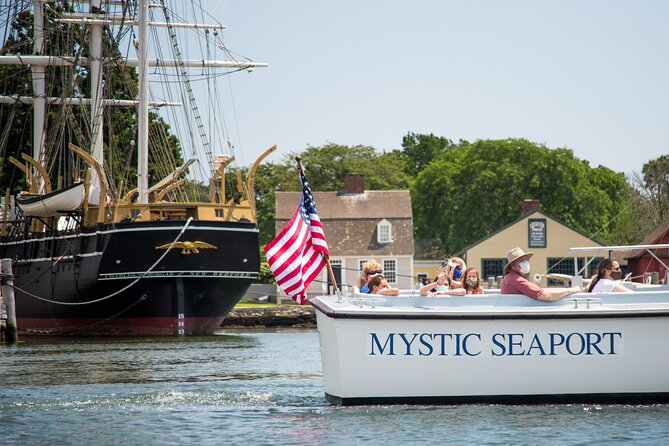
If you only do one ship at Mystic Seaport, make it Charles W. Morgan. This square-rigged whaling vessel is described as the last wooden whaleship in the world and the oldest American commercial ship still afloat, with only USS Constitution listed as older.
What makes this stop more than a photo opportunity is the access. You can climb aboard and go below decks to understand what life was like for the men and women who worked there. That’s the difference between seeing a ship and actually feeling its scale and layout.
You’ll typically spend around 30 minutes at Charles W. Morgan. That’s enough time to get oriented on deck, then head below to see how the interior was arranged and why the ship was built for its working life.
Even if whaling is not your main interest, I think this is still worth your time. It anchors the whole place. It’s not just a tall ship. It’s a working-world artifact. And because Mystic Seaport actively preserves and restores vessels, you’re seeing maritime history treated as something living, not locked behind a barrier.
The Working Shipyard and the Included Tall Ships Experience
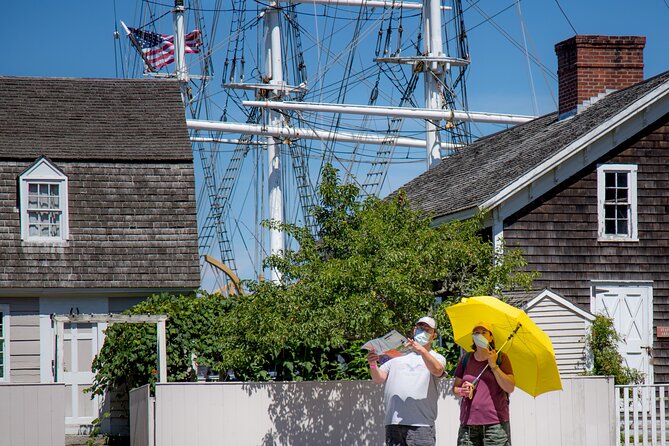
One of the smartest parts of this day is the way the shipyard is part of the visitor experience. The preservation shipyard is actively working, with ships and boats restored and maintained. That changes the vibe. You’re not watching history from a distance. You’re walking into the ongoing work of keeping wooden vessels seaworthy.
Mystic Seaport includes access to 3 tall ships during your admission. That means you’re not limited to the one famous hull. You can compare how different ships are built and used, and you can focus on what grabs you most: rigging, deck layout, or how cargo and daily life might have worked.
You’ll also be able to explore these ships alongside a recreated 19th-century working waterfront seaport village setting. So the tall ships feel tied to a place where people lived and worked, not just anchored as display objects.
My advice: do one ship early in the day when your energy is high, then use the others as “reward stops” when you need a break from indoor galleries or village buildings. It keeps the day from turning into one long grind of walking and looking.
Planning Your Time, From a 2-Hour Peek to a Full-Day Roam

Mystic Seaport is rated as a 2 to 6 hour experience window, and the best approach depends on what you’re trying to get out of it.
If you want a focused visit, 2 to 3 hours can work. I’d prioritize these in order: start with the main ship, Charles W. Morgan, then walk the village core and pick 1 or 2 trades to watch. If you skip the village, you risk missing the part that makes this place feel like a real seafaring town.
For a truly satisfying visit, plan for at least 4 hours, and if you have the time, go for the full day. The site can be busy with details, and there’s no reason to rush. One of the best pieces of advice I’d borrow is this, arrive early and give yourself room to wander without stress.
Also, build in rest time. The site has seating spots and there are areas where you can pause, but the overall experience includes plenty of movement. If you know you get tired, you’ll thank yourself later for scheduling slow breaks into your day.
What the Galleries Teach You After the Ships and Village

The museum’s exhibition halls are where you get the context layer. Permanent and rotating exhibits explore maritime history, art, and culture. You can find figureheads, vintage photography, restored vessels, carvings, and other maritime artifacts.
This matters because once you’ve seen the ship hulls and tools up close, the galleries help you connect the dots. You can go from “I saw how something was built” to “here’s how it relates to trade, whaling, and coastal life.”
A helpful strategy: do one “walk experience” first (village and ships), then step into a gallery for the “why.” You’ll get more out of the explanations because your brain already has the visual anchors.
Food, Extra Attractions, and How to Avoid a Bad Lunch
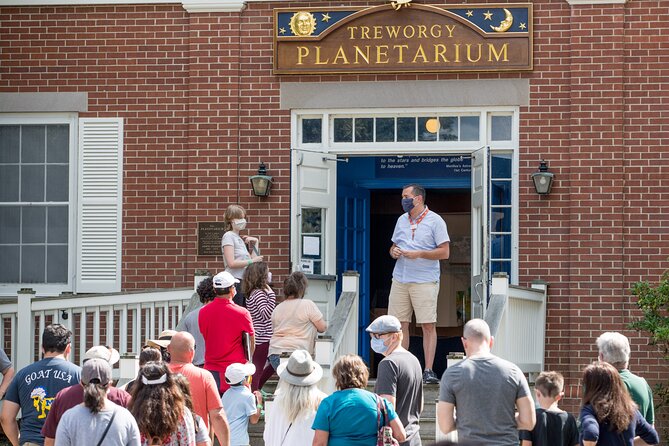
Food and drinks are not included with your admission. That alone means you should plan lunch rather than assuming you can grab a quick bite and keep rolling.
Some visits include special extras and events, like live music and tasting-style programming, and there can be family-friendly distractions such as markets and seasonal activities. You might also run into attractions that are ticketed separately. One example mentioned is the planetarium, which some visitors say costs extra.
If you care about food quality, don’t leave it to chance. One visitor flagged that their on-site meal wasn’t good and recommended heading off site for lunch. I’m not saying every meal will be the same, but I do think it’s smart to plan a backup lunch option nearby so you can keep your day moving if the first choice is disappointing.
Getting There and Redeeming Your Voucher Without Stress

This experience uses voucher admission, so you’ll present your voucher for entry to the Museum of America and of the Sea. Prebooking is meant to help you avoid ticket line delays, which is a win at a popular site.
Here’s a practical tip: if you’re relying on online directions for where to pick up tickets, make sure you follow the signage for the front entrance when you redeem. Some people report the online pickup address details can be off, and the simplest fix is to ignore guesswork and use the on-site entrance directions.
Also, parking fees are included, which is one less thing to juggle when you’re arriving with a family or in a car. It’s one of those small details that reduces friction and keeps the day focused on the museum.
Comfort, Steps, Gravel, and Rules for Dogs and Access
Mystic Seaport is not a “wheelchair-free day” kind of museum. It’s a historic maritime site with limited handicap accessibility in some ships and exhibit buildings. That doesn’t mean you can’t enjoy it, but you should plan your route and expect some areas may be harder to reach.
Walking comfort matters. Reviews repeatedly point out gravel paths and stairs or steps. So wear shoes with good traction. If you’re with older adults or anyone with mobility limits, consider doing ships and the main village first, then decide later how much gallery time you can handle.
Dogs are permitted on grounds if they’re on leash, but dogs are not allowed on ships or in exhibits. And you should not leave them unattended. Service animals are allowed.
If you’re traveling with kids, the general rule is that children must be accompanied by an adult. The site is family-friendly in spirit, especially because the village and working-trade demonstrations give kids something to look at besides screens.
When to Go: Hours, Seasons, and Weather Reality
Mystic Seaport runs different hours by season. In spring and summer it’s open daily from 10:00 AM to 5:00 PM. In late fall and early winter it shifts, and you’ll want to double-check timing since hours are shorter and the schedule may be Thursday to Sunday.
Weather can change the experience. The site is indoor and outdoor, so you will still see plenty even in a light drizzle. But if extreme weather forces closures, you’ll be offered an alternative date.
My advice is simple: check the day-of forecast, then dress for it. Bring a light layer. Plan shoes for damp conditions. And if the weather looks rough, prioritize the ships and key village buildings first, then move into galleries where it’s easier to stay comfortable.
Should You Book Mystic Seaport and the Charles W. Morgan?
Yes, I’d book this if you want a maritime day that feels like a real harbor community, not a sealed exhibit. The big draw is the combination of climbing onto ships, learning trades like cooperage and ship-smithing, and spending as much or as little time as you want. The inclusion of Charles W. Morgan and 3 tall ships is the kind of “main attraction with real access” setup that actually justifies a full visit.
I’d think twice only if you know you hate stairs, gravel walking, and older buildings with limited accessibility. Also, if you’re truly not into boats at all, you may end up feeling like the day is mostly ship-focused.
If you like history that you can touch, ask questions about, and see from multiple angles, Mystic Seaport is a strong choice. Plan for a full day, arrive early, and you’ll get far more than a quick look at tall ships.
New England Coast and Islands, side by side.
 ★ 5.0Newport Gilded Age Mansions Trolley Tour with Breakers AdmissionFrom $473,785 reviews
 ★ 4.5Boston to Martha’s Vineyard Day Trip with Optional Island TourFrom $1293,162 reviews
 ★ 4.5Narrated Bus Tour of Bar Harbor and Acadia National ParkFrom $671,926 reviews
 ★ 5.0Afternoon Grand Tour | Gansett Cruises in Newport, RIFrom $421,869 reviews
 ★ 5.0Newport Trolley Tour with Breakers Mansion – Viking ToursFrom $451,624 reviews
 ★ 4.5#1 Best 3hr Martha’s Vineyard shared Island Tour from Oak BluffsFrom $651,439 reviews
 ★ 4.2Newport Beach: 2-Hour Whale Watching TourFrom $271,375 reviews
 ★ 4.5Whale-Watching Cruise from Newport BeachFrom $31927 reviews
This one is also listed in