
Review · SALEM WITCH HISTORY
Best Salem Witch Trials Historical Walking Tour
Witches, warrants, and a tight loop of Salem. This 90-minute walking tour is built to get you close to the most important 1692 trial locations, with a guide who ties names to places and explains what is known, what is debated, and what myths grew around the hysteria. I like that the route includes both the public memorial and the only surviving structure linked directly to the witch trials, the Witch House.
Two things I really like: first, you do not just get spooky atmosphere. You get the human story of the accusers and victims, tied to specific sites, including moments like the memorial benches that spell out who died, how, and when. Second, it is a fast, practical way to see Salem’s core without turning your day into a scavenger hunt of street corners and missing buildings.
One drawback to consider up front: most of the original trial-era structures are gone. So even though you are moving from stop to stop, you will spend some time standing where buildings used to be, with the guide using period evidence and old images to show what stood there.
In This Review
- What Makes This Tour Worth Your Time
- Price and Value: Getting History Without the Spreadsheet
- Meeting Point at 8 Central St and the 1-Mile Walking Reality
- A Smart Start: How the Tour Frames 1692 Salem
- Stop-by-Stop: The Best Parts of the Route
- Stop 1: The Salem Witchcraft Story Starts With Context
- Stop 2: Salem Witch Trials Memorial Bench Stories
- Stop 3: Rockafellas Restaurant and the Old First Church Site
- Stop 4: Joshua Ward House Site and George Corwin’s Role
- Stop 5: The Witch House, the Only Surviving Trial-Era Structure
- Stop 6: Salem YMCA on Sewall Street and Betty Parris
- Stop 7: Turner’s Seafood at Lyceum Hall and Bridget Bishop’s Timeline
- Stop 8: Witch Dungeon Museum as a Window Into Jails
- Stop 9: The Bewitched Statue and a Cultural Contrast
- Stop 10: Essex Lodge and the Court of Oyer and Terminer
- Stop 11: 50 St Peter St and the Witchcraft Jail Site
- What You Learn That You Cannot Easily Guess on Your Own
- The Main Things to Watch Out For
- Should You Book This Salem Witch Trials Walking Tour?
- FAQ
- How much is the Salem Witch Trials Historical Walking Tour?
- How long is the tour?
- Where do I meet the guide?
- What time does the tour run?
- Is the tour offered in English?
- Does the tour include admission to all sites?
- Are there public restrooms during the tour?
- How much walking is involved?
- Is the tour suitable for mobility or accessibility needs?
- Can I cancel and get a full refund?
What Makes This Tour Worth Your Time
- A short, timed route that fits into a busy Salem day
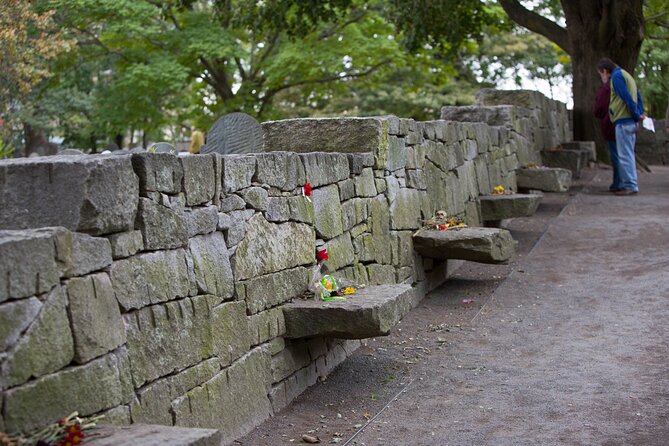
- Memorial bench stories that give you names, dates, and death details for the 20 victims
- The Witch House visit to connect the Corwin family and the court chatter to a real surviving building
- Court and jail stops tied to the Oyer and Terminer court and the places people were held
- A guide-led version of Salem math, where you learn how locations fit together instead of guessing on your own
- Small enough to hear answers, with a maximum group size of 40
Price and Value: Getting History Without the Spreadsheet
At $30 per person for about 1 hour 30 minutes, this is one of those Salem tours that makes sense for two reasons. First, you are paying for interpretation. Salem is full of markers, plaques, and tour brochures, but the guide’s job is to connect the dots so you understand how the trials moved from rumor to accusation to legal machinery. Second, you are buying time savings. Trying to research the right addresses, the right individuals, and what is actually still standing takes hours, and you will still miss the meaning a good local guide gives.
Also, this tour has a clear shape. It is a one-mile walk at a manageable pace with frequent stops, and the whole thing is designed to end back in downtown. That matters because Salem is easy to over-plan. When you have a solid historical route done early or mid-day, you can spend the rest of your time browsing, eating, or branching out to museums on your own schedule.
Meeting Point at 8 Central St and the 1-Mile Walking Reality
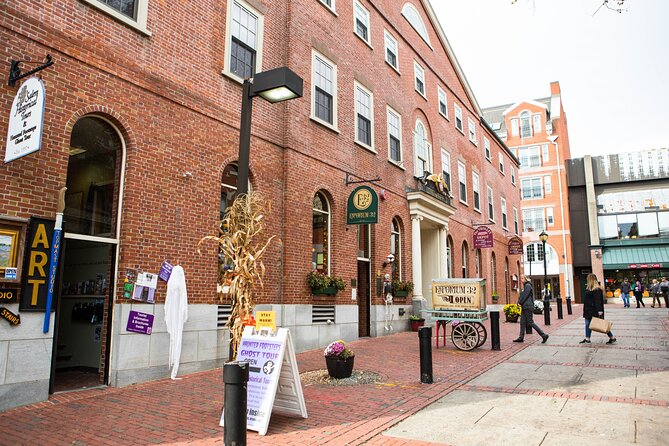
You check in at the Salem Historical Tours Office at 8 Central Street and you should arrive 15 minutes early. Tours run at 10 am, 1 pm, and 4 pm, so plan your day around one departure time instead of trying to squeeze in between other activities.
The walk is about one mile total, but that does not mean it is constant walking. It is built around stops and standing around for explanations. Sidewalks in historical Salem can be narrow and uneven, with bricks, cobblestones, and stairs. October crowds can also make the walking feel slower, so I suggest dressing for weather and keeping your expectations realistic.
There are no public restrooms on the route, so if you have a long Salem itinerary, handle bathroom timing before you meet your guide.
Additional Walking Tours on the review pile in Salem
A Smart Start: How the Tour Frames 1692 Salem
The tour kicks off at the Salem Historical Tours area, where you get a quick framing of what drove the 1692 events, including competing theories and personal stories. The guide also points out a key practical fact: many of the structures tied to the trials do not exist anymore. You may feel that at first, but it is part of why a guided route helps. You are not just seeing where things were, you are learning how we know where they were and why the memory of the events is tied to places that look different today.
A big plus here is what the guide seems to do well in many past groups: answer questions and keep the stories moving. One reviewer singled out a guide named Bob as bringing the 1600s to life with a detailed narrative. If Bob happens to be leading your tour, that is a strong signal you will get both structure and energy.
Stop-by-Stop: The Best Parts of the Route
This is a guided loop with some flexibility. The guide will hit as many locations as possible and the order may vary. That is normal in Salem, where foot traffic and weather can nudge timing.
Stop 1: The Salem Witchcraft Story Starts With Context
You begin with an overview that sets up the rest of the walk. The goal is to make you understand the mix of fear, accusation, and power that turned neighbors into targets. The guide points you toward multiple sites that are full of history, even if the buildings themselves are gone.
If you prefer straight chronology, come in with that mindset early and ask questions as you go. In a short tour, guides sometimes prioritize vivid stories over a strict timeline, but you can usually steer your own learning by asking where each event fits in the overall sequence.
Stop 2: Salem Witch Trials Memorial Bench Stories
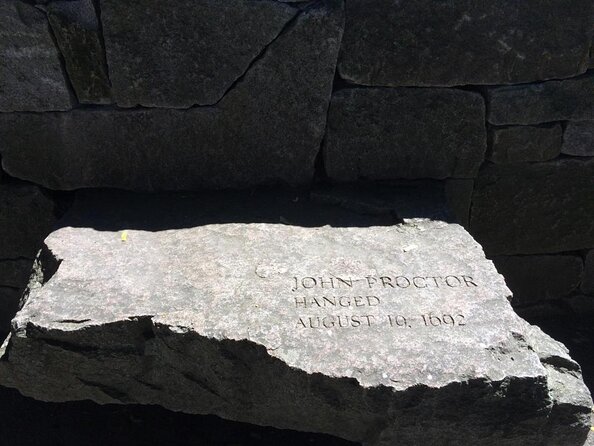
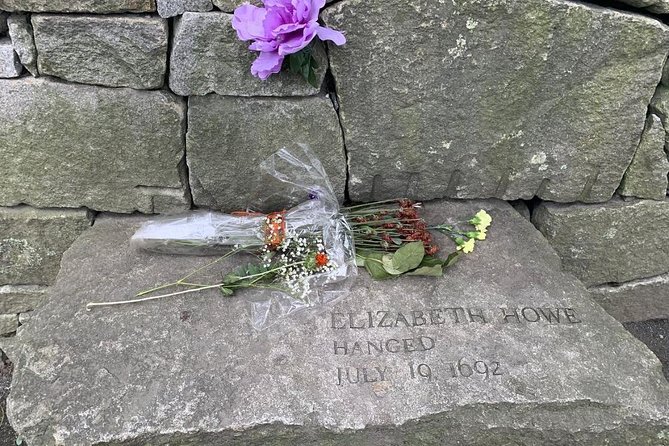
This stop is one of the most meaningful parts of the whole experience. The Salem Witch Trials Memorial honors the 20 innocent victims from the 1692 trials, and each bench includes the person’s name, how they died, and the date. It is dedicated in 1992, and the guide explains the memorial’s symbolism and shares stories connected to the individuals.
I love this stop because it gives you something rare in Salem. It is not only about famous names or a vague sense of tragedy. It is about specific people and specifics. Even if you already know the basics, this kind of structured remembrance helps the facts land harder.
Elsewhere under Historical Tours across Salem




Stop 3: Rockafellas Restaurant and the Old First Church Site
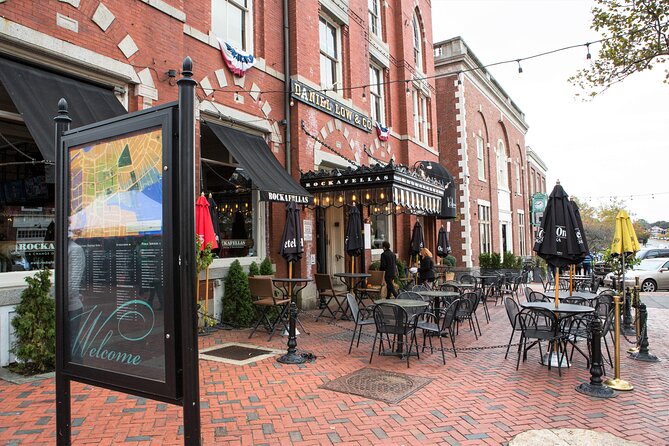
Next, you pause at Rockafellas Restaurant, a well-known stop in downtown Salem. The key historical hook is that it is in the Daniel Low and Co. building, which originally housed the First Church of Salem and the city meeting house during 1692.
This is a good example of why guided tours matter. When you see the site today, it is easy to miss what went on there. A guide helps you understand the town center as a place where community, authority, and rumor all had a stage.
Practical note: this stop involves a street-level look at the location. If you want food, you can, but any meal or anything you choose to order is not included.
Stop 4: Joshua Ward House Site and George Corwin’s Role
You then reach the site of the Joshua Ward House, now the Merchant Hotel. This is tied to George Corwin, the High Sheriff of Essex County in 1692.
Here, the history turns darker. The guide explains that George Corwin was responsible for signing arrest and execution warrants, and that he also took people’s property and was tied to reports of cruelty in his home. It is one of those stops that makes the legal process feel real, not theoretical.
Short stop, but important. It helps you see that the system was run by people, not just a storm of superstition.
Stop 5: The Witch House, the Only Surviving Trial-Era Structure
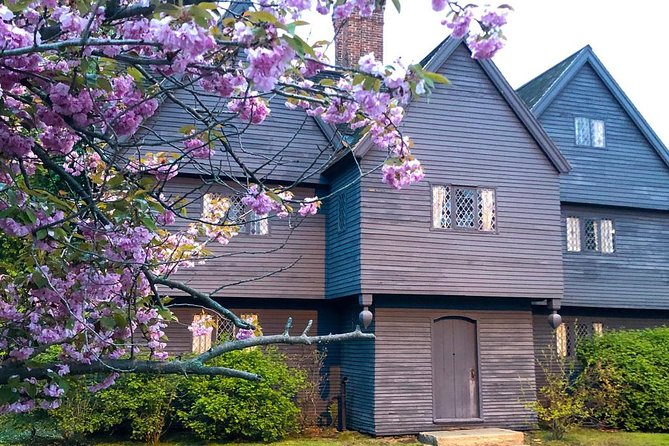
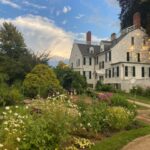
The Witch House at Salem is the star of the route because it is the only remaining Salem structure with direct ties to the 1692 trials. The house dates to the 1660s and is associated with Judge Jonathan Corwin. The guide also connects it to conversations between Judge Jonathan Corwin and Judge Hathorne about who could be a witch.
This stop is where Salem stops feeling like a theme park and starts feeling like a place where decisions happened behind real walls. Even if you have seen photos online, being there makes the scale and closeness click.
If you only do one indoor-related historical stop in Salem, I understand why people pick this one.
Stop 6: Salem YMCA on Sewall Street and Betty Parris
Next is the Salem YMCA on Sewall Street, named for Judge Stephen Sewall of the witchcraft court. The guide points out that nine-year-old Betty Parris was moved here in July 1692.
This is also a place that helps you understand how fear spread through families and how children became central to the story. You hear about Betty and her cousin’s role in helping spark the hysteria, and it reframes the idea that witch panic was purely adult politics. In Salem, it was also something people believed could be detected in a child.
Stop 7: Turner’s Seafood at Lyceum Hall and Bridget Bishop’s Timeline
Then the tour shifts to the site of Turner’s Seafood at Lyceum Hall. Lyceum Hall sits on land once owned by Bridget Bishop and her husband Edward.
The guide shares Bridget Bishop’s famous story, including the pace of her arrest, trial, and execution. The timeline given here is brutal: it took eight days for her to move from arrest to execution. It is one of those facts that stops the story from staying abstract.
Stop 8: Witch Dungeon Museum as a Window Into Jails
This stop is different from the rest. The Witch Dungeon Museum is not directly tied to 1692 trials, but it gives a concrete view of how people could be jailed. The guide explains that detainees were held in tiny cells, described as roughly the size of a phone booth or closet. You also learn that prisoners had to pay for their own jail time.
There is also a photo moment in the pillories, sometimes described as stocks.
Should you do it? If you want mood and context, this is a helpful change of pace. If you prefer only the strictly 1692-linked locations, treat it as a model of how imprisonment likely felt rather than a guaranteed historical match to one specific cell.
Stop 9: The Bewitched Statue and a Cultural Contrast
You then pause for the Bewitched Statue of Elizabeth Montgomery, where you can take a photo as Samantha Stevens. The guide adds the irony: the statue ties into how Bewitched was shot in Salem, and you learn whose land the statue sits on.
I appreciate this stop because it reminds you that Salem has always processed its past through stories. Some are meant to scare you. Some are meant to entertain you. Your perspective changes when you stand in front of a pop culture monument while learning about what people suffered centuries earlier.
Stop 10: Essex Lodge and the Court of Oyer and Terminer
Next up is the Salem Masonic Building, Essex Lodge, tied to the location of the witchcraft court known as Oyer and Terminer. The guide explains that the court was located in the middle of Washington Street in front of the present-day building, and most trials happened there. Some additional trials happened in January 1693.
One detail I found especially chilling is the legal contradiction: an accused was declared innocent by the jury, but the judges nullified the decision. That is the kind of fact that helps you see why the phrase justice feels complicated when the power sits in the wrong place.
Stop 11: 50 St Peter St and the Witchcraft Jail Site
The tour finishes with the site at 50 St Peter St, where the witchcraft jail once stood. The guide explains that the jail was part of a wider system, with jails across the greater Boston area used during the trials.
You also hear names tied to this story, including Giles Corey, who was crushed during interrogation. The guide also notes that some prisoners died in jail.
This final stop leaves you with one last reality check: the trials were not only about courtroom procedure. They were also about physical punishment and confinement, with consequences that extended beyond the final sentence.
What You Learn That You Cannot Easily Guess on Your Own
A good historical walking tour is mostly a translation job. This one translates Salem into something you can understand fast:
- You learn how specific people and roles connect, from judges to sheriffs.
- You get familiar names linked to particular places, so the history becomes map-based, not memory-based.
- You hear both the human stories and the way the legal machinery worked.
In several past groups, guides were praised for energy and answering questions. The best moments tend to come when you ask follow-ups and the guide can anchor your question to a nearby site. That is one reason the tour’s group size, capped at 40, is a practical advantage. It is large enough to keep things lively, but small enough that the guide can still handle questions.
The Main Things to Watch Out For
This tour is strong, but not perfect, and it comes down to expectations.
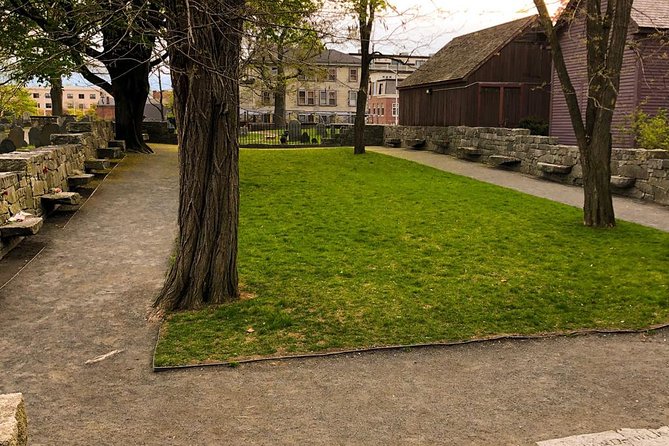
First, remember that many original trial-era buildings are gone. You may feel you are doing a lot of standing and listening, and that can frustrate people who expected the same kind of site-seeing you get in European castles. The tour team handles this by showing where things used to be and using evidence to explain the missing structures, but the reality stays the same.
Second, the route order can vary, and guides may adjust timing based on the day. If you are chasing a strict sequence, you might want to ask your guide to keep the story timeline clear as you move.
Third, guide personality matters. One past review complained about excessive personal talk, which is not what you booked for. You can avoid that by gently steering the conversation back to 1692 history if it wanders.
Should You Book This Salem Witch Trials Walking Tour?
Book it if you want a fast, guided way to see the most important 1692-related locations in downtown Salem, without spending your whole trip doing research. The $30 price works best when you treat this as your foundation, then build the rest of your Salem day around your own interests.
Skip it or pair it differently if you want only perfectly preserved sites, or if you find standing still tiring. Also take the walking reality seriously. You need the ability to complete the roughly one-mile route within 90 minutes and handle narrow, uneven sidewalks.
If you are planning Salem during October, book ahead and give yourself extra time. Crowds and parking slow everything down, and the tour meets at a fixed downtown start time.
If your goal is to understand what happened in 1692, tied to actual places you can stand on today, this tour is a very workable choice.
FAQ
How much is the Salem Witch Trials Historical Walking Tour?
The tour costs $30.00 per person.
How long is the tour?
It is approximately 1 hour 30 minutes.
Where do I meet the guide?
Check in at the Salem Historical Tours Office at 8 Central Street, Salem, MA 01970.
What time does the tour run?
Tours depart at 10 am, 1 pm, and 4 pm. Plan to arrive 15 minutes early to check in.
Is the tour offered in English?
Yes, the tour is offered in English.
Does the tour include admission to all sites?
Not all stops include admission. Some stops are listed as admission ticket free, while others are listed as admission ticket not included. You may need to pay on your own for those.
Are there public restrooms during the tour?
No public restrooms are available.
How much walking is involved?
The tour is about one mile long and takes 90 minutes with frequent stops for viewing and information.
Is the tour suitable for mobility or accessibility needs?
The tour can pose challenges due to narrow and uneven sidewalks, bricks, cobblestones, and stairs. You must be able to complete the one-mile walk within 90 minutes.
Can I cancel and get a full refund?
Yes. Free cancellation is available, and you can cancel up to 24 hours in advance for a full refund.
Still working through Walking Tours in Salem
- History and Hauntings of Salem Guided Walking Tour★ 5.0 · 14,564 reviews
- Salem Voodoo, Vampires, and Ghosts Guided Walking Tour★ 5.0 · 1,931 reviews
- Bewitched Walking Tour of Salem★ 5.0 · 1,895 reviews
- Satanic Salem Walking Tour★ 5.0 · 1,635 reviews
- Mysteries and Murders of Salem Guided Night-Time Walking Tour★ 5.0 · 1,488 reviews
Tours: the rest of the Salem file
- History and Hauntings of Salem Guided Walking Tour★ 5.0 · 14,564 reviews
- Salem’s Best Ghost Tour★ 4.5 · 4,186 reviews
- Salem Voodoo, Vampires, and Ghosts Guided Walking Tour★ 5.0 · 1,931 reviews
- Bewitched Walking Tour of Salem★ 5.0 · 1,895 reviews
- Satanic Salem Walking Tour★ 5.0 · 1,635 reviews
Tour Reviews: more from our Salem desk
- History and Hauntings of Salem Guided Walking Tour★ 5.0 · 14,564 reviews
- Salem’s Best Ghost Tour★ 4.5 · 4,186 reviews
- Salem Voodoo, Vampires, and Ghosts Guided Walking Tour★ 5.0 · 1,931 reviews
- Bewitched Walking Tour of Salem★ 5.0 · 1,895 reviews
- Satanic Salem Walking Tour★ 5.0 · 1,635 reviews
Newest Salem reviews added to this site
- 1692 Salem Night Walking Tour
★ 5.0 · 333 reviews - Black Cat Ghostly Night Tour in Salem
★ 5.0 · 344 reviews - Black Cat Historical Day Tour
★ 5.0 · 355 reviews - Salem: Boos and Brews Haunted Pub Crawl
★ 4.1 · 411 reviews - Salem Booze and Brews Haunted Pub Crawl by US Ghost Adventures
★ 4.5 · 413 reviews - Salem Ghost Tours: Witches & Wicked Whispers
★ 4.2 · 436 reviews - Haunted Footsteps Best Ghost & Paranormal Salem Tour
★ 4.0 · 443 reviews - Salem Uncovered: The Salem Witch Trials Tour
★ 4.5 · 471 reviews - Requiem for Salem Walking Ghost Tour
★ 4.5 · 562 reviews - Salem Ghost Tour: Witches & Wicked Whispers
★ 4.5 · 571 reviews
Salem Witch History, side by side.
 ★ 5.0History and Hauntings of Salem Guided Walking TourFrom $3614,564 reviews
 ★ 4.5Salem’s Best Ghost TourFrom $304,186 reviews
 ★ 5.0Salem Voodoo, Vampires, and Ghosts Guided Walking Tour1,931 reviews
 ★ 5.0Bewitched Walking Tour of SalemFrom $351,895 reviews
 ★ 5.0Satanic Salem Walking TourFrom $301,635 reviews
 ★ 5.0Mysteries and Murders of Salem Guided Night-Time Walking TourFrom $361,488 reviews
 ★ 4.5The Salem Witch WalkFrom $251,301 reviews
 ★ 5.0Wicked Awesome Tours: Witch Trial History and Salem Haunts!From $291,032 reviews
This one is also listed in