
Review · BIG ISLAND VOLCANOES AND KONA
Big Island: Mauna Kea Summit Tour with Free Night Star Photo
Chasing stars starts with a cold climb. This Mauna Kea Summit Tour takes you up in a 4×4 van, stops for dinner at the Onizuka Astronomy Complex, then times the summit for sunset and guided stargazing. You also get free DSLR photos of the group at sunset and a star-photo with you after dark, weather and moon phase permitting.
My two favorite parts are the small-group size (max 12) and how the tour is built around comfort at altitude. They provide winter gear like snow parkas, ski pants, and gloves, plus hot drinks and a light dinner so you are not freezing while your body adjusts. One thing to weigh: the drive is long, it can be brutally windy up high, and sunset plus stargazing are not 100% guaranteed if clouds or rangers closures roll in.
In This Review
- Key highlights at a glance (what makes this tour worth the ticket)
- Pickup to summit: what the full 8-hour experience really feels like
- Onizuka Astronomy Complex: your altitude break, dinner, and warm-up plan
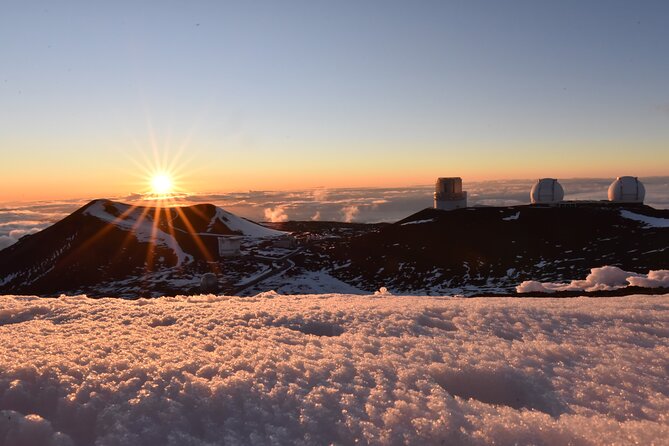
- Mauna Kea summit for sunset: views, posing, and observatory spotting
- After dark stargazing with a telescope and guided laser pointers
- What you get for $280: where the value shows up
- Weather, altitude, and safety limits: who should book this, and who should pause
- Photos, gear, and the small details that can save your night
- Should you book the Mauna Kea Summit Tour with Free Night Star Photo?
- FAQ
- What is the duration of the Mauna Kea Summit Tour?
- Where do pickup and drop-off happen?
- What time does the tour start?
- What food is included?
- Is Mauna Kea admission included?
- What winter gear is provided?
- How does the stargazing part work?
- Do I get photos included?
- Who cannot participate?
Key highlights at a glance (what makes this tour worth the ticket)
- Small group, big attention with a max of twelve people, so the guide can actually manage cold, timing, and questions.
- Acclimatization first with dinner at Onizuka around 9,000 ft, then higher up for the summit.
- Warm gear included (snow parka, ski pants, gloves) plus hot drinks, which is not optional at Mauna Kea.
- Free DSLR photo package taken during sunset and again during stargazing, sent to you at no extra cost if conditions allow.
- Hands-on stargazing with a refractor telescope and a guided laser pointer tour of constellations and planets.
Pickup to summit: what the full 8-hour experience really feels like
This is an 8-hour tour in practice, start to finish, with variable pickup times depending on the season. Your meeting point options are easy, but you do need to choose the one that matches where you are staying. Common pickups include Target in Kona (meet by the McDonald’s inside the Target parking area), Queens’ Marketplace in Waikoloa (back-side shuttle stop in the large lot near Not Starbucks), and Gilbert Kahele Recreation Park in Waimea.
From there, you ride up in a passenger 4×4 van. Expect time on the road, including stretches that feel bumpy or slow. In the feedback I saw, guides like Wes, Chris, and James were singled out for handling the drive well and for keeping everyone calm when plans shift due to road status. That matters on Mauna Kea, because rangers can close roads, and your timing has to adapt in real time.
A good way to think about it: this is not a quick photo stop. It is a full nighttime experience where the schedule is designed around cold, altitude, and visibility. If you go in expecting a straight line from point A to point B, you’ll be annoyed. If you go in expecting a managed adventure, it feels smooth.
Onizuka Astronomy Complex: your altitude break, dinner, and warm-up plan
The tour builds in a smart pause before you go all the way up. You stop at the Onizuka Astronomy Complex Visitor Information Station at about 2,800 m (9,000 ft) for early dinner and altitude acclimatization. This stop is there for a reason: it helps you adjust before you climb to roughly 13,796 ft at the summit.
You change into the winter weather gear here. That means you are not trying to wrestle with snow pants and gloves while your body is already struggling with altitude. The tour also serves a light meal while you acclimatize. The menu is a BLT or a vegan sandwich, and the default is BLT unless you request vegan by day before your tour. They also mention that no food or drink is sold at the visitor area, but the gift shop can be open for souvenirs.
One practical note: On Mauna Kea, weather can change fast. This is the point in the night where you benefit from being patient. If clouds roll in or visibility drops, the guide can adjust what you do later. In the feedback, guides repeatedly came across as proactive about road and weather updates, which is exactly what you want when the schedule is weather-dependent.
Evening Experiences we have also been through in Big Island of Hawaii
Mauna Kea summit for sunset: views, posing, and observatory spotting
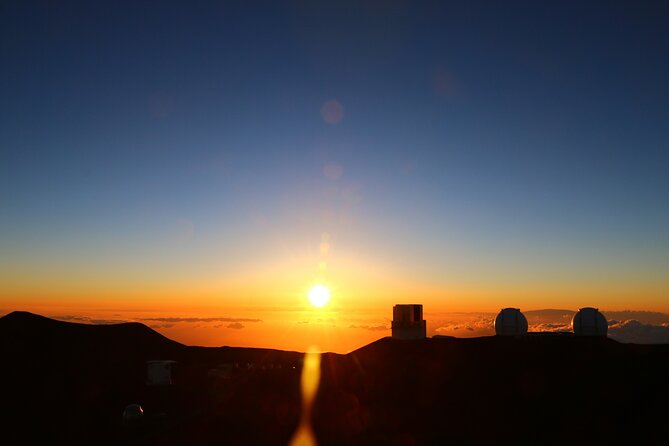
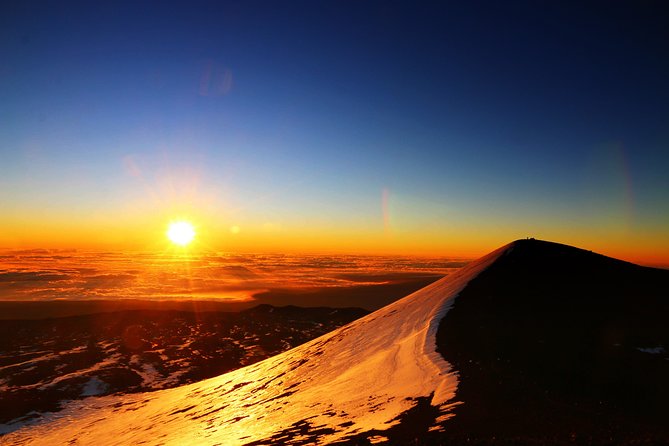
Once the group is geared up, you head to the summit in the 4×4 van. Your arrival is timed for sunset, and the goal is clear: you want the best chance at dramatic light and a sky that turns from orange to black without wasting your cold-weather window.
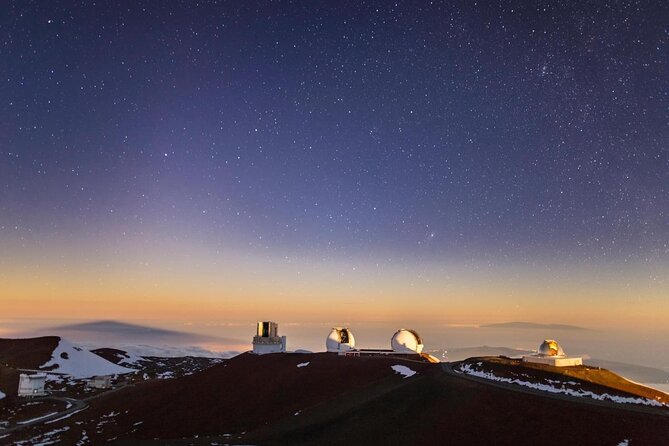
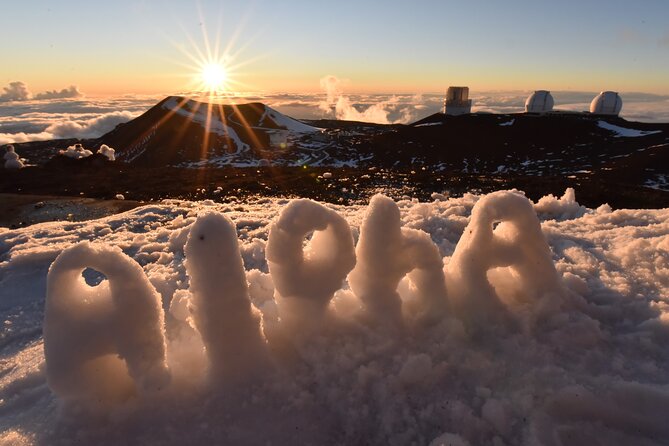
At the summit, the experience includes time at the highest accessible area, and you should be able to see many observatories up there. The summit time is about one hour, which is short enough that you will feel the cold quickly, but long enough to soak in the view and get a few meaningful photos.
You also get DSLR photos taken of your group during sunset and star-gazing. The tour frames it as included, and it’s free, but it also comes with conditions: photos depend on weather and moon phase. If you have ever regretted spending money on a tour where you felt like you only got cellphone snaps, this is one of the reasons this tour gets such a high rating.
The main consideration at the summit is discomfort. It is cold and windy. Your gear helps a lot, but you should still treat this like winter. In the feedback, people repeatedly said the included jackets and gloves made the difference. Even so, arrive ready to stand still, take photos, and stay alert to your guide’s timing.
After dark stargazing with a telescope and guided laser pointers
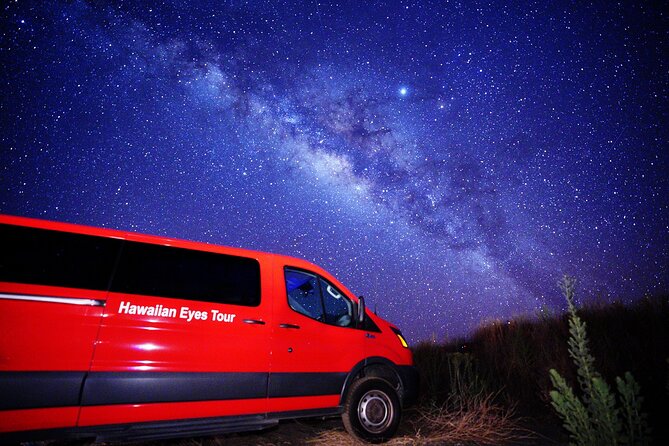
After sunset, you go back down to the Onizuka Astronomy Complex for guided stargazing. The stargazing block is about 45 minutes, and the exact location can vary based on weather conditions. That flexibility helps when clouds or wind interfere, but it also means you should not assume a single fixed spot.
During stargazing, the guide uses a refractor telescope and a laser pointer to show you stars, constellations, and planets. This is not just a random walk with a telescope. Your guide is actively explaining what you’re seeing, and they also take an astro photo with you in it.
One more reason this part lands well for many people: you get a structured experience. It’s easier to look up and actually understand the sky when someone points and explains. If you want to feel like you learned something rather than just watched lights, this guided setup is a plus.
Visibility still depends on the night. Moon phase affects what you can see well, and cloud cover can make the whole thing softer. The tour itself is upfront that sunset and stargazing are not 100% guaranteed. That honesty is part of why people tend to walk away feeling satisfied, even when conditions are imperfect.
What you get for $280: where the value shows up
At $280 per person, you’re paying for three big things that add up in cost and stress for most people: transportation to the summit area, admission fees, and the “cold night logistics” that make the difference between a fun night and a miserable one.
Here’s what is included:
- Admission fees for Mauna Kea
- 4×4 passenger van to the summit
- Dinner (BLT or vegan sandwich)
- Snow parka, ski pants, and gloves
- An astronomical telescope
- Free DSLR photos (sunset and star photo package with you, weather and moon phase permitting)
The free photo package is the sneaky value. Lots of tours offer a camera moment, then quietly charge extra for nicer shots. Here, the plan is that your guide takes the photos and you receive them for free when conditions allow. That turns the price from a “transport and cold” purchase into a memory product.
You also get a small-group setup (up to twelve). If you have ever been stuck behind a wall of people on a stargazing tour, you know why this matters. Fewer people means it’s easier to move, manage cold, and get clear views.
Is it expensive? Yes. But if you want to get to the summit without renting gear, dealing with the timing, and figuring out what to do at each altitude stop, $280 can feel fair. This is one of the rare tours where the included elements are not fluff.
Weather, altitude, and safety limits: who should book this, and who should pause
This tour asks for moderate physical fitness. The reason is simple: you’re spending time at high altitude, standing in cold, and moving through a few different stops.
There are also clear participation limits:
- No one under 16 years old, and no one older than 75 can participate.
- Not recommended if you have respiratory problems such as asthma.
- Not recommended if your weight is more than 300 lb.
Altitude matters too. If anyone in your group shows altitude sickness or related conditions, the time at the summit and the stargazing location may be adjusted. That’s not a deal breaker, it’s smart risk management.
If you are someone who gets winded easily or feels altitude quickly, treat this as a “prepare carefully” experience, not a casual excursion. Bring your best attitude, but also your caution. Follow your guide’s advice about going slow and staying hydrated. In feedback, guides were specifically praised for tips that helped people minimize altitude sickness, which is exactly the kind of guidance you should listen to.
The rest of our Big Island Volcanoes and Kona notes for Big Island of Hawaii
Photos, gear, and the small details that can save your night
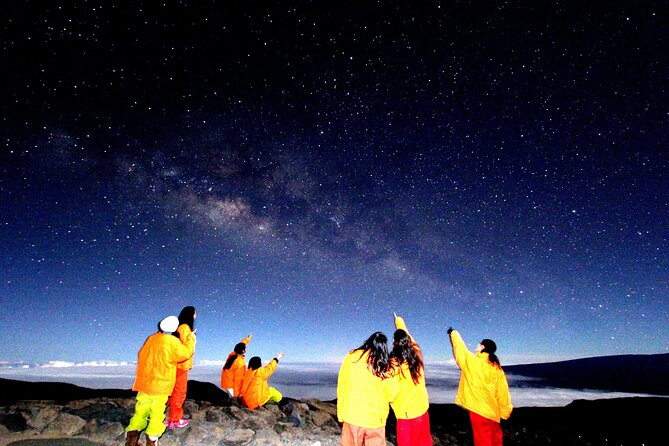
The tour supplies a full cold-weather kit: snow parkas, ski pants, and gloves. That is huge. Mauna Kea nights can go from chilly to painful quickly, and the difference between stiff fingers and usable fingers is your gloves actually fitting and being warm enough.
The tour also includes hot drinks and a light dinner at Onizuka. That helps you keep energy up through the long drive and the long cold wait. In multiple accounts, hot cocoa was specifically appreciated during star gazing, which makes sense, because you’re stationary while you look up.
Your photo package has two stages:
- A group DSLR photo during sunset and star-gazing
- Another astro photo taken during the telescope session
Photos depend on weather and moon phase, so if the night is cloudy, visibility will suffer. The tour still aims to deliver the stargazing part when possible, but you should stay flexible.
One more practical point: your guide may take time to learn names and keep the group moving, and multiple guides, including Wes, Chris, and James, were praised for being friendly, organized, and good at handling the night smoothly. That’s a real travel variable. On this kind of trip, a calm guide makes you enjoy the experience instead of just enduring it.
Should you book the Mauna Kea Summit Tour with Free Night Star Photo?
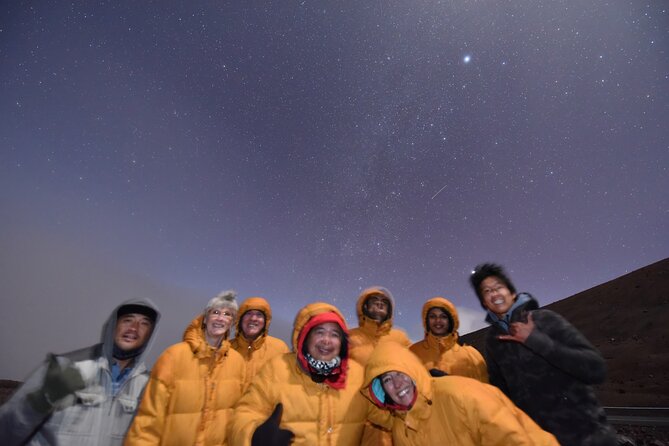
I’d book it if you want:
- A managed summit-and-stars night with cold gear included
- A realistic plan for acclimatization at Onizuka before you go higher
- Free DSLR photos as part of the package
- A small group where the guide can keep everyone together and warm
I’d think twice if:
- You know cold wind is a big issue for you and you hate standing outside for a while
- You have respiratory concerns like asthma
- You are very sensitive to altitude and haven’t handled it well before
- You want guaranteed stargazing no matter what the sky does, because conditions can change and the tour itself notes it’s not 100% assured
Bottom line: if you show up prepared for winter conditions and altitude, this tour offers a strong value mix of summit access, guided telescope time, and free photos. It’s one of those nights where you will feel like the effort was worth it, even if the sky decides to be moody. Just remember, you are booking the experience of going up and looking, not just a guaranteed view.
FAQ
What is the duration of the Mauna Kea Summit Tour?
It runs about 8 hours, approximately.
Where do pickup and drop-off happen?
Pickup is available from three main areas: Target in Kona, Queens’ Marketplace in Waikoloa, and Gilbert Kahele Recreation Park in Waimea. Drop-off returns to the pickup locations, starting from Waikoloa Resort.
What time does the tour start?
Pickup time varies by season. You’ll receive a message about the pick up time and location after booking confirmation.
What food is included?
You’ll get a light dinner at the Onizuka Astronomy Complex. It’s a BLT or a vegan sandwich if you request it by the day before the tour.
Is Mauna Kea admission included?
Yes, the admission fee for Mauna Kea is included.
What winter gear is provided?
The tour provides snow parkas, ski pants, and gloves.
How does the stargazing part work?
After sunset, you’ll do guided stargazing using a refractor telescope and a laser pointer. Your guide explains stars, constellations, and planets.
Do I get photos included?
Yes. You get free DSLR photos of the stars with you in them as part of the tour. Photos depend on weather and moon phase.
Who cannot participate?
The tour notes that people under 16 and over 75 cannot participate. It also isn’t recommended for respiratory problems such as asthma, and it lists a not-recommended limit of over 300 lb.
Elsewhere under Evening Experiences in Big Island of Hawaii
- Big Island Manta Ray Night Snorkel★ 5.0 · 5,656 reviews
- KONA Manta Ray Night Snorkel – FREE re-ride if no Sightings★ 5.0 · 2,212 reviews
- Manta Ray Night Snorkel at Kona, Big Island★ 5.0 · 1,758 reviews
- Big Island GOAT Experience: Mauna Kea Summit, Sunset & Stars★ 5.0 · 1,706 reviews
- Glow of the Deep: Night Snorkeling with Manta Rays★ 4.5 · 1,254 reviews
Tours: the rest of the Big Island of Hawaii file
- Big Island: Kona Manta Ray Snorkel Tour in Keauhou Harbor★ 4.5 · 2,465 reviews
- Hilo Shore Excursion: Volcanoes National Park & Black Sand Beach★ 4.5 · 2,338 reviews
- Small Group Big Island Twilight Volcano and Stargazing Tour★ 5.0 · 1,619 reviews
- Big Island: Mauna Kea Summit and Stars Small-Group Adventure Tour★ 5.0 · 1,545 reviews
- Kona Snorkel Tour: Captain Cook Reef Snorkel, Dolphin & Sea Caves★ 4.5 · 1,411 reviews
Tour Reviews: more from our Big Island of Hawaii desk
- Big Island in a Day: Volcanoes Waterfalls Sightseeing and History★ 5.0 · 6,569 reviews
- Big Island Manta Ray Night Snorkel★ 5.0 · 5,656 reviews
- Big Island: Kona Manta Ray Snorkel Tour in Keauhou Harbor★ 4.5 · 2,465 reviews
- Hilo Shore Excursion: Volcanoes National Park & Black Sand Beach★ 4.5 · 2,338 reviews
- Big Island: Captain Cook Snorkel On A Power Catamaran With Lunch★ 5.0 · 2,232 reviews
Newest Big Island of Hawaii reviews added to this site
- Luxury Kona Coast Snorkel Tour Including Lunch
★ 5.0 · 309 reviews - Kona Cloud Forest Sanctuary Montane Jungle Tour (2.5 hrs)
★ 5.0 · 322 reviews - Kona Shore Excursion: Sea Turtles, Historic Kona & Coffee
★ 4.5 · 324 reviews - Deluxe Morning Snorkeling Adventure
★ 5.0 · 325 reviews - Kohala Waterfalls Small Group Adventure Tour
★ 5.0 · 335 reviews - Volcano National Park Adventure From Kona
★ 5.0 · 339 reviews - Small-Group Big Island Tour: Hawaii Volcanoes National Park and Kona Coffee Farm
★ 5.0 · 343 reviews - Two Reef Snorkel Trip-See Captain Cook Monument & Sea Caves
★ 5.0 · 347 reviews - Big Island Parasailing Experience
★ 5.0 · 353 reviews - Hilo Shore Excursion: Volcano Safari Lava Caves & Black Sand
★ 4.5 · 363 reviews
Big Island Volcanoes and Kona, side by side.
 ★ 5.0Big Island in a Day: Volcanoes Waterfalls Sightseeing and HistoryFrom $2646,569 reviews
 ★ 5.0Big Island Manta Ray Night SnorkelFrom $845,656 reviews
 ★ 4.5Big Island: Kona Manta Ray Snorkel Tour in Keauhou HarborFrom $252,465 reviews
 ★ 4.5Hilo Shore Excursion: Volcanoes National Park & Black Sand BeachFrom $1592,338 reviews
 ★ 5.0Big Island: Captain Cook Snorkel On A Power Catamaran With LunchFrom $852,232 reviews
 ★ 5.0KONA Manta Ray Night Snorkel – FREE re-ride if no SightingsFrom $492,212 reviews
 ★ 5.0Manta Ray Night Snorkel at Kona, Big IslandFrom $441,758 reviews
 ★ 5.0Big Island GOAT Experience: Mauna Kea Summit, Sunset & StarsFrom $2891,706 reviews
This one is also listed in