
Review · BIG ISLAND VOLCANOES AND KONA
Big Island GOAT Experience: Mauna Kea Summit, Sunset & Stars
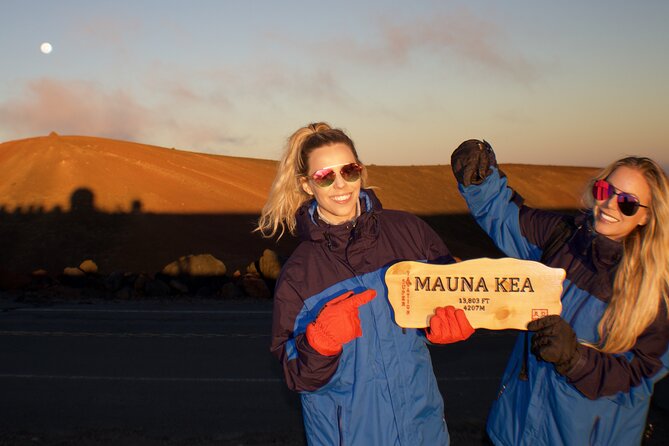
Mauna Kea at night changes your sense of scale. This small-group sunset and stars trip uses a 4×4 van to get you up to the summit, then pairs it with guided sky pointing, a telescope view, and Hawaiian cultural context. I love how the tour makes the cold part manageable with warm jackets and gloves, and I like that you get a professional telescope moment plus an included night photo. The main consideration is simple: it can get brutally cold and the altitude is real, so you’ll want good layers and a moderate pace.
You also get real payoff for the time. A guide helps you understand what you’re seeing, using a laser pointer and Celestron telescope for views you usually only get from textbooks. That said, sky conditions control what you’ll see, so stargazing quality can be hit or miss when clouds roll in.
In This Review
- Key things I’d highlight before you go
- Why Mauna Kea sunset and stars feel like a Hawaii bucket list
- Pickup to Mauna Kea summit, with a 4×4 van and altitude reality
- Getting cold under control: jackets, gloves, hot drinks, and what to pack anyway
- Sunset at the summit: the view, the observatories, and the guided storytelling
- Halepōhaku and Onizuka Center: Hawaiian cultural context plus real astronomy
- Stargazing with a laser pointer and a Celestron telescope (weather permitting)
- The night photo: a small extra that saves you frustration
- Food, time, and why the 7 to 8 hours can still feel worth it
- Group size and comfort: where you’ll feel the tradeoffs
- Who should book this Mauna Kea GOAT-style sunset and stars tour
- Should you book this Mauna Kea summit sunset and stars tour?
- FAQ
- How long is the Mauna Kea summit sunset and stars experience?
- What group size is this tour?
- Where can I be picked up?
- What does the tour include for warmth and comfort?
- Do I get to see stars through a telescope?
- Is dinner included?
- Are restrooms available?
- Are there age or health restrictions?
- What is the cancellation policy?
Key things I’d highlight before you go
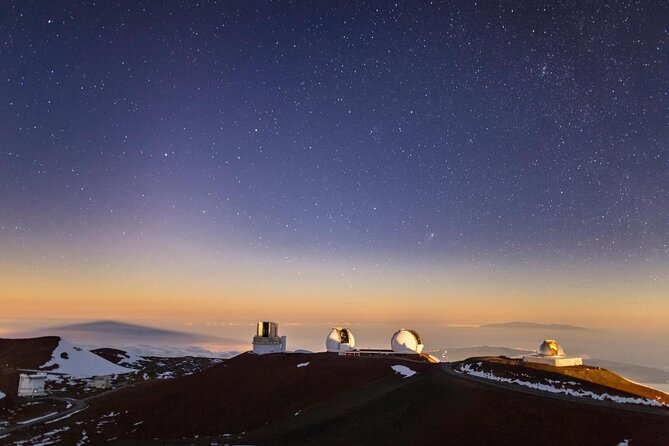
- Max group size of 14 means more space to hear and look around without chaos
- Round-trip 4×4 transit takes the driving stress off your shoulders
- Summit warm gear and hot drink are included, but you still need to layer up
- Laser pointing plus a pro telescope helps you find planets, constellations, and highlights
- Halepōhaku stop at Onizuka Center adds Hawaiian astronomy and legend context
- Included night photo gives you a keepsake from a professional camera
Why Mauna Kea sunset and stars feel like a Hawaii bucket list
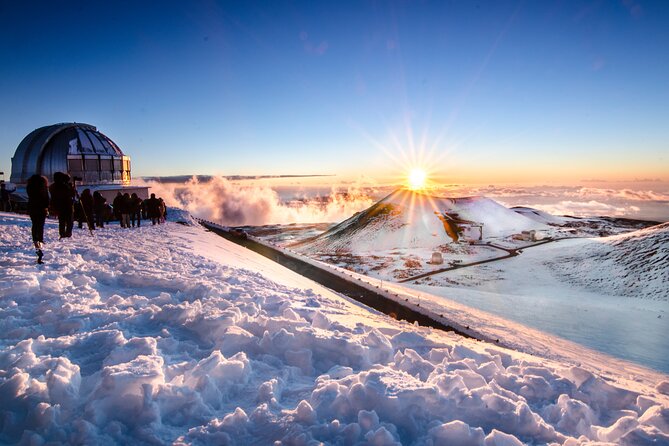
Mauna Kea sits above Hawaii’s usual weather patterns, so the whole experience has a “different planet” vibe. Up here, sunset looks sharper and the night sky can feel close enough to touch. You’re not just watching. You’re learning how the sky connects to navigation, culture, and modern astronomy.
What makes this tour worth your time is the combination. You get a summit sunset with warm gear and a hot drink, then you shift into stargazing mode with a guide who points out what matters. And because the group is small, you’re not stuck guessing where everyone else is looking.
Pickup to Mauna Kea summit, with a 4×4 van and altitude reality
Your day starts with pickup from one of three areas on the Big Island: Hilo, Waikoloa Village, or Kailua-Kona. From there, you ride in a comfortable 4×4 van with a small group (up to 14 people). This matters because getting to Mauna Kea takes serious elevation and road changes, and the tour handles it end to end.
Once you reach the summit area, the altitude hits quickly. The visitor station is at 9,200 ft, while the summit rises to 13,796 ft. That’s why the tour asks for moderate physical fitness and why pregnant travelers, people with heart problems, or anyone with serious medical conditions are not allowed. You may notice breathlessness or feeling “off,” especially if you’re sensitive to altitude.
Practical tip: slow down your breathing and keep your movements small when you’re outside. Even if the walking isn’t long, you’ll be standing at high elevation, wearing layers, and staying still to look up. That’s more tiring than it sounds.
Evening Experiences we have also been through in Big Island of Hawaii

Getting cold under control: jackets, gloves, hot drinks, and what to pack anyway
Yes, they provide warm jackets and gloves. They also bring snacks and a hot beverage, which helps a lot when you’re waiting for the sky to go dark.
Still, cold at the summit is not a “light sweater and you’re fine” situation. In winter, people have even reported snow at the summit. One thing I’d take from this experience is that provided gear can be helpful, but it may not fully match your needs, especially for hands and feet. Some guides keep coats organized and everyone gets what they need, but gloves may not be your perfect size and shoes can feel painfully insufficient.
Here’s what I’d personally pack for a comfy night sky moment:
- Extra layers under the provided jacket (you’ll thank yourself)
- Warm hat that fits under your hood if you use one
- Thick socks and warmer shoes if you have them
- Hand warmers if you tend to get cold easily
- A small pack for changes if you want to re-layer between stops
If you’re planning to stay outdoors for a while, focus on warmth that stays put. That usually means layers you can zip up and adjust quickly.
Sunset at the summit: the view, the observatories, and the guided storytelling
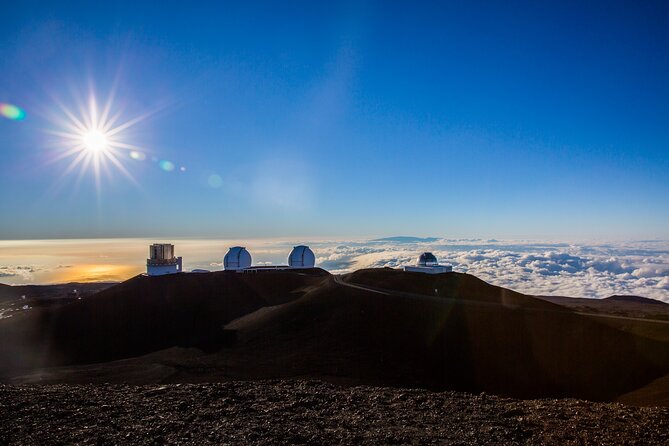
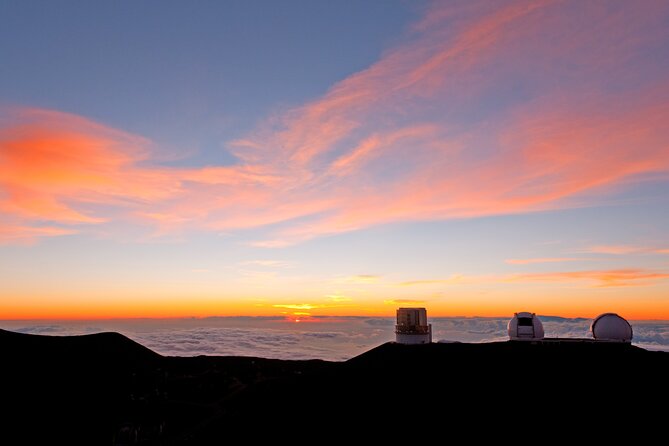
At the summit, the tour shifts into “golden hour meets science.” You watch the sun go down from very high altitude, where the light feels dramatic because the horizon is wide and the air can be extremely clear.
The guide explains what you’re seeing, including why research telescopes are located on Mauna Kea and what the mountain means in Hawaiian tradition. This is one of the biggest reasons I like booking with a tour instead of driving up on your own. You’re not just getting a view. You’re getting the context to understand why the place matters.
You’ll also likely get close to the observatories area, which makes the modern astronomy side feel real. In the real world, those giant instruments are hard to picture from afar. Up there, they’re physical, huge, and strangely calm-looking in the twilight.
Halepōhaku and Onizuka Center: Hawaiian cultural context plus real astronomy
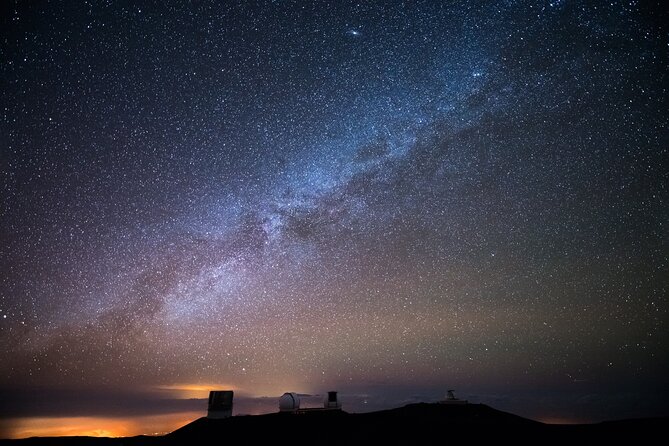
After the summit sunset phase, you head to Halepōhaku, Onizuka Center for International Astronomy, a mid-level astronomy facility. This stop helps connect two ways of seeing the sky: cultural meaning and modern observation.
The mountain is tied to Hawaiian tradition and legend, including references to the goddess Poliʻahu and other figures in the stories. You’ll also hear how Mauna Kea was historically kapu, with only certain high-ranking people and priests allowed to go. A guide may also mention the long trek to the summit in ancient times, and how the mountain is still treated as sacred even with today’s observatories.
From a practical viewpoint, this stop gives your legs a breather and your brain a bridge. You go from “wow, stars” to “okay, this is what the sky means here,” which makes the night sky part more satisfying.
Stargazing with a laser pointer and a Celestron telescope (weather permitting)
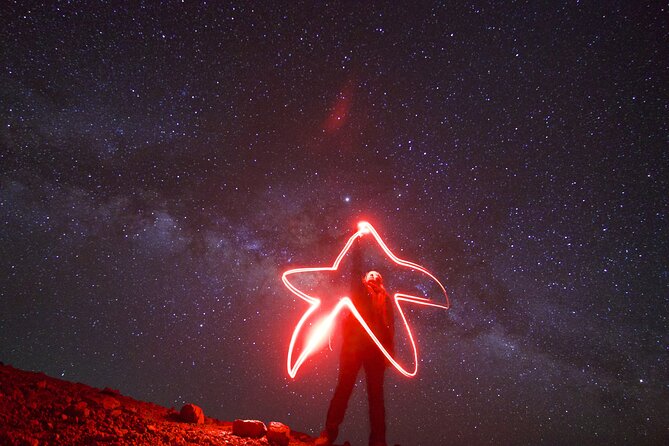
The heart of the evening is the guided stargazing. Your guide uses a laser pointer to show you important parts of the sky, then you get a look with a professional Celestron telescope, assuming conditions cooperate.
Here’s what you can realistically expect:
- You’ll learn how to locate key constellations and sky highlights
- You’ll see views through the telescope that are far more detailed than naked-eye astronomy
- The guide will explain what you’re looking at in clear, hands-on terms
- Cloud cover can reduce what you see, even when the sunset is amazing
One thing I love in this tour style is that the telescope viewing isn’t treated like a quick photo stop. Guides linger, point, and help you understand where to look. People have also reported seeing things like planets, constellations, and satellites passing through the sky during good conditions.
Names I’ve heard connected to excellent guidance include Tay, John, Chris, Val, Valerie, and Kellah. No matter who’s leading your group, the pattern is the same: you get a guided “find it and understand it” approach, not just free time to look around.
The rest of our Big Island Volcanoes and Kona notes for Big Island of Hawaii
The night photo: a small extra that saves you frustration
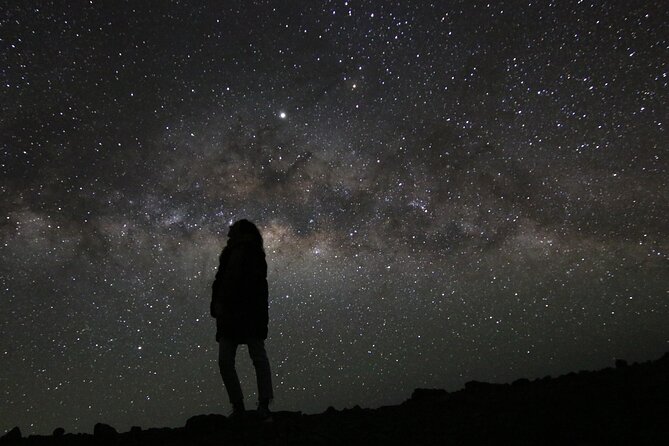
This tour includes a FREE night photo taken with a professional camera. For sky viewing, that’s a big deal. Even if you’re a decent phone photographer, dark skies and movement are tough. A guide setting you up for a good shot reduces stress and gives you something you can actually share.
A quick note from the spirit of the experience: since the photo is part of the package, keep an eye on how you’ll receive it after the tour. You’ll be excited about it in the moment, but you don’t want to lose track of it later.
Food, time, and why the 7 to 8 hours can still feel worth it
Your total trip runs about 7 to 8 hours. That sounds long until you realize the time covers real driving, high-altitude conditions, sunset timing, and the stargazing window.
What’s included is practical: snacks and a hot beverage. Dinner is not included, and you likely won’t have a convenient meal option waiting for you at the summit. If you’re sensitive to hunger, eat before pickup and consider bringing a packed dinner you can eat after you’re back down.
Time-wise, you should expect to spend a chunk of the evening outdoors looking up. That’s the whole point, and it’s also why dressing right matters so much.
Group size and comfort: where you’ll feel the tradeoffs
Small group size is a major advantage here. With a maximum of 14 people, you get more personal guidance and better flow between stops. It also helps for telescope viewing, since guides are directing attention and managing timing.
The tradeoff is that the day is still logistically intense. You’re going high in elevation and then coming back down. Some people mention van comfort and space depending on where you sit, especially on the longer return ride. If you’re picky about seat comfort, bring patience and assume the ride is part of the adventure.
Also remember that the stargazing part can be physically chilly even if you don’t do much walking. You’re standing and waiting for darkness, which is harder than it looks.
Who should book this Mauna Kea GOAT-style sunset and stars tour
This is a strong fit if you want:
- A guided Mauna Kea summit experience without driving yourself
- A small group with expert-style sky pointing and telescope viewing
- Hawaiian cultural context for what you’re seeing
- A built-in plan for warmth, snacks, and a night photo
It’s not the best match if:
- You’re very sensitive to altitude
- You’re dealing with a serious medical condition, heart issues, or you’re pregnant
- You can’t tolerate very cold temperatures and wind
- You’re traveling with kids under 13
It’s also worth knowing that the telescope component depends on weather. You might get a sky show with bright stars, or you might mostly get the learning and the sunset if clouds move in.
Should you book this Mauna Kea summit sunset and stars tour?
If Mauna Kea is on your Big Island “must see” list, I’d book it. The value comes from the combo: 4×4 transport, summit sunset timing, laser-guided stargazing, and an included pro night photo. It’s not just views. It’s the whole guided arc of the evening.
Here’s how to make the decision wisely:
- If you love astronomy, stargazing, or you want a guide to show you what to look for, this is a clear yes.
- If cold and altitude worry you, plan to layer hard and consider whether you’re comfortable standing outside at over 9,000 ft and then higher.
- If you hate waiting for weather, know that stargazing quality can change. You’re booking an evening on a mountain, and nature calls the shots.
For the right person, it’s the kind of night you’ll remember when you’re back on the beach.
FAQ
How long is the Mauna Kea summit sunset and stars experience?
It runs about 7 to 8 hours.
What group size is this tour?
The maximum group size is 14 travelers.
Where can I be picked up?
Pickup is available from Hilo, Waikoloa Village, or Kailua-Kona. You choose the pickup option when booking.
What does the tour include for warmth and comfort?
You get provided jackets and gloves, plus snacks and a hot beverage.
Do I get to see stars through a telescope?
You can use a professional Celestron telescope, weather permitting.
Is dinner included?
No. Dinner is not included, though you may bring your own packed dinner.
Are restrooms available?
Yes. There are restrooms at the visitors center, plus portable restrooms near the summit.
Are there age or health restrictions?
Yes. Travelers under 13 are not allowed. It is also not allowed for pregnant travelers or anyone with heart problems or other serious medical conditions.
What is the cancellation policy?
You can cancel for free up to 24 hours before the experience for a full refund. If you cancel less than 24 hours before, you do not get refunded. If the experience is canceled due to poor weather, you are offered a different date or a full refund.
Big Island Volcanoes and Kona reviewed right across Big Island of Hawaii
- Big Island in a Day: Volcanoes Waterfalls Sightseeing and History★ 5.0 · 6,569 reviews
- Big Island Manta Ray Night Snorkel★ 5.0 · 5,656 reviews
- Big Island: Kona Manta Ray Snorkel Tour in Keauhou Harbor★ 4.5 · 2,465 reviews
- Hilo Shore Excursion: Volcanoes National Park & Black Sand Beach★ 4.5 · 2,338 reviews
- Big Island: Captain Cook Snorkel On A Power Catamaran With Lunch★ 5.0 · 2,232 reviews
Elsewhere under Evening Experiences in Big Island of Hawaii
- Big Island Manta Ray Night Snorkel★ 5.0 · 5,656 reviews
- KONA Manta Ray Night Snorkel – FREE re-ride if no Sightings★ 5.0 · 2,212 reviews
- Manta Ray Night Snorkel at Kona, Big Island★ 5.0 · 1,758 reviews
- Big Island: Mauna Kea Summit Tour with Free Night Star Photo★ 5.0 · 1,449 reviews
- Glow of the Deep: Night Snorkeling with Manta Rays★ 4.5 · 1,254 reviews
Tour Reviews: more from our Big Island of Hawaii desk
- Big Island in a Day: Volcanoes Waterfalls Sightseeing and History★ 5.0 · 6,569 reviews
- Big Island Manta Ray Night Snorkel★ 5.0 · 5,656 reviews
- Big Island: Kona Manta Ray Snorkel Tour in Keauhou Harbor★ 4.5 · 2,465 reviews
- Hilo Shore Excursion: Volcanoes National Park & Black Sand Beach★ 4.5 · 2,338 reviews
- Big Island: Captain Cook Snorkel On A Power Catamaran With Lunch★ 5.0 · 2,232 reviews
Newest Big Island of Hawaii reviews added to this site
- Luxury Kona Coast Snorkel Tour Including Lunch
★ 5.0 · 309 reviews - Kona Cloud Forest Sanctuary Montane Jungle Tour (2.5 hrs)
★ 5.0 · 322 reviews - Kona Shore Excursion: Sea Turtles, Historic Kona & Coffee
★ 4.5 · 324 reviews - Deluxe Morning Snorkeling Adventure
★ 5.0 · 325 reviews - Kohala Waterfalls Small Group Adventure Tour
★ 5.0 · 335 reviews - Volcano National Park Adventure From Kona
★ 5.0 · 339 reviews - Small-Group Big Island Tour: Hawaii Volcanoes National Park and Kona Coffee Farm
★ 5.0 · 343 reviews - Two Reef Snorkel Trip-See Captain Cook Monument & Sea Caves
★ 5.0 · 347 reviews - Big Island Parasailing Experience
★ 5.0 · 353 reviews - Hilo Shore Excursion: Volcano Safari Lava Caves & Black Sand
★ 4.5 · 363 reviews
Big Island Volcanoes and Kona, side by side.
 ★ 5.0Big Island in a Day: Volcanoes Waterfalls Sightseeing and HistoryFrom $2646,569 reviews
 ★ 5.0Big Island Manta Ray Night SnorkelFrom $845,656 reviews
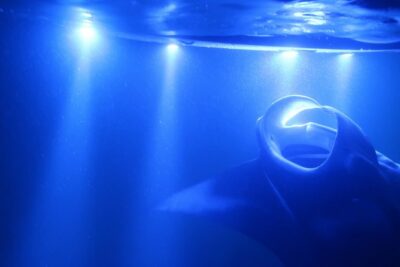 ★ 4.5Big Island: Kona Manta Ray Snorkel Tour in Keauhou HarborFrom $252,465 reviews
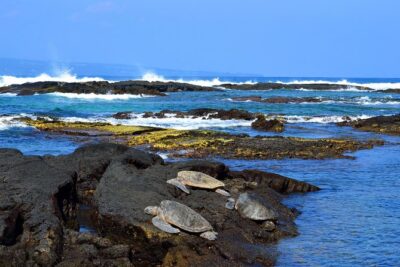 ★ 4.5Hilo Shore Excursion: Volcanoes National Park & Black Sand BeachFrom $1592,338 reviews
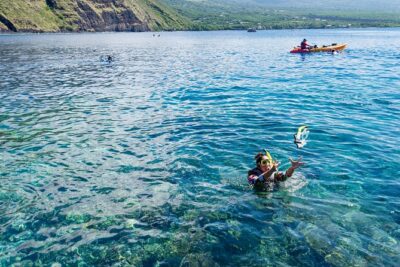 ★ 5.0Big Island: Captain Cook Snorkel On A Power Catamaran With LunchFrom $852,232 reviews
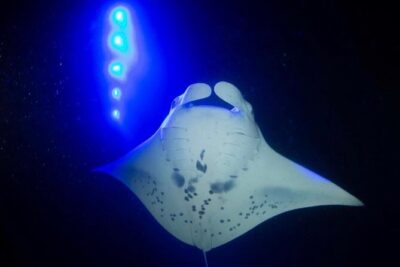 ★ 5.0KONA Manta Ray Night Snorkel – FREE re-ride if no SightingsFrom $492,212 reviews
 ★ 5.0Manta Ray Night Snorkel at Kona, Big IslandFrom $441,758 reviews
 ★ 5.0Small Group Big Island Twilight Volcano and Stargazing TourFrom $2971,619 reviews
This one is also listed in