
Review · CANOES & KAYAKS
Bioluminescence Kayak Tour
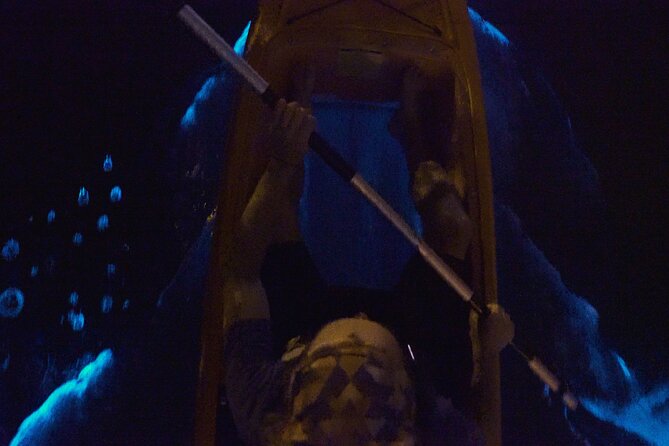
Glowing water can feel like science fiction. You’ll paddle at night near Merritt Island National Wildlife Refuge and watch tiny organisms light up the lagoon. I love that the tour is built around real biology, with guides who explain the why behind the glow, and that you get a safe setup with a PFD plus flotation support from the start. I also love the small touch that shows up in multiple reviews, guides like Matt, Aidan, and Zoey keep everyone calm, organized, and engaged while you’re in the dark.
The one consideration is that the brightness depends a lot on timing and conditions. In off-season months, you might still have a magical night, but you may see fewer flashes, and light pollution can make the glow harder to spot.
In This Review
- Key things to know before you go
- Night Kayaking by Merritt Island, and Why the Glow Happens
- Dinoflagellates in Summer vs Comb Jellies in Winter
- The 2-Hour Paddle Flow, from Kiwanis Island Park to the Lagoon
- Wildlife Chances: Manatees, Dolphins, and Mullets Jumping Like Lightning
- What the Guides Do So You Actually See the Glow
- Gear and Clothing: Water Shoes, Spare Clothes, and Photo Reality
- Value: Why This Tour Often Feels Like Worth Every Penny
- Who Should Book This Bioluminescence Kayak Tour
- Should You Book This Tour?
- FAQ
- How long is the bioluminescence kayak tour?
- Where is the meeting point?
- What bioluminescence will I see, dinoflagellates or comb jellies?
- Do comb jellies sting?
- What’s included in the tour?
- What should I bring?
- Is it okay if I’ve never kayaked before?
- What is the cancellation policy?
Key things to know before you go
- Two bioluminescence seasons, dinoflagellates in summer and comb jellies in cooler months
- You’re not just looking, your guide helps you understand what you’re seeing
- Wildlife is part of the package, with chances for dolphins, manatees, and jumping fish
- The tour is short and manageable, about 2 hours on the water
- Small groups matter, with a maximum of 42 travelers per tour
Night Kayaking by Merritt Island, and Why the Glow Happens
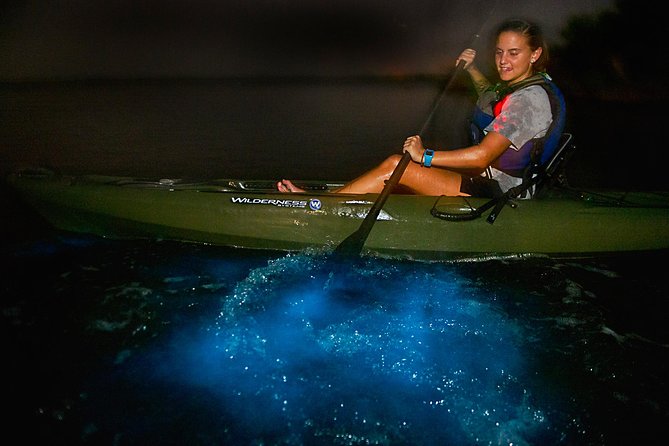
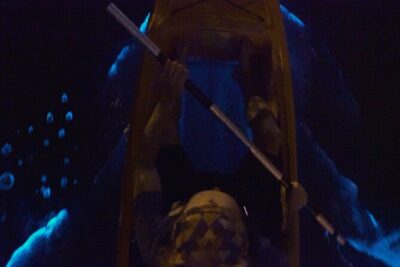
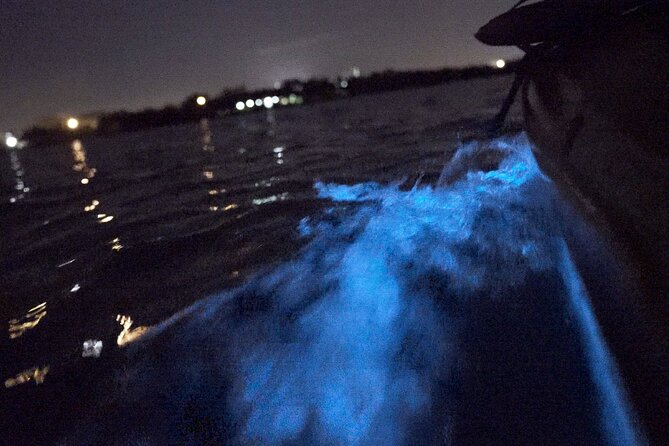
This is the kind of tour that flips the usual Florida script. Instead of beaches and sunsets, you’re out after dark, gliding across a calm lagoon while the water starts to look alive. The star of the show is bioluminescence, caused by microscopic marine organisms. When they’re disturbed by your paddle, the water can light up in quick bursts, like the sea is reacting to your presence.
What makes this experience especially fun is that it’s not only visual. The guide turns the glow into a story you can follow. That matters because the light show is easy to miss if you’re not sure what you’re looking for. With a good guide, you stop just watching random specks and start recognizing patterns, like what different organisms look like and when you’re most likely to see activity.
And yes, it can be cold. At least one February tour notes chilly conditions on the water, but the group still had a blast. The tour is built to feel doable, with safety gear provided and guidance on how to handle your kayak smoothly in the dark.
Dinoflagellates in Summer vs Comb Jellies in Winter
Florida bioluminescence changes with the seasons, and this is the biggest decision factor for your expectations.
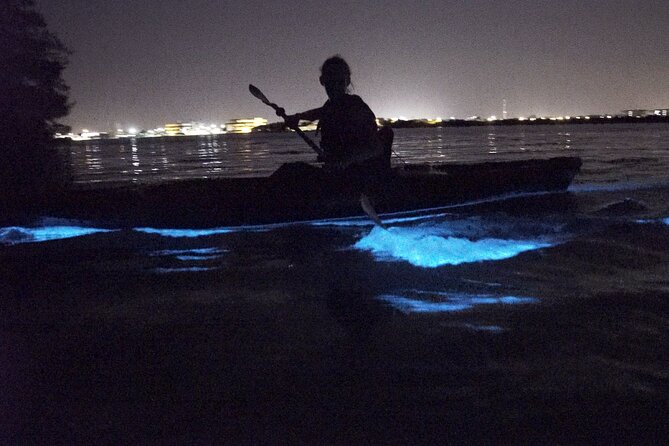
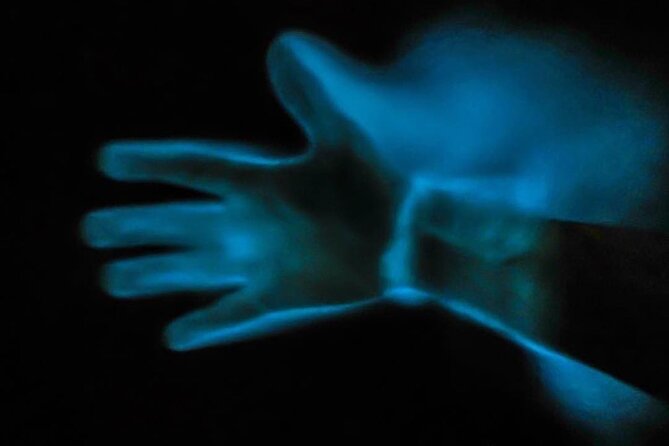
In warm months, from roughly May to early November, the glow is linked to dinoflagellates. This is the classic “cloudy bluegreen glow” effect. You’re essentially looking at a living glow that reacts as you move through the water. It can look like the lagoon is sprinkled with tiny fireworks.
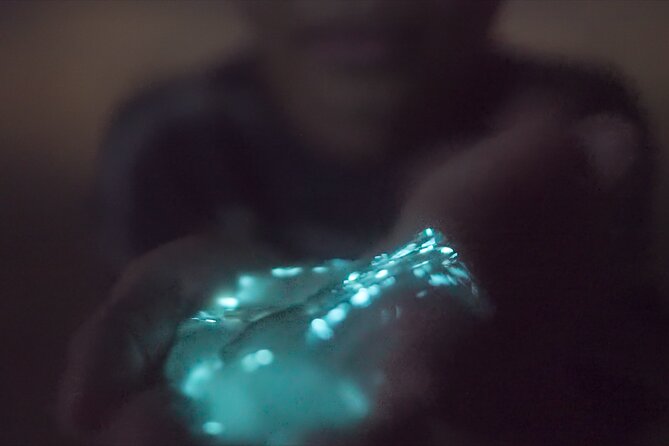
In cooler months, from about late November to April, you’re more likely to see comb jellies. They’re described as clear, glob-like creatures that emit light, and the best part for nervous first-timers is that they do not sting. A few reviews mention catching or holding comb jellies at hand level, which turns the night from purely observational into hands-on wonder.
Here’s the practical tip I want you to take seriously: you should plan your night around what season you’re visiting. One review calls out that the timing in mid-late December was bad for bioluminescence, leading to a weaker experience. That doesn’t mean the tour is bad. It means nature is not a theme park, and brightness is not guaranteed every night.
The rest of our Canoes & Kayaks notes for Cocoa Beach
The 2-Hour Paddle Flow, from Kiwanis Island Park to the Lagoon
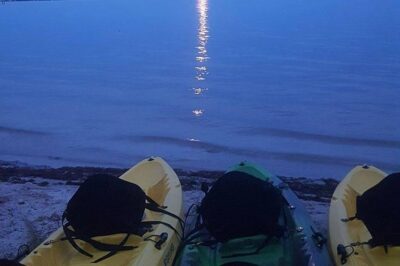
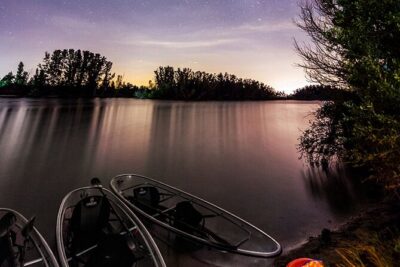
The tour starts and ends at 951 Kiwanis Island Park Rd, Merritt Island, FL 32953. Expect the usual rhythm for a guided kayak trip: arrive, get sorted, listen closely, then head out into the dark.
Before you paddle, you’ll get the basics you need to feel confident fast. Multiple reviews praise guides for explaining exactly what to do, including for people who had never kayaked before. That matters because night kayaking adds a layer of uncertainty. A clear safety talk helps you relax, which is when you actually start noticing the glow.
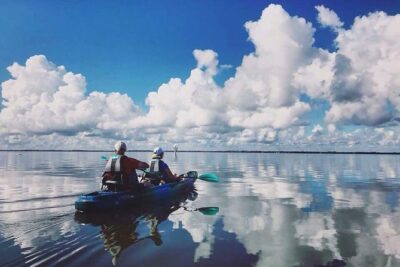
Once you’re on the water, the experience turns into guided “spot and react.” The guide points out what to look for, then you paddle through the areas where light is more likely. The boat and paddle movement is part of the equation, because the organisms respond to disturbance.
You’ll also have time for wildlife scanning. In the reviews, the standout sightings include manatees, dolphins, and jumping fish. Even if wildlife is quiet on your night, just seeing the water react to paddling can still feel like a different world.
The trip is short, about 2 hours (approx.), which helps you stay present. You’re not trapped on the water all night. You’ll get a focused taste of bioluminescence without the fatigue that can turn a great idea into a grumpy end-of-trip memory.
Wildlife Chances: Manatees, Dolphins, and Mullets Jumping Like Lightning
The bioluminescence is the headline, but wildlife sightings are a big reason people call this a must-do Florida night activity.
You might see:
- Manatees, including a review that describes a manatee surfacing right in front of a kayak
- Dolphins, mentioned in several accounts as an exciting bonus
- Jumping fish, often described as mullets that flash in the dark and splash near the surface
The guide plays an important role here. A few reviews specifically praise guides for knowing behavior patterns and pointing out what the wildlife is doing, not just that it exists. That’s the difference between a random sighting and an “oh wow, I understand what I’m seeing” moment.
One practical safety note: wildlife and kayaks can intersect in surprising ways. If you see a manatee or something larger moving nearby, stay relaxed and let the guide steer the interaction. You’re there to observe, not to chase.
Also, conditions can vary. One review notes rougher water than expected and suggests the tour wasn’t clearly labeled for advanced kayakers. If you’re easily thrown off by chop, show up ready for Florida weather to do Florida things.
What the Guides Do So You Actually See the Glow
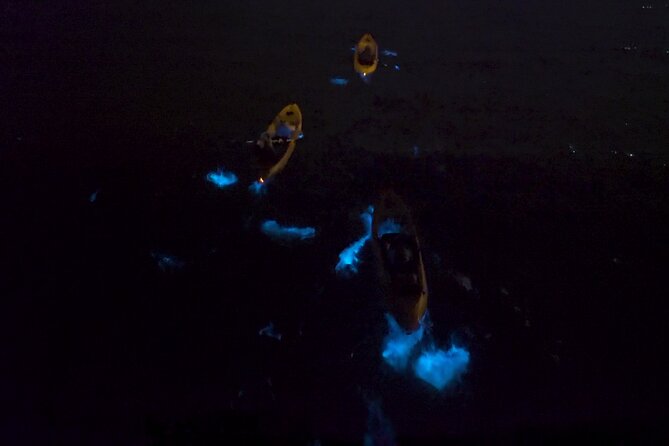
Here’s what the best guides do differently, and why so many people leave high ratings.
First, they explain the science in plain language. Guides like Matt and Aidan get singled out for being very informative and for connecting the biology to what you see on the water. Sean also gets praise for getting into the science and keeping the mood playful and curious.
Second, they manage the group so you don’t drift into confusion. Several reviews mention guides being protective, helpful, and tuned into the group’s energy. That’s huge when you’re paddling in the dark with multiple kayaks spread out.
Third, they teach you how to react to what you see. One of the more memorable moments in reviews involves catching and holding comb jellies. That kind of moment only happens if the guide sets up safe, gentle handling and keeps everyone in the right place at the right time.
One “take it seriously” consideration: if you go in a season or location where bioluminescence is weaker, the tour can feel like more of a calm kayak outing with a sprinkle of glow. That’s not a failure of the guides. It’s a mismatch between the night you hoped for and the night you got. The guide can’t control light pollution or how active the organisms are.
Gear and Clothing: Water Shoes, Spare Clothes, and Photo Reality
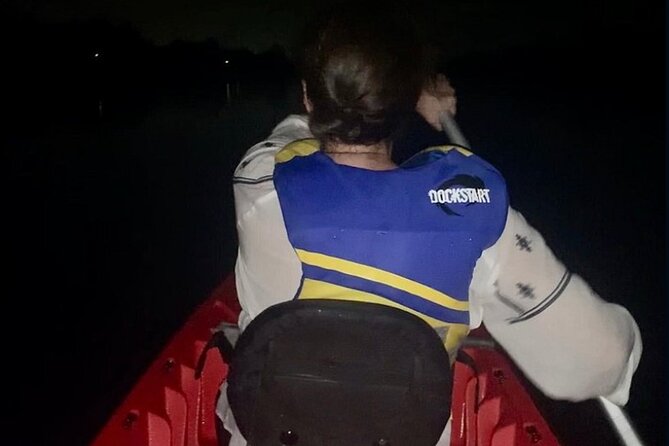
Let’s keep this practical, because wet gear is part of the deal.
What to bring and wear:
- Clothes you don’t mind getting wet
- A towel is mentioned as something you can leave in your car
- Water shoes such as sandals or Crocs that can be worn in the water
- An extra change of clothes, just in case
- Bottled water and snacks
- A camera in a dry bag is optional
- An optional dry bag for your phone or camera
About photos, take the honest version. One note says camera and dry bag are fairly useless for capturing bioluminescence, but great for capturing people. That tracks with how night wildlife and glowing plankton work. Your best photos are likely going to be the human moments, not the glowing organisms at super crisp detail.
Flashlights: you may bring one, and the tour provides a safety light. In a setting like this, using light the wrong way can reduce the glow you can see. If you bring a flashlight, plan to use it for safety and getting oriented, not for constant scanning.
Also, multiple reviews highlight that the kayaking is not strenuous. People describe it as low stress and doable for kids and first-timers. Still, one review mentions conditions were rough and the trip felt far for their group. That’s why bringing comfortable basics and being prepared for water movement helps.
Value: Why This Tour Often Feels Like Worth Every Penny
I can’t quote a price here because none was provided, but I can still judge value the useful way: what you get for your time and money.
You’re paying for:
- A guided 2-hour night paddle in a protected wildlife area
- Kayak, paddle, and PFD so you don’t spend time hunting gear
- A professional guide who teaches the science and wildlife spotting
- A chance at a rare Florida experience that’s hard to replicate on your own
The rating says a lot. The tour scores 4.8 with 831 reviews and a 94% recommended rate. That kind of pattern usually means the experience quality and guide effect are consistent.
Where value shows up in the real world is in moments like:
- Feeling safe and informed even if you had never kayaked before
- Getting a genuine explanation of dinoflagellates or comb jellies, not just a name read off a sign
- Seeing wildlife, including manatees and dolphins when conditions cooperate
If you’re the type who likes nature with context, this is a strong fit. If you expect guaranteed, bright bioluminescence every single night, you might feel disappointed. Nature runs the show.
Who Should Book This Bioluminescence Kayak Tour
This tour is best for people who like:
- Night wildlife and water-based nature experiences
- Learning how an ecosystem works, without needing a biology degree
- A short, guided activity that’s easy enough for first-time kayakers
Families do well here too. Reviews mention a 5-year-old doing great, and teens enjoying the mix of science and night adventure. Couples also score this as a memorable “once in a while” romantic night out.
Who should think twice:
- If you only want maximum bioluminescence brightness and you’re visiting during a weaker season, manage your expectations
- If you’re very sensitive to cold or choppy water, dress and pack accordingly, because night conditions can change
- If you rely on photos for the main event, be realistic about what your camera can capture
If you want to stack this trip with other Central Florida highlights, it also fits nicely into a broader itinerary. People mention visiting Cape Canaveral and even seeing a Falcon 9 launch during their trip timeframe. That’s not guaranteed, but it speaks to how the wider area can surprise you.
Should You Book This Tour?
If your goal is a guided night kayaking experience with a real chance to see bioluminescence and wildlife, I’d book it. The strongest sign is the way guides show up in the details, names like Matt, Aidan, Caleb, Drew, Jordan, Zoey, and Jorge repeat because they help people feel safe and curious fast.
Just plan smarter than your expectations. Pick your dates based on whether you want the summer dinoflagellate glow or the winter comb jelly light. Bring water shoes, expect to get wet, and dress for cool night air even in Florida.
If you want a guaranteed light show the way a theme park delivers it, this isn’t that. If you want a real night at sea, with a guide who explains what’s happening and a chance at magic, you’ll likely leave happy.
FAQ
How long is the bioluminescence kayak tour?
It runs about 2 hours, roughly.
Where is the meeting point?
The meeting point is 951 Kiwanis Island Park Rd, Merritt Island, FL 32953, USA.
What bioluminescence will I see, dinoflagellates or comb jellies?
In summer (May to early November), the glow is linked to dinoflagellates. In winter (late November to April), the glow is linked to comb jellies.
Do comb jellies sting?
No. The tour information notes that comb jellies do not sting.
What’s included in the tour?
You get the 2-hour kayak tour, a professional guide, a kayak, a paddle, and a PFD.
What should I bring?
Wear clothes you don’t mind getting wet, and bring water shoes (sandals or Crocs work). Bring an extra change of clothes, bottled water, and snacks. A towel is left in your car. A camera in a dry bag is optional, and a flashlight is allowed (a safety light is provided).
Is it okay if I’ve never kayaked before?
Most travelers can participate, and multiple reviews describe the kayaking as low stress and beginner-friendly with guides who help with getting in and out and with paddling basics.
What is the cancellation policy?
You can cancel up to 24 hours in advance for a full refund. If you cancel less than 24 hours before the start time, the amount paid is not refunded.
Canoes & Kayaks reviewed right across Cocoa Beach
- Thousand Island Mangrove Tunnel, Manatee & Dolphin Kayak Tour w/Cocoa Kayaking★ 5.0 · 923 reviews
- Bioluminescence Night Kayaking Tour of Merritt Island Wildlife Refuge★ 4.5 · 605 reviews
- Florida Bioluminescence Kayaking Tour (Titusville)★ 4.5 · 350 reviews
- Bioluminescent Clear Kayak Tours in Titusville★ 5.0 · 321 reviews
Tours: the rest of the Cocoa Beach file
- Cocoa Beach Dolphin and Wildlife Tour★ 5.0 · 1,052 reviews
- Thousand Island Mangrove Tunnel, Manatee & Dolphin Kayak Tour w/Cocoa Kayaking★ 5.0 · 923 reviews
- Mangrove Tunnels, Dolphins, Manatee Tour #1 Rated in Cocoa Beach★ 5.0 · 836 reviews
- Bioluminescence Night Kayaking Tour of Merritt Island Wildlife Refuge★ 4.5 · 605 reviews
- Florida Bioluminescence Kayaking Tour (Titusville)★ 4.5 · 350 reviews
Tour Reviews: more from our Cocoa Beach desk
- Cocoa Beach Dolphin and Wildlife Tour★ 5.0 · 1,052 reviews
- Thousand Island Mangrove Tunnel, Manatee & Dolphin Kayak Tour w/Cocoa Kayaking★ 5.0 · 923 reviews
- Mangrove Tunnels, Dolphins, Manatee Tour #1 Rated in Cocoa Beach★ 5.0 · 836 reviews
- Bioluminescence Night Kayaking Tour of Merritt Island Wildlife Refuge★ 4.5 · 605 reviews
- Florida Bioluminescence Kayaking Tour (Titusville)★ 4.5 · 350 reviews
Newest Cocoa Beach reviews added to this site
- Florida Bioluminescence Kayaking Tour (Titusville)
★ 4.5 · 350 reviews - Bioluminescence Night Kayaking Tour of Merritt Island Wildlife Refuge
★ 4.5 · 605 reviews - Bioluminescence Kayak Tour
★ 5.0 · 831 reviews - Mangrove Tunnels, Dolphins, Manatee Tour #1 Rated in Cocoa Beach
★ 5.0 · 836 reviews - Thousand Island Mangrove Tunnel, Manatee & Dolphin Kayak Tour w/Cocoa Kayaking
★ 5.0 · 923 reviews - Cocoa Beach Dolphin and Wildlife Tour
★ 5.0 · 1,052 reviews
Canoes & Kayaks, side by side.
 ★ 5.0Clear Kayak Tour of Shell Key Preserve and Tampa Bay AreaFrom $795,800 reviews
 ★ 5.0Half-Day Emerald Cave Kayak Tour with Optional Hotel PickupFrom $994,978 reviews
 ★ 5.0Emerald Cave Kayak Tour: Scenic Paddle with Optional ShuttleFrom $892,858 reviews
 ★ 5.0Rock Springs 2-Hour Glass Bottom Guided Kayak Eco TourFrom $1152,459 reviews
 ★ 5.0Sarasota Guided Mangrove Tunnel Kayak TourFrom $592,440 reviews
 ★ 5.0Kayaking the Salt River Foxtail TripFrom $572,395 reviews
 ★ 5.0Key West Mangrove Kayak Eco TourFrom $802,205 reviews
 ★ 5.0Crystal River Three Sisters Springs and Manatee Clear Kayak Tours1,830 reviews
This one is also listed in