
Review · MEMPHIS MUSIC AND CIVIL RIGHTS HISTORY
Birmingham Civil Rights Tour- Riding & Walking
Birmingham history hits hard, in good ways. This 3-hour small-group tour connects the dots between key civil rights sites, using live commentary and an air-conditioned vehicle to keep you moving without feeling rushed. You get a tight route that’s easier than trying to map the story on your own.
What I like most is the way you’re taught the meaning of each place, not just shown the name. Guides such as Clay and Mike bring the timeline into focus, so stops like Kelly Ingram Park and 16th Street Baptist Church feel connected instead of random.
One thing to plan for: this tour is serious history, and it also includes walking. You’ll cover about a mile total, in temperatures that can run from 40F to 100F, so bring the right layers and pace yourself.
In This Review
- Key Things to Know Before You Go
- Why This Birmingham Civil Rights Tour Works So Well
- How the 3-Hour Route Is Laid Out, From Kelly Ingram Park to the Freedom Riders Stop
- Stop 1: Civil Rights District and the Kelly Ingram Park Area (about 30 minutes)
- Stop 2: Kelly Ingram Park Walk (about 30 minutes)
- Stop 3: 16th Street Baptist Church (about 30 minutes)
- Stop 4: Linn Park (about 15 minutes)
- Stop 5: Boutwell Auditorium and Bull Connor (about 15 minutes)
- Stop 6: Smithfield and Dynamite Hill (about 15 minutes)
- Stop 7: Historic Bethel Baptist Church (about 20 minutes)
- Stop 8: Eddie Kendrick Memorial Park and the Black Business District (about 5 minutes)
- Stop 9: John Herbert Phillips Academy and school integration (about 15 minutes)
- Stop 10: Wells Fargo ATM, Freedom Riders Attack Site (about 10 minutes)
- What You Gain From a Live Guide, Not Just Landmark Photos
- The Best Part for Many People: No Hidden Costs and Easy Between-Stops Logistics
- Walking, Weather, and What to Wear (So the Day Feels Good)
- Who This Tour Is Best For (And Who Might Want a Different Plan)
- A Quick Take on Value: Why This Feels Worth It for Most People
- Should You Book the Birmingham Civil Rights Tour- Riding and Walking?
- FAQ
- How long is the Birmingham Civil Rights Tour- Riding & Walking?
- Where does the tour start, and where does it end?
- Are entrance fees included?
- How much walking is involved?
- Does the tour run in rain?
- What is the cancellation window?
Key Things to Know Before You Go
- A timed loop that keeps the story straight, with stops designed to follow how events unfolded in Birmingham
- All entrance fees included, so you avoid surprise costs and can focus on the sites
- Small-group size (max 14) that makes questions easier and the pacing feel human
- Mix of walking and rides in an air-conditioned vehicle, which helps a lot on longer downtown stretches
- Standout stops beyond the usual postcard sites, including Dynamite Hill and the Freedom Riders attack area
Why This Birmingham Civil Rights Tour Works So Well
Birmingham can be tricky to understand on your own. You can stand in front of a landmark and still miss the point of why it matters. This tour solves that problem with a simple formula: visit the places, then get the context while you’re standing there, plus short walks that keep the experience from feeling like a lecture on wheels.
The route is also built for real life. You get air-conditioned transportation between stops, so you’re not overheating in summer or getting chilled in shoulder seasons. Then you do short stretches on foot, enough to feel the streets and spaces without turning it into a marathon. That matters when the content is emotionally heavy, because you need steady pacing.
And the guides, including Clay and Mike, tend to handle tough topics with care. You should expect sobering moments, plus explanation that aims to clarify what happened and why people responded the way they did. In the reviews, that respectful balance between emotion and facts shows up again and again.
How the 3-Hour Route Is Laid Out, From Kelly Ingram Park to the Freedom Riders Stop
This is an approximately 3-hour experience that runs rain or shine. It starts at 512 16th St N, Birmingham, AL 35203, and returns you back to the meeting point. The tour language is English, and you’ll use a mobile ticket.
A quick practical note: the tour is designed for moderate physical fitness. The guidance is clear that you should be able to walk unassisted at a reasonable speed, and it’s not recommended for people who cannot walk at least a mile.
Here is what the day looks like, stop by stop, and what each stop is really doing for your understanding.
Stop 1: Civil Rights District and the Kelly Ingram Park Area (about 30 minutes)
You begin with a look around the Kelly Ingram Park area. This first chunk of time matters because it sets the frame for everything after. You’ll see the key park space where demonstrations played out, and you’ll also get oriented to the civil rights story in Birmingham before you start hopping to smaller, more specific locations.
This is also the part where you start learning how to read the “map” of the movement. If you’re arriving with only a general idea of the 1960s, this opening gives you names, events, and motivations in the right order, so later stops don’t feel like isolated scenes.
Stop 2: Kelly Ingram Park Walk (about 30 minutes)
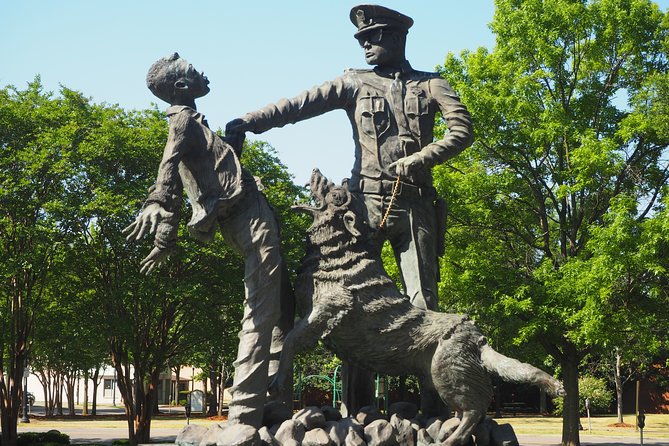
Next you circle more fully through Kelly Ingram Park. This is where the sculptures and the layout help you feel the stakes. The walking time stays manageable, but it gives you space to absorb details and let the guide explain who was involved and what they were fighting for.
The park is more than a memorial. It’s a place that shows how public space becomes a battleground. Expect the story to connect protest, local leadership, and national attention, with Birmingham positioned as a key flashpoint.
Stop 3: 16th Street Baptist Church (about 30 minutes)
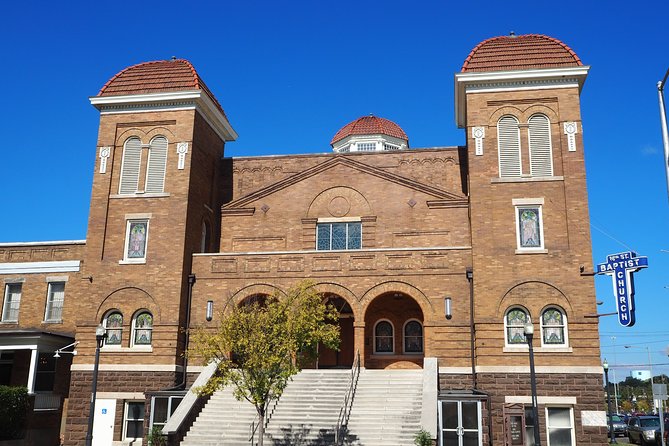
Then comes one of the most significant stops: 16th Street Baptist Church. The tour focuses on the role the church played in the movement, and it addresses the history of the bombing that killed four little girls.
This is not the kind of stop you breeze through. The time allotment helps because you get explanation rather than a quick photo moment. If you want your visit to be meaningful, this is the stop where the guide’s tone really matters, since the subject is heartbreaking. Plan to feel it, not just learn it.
Stop 4: Linn Park (about 15 minutes)
Linn Park is a shorter stop, but it has a clear purpose: you see where the march protests ended in Birmingham. The guide ties that geography back to group action and the way different parts of the city became stages for the struggle.
This is a good spot for photos if you move carefully and keep an eye on the group. Because it’s brief, it’s not meant to be a long wandering break, but it does add a crucial “where people went” layer.
Stop 5: Boutwell Auditorium and Bull Connor (about 15 minutes)
At Boutwell Auditorium, you focus on Bull Connor and his clashes with those fighting for civil rights. This is where you start seeing the local power structure more clearly, not just the protest signs and marches.
A short stop like this is still valuable because the guide typically explains the cause and effect. You learn how resistance was organized locally, how tactics escalated, and why national attention followed.
Stop 6: Smithfield and Dynamite Hill (about 15 minutes)
Then you shift to Smithfield and see Dynamite Hill, where houses and churches were bombed during the civil rights movement. This stop is brief, but the subject is heavy, and that mix is intentional. It shows you that the intimidation was not abstract, it landed on everyday homes and community institutions.
What you get from a guided stop here is context. Even if you’ve heard the phrase before, it helps to understand how terror tactics were used and how communities endured.
Stop 7: Historic Bethel Baptist Church (about 20 minutes)
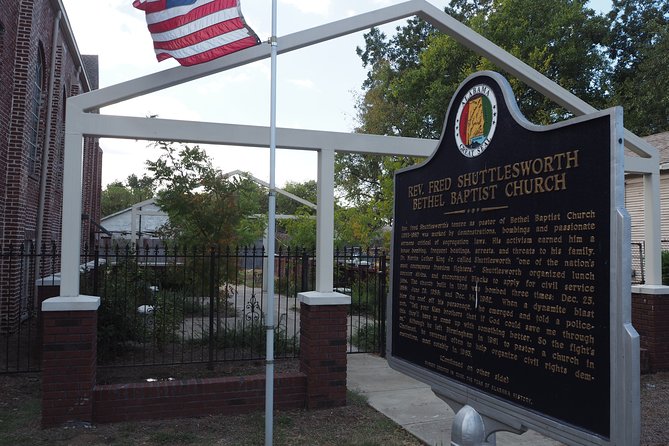
Historic Bethel Baptist Church is next, with a specific focus on Rev. Fred Shuttlesworth and his leadership. This is one of the stops that adds names to the story. When you hear the names connected to actual places, history stops being a timeline in a book and starts being people making decisions under pressure.
The extra time here gives you room to absorb how religious leadership, organizing, and nonviolent action worked together in Birmingham.
Stop 8: Eddie Kendrick Memorial Park and the Black Business District (about 5 minutes)
This stop is quick, about five minutes, but it serves an important purpose. You see the Black Business District to learn about Black life in Birmingham during its heyday.
This is where the tour subtly widens your lens. It’s not just protest and punishment. It’s also community building and economic life. That contrast is a useful reminder that the movement was fought by people who were building, working, and caring for families too.
Stop 9: John Herbert Phillips Academy and school integration (about 15 minutes)
John Herbert Phillips Academy is another short, focused stop. You’ll see where Rev. Fred Shuttlesworth attempted to integrate schools in Birmingham.
This matters because it shows the civil rights fight expanded beyond lunch counters and bus rides. Education and access were central. The guide’s job here is to connect these efforts to the broader strategy and the backlash that followed.
Stop 10: Wells Fargo ATM, Freedom Riders Attack Site (about 10 minutes)
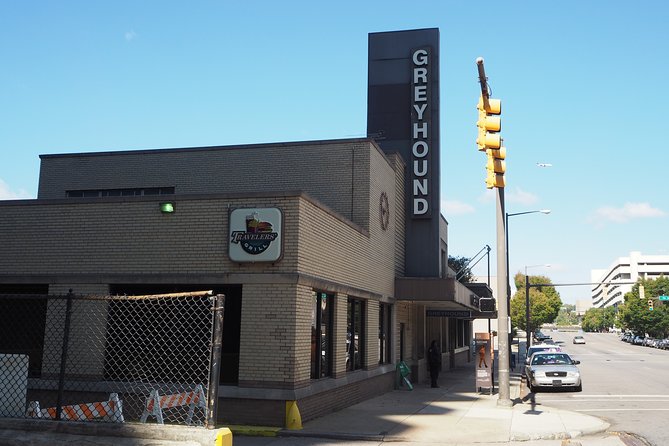
Finally, you reach the site where Freedom Riders were attacked in Birmingham, marked by a Wells Fargo ATM stop. It’s a quick moment, but it’s also a reminder that civil rights history spilled into public travel and public safety.
Because it’s a short stop, ask your guide questions if you want more detail. This is one of those areas where a bit of background makes the whole event click.
What You Gain From a Live Guide, Not Just Landmark Photos
You could technically drive between these stops yourself. But you’d miss what makes the Birmingham story feel coherent: the cause and effect. Guides like Clay and Mike are consistently described as story tellers who help you visualize what happened where it happened, and that storytelling is the value you’re paying for.
Also, the tour is designed with timing in mind. Each stop gets a set amount of attention, so you’re not stuck at one location while the rest of the route gets rushed. That structure helps if you want a complete view without feeling exhausted.
In the reviews, there’s also mention of small practical care, like shade breaks and restroom breaks. That’s not listed as a guarantee, but it’s a useful sign that the guide thinks about comfort while covering difficult material.
The Best Part for Many People: No Hidden Costs and Easy Between-Stops Logistics
One of the most practical perks is that you get entrance fees included. That means you can treat this as a “one price” experience in spirit, without needing to budget for surprise tickets mid-route.
Add air-conditioned transportation and you get a smoother day. Birmingham summers can be brutally humid, and winters can still bite. Even if the tour is only a little over three hours, those breaks matter.
The small-group cap of 14 travelers also changes the feel. You can hear explanations more clearly. And if you have a question about a person or event, you’re more likely to get an answer rather than waiting until the next stop.
Walking, Weather, and What to Wear (So the Day Feels Good)
The tour runs rain or shine. If significant weather causes a cancellation, you get an option of an alternative date or a full refund, and you’re also told there is transportation if rain becomes an issue. Either way, you should bring a plan.
Here’s what the physical guidance means in real terms:
- You’ll walk over a mile total.
- Temps can be anywhere between 40F and 100F.
- You should be able to walk unassisted at a reasonable speed.
- It’s not recommended if you’re affected by very cold or very hot weather.
Wear walking shoes with traction. Bring a light layer even in warm months, since air-conditioned vehicles can cool you down quickly after being outdoors. If you’re visiting in winter or shoulder season, a hat and gloves can make you far more comfortable during outdoor stretches.
Who This Tour Is Best For (And Who Might Want a Different Plan)
This tour is a strong fit if you want Birmingham civil rights history explained in order, with a guided route that hits the key places without guesswork. It’s also ideal if you care about understanding the bigger story, not just collecting photos.
It’s especially well-suited for visitors who:
- Want a more intimate small-group experience
- Prefer short stops connected by context
- Learn best when the guide points out what to notice
It might not be the right fit if you:
- Cannot walk at least a mile
- Have trouble with temperature extremes
- Want a light and casual sightseeing day rather than serious, emotionally heavy history
If you’re traveling with kids, the guidance is that children must be accompanied by an adult. The tour content deals with difficult topics, so consider whether your child is ready for that kind of history.
A Quick Take on Value: Why This Feels Worth It for Most People
There’s a reason the tour has a 5-star rating across hundreds of reviews and a 100% recommendation rate. The value isn’t just that it covers famous landmarks. It’s that the guide keeps the story tight and understandable.
You get:
- Entrance fees included
- Air-conditioned transport between meaningful stops
- Live commentary throughout
- A small-group size that supports real questions
- A route that covers both civil rights flashpoints and community life
If you’re in Birmingham for a short time and want the best chance of leaving with a real understanding, this tour’s structure does the heavy lifting.
Should You Book the Birmingham Civil Rights Tour- Riding and Walking?
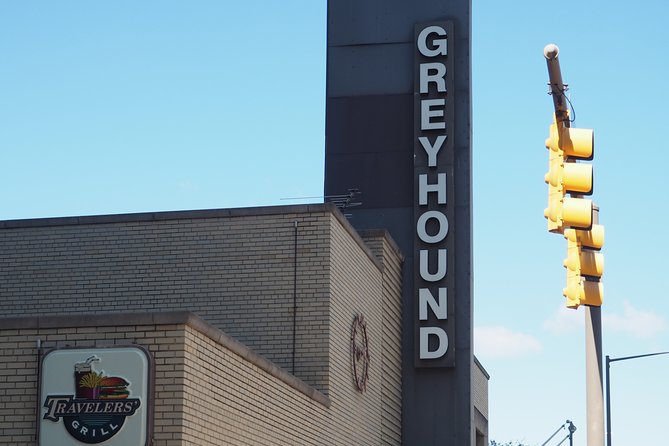
I’d book this tour if you want Birmingham civil rights history explained in a clear timeline, with stops that include Kelly Ingram Park, 16th Street Baptist Church, Dynamite Hill, and the Freedom Riders attack site. The small group size, air-conditioned rides, and entrance fees included make it a practical way to do a serious subject respectfully.
Skip it or consider an alternate plan if walking and temperature extremes are a concern for you. Also, if you need a low-emotion day, this route may feel too heavy.
If you’re ready for history that is both sobering and clarifying, this is one of the most direct ways to make Birmingham’s civil rights story land.
FAQ
How long is the Birmingham Civil Rights Tour- Riding & Walking?
The tour lasts about 3 hours.
Where does the tour start, and where does it end?
It starts at 512 16th St N, Birmingham, AL 35203 and ends back at the same meeting point.
Are entrance fees included?
Yes. The tour lists all entrance fees as included, along with taxes, fees, and handling charges.
How much walking is involved?
You will walk over a mile during the tour. You should have moderate physical fitness and be able to walk unassisted at a reasonable speed.
Does the tour run in rain?
Yes, the tour runs rain or shine. If canceled due to significant weather, you can choose an alternative date or receive a full refund.
What is the cancellation window?
You can cancel up to 24 hours in advance for a full refund. If you cancel less than 24 hours before the start time, the amount paid is not refunded.
Memphis Music and Civil Rights History
 ★ 4.5Memphis City Tour with Optional Riverboat Cruise & Sun Studio Add-On OptionsFrom $451,804 reviews
 ★ 5.0Memphis Mojo Bus TourFrom $431,476 reviews
 ★ 5.0Atlanta’s Black History and Civil Rights TourFrom $741,330 reviews
 ★ 5.0Taste of Downtown Memphis Food TourFrom $85909 reviews
 ★ 4.5Haunted Memphis Walking Ghost TourFrom $29764 reviews
 ★ 5.0Memphis Discovery TourFrom $49721 reviews
 ★ 5.0Memphis City Tour with Sun Studio AdmissionFrom $92691 reviews
 ★ 4.5Guided Memphis City Tour that includes Riverboat CruiseFrom $95575 reviews
This one is also listed in