
Review · CHICAGO ARCHITECTURE AND RIVER CRUISES
Chicago Architecture Center River Cruise aboard First Lady
Chicago’s skyline reads like a story from water. The Chicago Architecture Center River Cruise aboard Chicago’s First Lady turns a fast river ride into a focused walkthrough of Windy City architecture, with a docent guiding you past major landmarks you can spot only from the water. I especially like the docent-led narration that connects buildings to the city’s real history and engineering, and I also like the practical comfort built into the boat.
One important consideration: the dock has no elevator access, so expect stairs when you board.
In This Review
- Key things to know before you go
- Boarding at 112 E Wacker Dr: find the riverwalk dock fast
- Price and value: what $57 buys you on a 90-minute cruise
- The boat setup: top deck for air, lower deck for comfort
- Boarding and seating: why arriving 30 minutes early pays off
- How the docent turns the river into a timeline
- The route, in plain English: what you see in 90 minutes
- Chicago River, the city’s changing engine
- Navy Pier and adaptive reuse as a Chicago theme
- Marina City: Bertrand Goldberg’s middle-class urban experiment
- The Trump International Hotel & Tower: form that reflects context
- Modernist landmarks by Mies van der Rohe
- 150 North Riverside and other engineering-forward icons
- Willis Tower’s height history, and what Chicago sized itself for
- Chicago Mercantile Exchange Building and the financial spine
- Chicago Tribune Freedom Center
- What makes this cruise feel worth it: comfort, pacing, and context
- Who should book this, and who should think twice
- Should you book Chicago’s First Lady with the Chicago Architecture Center?
- FAQ
- Where does the Chicago Architecture Center River Cruise aboard Chicago’s First Lady depart?
- How early should I arrive before my departure time?
- Does the cruise run in bad weather?
- Are there restrooms on board?
- Is seating assigned?
- Can I bring luggage onto the boat?
- Can I buy drinks or snacks during the cruise?
- Is WiFi available on board?
- (Bonus) Is the tour suitable for children?
Key things to know before you go
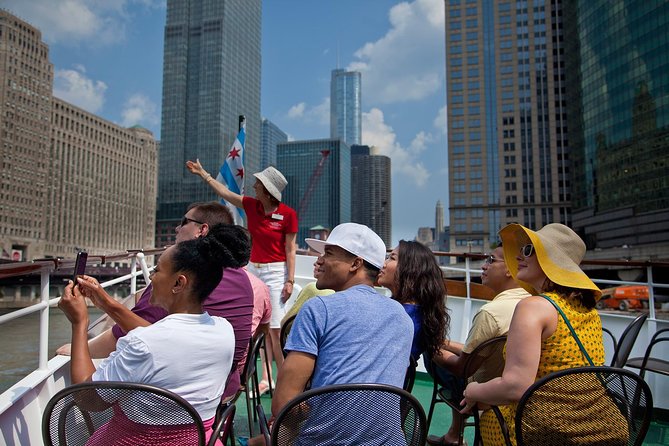
- Docent narration drives the experience, so you are not just sightseeing buildings, you are learning why they look the way they do.
- First come, first served seating means arriving early helps if you care about getting closer to the windows.
- Two deck options let you switch between open-air views and a climate-controlled lower level.
- You get a classic orientation loop of Chicago’s most recognizable architecture along the river.
- Onboard restrooms are available, but they close about 15 minutes before the end for safety.
- The $5 Chicago Architecture Foundation discount can add extra value if you plan to visit the center too.
Boarding at 112 E Wacker Dr: find the riverwalk dock fast
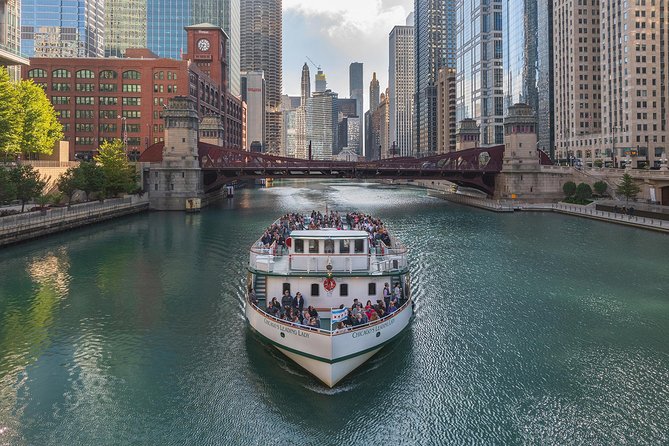
Meeting is easy once you know the landmark. You are headed to 112 E Wacker Dr, right along the Chicago Riverwalk. The dock entrance is street level on the northeast corner of Michigan Ave and Wacker Dr, so you are not hunting down a hidden stairwell far from the water.
The ticket office is on the Riverwalk level of Wacker Drive. The best move is to give yourself time to stand in line, get your ticket handled, and then walk right up to the boarding area. This cruise runs on multiple departure times, and boarding is time-sensitive, so you do not want to sprint at the last minute.
Price and value: what $57 buys you on a 90-minute cruise
At $57 per person for about 90 minutes, this is a solid value for an architecture education that is also a sightseeing win. You are paying for three things that usually cost you more separately: a guided architectural talk, prime river views, and a comfortable boat ride.
Here is where it gets even better. You can get discounted Chicago Architecture Foundation admission if you show your river cruise ticket, at a $5 per person discount. If you like the idea of turning the cruise into a fuller architecture day, that small discount can help justify the total spend.
Also, this is not a huge floating stadium. The tour has a maximum capacity of 250 travelers, so you will feel the energy of a popular activity, but it is not the same vibe as an overcrowded commuter ferry. You get live commentary plus onboard amenities, including restrooms and a climate-controlled lower level.
Further Cruises & Boat Tours covered by our reviewers in Chicago
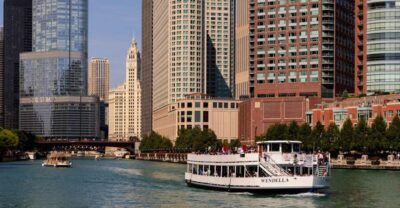
The boat setup: top deck for air, lower deck for comfort
This is one of those tours where your comfort choices actually matter. The boat has two levels: an open-air top deck and an enclosed, climate-controlled lower salon. Both are surrounded by large windows, which means even if the wind off the river gets annoying, you can still see buildings clearly.
If it is cold, I would prioritize getting a seat where you can move easily between levels. People often end up warming up in the lower deck while keeping an eye on the top deck when the view looks best. On bright days, the top deck feels like the classic Chicago experience, but in shade it can get chilly fast, so plan to dress in layers.
A few practical notes that help on the water:
- Restrooms are available on board, but they close about 15 minutes before the end.
- Drinks and light snacks are not included, but there is a full bar onboard.
- WiFi is not provided, so save your battery for photos and maps.
Boarding and seating: why arriving 30 minutes early pays off
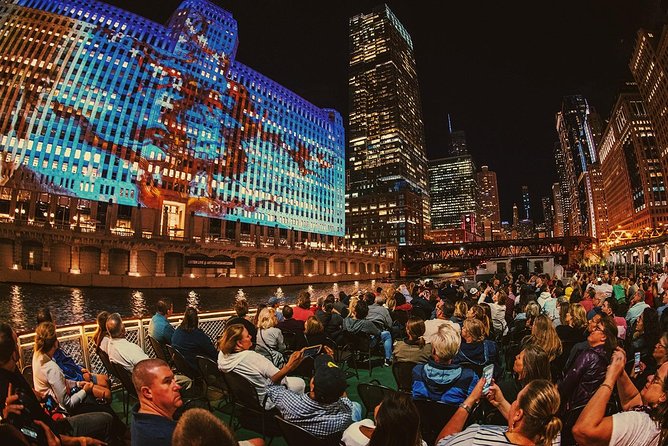
Seating is general admission, and boarding is first come, first served. That means no assigned seat rescue if you show up late. If you want a better chance at window sightlines, arrive early and be ready to board promptly.
The guidance is to arrive 30 minutes before departure, and in summer, allow extra time. In practice, 30 minutes is what lets you avoid the rushed scramble that happens when groups converge at the same entrance.
Also, keep in mind the dock has no elevator access. If stairs are an issue for you, this is the one part of the experience that may feel limiting. Strollers are allowed, but children must be removed from strollers before boarding, and strollers are folded and stored during the cruise.
How the docent turns the river into a timeline
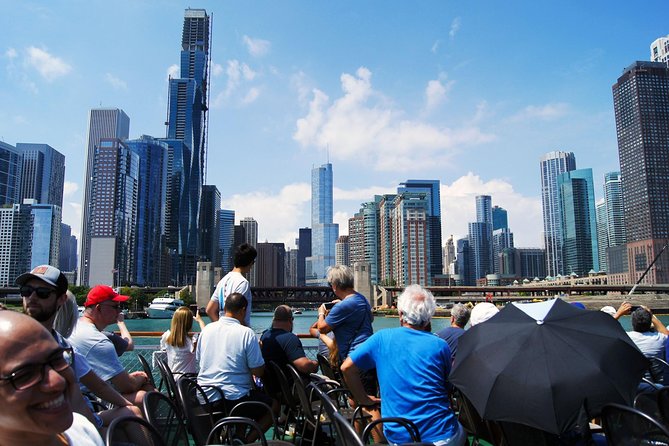
This cruise works because the story is not random. The docent builds a guided timeline that explains how the Chicago River evolved through changing use, from industry and transportation to revitalization and recreation. Once that framework clicks, the buildings stop feeling like scattered landmarks and start feeling like part of one big city conversation.
The narration also tends to focus on relationships between buildings, not just individual towers. You will hear how designers thought about height, materials, and the urban environment around them. And because this is a Chicago Architecture Foundation docent-led experience, the talk stays grounded in real design and planning decisions rather than just general sightseeing commentary.
You might hear different docents by date and departure. The reviews you shared include names like Cynthia, Laura, Amy, Nick, Russell, and Mark, and they all have that same core role: connecting you to the river, bridges, and skyline in a clear, engaging way.
The route, in plain English: what you see in 90 minutes
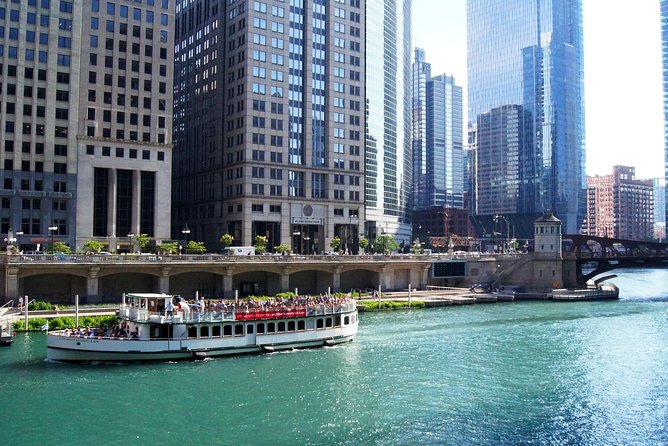
The cruise loops you through the heart of the riverfront, where you get repeat view angles of Chicago’s architectural identity. It is not a long, slow cruise where you hop in and daydream. It is a purposeful, about-90-minute tour where each stretch of river has a point.
Here is the highlight sequence you can expect to recognize as it unfolds:
More filed under Chicago Architecture and River Cruises in Chicago
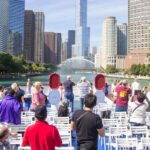
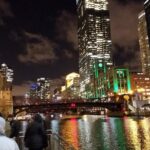



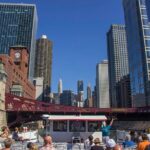
Chicago River, the city’s changing engine
Right away, the narration sets up why the river matters. The Chicago River’s story is told as something still unfolding, shaped by periods of industry, transportation, then later by revitalization and recreation. When you hear that, it changes how you read the waterfront. You start noticing not just what is tall, but what was built for movement, trade, and urban change.
Navy Pier and adaptive reuse as a Chicago theme
From the water, Navy Pier looks like it has always been a fun destination, but the talk frames it as an example of adaptive reuse. You learn how the space ties back to a naval base and a university campus, then transforms into an entertainment and visitor hub. That is a big Chicago pattern: old infrastructure gets repurposed rather than erased.
If you are traveling with someone who thinks architecture is just skyscrapers, this stop helps reset that mindset. It proves the city’s design story includes neighborhoods, industry sites, and civic destinations.
Marina City: Bertrand Goldberg’s middle-class urban experiment
Next comes Marina City, famous for its twin towers and for the way it was imagined as a modern urban experiment. The narration credits architect Bertrand Goldberg with designing it to pull middle-class Chicagoans back toward the city after years of suburban migration.
What I like about this part is the framing. You can actually look at the towers and think about the social goal behind the shape, not just admire the silhouette. It is one of the clearer ways the cruise shows architecture as a human strategy.
The Trump International Hotel & Tower: form that reflects context
As the cruise glides past the Trump International Hotel & Tower, the narration is not only about shiny glass and steel. The explanation connects the building’s presence to its surrounding environment, which makes the structure feel less like a random trophy and more like a response to its setting.
If you love architecture but do not want a purely academic talk, this is a good example of how the cruise stays accessible while still being detailed.
Modernist landmarks by Mies van der Rohe
You also pass a major Modernist highlight tied to Ludwig Mies van der Rohe, described in the narration as one of his last American projects. His style tends to feel disciplined and spare, but from the river, you also pick up how that discipline interacts with movement, reflections, and nearby structures.
This is a great part for photos too. The river gives you angles where the building edges and lines look crisp, especially when the light hits the windows.
150 North Riverside and other engineering-forward icons
The cruise includes 150 North Riverside, described as a gravity-defying architectural and engineering wonder. Even if you are not a structural nerd, the river view helps you see why that reputation sticks.
You also get the chance to view Boeing International Headquarters at 100 N Riverside Plaza, which adds a useful mix of corporate architecture to the skyline tour. It breaks the pattern of only talking about the biggest and oldest icons.
Willis Tower’s height history, and what Chicago sized itself for
One of the most iconic skyline moments is the Willis Tower. You will hear it was formerly known as the Sears Tower, and that it held the world’s tallest building title for nearly 25 years after completion.
That stop also connects height to purpose. The story touches on size and ambition in Chicago, including how the building was designed as the largest building in the world in 1930 and served as Marshall Field’s wholesale warehouse, where retailers could buy stock. That detail helps you understand that tall buildings were not always about status. Sometimes they were about logistics.
Chicago Mercantile Exchange Building and the financial spine
Another recognizable sight is the Chicago Mercantile Exchange Building. The river position gives you a front-row angle for a building type that is often discussed from street level. It also reinforces how Chicago’s riverfront shaped commerce and finance.
Chicago Tribune Freedom Center
Finally, you pass the Chicago Tribune Freedom Center. This adds a civic and media layer to the architecture tour, reminding you that the riverfront story is not only about corporate towers and residential experiments. It is also about institutions that help shape public life.
What makes this cruise feel worth it: comfort, pacing, and context
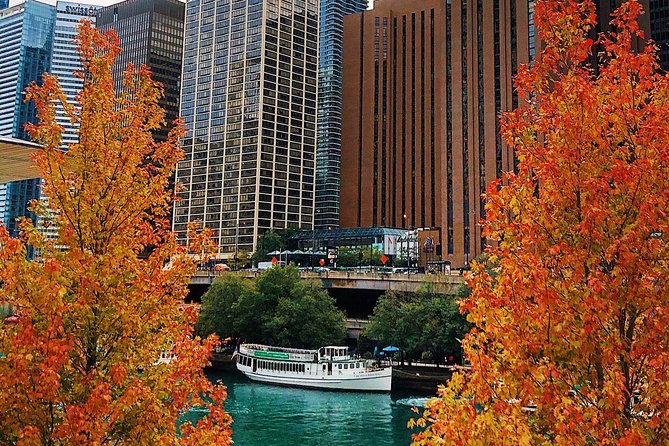
Plenty of city tours show you landmarks. This one earns its spot because it explains how the landmarks connect to the Chicago River story, and because it keeps you comfortable while doing it.
The fact that the lower deck is climate controlled matters more than you might think. A river cruise can go from pleasant to miserable fast when shade cools you down or the wind picks up. Here, you can move indoors without giving up the view. And you still get the experience of open-air river time when the weather behaves.
The pacing also helps. The tour is about 1 hour 30 minutes, so you get a concentrated skyline overview without feeling like you got stuck on a long boat ride. Many people use it as a day-one orientation, and the cruise does set you up to recognize buildings later when you are walking around.
And the onboard vibe is not cold and sterile. Reviews in your info mention a cozy onboard bar setup and that the drink options can make waiting in chilly weather feel less grim. Even if you skip alcohol, it is nice knowing you can buy warm drinks when needed.
Who should book this, and who should think twice
This cruise is best for:
- First-time visitors who want a Chicago architecture orientation in a short window
- Travelers who like learning while moving, not sitting in a classroom setting
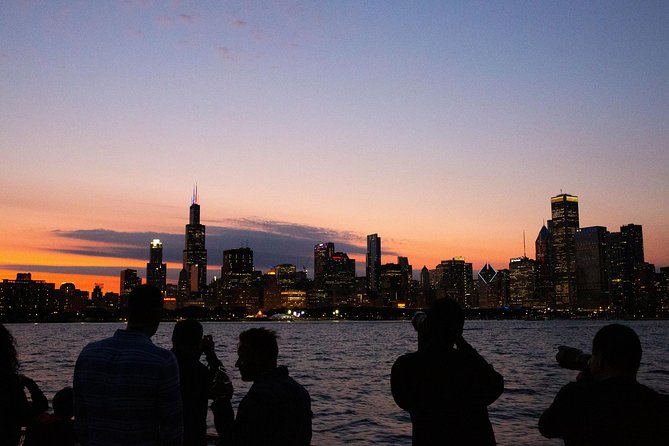
- People who want great skyline photos from the water, with minimal effort
You might think twice if:
- Mobility is an issue, because there is no elevator access to the boat dock
- You want a super small group or a silent, minimalist experience (this is a narrated cruise with general admission seating)
- You are traveling with very young kids. It is not recommended for children under 12, and children must be accompanied by an adult.
If you are okay with stairs and general-admission logistics, this is one of the easiest ways to see a lot of Chicago architecture without spending hours in transit.
Should you book Chicago’s First Lady with the Chicago Architecture Center?
Yes, if your goal is a smart, visual overview of Chicago architecture along the river, with a docent-led story that makes the skyline make sense. The price is reasonable for a guided, 90-minute experience that includes onboard comfort, restrooms, and live narration, plus the chance for a small discount at the Chicago Architecture Foundation.
Book it sooner rather than later if you have a tight schedule, because this popular cruise often sells out and it is commonly booked about a week ahead. Plan to arrive 30 minutes early, dress for wind and shade, and treat it as your architecture warm-up for the rest of your trip.
FAQ
Where does the Chicago Architecture Center River Cruise aboard Chicago’s First Lady depart?
The cruise departs from 112 E Wacker Dr at the Chicago Riverwalk dock. The entrance to the Riverwalk dock is street level on the northeast corner of Michigan Ave and Wacker Dr.
How early should I arrive before my departure time?
Arrive 30 minutes prior to your cruise departure time. If you are visiting in summer, allow a bit extra time.
Does the cruise run in bad weather?
Yes. The cruise operates in all weather conditions. The boat has an open-air top deck and an enclosed, climate-controlled lower level with large windows.
Are there restrooms on board?
Yes, there are restrooms on the boat. They close about 15 minutes before the end of the tour for safety reasons.
Is seating assigned?
No. Seating is general admission on a first come, first served basis.
Can I bring luggage onto the boat?
No. Due to security reasons, you cannot bring luggage on board, and there is no luggage storage dockside.
Can I buy drinks or snacks during the cruise?
Yes. Drinks and light snacks are available to purchase, and the boat has a full bar.
Is WiFi available on board?
No. WiFi is not available on board.
(Bonus) Is the tour suitable for children?
Children must be accompanied by an adult, and the tour is not recommended for children younger than 12 years.
Chicago Architecture and River Cruises: the rest of the Chicago file
- Chicago Architecture River Cruise★ 5.0 · 15,756 reviews
- Chicago River 90-Minute Architecture Tour★ 4.5 · 9,629 reviews
- Chicago River: 1.5-Hour Guided Architecture Cruise★ 4.8 · 8,046 reviews
- Chicago: Gangsters and Ghosts Walking Tour★ 5.0 · 7,155 reviews
- Chicago: Willis Tower Skydeck and The Ledge Ticket★ 4.6 · 4,350 reviews
More logged under Cruises & Boat Tours in Chicago
- Chicago Architecture River Cruise★ 5.0 · 15,756 reviews
- Chicago River: 1.5-Hour Guided Architecture Cruise★ 4.8 · 8,046 reviews
- Chicago: Architecture River Cruise Skip-the-Ticket Line★ 4.8 · 4,325 reviews
- Chicago: 45-Minute Family-Friendly Architecture River Cruise★ 4.7 · 2,304 reviews
- Chicago: 1.5-Hour Lake and River Architecture Cruise★ 4.7 · 2,050 reviews
Tour Reviews: more from our Chicago desk
- Chicago Architecture River Cruise★ 5.0 · 15,756 reviews
- Chicago River 90-Minute Architecture Tour★ 4.5 · 9,629 reviews
- Chicago River: 1.5-Hour Guided Architecture Cruise★ 4.8 · 8,046 reviews
- Chicago: Gangsters and Ghosts Walking Tour★ 5.0 · 7,155 reviews
- Chicago: Willis Tower Skydeck and The Ledge Ticket★ 4.6 · 4,350 reviews
Newest Chicago reviews added to this site
- Chicago: Museum of Ice Cream Entry Ticket
★ 4.2 · 325 reviews - Chicago Architecture and True Crime Tour
★ 5.0 · 326 reviews - The Escape Game Chicago: Epic 60-Minute Adventures in River North
★ 5.0 · 332 reviews - Lake Michigan 30-Minute Speedboat Ride
★ 4.0 · 333 reviews - City Cruises Chicago: Premier Lunch or Dinner Cruise
★ 4.3 · 334 reviews - Chicago Craft Brewery Barrel Bus Tour
★ 5.0 · 339 reviews - Chicago Premier Dinner Cruise on Lake Michigan
★ 3.5 · 344 reviews - 2-Hour Chicago Lakefront & Museum Campus Segway Tour
★ 5.0 · 345 reviews - City Cruises Chicago: Signature Lunch Cruise on Lake Michigan
★ 4.0 · 348 reviews - Chicago Explorer Pass: 35+ Things To Do – Includes 360 Chicago
★ 4.0 · 354 reviews
Chicago Architecture and River Cruises, side by side.
 ★ 5.0Chicago Architecture River CruiseFrom $3915,756 reviews
 ★ 4.5Chicago River 90-Minute Architecture TourFrom $459,629 reviews
 ★ 4.8Chicago River: 1.5-Hour Guided Architecture CruiseFrom $448,046 reviews
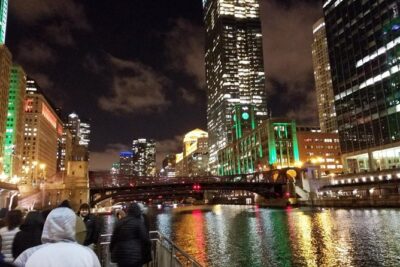 ★ 5.0Chicago: Gangsters and Ghosts Walking TourFrom $527,155 reviews
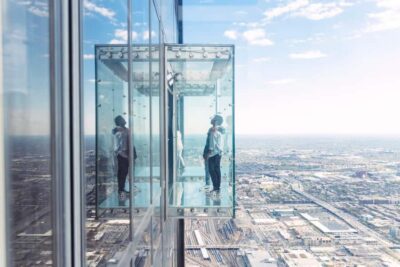 ★ 4.6Chicago: Willis Tower Skydeck and The Ledge TicketFrom $424,350 reviews
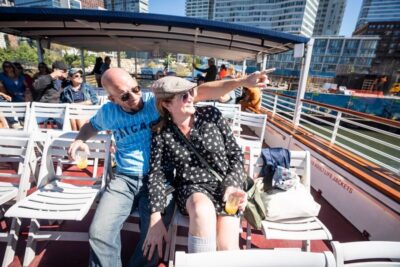 ★ 4.8Chicago: Architecture River Cruise Skip-the-Ticket LineFrom $394,325 reviews
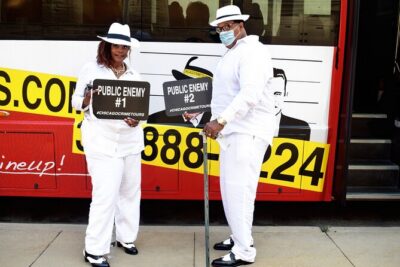 ★ 4.5Chicago Crime and Mob Bus TourFrom $493,186 reviews
 ★ 4.5Chicago: 360 CHICAGO Observation Deck TicketFrom $293,173 reviews
This one is also listed in