
Review · CHICAGO ARCHITECTURE AND RIVER CRUISES
Chicago’s Secret Interiors Architectural Walking Tour
Chicago has a second skyline inside. This tour lets you see rare interiors across the Loop, where you’ll walk past famous facades and then step into the spaces that made the city’s power possible.
I really like how the stops connect building design to real people and big-money eras, from the Gilded Age to the Roaring Twenties. You also get a tight mix of iconic landmarks and lesser-spotted craftsmanship, including mosaic details and big indoor volumes like skylit halls. One thing to watch: The Rookery is closed on Sundays, so that interior stop will not be on the route that day.
In This Review
- Key moments worth circling
- Why Chicago interiors feel like a secret mission
- Starting at Union Station, then stepping into the Loop
- Stop 1: Downtown and the Loop skyline story
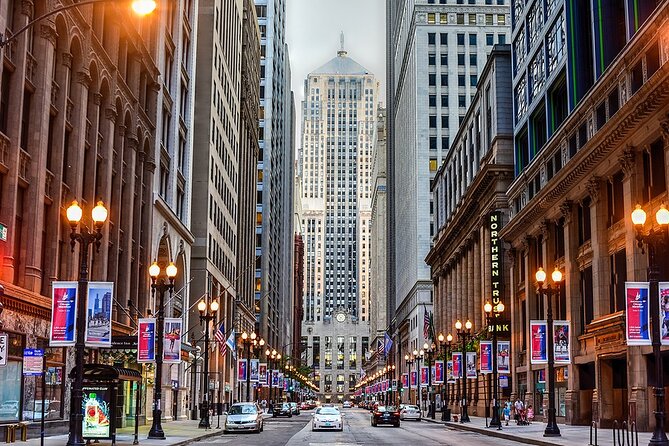
- Stop 2: La Salle and the idea of the Financial Canyon
- Stop 3: Union Station’s Beaux-Arts facade and Great Hall skylight
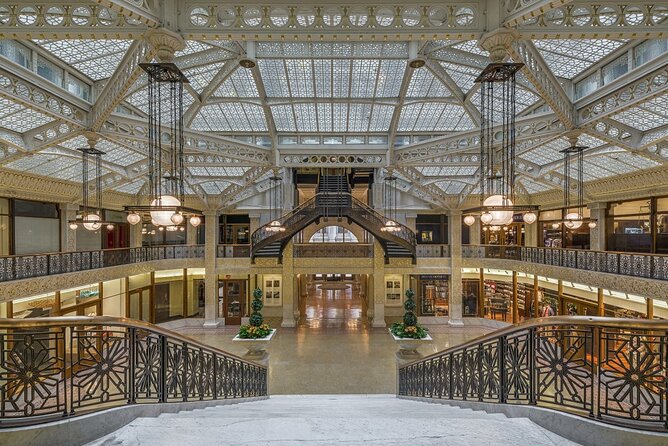
- Stop 4: The Rookery Building, Frank Lloyd Wright’s light court
- Stop 5: The Field Building’s Art Deco presence
- Stop 6: Marquette Building, Chicago window design and mosaics
- Stop 7: Palmer House, Gilded Age glamour after the Great Fire
- Stop 8: Chicago Cultural Center or Monadnock Building
- Stop 9: Marshall Field and Company Building, Tiffany mosaic dome
- What I learned from the guide style that shows up again and again
- Price, time, and how to judge the value
- Practical tips so your tour day feels easy
- Should you book Chicago’s Secret Interiors tour?
- FAQ
- How long is the Chicago Secret Interiors Architectural Walking Tour?
- What is the price?
- Where is the tour starting point?
- Where does the tour end?
- Do I need tickets in advance, and is it mobile?
- What’s the maximum group size?
- Is the Rookery Building included every day?
- Are admissions included for the stops?
- What happens if weather is poor?
- Is free cancellation available?
- Are service animals allowed?
Key moments worth circling
- Stop density: frequent building entries so you get more than street views in 2 hours
- Design variety: Romanesque, Moorish touches, Beaux-Arts grandeur, Art Deco, and Chicago School details
- Chicago-window fanfare: the Marquette Building is a standout for the architecture nerds
- Gilded hotel glamour: the Palmer House interiors are pure showmanship
- Ceilings and skylights: Union Station and the department-store dome are built for wow
- Small group size: maximum 15 people keeps the walk orderly and the guide audible
Why Chicago interiors feel like a secret mission
Chicago’s famous from the street. But the real story often hides one door closer. This walking tour focuses on the inside stuff people tend to miss: the carved detailing, the light wells, the mosaic floors, and the domes that were designed to make you look twice while you walk in and out of power.
At $35 for about 2 hours, the value comes from access. Many of these are buildings you could technically pass by on your own, but you would not get the design context or the best sightline inside. With a small group, you also move fast enough to hit a lot, without feeling like a human conveyor belt.
The guides help too. Names like Grant and Ethan show up in the praise, with comments about staying organized and keeping the group together even on messy weather days. If you want a tour that turns architecture into clear stories, this is a strong fit.
Starting at Union Station, then stepping into the Loop
You meet at Chicago Union Station, 225 S Canal St. It’s a smart starting point because it sets the mood right away. Union Station’s early 20th-century Beaux-Arts style is the kind of architecture that screams ambition, and it gives you a quick framework for what comes next: Chicago builds big, then it decorates the inside like it means something.
From here, the walking portion matters. The Loop is basically a canyon of tall buildings, and the tour uses that reality instead of fighting it. You get viewpoints that help you understand why certain structures needed engineering solutions, especially when downtown land gets tight and vertical growth becomes the only option.
If you’re the type who likes to understand why a building looks the way it does, pay attention early. The tour’s themes start forming as soon as you’re walking among the skyscrapers.
Additional Walking Tours on the review pile in Chicago

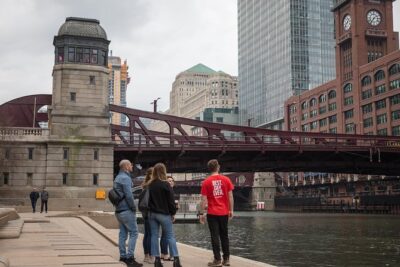
Stop 1: Downtown and the Loop skyline story
In the Chicago Loop, you’ll get the classic “oh wow” factor, with major landmarks along the way and context for how the district became an economic engine. This part is about the skyline as a timeline: you learn how the city’s financial and commercial needs shaped what got built, and how bold architecture became a kind of branding.
I like this start because it gives you a mental map fast. Even if you have seen Chicago towers before, this helps you connect them to the people and industries that drove construction in different eras.
A practical note: this is a walking-heavy city block phase. Wear shoes you don’t mind in rain or cold, and keep your phone charged. The tour uses a mobile ticket, so having it ready helps everything stay smooth.
Stop 2: La Salle and the idea of the Financial Canyon
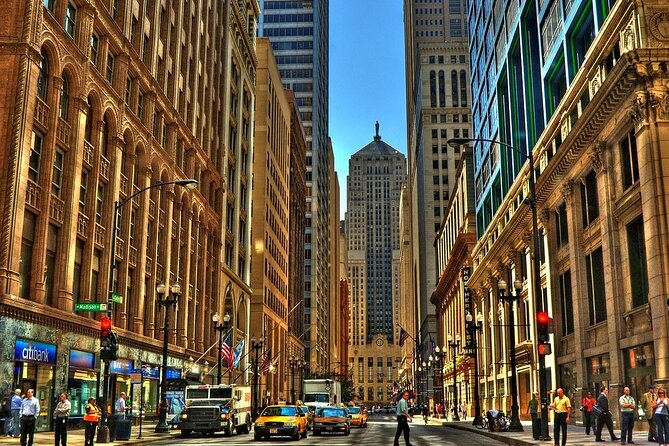
The tour shifts into the Financial Canyon area, still within the Loop. This is where the “architecture as experience” part clicks. Tall buildings on both sides turn city blocks into something you feel, not just see. Your guide explains how architects and engineers handled major structural challenges, while you watch the skyline compress and expand with each turn.
This stop also works well for non-experts. You do not need a background in architecture. The story is straightforward: Chicago grew upward, and that required technical solutions plus design choices that held up at street level.
If you’re sensitive to crowds, you’ll likely appreciate the small group size and the pace. Keeping the group tight matters here, because the best sightlines are short and you want to be positioned right when the guide points things out.
Stop 3: Union Station’s Beaux-Arts facade and Great Hall skylight
Next comes one of the most memorable inside moments: stepping into Union Station. This is a key architectural landmark designed by Daniel Burnham and completed in 1925. Even if you’ve passed Union Station before, entering the Great Hall is different because the space is built for ceremony and movement at scale.
You’ll focus on the Beaux-Arts facade, the expansive Great Hall volume, and the magnificent skylight. Those details matter because they show how travel hubs were meant to feel grand, not utilitarian. In Chicago, that attitude tracks with how the city marketed itself during an era of big growth.
The only real drawback is timing. If you’re hoping for long, slow photography sessions, this is a tour with multiple buildings in a short window. You’ll get enough time to see the key features, but it won’t feel like a museum crawl.
Stop 4: The Rookery Building, Frank Lloyd Wright’s light court
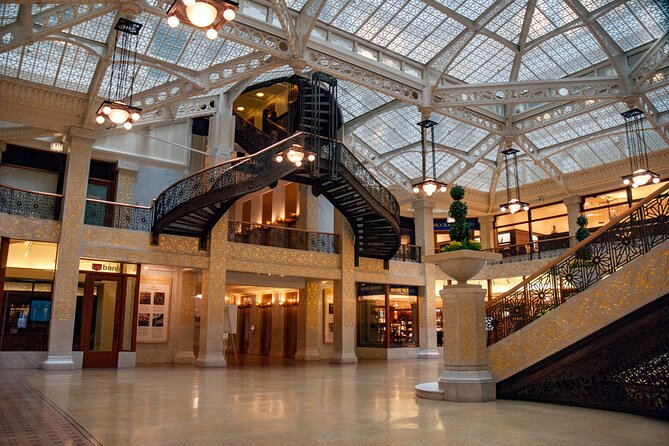
The Rookery Building is where the tour turns from big-city power to clever design and craftsmanship. The building dates to 1888, with Burnham and Root as designers. Then Frank Lloyd Wright later reimagined the interior, and you get to see the result.
This stop blends styles, including Romanesque and Moorish influences. You’ll hear about the famous light court, the ironwork, and the oriel staircase. If you like architecture that rewards you the longer you look, this is the one.
One important consideration: The Rookery is closed on Sundays, so it will not be on the route that day. If your travel plans include a Sunday, don’t get disappointed if that interior moment is swapped out.
More filed under Chicago Architecture and River Cruises in Chicago






Stop 5: The Field Building’s Art Deco presence
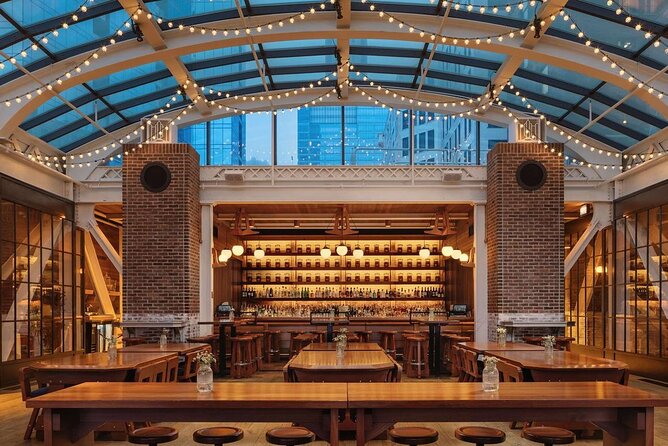
The Field Building is a highlight for anyone who likes the Chicago skyline in its 20th-century clothes. This stop leans into Art Deco design, and the experience is about getting a feel for how modern style became part of Chicago’s identity.
Art Deco can look flashy from the outside, but the payoff here is how the guide connects ornament and engineering choices to the building’s role in the city. You’re not just staring at surfaces. You’re learning why the details are there and what they were built to communicate.
Because the tour includes several indoor entries, this stop can also be a good weather buffer. On cold or rainy days, you may find the schedule feels more manageable than a purely outdoor walk.
Stop 6: Marquette Building, Chicago window design and mosaics
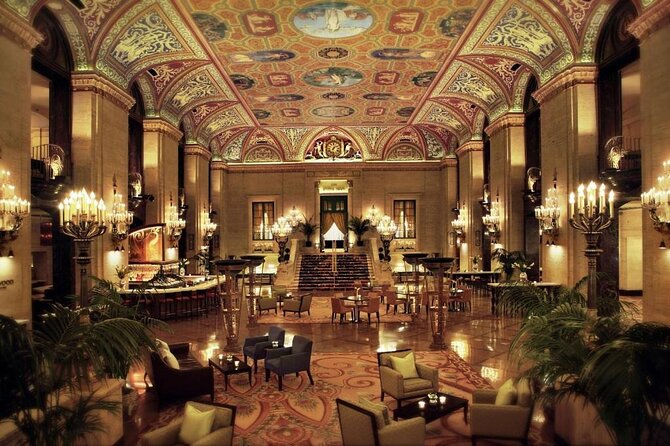
The Marquette Building is all about architectural innovation. You’ll hear about the pioneering use of the Chicago window, plus the terra cotta facade that’s a classic Chicago School signature. Inside, the lobby features ornate mosaics that tell a story tied to Jacques Marquette’s exploration of Illinois.
This stop is great if you want the tour to feel educational without turning into a lecture. The “Chicago window” concept is one of those ideas you can spot on buildings later. After this, you’ll likely notice similar patterns when you walk around downtown on your own.
Time here is limited, like every other stop, so prioritize the guide’s pointers. If you rush your eyes, you’ll miss the mosaic storytelling. Take a breath, then look up and around.
Stop 7: Palmer House, Gilded Age glamour after the Great Fire
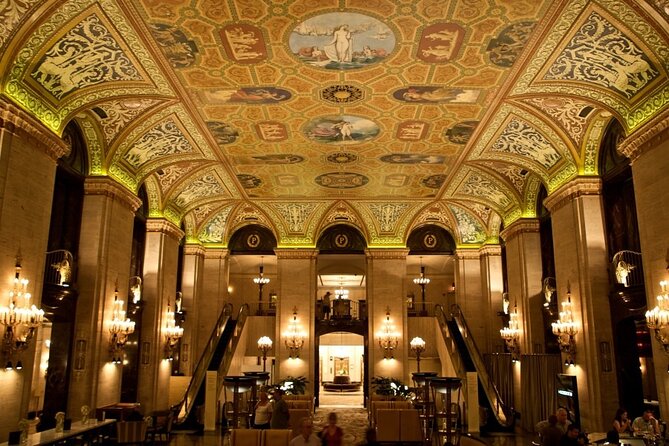
Then you hit one of Chicago’s most iconic hotel interiors: Palmer House a Hilton Hotel. It’s known as one of Chicago’s grandest hotels, with Beaux-Arts architecture and opulent interiors that match the Gilded Age vibe.
A big piece of the story is that it was rebuilt after the 1871 Great Chicago Fire, so the hotel becomes part of the city’s survival narrative as well as its luxury narrative. Expect to see the frescoed ceiling, mosaic floors, and bronze peacock doors.
This stop often feels like a movie set because hotels were designed to impress wealthy guests and important visitors. If you like architecture that mixes status with craftsmanship, this is a must.
Stop 8: Chicago Cultural Center or Monadnock Building
At this point, your route splits: you’ll either visit the Chicago Cultural Center or the Monadnock Building. The idea is to keep the tour flowing while still giving you a meaningful architectural stop at this stage.
The Chicago Cultural Center brings architectural beauty and cultural heritage together. The Monadnock Building is described as a commercial-style landmark from the late 19th century, and it’s a great contrast if you want something that feels more business-focused than ceremonial.
If you care deeply about one of these, ask when you book which option is currently running. The tour note says guests will either visit the Cultural Center or the Monadnock Building, so you can’t count on both in one outing.
Stop 9: Marshall Field and Company Building, Tiffany mosaic dome
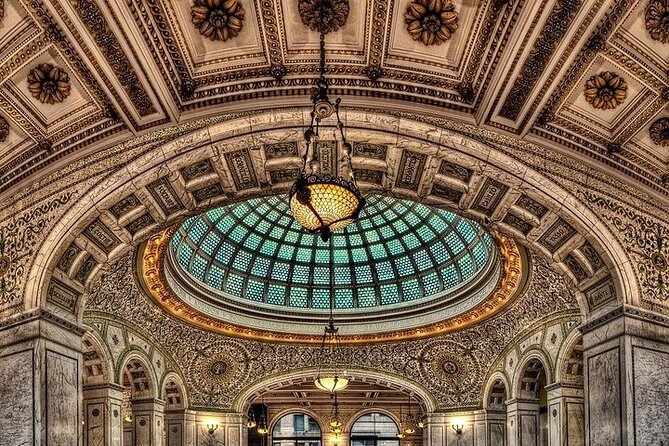
The walk finishes at Marshall Field and Company Building, 111 N State St, a longtime Chicago department-store landmark. The building is famous for the Tiffany glass mosaic dome and the Tea Room with walnut-paneled details.
This stop lands well because it ties architecture to everyday power. Department stores were not just retail. They were civic-level showrooms. Seeing the dome and interior craftsmanship helps you understand how Chicago turned commerce into culture.
You’ll also hear that this building now houses Macy’s, but the tour framing keeps the focus on architectural legacy and how the space continues to operate as a working downtown landmark.
What I learned from the guide style that shows up again and again
This tour is built around a tight loop of outdoor views and quick indoor entries. That structure is why guides get praised for keeping groups together and moving at a good pace. In the feedback, names like Grant and Matt stand out for organization, and Ethan and Matthew show up with notes about enthusiasm and a big ability to make details stick.
If the weather is cold or rainy, the schedule still tends to work because you spend a good amount of time indoors at each stop. One guide was even described as handling challenging weather situations with humor and focus, which is reassuring if you hate tours that fall apart when conditions get messy.
Still, one caution from the experience record: there has been at least one issue where a guide did not show up, and the passenger had to sort it out afterward. For peace of mind, I’d confirm your time close to departure and keep an eye on your tour messages so nothing slips.
Price, time, and how to judge the value
For $35 and about 2 hours, the real value is what you get inside. This is not just a skyline walk. It’s multiple stops featuring recognizable interiors: Union Station’s Great Hall, the Rookery’s light court, the Palmer House lobby details, and the Tiffany mosaic dome at Marshall Field.
A tour that charges more can still be lighter on access. Here, the design is different: the itinerary is packed with building entries that you likely would not plan on your own. Even the “free” admission note at stops signals that you’re not paying separate site fees during the walk.
Also consider the group size. With a maximum of 15 travelers, you’re less likely to get lost, and the guide can keep you together so you don’t miss key views and sightlines.
Practical tips so your tour day feels easy
- Bring layers. You’ll be outside between stops, then inside often.
- Wear grippy shoes. Sidewalks in Chicago can be slick in winter or after rain.
- Keep your phone battery up for the mobile ticket.
- If you’re visiting on a Sunday, remember the Rookery won’t be included.
- If you want the best photos, listen for the guide’s specific pointers and then take a quick shot, not a long pause.
If you love architecture but hate slow tours, this is a good middle ground. You get momentum, lots of design variety, and enough story to make the buildings feel connected.
Should you book Chicago’s Secret Interiors tour?
Book it if you want a fast, focused architectural walk that prioritizes interiors. It’s a great choice for first-time Chicago visitors who know the skyline but want the inside story, and it’s also a smart add-on for repeat visitors who want a fresh angle on familiar downtown buildings.
Skip it or adjust expectations if you want one building to be the “main event” for a long time. This tour is structured for several stops, so you’ll see the highlights without lingering for an hour in any single space.
Finally, if you’re traveling on a Sunday, plan around the Rookery closure. The rest of the route still covers major downtown architecture, but that particular interior moment will be replaced.
FAQ
How long is the Chicago Secret Interiors Architectural Walking Tour?
It runs for about 2 hours (approximately), with multiple stops along the way.
What is the price?
The price is $35.
Where is the tour starting point?
The start is Chicago Union Station, 225 S Canal St, Chicago, IL 60606.
Where does the tour end?
The tour ends at Marshall Field and Company Building, 111 N State St, Chicago, IL 60602.
Do I need tickets in advance, and is it mobile?
You use a mobile ticket, and confirmation is received at the time of booking.
What’s the maximum group size?
The tour has a maximum of 15 travelers.
Is the Rookery Building included every day?
No. The Rookery is closed on Sundays, so it will not be included on Sunday routes.
Are admissions included for the stops?
The stop details indicate admission ticket free for the listed stops.
What happens if weather is poor?
This tour requires good weather. If it’s canceled due to poor weather, you’ll be offered a different date or a full refund.
Is free cancellation available?
Yes. You can cancel for a full refund up to 24 hours in advance. Within 24 hours, the amount paid will not be refunded.
Are service animals allowed?
Yes, service animals are allowed. The tour also notes it’s near public transportation and that most travelers can participate.
Still working through Walking Tours in Chicago
- Chicago: Gangsters and Ghosts Walking Tour★ 5.0 · 7,155 reviews
- Chicago Favorites Ultimate Food and Walking Tour★ 5.0 · 1,962 reviews
- Chicago: Gangsters and Ghosts Guided Walking Tour★ 4.7 · 1,697 reviews
- Chicago in a Day: Food, History & Architecture Walking Tour★ 5.0 · 1,153 reviews
- Chicago’s Chinatown Food and Walking Tour★ 5.0 · 600 reviews
Tours: the rest of the Chicago file
- Chicago River 90-Minute Architecture Tour★ 4.5 · 9,629 reviews
- Chicago: Gangsters and Ghosts Walking Tour★ 5.0 · 7,155 reviews
- Chicago Crime and Mob Bus Tour★ 4.5 · 3,186 reviews
- Chicago River 45-Minute Architecture Tour from Magnificent Mile★ 4.5 · 2,924 reviews
- Chicago Lake and River Architecture Tour★ 4.5 · 2,308 reviews
Tour Reviews: more from our Chicago desk
- Chicago Architecture River Cruise★ 5.0 · 15,756 reviews
- Chicago River 90-Minute Architecture Tour★ 4.5 · 9,629 reviews
- Chicago River: 1.5-Hour Guided Architecture Cruise★ 4.8 · 8,046 reviews
- Chicago: Gangsters and Ghosts Walking Tour★ 5.0 · 7,155 reviews
- Chicago Architecture Center River Cruise aboard First Lady★ 5.0 · 5,536 reviews
Newest Chicago reviews added to this site
- Chicago: Museum of Ice Cream Entry Ticket
★ 4.2 · 325 reviews - Chicago Architecture and True Crime Tour
★ 5.0 · 326 reviews - The Escape Game Chicago: Epic 60-Minute Adventures in River North
★ 5.0 · 332 reviews - Lake Michigan 30-Minute Speedboat Ride
★ 4.0 · 333 reviews - City Cruises Chicago: Premier Lunch or Dinner Cruise
★ 4.3 · 334 reviews - Chicago Craft Brewery Barrel Bus Tour
★ 5.0 · 339 reviews - Chicago Premier Dinner Cruise on Lake Michigan
★ 3.5 · 344 reviews - 2-Hour Chicago Lakefront & Museum Campus Segway Tour
★ 5.0 · 345 reviews - City Cruises Chicago: Signature Lunch Cruise on Lake Michigan
★ 4.0 · 348 reviews - Chicago Explorer Pass: 35+ Things To Do – Includes 360 Chicago
★ 4.0 · 354 reviews
Chicago Architecture and River Cruises, side by side.
 ★ 5.0Chicago Architecture River CruiseFrom $3915,756 reviews
 ★ 4.5Chicago River 90-Minute Architecture TourFrom $459,629 reviews
 ★ 4.8Chicago River: 1.5-Hour Guided Architecture CruiseFrom $448,046 reviews
 ★ 5.0Chicago: Gangsters and Ghosts Walking TourFrom $527,155 reviews
 ★ 5.0Chicago Architecture Center River Cruise aboard First LadyFrom $575,536 reviews
 ★ 4.6Chicago: Willis Tower Skydeck and The Ledge TicketFrom $424,350 reviews
 ★ 4.8Chicago: Architecture River Cruise Skip-the-Ticket LineFrom $394,325 reviews
 ★ 4.5Chicago Crime and Mob Bus TourFrom $493,186 reviews
This one is also listed in