
Review · CRUISES & BOAT TOURS
Harbor Lights and Sights Cruise
A harbor cruise turns Portland into a story you can see at once. This 1 hour 45 minute Harbor Lights and Sights Cruise guides you along Diamond Pass with onboard narration that connects the shoreline to real maritime events. I particularly like how the sights are paired with place specific facts, so the water view feels meaningful, not random.
What I like even more is the practical side. You get an onboard bar with snacks, plus comfortable restrooms, which makes a chilly harbor ride much easier to enjoy. The main thing to consider is weather and sound: if it is windy or cold, you will feel it, and if you sit near the back on the lower level, the narration can be harder to catch.
In This Review
- Key Points Worth Noting
- Harbor Lights and Sights: A $54 Cruise That Makes Portland Make Sense
- Meeting at 170 Commercial St and Getting Out Fast
- Diamond Pass and Portland Harbor: The Route That Keeps the Water Moving
- Maine’s Oldest Lighthouse and the George Washington Commission
- The 1897 West-Side Shipping Channel Lighthouse
- Thomas Walter, US Capitol Designer, and Bug Light’s Six Columns
- Hog Island Ledge and the Civil War Era Fort Plan
- The 1905 Twin of Graves Light at Portland’s Northern Entrance
- Peaks Island, Diamond Pass, and the Seal Habitat at Halfway Rock
- How Cold, Windy, and Choppy Might Get, and How to Handle It
- Onboard Comfort: Snacks, Restrooms, and a Bar That Changes the Feel
- The People Factor: Narrators Like Mark and Carl Make the History Stick
- Who This Portland Harbor Cruise Fits Best
- Should You Book Harbor Lights and Sights?
- FAQ
- How long is the Harbor Lights and Sights Cruise?
- Where does the cruise start?
- Does the tour return to the same place?
- How much does it cost?
- Is a mobile ticket used?
- Is the tour offered in English?
- What is the maximum group size?
- Are service animals allowed?
- Does it require good weather?
- Is there free cancellation?
- How far in advance is it usually booked?
Key Points Worth Noting
- Diamond Pass views: You will spend real time looking out over Casco Bay and the islands rather than just passing them.
- Multiple lighthouse stops: The route includes lighthouses tied to George Washington, Thomas Walter, and Graves Light connections.
- Civil War era fort story: Hog Island Ledge, modeled after Fort Sumter, plus WWI and WWII storage use.
- Snacks and restrooms onboard: A small comfort upgrade that matters on a 1h45 cruise.
- Photo tips that actually help: Get strategic with where you sit for the clearest angles.
Harbor Lights and Sights: A $54 Cruise That Makes Portland Make Sense
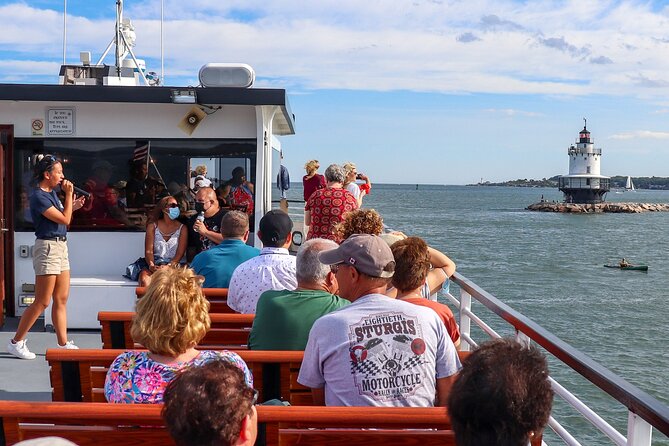
For $54, you are buying more than a boat ride. You are paying for guided context, shoreline access that most people do not get on foot, and a route designed for big visual payoffs: lighthouses, military sites, and island scenery across Portland Harbor and Casco Bay.
This is also one of those tours where timing matters. The length, about 1 hour 45 minutes, is long enough to feel like you are leaving the dock area and settling into the harbor rhythm. It is short enough that you are not trapped on the water if the weather turns.
The best value here is the pairing of story and sight. When you hear why a lighthouse was built or how a fort was used, the scenery stops being just pretty silhouettes. You start noticing details like ledges, channel markers, and the way islands shape the water near the shipping channel.
Meeting at 170 Commercial St and Getting Out Fast
Most harbor tours live or die by the first 15 minutes, and this one is simple. You meet at 170 Commercial St, Portland, ME 04101, then you return to that same spot when the cruise ends.
The cruise uses a mobile ticket, which is easy if you are already juggling a few other Portland stops. The group size cap is 80 travelers, so you will not feel like you are stuck in a giant crowd, but you should still treat boarding like it matters.
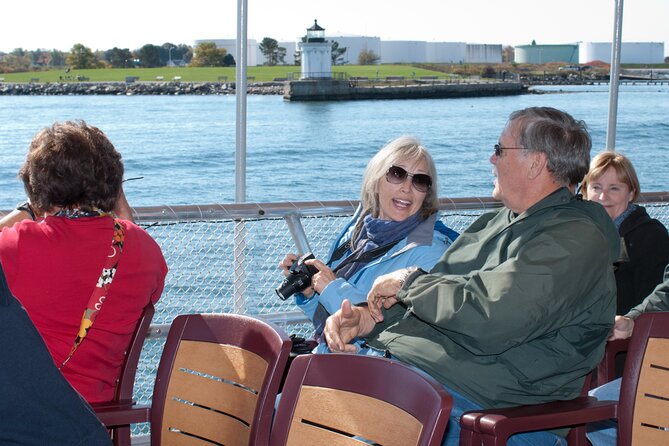
If you want better photo angles, arrive early and pay attention to where you choose to sit. One practical tip that can make a noticeable difference is to sit on the side that faces the most open water views when you are looking toward the front of the boat. On a harbor like this, a few yards can change what you can frame.
Further Cruises & Boat Tours covered by our reviewers in Portland
Diamond Pass and Portland Harbor: The Route That Keeps the Water Moving
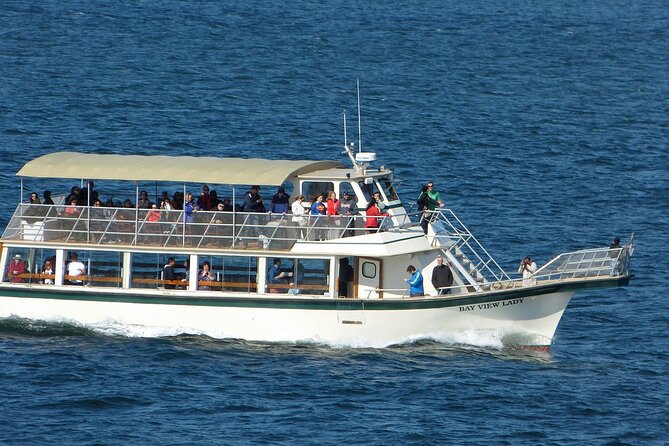
The heart of the experience is the water route along Diamond Pass and through the surrounding harbor and island areas. From the deck, you are not just looking at Portland in the distance. You are watching how the coastline, shipping channel, and island groups work together.
You will also get views of key features like Fort Gorges and other harbor landmarks, based on how the captain times the cruise. Even if you are not chasing every lighthouse by name, this portion of the route gives you your bearings fast, so Portland Harbor feels like a system, not a random coastline.
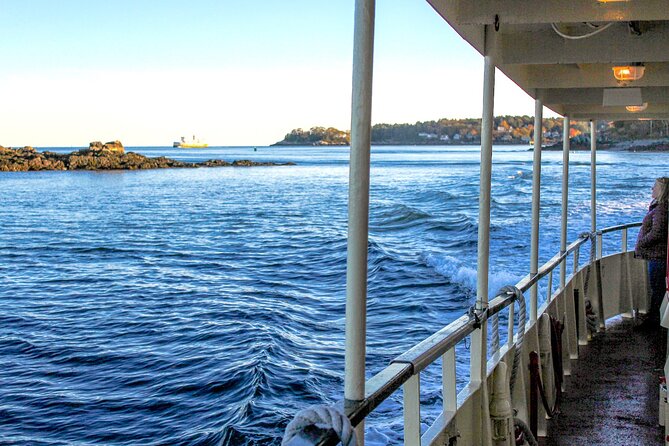
Expect the ride to be scenic, and expect the weather to matter. Reviews from recent riders point out windy, cold conditions at times, especially in fall months. If you run cold easily, dress for it, even if the morning seems mild.
Maine’s Oldest Lighthouse and the George Washington Commission
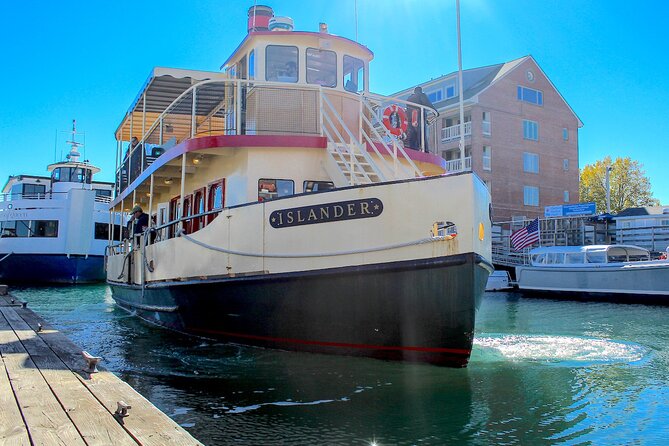
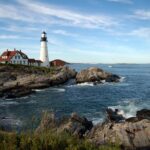
One of the most talked about moments on this cruise is the stop at Maine’s oldest lighthouse, commissioned by George Washington. This is described as one of the most photographed lighthouses in the county, and it makes sense why. It is not just old, it is visually strong: a classic lighthouse shape set against harbor water.
What you should look for here is the sense of purpose. Commissioned in the earliest era of coastal navigation, this lighthouse represents the early push to keep ships safe near a busy seafaring coastline. When you learn that connection from the onboard narration, you start seeing the lighthouse as infrastructure, not just a postcard prop.
If you are the type who loves landmarks but also likes a few solid facts, this is a highlight that pays off. You get a reason for the importance, plus a front row view from the water.
The 1897 West-Side Shipping Channel Lighthouse
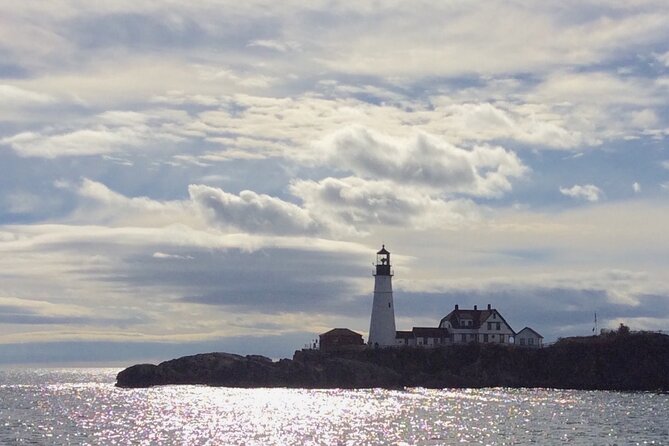
Next up, you pass a historic lighthouse constructed in 1897 that marks the west side of the Portland shipping channel. This kind of lighthouse is built for function, and the view helps you understand that.
From the boat, you can appreciate how these channel markers relate to the movement of ships. The cruise timing and angle let you see how a lighthouse can serve as a directional cue in a working harbor. If you spend any time watching boats from shore, it is easy to assume the harbor is casual. Out here, you feel the logic behind navigation.
One consideration: you might not be able to get the same close-up detail you would from a lighthouse visit on land. But you gain context. You see how multiple points in the harbor work together, and you learn where ships likely need guidance.
Thomas Walter, US Capitol Designer, and Bug Light’s Six Columns
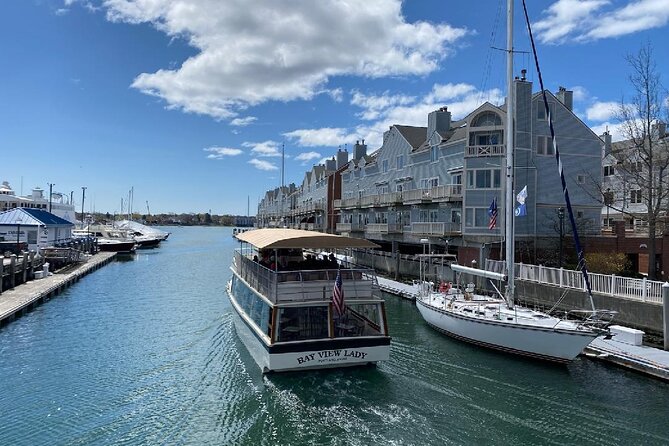
This stop is for lighthouse nerds and also for anyone who likes a good architectural story. You will see a historic lighthouse constructed in 1855, with design ties to Thomas Walter, the designer of the US Capitol dome and the East and West Wings.
The smaller lighthouse associated with this stop is also known as Bug Light, and it features six Corinthian columns around its base. That column detail is the kind of thing you can spot and then connect back to the broader theme: American design traditions show up even in working maritime structures.
Why this stop is worth your attention is how it breaks the stereotype that lighthouse design is always plain and purely practical. Here, the design language is noticeable, and the narration connects it to a larger national story. It turns a quick look at a small light into a richer visual explanation.
If you are traveling with kids, this is also a strong moment because the columns and the name Bug Light give the story something playful to hold onto while the boat keeps moving.
- The Real Portland Tour: City and 3 Lighthouses Historical Tour with a Real Local
★ 5.0 · 1,448 reviews


Hog Island Ledge and the Civil War Era Fort Plan
The cruise also hits a Civil War era fort in Casco Bay located on Hog Island Ledge. You will hear that it was modeled after Fort Sumter in Charleston, South Carolina, and you will learn how it later became a storage facility in WWI and WWII.
This is one of the best examples of why doing Portland from the water matters. Forts can feel distant and abstract when you only see them on maps. From the harbor, you get a clearer sense of how military planning used geography, ledges, and distance.
What to watch for at this stop is the setting. Hog Island Ledge is not just a dot on a chart. You can see why the location mattered. The narration helps you connect that physical setting to the idea of defense and logistics.
And if you are the kind of traveler who likes historical parallels, the Fort Sumter connection is a satisfying link, because it gives you a known reference point even if you have never stood in Charleston.
The 1905 Twin of Graves Light at Portland’s Northern Entrance
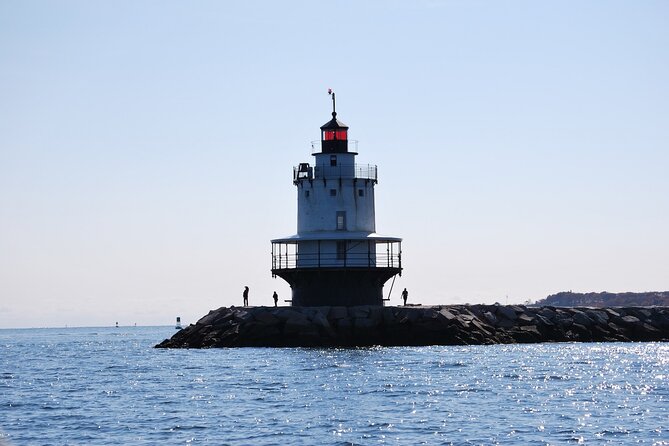
Another lighthouse stop on the route is a structure constructed in 1905, described as a twin of Graves Light off Boston. It sits on a quarter mile of ledge that marks the northern entrance into Portland Harbor.
This is a great moment to focus on ledges and entrances. When you look across water and see ledges holding a lighthouse in place, you understand why location is everything in navigation. A harbor entrance is not just a gateway, it is a boundary where ships transition into a more complex area.
The Graves Light comparison is useful too. It shows how lighthouse design and function travelled across coastlines, rather than being invented from scratch everywhere.
On days when weather is overcast or choppy, you might not see every lighthouse in the same clear way. That does not erase the value. You still get multiple lighthouse moments and strong narration, even if one or two views are less crisp than ideal.
Peaks Island, Diamond Pass, and the Seal Habitat at Halfway Rock
As you move through the cruise, the scenery shifts from single structures to a broader island view. You will see islands off the coast of Portland, including Peaks Island, House Island, Cushing Island, Little and Great Diamond Islands, and you travel through Diamond Pass.
A standout in the highlights is a seal habitat called Halfway Rock. If wildlife shows up, it is one of those small surprises that makes the boat feel alive. Even if you do not catch seals in every moment, the habitat reference helps you look for movement instead of treating the water like background.
This part of the route also gives you a more everyday Portland look. You can see how the harbor spreads out, how islands sit in layers, and how the city relates to nearby coast communities. It is scenic, but it is also practical for understanding Portland’s geography.
In other words, you finish the cruise with a better sense of where things are. That is huge if you plan to visit more spots around Casco Bay.
How Cold, Windy, and Choppy Might Get, and How to Handle It
The cruise runs in the real world, not an indoor studio. Wind can show up fast over open water. Reviews specifically call out windy, cold conditions in fall, and they also mention that the water can get a little choppy for part of the ride.
So dress for the deck. Layers help, and a wind-resistant outer layer is a smart move. If you hate cold hands, bring gloves even if you think you will not need them.
There is also a comfort tip that matters: sound and seating. If you end up sitting on the lower level toward the back, you might struggle to hear details during the narration. If you care about the history facts as much as the views, try to choose seating that gives you clearer sightlines and audio.
Onboard Comfort: Snacks, Restrooms, and a Bar That Changes the Feel
Good harbor weather is pleasant. But not every day is perfect, and this tour still holds up because it comes with onboard basics that make waiting on deck easier.
You can expect a bar and snacks onboard, plus comfortable restrooms. That is not just convenience. It is part of why the experience works for all ages. If someone needs to step inside, or if you want a quick snack between viewpoints, you can do it without feeling stuck.
The cruise also runs smoothly according to rider comments. That is not a guarantee, but it is a strong signal that the captain and crew are experienced at keeping the ride steady.
The boat has limited capacity with the 80 traveler cap, so you should not feel like you are squeezed into a sardine situation. Still, bring patience, especially if you arrive close to the boarding time.
The People Factor: Narrators Like Mark and Carl Make the History Stick
A boat tour lives and dies by narration. This cruise appears to take that seriously, with guides who bring humor and real local flavor.
Some narrators referenced include Mark, described as a lifelong native who ties personal experience to what you are seeing, and Carl, noted for being informative and funny. There are also mentions of guides like Victoria and Nate, with a relaxed, friendly vibe.
You should not expect a dry lecture. The narration is timed to the route, with lots of facts designed to match the visuals when you are looking out at the same time. The one drawback to watch for is timing mismatch on certain days, especially if it feels like you are hearing about something before you are actually near it. If that happens, just know the key points are still interesting enough to catch even if you later revisit the story in your own way.
Who This Portland Harbor Cruise Fits Best
This is a strong pick if you want Portland’s maritime side without doing a lot of walking. It is also ideal for families because the cruise covers big, easy-to-see landmarks like lighthouses and islands, plus the boat has snacks and restrooms.
If you are a couple, it works because you can balance calm water time with the structured narration. You still get room to enjoy the view without feeling like you are on a tight sightseeing schedule.
History lovers should like the mix of lighthouse commissioning and architectural connections, plus the fort modeled after Fort Sumter and its later use in WWI and WWII. You get stories you can picture, not just facts you memorize.
And if you are a first time Portland visitor, you will get your bearings fast. Seeing Diamond Pass and the islands from water gives you a spatial map your brain can reuse when you explore on land later.
Should You Book Harbor Lights and Sights?
If you want Portland from the water, this cruise is a solid value at $54. You get a tight 1h45 format, multiple lighthouse moments, a Civil War era fort story, and island views that make Portland Harbor feel real.
I would book it if:
- You care about lighthouses, forts, and how the harbor works.
- You want an easy, comfortable outing with snacks and restrooms onboard.
- You like guided storytelling that stays connected to what you can actually see.
I might skip or adjust expectations if:
- You hate cold wind and you are visiting in a season when the harbor air runs sharp.
- Clear audio is a priority for you, because seating near the back on the lower level can make narration harder.
If you are flexible and dress for the deck, this is one of the easier ways to get a meaningful slice of Maine’s coastal world in one outing.
FAQ
How long is the Harbor Lights and Sights Cruise?
It runs about 1 hour 45 minutes.
Where does the cruise start?
The tour meets at 170 Commercial St, Portland, ME 04101, USA.
Does the tour return to the same place?
Yes, it ends back at the meeting point.
How much does it cost?
The price is $54.00 per person.
Is a mobile ticket used?
Yes, the tour offers a mobile ticket.
Is the tour offered in English?
Yes, it is offered in English.
What is the maximum group size?
The maximum is 80 travelers.
Are service animals allowed?
Yes, service animals are allowed.
Does it require good weather?
Yes. The experience requires good weather, and if it is canceled due to poor weather you will be offered a different date or a full refund.
Is there free cancellation?
Yes, you can cancel for a full refund up to 24 hours in advance.
How far in advance is it usually booked?
On average, it is booked about 18 days in advance.
More logged under Cruises & Boat Tours in Portland
- 2.5-hour Dinner Cruise on Willamette River★ 4.5 · 480 reviews
Tour Reviews: more from our Portland desk
- Multnomah Falls and Columbia River Gorge Half-Day Hiking Tour★ 5.0 · 2,108 reviews
- The Real Portland Tour: City and 3 Lighthouses Historical Tour with a Real Local★ 5.0 · 1,448 reviews
- Columbia River Gorge Waterfalls Tour from Portland, OR★ 5.0 · 1,278 reviews
- Discover Portland City and Lighthouse Tour★ 5.0 · 1,019 reviews
- Portland Explorer | Maine History, Culture, & 3 Lighthouses Tour★ 5.0 · 948 reviews
Newest Portland reviews added to this site
- Columbia River Gorge Waterfall Tour from Portland
★ 5.0 · 319 reviews - Phantoms, Penance, and Poltergeists: Portland Ghost Tour
★ 4.5 · 328 reviews - Columbia Gorge Waterfalls and Mt. Hood Tour – Full Day
★ 5.0 · 339 reviews - Oregon Coast Tour from Portland
★ 5.0 · 373 reviews - Haunted Underground Shanghai Tunnel Tour with Brewery Tastings
★ 4.5 · 405 reviews - Old Port Culinary Walking Tour from Portland
★ 5.0 · 419 reviews - Portland Sightseeing Tour Including Columbia Gorge Waterfalls
★ 4.5 · 423 reviews - Essential Portland Oregon Bike and E-Bike Tour!
★ 5.0 · 431 reviews - Afternoon Half-Day Multnomah Falls and Columbia River Gorge Waterfalls Tour from Portland
★ 5.0 · 473 reviews - 2.5-hour Dinner Cruise on Willamette River
★ 4.5 · 480 reviews
Cruises & Boat Tours, side by side.
 ★ 5.0Chicago Architecture River CruiseFrom $3915,756 reviews
 ★ 4.5Boston Duck Boat Sightseeing City Tour with Cruise Along Charles RiverFrom $599,378 reviews
 ★ 5.0Best Niagara Falls US Tour W/Boat Ride, Cave & More Wonders!From $1398,372 reviews
 ★ 4.6NYC: Circle Line 2h Harbor Lights Cruise Skip-The-Box-OfficeFrom $458,222 reviews
 ★ 4.8Chicago River: 1.5-Hour Guided Architecture CruiseFrom $448,046 reviews
 ★ 4.0New Orleans Steamboat Natchez Jazz Cruise with Dinner OptionFrom $587,533 reviews
 ★ 4.5Miami: Biscayne Bay Millionaire’s Homes Sightseeing CruiseFrom $207,348 reviews
 ★ 4.5NYC: Circle Line 2.5 Hour Best of NYC Boat CruiseFrom $397,268 reviews