
Review · ALASKA GLACIER TOURS
Kenai Fjords National Park Glacier & Wildlife Cruise
Glaciers feel real on this cruise. This Kenai Fjords National Park sailing from Seward gets you close to tidewater ice like Holgate or Aialik Glacier, with ongoing spotting tips from the naturalist. You also sail past the Chiswell Islands area, famous for seabirds, so your time is not only about the glacier.
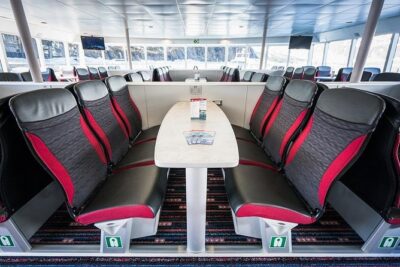
I especially like the practical setup onboard: a heated cabin with reserved seating, plus water, coffee, and tea so you stay comfortable while you scan the water and cliffs. Binoculars are included too, and that small detail makes a big difference when puffins are far out or otters pop up and vanish fast.
The main consideration is that wildlife is never guaranteed, and the boat can move. If you are prone to sea sickness, plan ahead, because people who waited or did not treat it early often had a rougher ride, even on a great day.
In This Review
- Key things I’d focus on
- Seward departures to Kenai Fjords: how this 6-hour day really flows
- Holgate vs. Aialik Glacier: why the calving views are the main event
- Chiswell Islands and Cape Resurrection: seabirds that make you look twice
- Wildlife spotting without the fantasy promises: what you can realistically watch for
- Inside the heated cabin: seating, narration, and staying comfortable
- What you eat: complimentary lunch, then optional snacks
- What to wear, plus camera and motion sickness tips that actually help
- Is this cruise worth $265.23? The value math and who it fits
- Should you book Kenai Fjords Glacier and Wildlife Cruise from Seward?
- FAQ
- How long is the Kenai Fjords Glacier & Wildlife Cruise?
- Where does the tour start in Seward?
- Is lunch included, and what are the options?
- Are binoculars provided for wildlife viewing?
- Does the cruise run in bad weather?
- Can I cancel and get a full refund?
Key things I’d focus on
- Holgate or Aialik Glacier calving: you get front-row views of ice breaking into the water (when conditions allow).
- Chiswell Islands or Cape Resurrection: huge seabird concentrations make bird watching a real event.
- A naturalist onboard: you get constant, on-the-spot explanations for what you are seeing.
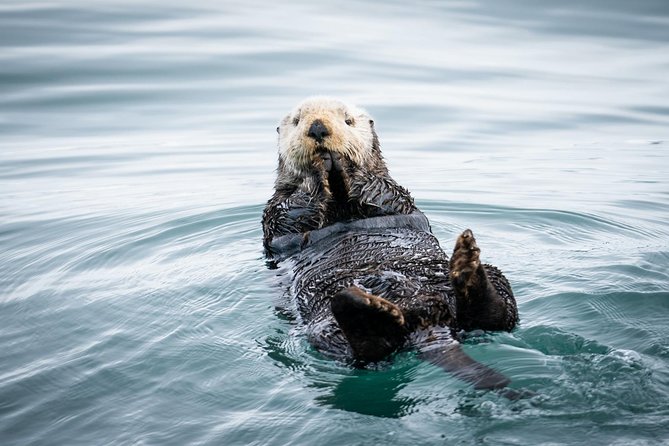
- Wildlife chances that feel realistic: watch for sea otters, puffins, whales, and even mountain goats along the way.
- Comfort perks that matter in Alaska: heated cabin, reserved seating, water, coffee, tea, and onboard binoculars.
- Motion sickness prep is not optional: take precautions early if you know you get queasy.
Seward departures to Kenai Fjords: how this 6-hour day really flows
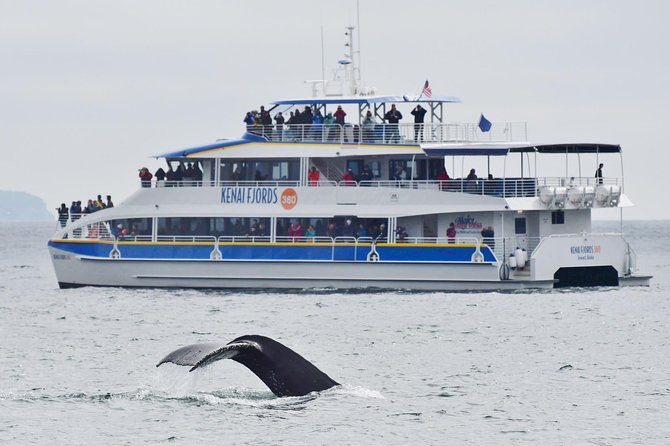
This is a half-day cruise designed to pack the best of Kenai Fjords into a single outing. It starts in Seward at 1412 4th Ave, and they ask you to arrive 1 hour prior so you can check in, get to your seat, and be ready before the boat leaves the dock. It runs in English, uses a mobile ticket, and typically carries up to 150 people, which helps keep things organized and gives you space to move around during wildlife viewing.
Once you leave Seward, the route takes you through Resurrection Bay and then deeper toward the glacier areas. You are sailing roughly 100 miles round-trip, so it is not a short “look and turn around” cruise. That distance matters. Glaciers and wildlife are not static targets. The captain and crew reposition based on what the day offers, and that is where a guided trip beats self-guided sightseeing, especially if you want narration along the way.
If you are watching for wildlife, keep your expectations grounded. You can see a lot, but you are boating in a living system with wind, waves, and animals that decide when to show up. The good news is the crew gives you continual cues on where to look and when to scan, so you are not just staring out into gray water and hoping.
Holgate vs. Aialik Glacier: why the calving views are the main event
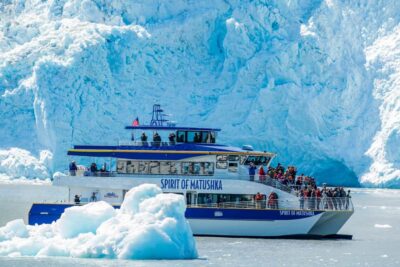
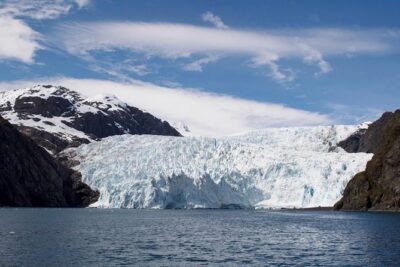
The glacier portion is the heart of this cruise, and you get the classic Kenai Fjords experience: watching tidewater glaciers interact with the ocean. Depending on the day and conditions, you will see either Holgate Glacier or Aialik Glacier, with time near Aialik Bay when an active tidewater face is in range.
Here is what makes these glaciers special for you as a visitor. Tidewater glaciers calve because moving ice is meeting seawater. When chunks break off, it is not just scenery, it is a process you can witness. The crew and naturalist commentary helps you interpret what you are seeing in plain language, so you understand why the ice looks the way it does and why certain areas are worth watching longer.
A few practical points that help the experience:
- Stay flexible about the glacier name. You are aiming for calving and a close approach, not a guarantee of one specific glacier.
- Expect cold and wind near the ice. Even if Seward feels mild before you depart, the glacier area can feel sharper on your face and hands.
- Keep your camera ready. Calving can be sudden, and you do not want to be digging for straps or fiddling with settings when the moment happens.
Some days are louder and more dramatic than others. Still, even when the calving is quieter, seeing a working glacier close up gives you that rare “I am really here” feeling that you cannot get from postcards or distant overlooks.
Further Cruises & Boat Tours covered by our reviewers in Seward
Chiswell Islands and Cape Resurrection: seabirds that make you look twice
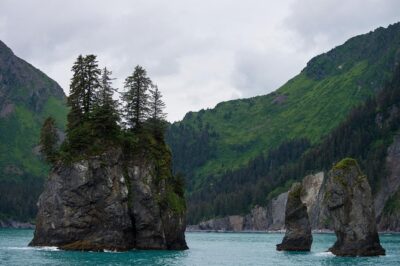
One of the best surprises in this itinerary is the bird stop. Depending on weather and timing, the cruise visits the Chiswell Islands or Cape Resurrection. This is not a quick glance at a single bird. You are usually looking at major seabird activity, the kind that makes you realize the coast is not just scenery, it is a home.
Chiswell Islands are known for thousands of nesting seabirds, and that scale is what you are really paying for. When birds are packed like that, your binoculars suddenly become useful instead of just decorative. Puffins, gulls, and other coastal birds can keep you busy while the boat holds position.
Cape Resurrection is a different vibe, but still tied to the same idea: offshore islands and headlands concentrate food and nesting areas. If you have any interest in birds, this stop makes the cruise feel like more than glacier viewing. It turns the day into a broader Kenai Fjords wildlife show.
A tip that helps: once you notice strong bird activity, slow your scanning. Pan with your eyes first, then switch to binoculars for confirmation. It makes spotting faster and reduces the chance you miss quick movement while you are trying to focus your binoculars.
Wildlife spotting without the fantasy promises: what you can realistically watch for
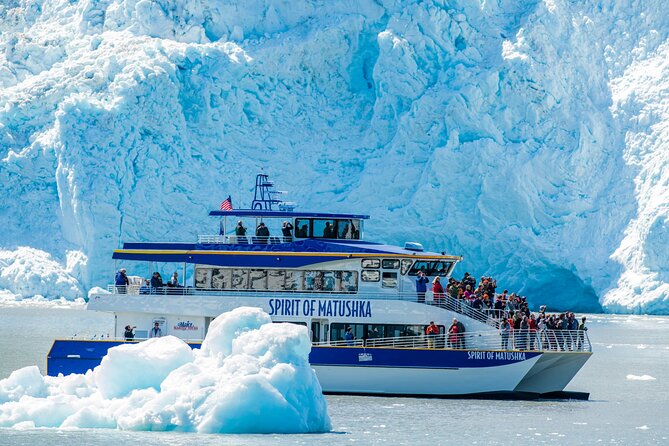
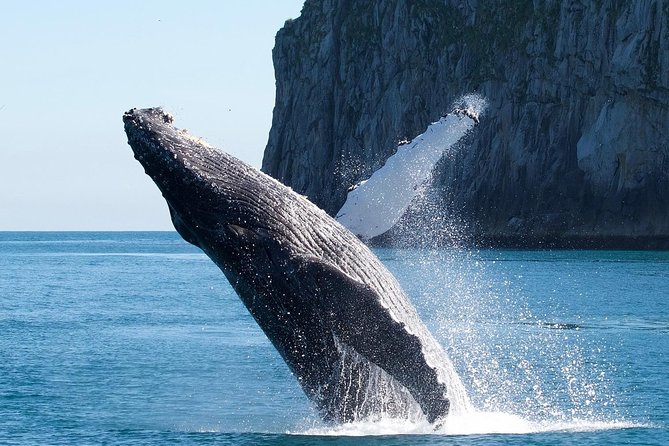
This cruise is built around the kinds of animals that tend to appear in Kenai Fjords waters. You are encouraged to watch for sea otters, puffins, whales, and mountain goats, and that is a solid lineup. The key is to treat it as a set of opportunities, not a scripted checklist.
From what I see in the way the day is run, the biggest advantage is that the crew uses guidance and repeated scanning. You are not left on your own to interpret distant movement. You get prompts to look in likely areas, and you get time to search, which dramatically increases your chances of seeing something.
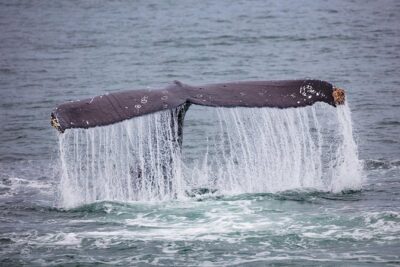
If you are hoping for whales, keep this mindset: whales show up on their schedule. Some days bring multiple sightings, including different whale types, and some days are quieter. Either way, you should still expect wildlife. Sea otters and seabirds often make an appearance even when whale sightings are less frequent, so the day does not collapse if the whales do not.
One more thing that I think matters for you: bring patience for the on-water reality. A calving glacier can steal attention. Then a bird shift can pull you away. Then a distant spout can bring you back. A good cruise rhythm keeps you engaged, and the narration helps you reframe what you are seeing as part of one big system instead of random sightings.
Inside the heated cabin: seating, narration, and staying comfortable
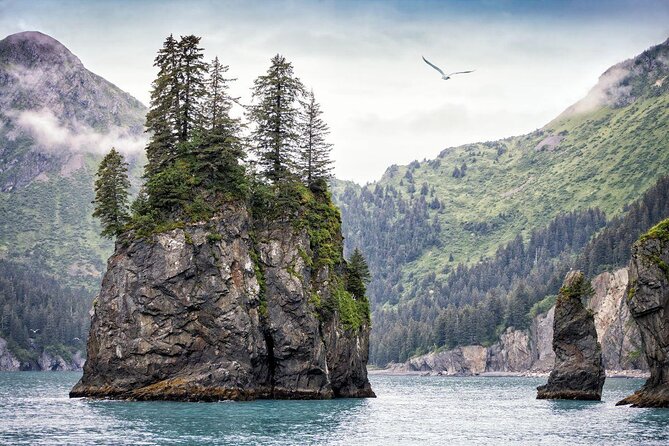
This is an actively guided cruise, not a silent sightseeing ride. You have onboard naturalist narration throughout, and it changes how you experience the park. Instead of wondering what a cliff is made of or why a glacier front looks the way it does, you get explanations in the moment as you pass the areas of interest.
I also like how the seating works. You get reserved seating in the heated cabin, and people report that the boat feels efficiently set up, with comfort that helps you focus on viewing. In addition, staff assign a table as a sort of home base, which keeps you from constantly playing “where do we sit” when wildlife pops up and everyone wants a better angle.
Small comfort wins add up in Alaska:
- Water, coffee, and tea are included, which helps on chilly mornings.
- Binoculars are provided, so you do not need to guess whether your own gear will work.
- The vessel is described as clean, and onboard restrooms are kept in good condition, which matters more than you think on a half-day excursion.
One extra note about people. In some departures, the captain and crew are named in the feedback, including Capt. Lara, plus crew members like Luis, Melody, and Sydney. The pattern is consistent though: staff get high marks for being attentive, friendly, and quick to help you spot what matters.
What you eat: complimentary lunch, then optional snacks
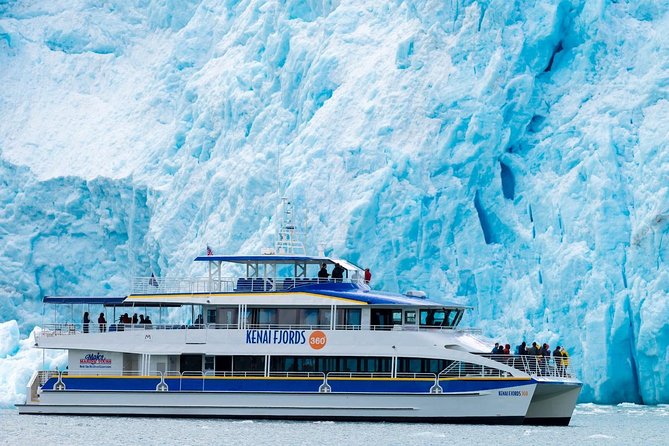
You get a complimentary brunch or deli lunch during the cruise, and that is a real value in a place where you can easily spend the whole day focused on the water and forget to eat until you feel drained. Lunch is included as a sandwich option with turkey, roast beef, or vegetarian, and you should submit your choice in advance.
Here is the balanced take. A sandwich lunch is straightforward, filling enough to keep your energy up, but it is not a gourmet spread. If you like to graze, you may want to plan for additional snacks that are available to purchase onboard. People also talk about a fun alcohol option like a glacier-themed margarita, and alcohol is not included, so consider it a splurge if it shows up on the bar menu that day.
For many people, the included drinks plus a warm meal make the cruise feel easier to enjoy, especially if weather is changeable and you end up in wind and mist longer than expected.
Other National Parks we have written up across Seward
What to wear, plus camera and motion sickness tips that actually help
This is where most “worth it” days are made. The cruise runs in all weather conditions, and they ask you to dress appropriately, which usually translates to: layers, rain gear, and gloves you can tolerate. Even if the sun is out in Seward, you can feel the shift after you get closer to open water and glacier air.
I recommend you treat this as a bring-everything day:
- Layers you can add or peel quickly
- Rain jacket and something that works as a rain hat in wind
- Gloves for hands that get cold fast
- Closed-toe shoes with grip for moving around
Two more “do not wait until you feel sick” tips are worth repeating. First, motion sickness prevention works best when taken before you get queasy, not after. If you are prone to sea sickness, take it early, at least an hour before departure. Second, if you bring a camera with a telephoto lens, plan for stability. A monopod can help reduce shake when you are scanning ice fronts and sudden wildlife movement.
Finally, remember why binoculars matter. You will spend time looking at the far end of the water and the far slope of islands. Having a shared set of viewing tools onboard levels the playing field, even if your own gear is in the bottom of your bag.
Is this cruise worth $265.23? The value math and who it fits
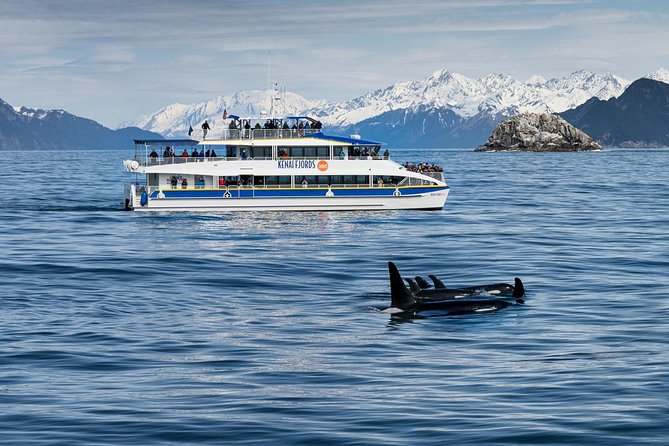
At $265.23 per person for about 6 hours, the price is not cheap, but it is also not random. You are paying for:
- access to Kenai Fjords areas that are mostly practical by boat (or helicopter)
- a working naturalist who explains what you are seeing in real time
- included comfort basics: heated cabin seating, water, coffee, tea
- binoculars provided for viewing
- a complimentary lunch sandwich (turkey, roast beef, or vegetarian)
If you are a first-timer in Seward and you want maximum “big scenery + wildlife” in a single outing, this is a strong match. The glacier views and the chance at wildlife sightings let you check off the big Kenai Fjords themes without adding extra tours.
If you hate boats or know you get sick easily despite medication, you may want to rethink it, because the movement can affect some people even on good days. If you are traveling with kids, this can work well, but it is smart to know that open-air behavior (running, calling, blocking sightlines) can affect your viewing comfort. The cruise is sized to keep it manageable, with a cap around 150, but you still share public space with other people.
One more timing note. This cruise tends to book ahead, often around 56 days in advance, so if you have a tight travel window, start early.
Should you book Kenai Fjords Glacier and Wildlife Cruise from Seward?
I would book it if you want one practical, guided half-day that gives you close glacier viewing and real wildlife watching time, with comfort built in. The inclusion list is meaningful, especially the heated seating, binoculars, and lunch, and the naturalist narration turns the scenery into something you can actually understand while you are watching.
I would hesitate only if you are very sensitive to motion or your personal priority is guaranteed whale sightings. You can have an amazing day and still leave without whales. On this cruise, your best odds come from being ready for changing conditions, dressing warmly, and sticking with the viewing rhythm the crew leads.
If that sounds like your style, this is a high-value Kenai Fjords choice.
FAQ
How long is the Kenai Fjords Glacier & Wildlife Cruise?
The cruise runs about 6 hours.
Where does the tour start in Seward?
You meet at 1412 4th Ave, Seward, AK 99664, USA. The cruise ends back at the meeting point.
Is lunch included, and what are the options?
Yes. The tour includes a complimentary brunch or deli lunch with sandwich options: turkey, roast beef, or vegetarian. You should submit your choice in advance.
Are binoculars provided for wildlife viewing?
Yes. The tour includes use of binoculars.
Does the cruise run in bad weather?
The cruise operates in all weather conditions, but it also requires good weather. If it is canceled due to poor weather, you will be offered a different date or a full refund.
Can I cancel and get a full refund?
Yes. You can cancel for a full refund up to 24 hours before the experience start time. If you cancel less than 24 hours before, the amount paid is not refunded.
National Parks: more from our Seward desk
- Kenai Fjords National Park Glacier & Wildlife Tour from Seward★ 4.5 · 1,036 reviews
- Seward: Kenai Fjords National Park Catamaran Cruise w/Lunch★ 4.8 · 736 reviews
- Full-Day Kenai Fjords National Park Cruise★ 5.0 · 638 reviews
- Wilderness Dog Sled Ride and Tour in Seward★ 5.0 · 405 reviews
- Full-Day Kenai Fjords National Park Northwestern Cruise★ 5.0 · 341 reviews
More logged under Cruises & Boat Tours in Seward
- Kenai Fjords and Resurrection Bay Half-Day Wildlife Cruise★ 5.0 · 1,156 reviews
- Seward: Kenai Fjords National Park Catamaran Cruise w/Lunch★ 4.8 · 736 reviews
- Full-Day Kenai Fjords National Park Cruise★ 5.0 · 638 reviews
- Full-Day Kenai Fjords National Park Northwestern Cruise★ 5.0 · 341 reviews
Tour Reviews: more from our Seward desk
- Kenai Fjords and Resurrection Bay Half-Day Wildlife Cruise★ 5.0 · 1,156 reviews
- Kenai Fjords National Park Glacier & Wildlife Tour from Seward★ 4.5 · 1,036 reviews
- Seward: Kenai Fjords National Park Catamaran Cruise w/Lunch★ 4.8 · 736 reviews
- Full-Day Kenai Fjords National Park Cruise★ 5.0 · 638 reviews
- Wilderness Dog Sled Ride and Tour in Seward★ 5.0 · 405 reviews
Newest Seward reviews added to this site
- Wilderness Dog Sled Ride and Tour in Seward
★ 5.0 · 405 reviews - Full-Day Kenai Fjords National Park Cruise
★ 5.0 · 638 reviews - Seward: Kenai Fjords National Park Catamaran Cruise w/Lunch
★ 4.8 · 736 reviews - Kenai Fjords National Park Glacier & Wildlife Tour from Seward
★ 4.5 · 1,036 reviews - Kenai Fjords and Resurrection Bay Half-Day Wildlife Cruise
★ 5.0 · 1,156 reviews - Kenai Fjords National Park Glacier & Wildlife Cruise
★ 5.0 · 1,756 reviews
Alaska Glacier Tours, side by side.
 ★ 5.0Juneau Wildlife Whale Watching & Mendenhall GlacierFrom $2496,236 reviews
 ★ 5.0Wilderness, Wildlife, Glacier Experience from AnchorageFrom $1993,004 reviews
 ★ 5.0Mendenhall Glacier Ice Adventure TourFrom $3761,285 reviews
 ★ 5.0Mendenhall Glacier Lake Canoe TourFrom $2501,269 reviews
 ★ 4.5Kenai Fjords National Park Glacier & Wildlife Tour from SewardFrom $2231,036 reviews
 ★ 5.0Ultimate Juneau Whale Watch and Mendenhall Glacier ViewFrom $156915 reviews
 ★ 4.5Prince William Sound Glacier Tour – WhittierFrom $248838 reviews
 ★ 4.5Mendenhall Glacier Visitor Center and Ultimate Whale Watch ComboFrom $199771 reviews
This one is also listed in