
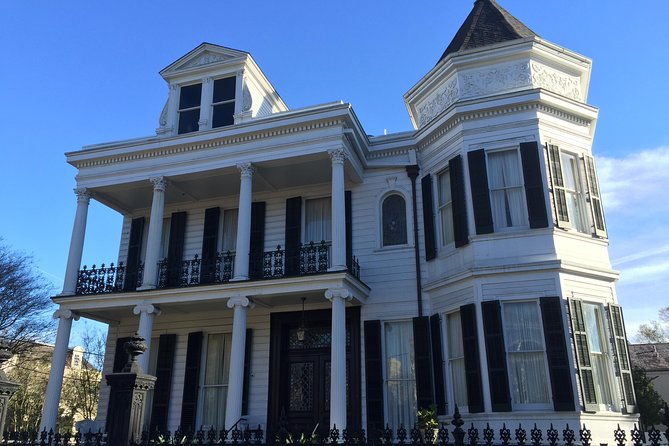
Review · FRENCH QUARTER AND GARDEN DISTRICT
New Orleans Garden District Architecture Tour
Garden District mansions tell stories at walking speed. On this $40, 2-hour tour, I like the small-group feel and the licensed local guide who connects building details to real New Orleans life. You also get a stop at Lafayette Cemetery No. 1, a peek into the city’s famous Cities of the Dead, plus guided looks at standout homes with Italianate style.
Access can shift: Lafayette Cemetery No. 1 may be closed when city services are happening, and the tour requires good weather. Plan on steady walking through the Garden District, so comfortable shoes matter.
In This Review
- Key things to know before you go
- Entering the Garden District: what this tour teaches you to see
- Your guide makes the difference, and the tour delivers that
- Meeting at 2727 Prytania St and planning your timing
- Stop 1: Lafayette Cemetery No. 1 and learning the burial-custom basics
- Stop 2: Commander’s Palace, architecture talk, and what is not included
- Stop 3: Morris-Israel House and the Italianate clues from 1869
- Stop 4: Women’s Guild of the New Orleans Opera house and how to tell two styles apart
- Stop 5: Louise S. McGehee School and from residence to library
- Stop 6: Carroll-Crawford House and the Irish-born Samuel Jameson connection
- Stop 7: The Rink Shopping Center and the 1884 skating surprise
- Stop 8: The Garden District walk itself, antebellum homes, and the people story
- What makes the price feel fair at $40 per person
- Who should book this tour (and who might want to pick something else)
- Should you book the New Orleans Garden District Architecture Tour?
- FAQ
- How long is the New Orleans Garden District Architecture Tour?
- How much does the tour cost?
- Is there admission included for all stops?
- Where does the tour start and end?
- What language is the tour offered in?
- What happens if weather is bad?
Key things to know before you go

- Small group, bigger attention: a maximum of 14 travelers means you can ask questions and actually hear the answers.
- You learn to spot styles: Italianate architecture shows up repeatedly, and your guide helps you read clues.
- Cemetery visit is part of the story: Lafayette Cemetery No. 1 is brief but memorable, with a focus on burial customs.
- Not all stops are equal on tickets: most stops are free to view, but Commander’s Palace admission is not included.
- Pace is relaxed, not rushed: you spend a large chunk of time on the Garden District itself, not just quick photo stops.
Entering the Garden District: what this tour teaches you to see

The Garden District can look like a wall of pretty houses. This tour helps you read the wall. Instead of just admiring porches and columns, you learn what to look for in the architecture, and you get enough context to make the neighborhood feel understandable, not just scenic.
What makes it work is the mix of stops. You start with a cemetery moment that explains New Orleans burial customs in general terms, then you move to houses designed with specific architectural intentions. By the time you’re walking the tree-lined streets, your brain is already doing the pattern matching: window shapes, rooflines, and the way different styles sit next to each other like they’re talking.
I also like that it’s designed for a quick hit. The duration is about 2 hours, and a big part of that is spent in the Garden District itself. That matters because you get time to actually absorb street views, not just hop from landmark to landmark.
Your guide makes the difference, and the tour delivers that
The strongest common thread here is the guide. People mention names like Angela, Doug, Lee, Eva, John, Gary, Chelsea, Pauline, and Kelsey because each of them brings a slightly different angle, but the same core skill: turning architecture and local stories into something you can follow in real time.
A standout detail I’d watch for is how guides handle questions. Some guides are described as welcoming questions and answering thoroughly, and others use photos or other visuals to clarify what you’re seeing. That is especially useful in the Garden District, where two homes can look similar at a glance but be very different when you know what to compare.
One more thing: several guides bring personal connection to New Orleans. Angela, for example, is described as a 10th generation New Orleanian, and that kind of local perspective tends to make the history feel less like a lecture and more like a story you’re walking through.
Further French Quarter and Garden District covered by our reviewers in New Orleans
Meeting at 2727 Prytania St and planning your timing

The tour starts at 2727 Prytania St and ends back at the same meeting point. There’s no transportation included, so you’ll want to get yourself there and then enjoy walking the neighborhood.
Also note the practical bits that make the day smoother:
- You’ll use a mobile ticket.
- It’s offered in English.
- It runs best when weather cooperates.
- Service animals are allowed.
- Most people can participate, but you are still doing a walking tour.
The meeting point detail matters because the Garden District is spread out. When you start and finish in the same place, you can build the rest of your day around it easily, whether you’re going to another neighborhood or grabbing a late lunch after your walk.
If you’re visiting during peak times, it helps to book ahead. This tour is often reserved about 19 days in advance on average, so earlier planning can save you from last-minute scramble.
Stop 1: Lafayette Cemetery No. 1 and learning the burial-custom basics
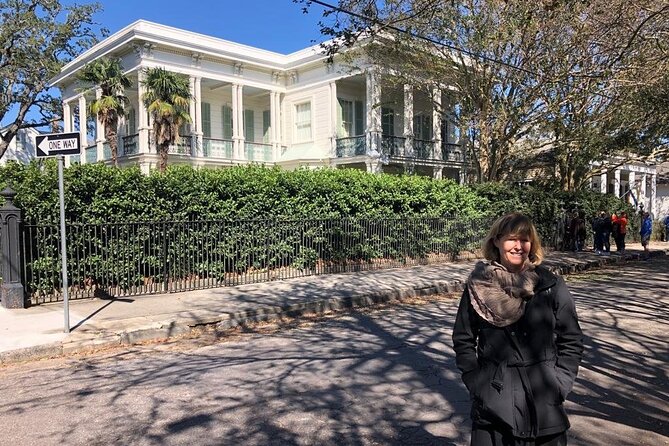
The first stop is Lafayette Cemetery No. 1. It’s a short segment, around 5 minutes, but it sets the tone. This is where your guide frames New Orleans burial customs and connects the cemetery to the larger idea of the city’s “Cities of the Dead.”
Here’s the key practical consideration: entrance is permitted by the City of New Orleans, and the cemetery may be closed when services are being performed. That doesn’t mean your tour is cancelled, but it does mean you should expect that access can be time-sensitive.
If you’re someone who likes understanding why a place looks the way it does, this stop is worth it. Cemeteries in New Orleans are not just background scenery. They’re part of how the city thinks about memory, community, and space.
Stop 2: Commander’s Palace, architecture talk, and what is not included
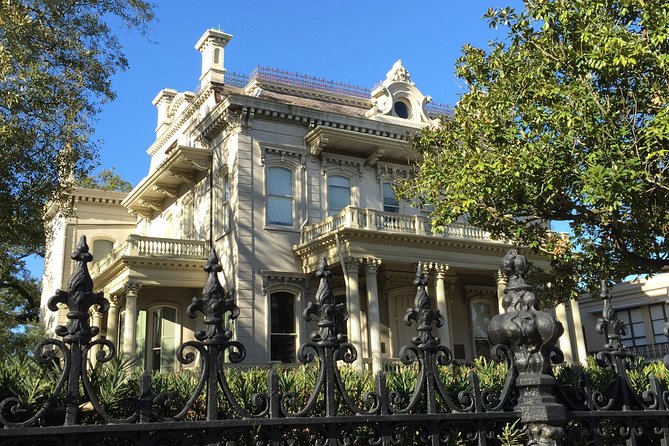
Next up is a discussion around Commander’s Palace. This stop is about 3 minutes, and it focuses on the building’s architecture and the history of the owners, plus highlights of the culinary experience awaiting guests.
One important detail: admission is not included for this stop. So think of Commander’s Palace here as an information stop. If you plan to eat there, or if you want anything beyond what’s included in the tour, you’ll need to handle that separately.
That said, it’s still a smart stop for architecture nerds and casual admirers alike. Even if you’re not going inside, the guide’s framing helps you see how a landmark building fits into the neighborhood’s story.
Stop 3: Morris-Israel House and the Italianate clues from 1869
The Morris-Israel House is described as being designed by Samuel Jameson in 1869, and it’s held up as an excellent example of New Orleans’ iconic Italianate architecture. This is one of the places where your guide’s job turns visible.
Italianate buildings often give you a set of consistent visual hints, and the tour helps you spot them instead of guessing. That means you’ll start recognizing features in other homes too, not just the specific examples you’re standing in front of.
This stop is brief, around 5 minutes, so you’ll want to pay attention right away. When your guide points out the architectural details, follow along, because that same logic tends to carry forward to later houses on the route.






Stop 4: Women’s Guild of the New Orleans Opera house and how to tell two styles apart
The Women’s Guild of the New Orleans Opera house is a fascinating concept for a walking tour because it’s built in two different eras and two different styles. That gives you a built-in puzzle: you learn how to tell the difference between the styles at one location.
This stop runs about 3 minutes, but it can really change how you look at the rest of the neighborhood. Instead of thinking every house was built all at once, you start noticing that buildings can evolve. Additions, updates, and shifting tastes can show up in the details, and your guide gives you a way to see those differences.
If you’ve ever walked past older buildings and wondered why they look slightly mismatched, this is the moment the tour helps you understand what you were seeing.
Stop 5: Louise S. McGehee School and from residence to library
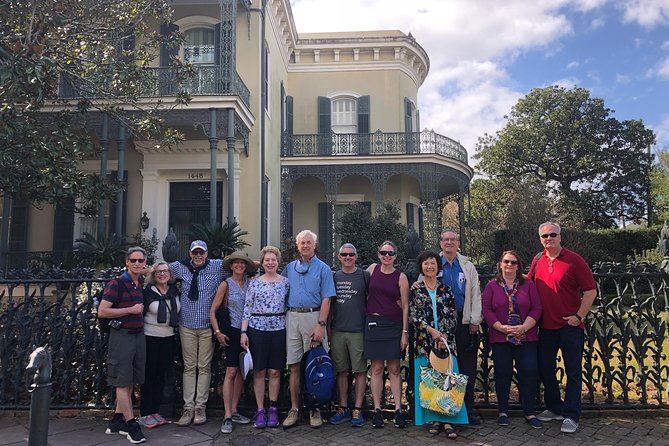
The Louise S. McGehee School gets more time, about 10 minutes. This is a late 19th century building, and the tour walks you through how it started as a single family residence before becoming the library of the McGehee School.
That change of purpose is a big part of why this stop works. Architecture isn’t frozen in time. In cities like New Orleans, buildings can shift roles while still carrying visible traces of the past.
If you like seeing how neighborhoods adapt, you’ll probably find this stop satisfying. It’s not just about what the building looks like. It’s also about why the community needed a different use later on.
Stop 6: Carroll-Crawford House and the Irish-born Samuel Jameson connection
Another quick architectural stop, around 5 minutes, focuses on the Carroll-Crawford House. Like the Morris-Israel House, it’s tied to Samuel Jameson, and the tour notes he was Irish born. This building is also highlighted as an Italianate style example.
This is one reason the tour is such a good “second layer” experience. Once you’ve seen Italianate clues at Morris-Israel, Carroll-Crawford becomes a chance to compare. You stop treating Italianate as a single look and start seeing it as a style with recognizable features, plus variation between buildings.
And if you like a guided pattern, this is exactly that. The guide’s comparisons can help you remember what you learned earlier, instead of letting it wash over you.
Stop 7: The Rink Shopping Center and the 1884 skating surprise
The Rink Shopping Center gets about 7 minutes and a fun historical context. The tour explains residents’ favorite recreational activities at the turn of the century, and it notes that this building housed the largest skating rink in the country at the time it was built, in 1884.
This is the kind of stop that makes the Garden District feel more human. You’re not only learning about wealth and formal design. You’re also seeing how people spent their leisure time in a place that now looks like a different kind of neighborhood.
Even if you’re mostly here for architecture, this stop adds balance. It keeps the tour from becoming only about mansions and instead shows how ordinary life used buildings in different ways over time.
Stop 8: The Garden District walk itself, antebellum homes, and the people story
The centerpiece is the Garden District segment, about 2 hours. This is where you spend most of your time admiring antebellum mansions and learning the history of the area around the time the homes were built.
The guide adds stories about the designers and the people who lived there. That detail matters, because architecture alone can feel abstract. When you tie styles and choices to real residents and real social context, the neighborhood starts to make sense as a place where lives happened.
This is also where small-group size pays off. In a group of up to 14, you can pause without feeling like you’re holding up everyone. You can ask, you can adjust your route on the fly, and you can keep your focus on what the guide is pointing out.
If you’re a first-timer to New Orleans, this walk is a strong orientation. People often mention that it becomes a helpful lens for the rest of the city. Once you’ve learned to see style cues here, other neighborhoods start to click into place too.
What makes the price feel fair at $40 per person
At $40 per person for about 2 hours, this tour is priced like a focused walking experience with a real guide, not like an all-day ticketed attraction.
Here’s why I think it’s good value:
- You’re paying for a licensed, insured local guide with extensive area knowledge.
- Multiple key stops are included, and several are free in terms of admission.
- You get time to learn, not just time to pass by.
You do have to plan around what is not included. Admission is not included for Commander’s Palace, and transportation to and from the sights is not included. Also, cemetery access can be time-sensitive based on city services.
Still, for many people the tradeoff feels right. You’re investing in understanding the neighborhood, and a guide helps you avoid guessing at details you’d otherwise miss on your own.
Who should book this tour (and who might want to pick something else)
This tour is a great fit if you:
- Want a practical way to learn architectural styles in New Orleans.
- Like walking, and you’re comfortable spending about 2 hours on your feet.
- Enjoy asking questions and getting clear answers.
- Want a calmer antidote to the intensity of other neighborhoods, while still staying in the center of the action.
You might reconsider if you:
- Need a fully indoor experience. This is outdoors and depends on weather.
- Are mainly chasing museum-style exhibits. This is more street-level and architectural, with discussions and exterior viewing.
If you’re visiting as a couple, family, or solo traveler, the small-group cap is a big plus. For families with teens, it can also work well because it mixes storytelling with something visually concrete to look for.
Should you book the New Orleans Garden District Architecture Tour?
If you want to understand the Garden District instead of just photographing it, I’d book this. The best part is the combination of architecture instruction and a strong local guide presence, with recognizable enthusiasm from guides like Angela, Doug, Lee, and Eva.
The main thing to respect is the tour’s nature: it’s weather-dependent, it’s a walking route, and cemetery access can be affected by services. If you’re good with that, you’ll leave with a clearer eye for Italianate details, two-era building contrasts, and the way New Orleans history shows up in everyday street scenes.
FAQ
How long is the New Orleans Garden District Architecture Tour?
It’s approximately 2 hours.
How much does the tour cost?
The price is $40.00 per person.
Is there admission included for all stops?
Most stops list admission as free, but admission for Commander’s Palace is not included.
Where does the tour start and end?
The tour starts at 2727 Prytania St, New Orleans, LA 70130, USA, and it ends back at the meeting point.
What language is the tour offered in?
The tour is offered in English.
What happens if weather is bad?
The tour requires good weather. If it’s canceled due to poor weather, you’ll be given the option of an alternative date or a full refund.
More logged under French Quarter and Garden District in New Orleans
- New Orleans Food Walking Tour of the French Quarter with Small-Group Option★ 5.0 · 6,118 reviews
- New Orleans French Quarter, Voodoo and Culture Walking Tour★ 4.5 · 2,961 reviews
- New Orleans Garden District History Walking Tour★ 5.0 · 2,879 reviews
- French Quarter Historical Sights and Stories Walking Tour★ 5.0 · 2,724 reviews
- Ghost and Vampire Walking Tour Of The French Quarter★ 4.5 · 2,406 reviews
Tours: the rest of the New Orleans file
- New Orleans Premier Ghost, Voodoo and Vampire Walking Tour★ 4.5 · 12,856 reviews
- Adults-Only New Orleans Ghost, Crime, Voodoo, and Vampire Tour★ 5.0 · 6,545 reviews
- New Orleans Food Walking Tour of the French Quarter with Small-Group Option★ 5.0 · 6,118 reviews
- New Orleans Swamp and Bayou Boat Tour with Transportation★ 5.0 · 5,399 reviews
- New Orleans City Sightseeing Hop-On Hop-Off Bus Tour★ 4.5 · 4,943 reviews
Tour Reviews: more from our New Orleans desk
- New Orleans Premier Ghost, Voodoo and Vampire Walking Tour★ 4.5 · 12,856 reviews
- New Orleans Steamboat Natchez Jazz Cruise with Dinner Option★ 4.0 · 7,533 reviews
- Adults-Only New Orleans Ghost, Crime, Voodoo, and Vampire Tour★ 5.0 · 6,545 reviews
- New Orleans Food Walking Tour of the French Quarter with Small-Group Option★ 5.0 · 6,118 reviews
- New Orleans Swamp and Bayou Boat Tour with Transportation★ 5.0 · 5,399 reviews
Newest New Orleans reviews added to this site
- Adults-Only Uncensored Ghost, Vampire, and Voodoo Walking Tour
★ 4.5 · 311 reviews - Seven Three Distilling Tour and Tasting
★ 5.0 · 319 reviews - Private Transfer in New Orleans MSY/Home/Hotel/Work
★ 5.0 · 325 reviews - New Orleans: 2-Hour 15-Minute City and Cemetery Tour by Bus
★ 4.7 · 326 reviews - French Quarter True Crime Walking Tour
★ 5.0 · 327 reviews - New Orleans Combo Tour: Voodoo, Vampire, and Ghost Tour
★ 4.5 · 327 reviews - New Orleans Spirits & Spells: Witchcraft, Voodoo, and Ghost Tour
★ 5.0 · 329 reviews - Private Arrival Transfer from Louis Armstrong New Orleans Airport
★ 4.5 · 334 reviews - Hands-on Cajun Roux Cooking Class in New Orleans
★ 5.0 · 356 reviews - Honey Island Swamp Boat Tour with Transportation from New Orleans
★ 5.0 · 361 reviews
French Quarter and Garden District, side by side.
 ★ 5.0New Orleans Food Walking Tour of the French Quarter with Small-Group OptionFrom $756,118 reviews
 ★ 4.5New Orleans French Quarter, Voodoo and Culture Walking TourFrom $272,961 reviews
 ★ 5.0New Orleans Garden District History Walking TourFrom $352,879 reviews
 ★ 5.0French Quarter Historical Sights and Stories Walking TourFrom $352,724 reviews
 ★ 4.5Ghost and Vampire Walking Tour Of The French QuarterFrom $212,406 reviews
 ★ 4.5New Orleans City Tour: French Quarter, Garden District & CemeteryFrom $402,209 reviews
 ★ 5.0Charleston French Quarter or Brunch Food Tour with 7+ TastingsFrom $1081,853 reviews
 ★ 5.0New Orleans Small-Group Garden District Walking TourFrom $351,384 reviews
This one is also listed in