
Review · OAHU CIRCLE ISLAND AND NORTH SHORE
Oahu Beachfront ATV Adventure and Farm Tour
ATVs plus shoreline restoration beats a typical tour. At North Shore Stables in Waialua, you drive your own 2022 Kawasaki ATV on beachfront farm land, and you choose and plant a native shoreline plant with your own hands. It turns a dirt-road ride into something that feels tied to place, not just motion.
Here is the one thing to consider: this is not a high-speed thrill ride. The pace is usually controlled for safety and the track conditions, and the time you spend right against the shoreline may feel shorter than the Beachfront in the title. Add in that the ground can be dusty and muddy, and you’ll want to dress like you mean it.
I also like that this tour runs with a small maximum group size (16), so you are not lost in a crowd. Guides are friendly, and one name that keeps popping up in feedback is Shavel, who clearly knows how to connect the animals, the land, and the human story around Kapukapuakea and Taputapuatea.
In This Review
- Key things you should know before booking
- North Shore Stables in Waialua: the setting you are really riding through
- Drive your own ATV, not a UTV: what that feels like day-of
- The shoreline planting moment: choosing a native plant and putting it in
- Kapukapuakea and Taputapuatea: why the history lesson feels practical
- Farm tour time: animals, soil health, and the Korean Natural Pig Farming angle
- Timing and route: how long you ride and how beachfront it really is
- What to wear and bring: closed-toe shoes and how to stay comfortable
- Photos, Polaroid package, and the real cost of memories
- Price and value at about $130.89 per person
- Should you book this North Shore ATV and farm tour?
- FAQ
- Do I drive the ATV myself?
- Is this a UTV where I ride with someone else?
- How long is the tour?
- What is required for clothing and footwear?
- Are helmets and eye protection provided?
- How big are the groups?
- What language is the tour offered in?
- Are service animals allowed?
- Can I cancel for a full refund?
Key things you should know before booking
- You drive your own ATV on a 4-wheel track, not a passenger setup in a UTV.
- Hands-on shoreline planting is the headline, with you picking one plant and putting it in the restored edge area.
- 49 native shoreline plants are part of the education, with a practical focus on erosion and sand dune building.
- Small groups up to 16 helps you get fitted on time and actually hear what your guide is saying.
- Expect a farm route with animals and soil practices tied to Korean Natural Pig Farming.
- Plan for dust and dirt, and bring a second pair of shoes if you care about staying clean.
North Shore Stables in Waialua: the setting you are really riding through
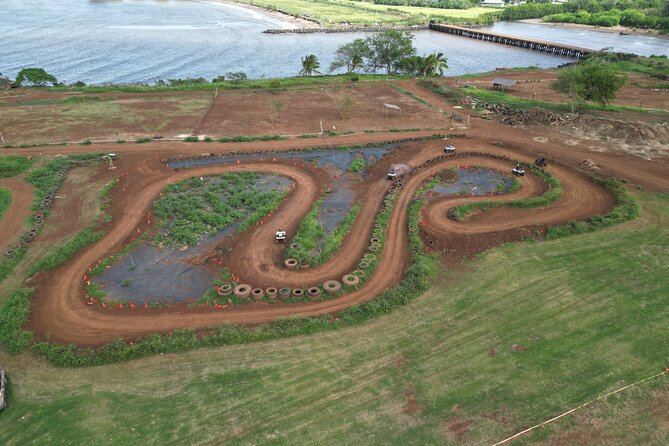
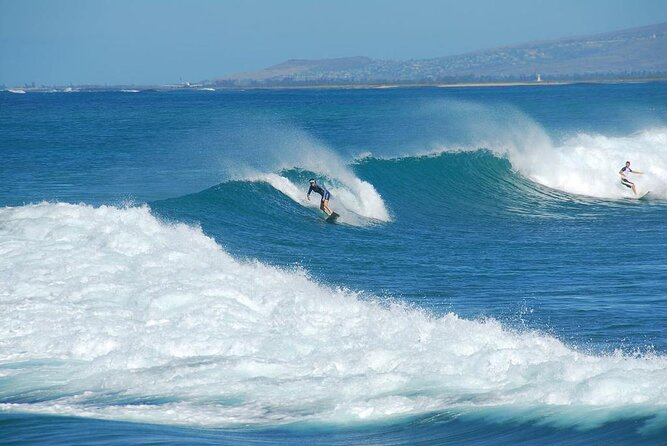
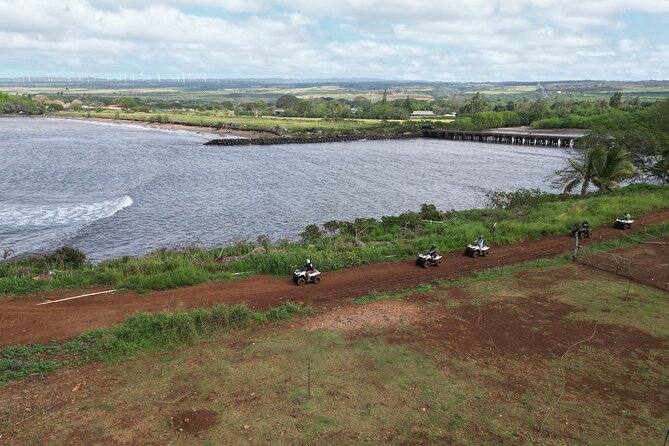
Oahu’s North Shore gets busy in spots, but this operation is in the quieter countryside area around Waialua. North Shore Stables is on oceanfront farm land, which matters because you are not just riding in a parking-lot loop. You get stretches where the ocean is in the background, plus open farm space that makes the whole experience feel more grounded than a generic ATV stop.
A big part of why this tour feels different is the “farm first” vibe. You start by getting fitted with a helmet and eye protection, then you move onto a track that runs across 80 acres of land. That size is why the ride feels like more than a quick circuit, even though time on the ATV is still controlled.
The small max group size (16) also changes the feel. You are more likely to notice details, like where your guide stops to explain plant types, or how the animal area fits into the broader land-restoration story. If you prefer activities where you can hear instructions and not just follow dust, this helps.
Drive your own ATV, not a UTV: what that feels like day-of
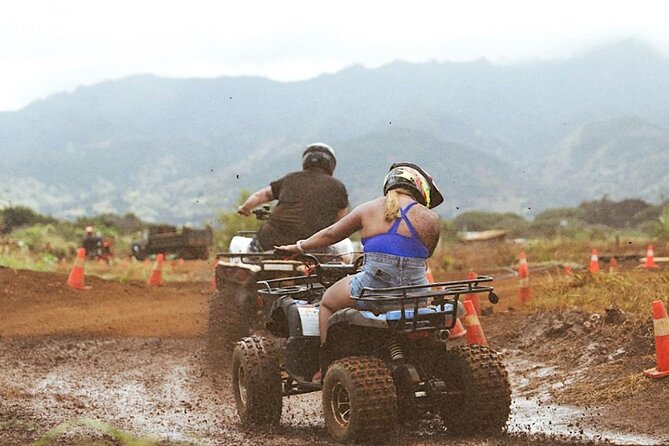
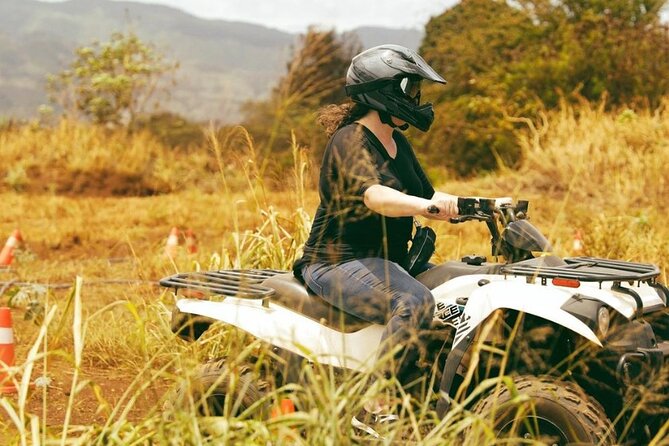
This is one of the main reasons people book. You drive your own 4-wheel ATV, and the tour description is very specific that it is not a UTV setup with one driver and passengers. That means you control your own handlebars and your own pace, which is a lot more satisfying if you want to feel the machine under you instead of watching from behind.
ATV helmets are required, and eye protection is part of the gear package. You can use the goggles or safety glasses provided, or wear your own sunglasses if you want. Also remember the clothing reality. Even when the day is dry, the track can be dusty, and if it has rained recently, the mud factor can kick in.
Now the honest expectation check: a number of riders talk about a slow pace, and some say it is more like a single-file follow-the-leader route than a wide-open trail. If your dream ATV trip is fast, aggressive, and technical, you might be disappointed. If your dream is controlled riding with a purpose, the setup makes sense.
If you are newer to ATVs, the controlled pace can actually be a benefit. You get time to get comfortable with steering and braking without feeling like you are racing the group.
Oahu Circle Island and North Shore we have also been through in Oahu

The shoreline planting moment: choosing a native plant and putting it in
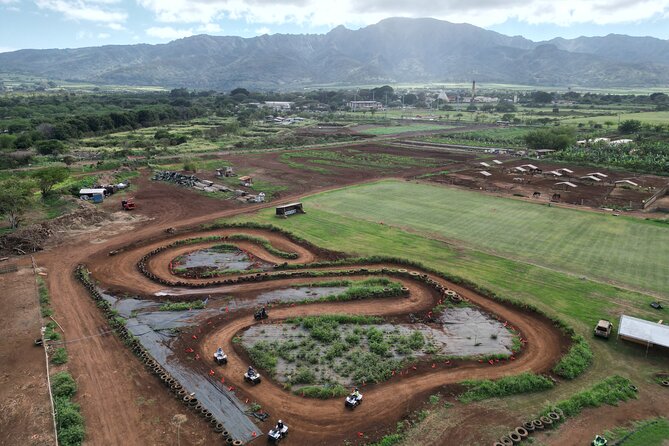
The centerpiece here is not just driving, it is restoring. During the tour, you pick an indigenous shoreline plant and plant it yourself in the area they restore to help prevent erosion. The goal is simple: a healthier shoreline reduces erosion, and over time it supports better sand dune building.
You are not just hearing the word native. You are choosing one plant and doing the physical work of placing it. That makes the lesson stick, because you are part of the process instead of standing around while someone else explains.
There is also a lot of education built into that theme. The tour talks through 49 native Hawaiian shoreline plants that help stabilize shorelines, plus why these plants matter in this part of Oahu. Even if you only remember a few plant names, the practical concept is what lands: vegetation helps hold the coast together.
One more expectation to set: this kind of planting experience is hands-on, but it is not described as a long, extended eco-work session. It is folded into a roughly hour-long adventure. So you should come ready to learn, help, and then ride, not to spend all day doing manual restoration work.
Kapukapuakea and Taputapuatea: why the history lesson feels practical
This tour connects the land you ride through to larger cultural stories. You learn about Kapukapuakea, described as a spiritual and physical connection with Taputapuatea, and the link to the UNESCO world heritage recognition. The tour frames Kapukapuakea as having deep roots in history, with a timeframe of about 1,000 years.
What makes this lesson worth your attention is how it ties back to what you are doing during the ride. You are planting shoreline plants to prevent erosion, and the tour is not treating that as random feel-good work. It is connecting the ecosystem to place, and place to story.
In real time, that can turn the experience from a scenic activity into a meaningful one. You start noticing the shoreline areas your guide points out, and you understand why the plant selection and spacing matters. Even if you do not retain every detail, you leave with a clearer sense of what is being protected and why it is protected.
Farm tour time: animals, soil health, and the Korean Natural Pig Farming angle
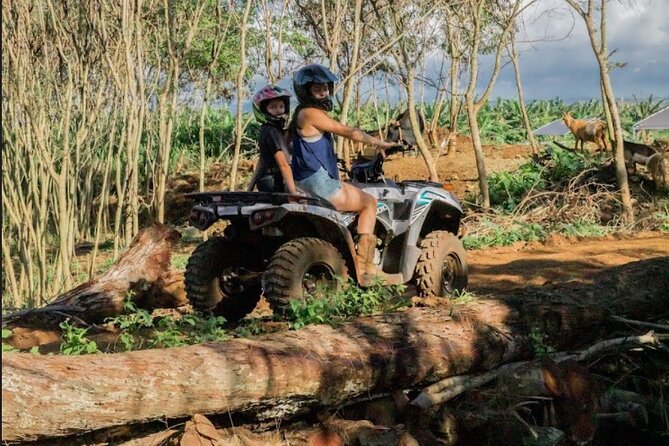
This is also a genuine farm stop. You meet their animal ohana, and the tour includes a discussion of how they organically rejuvenate the soil using Korean Natural Pig Farming. That is not just a random buzzword, it is a land-management approach that supports healthier ground, which then supports shoreline plants.
You might also get some animal interaction. Many riders highlight feeding goats and seeing pigs or cows as part of the fun. It is a nice contrast to the safety talk at the start, because animal time breaks the adrenaline cycle and makes it feel like a family-run operation where people genuinely care for the animals.
There are tradeoffs to keep in mind. When a property is working farmland, it is not a manicured, resort-style landscape. Some people love the authenticity of dirt, animals, and working routines. Others may find the look of the track or farm areas less polished than expected, especially if there is visible debris or if conditions make the ground look rougher. If aesthetics matter a lot to you, ask questions before you go, and accept that the environment is part of the deal.
The upside is that this is not a fake farm set dressing. It feels like a working property, and the animal time is one of the most repeated highlights in feedback.
Timing and route: how long you ride and how beachfront it really is

The tour runs about 1 hour total. The described itinerary includes around 45 minutes of riding, plus time for check-in, helmet fitting, and a safety demonstration before you head out. Tours leave promptly at the scheduled time, so plan to arrive early.
One practical tip that keeps you from losing riding time: check in online ahead of arrival if that option is offered to you. Then show up at least 15 minutes before departure so you are ready for the safety demo.
Now for the tricky part, based on real-world impressions: some riders say the trip includes only a small strip of beachfront, and that much of the route is around bayside or off the sand on a path. That lines up with how these farms often work, where oceanfront land does not always mean you spend the whole ride right on the shoreline.
Also, your ride may be paced in a way that keeps you together. A few people describe slow speeds and single-file movement. That can be a letdown if you expected a wider trail or faster cruising. If you want calm, scenic riding with stops for education and animal time, it will probably fit better.
If your priority is beach time, I would treat the shoreline as a major theme, not a guarantee of long, sand-adjacent riding.
Further ATV, UTV and Off-Road Trails covered by our reviewers in Oahu
What to wear and bring: closed-toe shoes and how to stay comfortable
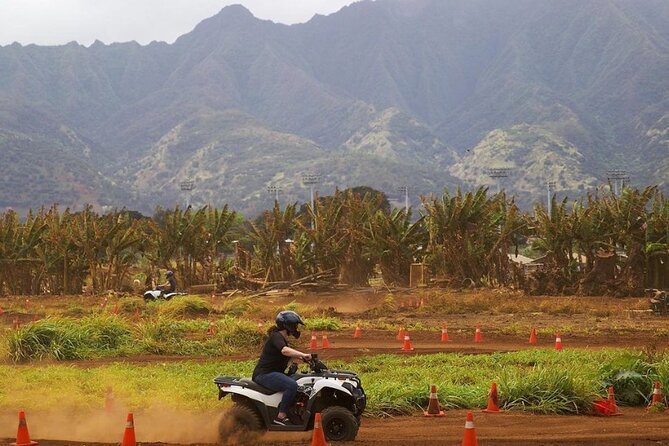
Closed-toe shoes are required for all riders. The track is described as dusty & muddy, and you should wear clothes you do not mind getting dirty. Helmet and eye protection are part of the provided gear, but your footwear choice matters because you may be walking around farm surfaces before and after the ride.
Rubber boots are mentioned as available for rent to help protect shoes, but they are not included, so factor that into your decision if you hate soggy shoe scenarios.
A strong practical add-on from experience-style tips: bring a second pair of shoes or sandals for after. Several riders bring up comfort after the ride, especially if the track is messy. It is a small move that saves you from spending the rest of your day thinking about wet socks.
Also consider a basic head or face cover. Dust is part of the reality on ATV tracks, and some riders end up paying for additional helmet liners or face protection when the complimentary options do not look fresh to them. You can play it safe by bringing your own light face cover if you are sensitive to dust.
Photos, Polaroid package, and the real cost of memories
You will have the chance to get a Polaroid photo package. The tour description treats it as part of the experience, but it is not listed with a price. One rider mentioned the photo package cost around $40, which gives you a realistic ceiling to mentally budget.
So here is the value tip: if photos are a priority for you, plan for that extra expense. If they are not, you might want to decide on the spot whether the memories are worth paying for.
Also keep in mind the “review push” theme that shows up in some feedback. A few people complain that they were asked to leave a review at the end for an incentive. That does not automatically mean anything is wrong with the tour, but it can be a sign that the operation uses feedback marketing. For you, the only smart move is this: judge the day on the ride, the safety, and the shoreline planting, not on whether there is an end-of-tour perk.
Price and value at about $130.89 per person
At $130.89 per person for about an hour, this tour is priced like an experience with equipment plus education plus a hands-on environmental component. You are getting use of an individual ATV, a required helmet, and eye protection. You are also paying for the story of Kapukapuakea and Taputapuatea, plus the shoreline planting activity with native species education.
Is it a bargain? Not really. It sits in the mid-to-higher range for Oahu ATV activities. But the value case is real if your interests line up.
This is better value for:
- Families and first-timers who want safe, structured ATV driving
- People who want more than scenery, specifically the shoreline restoration and plant lesson
- Anyone who likes animals and farm routines as part of the day
This is less ideal value for:
- People who only want speed or long, rugged trails
- Anyone expecting a long, continuous ride right along sand the whole time
- Those who will be upset if the track looks dusty, muddy, or rougher than a curated resort path
The best way to make it feel worth it is to match expectations. If you come for the full package, the cost starts to feel justified. If you come for a thrill ride, you may feel like you paid too much for a short, controlled route.
Should you book this North Shore ATV and farm tour?
Book it if you want an ATV ride with a reason. The fact that you drive your own machine, then plant a native shoreline plant with your own hands, makes this stand out as more than just riding around. Add in animal time and the Kapukapuakea and Taputapuatea context, and you get a day that is both active and educational.
Skip it (or choose a different option) if your main goal is high speed or lots of beachfront time on sand. Also skip if you are the type who cannot handle dusty, muddy conditions or who needs the scenery to be perfectly polished.
My practical checklist before you go:
- Wear closed-toe shoes and expect dirt.
- Go in knowing it is a controlled, guided route.
- Treat the shoreline as a major theme, not a guarantee of constant sand riding.
- Decide ahead of time whether you want the Polaroid photo package.
If that sounds like your kind of North Shore day, you are likely to enjoy it.
FAQ
Do I drive the ATV myself?
Yes. You use an individual ATV, and you will drive your own 4-wheel all terrain vehicle during the ride.
Is this a UTV where I ride with someone else?
No. This tour is specifically described as driving your own ATV, not a UTV setup.
How long is the tour?
The duration is about 1 hour. The itinerary includes about 45 minutes of riding time.
What is required for clothing and footwear?
Closed-toe shoes are required for all riders. The track is dusty and muddy, so wear clothes you do not mind getting dirty. Rubber boots are mentioned as available for rent, but they are not included.
Are helmets and eye protection provided?
Yes. Helmets are required and provided, and eye protection (goggles or safety glasses) is available.
How big are the groups?
This activity has a maximum of 16 travelers.
What language is the tour offered in?
The tour is offered in English.
Are service animals allowed?
Yes, service animals are allowed.
Can I cancel for a full refund?
Yes. You can cancel up to 24 hours in advance for a full refund. If you cancel less than 24 hours before the start time, the amount paid is not refunded. The experience can also be canceled due to poor weather, with an offer of a different date or a full refund.
Elsewhere under Oahu Circle Island and North Shore in Oahu
- Oahu Circle Island Tour with Waimea Waterfall★ 5.0 · 3,912 reviews
- Oahu’s North Shore: 8-Line Zipline Adventure★ 5.0 · 3,616 reviews
- Hidden Gems of Oahu Circle Island Tour with Byodo In Temple★ 5.0 · 3,450 reviews
- Toa Luau at Waimea Valley, Oahu★ 5.0 · 3,350 reviews
- Turtle Canyon Snorkel Adventure in Waikiki, Oahu★ 5.0 · 3,197 reviews
Tours: the rest of the Oahu file
- Waikiki Trolley Hop-On Hop-Off Tour of Honolulu★ 4.5 · 4,783 reviews
- Waikiki, Hawaii: Turtle Canyon Snorkel Excursion★ 5.0 · 4,656 reviews
- Oahu Circle Island Tour with Waimea Waterfall★ 5.0 · 3,912 reviews
- Hidden Gems of Oahu Circle Island Tour with Byodo In Temple★ 5.0 · 3,450 reviews
- Waikiki Trolley Red Line Heroes & Legends Hop-on Hop-off Tour★ 5.0 · 2,120 reviews
Tour Reviews: more from our Oahu desk
- Parasailing Experience in Waikiki, HI★ 5.0 · 7,692 reviews
- Waikiki Trolley Hop-On Hop-Off Tour of Honolulu★ 4.5 · 4,783 reviews
- Waikiki, Hawaii: Turtle Canyon Snorkel Excursion★ 5.0 · 4,656 reviews
- Paradise Cove Luau★ 4.5 · 4,498 reviews
- Waikiki Trolley Blue Line Coastline & Local Grindz Hop-on Hop-off★ 5.0 · 4,159 reviews
Newest Oahu reviews added to this site
- Go City: Oahu All-Inclusive Pass with over 45 Things To Do
★ 4.0 · 314 reviews - Waikiki Beach Glass Bottom Boat Cruise
★ 4.5 · 314 reviews - Surfing Lessons On Waikiki Beach
★ 4.5 · 317 reviews - Diamond Head Hiking and Oahu Island Experience feat. North Shore
★ 5.0 · 319 reviews - 3-Hour Honolulu Bottom Fishing Adventure
★ 4.5 · 320 reviews - West Oahu Dolphin Watch and Snorkel Sail with Lunch
★ 4.5 · 320 reviews - Premier Waikiki Sunset Party Cruise with Live DJ and Full Bar
★ 5.0 · 322 reviews - Oahu: Kualoa Ranch Hollywood Film Locations Tour
★ 4.5 · 323 reviews - Certified Diver: 2-Tank Deep Wreck and Shallow Reef Dive Off Oahu
★ 5.0 · 331 reviews - Small Group Turtle Canyon Snorkel in Waikiki (Boat Tour)
★ 5.0 · 333 reviews
Oahu Circle Island and North Shore, side by side.
 ★ 5.0Oahu Grand Circle Island and Haleiwa Tour: 9-Hr Deluxe ExperienceFrom $14017,387 reviews
 ★ 5.0Oahu: Grand Tour Around Island 16 Locations plus SnorkelingFrom $1098,669 reviews
 ★ 4.5Oahu’s Ultimate Tour: Dole, Turtle Snorkel, Pali Lookout & MoreFrom $1085,461 reviews
 ★ 5.0Oahu Circle Island Tour with Turtle Snorkeling— Small-GroupsFrom $1495,214 reviews
 ★ 5.0Oahu Circle Island Tour with Waimea WaterfallFrom $1543,912 reviews
 ★ 5.0Tour of North Shore & Waimea WaterfallFrom $1543,682 reviews
 ★ 5.0Oahu’s North Shore: 8-Line Zipline AdventureFrom $2033,616 reviews
 ★ 5.0Hidden Gems of Oahu Circle Island Tour with Byodo In TempleFrom $1463,450 reviews
This one is also listed in