
Review · TEXAS TOURS
San Antonio Missions UNESCO World Heritage Sites Tour
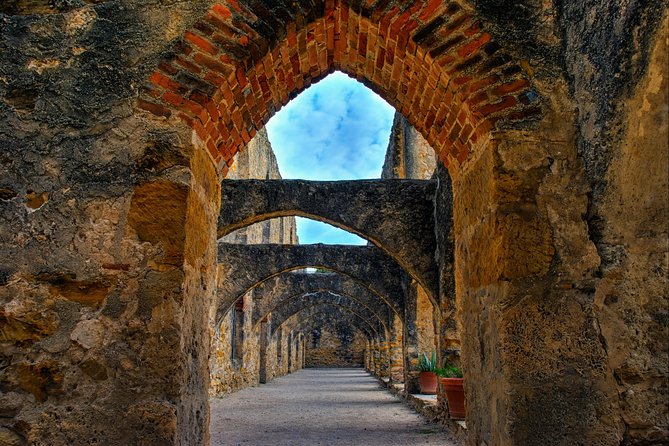
Four missions, one story, in half a morning. The San Antonio Missions UNESCO World Heritage Sites tour turns a spread of religious architecture into one clear narrative, with on-the-ground stops you can actually see without rushing all day.
I love the hotel pickup from select downtown hotels. I also love the small group feel, capped at 12 people, which makes it easy to ask questions without the guide sprinting ahead.
One possible drawback: it is a tight half-day outdoors, so if you want extra time at every church, chapel, or visitor center, you may feel slightly time-bound.
In This Review
- Key highlights that matter on the ground
- Why San Antonio Missions work so well as a half-day UNESCO plan
- Gray Line pickup, small group pace, and what the 3.5 hours feels like
- Mission Concepcion: frescoes and a calm start
- Mission San Jose: baroque church details and a film that clears things up
- Mission San Juan: irrigation and agriculture, seen through mission logic
- Espada Aqueduct: the irrigation story you can almost trace with your eyes
- Mission Espada: church and grounds to wrap the UNESCO thread
- The Alamo connection at the end, and what is not included
- Price and value: $75 makes sense if you want guided efficiency
- What to bring (and how to handle the outdoors)
- Who this tour suits best, and who should reconsider
- Should you book this San Antonio Missions tour?
- FAQ
- Which missions are included on this San Antonio tour?
- How long does the tour run?
- Is admission included for the mission sites?
- Does the tour include a guided visit to the Alamo?
- Is hotel pickup included?
- How many people are in the group?
- What kind of ticket do I get?
- Will I get confirmation after booking?
- Are service animals allowed?
- What is the cancellation situation if weather is bad?
Key highlights that matter on the ground
- UNESCO missions grouped for an efficient half-day so you can see major pieces without car logistics
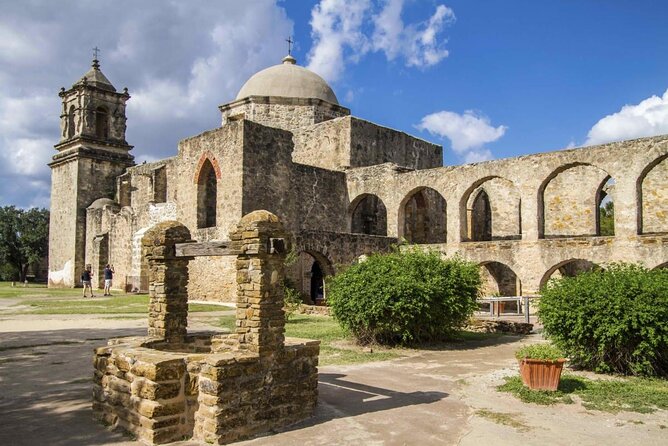
- Four mission stops plus the Espada Aqueduct, all connected by irrigation and community life
- Free admission noted for the mission stops, making your $75 spend go farther
- Mission San Jose baroque architecture and an award-winning film, good for understanding what you are looking at
- Local-guides style, with names like Domingo, Alex, and Mike showing up in feedback for local color and clear explanations
- Alamo talk at the end, without an included Alamo tour, so you can choose how you handle the rest of your day
Why San Antonio Missions work so well as a half-day UNESCO plan
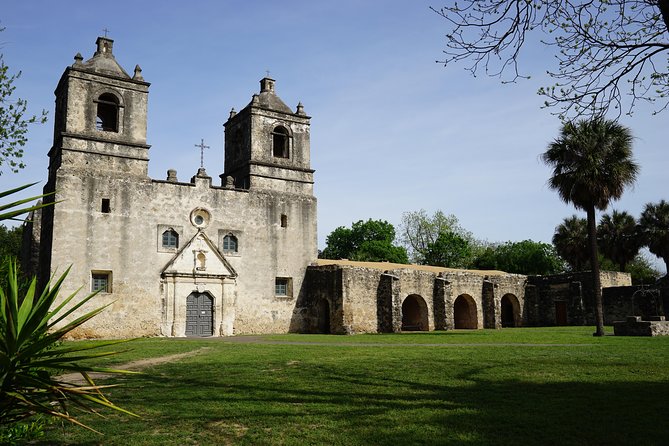
San Antonio’s missions are not just pretty buildings. They were built to support religious life and daily survival in a challenging environment. What I like about this tour format is that it keeps the focus on how the missions functioned, not just what they look like in photos.
You also get a practical structure: short stops at each site, then a guide who ties the themes together. The result is you walk away with a story that clicks, from frescoes to baroque church design to water systems that made agriculture possible.
And yes, it is sightseeing, but it is also learning you can see. You are outdoors, you are moving between stops, and you are getting context while you are still standing in the place where it happened.
Gray Line pickup, small group pace, and what the 3.5 hours feels like
This is a 3 hours 30 minutes experience with pickup and drop-off at select downtown hotels. That matters in San Antonio because you avoid the usual “where do we park, and how long will that take” headache.
The group limit is 12 travelers, which helps a lot. With fewer people, the guide can adjust the pace, handle questions without cutting you off, and keep the stops from turning into a conveyor belt.
You should also plan around heat and light. Even though each stop is relatively brief, you are in Texas sun. Bring water and sunscreen, and treat the tour like a mild outdoor outing, not a long indoor museum day.
One more practical detail: the last stop is flexible. You either continue to your downtown hotel, or you can be dropped near the Alamo. The Alamo itself is not part of this tour’s guided time.
Elsewhere under Historical Tours across San Antonio
Mission Concepcion: frescoes and a calm start
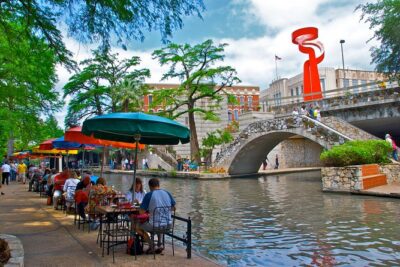
The tour begins at Mission Concepcion. Your time here is about 25 minutes, and the big draw is the chance to view the original frescoes. Frescoes can be easy to miss if you just glance at walls, so arriving with context helps you look longer and smarter.
In addition to the frescoes, you explore the grounds and get the history of Mission Concepcion. This is a good opener because it sets a visual theme early. You get the sense that art, faith, and daily life were designed to be seen as one system.
Possible drawback? Concepcion is first, and you might be in “I’m still waking up” mode if you are not used to early mornings. Still, the stop is short enough that you can enjoy it without feeling like you are stuck in a long pre-breakfast lesson.
Mission San Jose: baroque church details and a film that clears things up
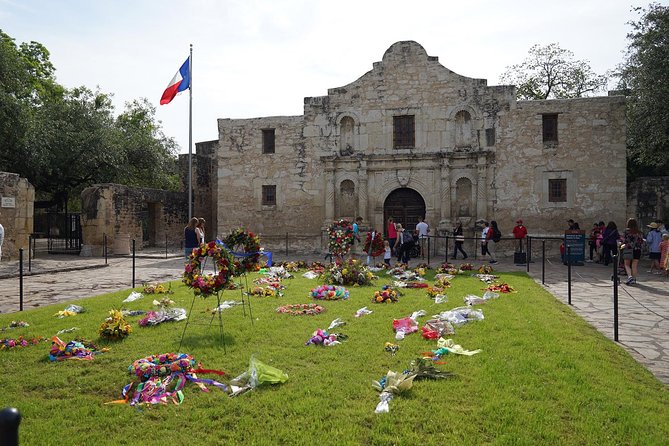
Next is Mission San Jose, with about 1 hour on site. This is the stop that tends to satisfy both the architecture lovers and the history-focused crowd.
The standout detail here is the church and grounds, plus the fact that you get to see one of the finer examples of baroque architecture in the mission complex. Baroque can sound like a textbook word. On the ground, it is about how the space directs your eye, how surfaces are shaped, and how the design supports worship.
Another smart inclusion is the award-winning film. If you are trying to connect the dots between daily mission life and what you see outside, a film can save you from guessing. It gives you a framework before you wander.
If you are the type who likes photos, you may get some built-in breathing room for visitor center time and picture moments. The time here is the longest of the mission stops, so it is where your brain catches up.
Mission San Juan: irrigation and agriculture, seen through mission logic
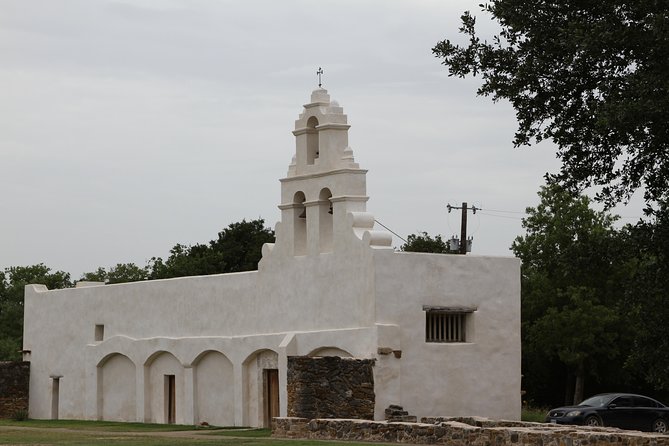
Then you move to Mission San Juan for about 10 minutes. Short stop, but it has a purpose.
The focus here is irrigation and agriculture. Missions were not only spiritual hubs. They were also production systems. Water management was the difference between dry survival and sustained farming.
Because the stop is brief, you will want to listen closely to what the guide is pointing out, then look for the traces of how water was used. This part of the experience works best when you treat it as a concept check: you are seeing the mission landscape as a working farm, not just a church.
Espada Aqueduct: the irrigation story you can almost trace with your eyes
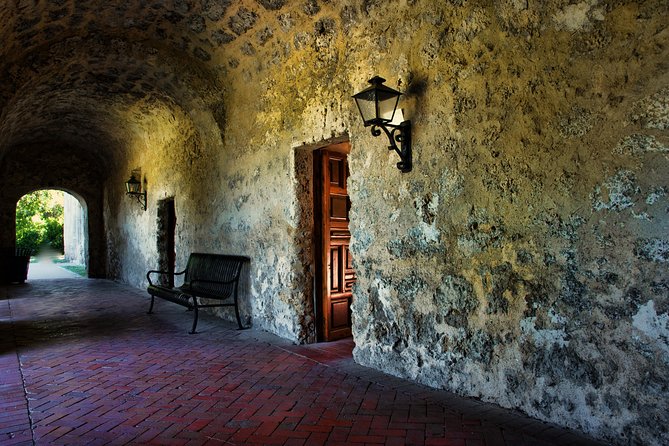
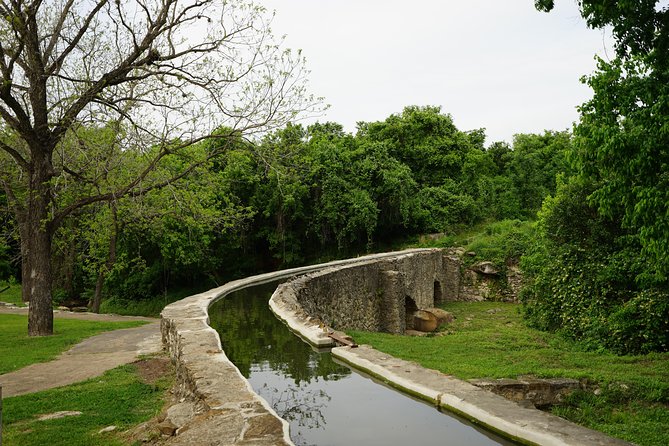
After San Juan comes the Espada Aqueduct, with about 5 minutes here. It is a quick stop, but it is also one of the most “aha” moments for people who like how engineering supports life.
You see the irrigation system used to water mission lands. That is the whole point, and it is exactly why this tour is worth it as a package. You go from church and art themes into something practical, then tie it back to why agriculture mattered.
Because it is so short, don’t expect a long explanation at this stage. Expect clarity, then a chance to look and picture how water moved through the area.
Other Texas Tours we have written up across San Antonio

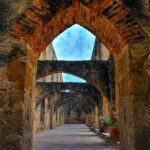




Mission Espada: church and grounds to wrap the UNESCO thread
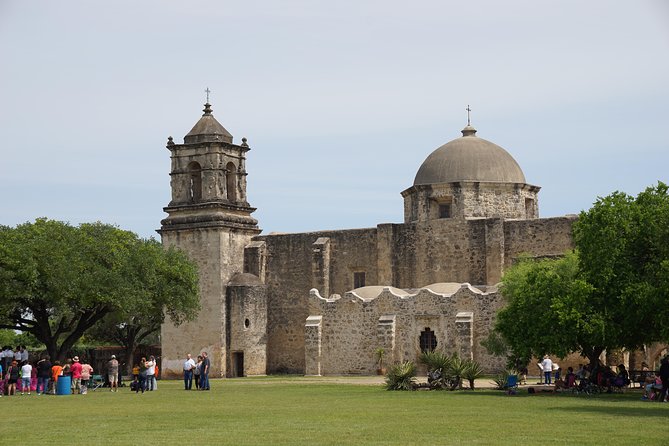
Finally, you visit Mission Espada for about 10 minutes. This stop is shorter than San Jose and more focused than Concepcion, but it helps bring the loop to a close.
You explore the church and grounds, and the guide’s narration helps tie it back to the bigger UNESCO story: these places were built as connected sites rather than isolated attractions. You start to notice how each mission contributes a different piece, from artwork to architecture to water infrastructure.
If you want a “final look,” this is often the moment you are happiest you stayed attentive earlier. You can compare what you saw, even if time is tight.
The Alamo connection at the end, and what is not included
This tour includes narration about the founding of Mission San Antonio de Valero and the Battle of the Alamo. But here is the key point: a tour of the Alamo is not included. The Alamo runs its own guides or you can go self-guided.
What I like about this setup is that it prevents awkward overlap. You get the mission context without forcing you into a second guided tour that may or may not match your pace.
Your choice at the end is straightforward. Either you are dropped at your hotel, or you are dropped off at the Alamo area. If you want the Alamo experience, plan to handle it after this tour with the Alamo’s own materials.
Price and value: $75 makes sense if you want guided efficiency
At $75 per person, this is priced for a real “do it once, done right” approach. You are paying for transportation, guided narration, and a structured route that hits four missions plus the Espada Aqueduct in one outing.
The value improves because the mission stops are listed with free admission tickets. That means the cost is not being piled onto entry fees for each site.
You also get something intangible that is hard to price: someone who can explain what you are seeing while you are standing there. In feedback, guides like Domingo and Alex are praised for how smoothly they connected mission stories to wider San Antonio context, including practical local pointers. That kind of guidance can make a short stop feel longer in the best way.
Who should feel good about the price? First-time visitors who want UNESCO context and an efficient route. If you already planned to visit every mission on your own with a guidebook and a car, you might feel the cost more. But for most people, the pickup and narration are doing real work.
What to bring (and how to handle the outdoors)
This tour notes moderate physical fitness and there is some walking outdoors. Nothing extreme is indicated, but plan for uneven surfaces, sun exposure, and brief stops where you might need to move quickly.
Bring:
- Water, especially if you go in warmer months
- Sunscreen
- Hat or sunglasses if you use them regularly
Also, use your body like a traveler, not a statue. If you need to pause for photos or questions, ask. The small group size helps, and most guides can give you a few seconds that turn a quick view into a meaningful one.
Who this tour suits best, and who should reconsider
This works best if you:
- Want UNESCO missions guidance without building a route yourself
- Prefer a small group and a relaxed pace
- Like religious architecture but also want the practical side, like irrigation and agriculture
You might want a different plan if you:
- Want a long, slow deep dive at one mission
- Are mainly interested in the Alamo itself as a standalone experience, since the Alamo tour is not included here
If you do love mission history, this tour is also a great way to decide where you want to return later. San Jose is likely your anchor stop because it has more time, plus the film and baroque architecture focus.
Should you book this San Antonio Missions tour?
I would book it if you are short on time and want to get the mission story in one clean morning. The combination of hotel pickup, a max of 12 people, and the way the route moves from frescoes to baroque design to irrigation is exactly what turns scattered stops into understanding.
I would skip or pair it differently if you are expecting a full guided Alamo visit or you want lots of unscheduled time inside every site. This tour is structured, and the outdoor timing is part of that trade.
If you are choosing your first UNESCO mission day in San Antonio, this is one of the more efficient ways to do it.
FAQ
Which missions are included on this San Antonio tour?
You’ll visit Mission San Jose, Mission Concepcion, Mission San Juan, and Mission Espada, plus the Espada Aqueduct as part of the route.
How long does the tour run?
The tour is about 3 hours 30 minutes.
Is admission included for the mission sites?
The tour details show free admission tickets for the mission stops listed on the schedule.
Does the tour include a guided visit to the Alamo?
No. The Alamo is not included as a guided tour. The tour includes narration about the founding of Mission San Antonio de Valero and the Battle of the Alamo, but Alamo tours are handled by the Alamo itself or you can do self-guided.
Is hotel pickup included?
Yes, hotel pickup and drop-off are included at select downtown hotels.
How many people are in the group?
The tour has a maximum of 12 travelers.
What kind of ticket do I get?
You’ll receive a mobile ticket.
Will I get confirmation after booking?
Yes. Confirmation is received at time of booking.
Are service animals allowed?
Yes. Service animals are allowed.
What is the cancellation situation if weather is bad?
The experience requires good weather. If it’s canceled due to poor weather, you’ll be offered a different date or a full refund. You can also cancel for a full refund up to 24 hours in advance of the experience start time.
Historical Tours we have also been through in San Antonio
- San Antonio Haunted History Ghost Tour★ 4.5 · 771 reviews
- San Antonio Full-Day Historic City Tour★ 5.0 · 366 reviews
Tours: the rest of the San Antonio file
- The Haunted Ghost Bus Tour in San Antonio★ 4.5 · 971 reviews
- San Antonio Premium City Tour with Alamo & River Walk Cruise★ 4.5 · 943 reviews
- San Antonio Haunted History Ghost Tour★ 4.5 · 771 reviews
- San Antonio Full-Day Historic City Tour★ 5.0 · 366 reviews
- Segway Tour of San Antonio and the Alamo★ 5.0 · 317 reviews
Tour Reviews: more from our San Antonio desk
- The Haunted Ghost Bus Tour in San Antonio★ 4.5 · 971 reviews
- San Antonio Premium City Tour with Alamo & River Walk Cruise★ 4.5 · 943 reviews
- San Antonio Haunted History Ghost Tour★ 4.5 · 771 reviews
- Hopscotch San Antonio Immersive Art Experience★ 4.5 · 644 reviews
- Bulverde: Saturday Night Rodeo General Admission Ticket★ 4.8 · 630 reviews
Newest San Antonio reviews added to this site
- Cave Without a Name Admission Ticket with Guided Cavern Tour
★ 5.0 · 315 reviews - Segway Tour of San Antonio and the Alamo
★ 5.0 · 317 reviews - San Antonio: Hopscotch Immersive Art Experience Ticket
★ 4.7 · 333 reviews - San Antonio Full-Day Historic City Tour
★ 5.0 · 366 reviews - The Escape Game San Antonio: Epic 60-Minute Adventures at The Rim
★ 5.0 · 477 reviews - San Antonio Zoo General Admission Ticket
★ 4.0 · 528 reviews - San Antonio: River Walk Cruise Ticket
★ 4.6 · 577 reviews - Bulverde: Saturday Night Rodeo General Admission Ticket
★ 4.8 · 630 reviews - Hopscotch San Antonio Immersive Art Experience
★ 4.5 · 644 reviews - San Antonio Haunted History Ghost Tour
★ 4.5 · 771 reviews
Texas Tours, side by side.
 ★ 4.6Houston: Space Center Houston Admission TicketFrom $293,274 reviews
 ★ 5.0Best of Austin Small-Group Driving Tour with Local GuideFrom $492,275 reviews
 ★ 5.0Top Waco Fixer Upper/City Tour: 5 Star, Award Winning, AffordableFrom $492,104 reviews
 ★ 5.0Baywatch Dolphin Tours – Pier 21 GalvestonFrom $321,860 reviews
 ★ 5.0The Historic Galveston Ghost TourFrom $331,524 reviews
 ★ 5.0Eco and Dolphin Watch Tour of South Padre IslandFrom $191,428 reviews
 ★ 4.0Space Center Houston Admission TicketFrom $321,403 reviews
 ★ 5.0Austin Biker Gang E-Bike TourFrom $851,399 reviews
This one is also listed in