

Review · SEDONA RED ROCK TOURS
Sedona Stargazing Tours LLC
Sedona goes full sci-fi at night. I love the way this astronomer-led tour turns Oak Creek’s dark skies into a clear, step-by-step sky lesson, and I love the chance to get real telescope views that can include Saturn’s rings. The only real drawback is that clouds or a bright moon can limit what you see.
From near Oak Creek, you get a constellation walkthrough with a laser pointer, then you rotate through the big telescopes. I like the setup with wide-view binoculars and a comfortable chair, and on colder nights the experience is usually warmed up with blankets or parkas.
This is a private outing for just your group, so you can ask questions and shape what you want to look at during the 1 hour 15 minutes.
In This Review
- Key Things I’d Put on Your Radar
- Oak Creek Night Skies: Starting at Verde Valley School
- The Tour Flow: Laser Pointers, Telescope Turns, and Binocular Time
- What You Can Actually See: Planets, Nebulas, Galaxies, and Star Clusters
- Meeting Your Astronomer Guides: Storytelling Plus Real Explanations
- Equipment and Comfort: Why This Feels More Than Just a Quick Look Up
- Price and Value: Is $89 Worth 1 Hour 15 Minutes?
- Weather Reality in Sedona: Full Moon, Clouds, and What to Wear
- Who This Tour Fits Best
- Should You Book This Sedona Stargazing Tour?
- FAQ
- How long is the stargazing tour?
- Where does the tour start in Sedona?
- Is this a private tour?
- Is the tour offered in English?
- What viewing equipment is included?
- How do you learn the constellations during the tour?
- What happens if the weather is poor?
- When should I book?
Key Things I’d Put on Your Radar
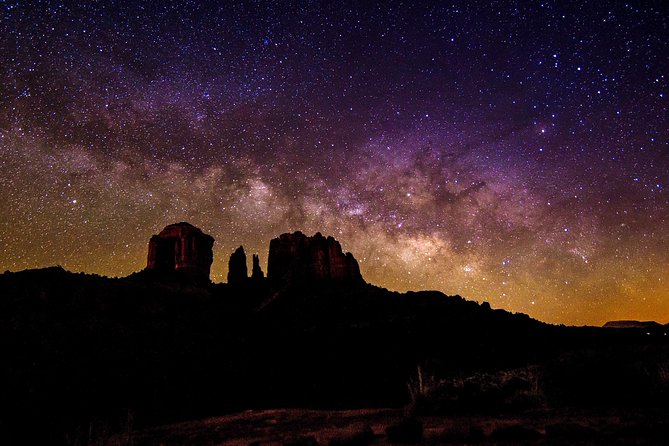
- Laser pointer constellation mapping first: you get your bearings before telescope time starts.
- GPS-assisted telescope positioning: less fiddling, more looking.
- Rotating turns at large telescopes: you do not spend the night just watching other people.
- Wide-view binocular breaks: you rest between telescope rounds without losing the sky.
- Real targets, not just pinpricks: planets, stars, distant galaxies, nebulas, and star clusters are part of the plan.
- Guide personality matters: names like Wes, Dave, Richard, and Mr. Sanders show up, and guests repeatedly praise storytelling and Q&A.
Oak Creek Night Skies: Starting at Verde Valley School

This tour is built around one simple fact: Sedona is best at night when the sky is actually dark. You leave the glow of town and head toward the Oak Creek area for a sky that feels different than what you see from most cities.
You start at Verde Valley School at 3511 Verde Valley School Rd, Sedona, AZ 86351, and the experience ends back at the meeting point. That out-and-back structure matters because it keeps the logistics clean. You do not need to plan a separate ride or a long drive back after you are cold and sleepy.
Also, note the tour length. It is about 1 hour 15 minutes, so the night moves at a good pace. You spend enough time to learn what you are seeing, and you still get multiple rounds at the telescopes.
The Tour Flow: Laser Pointers, Telescope Turns, and Binocular Time
The way the evening runs is one of the biggest reasons this experience works for both first-timers and repeat stargazers.
Here is the basic rhythm you can expect:
First, you meet at the viewing location near Oak Creek at the scheduled time. Then the guide gives you an overview of the sky using a laser pointer. This is not just random pointing. It is designed to help you understand what you are looking at, so the telescope views do not feel like magic with no map.
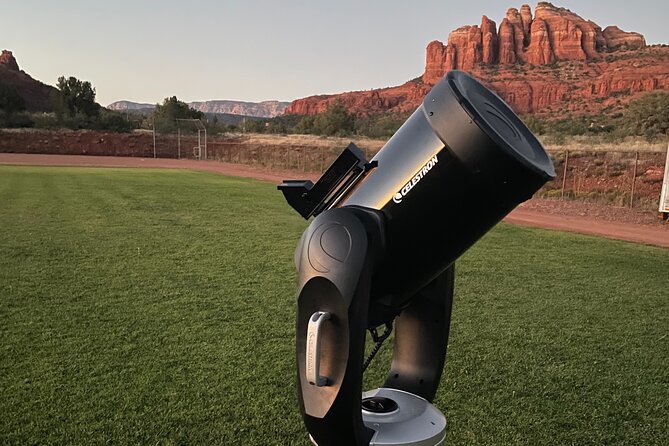
Next comes the telescope rotation. You take turns at large, powerful telescopes. GPS auto positioning helps the telescopes lock onto targets, which means less time lost to aiming and more time actually seeing. You can expect views of planets, stars, distant galaxies, nebulas, and star clusters depending on the night.
In between turns, you use your wide-view binoculars and relax in a comfortable chair. That break is important. If you have ever tried to stargaze for an hour while standing still, you know how quickly your attention fades. Having a place to sit makes it easier to stay focused and actually enjoy the night.
And yes, you can ask questions during the process. The tour is framed as customizable, so if you want to spend more time on something specific, you have a real chance to do it during the rounds at the telescope.
What else we logged under Sedona Red Rock Tours in Sedona
What You Can Actually See: Planets, Nebulas, Galaxies, and Star Clusters
This is not marketed as a vague, look-up-and-hope type of activity. The plan is to show you real objects, and the equipment is meant to make those objects easier to find and to view.
Here is what the tour highlights as possible targets:
- Planets: often the big draw because telescope views can feel dramatic compared to the naked eye.
- Stars: not just “dots,” but clear star patterns tied to constellations you learned earlier.
- Distant galaxies: you will not get a movie-screen look, but a telescope can help them show up where your eyes might miss.
- Nebulas: these can be subtle, so sky conditions matter.
- Star clusters: great for seeing how grouped stars look when you get magnification and focus.
One of the most repeated highlights is seeing Saturn, including its rings and its moon. If you are planning your expectations, that is the right kind of goal for a telescope tour. Some nights you might get more moon and planet detail, while other nights emphasize clusters and faint targets.
The practical takeaway: your “best night” depends heavily on sky conditions. The tour does not promise the same view every time, but it does promise active guidance and telescope time, which improves your odds of seeing something memorable even when conditions are not perfect.
Meeting Your Astronomer Guides: Storytelling Plus Real Explanations
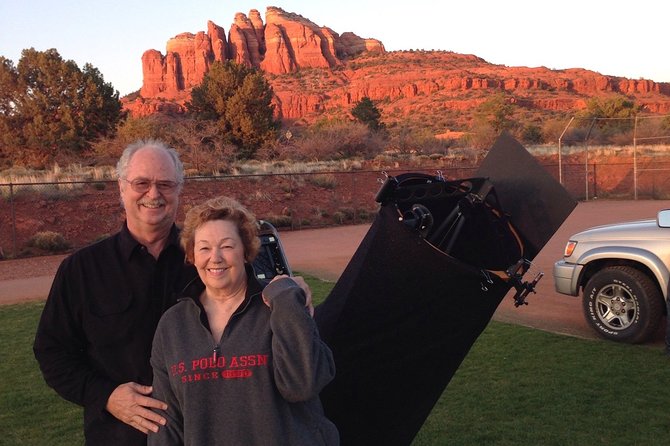
The guides are a big part of why people rate this tour so highly.
You will be with a professional astronomer style guide who explains what you are looking at. Multiple guide names come up in the experience details, including Wes, Dave, Richard, and Mr. Sanders. What stands out is not only technical talk, it is how clearly the explanations land.
In plain terms, the guide work helps you:
- connect the patterns in the sky to what the telescope is showing you
- understand why an object looks the way it does
- ask questions without feeling like you are “interrupting the lesson”
If you are the type who likes to know what you are seeing instead of just seeing it, this tour fits. If you are more relaxed, you still get a guided experience, not a hard lecture.
One small consideration: since you are outdoors at night, audio can be hit or miss depending on wind, spacing, and where you are standing or sitting. If you want the story part to land, position yourself so you can hear the guide clearly during the laser pointer portion.
Equipment and Comfort: Why This Feels More Than Just a Quick Look Up
You get more than a chair and a vague “good luck” approach. The experience is designed around usable gear and a comfortable viewing setup.
From the tour description:
- Wide-view binoculars are provided for your in-between viewing.
- You have a comfortable chair so you can actually enjoy the night.
- There are high-powered telescopes with GPS auto position.
From guest experience details you have been given:
- blankets and parkas show up on colder nights, and guests appreciate having warm layers ready.
That may sound like a minor perk, but it changes the whole vibe. A stargazing night can turn miserable fast when the temperature drops. When you are warm enough to stay still and focused, the astronomy part becomes the fun part instead of the “endure the cold” part.
The rotating turns at the telescopes are also worth mentioning. It is easy to end up in a group activity where you never get enough telescope time. Here, the structure pushes you to have actual time at the equipment, not just watching from the sidelines.
Price and Value: Is $89 Worth 1 Hour 15 Minutes?
At $89 per person, this tour is not a throwaway add-on. It sits in the category of “worth it if you care about the sky and the equipment.”
So what makes it feel like value?
- You are paying for professional astronomer guidance, not just a casual walk.
- You are paying for real telescope time with GPS-assisted aiming.
- You are paying for setup and comfort, including chairs and viewing breaks.
- You are paying for a structured experience that teaches constellations first, then shows targets.
Where it can feel less worth it is when the sky does not cooperate. A bright moon or clouds can reduce the number of objects you can see clearly. That is not a trick. It is astronomy reality.
My practical advice on value: if you are going to spend money on one night-sky experience in Sedona, choose the one that gives you both guidance and multiple looks through telescopes. This tour does that, and the consistent praise for telescope views like Saturn rings is a strong clue that the equipment portion is the main event.


Weather Reality in Sedona: Full Moon, Clouds, and What to Wear
Stargazing is weather-dependent. This tour requires good weather, and if conditions are too poor, you are offered a different date or a full refund.
That matters because the sky quality determines how much you can see, especially for fainter objects like nebulas. Even with clouds, you might still see stars, but the telescopes and wide-view viewing can get limited when the sky is bright or hazy.
If you want the night to be comfortable, pack for cold. Multiple guests call out freezing temperatures in winter and appreciate blankets and parkas. Even if you think Sedona nights are only “cool,” plan for your body to feel the drop once the sun goes down.
Also, consider your own style of night viewing:
- If you get cold easily, you will enjoy this more with warm layers, not just “maybe a jacket.”
- If you do not like waiting, bring patience for the setup and rotation process, which is part of how everyone gets a look.
Who This Tour Fits Best
This is a great fit for families, couples, and solo travelers who want more than a casual “look at the stars” moment.
It tends to work well for:
- kids who like clear, story-driven explanations and hands-on telescope time
- couples who want a memorable shared activity with real visuals
- anyone who wants a guided first pass at constellations and sky objects
It also fits people who can handle outdoor time. Most travelers can participate, and the seating and viewing breaks are designed to keep things manageable during the 1 hour 15 minutes.
If you are the sort who wants total control over viewing every second, this may feel structured rather than free-form. But if you want the guide to steer you and help you locate and understand targets, you are in the right place.
Should You Book This Sedona Stargazing Tour?
I would book it if you want a guided stargazing session where you actually use telescopes, not just stand around and hope. The combination of laser pointer orientation, telescope rotation, and wide-view binocular breaks gives you multiple ways to enjoy the sky within a short time.
Skip it or adjust expectations if you already know you will be visiting during a period of likely cloud cover or you are only chasing ultra-faint targets. A bright moon can also change what looks dramatic. The tour can still be fun, but your view may tilt more toward brighter objects like the Moon and planets.
If you do book, go in ready to sit, listen, ask questions, and stay warm. The payoff is a night where the sky becomes understandable, and where telescope views like Saturn rings can turn into a true highlight.
FAQ
How long is the stargazing tour?
The tour lasts about 1 hour 15 minutes.
Where does the tour start in Sedona?
The experience starts at 3511 Verde Valley School Rd, Sedona, AZ 86351, USA, and it ends back at the meeting point.
Is this a private tour?
Yes. This is a private tour or activity, and only your group participates.
Is the tour offered in English?
Yes. The tour is offered in English.
What viewing equipment is included?
You get wide-view binoculars for relaxing between telescope turns, and the tour uses large, powerful telescopes for viewing planets, stars, galaxies, nebulas, and star clusters.
How do you learn the constellations during the tour?
The guide provides an overview of constellations using a laser pointer, helping you orient yourself before telescope time.
What happens if the weather is poor?
This experience requires good weather. If it is canceled due to poor weather, you will be offered a different date or a full refund.
When should I book?
On average, this tour is booked about 23 days in advance, so booking earlier can help you lock in a good time slot.
Sedona Red Rock Tours: what else we logged in Sedona
- Small-Group Grand Canyon Complete Tour from Sedona or Flagstaff★ 5.0 · 1,928 reviews
- Explore Sedona’s Vortexes: 2.5 Hour Jeep Tour of Mysticism★ 5.0 · 1,834 reviews
- Guided ATV Tour of Western Sedona★ 5.0 · 1,767 reviews
- Half-day Sedona Sightseeing Tour★ 4.5 · 1,688 reviews
- Sedona Outlaw Trail: 3-Hr 4×4 Tour of Western Canyons & Wildlife★ 5.0 · 1,335 reviews
Tours: the rest of the Sedona file
- Small-Group Grand Canyon Complete Tour from Sedona or Flagstaff★ 5.0 · 1,928 reviews
- Explore Sedona’s Vortexes: 2.5 Hour Jeep Tour of Mysticism★ 5.0 · 1,834 reviews
- Guided ATV Tour of Western Sedona★ 5.0 · 1,767 reviews
- Half-day Sedona Sightseeing Tour★ 4.5 · 1,688 reviews
- Sedona Outlaw Trail: 3-Hr 4×4 Tour of Western Canyons & Wildlife★ 5.0 · 1,335 reviews
Tour Reviews: more from our Sedona desk
- Verde Canyon Railroad Adventure Package★ 4.5 · 2,821 reviews
- Small-Group Grand Canyon Complete Tour from Sedona or Flagstaff★ 5.0 · 1,928 reviews
- Explore Sedona’s Vortexes: 2.5 Hour Jeep Tour of Mysticism★ 5.0 · 1,834 reviews
- Guided ATV Tour of Western Sedona★ 5.0 · 1,767 reviews
- Half-day Sedona Sightseeing Tour★ 4.5 · 1,688 reviews
Newest Sedona reviews added to this site
- PRIVATE Sedona Jeep Tour 4X4 Excursion – Red Rock West Trail
★ 4.5 · 314 reviews - Extreme Sedona Off-Road Canyon Jeep Tour
★ 5.0 · 325 reviews - Sedona Boynton Canyon Trolley Tour
★ 4.5 · 326 reviews - The Grand Canyon Classic Tour From Sedona, AZ
★ 4.9 · 343 reviews - Private Grand Canyon Day Tour
★ 5.0 · 347 reviews - Sedona or Flagstaff: Horseshoe Bend & Antelope Canyon X Tour
★ 4.9 · 350 reviews - Jerome Ghost Walk
★ 4.5 · 358 reviews - Tour to Sacred Sites and Vortexes in Sedona
★ 5.0 · 363 reviews - PRIVATE Sedona Jeep Tour Diamondback Gulch Extreme Off-Road
★ 5.0 · 377 reviews - 2 Hours Water to Wine Kayak Trip from Cottonwood
★ 5.0 · 393 reviews
Sedona Red Rock Tours, side by side.
 ★ 5.0Small-Group or Private Grand Canyon with Sedona Tour from PhoenixFrom $2352,405 reviews
 ★ 5.0Scooter Tours of Red Rock CanyonFrom $1352,174 reviews
 ★ 5.0Small-Group Grand Canyon Complete Tour from Sedona or FlagstaffFrom $2081,928 reviews
 ★ 5.0Red Rock Canyon eBike Half-Day TourFrom $1371,870 reviews
 ★ 5.0Explore Sedona’s Vortexes: 2.5 Hour Jeep Tour of MysticismFrom $1361,834 reviews
 ★ 5.0Guided ATV Tour of Western SedonaFrom $2381,767 reviews
 ★ 4.5Half-day Sedona Sightseeing Tour1,688 reviews
 ★ 5.0Grand Canyon with Sedona and Oak Creek Canyon Van TourFrom $1981,337 reviews
This one is also listed in