

Review · ST. AUGUSTINE HISTORIC TOURS
St. Augustine’s Wine, Cocktail and Food Experience
Wine, food, and history in one afternoon walk. This St. Augustine wine, cocktail, and food experience pairs generous tastings with a guided stroll through the Old City’s most important sights, from city gates to major monuments, all while keeping the group to a maximum of 8. It’s a smart way to eat well and get your bearings fast without juggling reservations.
Two things I especially like are that food and alcohol samples come included (no extra add-on fees) and that the guide weaves in history as you walk, so the time feels useful, not just snacky. One possible drawback to plan for: dietary needs can mean a more limited selection, so it helps to confirm options early if you’re avoiding gluten, dairy, sugar, or alcohol.
In This Review
- Key points to know before you go
- A 3.5-hour St. Augustine wine and food walk from Treasury Street
- What $159 buys you, and why the value can be real
- First big stop: Castillo de San Marcos and the view of power
- Huguenot Cemetery: Protestant history at the City Gate
- St. George Street: the backbone of the historic district
- Plaza de la Constitución: why town plans start with a public square
- St. Photios Greek Orthodox National Shrine: the 1768 Greek colony story
- Cathedral Basilica of St. Augustine: built in the 1790s, still the anchor
- Government House: a site that keeps changing hands
- Food and drink stops: what the lunch feels like in real life
- Guide energy matters, so pick your vibe
- Walking logistics and comfort tips for the perfect afternoon
- Who this St. Augustine wine and food experience suits best
- Should you book this tour?
Key points to know before you go

- Included tastings for lunch: Alcoholic beverages, bottled water, and lunch are part of the price, so you are not doing math every stop.
- Small group pace: With a maximum of 8 people, the walk stays friendly and you can ask questions.
- Old City landmarks as you eat: You’ll hit big names like Castillo de San Marcos and the Town Plaza area.
- Mixed drinking levels: Non-alcoholic drinks are available, so you can still join the fun.
- A history guide on the move: St. Augustine’s shifts between Spain and later rule make the stories worth hearing.
- Walking tour reality: It is moderate, so comfortable shoes matter.
A 3.5-hour St. Augustine wine and food walk from Treasury Street
This experience is built for an afternoon, about 3 hours 30 minutes long, and it runs in English. You meet at 57 Treasury St in St. Augustine, then your route ends within about two blocks of Plaza de la Constitución. The mobile ticket is straightforward, and the tour stays close enough to public transit that you should not need a car just to start.
I like tours that do two jobs at once, and this one does that. You get lunch plus multiple tastings, and you also walk through the part of town where St. Augustine’s big story is visible in stone, plazas, and church buildings. It makes the food feel like part of the place, not just a stop-and-go meal.
The other reason I recommend this time window is that St. Augustine is a great walking town when the day is still moving but you are not dealing with every late-night option. You can see major landmarks, then still have plenty of energy left for a relaxed dinner afterward.
What $159 buys you, and why the value can be real
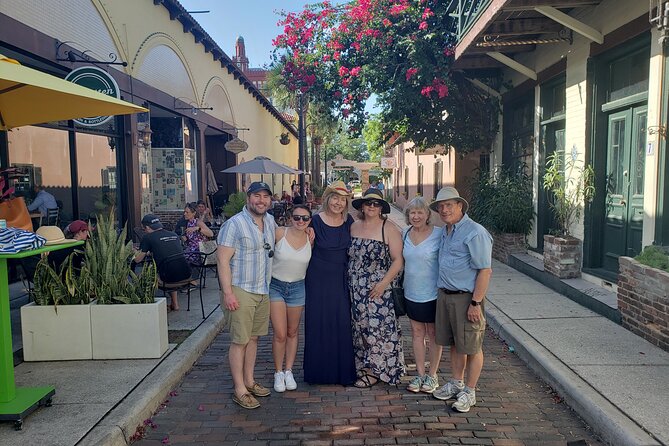
$159 per person sounds like a splurge until you look at what you are actually getting. The tour includes lunch, bottled water, and alcoholic beverage tastings, with the note that there are no added fees for the food and drink samples during the tour. For most people, that is the difference between a simple stroll with snacks and a true planned meal experience.
A big part of the value is the pacing and the planning. You are not hunting for pairings or trying to guess which spots are worth your time. The tour is doing the hard part: selecting stops, timing them for an afternoon walk, and making sure you get a mix of flavors rather than one single heavy meal.
One practical tip: treat this as lunch first, then plan your evening like you might not want a huge dinner. Many people end the tour full and ready to graze, not to start over.
Our remaining Food & Drink write-ups for St Augustine


First big stop: Castillo de San Marcos and the view of power
Your walk begins with a stop at Castillo de San Marcos, a Spanish stone fortress built in the 17th century. It is described as the oldest masonry fort in the continental United States and it is a National Monument. The structure is noted as being about 325 years old, which makes the rest of the city’s story feel less like trivia and more like a timeline you can stand next to.
What makes this stop worth your attention is the way it anchors the whole tour. St. Augustine was about defense and claims in the New World, and the fort is the physical answer to that. Even if you are not a hardcore history person, you can tell it was built to last and to intimidate.
A small drawback to consider: forts often involve uneven ground and stairs or ramps depending on where you stop to look. If you have any knee or balance issues, wear shoes with grip and take your time at viewpoints.
Huguenot Cemetery: Protestant history at the City Gate

Next comes the Huguenot Cemetery, located across from the historic City Gate. This was a Protestant burial ground between 1821 and 1884, and it matters because it shows the city’s religious landscape after the shift to American occupation.
Here is a detail that helps you understand the placement: before American rule, St. Augustine was predominantly Catholic, and the other cemetery inside the city, Tolomato, was reserved for Catholics. When a formal Protestant burial ground was needed, the chosen area just outside the city gate fit the practical and social realities of that era.
The cemetery story also includes timing that is easy to overlook but powerful: the first burials occurred in 1821 just prior to a yellow fever epidemic that claimed many lives. That is the kind of context a good walking guide adds, and it turns a cemetery stop into a human story instead of a quick glance.
If you prefer quieter stops, you will likely like this one. Just remember it is outdoors, so bring your patience for the walking pace and the weather, especially on hot, humid days.
St. George Street: the backbone of the historic district

You then move to St. George Street, described as the backbone of the historic district. You enter through the Old City Gates built in 1808, and it is a fun moment because it frames the rest of your walk like a corridor into the old town.
St. George Street is one of those places where you can feel the layering: commerce, architecture, and tourism all sit on top of each other, but the street plan still guides you. It is also where you start to see why St. Augustine works so well as a walking city. You keep moving, and the sights keep overlapping.
The possible catch is crowds. Even in the afternoon, St. George can be busy. The tour helps because the guide gives you a route and keeps you moving rather than stopping for every photo at once.
Plaza de la Constitución: why town plans start with a public square

Your next major landmark area is Plaza de la Constitución, the downtown historic park that sits at the center of the original city plan. It is bordered by the Government House, the Cathedral Basilica, and it also connects visually toward Bridge of Lions and Matanzas Bay.
This stop gets extra interesting because it ties to the 1573 Leyes de Indias, the Spanish laws for colonial town planning. Those rules set aside a plaza for government, church, and public use. Along coasts, plazas were to begin at the waterfront, so people could see and be seen.
That is a useful idea to carry with you as you keep walking. In St. Augustine, the plaza is not just a scenic park, it is the organizing principle for where authority and religion live side-by-side. You also get a natural transition point where you can regroup, grab a breath, and reset for the next buildings.





St. Photios Greek Orthodox National Shrine: the 1768 Greek colony story

Just steps from the city gates on St. George Street is the St. Photios Greek Orthodox National Shrine. The shrine is dedicated to the first colony of Greek people who came to America in 1768.
This stop is a reminder that St. Augustine is not only Spanish and Catholic in its story. You get a different thread of immigration and faith, and the guide’s framing helps it make sense in the broader picture of who was arriving and why.
The practical angle: this is a good pause if you want a change from fort walls and cemeteries. It also helps diversify the architecture you see during the walk.
Cathedral Basilica of St. Augustine: built in the 1790s, still the anchor

The tour then focuses on the Cathedral Basilica of St. Augustine, a major Catholic landmark and the seat of the bishop. It was constructed over five years from 1793 to 1797, and it was designated a U.S. National Historic Landmark on April 15, 1970.
The church’s congregation dates to 1565, and it is described as the oldest Christian congregation in the contiguous United States. That is the kind of fact that sounds big, until you are standing in front of the building and realizing it has been central for centuries.
Potential drawback: if you are expecting a tour that is only outside, note that cathedrals can have rules about when and how you can enter or move inside. If you want to get maximum value from this stop, keep your schedule flexible and follow the guide’s cues.
Government House: a site that keeps changing hands
At the west end of the town plaza is the Government House, a unique Spanish land use component within a National Historic Landmark District. Since 1598, a government building has stood on this site with views of the harbor landing, serving as administrative headquarters and residences for colonial governors appointed by Spain and then Britain, then Spain again.
After Spain ceded Florida to the United States in 1821, the same site served as a courthouse and briefly as a Capitol of the new Territory of Florida. The point is simple: this place is like a stage where each new ruling power reused what was already there.
That continuity is why this stop feels more meaningful than a quick photo break. You see the same location acting as different forms of authority across time.
Food and drink stops: what the lunch feels like in real life
The heart of this tour is the food and drink portion: you sample food and alcoholic beverages at several stops, with non-alcoholic drinks available too. Bottled water is included, which I appreciate because it helps you stay comfortable while walking and tasting.
What I like about the setup is that it is designed like a proper meal experience, not just a few sips. The tour includes lunch, and the portions are described by many people as enough to leave you full. If you are the kind of person who always underestimates how much food you can eat in an afternoon, this might surprise you in a good way.
In terms of flavors, the tastings can run from classic wine moments to cocktails and dessert. Some people have called out specific hits like BBQ and even mention tasting things such as brie, which suggests the menu choices tend to cover comfort food and cheese-friendly options rather than just light bites.
Dietary notes matter. If you are vegetarian, vegan, kosher, sugar free, gluten-free, or dealing with dairy allergies, you should know your options may be limited. I would treat that as a reason to check in early, not as something to hope works out.
Guide energy matters, so pick your vibe
One of the biggest themes from past experiences is how much the guide impacts the day. Guides such as Garry, Russ, and Alex are repeatedly described as bringing the history to life, often with humor and story-driven pacing. That matters because you are not only eating, you are walking between layers of St. Augustine’s past.
There is also one important caution to balance the good. One unhappy experience specifically complained about a guide named Garry focusing heavily on personal topics and pushing for ratings and tips, and the guest also said some historical facts were incorrect. I cannot verify any guide’s claims from the outside, so here is my practical advice: decide your tipping approach in advance and be prepared for a guide style that may be more personal than strictly academic.
If you want a calmer, strictly factual vibe, ask yourself what you prefer in a tour guide before you commit. If you like story and humor, this style is often the reason people love it.
Walking logistics and comfort tips for the perfect afternoon
This is a walking tour with moderate physical fitness expected. Even if you are an active person, plan for steady walking over a few hours, plus stops for looking and tasting.
My comfort checklist:
- Wear comfortable shoes with good grip.
- Bring a light layer, since you are outside through multiple landmarks.
- Pace yourself at the fort area, because you will likely want photos and time to scan viewpoints.
Also, the tour finishes near Plaza de la Constitución, which is convenient because you can either linger in the square or pivot to a nearby dinner plan without a long commute.
Who this St. Augustine wine and food experience suits best
This tour fits best if you want an organized afternoon where:
- you like wine, cocktails, and good food, and you do not want to plan each stop
- you enjoy history told on foot, tied to real buildings and public spaces
- you appreciate a small group so the guide can keep an eye on timing and questions
It is less ideal if you want fully customizable menu choices. Dietary restrictions can reduce options, and alcohol tastings may not be your first priority even if non-alcoholic drinks are offered.
Should you book this tour?
If your ideal St. Augustine day is half flavors and half landmarks, I think this is a solid buy. $159 feels more reasonable once you remember the tour includes lunch, bottled water, and alcohol tastings, plus a guided walk past major sights like Castillo de San Marcos and the Town Plaza area.
I would especially recommend it if you like the idea of tasting your way through St. Augustine instead of just sightseeing with an empty stomach. And if you are traveling with someone who usually worries about whether food tours are too touristy, this one has the advantage of tying tastings to the places that shaped the city.
Before you book, check your dietary needs, because selection may be limited for some requirements. If your schedule is flexible, it is also reassuring that the experience offers free cancellation up to 24 hours in advance for a full refund, so you can reserve without stress and make the final call when your plans firm up.
If that sounds like your kind of afternoon, book it and give your feet a comfy shoe. You’ll come away with a fuller sense of St. Augustine, and, yes, a belly that probably would not mind skipping dessert later.
Food: more from our St Augustine desk
- Feast of Saint Augustine Historical Walking Food Tour★ 5.0 · 347 reviews
Food & Drink: more we have covered in St Augustine
- Wine Tasting Cruise in St. Augustine★ 5.0 · 426 reviews
- Feast of Saint Augustine Historical Walking Food Tour★ 5.0 · 347 reviews
Tour Reviews: more from our St Augustine desk
- St. Augustine Hop-On Hop-Off Trolley Tour★ 4.5 · 3,799 reviews
- St. Augustine Ghost Tour: A Ghostly Encounter★ 4.5 · 2,404 reviews
- Medieval Torture Museum with Ghost Hunting and Tiny Art Gallery★ 5.0 · 2,011 reviews
- Take a Scenic Boat Ride in St. Augustine★ 4.5 · 1,399 reviews
- Sunset Cruise of St. Augustine★ 5.0 · 1,235 reviews
Newest St Augustine reviews added to this site
- St. Augustine Live Music Cruise with Drinks and Sunset Option
★ 5.0 · 315 reviews - Red Boat Tours – Dolphin Odyssey and Sightseeing Tour
★ 5.0 · 330 reviews - Feast of Saint Augustine Historical Walking Food Tour
★ 5.0 · 347 reviews - Nights of Lights Boat Cruise
★ 4.5 · 382 reviews - The Original Haunted Pub Tour
★ 4.5 · 382 reviews - Ghost Tour of St. Augustine: The Original Haunted History Tour
★ 5.0 · 386 reviews - Wine Tasting Cruise in St. Augustine
★ 5.0 · 426 reviews - Guided Historical Tour of St. Augustine Per Person
★ 5.0 · 470 reviews - 8pm Beyond the Grave Tour
★ 4.5 · 576 reviews - Old Jail Museum Tour in St. Augustine
★ 5.0 · 717 reviews
St. Augustine Historic Tours, side by side.
 ★ 4.5St. Augustine Hop-On Hop-Off Trolley TourFrom $383,799 reviews
 ★ 4.5St. Augustine Ghost Tour: A Ghostly EncounterFrom $302,404 reviews
 ★ 4.5Take a Scenic Boat Ride in St. AugustineFrom $261,399 reviews
 ★ 5.0Sunset Cruise of St. AugustineFrom $431,235 reviews
 ★ 5.0Private Guided Historic Electric Cart Tour of St. AugustineFrom $2001,194 reviews
 ★ 5.0Walking History Tour of St. Augustine’s Historic DistrictFrom $251,152 reviews
 ★ 4.6St. Augustine: Hop-on Hop-off Trolley Tour with Museum EntryFrom $39970 reviews
 ★ 5.0Airboat Adventure in Saint Augustine with a Guide902 reviews
This one is also listed in