
Review · MONUMENT VALLEY AND NAVAJO COUNTRY
2 Hour Monument Valley Horseback Tour
Hooves in red rock country. This ride is a classic way to get close to Monument Valley’s sandstone icons, with small-group attention and stops that take you from the Mittens to Sentinel Mesa. One trade-off to plan for: the Monument Valley Navajo Tribal Park entrance fee is not included, so expect an extra $20 on top of the tour price.
I like that the whole experience feels calm and personal, not rushed. You meet at Sacred Monument Tours, sign the waiver, get a safety briefing, then set off on a scenic route with stops tied to how this landscape formed and how it shows up in Western film lore.
The one practical consideration: the tour is sold as 2 hours, but parts of that time are used for meeting, waivers, and getting saddled up, so the actual time riding may feel shorter than you expect.
In This Review
- Key things I’d plan for before you go
- Entering Monument Valley by Horse, not by Car
- Where You Start: Sacred Monument Tours and the Stable Setup
- The Mittens Stop: West and East Mitten Buttes Up Close
- Merrick Butte and Richard Merrick: A Western-Film Landmark
- Sentinel Mesa, the Watchtower Feeling and the Best Panoramas
- Horses, Pace, and What It Feels Like to Ride Calmly
- Guides, Stories, and the Small-Group Photography Advantage
- Price and Value: $110 Plus the Tribal Park Fee
- Timing Reality Check: How the 2 Hours Can Feel in Your Day
- Who This Tour Is Best For
- Should You Book This Monument Valley Horseback Tour?
Key things I’d plan for before you go
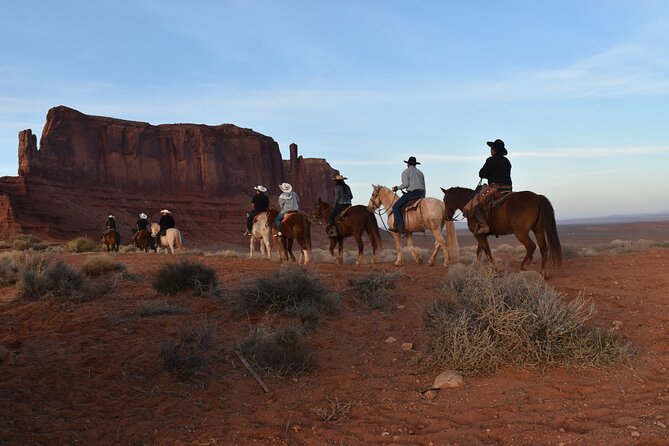
- Max 4 riders means you’re not competing with a big crowd for quiet views.
- Navajo-guided stops include specific landmarks, like The Mittens and Merrick Butte, not just scenic driving talk.
- Cowboy hats and helmets are provided, so you can ride without scrambling for gear.
- Photo moments are built into the route, with time for last-minute pictures back at the stable.
- Relaxed pace keeps things doable for beginners, without promising trotting or sprinting.
- Park entrance fee extra so your real cost is $110 plus the $20 tribal park fee.
Entering Monument Valley by Horse, not by Car
Monument Valley is one of those places where a car tour is good, but a horse tour is different. By land, the scale hits you fast. From the saddle, the valley feels wider, the rocks feel closer, and you get that slow-motion sense of traveling through a real, working landscape instead of sightseeing through it.
This tour is designed for that kind of attention. You’re not just passing viewpoints. You ride to named landmarks, stop for photos, and hear the story connected to them. The guide does the work of pacing the group, choosing when to stop, and keeping things safe on uneven desert ground.
One big plus for value is the group size. With a maximum of 4 travelers, you’re less likely to feel like a spare seat in a conveyor belt. It’s easier to ask questions, get a better look around, and settle into the quiet of the valley.
Where You Start: Sacred Monument Tours and the Stable Setup
Your tour starts at Sacred Monument Tours on Main Monument Valley Rd, near the Visitor Center area. From there, you’ll head toward The View Hotel Premium Cabins area, then follow a path that leads you to the horse stable.
Once you arrive, the rhythm is simple:
- meet your Navajo guide
- sign a waiver
- get a safety briefing
- get saddled up
This is the part where time can shift. The booked duration is about 2 hours, but getting everyone ready takes a chunk of the schedule. In practice, that means you should expect some time on the ground before you’re actually riding, and some wrap-up time at the end to ask questions and take photos with the horses.
It’s also worth noting what they provide. You get cowboy hats and helmets, plus personal protective equipment. That’s a real convenience in this part of the country, where dust, sun, and wind can be more than a little annoying if you’re not prepared.
Not settled on one yet? These are other Monument Valley trips our reviewers have been through.
The Mittens Stop: West and East Mitten Buttes Up Close
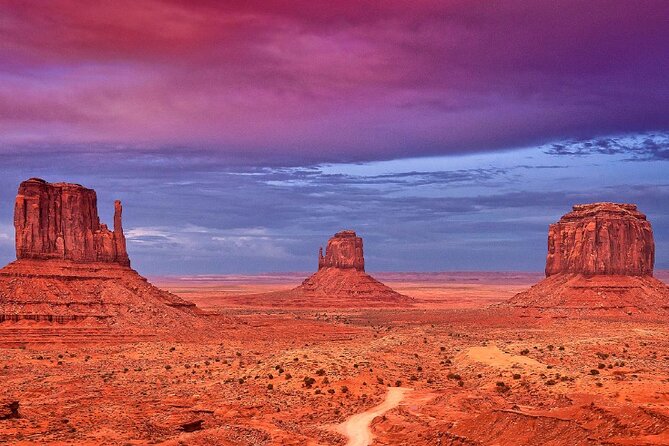
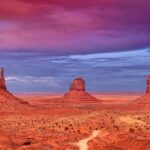
Your first major riding stop is The Mittens, also called the West and East Mitten Buttes. This is one of the valley’s most recognizable shapes, and the tour ties it to a neat visual detail: when viewed from the south, the buttes look like two gigantic mittens with their thumbs facing inward.
That matters because it changes how you look at the rock formations. Instead of seeing them as random sandstone lumps, you start reading them like a portrait. The guide’s explanation gives you a mental hook for the whole valley, and after that, other shapes start clicking into place.
You’ll also get the benefit of a horse-based angle. From the saddle, the distance to the buttes often feels shorter, and you’re not limited to just one or two car pull-offs. You can pause, look around, and take pictures in a way that feels more like being in the scene than standing beside it.
Potential drawback here is time. If you’re sensitive to a tightly timed schedule, remember that photo stops are part of the ride, but they may not be long. Think: look, listen, snap, move on.
Merrick Butte and Richard Merrick: A Western-Film Landmark
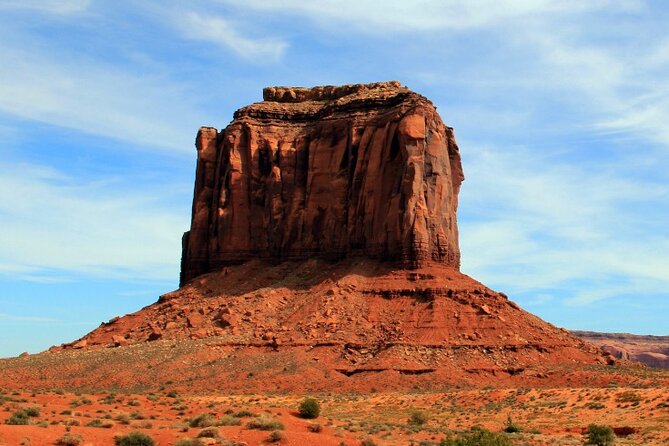
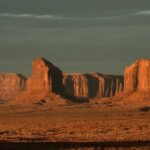
Next comes a stop connected to a 19th-century prospector, Richard Merrick. The butte named after him, Merrick Butte, is one of those Monument Valley silhouettes that has shown up in Western movies again and again.
The tour connects that pop-culture familiarity to a specific real-world setting. Merrick Butte stands about 5,000 feet above sea level, and it’s often framed in that classic “background icon” role you might recognize from old film shots.
From the rider’s perspective, this stop feels especially cool because the butte isn’t just a distant photo target. You approach it from ground level on horseback, and the silhouette has more drama in person than it does on a postcard.
Also, this is one of the stops where the guide’s story is doing more than being trivia. It helps you place the valley in time, not just in scenery. You start noticing how landscapes get used, remembered, and reinvented through storytelling.
Sentinel Mesa, the Watchtower Feeling and the Best Panoramas
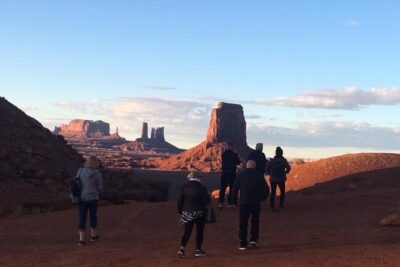
Then you ride to Sentinel Mesa, often referred to as the watchtower of the valley. The tour frames why that name fits. Sentinel Mesa rises to around 6,200 feet, and it has long functioned as a natural landmark for both Navajo people and early explorers.
On horseback, you feel those vantage points more than you do from a road pull-off. The ride pauses for panoramic views, and the mesa’s shape creates that “lone sentinel keeping watch” effect in a way that feels almost cinematic.
This is also a major photography stop. If you care about getting shots that look like they belong in a Western opening scene, this is the one. Bring your camera instincts, take a few angles, and don’t rush. The red rock colors and the light can shift quickly in this area, so a minute extra can mean better photos.
One more detail you’ll notice as you ride: the route style encourages you to keep looking outward. You’re not just watching the horses’ steps. You’re also checking the horizon for the next landmark reveal.
Horses, Pace, and What It Feels Like to Ride Calmly
Most of the value here is tied to comfort and pace. The ride is described as chill and slow, not something focused on trotting or running. That’s good news if you’re a beginner or if you want to enjoy the scenery without white-knuckling your balance.
You’ll be in a small group, and the guide is there to manage pace and safety. Many guides in this setup have a patient, teaching style, including handling novice cowboys. In past tours, guides have included people with names like Logan, Marco, Nelson, Ezekiel, Adam, and Ranger. You should expect a friendly guiding approach, with stories and explanations as part of the ride.
Horses are selected based on experience level and size, and equipment quality matters. Past riders have noted well-behaved horses and clean gear. You may even hear the route described as passing through valley areas that feel tucked away compared to the road.
Here’s my practical advice: treat this as a slow scenic ride with landmark stops. If you’re expecting a high-energy adventure, you might feel underwhelmed. If you’re looking for a relaxed way to see Monument Valley at close range, this is a strong match.
Guides, Stories, and the Small-Group Photography Advantage
Even when the landscape does most of the talking, the guide’s role is huge. You’re not just receiving directions. You’re learning what you’re looking at and why it matters, from geological references for The Mittens to the named history tied to Merrick Butte.
Some guides also share stories and songs as part of the experience. That can make the ride feel more like a cultural conversation than a checklist tour, especially with a group of just a few people.
Photography is included as part of the experience. You’ll have photography opportunities along the way, and back at the stable you can take last-minute pictures with everyone, including the horses. That timing helps. You’re not trying to hunt for photos while everyone is scrambling to mount or dismount.
If you care about pictures, plan to bring a charged phone or camera, and keep your hands free during stop moments. The more you can enjoy the view while the guide works with the group, the better your photos will look.
Price and Value: $110 Plus the Tribal Park Fee
The tour price is $110 per person, for an approx. 2-hour experience. On top of that, the Monument Valley Navajo Tribal Park entrance fee is listed separately at $20.
So your basic plan should be:
- $110 for the horseback tour
- $20 for the tribal park entrance fee
That brings it to $130 per person before you consider any optional extras or food decisions.
Is it worth it? I think it can be, especially because you’re paying for three things at once:
- small-group handling (up to 4 travelers)
- guide-led landmark stops tied to real explanations
- horseback access to areas that aren’t as easy to reach by road
In other words, you’re not just buying transportation. You’re buying access, time, and context. If you already feel comfortable with self-guided car viewpoints, then horseback is still a step up because it changes how close and immersive the valley feels.
But if budget is tight, the separate $20 entrance fee is the first thing I’d double-check. Add that in at checkout time so you don’t end up surprised at the park gate.
Timing Reality Check: How the 2 Hours Can Feel in Your Day
This is the part most worth planning for. Your booking says 2 hours approx., but your day will include more than just mounted riding. Expect:
- arriving at the stable
- waiver and safety briefing
- saddling and organizing your ride time
- riding to multiple named stops
- returning to the stable for questions and photos
So, if you’re hoping for a long uninterrupted stretch in the saddle, you might want to mentally price the ride as “short scenic ride plus landmark moments,” not “two full hours of continuous riding.”
My suggestion: if you’re trying to choose between shorter vs longer rides, ask yourself what you value more.
- If you mainly want landmark access and photos, this length often hits the sweet spot.
- If you want maximum time mounted, you should confirm how long the ride segment usually lasts relative to the total window.
That one check can save a lot of frustration on a tight itinerary day.
Who This Tour Is Best For
This is a good fit if you:
- want a relaxed way to see Monument Valley without driving between stops all day
- like guided context, not just scenic views
- prefer smaller groups and personal attention
- are okay with a slow pace focused on looking and photographing
It’s also a strong option for couples and first-time riders because the horse-and-guide setup is built around comfort and safety. You can enjoy the ride without needing advanced riding skills.
If you’re looking for a workout or speed, this likely won’t satisfy. Again, the tone is calm, with photography and viewpoints built into the route.
Should You Book This Monument Valley Horseback Tour?
I’d book it if your priority is getting Monument Valley’s landmarks up close, with a guide who talks through what you’re seeing. The mix of named stops like The Mittens, Merrick Butte, and Sentinel Mesa is exactly the kind of structure that makes a short tour feel meaningful.
Book with eyes open if:
- you’re watching the final cost and need to add the $20 tribal park entrance fee
- you expect two full hours of continuous riding rather than a tour window that includes preparation and wrap-up
If you want Monument Valley to feel less like a drive-by and more like you’re part of the landscape for a couple hours, this horseback tour is a smart, cost-conscious way to do it.
Tours: the rest of the Monument Valley file
- 3 Hour Monument Valley Tour★ 5.0 · 1,616 reviews
- 2.5 Hours of Monument Valley’s Backcountry 4×4 Tour★ 5.0 · 1,550 reviews
- 3.0 Hours of Monument Valley’s Sunrise or Sunset 4×4 Tour★ 5.0 · 811 reviews
- Sunset Tour of Monument Valley★ 5.0 · 742 reviews
- Monument Valley Extended Backcountry Tour★ 5.0 · 720 reviews
Tour Reviews: more from our Monument Valley desk
- 3 Hour Monument Valley Tour★ 5.0 · 1,616 reviews
- 2.5 Hours of Monument Valley’s Backcountry 4×4 Tour★ 5.0 · 1,550 reviews
- 3.0 Hours of Monument Valley’s Sunrise or Sunset 4×4 Tour★ 5.0 · 811 reviews
- Sunset Tour of Monument Valley★ 5.0 · 742 reviews
- Monument Valley Extended Backcountry Tour★ 5.0 · 720 reviews
Newest Monument Valley reviews added to this site
- 1.5 Hour Tour of Monument Valley’s Loop Drive
★ 5.0 · 400 reviews - 2 Hour Monument Valley Horseback Tour
★ 4.5 · 458 reviews - Monument Valley Group Tour – 3 Hours – Navajo Spirit Tours
★ 5.0 · 636 reviews - Monument Valley Backcountry Tour
★ 5.0 · 645 reviews - Monument Valley Extended Backcountry Tour
★ 5.0 · 720 reviews - Sunset Tour of Monument Valley
★ 5.0 · 742 reviews - 3.0 Hours of Monument Valley’s Sunrise or Sunset 4×4 Tour
★ 5.0 · 811 reviews - 3 Hour Monument Valley Tour
★ 5.0 · 1,616 reviews
Monument Valley and Navajo Country, side by side.
 ★ 4.7Page: Lower Antelope Canyon Entry and Navajo Guided TourFrom $787,801 reviews
 ★ 4.7Page: Lower Antelope Canyon Tour with Trained Navajo GuideFrom $752,552 reviews
 ★ 4.8Monument Valley: Backcountry Jeep Tour with Navajo GuideFrom $801,794 reviews
 ★ 5.03 Hour Monument Valley TourFrom $601,616 reviews
 ★ 5.02.5 Hours of Monument Valley’s Backcountry 4×4 TourFrom $751,550 reviews
 ★ 4.8Monument Valley: Sunset Tour with Navajo GuideFrom $921,467 reviews
 ★ 4.7Page: Lower Antelope Canyon Walking Tour with Navajo GuideFrom $761,289 reviews
 ★ 5.03.0 Hours of Monument Valley’s Sunrise or Sunset 4×4 TourFrom $85811 reviews
This one is also listed in