
Review · BOSTON FREEDOM TRAIL AND HISTORY
Boston: Official Freedom Trail® Walking Tour
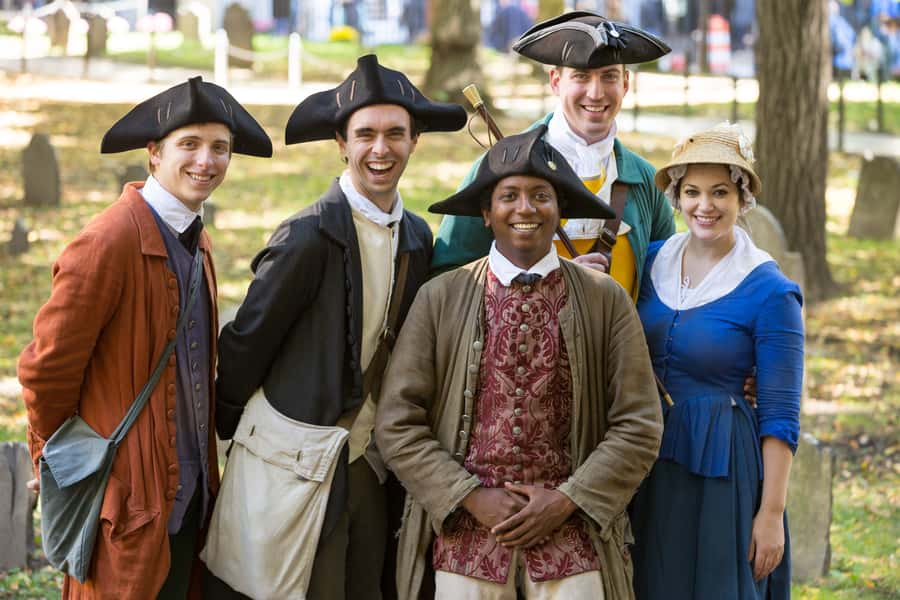
Boston’s red line tells a dramatic story. I love how this official walk turns major Revolutionary moments into scenes you can actually stand inside, and I really like the period-costumed guide style, with names like Jeremiah Poope and Dr. Byles showing how funny and clear history can be. One consideration: the group can run large, so if you want to be right up front for the jokes and details, you’ll need to get close early.
In 1.5 hours and about a mile, you hit the must-know stops, including Boston Common, the Boston Massacre area, the Granary Burying Ground, and the site of the oldest public school in the United States. You’ll also spend time in the Faneuil Hall precincts hearing how Samuel Adams and James Otis argued for independence, and you’ll get a vivid reminder of the blood-in-the-snow moment outside the Old State House.
Is it perfect for everyone? Not quite. The tour does not include paid entry into some big-ticket Freedom Trail buildings like the Old South Meeting House, Old State House, Old North Church, and the Paul Revere House, so plan to use this tour as your orientation, then return for ticketed interiors if you want more.
In This Review
- Key things to know before you walk
- A red-line walk that feels like stepping into the 1770s
- Price and value: why $18 works here
- Where the tour starts: Boston Common to get your bearings fast
- Faneuil Hall precincts: where speeches feel close enough to hear
- Boston Massacre site: remembering the victims without turning it into trivia
- Granary Burying Ground and Paul Revere: history slows down here
- The oldest public school stop: small details that explain a bigger shift
- How the guide experience shapes everything
- What the tour includes, and what you may want to add later
- Reverse Walk into History: a different way to learn
- Who should book this Freedom Trail tour?
- Should you book this Boston Freedom Trail walking tour?
- FAQ
- How long is the Boston Freedom Trail walking tour?
- What does the tour cost?
- Where do I meet for the tour?
- How often do tours leave?
- Do I need to choose a specific date and time when I book?
- Is video recording allowed?
- Are there Freedom Trail sites with admission fees that are not included?
- What should I bring?
- Do I need a printed voucher?
Key things to know before you walk
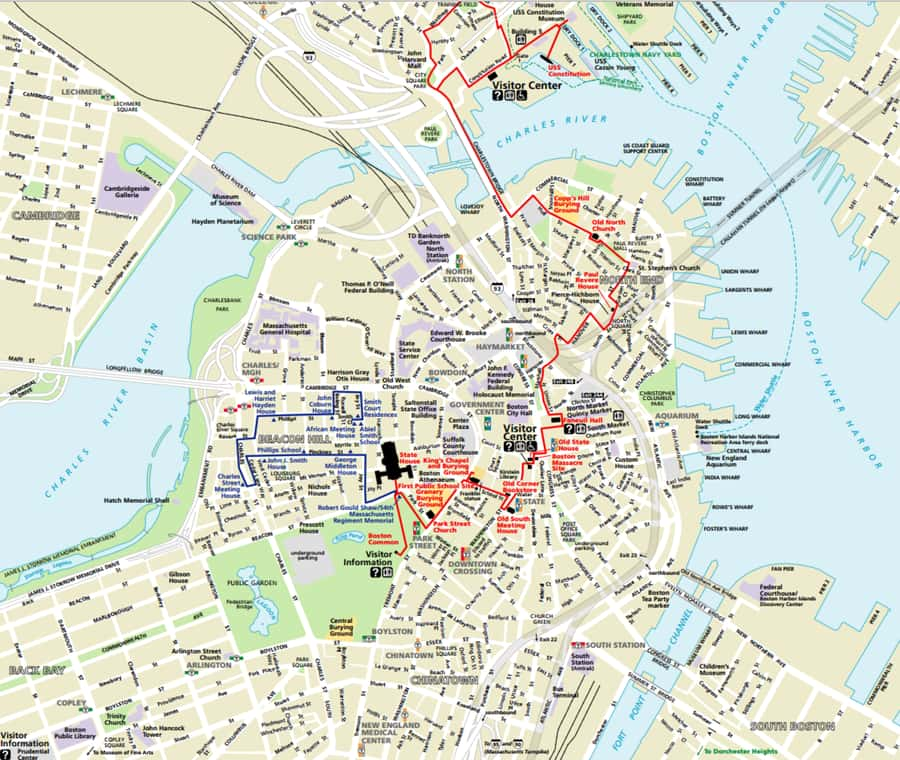
- Official Freedom Trail Foundation tour, 1.5 hours, covering 11 of the 16 historic sites
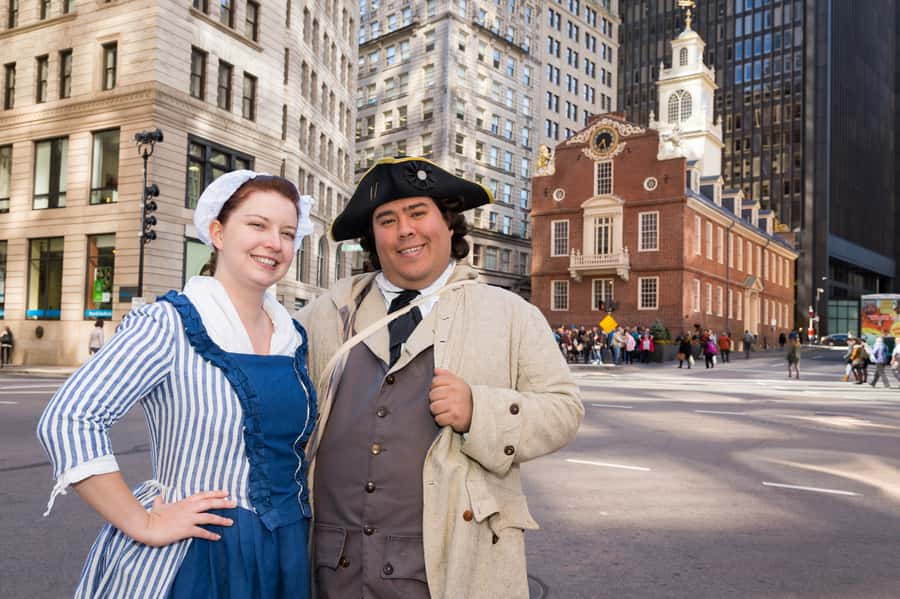
- Period-costumed guides who use humor, character voices, and time for questions
- Boston Common and the Massacre area, a strong mix of calm park space and hard truth
- Faneuil Hall precinct storytelling, with patriotic orators coming to life in the streets
- Granary Burying Ground and Paul Revere’s final resting place, quiet, reflective, and worth slowing down for
- A short, focused route about 1 mile, not the full trail, so you get clarity fast and leave wanting more
A red-line walk that feels like stepping into the 1770s

The Freedom Trail can feel like a list of famous places until you see it with a guide who knows how to connect the dots. This tour follows the red line through central Boston for about a mile, then uses that simple route to explain why the Revolution happened where it happened.
What I like most is the way the guide uses story beats, not just dates. You’re walking past real streets where real people made real choices, and the guide helps you picture the tension in the air. Crispus Attucks, Paul Revere, Samuel Adams, and John Adams come up as more than names in a textbook, and that shift is what makes the tour feel worth doing even if you already know the basics.
Price and value: why $18 works here
At $18 per person for a 1.5-hour guided walk, you’re paying for three things: interpretation, efficiency, and pacing.
Interpretation matters because Boston’s Revolutionary sites are spread through a working city. A self-guided walk is doable, but you will likely miss the “why this spot” framing that turns random brick and stone into a timeline you can hold in your head.
Efficiency matters because you’re covering 11 of the 16 official stops in one go. That’s the big value move. You get to sample the trail’s key story moments, then you can decide what to return to later for paid interiors.
Pacing matters because the tour includes time for questions and photographs. It’s not a sprint. Still, it’s a city walk. You should expect some stop-and-start movement as the guide gathers everyone and explains the next scene.
Where the tour starts: Boston Common to get your bearings fast
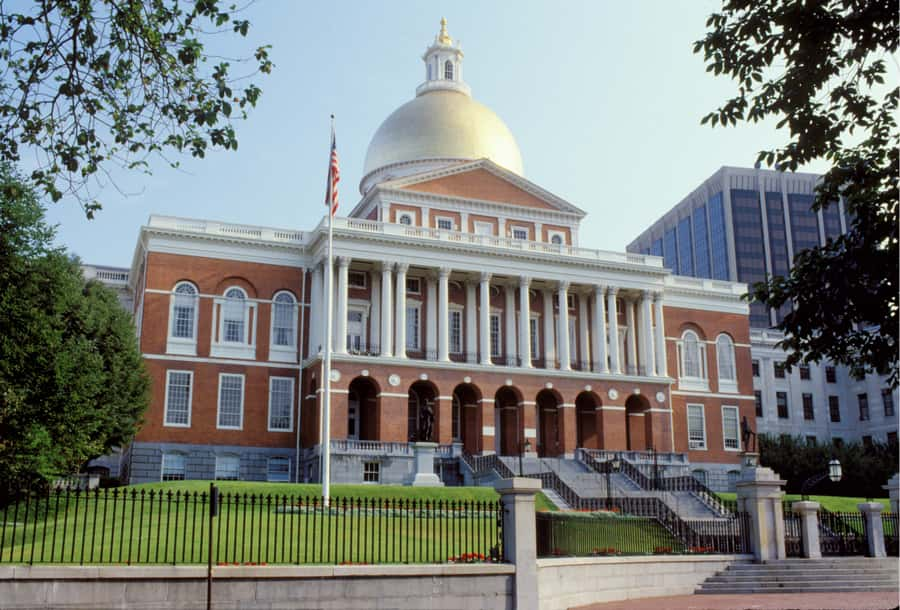
Most departures leave from the Boston Common Visitor Information Center, and that’s a smart starting choice. Boston Common is not just a landmark, it’s the setting. This is America’s first public park, and even if you’ve only glanced at it before, being there at the start helps you understand why public space mattered so much.
From there, the tour presses forward along the trail with the classic “pay attention to the red line” rhythm. You’ll learn how the guide sets context before each major stop, so the next location feels like it follows logically instead of appearing out of nowhere.
If you’re traveling with kids or teens, this part usually lands well because the park gives them a breather before the politics heats up. Bring water and wear comfortable shoes, because it’s an urban walk and you’ll want your feet to cooperate.
Faneuil Hall precincts: where speeches feel close enough to hear
Faneuil Hall is one of those places where people outside Boston can only imagine the noise. On this tour, you don’t just “visit Faneuil Hall.” You spend time in the precincts and hear how Samuel Adams and James Otis carried the argument for independence in the streets.
The guide style here is a big part of the experience. The best moments come when the guide shifts into character and explains what patriots were asking for, what they feared, and why they thought the British government was overreaching. The tour also helps you connect those speeches to the tension you’ll see later at the Old State House area and the Boston Massacre site.
One practical point: if the group is large, it can be hard to all hear every word at once. Get near the front of your cluster when the guide is speaking, and don’t be shy about asking questions. The pace is designed for back-and-forth, not just a one-way lecture.
Boston Massacre site: remembering the victims without turning it into trivia

At the Boston Massacre site, the tone changes. This stop is about the victims, and the tour brings the moment to life with the detail about blood in the snow outside the Old State House area on the night of the Boston Massacre.
That’s the kind of specificity that keeps the story from floating. You’re not just learning that something violent happened. You’re learning why it mattered, and why ordinary Bostonians would interpret it as proof that they were being pushed beyond their limits.
This is also a good moment to pause mentally. If you rush through Revolutionary history, you can end up treating it like a script where everyone acts out of pure ideals. Here, you’re reminded that people were harmed, and that the outrage behind representative government came from real suffering.
Granary Burying Ground and Paul Revere: history slows down here
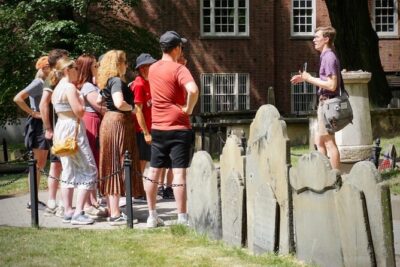
Granary Burying Ground is one of the stops where the walking tour really earns its keep. It’s not just famous. It’s a place where you naturally slow down, look around, and think.
The tour includes Paul Revere’s final resting place, and that gives you a satisfying emotional “bookend” to all the action earlier on. You meet him as a person in the story, then you see where he rests. The guide ties that together so it doesn’t feel like a random cemetery stop.
Granary Burying Ground also helps you understand Boston’s historical depth. Even if you know the dates, standing in a cemetery makes the founding era feel less like a set of events and more like a chain of lives and families.
If you prefer photo-taking, this is a good area for it. The tone stays respectful, but the guide typically gives time for pictures and for everyone to see what the stop is about before moving on.
The oldest public school stop: small details that explain a bigger shift
One of the highlights on this tour is the site of the oldest public school in the United States. It might sound like a detour from dramatic revolutionary landmarks, but it’s actually a powerful lens.
This is where you start seeing that the Revolution was not only about throwing off rulers. It was also about building a society. Education, civic learning, and the idea that ordinary people could improve their lives all connect to the broader push toward representative government.
The guide’s job at this stop is to make you notice the point. Even if you only see a marker or streetscape cue, you learn how early Bostonians thought about public instruction and why that mattered.
If you’re the kind of traveler who loves “how people lived” questions, you’ll likely enjoy this stop a lot more than you expect.
How the guide experience shapes everything
This tour lives or dies based on the guide. The reviews you’ll find for this Freedom Trail Foundation walk repeatedly point to a similar theme: guides who stay in character, keep the group engaged, and use humor to make hard moments easier to understand.
You’ll see names like Jeremiah Poope, Danielle, Hepzibah Swan, James O’Sullivan, Matt Prescott, Rob Cream (aka Isiah Thomas), and Dr. Byles pop up because those guides nail the balance.
Here’s what that balance looks like in practice:
- The guide explains facts clearly, then frames them as choices patriots made.
- They use jokes and human moments, but they don’t sand down the seriousness of events like the Massacre.
- They project their voice so you can hear them even with street noise.
- They allow time for questions and photographs, so you can shape your own learning.
If you’re worried about missing jokes or details because of group size, solve it with one strategy: stay close to the guide during key explanations, then use question time to catch anything you missed.
What the tour includes, and what you may want to add later

The tour features 11 of the 16 official Freedom Trail historic sites, and that is a big reason it feels like a good “first Boston history” move. The route is about a mile, done on foot in roughly 90 minutes, which keeps it from dragging on.
The tour also does not include entrance to some sites that charge admission, including the Old South Meeting House, Old State House, Old North Church, and the Paul Revere House. You can still see these as part of the trail experience, but if you want the interior exhibits, you’ll need to plan a separate visit and tickets on your own.
To me, that’s fine. This walking tour gives you context and orientation. Ticketed interiors work best after you understand what happened and why you’re looking at what you’re looking at. You’ll get more out of those later visits.
Reverse Walk into History: a different way to learn
If you like options, there’s also a Reverse Walk Into History option. The idea is simple: you follow the story in the opposite direction, which can help you connect cause and effect in a new way.
I like reverse routes for one reason. Forward walking can feel like you’re just “checking off” famous spots. A reverse route forces your brain to hold the ending in mind while you learn the beginning. If you’re someone who gets bored by linear history, this can refresh the experience.
Who should book this Freedom Trail tour?
This tour is a strong fit if:
- You want a guided introduction to Boston’s Revolutionary core in about 1.5 hours
- You value storytelling that connects people, places, and motives
- You like learning in character, with humor and interaction
- You want a shortcut to understanding the trail before you pick which ticketed sites to revisit
It’s less ideal if:
- You hate group walking and prefer total quiet
- You only want to see interior museum spaces and nothing outside
- You’re hoping for a full end-to-end walk of the entire Freedom Trail line in one day
Should you book this Boston Freedom Trail walking tour?
Yes, if you want a smart first step. For $18, you get an official guided route that hits major stops, includes story-driven guide performance, and keeps a good pace with time for questions and photos. It’s not trying to replace paid site visits, and that actually helps. It sets you up to choose which buildings to explore more deeply later.
Book it if you’re short on time, new to Boston, or you want the trail to make sense fast. Skip it only if your goal is strictly ticketed interiors or you’re determined to walk the entire trail without any guidance.
FAQ
How long is the Boston Freedom Trail walking tour?
The tour lasts about 1.5 hours and covers roughly 1 mile.
What does the tour cost?
The price is $18 per person.
Where do I meet for the tour?
The meeting point can vary depending on the option you book.
How often do tours leave?
Tours leave every hour on the hour from the Boston Common Visitor Information Center, and every hour on the half-hour from the ArtsBoston booth at Faneuil Hall.
Do I need to choose a specific date and time when I book?
You do not need to specify a date or time. With your ticket, you are guaranteed a spot on a Freedom Trail Foundation tour on any date any time.
Is video recording allowed?
No. Video recording is not allowed on the tour.
Are there Freedom Trail sites with admission fees that are not included?
Yes. Entrance to sites that charge admission fees is not included, including the Old South Meeting House, Old State House, Old North Church, and the Paul Revere House.
What should I bring?
Bring comfortable shoes and water.
Do I need a printed voucher?
Yes. A printed voucher is required.
Boston Freedom Trail and History, side by side.
 ★ 5.0Boston: Freedom Trail History Small Group Walking TourFrom $356,450 reviews
 ★ 4.8Boston Fenway Park: Guided Ballpark Tour with OptionsFrom $203,606 reviews
 ★ 4.5Tour of Historic Fenway Park, America’s Most Beloved BallparkFrom $453,013 reviews
 ★ 4.5Boston Freedom Trail Walking Tour with Costumed GuideFrom $262,531 reviews
 ★ 4.5Boston Tea Party Ships and Museum AdmissionFrom $352,512 reviews
 ★ 4.8Boston: Boston Tea Party Ships and Museum Interactive TourFrom $351,926 reviews
 ★ 5.0Boston Food & History: Pizza, North End & Freedom TrailFrom $901,772 reviews
 ★ 4.9Boston’s Freedom Trail: A Revolutionary Walking TourFrom $311,748 reviews
This one is also listed in