

Review · BOSTON FREEDOM TRAIL AND HISTORY
Boston’s Freedom Trail: A Revolutionary Walking Tour
Sixteen Freedom Trail stops in one walk. This guided tour turns Boston’s American Revolution places into a clear, story-driven route you can follow on foot.
I really like the focus on key sites you normally have to pick and choose, plus the way the guide connects big events like the Boston Tea Party and the Boston Massacre to the streets you’re standing on. It also helps that the route is built around both famous names and the lesser-known people who shaped the city.
One thing to plan for: it’s a 2.5 hour walking tour, so you’ll need comfortable shoes and patience if you don’t love lots of stops in a single session.
In This Review
- Key moments that make this tour worth your time
- Sixteen Freedom Trail Sites in One 2.5-Hour Route
- Meeting at The Embrace on Boston Common, Then Spotting Your Guide
- Getting Your Bearings: Boston Common to the Massachusetts State House
- Park Street Church and Granary Burying Ground: Leaders Beneath Your Feet
- King’s Chapel to the Old Corner Bookstore: When Ideas Became Power
- Old South Meeting House and the Old State House: Protest, Tension, Outcomes
- The Boston Massacre Site: Making the Most of a Short, Sharp Stop
- Faneuil Hall to Paul Revere House: Where the Story Gets Loud
- Old North Church and Copp’s Hill: Lantern Signals and New Angles
- USS Constitution and Bunker Hill Monument: The Final Push
- Price, Value, and What You Might Still Want to Do
- Who This Walking Tour Suits Best
- Should You Book This Freedom Trail Tour?
- FAQ
- Where does the tour start?
- Where does the tour end?
- How long is the tour?
- How much does the tour cost?
- Is a live guide included?
- Are entry tickets to attractions included?
- Is the tour wheelchair accessible?
- What language is the tour in?
- Can I record video during the tour?
- What should I bring?
Key moments that make this tour worth your time
- All 16 official Freedom Trail sites in one continuous outing, no piecing together separate tickets.
- The guide’s storytelling style, with humor and lots of conversation, plus examples like Rob, Kenneth, Charlie R, and Alissa.
- Granary Burying Ground and the Golden Dome as major anchors, including the final resting places of Hancock, Revere, and Samuel Adams.
- Old North Church lantern detail, including the steeple where the two lanterns were hung.
- A strong Revolution storyline, with stops tied to the Boston Massacre and the build-up to the Tea Party era.
Sixteen Freedom Trail Sites in One 2.5-Hour Route
If Boston’s Freedom Trail feels like a long list, this tour solves the problem by stitching it into one guided walk. In about 2.5 hours, you cover the full set of 16 official sites, starting from Boston Common and ending back where you began.
The price, $31 per person, is the real argument here. You’re paying for a live guide to do the interpretation while you move from place to place, and you’re not forced to buy attraction tickets along the way. You will still want to plan for the fact that entry tickets to specific buildings are not included.
You also get a tour that balances famous revolution figures with stories about women, African Americans, and immigrant patriots and pioneers. That matters in Boston, where the “who” behind the fight is bigger than the names on coins.
Meeting at The Embrace on Boston Common, Then Spotting Your Guide
Your tour starts at The Embrace statue on Boston Common, right next to the Visitor’s Center at 139 Tremont Street. You’ll want to arrive a little early, because this is one of those tours where the group takes off once everyone’s accounted for.
The guide is not in costume. Instead, you’ll look for a flag that identifies the company, Boston History Company. That small detail helps a lot if you’re meeting in a busy public space.
One more practical note: bring comfortable shoes and water. The schedule is tight enough that you’ll feel every long block, and you’ll likely stand still at a few stops to hear the guide connect the dots.
Additional Walking Tours on the review pile in Boston

Getting Your Bearings: Boston Common to the Massachusetts State House
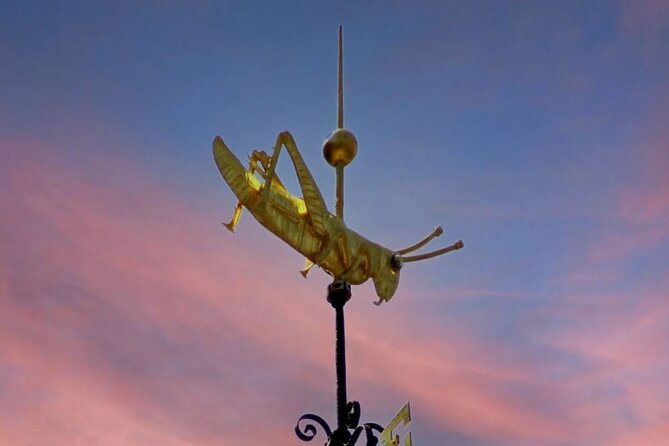
Boston Common sets the tone. Standing there, you get the big picture first, before you get specific. The guide frames Boston’s role in the American Revolution and also points out the city’s long reach into topics like abolition, American education, and immigration.
From there, the walk climbs into the heart of the story with the Golden Dome of the MA State House. This is the kind of stop that makes the trail feel real, not just theoretical. You’re not only looking at a landmark, you’re learning why it fits into a revolutionary city that argued about power, rights, and who counted.
This is also where the tour’s humor shows up in a light way. The format includes a few cheap dad jokes, which might sound small, but it keeps the group relaxed when the history gets intense.
Park Street Church and Granary Burying Ground: Leaders Beneath Your Feet
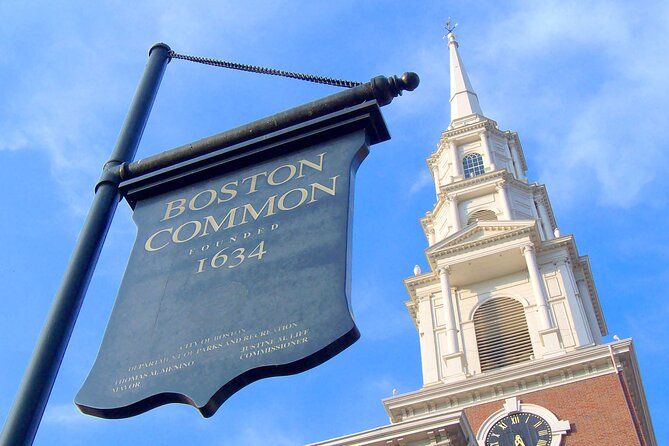
Park Street Church helps you switch from “mythic revolution” to lived-in streets. This part of the walk keeps momentum, so the stories land while the area still feels connected.
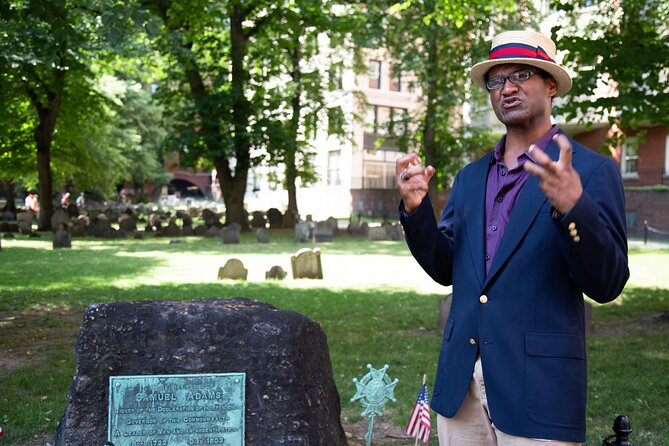
Then you reach Granary Burying Ground, one of the stops that anchors multiple famous names. You’ll see the final resting places of John Hancock, Paul Revere, and Samuel Adams. That trio alone makes this feel more personal than a museum ever can, because you’re standing in the same ground where history compresses into a few stones and a name.
What I like about this stop in particular is how it gives you a “who’s who” moment before the tour moves into more event-driven sites. It helps you remember names as you go, which makes the rest of the walk much easier to follow.
King’s Chapel to the Old Corner Bookstore: When Ideas Became Power
King’s Chapel is another smooth stepping stone, visually and story-wise. Here, the guide tends to broaden the theme beyond battles, emphasizing how public life and public talk helped push revolution forward.
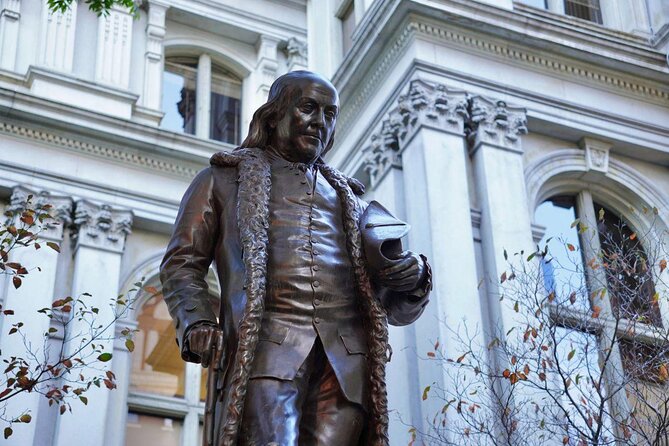
Next up is the Benjamin Franklin statue and then the Old Corner Bookstore. This part of the tour is where Boston’s history stops feeling like costumes and speeches and starts feeling like systems, like printing, distribution, and argument on street corners. You’ll also hear about the more human side of conflict, including rebels, gangs, and Midnight Riders as the guide threads the narrative forward.
If you like history that explains cause and effect, this stretch is a good match. You’re not only seeing sites, you’re learning what role they played in the kind of society that could produce uprisings.
Old South Meeting House and the Old State House: Protest, Tension, Outcomes

The Old South Meeting House stop is one of those moments where the architecture stops being background. The guide uses the location to connect you to the build-up of explosive events in Boston, including the Boston Tea Party era.
Then you move to the Old State House. This is where the Revolution storyline starts to feel urgent, because the tour frames the sites as checkpoints in a chain of escalating decisions. You’ll hear enough context to understand why the tension mattered, not just that something happened.
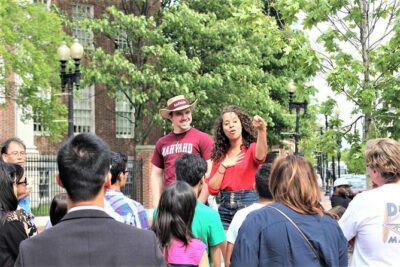
A practical tip: this is a point in the walk where questions are easy to ask. The guide keeps things interactive, and names like Kenneth and Matthew have been specifically noted for answering questions and keeping the group engaged. If you like to clarify details as you go, this is your moment.
More filed under Boston Freedom Trail and History in Boston





The Boston Massacre Site: Making the Most of a Short, Sharp Stop
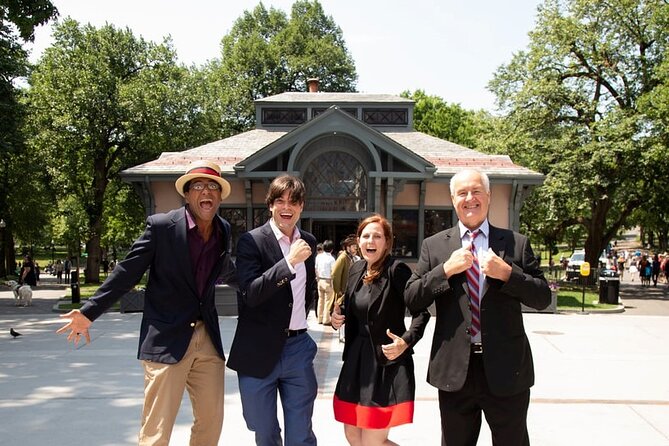
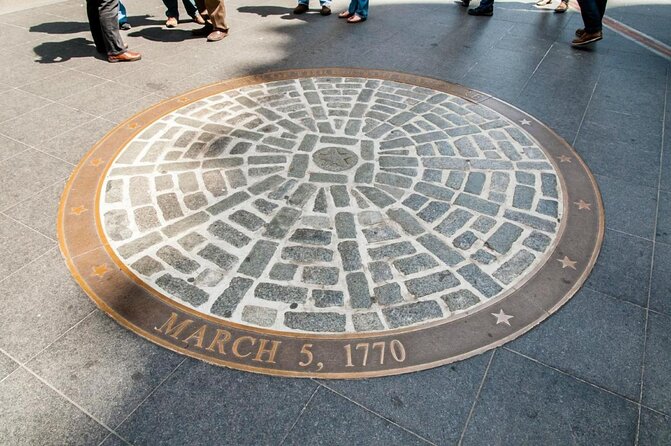
At the Boston Massacre Site, the tour shifts tone. This is a key moment on the Freedom Trail, and the guide makes sure you understand what made the event a turning point.
This stop connects directly to the tour’s attention to explosive Revolution events, and it’s also where the story becomes more than a headline. Even when the time on the ground is brief, you leave with a clearer sense of why people reacted the way they did and how public anger turned into political momentum.
The big value here is the pacing. The tour doesn’t rush past the emotional parts, it just keeps them concentrated. That keeps the rest of the walk from becoming a blur.
Faneuil Hall to Paul Revere House: Where the Story Gets Loud
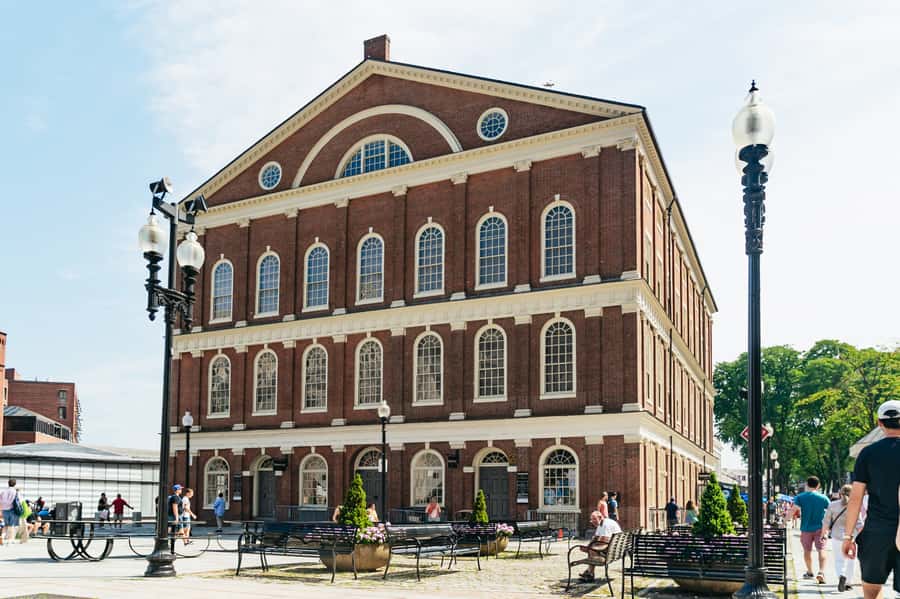
Faneuil Hall adds energy back into the route. It’s one of Boston’s most recognizable public spaces, and the guide uses it to keep the Revolution thread moving through places where talk, organizing, and disagreement all mattered.
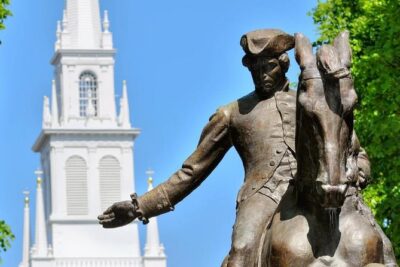
From there you go to the Paul Revere House. This is where the tour leans into the Midnight Riders theme in a very physical way. You can almost feel the urgency in the stop, because the guide ties the story to how information traveled and why speed mattered during tense moments.
One thing I appreciate is that the guide doesn’t treat Paul Revere as a statue. The stories are told in a way that makes the people feel connected to the city’s daily life, not sealed off in history books.
Old North Church and Copp’s Hill: Lantern Signals and New Angles
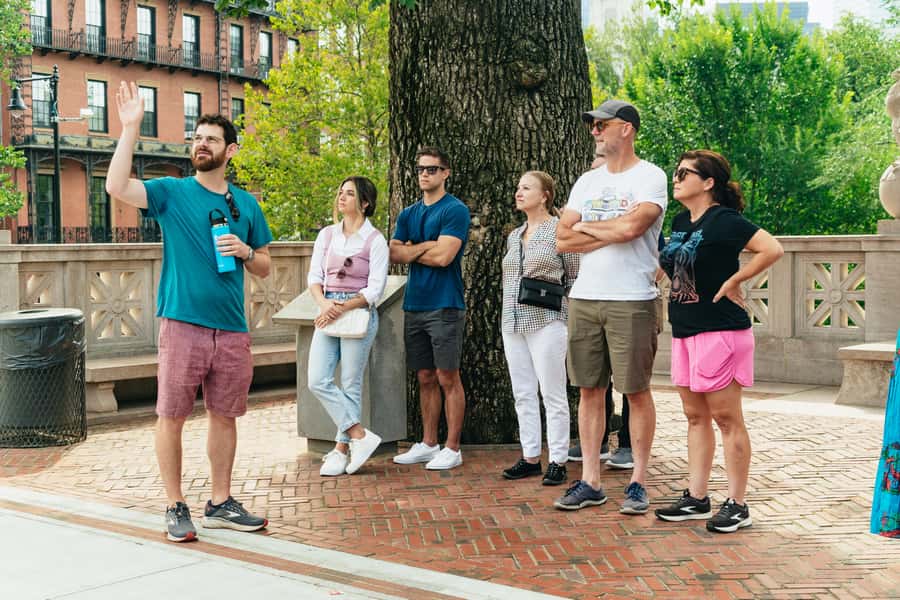
At Old North Church, the tour focuses on the steeple where the two lanterns were hung. The guide uses that image to turn a well-known moment into something you can visualize clearly while standing in place.
Then comes Copp’s Hill Burying Ground, a stop that adds perspective. This is also part of where the tour’s commitment to lesser-known stories becomes useful, since Boston’s revolutionary narrative includes more voices than the usual textbook cast.
If you like tours that go beyond the biggest names, Copp’s Hill helps with that. You’ll come away feeling like you understand more than a single heroic arc.
USS Constitution and Bunker Hill Monument: The Final Push
The USS Constitution stop gives you a different angle on the Revolution. Instead of focusing only on street-level conflict, you get to connect the story to endurance and capability, which is a nice change of pace in the last stretch.
Finally, Bunker Hill Monument closes the tour with scale. Even if you do not go inside any buildings, the monument’s presence makes it feel like a grand closing chapter. The guide keeps the ending tied to what you learned earlier, so the big finish doesn’t feel like a random add-on.
This is where you’ll be glad you started early in the walk, because you want your energy for the last few stops. If you’re the type who likes photos, this is a good moment to slow down and take them, since the route loops back to your meeting point afterward.
Price, Value, and What You Might Still Want to Do
At $31, the tour’s value comes from the structure: a live guide, 2.5 hours, and 16 sites on foot. You pay less than you would if you tried to replicate a similar experience with private guidance, and you avoid the “what do I do next” problem by following a pre-set route.
Not included: entry tickets. So if you love to go inside every stop, you might find yourself wanting to return later. I’d treat this tour as your orientation, then pick one or two locations that you want to experience more deeply on your own.
Also note the rule about recording: video recording is not allowed. That’s one of those details that can catch people off guard, so it’s worth keeping your plan simple.
Who This Walking Tour Suits Best
This tour is a strong fit if you want a guided walk that covers a lot of ground without turning into a rushed checklist. It also works well for first-time Boston visitors who want an easy way to see the Freedom Trail’s major landmarks and understand the story behind them.
It’s also a good option if you like asking questions. The guide is set up to keep conversation going, and names like Rob, Kenneth, Stuart, Noel, Malcolm, Sam, Jim, Megan, Stewart, and Julia have been linked to friendly engagement and humor in the guide lineup you’re likely to encounter.
One caution: there is a mix of accessibility notes listed with the tour being described as wheelchair accessible while also being marked as not suitable for people with mobility impairments. If mobility is part of your planning, you should check with the provider before booking so you can match your needs to the route reality.
Should You Book This Freedom Trail Tour?
Yes, I think you should book it if you want one guided afternoon that makes the Freedom Trail click. The big wins are the full 16-site coverage, the guide’s storytelling and humor, and the way the tour connects famous moments like the Boston Massacre and the Boston Tea Party era to the exact locations you visit.
Skip it if you hate walking, if you need long sitting breaks, or if you want a tour that includes entry tickets and inside-the-building time at every stop. For most people, though, this is a smart value buy: you get a clear route, you learn the why behind the where, and you finish with enough context to explore on your own afterward.
FAQ
Where does the tour start?
You meet your guide at The Embrace statue right next to the Visitor’s Center on Boston Common, at 139 Tremont Street.
Where does the tour end?
The activity ends back at the meeting point.
How long is the tour?
The tour lasts about 2.5 hours.
How much does the tour cost?
The price is $31 per person.
Is a live guide included?
Yes. The tour includes a live English-speaking guide and a walking tour.
Are entry tickets to attractions included?
No. Entry tickets are not included.
Is the tour wheelchair accessible?
It is listed as wheelchair accessible, but it is also marked as not suitable for people with mobility impairments, so it’s worth checking based on your needs.
What language is the tour in?
The tour is in English.
Can I record video during the tour?
No. Video recording is not allowed.
What should I bring?
Bring comfortable shoes and comfortable clothes, plus water.
Still working through Walking Tours in Boston
- Boston: Freedom Trail History Small Group Walking Tour★ 5.0 · 6,450 reviews
- Harvard University Campus Guided Walking Tour★ 4.5 · 3,632 reviews
- Boston Freedom Trail Walking Tour with Costumed Guide★ 4.5 · 2,531 reviews
- The Full Revolutionary Story Epic Small Group Boston Walking Tour★ 5.0 · 2,356 reviews
- Boston: Freedom Trail History Small Group Walking Tour★ 4.9 · 1,590 reviews
Tours: the rest of the Boston file
- Boston Duck Boat Sightseeing City Tour with Cruise Along Charles River★ 4.5 · 9,378 reviews
- Boston: Freedom Trail History Small Group Walking Tour★ 5.0 · 6,450 reviews
- Boston Hop-On Hop-Off Trolley Tour with 13 Stops★ 4.5 · 5,576 reviews
- Boston Duck Tour: The Original and World-Famous★ 4.6 · 3,935 reviews
- Harvard University Campus Guided Walking Tour★ 4.5 · 3,632 reviews
Tour Reviews: more from our Boston desk
- Boston Duck Boat Sightseeing City Tour with Cruise Along Charles River★ 4.5 · 9,378 reviews
- Boston: Freedom Trail History Small Group Walking Tour★ 5.0 · 6,450 reviews
- Boston Hop-On Hop-Off Trolley Tour with 13 Stops★ 4.5 · 5,576 reviews
- Boston Duck Tour: The Original and World-Famous★ 4.6 · 3,935 reviews
- Harvard University Campus Guided Walking Tour★ 4.5 · 3,632 reviews
Newest Boston reviews added to this site
- Cocktails & Cannoli: Boston’s North End Dessert Tour
★ 5.0 · 309 reviews - View Boston Observation Deck Admission Tickets
★ 4.5 · 314 reviews - Walk the Historic Freedom Trail with Costumed Guide
★ 4.5 · 329 reviews - 90-Min Narrated Trolley Tour of Lexington and Concord, MA
★ 4.5 · 358 reviews - Boston Pass: 40+ Things To Do – Includes Franklin Park Zoo
★ 4.0 · 359 reviews - Boston: City Cruises Sunset Skyline Cruise with Commentary
★ 4.6 · 381 reviews - Boston to Plymouth Day-Trip including Quincy, Plimoth Patuxet and Mayflower II
★ 5.0 · 407 reviews - Martha’s Vineyard Day Trip with Optional Island Tour from Boston
★ 4.5 · 407 reviews - City Cruises Boston 90-Minute Harbor Sunset Sightseeing Cruise
★ 4.5 · 411 reviews - Sunset Sailing Cruise on a Tall Ship in Boston Harbor
★ 4.5 · 414 reviews
Boston Freedom Trail and History, side by side.
 ★ 5.0Boston: Freedom Trail History Small Group Walking TourFrom $356,450 reviews
 ★ 4.8Boston Fenway Park: Guided Ballpark Tour with OptionsFrom $203,606 reviews
 ★ 4.5Tour of Historic Fenway Park, America’s Most Beloved BallparkFrom $453,013 reviews
 ★ 4.5Boston Freedom Trail Walking Tour with Costumed GuideFrom $262,531 reviews
 ★ 4.5Boston Tea Party Ships and Museum AdmissionFrom $352,512 reviews
 ★ 4.8Boston: Boston Tea Party Ships and Museum Interactive TourFrom $351,926 reviews
 ★ 5.0Boston Food & History: Pizza, North End & Freedom TrailFrom $901,772 reviews
★ 4.9Boston: Freedom Trail History Small Group Walking TourFrom $351,590 reviews
★ 5.0Boston Food & History: Pizza, North End & Freedom TrailFrom $901,772 reviews
★ 4.9Boston: Freedom Trail History Small Group Walking TourFrom $351,590 reviews
This one is also listed in