
Review · BOSTON FREEDOM TRAIL AND HISTORY
Boston: Freedom Trail History Small Group Walking Tour
Revolutionary clues are everywhere in Boston. This 2.5-hour Freedom Trail walking tour stitches together the years 1760 to 1775 with a historian guide, plus the small-group feel means real Q and A, not just background noise. I love that it covers the full set of 16 official landmarks on foot, and I like how it ends on Copp’s Hill with a sweeping view across the Charles River. On a past January tour, I heard guides like Jon and Alejandro answer questions on the spot and keep the story moving in time order.
One thing to plan for: you mostly view sites from the outside. You will get some time to warm up when conditions allow, but this is not a museum crawl where you can stroll through buildings at each stop.
In This Review
- Key Points Before You Go
- Boston Common to Copp’s Hill in One Coherent Story
- Meeting at the Boston Foundation Monument, Then Getting Your Bearings Fast
- Boston Common and the Granary Burying Ground, From Puritan Roots to Revolutionary Stakes
- Franklin Statue Area and the Massachusetts Bay Center, Where Politics Gets Physical
- The Boston Massacre Site, Faneuil Hall, and the Cradle of Liberty Energy
- North Square Park, the North End, and Paul Revere’s Downtown Scene
- Copp’s Hill Terrace: Your View Across to USS Constitution and Bunker Hill
- Price and Value for Money at $35.10 for 2.5 Hours
- Who This Freedom Trail Tour Is Best For, and Who Might Pass
- Should You Book This Freedom Trail Walking Tour?
- FAQ
- Where does the Freedom Trail tour start and end?
- How long is the tour?
- What language is the tour offered in?
- Does the tour include all 16 Freedom Trail landmarks?
- Is the tour accessible for wheelchairs and strollers?
- What is the cancellation policy?
Key Points Before You Go
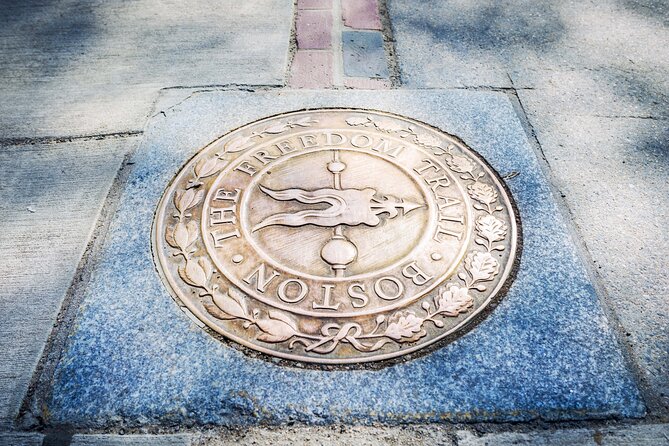
- 16 Freedom Trail landmarks, walked with a focused Revolutionary War timeline
- Historian-led small group (max 16), so questions actually get answered
- Boston Common to the North End, a smart mix of neighborhoods and landmark density
- Winter-friendly pacing, with occasional indoor pauses when available
- Copp’s Hill finale, an easy spot to connect the dots across the river
Boston Common to Copp’s Hill in One Coherent Story
This is a history walk that feels organized, not random. The guide keeps the Revolution years front and center, typically grounding the talk in what changed between 1760 and 1775, and why Boston’s politics and public spaces mattered. If you have ever read about the era but struggled to picture it, this kind of route helps you attach names to streets and events.
The small group matters more than you might think. With room for around 16 people, the guide can pause for your question, then steer the group right back into the next scene. I especially liked the way guides such as Cal and Nick framed people and events so you could follow along without needing a textbook.
At 2 hours 30 minutes, you get a lot done without feeling like you are speed-running Boston. It is long enough to feel substantial, short enough that you can still plan a separate dinner and maybe a self-guided walk later in the day.
Meeting at the Boston Foundation Monument, Then Getting Your Bearings Fast
You meet at the Boston Foundation Monument inside Boston Common, on the northern boundary of the park, across from 50 Beacon Street. The tour starts here for a reason: you are right at the heart of Boston, where the oldest civic ground still anchors the story. After check-in, the group sets off together, and the guide gives you a clear sense of what you will cover before you hit the first major landmark.
This route is heavily downtown, plus the North End, so you are never far from transit or your next meal plan. You also get a mobile ticket, which is handy when you are juggling cold hands, a phone case, and a checklist.
Good to know for your legs: the pace is a walking tour, and the provider asks for moderate physical fitness. It is wheelchair and stroller accessible, but it is still a lot of standing and moving through streets and park edges. If you know you cannot comfortably stand for extended stretches, you may want to think twice.
One practical tip I give friends: arrive a few minutes early. A couple of the reviews praised how guides handled the day, including very cold weather, but arriving early simply makes everything smoother for you and your group.
Additional Walking Tours on the review pile in Boston
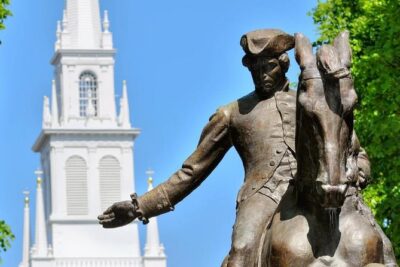
Boston Common and the Granary Burying Ground, From Puritan Roots to Revolutionary Stakes
Your first stop is the Boston Foundation Monument. The granite memorial includes a bronze relief showing two men shaking hands, tied to the Puritans arriving in 1630. It is a calm beginning, almost like a prologue, before the tour becomes more dramatic.
Then you settle into Boston Common itself. This is the oldest public land in the Americas and it served as Boston’s communal grazing pasture as far back as 1634. For the Revolutionary period, you can think of Boston Common as civic stage space, where public sentiment and city power play out.
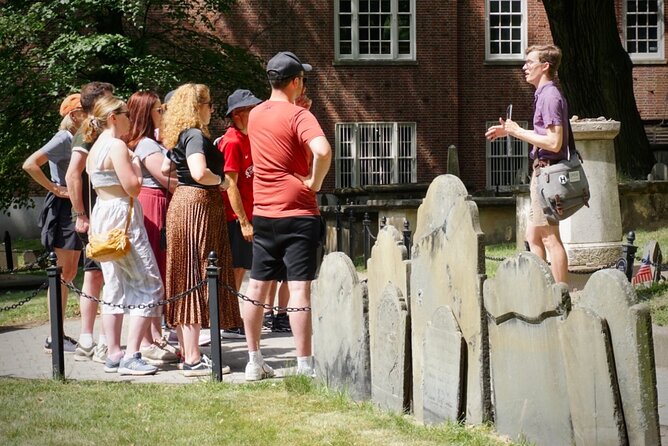
Next comes the Granary Burying Ground. This is where the tour gets emotionally sharper, because you are looking at final resting places connected to Revolutionary Boston. It is Boston’s third-oldest burying ground, and it is also where you feel how personal political conflict became.
What I like about this section is the balance. You get facts, dates, and context, but the locations are real and still there. Walking through spaces like this helps the Revolution feel less like a timeline in a book and more like a series of human decisions.
Franklin Statue Area and the Massachusetts Bay Center, Where Politics Gets Physical
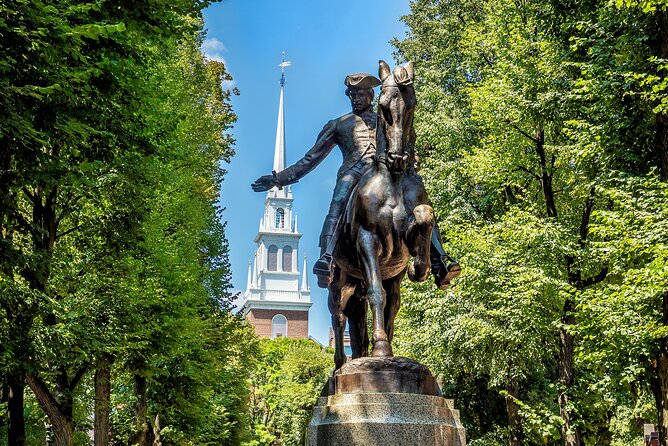
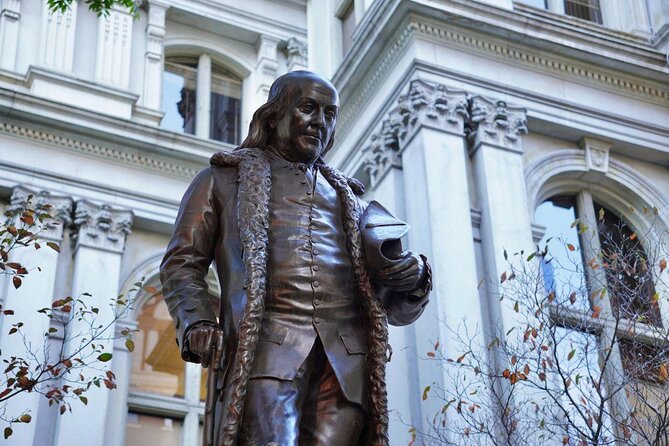
The next stretch is built around the Statue of Benjamin Franklin. The area connects to Boston Latin School, noted here as the oldest public school in the Americas (founded 1635). That detail is more than trivia. It signals how education, rhetoric, and civic debate fed into the political pressure of the 1760 to 1775 years.
This is also a hub of old meeting places and publishing activity. You will hear about the center of Boston politics for more than a century, plus a former publishing house of Ticknor and Fields (1718). The guide ties these locations to how ideas spread, not just who had the better argument.
One of the more pivotal connections on this walk is the meeting house area tied to the Boston Tea Party origin (1773). Even if you know the event, seeing how it connects to local meeting structures and colonial government buildings helps it click.
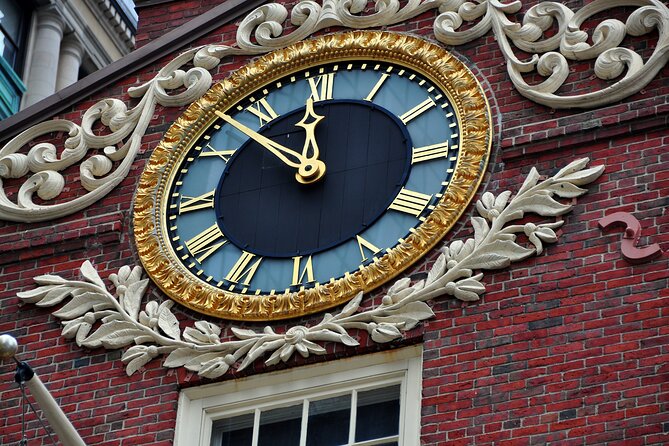
You will also encounter the colonial capitol of the Massachusetts Bay Colony, described here as the oldest public building in Boston (1713). This stop turns the abstract concept of resistance into something you can point at on the street.
The drawback in this area is simple: you have limited time. You are stopping, listening, taking a few photos, and moving on. If you want more depth, treat this as your orientation. Then pick 1 or 2 spots to revisit later on your own.
The Boston Massacre Site, Faneuil Hall, and the Cradle of Liberty Energy
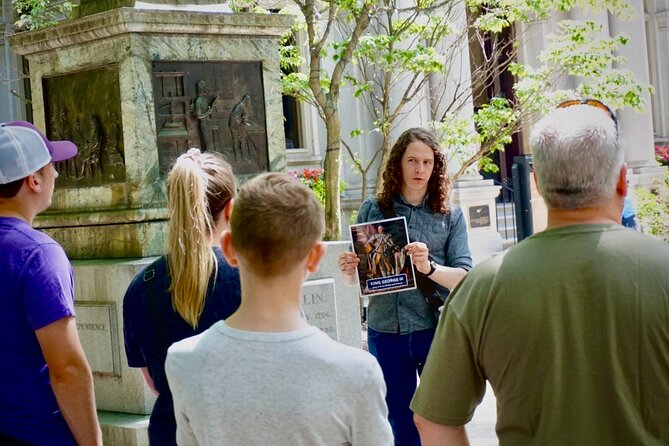
At the Boston Massacre Site, you get the event that shocks the story into focus. The description here centers on 1770, when British soldiers killed five Bostonians. The guide uses the moment to talk about tension on the street, not just on paper.
After that comes Faneuil Hall Marketplace, known as the Cradle of Liberty in this context. The landmark is tied to town meetings and dates back to 1742. Even from the outside, it is easy to understand why this kind of civic meeting place mattered. This is where public opinion could gather, argue, and organize.
A useful detail: this same area includes an old restaurant described as the oldest restaurant in the United States (1826) located in a historic building from 1704. Since the tour does not include museum admissions, you will not go inside as part of the main experience, but you can plan a meal stop before or after the walk. It is a nice way to turn the history into something you can taste.
North Square Park, the North End, and Paul Revere’s Downtown Scene
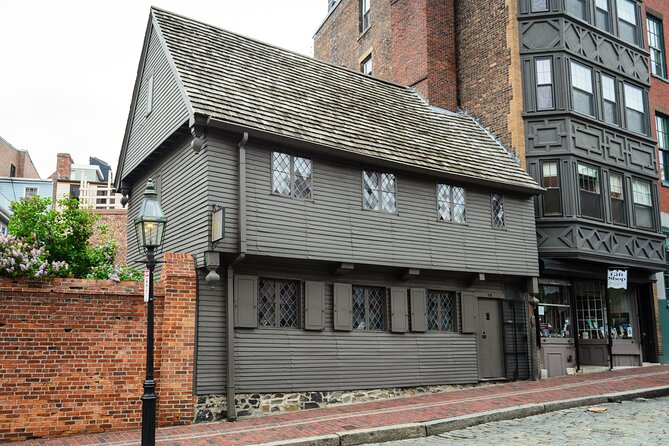
Your route continues through North Square Park, described as a historic public square in the heart of the North End dating to 1634. The North End vibe can feel dense and lived-in, which makes the Revolutionary-era stories sit better in your head. It is not just monuments. It is neighborhood space.
Then you reach the Paul Revere House. Here it is described as the home of Paul Revere and the oldest structure in Downtown Boston (1680). For me, this is one of the “hold onto your hat” moments, because it links a famous name to a specific physical place where you can stand and picture the people who lived there.
Right after that, the tour hits the Paul Revere Statue in a pedestrian-only space honoring the Midnight Ride (1775). This stop is built for photos, but it is also built for story. The guide ties the monument back to the network of signaling and readiness that made the ride matter.
You also hear about Boston’s oldest church held signal lanterns during the Midnight Ride (1723). Nearby, there is also mention of a second-oldest burying ground in Boston (1659). Even though you are not going inside during the tour, the clustering of these sites makes the narrative feel complete.
Elsewhere under Historical Tours across Boston




Copp’s Hill Terrace: Your View Across to USS Constitution and Bunker Hill
The tour ends at Copps Hill Terrace. This is a smart finish because it changes your perspective from street-level to river-level. From here, you get views across to two major Freedom Trail landmarks mentioned here: the U.S.S. Constitution (1797) and the Bunker Hill Monument tied to the 1775 battle.
This is the point where the walk can finally feel like a whole. You have moved through key places connected to meetings, messaging, and street conflict, then you look across to major military memory. It is a natural closing scene.
The end location also makes next steps easy. Copp’s Hill Terrace is near Hanover Street, where you can keep the day going with Italian restaurants, pastry shops, and pizza. After 2.5 hours of history, that matters. You are not forced into a long transit plan to get dinner.
Price and Value for Money at $35.10 for 2.5 Hours
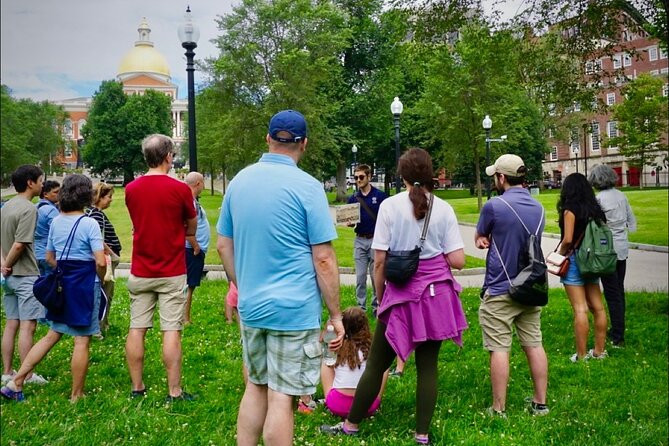
At $35.10 per person, the value is mostly about coverage and format. You are getting a guided walk that covers all 16 official Freedom Trail landmarks, in about 2.5 hours, with a small group capped at 16. For first-time Boston visitors, that is a lot of orientation packed into one ticket.
The guide focus also keeps you from getting lost in the “marker collecting” trap. A good historian tour does not just point at stones and buildings. It makes connections between what you see and what was happening in the 1760 to 1775 window. Guides like Jon, Mark, and Maura were specifically praised in reviews for keeping the story organized, answering questions, and making the Revolutionary period feel real.
One more value factor: this is offered in English and uses a mobile ticket, so you spend less time wrestling with logistics and more time on the streets. You do not have to schedule multiple entries or museum stops to build a complete day.
Who This Freedom Trail Tour Is Best For, and Who Might Pass
This tour is a strong fit if you want Revolutionary-era context without doing homework first. If you like history but also want a practical way to see Boston quickly, you will likely enjoy how the route ties together key moments between 1760 and 1775.
It is also ideal if you enjoy questions. Multiple guides were described as interactive and quick to answer, with the tour pacing designed to keep people engaged rather than lectured.
If you are the type who wants to go inside many buildings during the tour, you may feel constrained. The format here is mostly exterior viewing with time spent listening and walking. Some review comments also wished for seeing more churches from inside, and the provider’s response clarified that entering buildings on the Trail often is limited by time and cost.
A practical bonus for plan-ahead minds: if you want to add museum or church time after the walk, the provider notes that Old South Meeting House and Old North Church can have discounted admission with a Hub Town Tours ticket, and King’s Chapel is expected to offer a similar discount.
Should You Book This Freedom Trail Walking Tour?
Book it if you want a clear, guided route through Boston’s Revolutionary-era landmarks, and you want your history connected to place. The small group size and the focus on 1760 to 1775 make it more than a sightseeing loop, and the Copp’s Hill finish gives you a satisfying big-picture moment.
Consider a different plan if you need lots of indoor time, or if you know you struggle with standing for long stretches. This walk is designed to be manageable, including wheelchair and stroller access, but it is still a real walking day in the city.
FAQ
Where does the Freedom Trail tour start and end?
It starts at the Boston Foundation Monument, 49 Beacon St, Boston, MA 02108, and ends at Copps Hill Terrace, 520 Commercial St, Boston, MA 02109.
How long is the tour?
The tour is about 2 hours 30 minutes.
What language is the tour offered in?
The tour is offered in English.
Does the tour include all 16 Freedom Trail landmarks?
Yes, the experience includes the Freedom Trail and sees all 16 official historic landmarks.
Is the tour accessible for wheelchairs and strollers?
Yes, the tour is described as wheelchair and stroller accessible. The provider also notes a moderate physical fitness level is required, and it may not be recommended if you have difficulty standing for extended periods.
What is the cancellation policy?
Free cancellation is available up to 24 hours in advance for a full refund. If you cancel less than 24 hours before the start time, the amount paid is not refunded. The experience may also be canceled due to poor weather, with an offer of a different date or a full refund.
If you want, tell me your travel month and whether you plan to go inside any churches or museums afterward, and I’ll suggest a simple add-on plan around this tour’s finish area.
Still working through Walking Tours in Boston
- Harvard University Campus Guided Walking Tour★ 4.5 · 3,632 reviews
- Boston Freedom Trail Walking Tour with Costumed Guide★ 4.5 · 2,531 reviews
- The Full Revolutionary Story Epic Small Group Boston Walking Tour★ 5.0 · 2,356 reviews
- Boston’s Freedom Trail: A Revolutionary Walking Tour★ 4.9 · 1,748 reviews
- Boston: Freedom Trail History Small Group Walking Tour★ 4.9 · 1,590 reviews
Tours: the rest of the Boston file
- Boston Duck Boat Sightseeing City Tour with Cruise Along Charles River★ 4.5 · 9,378 reviews
- Boston Hop-On Hop-Off Trolley Tour with 13 Stops★ 4.5 · 5,576 reviews
- Boston Duck Tour: The Original and World-Famous★ 4.6 · 3,935 reviews
- Harvard University Campus Guided Walking Tour★ 4.5 · 3,632 reviews
- Boston Fenway Park: Guided Ballpark Tour with Options★ 4.8 · 3,606 reviews
Tour Reviews: more from our Boston desk
- Boston Duck Boat Sightseeing City Tour with Cruise Along Charles River★ 4.5 · 9,378 reviews
- Boston Hop-On Hop-Off Trolley Tour with 13 Stops★ 4.5 · 5,576 reviews
- Boston Duck Tour: The Original and World-Famous★ 4.6 · 3,935 reviews
- Harvard University Campus Guided Walking Tour★ 4.5 · 3,632 reviews
- Boston Fenway Park: Guided Ballpark Tour with Options★ 4.8 · 3,606 reviews
Newest Boston reviews added to this site
- Cocktails & Cannoli: Boston’s North End Dessert Tour
★ 5.0 · 309 reviews - View Boston Observation Deck Admission Tickets
★ 4.5 · 314 reviews - Walk the Historic Freedom Trail with Costumed Guide
★ 4.5 · 329 reviews - 90-Min Narrated Trolley Tour of Lexington and Concord, MA
★ 4.5 · 358 reviews - Boston Pass: 40+ Things To Do – Includes Franklin Park Zoo
★ 4.0 · 359 reviews - Boston: City Cruises Sunset Skyline Cruise with Commentary
★ 4.6 · 381 reviews - Boston to Plymouth Day-Trip including Quincy, Plimoth Patuxet and Mayflower II
★ 5.0 · 407 reviews - Martha’s Vineyard Day Trip with Optional Island Tour from Boston
★ 4.5 · 407 reviews - City Cruises Boston 90-Minute Harbor Sunset Sightseeing Cruise
★ 4.5 · 411 reviews - Sunset Sailing Cruise on a Tall Ship in Boston Harbor
★ 4.5 · 414 reviews
Boston Freedom Trail and History, side by side.
 ★ 4.8Boston Fenway Park: Guided Ballpark Tour with OptionsFrom $203,606 reviews
 ★ 4.5Tour of Historic Fenway Park, America’s Most Beloved BallparkFrom $453,013 reviews
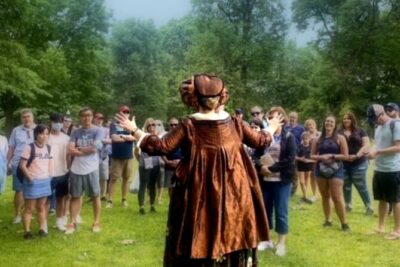 ★ 4.5Boston Freedom Trail Walking Tour with Costumed GuideFrom $262,531 reviews
 ★ 4.5Boston Tea Party Ships and Museum AdmissionFrom $352,512 reviews
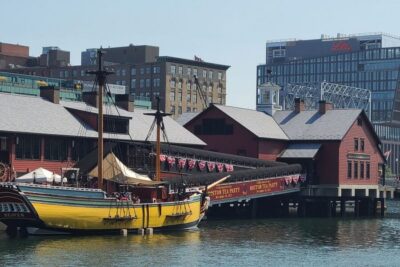 ★ 4.8Boston: Boston Tea Party Ships and Museum Interactive TourFrom $351,926 reviews
 ★ 5.0Boston Food & History: Pizza, North End & Freedom TrailFrom $901,772 reviews
 ★ 4.9Boston’s Freedom Trail: A Revolutionary Walking TourFrom $311,748 reviews
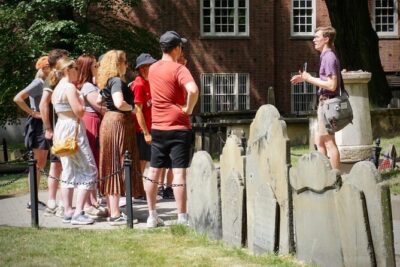 ★ 4.9Boston: Freedom Trail History Small Group Walking TourFrom $351,590 reviews
This one is also listed in