
Review · MUSEUMS
Corning Museum of Glass Admission Tickets
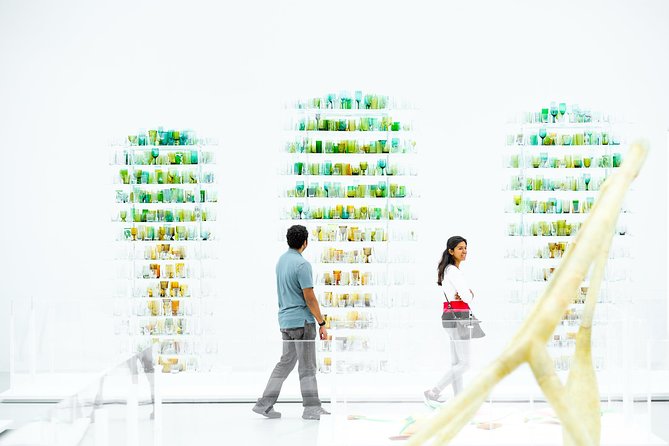
Glass turns ordinary hours into art-time. At the Corning Museum of Glass, your 2-day ticket lets you see about 50,000 glass objects across roughly a dozen galleries, and a live Hot Glass Demo in the 500-seat Hot Shop shows molten glass becoming a finished piece. I especially love the day-lit Contemporary Art + Design wing and the feeling that the museum is built for learning, not just staring. The main drawback to plan for is simple, you will do a lot of walking, and optional make-your-own sessions can add serious cost.
With two consecutive days, you can spread the museum out instead of trying to cram it all into one half-day. When you arrive, grab the schedule and floor layout so you can time the demos and hit the galleries in a smart order, and take advantage of the seating spots (some people even use the small stools tucked around the museum). If you only have one day, you will want to prioritize the Hot Shop and the biggest history galleries first.
In This Review
- Key Things to Know Before You Go
- Corning Museum of Glass: Why This Place Feels Bigger Than It Sounds
- Your Two-Day Ticket: How to Pace 50,000 Objects Without Burning Out
- The Hot Glass Demo in the Hot Shop: The Moment You Get Why Glass Matters
- Glass Innovation Center: Optics, Vessels, and Windows in Plain Language
- Contemporary Art + Design: A Day-Lit Wing Built for Looking Closely
- Touring the History Galleries: From Ancient Pieces to Colonial America
- Exhibits Worth Booking Time For: Paperweights and Glass in Nature
- Make Your Own Glass Workshops: Fun, Skill-Building, and a Budget Check
- Museum Layout, Walking Pace, and How to See More
- Food, Breaks, and the Gift Shop That People Keep Talking About
- Who This Visit Fits Best (and Who Might Want a Plan B)
- Getting There: Corning vs. Rochester and How Travel Time Affects Your Day
- Should You Book the Corning Museum of Glass Admission Ticket?
- FAQ
- How long should I plan for the Corning Museum of Glass?
- Is the admission ticket valid for more than one day?
- What is included with admission?
- Are Make Your Own Glass workshops included in the ticket price?
- Is food available inside the museum?
- What are the museum hours?
- Is the museum accessible, and are service animals allowed?
- Is there free cancellation?
Key Things to Know Before You Go
- Two consecutive days of admission: see the museum slowly, then come back if you missed something.
- Live Hot Glass Demo in the Hot Shop: watch a master create an object from molten glass, narrated and scheduled.
- Glass Innovation Center for Optics, Vessels, and Windows: practical, hands-on ideas about how glass works in real life.
- A huge span of glass history: from ancient glassworks through Colonial America and into modern design.
- Contemporary Art + Design, plus Venetian glass and more: modern galleries paired with Renaissance-era craft.
- Optional Make Your Own Glass workshops: extra fee sessions ranging from $14 to $150, depending on what you choose.
Corning Museum of Glass: Why This Place Feels Bigger Than It Sounds
The Corning Museum of Glass is the rare museum where the subject matter is also the special effect. Glass is usually something you pass by in daily life, a window, a bottle, a lightbulb cover. Here, glass becomes the main character, and you learn why it can be art, tool, science, and even a design obsession.
What really makes the museum work is the way it balances scale with clarity. You are walking through a world of objects, but you are also getting story threads: how glass was made, how it was used, and how artists and engineers think about materials. And because the admission covers two days, you can actually follow those threads instead of rushing to tick boxes.
One more reason it stands out: the museum is built around action. You do not just read about glassmaking, you watch it happen.
Your Two-Day Ticket: How to Pace 50,000 Objects Without Burning Out
The ticket is valid for two consecutive days, and that matters more than you might expect. With nearly 50,000 pieces spread across about a dozen galleries, one short visit usually turns into fast footwork and blurry details. Two days means you can slow down, repeat the galleries you love, and still leave happy instead of exhausted.
Here is how I’d pace it if you are trying to be efficient but not stressed. On day one, start with the Hot Glass Demo and the biggest “anchor” areas: the contemporary wing and the sweep of historical glass. On day two, focus on the specialty exhibits and any hands-on ideas that call your name, like paperweights or Glass in Nature.
Also, plan for pauses. Even if you feel energetic on arrival, you will likely want breaks as the galleries stack up. Some guests even use the small stools for sitting while they look closely at details.
The Hot Glass Demo in the Hot Shop: The Moment You Get Why Glass Matters
The Hot Shop is the star attraction for many people for a reason. You get a live, narrated demo where a master glassmaker takes a glowing gob of molten glass and shapes it into something beautiful. It happens in a 500-seat amphitheater setting, so you are not standing around hoping to see the action.
Look at it as more than entertainment. The demo is a quick crash course in technique and material behavior. You can watch how glass changes shape as it is worked and how skill turns heat into control. Even if you are not planning to take a workshop, the demo gives you a vocabulary for what you see later in the galleries.
Practical tip: check the schedule when you arrive. Demos run during the day, and having the times in hand helps you avoid missing the one that works best with your gallery plan.
Glass Innovation Center: Optics, Vessels, and Windows in Plain Language

If Hot Shop is the show, the Glass Innovation Center is the explanation. This is where the museum shifts from art-as-an-object to art-as-a-function. The focus is on Optics, Vessels, and Windows, which is a simple way of saying you get to see how glass design changes performance.
The best part is that it is not abstract. You get to connect what you saw in glassmaking to why specific shapes and finishes matter. Vessels help you think about form and function, windows make you think about light and clarity, and optics gets you curious about how glass can control what happens when light moves through it.
This is also a strong stop for families and for adults who like learning through interaction. If you enjoy hands-on science-adjacent exhibits, you will probably end up spending more time here than you originally planned.
Contemporary Art + Design: A Day-Lit Wing Built for Looking Closely
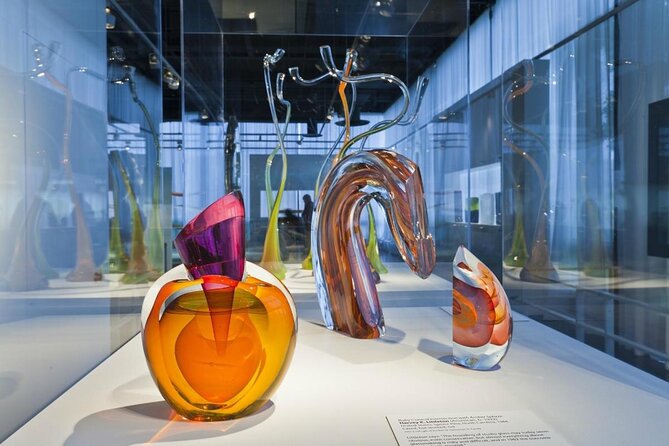
The Contemporary Art + Design wing is one of the easiest places to fall in love with the museum. It is day-lit, which helps because glass often looks different depending on light and angles. You get that real sense of glass as a surface, a color trick, and a design material, not just a craft.
In this area, you are seeing what glass can do in the last 25 years, and it gives the museum a modern backbone. You can stand in front of contemporary work and then turn your head to see echoes of older techniques in different forms.
If you like using your phone to explore at your own pace, there is also the option to explore Contemporary Art + Design through GlassApp. That can be a helpful way to get context without waiting in line for a guide.
Touring the History Galleries: From Ancient Pieces to Colonial America

The museum covers an impressive sweep, with more than 3,500 years of glassmaking history. You are not looking at a single style, you are watching a craft evolve across time, technology, and geography.
One of the easiest ways to enjoy this section is to treat it like a timeline built from objects. You might start with ancient examples, then move through later eras like Renaissance Venetian glass, and keep going toward Colonial America and beyond. Along the way, you can spot how different eras used glass for different goals, decoration, utility, status, and artistic expression.
This is also where a lot of iconic examples show up, from small pieces like an Egyptian pharaoh head to large, showstopper works like an enormous Tiffany window. If you want a museum moment that feels truly big, this is where you tend to find it.
Exhibits Worth Booking Time For: Paperweights and Glass in Nature
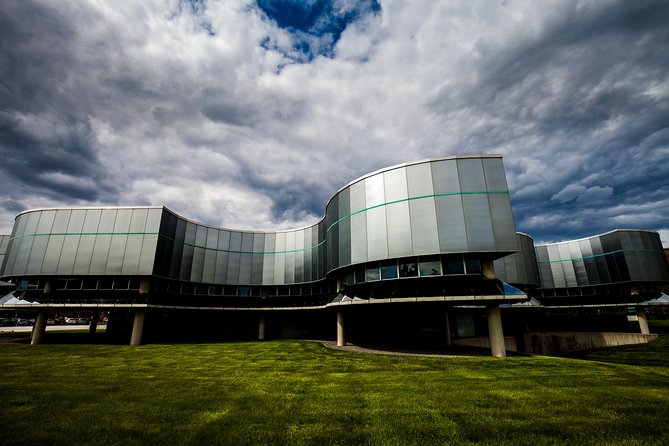
Some exhibits are easy to overlook if you only rush through. Two that fit the bill are paperweights and Glass in Nature.
Paperweights are a satisfying example of precision. They are small, but they reward close looking. You can see how color, shape, and internal details turn into collectible art.
Glass in Nature helps you connect craft to the world outside the museum. It is the kind of exhibit that nudges your brain into seeing patterns and structures, not just objects. If you like photography-style observation or nature exhibits, you will likely enjoy this one.
Make Your Own Glass Workshops: Fun, Skill-Building, and a Budget Check
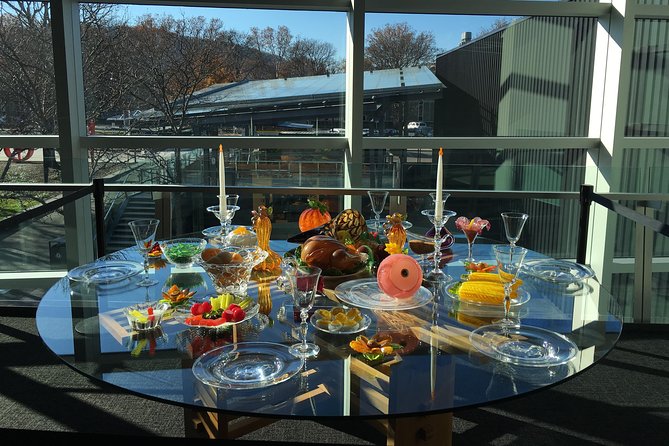
You can add a workshop called Make Your Own Glass, but it is not included in admission. The cost range is $14 to $150, depending on the project.
This is worth it when you want the learning to stick. Watching glass being made is great, but making something yourself turns observation into muscle memory. It also helps you understand why the demo looks easy only from far away.
Common workshop styles you may see offered include fused picture frames and suncatchers, sandblasted drinking glasses, flameworked beads, pulled-glass flowers, delicate blown ornaments, and seasonal projects (seasonal options have an additional fee). If you are traveling with kids, the options that let them touch and see immediate results can be a big win.
Budget reality check: some people find the add-on workshops pricey. If you are on a tight plan, you can still have an excellent visit by focusing on the free exhibits and demos, then deciding on one hands-on activity at most.
Museum Layout, Walking Pace, and How to See More
This museum encourages a slow, self-guided pace. You move through galleries, then time your stops around live demos in the Hot Shop. A lot of guests pick up pamphlets that list demo times and help with layout across the museum’s levels, which is exactly what you want on a first visit.
It is also a place where sitting helps. Even though you are moving through lots of displays, you can usually find places to rest and keep your attention on details. And if you are visiting with mobility needs, you should know it is handicap accessible, with access throughout the building reported by visitors. Service animals are allowed too.
One caution that comes up from time to time: if you are expecting to watch glassblowing from every angle, you might wish for a dedicated viewing area. Plan to rely on the main demo setting instead of expecting constant viewing in multiple spots.
Food, Breaks, and the Gift Shop That People Keep Talking About
You do not have to leave the museum to refuel. There is a Museum Cafe where you can purchase food and drinks. It is a smart move to stop for a simple meal rather than trying to squeeze in lunch outside and lose museum time.
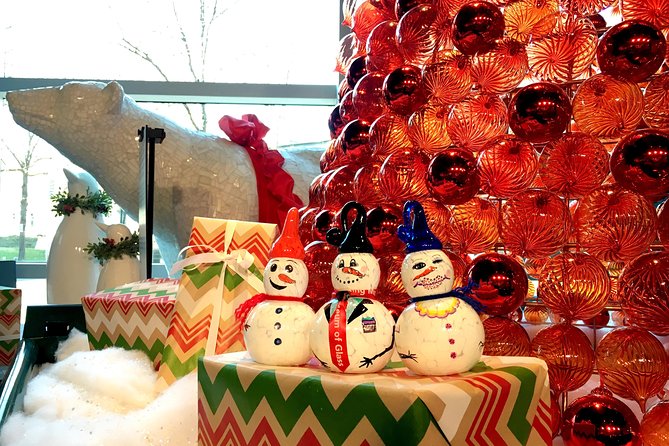
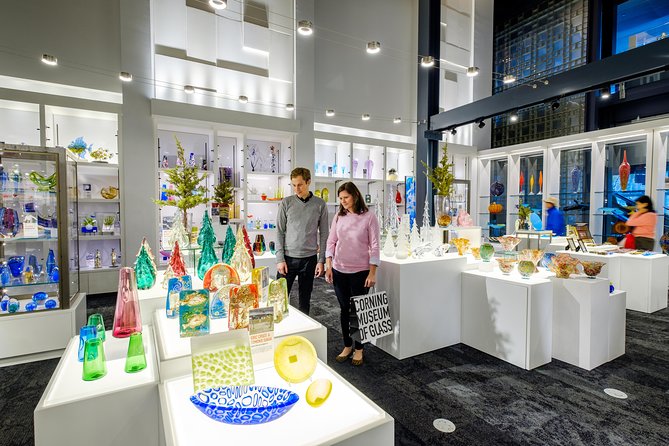
Then there is the gift shop, which many visitors treat like a second attraction. Expect handmade glass items, local artisan pieces, and Corning glass artists’ work. If you are shopping for a meaningful souvenir, this is one of the best places to do it because you are buying something tied to the museum’s core identity.
Who This Visit Fits Best (and Who Might Want a Plan B)
This is a strong fit for several travel styles:
- Families, especially if kids enjoy demos and hands-on activities.
- Couples who want an art-and-science museum date that feels different from the usual gallery run.
- Adults who like crafts, design, and the relationship between materials and everyday life.
It is also a good choice on rainy or hot days because so much of it is indoor and temperature-controlled. If you are in the region, it is hard to imagine glass enthusiasts leaving disappointed.
The main mismatch is people who only want a quick, short show. If you show up expecting a super-fast experience with minimal walking, you might feel underwhelmed. The museum rewards attention, and the best experience comes from planning a few hours and, ideally, using the second day.
Getting There: Corning vs. Rochester and How Travel Time Affects Your Day
The museum is in Corning, New York. If you are staying in Rochester, expect about a 1.5-hour drive. That matters because it affects how much time you can comfortably spend on day one before you head back.
If you can, build in a relaxed start. Driving time is one reason the two-day ticket is so smart. You avoid the stress of cramming the whole museum into a single window.
Should You Book the Corning Museum of Glass Admission Ticket?
I think you should book this if you want a museum day that mixes art, history, and a real-time craft demo. The big value is the two-day access, because it lets you learn without rushing, and the Hot Glass Demo gives you context for the galleries you see afterward.
I would think twice only if you are looking for a very short outing with minimal walking or if you do not plan to spend time on exhibits beyond the demo. This place works best when you plan to linger.
If you want a simple strategy, do this: use day one for the Hot Shop and the big historical and contemporary areas, then use day two for the specialty exhibits and any one workshop you feel drawn to. That approach keeps the experience fun, not frantic.
FAQ
How long should I plan for the Corning Museum of Glass?
A typical visit is about 3 to 4 hours, but you can stay as long as you like.
Is the admission ticket valid for more than one day?
Yes. Your admission ticket is valid for two consecutive days.
What is included with admission?
Your admission gives you access to the museum galleries and the experiences available as part of the museum visit, including the Hot Glass Demo.
Are Make Your Own Glass workshops included in the ticket price?
No. Make Your Own Glass workshops cost extra, with prices ranging from $14 to $150.
Is food available inside the museum?
Yes. Food and drinks are available for purchase at the Museum Cafe.
What are the museum hours?
The museum is open daily from 9:00 AM to 5:00 PM.
Is the museum accessible, and are service animals allowed?
The museum is handicap accessible, and service animals are allowed.
Is there free cancellation?
Yes. Free cancellation is available if you cancel up to 24 hours in advance for a full refund.
Museums, side by side.
 ★ 4.7NYC: Empire State Building Tickets – Observatory & MuseumFrom $4725,757 reviews
 ★ 4.5New York City: American Museum of Natural History TicketFrom $3715,447 reviews
 ★ 4.6NYC: Museum of Modern Art (MoMA) Entry TicketFrom $3012,540 reviews
 ★ 4.7NYC: Intrepid Museum Entry TicketFrom $384,687 reviews
 ★ 4.9San Diego: USS Midway Museum Entry TicketFrom $413,896 reviews
 ★ 4.3NYC: Museum of Ice Cream Entry TicketFrom $402,619 reviews
 ★ 4.5Boston Tea Party Ships and Museum AdmissionFrom $352,512 reviews
 ★ 5.0JFK Assassination and Museum Tour with Lee Harvey Oswald Rooming HouseFrom $792,480 reviews
This one is also listed in