
Review · WASHINGTON DC MONUMENTS AND MEMORIALS
DC Monuments and Capitol Hill Tour by Electric Cart
Fog rolls in, then the monuments glow. That is the kind of contrast this electric cart tour is built for, with a smooth loop through the National Mall plus Capitol Hill. I like that you get a local guide narrating key stops, and I also like the practical format, small carts and minimal walking. One drawback to plan for: the cart is open-air, so weather (wind, cold, rain) can change how comfortable you feel.
The biggest win here is that you cover a lot of ground fast, without losing the stories. In particular, I really like the generous photo time at the Lincoln Memorial (listed at 30 minutes) and the Martin Luther King Jr. Memorial (10 minutes), instead of feeling rushed at every stop. I also like how the route threads together the big national symbols, the war memorials, and the civic center in one tidy ride.
The main consideration is sound and comfort. The commentary comes through while you cruise, but with open-air carts and city traffic noise, it may be hard to hear at moments, so I suggest picking a spot where you can face the guide and staying alert during busy stretches.
In This Review
- Key things to know before you ride
- Why an electric cart loop works on the National Mall
- Start point and the 2-hour rhythm (what it feels like)
- Stop 1: National Law Enforcement Officers Memorial, then the Capitol dome views
- Cruise-by museums on the National Mall, and why it matters
- Washington Monument, Holocaust Memorial, and the Tidal Basin lighting effect
- Jefferson Memorial and MLK stop: time to get photos without rushing
- Lincoln Memorial: the biggest photo window on the route
- Korean War and Vietnam Veterans Memorials: quieter time, strong impact
- White House drive-by and Pennsylvania Avenue landmarks
- Price and value: why $55.61 can make sense
- The main drawback you should plan for: open-air comfort and hearing the guide
- Who should book this electric cart tour
- Should you book this DC Monuments and Capitol Hill Tour by Electric Cart?
- FAQ
- How long is the DC Monuments and Capitol Hill Tour by Electric Cart?
- What does the tour cost?
- Where do I meet the tour?
- Is the electric cart open-air, and what should I wear?
- Are there admission fees for the sights on the route?
- How big is the group on each electric cart?
Key things to know before you ride

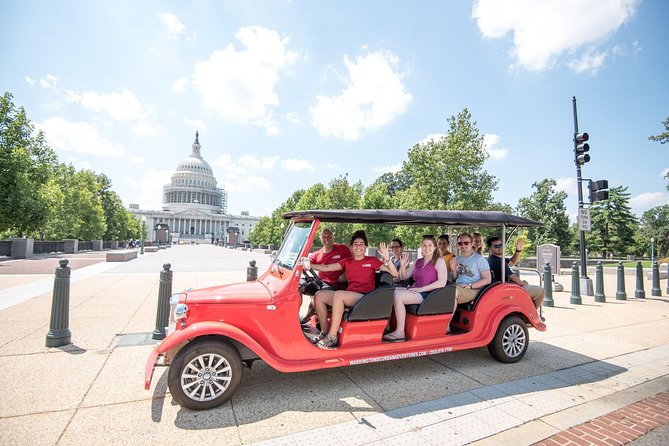
- Small-group cart time: each electric cart seats up to 7 people, so the tour feels more personal than giant buses
- Photo stops are real: Lincoln gets 30 minutes, MLK gets 10, Vietnam gets 15, and you can get out for shots
- A tight 2-hour loop: you see a lot of the National Mall plus Capitol Hill and a White House drive-by without exhausting walking
- Open-air comfort limits: carts are not heated, so dress in layers for cold or windy days
- Guide style can matter: guides like Lorenzo, Ellen, Reggie, Courtland, Dante, and Donte have been praised for clear storytelling and patience
- Route can shift: stop order and exact monuments may change due to road or closure issues
Why an electric cart loop works on the National Mall
Washington, DC has a way of looking “compact” on a map while still feeling huge in real life. This tour solves that with a simple idea: do the heavy sightseeing legs by electric cart, then use your own time on the places you want to linger at.
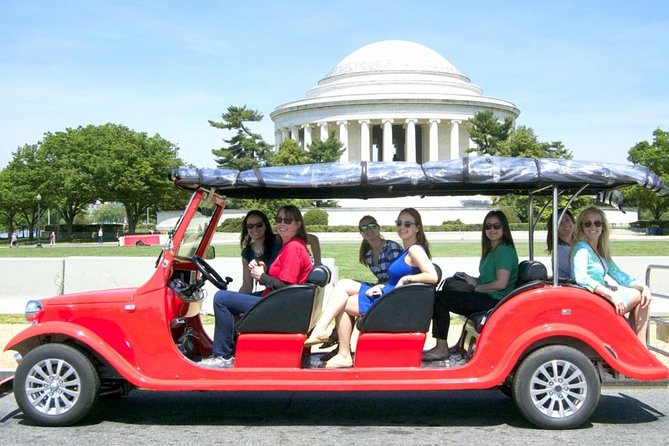
You get an all-electric, open-air ride in a Red Roadsters vehicle, designed for quiet, low-impact cruising. That matters because the National Mall is where traffic, crowds, and crosswalk logistics can drain energy. Here, you keep moving while someone else handles the flow and timing.
And because this is a small-group tour, you are not stuck in a cattle-line. You still get a guided route and narrated context, but you are also more likely to ask questions and get a human answer instead of shouting over a megaphone.
Start point and the 2-hour rhythm (what it feels like)
The tour begins at 450 F St NW, Washington, DC 20001, and it ends back there. Plan to arrive about 10 minutes early so you can check in with your small group at the first stop area.
The total time is listed as about 2 hours, which is the sweet spot for a “first day orientation” or a “we planned too much” day. You will cruise, stop, get out for photos, and then keep rolling. That pacing is why people with limited mobility or short sightseeing windows tend to like this format so much.
The biggest practical tip: the cart is open and not heated. If you go in winter, you will want layers, a hat, gloves if you run cold, and something wind-resistant. If you go in warmer months, dress for sun because the comfort comes from movement and shade is not guaranteed.
Additional Washington DC Monuments and Memorials on the review pile in Washington DC
Stop 1: National Law Enforcement Officers Memorial, then the Capitol dome views

The tour kicks off at the National Law Enforcement Officers Memorial, with a quick start that gets you into the Mall mindset fast. This is a strong opening because it frames the idea that DC monuments are not just “pretty buildings,” they are also messages about sacrifice and public service.
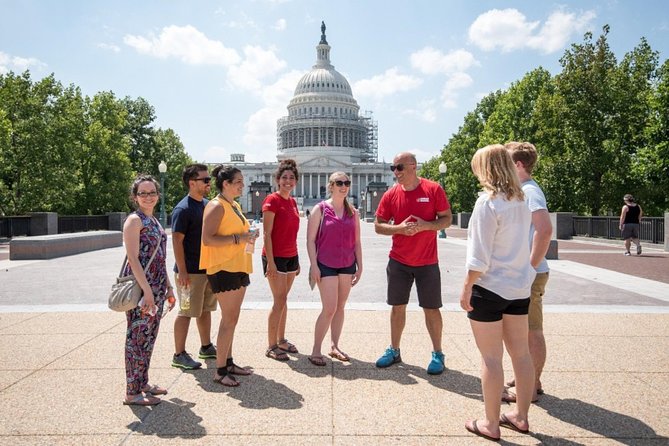
From there you move to the United States Capitol. You get views of the building and that iconic dome, plus history and significance from your guide. Even if you have seen the Capitol on TV a hundred times, the perspective from the Mall area helps your brain connect the landmarks into a map.
Two things I like about this early sequence:
- you build momentum right away, so the tour does not feel like a long ride before you see anything
- you get a civic anchor before you switch into monuments and memorials
Cruise-by museums on the National Mall, and why it matters
After the Capitol, the tour becomes a long, guided “greatest hits” drive along the Mall. You will pass a string of major museums, even when you are not going inside.
Here are the museum areas mentioned on the route, and what they add to your understanding:
- National Gallery of Art: the neoclassical look is impressive from the outside, and your guide gives context so you know what you are looking at
- National Museum of Natural History: that iconic dome is a DC landmark, and it helps you orient your next day if you plan to visit
- National Air and Space Museum: even from the outside, the museum is strongly tied to American science and engineering pride
- National Museum of American History: this is where national identity is displayed through artifacts and presidential storylines
- Museum of African American History and Culture: the building itself is a major statement, and your guide explains why it matters culturally
This “see it from the cart first” approach is not just efficient. It also helps you prioritize. After the narration, you can decide if you want to return for a specific museum, because you now know the tone each one is trying to set.
Washington Monument, Holocaust Memorial, and the Tidal Basin lighting effect
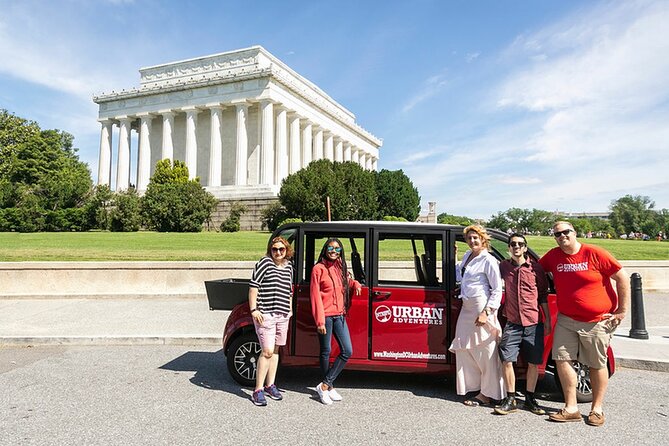
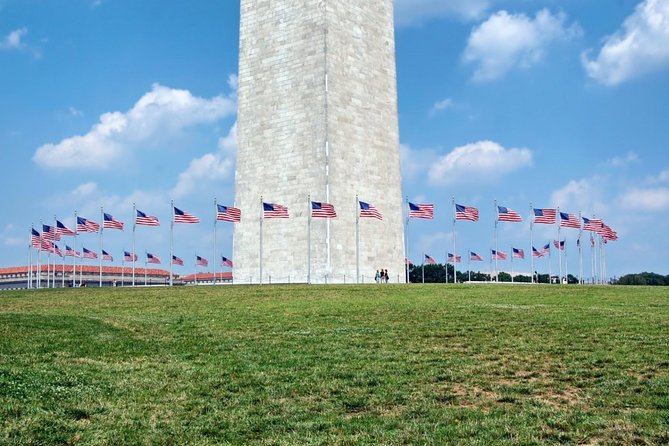
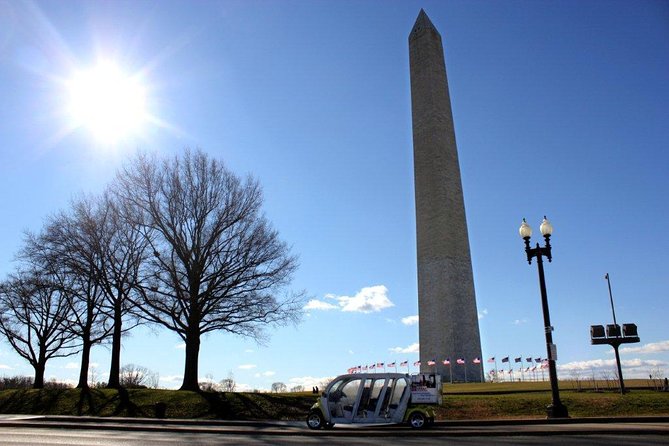
Next up is the Washington Monument, with a short stop and stories about leadership and legacy. It is tall enough that it dominates your view from almost anywhere on the Mall, but the guided framing makes it more than a postcard.
After that, you pass the Holocaust Memorial Museum. The architecture and storytelling are described as powerful, and your guide’s narration helps you connect the memorial’s purpose to the setting.
Then comes one of the most memorable visual moments on the route: the Tidal Basin area with floodlights. Your itinerary specifically notes how lighting can highlight important architecture, including the Jefferson Memorial and the Martin Luther King Jr. Memorial. If you are on a later start time, the lighting can make the whole walk-around vibe feel more cinematic. Even in daylight, you get a clean view corridor and a guided explanation of what you are seeing.
Jefferson Memorial and MLK stop: time to get photos without rushing

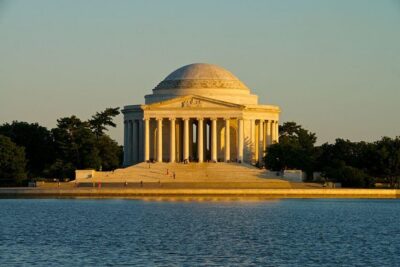
You get a stop near the Jefferson Memorial, with the dome and columns reflecting across the Tidal Basin area. The narration focuses on America’s founding ideals, which gives you a clearer sense of why this memorial is placed exactly where it is.
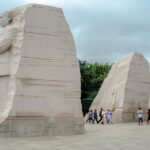
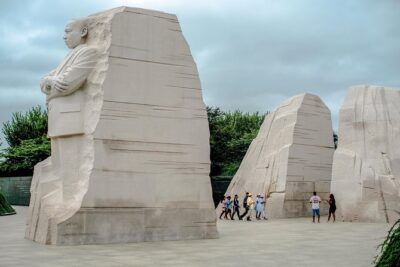
Then you arrive at Martin Luther King Jr. Memorial. Your itinerary calls out the Stone of Hope and themes of justice, equality, and peaceful resistance. The stop length is listed at 10 minutes, which is enough to take photos, read key details if you can, and then move on without feeling like the tour is dragging.
One thing I like about how this is handled is that the MLK stop comes after the route gives you context about the area. You are not just learning facts in isolation. You are seeing how DC uses space to reinforce meaning.
Guides such as Ellen and Lorenzo have been specifically praised for telling stories from the heart and for making the experience feel personal, which fits this kind of emotionally grounded stop.


Lincoln Memorial: the biggest photo window on the route
If you only remember one stop from this entire loop, it is probably the Lincoln Memorial. Your itinerary lists 30 minutes here, which is the largest dedicated photo and viewing window on the route.
That extra time matters because Lincoln is one of those monuments where people want a full moment: a wide shot for the columns, a front-facing photo, and then a chance to step to angles that work with the light. With 30 minutes, you are not constantly being ushered back to the carts.
The narration centers on Lincoln’s role in preserving the Union and championing freedom. For many first-timers, this is the “aha” stop where the rest of DC’s meaning starts to click.
A practical note: this is a very popular area. If you want the best photos, you might need to time your shots around crowds. Still, the scheduled time gives you room to work with the reality on the ground.
Korean War and Vietnam Veterans Memorials: quieter time, strong impact
After Lincoln, you pass the Korean War Veterans Memorial, where lifelike statues honor soldiers from what is sometimes called the Forgotten War. The tour then ends at the Vietnam Veterans Memorial stop, with 15 minutes allotted.
These war memorial stops have a different emotional feel than the civic monuments. People often slow down here, even though the tour itself is moving on schedule. The guide’s stories help you understand why the names, placement, and visual layout matter.
I also like that the Vietnam stop comes after Lincoln and MLK. It creates an arc: ideals and leadership, then the costs paid in conflict, then DC’s ongoing effort to remember.
White House drive-by and Pennsylvania Avenue landmarks
You finish with a cruise past the White House, with camera-ready stops noted as a chance to test night photography skills. Your experience can vary by time of day, but the key idea stays the same: you get that “you are really here” view without needing to fight traffic or wait for a formal ticketed visit.
Then you travel down Pennsylvania Avenue, passing major federal and historic landmarks, including:
- Old Post Office Building
- National Archives
- Navy Memorial
- other historic federal buildings that shape DC’s civic life
This section is valuable because it connects the monuments to the working government side of the city. It also gives you a clean set of “street names to know,” so your next self-guided walk feels easier.
Price and value: why $55.61 can make sense
The price is listed at $55.61 per person, for an about 2-hour small-group tour. On paper, that is not “cheap,” but it can be good value if you compare it to what costs you time and energy in DC.
Here is what you get that usually costs extra if you do it solo:
- Guided narration at multiple major stops, which helps you prioritize your next visits
- Electric cart transportation across a spread-out area, cutting down walking fatigue
- Photo stop time at key monuments, especially Lincoln and MLK
- A local perspective from a guide (many praised for being friendly, safe, and patient with questions)
If you are traveling with family, older parents, or anyone who gets tired quickly, the value can be even clearer. One review-style theme in the feedback was that this tour helped people who were getting a little old for hoofing around DC, while still seeing the highlights.
Also, the tour is offered year-round and goes ahead rain or shine unless conditions become dangerous. That can matter if your schedule is tight and you hate wasting a half day to weather logistics.
The main drawback you should plan for: open-air comfort and hearing the guide
The tour is open-air, so you feel the weather. That is not a problem if you dress for it, but it can be a problem if you show up in one light layer and expect warmth.
Sound is the second issue. One experience feedback notes it can be hard to hear commentary over traffic noise. You can reduce this by choosing a spot where you face the guide and staying attentive during the louder stretches.
Finally, there is a realistic “DC factor” to accept. The itinerary order can change due to local closures or road conditions. Your tour still aims to cover the same major landmarks, but the exact flow can shift.
Who should book this electric cart tour
This is a great match if:
- you want big DC icons in a single, organized loop
- you want to save your legs for museums or neighborhoods after
- you are traveling with kids or a mixed-age group and need a calmer pace
- you like having a guide explain context so you are not just looking at monuments silently
It is also useful for return visits. Even after multiple trips, guides like Reggie and Courtland have been praised for bringing new info, which is exactly what a good narration should do: make familiar places feel fresh.
If you hate structured time windows or want total freedom to wander at every stop, you might find the schedule a bit “tight.” But if you want a smart orientation and photo-ready stops, this fits well.
Should you book this DC Monuments and Capitol Hill Tour by Electric Cart?
I would book it if your top goal is to see the key landmarks of DC fast, with a friendly guide and real chances for photos. The combination of small-group cart comfort, guided storytelling, and scheduled time at Lincoln, MLK, and Vietnam is a strong value package for most visitors.
I would think twice if you are very sensitive to cold or noise, because the cart is open-air and traffic can drown out narration at moments. If that is you, just dress warm, choose a seat where you can hear, and treat the cart ride as the easiest way to set up the rest of your DC day.
If you want a “DC hits” tour that also helps you decide what to do next, this one is hard to beat.
FAQ
How long is the DC Monuments and Capitol Hill Tour by Electric Cart?
The tour runs for approximately 2 hours.
What does the tour cost?
The price is $55.61 per person.
Where do I meet the tour?
You meet at 450 F St NW, Washington, DC 20001, USA. The tour ends back at the meeting point.
Is the electric cart open-air, and what should I wear?
Yes, the carts are open to the environment and are not heated. The tour runs rain or shine, so dress in layers for cold months and dress for the weather.
Are there admission fees for the sights on the route?
The stops listed include admission ticket free, and the tour itself includes the cart and guide narration. Food and drinks are not included.
How big is the group on each electric cart?
This is a small-group experience, and each electric cart is limited to a maximum of 7 people. Seating for larger parties is not guaranteed, and you might be placed on separate carts.
Washington DC Monuments and Memorials: more from our Washington DC desk
- National Mall Monuments Night Tour with 10+ Stops, Entry Tickets★ 4.5 · 4,863 reviews
- Washington DC Monuments by Moonlight Tour by Trolley★ 4.5 · 3,956 reviews
- Arlington National Cemetery Walking Tour & Changing of the Guards★ 5.0 · 2,566 reviews
- VIP Best of DC with US Capitol + National Archives Reserved Entry★ 4.5 · 2,491 reviews
- National Mall Night Tour with 10+ Monuments (Public or Private)★ 4.5 · 2,207 reviews
Tours: the rest of the Washington DC file
- DC Memorials Night Tour: Glass-Roof Convertible Upgrade Option★ 4.5 · 6,933 reviews
- National Mall Monuments Night Tour with 10+ Stops, Entry Tickets★ 4.5 · 4,863 reviews
- Washington DC Monuments by Moonlight Tour by Trolley★ 4.5 · 3,956 reviews
- Hop-on Hop-off Sightseeing Tour by Open-top Bus with 18 Stops★ 3.5 · 3,848 reviews
- Washington DC in One Day: Guided Sightseeing Tour★ 4.5 · 3,360 reviews
Tour Reviews: more from our Washington DC desk
- DC Memorials Night Tour: Glass-Roof Convertible Upgrade Option★ 4.5 · 6,933 reviews
- National Mall Monuments Night Tour with 10+ Stops, Entry Tickets★ 4.5 · 4,863 reviews
- Washington DC Monuments by Moonlight Tour by Trolley★ 4.5 · 3,956 reviews
- Hop-on Hop-off Sightseeing Tour by Open-top Bus with 18 Stops★ 3.5 · 3,848 reviews
- Washington DC in One Day: Guided Sightseeing Tour★ 4.5 · 3,360 reviews
Newest Washington DC reviews added to this site
- Washington DC: Sightseeing Tour with Potomac River Cruise
★ 4.7 · 311 reviews - Washington, DC: African American History Tour & Museum Entry
★ 4.9 · 312 reviews - Washington DC: National Mall Night Bus Tour
★ 4.6 · 313 reviews - Historic Georgetown: History, Gossip, & Architecture Walking Tour
★ 5.0 · 321 reviews - Private Night-Time Monuments Tour of DC for up to 10 Guests
★ 5.0 · 326 reviews - National Mall Tour with 10 Stops & U.S. Capitol or Museum Entry
★ 4.5 · 331 reviews - George Washington’s Mount Vernon Gardens & Grounds Admission
★ 4.5 · 340 reviews - Ghosts of D.C. – Walking Tour
★ 4.5 · 344 reviews - Hop-On Hop-Off 21 Stop Trolley Tour + Arlington Cemetery Tour
★ 4.0 · 369 reviews - Gastronomic Georgetown Walking Food Tour
★ 4.5 · 373 reviews
Washington DC Monuments and Memorials
 ★ 4.5National Mall Monuments Night Tour with 10+ Stops, Entry TicketsFrom $654,863 reviews
 ★ 4.5Washington DC Monuments by Moonlight Tour by TrolleyFrom $483,956 reviews
 ★ 5.0Arlington National Cemetery Walking Tour & Changing of the GuardsFrom $552,566 reviews
 ★ 4.5VIP Best of DC with US Capitol + National Archives Reserved EntryFrom $1292,491 reviews
 ★ 4.5National Mall Night Tour with 10+ Monuments (Public or Private)From $682,207 reviews
 ★ 5.0Small-Group Guided Tour inside US Capitol & Library of CongressFrom $671,869 reviews
 ★ 5.0Small Group National Mall Night Tour with 10 Top AttractionsFrom $991,658 reviews
 ★ 4.6Washington DC: Monuments by Moonlight Nighttime Trolley TourFrom $481,529 reviews
This one is also listed in