
Review · WALKING TOURS
Historic Georgetown: History, Gossip, & Architecture Walking Tour
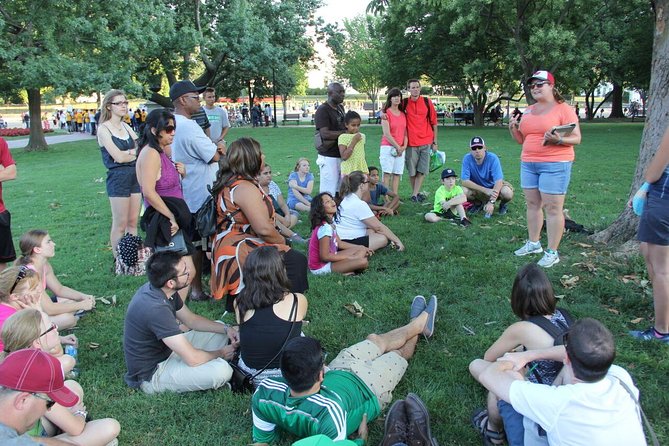
Georgetown hides stories in plain sight. This 2-hour walking tour with a small-group cap of 15 lets you see Georgetown’s architecture and history, with in-depth storytelling you can actually use as you explore on your own after.
One thing to plan for is cobblestones and hills, so wear good shoes if your feet are sensitive. Guides on past departures, like Vicky and Wayne, are especially good at keeping the pace friendly and the questions coming.
In This Review
- Key things I’d circle before you go
- Georgetown history without the random wandering
- Meeting at C&O Canal Lock 3, then building the Georgetown “map”
- Georgetown’s cobblestones and the stories most people skip
- C&O Canal: the working lock and the industrial side of town
- Old Stone House: built in 1766, preserved for a reason
- Hedin House Apartments and Georgetown’s family connections
- Georgetown University spires, John Carroll, and Patrick Healy
- Exorcist Steps and Martin’s Tavern for the ending you’ll remember
- Pace, terrain, and what small-group really means
- Price and value: why $49 can make sense here
- Who should book this Georgetown walking tour
- Should you book Historic Georgetown: History, Gossip, & Architecture?
- FAQ
- What are the meeting point and end point?
- How long is the walking tour?
- How big is the group?
- What language is the tour in, and do I get a ticket on my phone?
- Do the stops require paid admission?
- What if the weather is bad or I need to cancel?
Key things I’d circle before you go
- Small-group cap of 15 keeps it personal and makes Q and A realistic.
- C&O Canal Lock 3 start gives you the right context fast, before you hit the neighborhood streets.
- Old Stone House stop (built in 1766) plus a National Park Service garden break.
- Kennedy family connections show up through historic homes, including the Hedin House Apartments area.
- Georgetown University sights include the Patrick Healy building spires and John Carroll statue.
- Martin’s Tavern ends the tour at a long-running Georgetown institution.
Georgetown history without the random wandering
If you only do a self-guided walk in Georgetown, you’ll miss the why. This tour is built to explain what you’re looking at, then tie it to the people who shaped the area. It’s also the kind of DC experience that turns “I recognize that building” into “I know what that meant.”
I like the small-group size because you hear everything and you can ask follow-ups. I also like that the guide uses the neighborhood’s details, cobbles, bricks, and gardens, to tell a clear story. That matters in Georgetown, where the architecture is pretty, but the meaning is what makes it memorable.
There is one catch. The route uses uneven footing and includes hills, so comfortable walking shoes are not optional.
Meeting at C&O Canal Lock 3, then building the Georgetown “map”
You start at C&O Canal Lock 3, and that’s smart. It anchors the whole walk in the canal era, when Georgetown was tied to shipping, industry, and river commerce. Even if you’ve seen photos of Georgetown before, starting at the canal helps you understand why the neighborhood looks the way it does.
From the first minutes, you’re not just “walking around.” You’re being set up to notice patterns: older street layouts, where warehouses and industrial functions sat, and why certain buildings or areas became important later. It’s an orientation that pays off when you’re still exploring after the tour ends near Georgetown University.
You’ll also get a mobile ticket, so bring your phone and make sure your battery is happy.
Additional Walking Tours on the review pile in Washington DC




Georgetown’s cobblestones and the stories most people skip
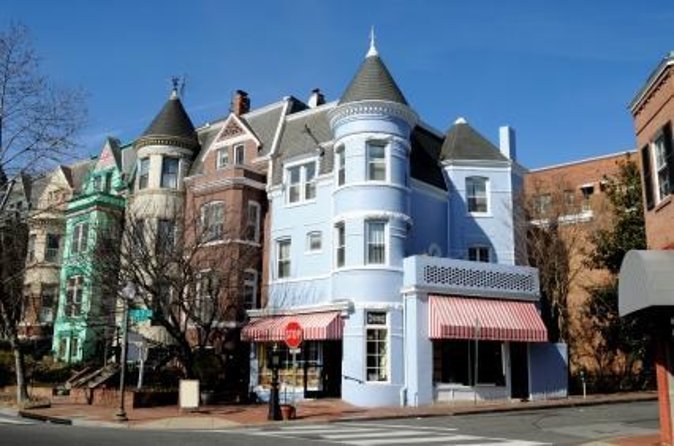
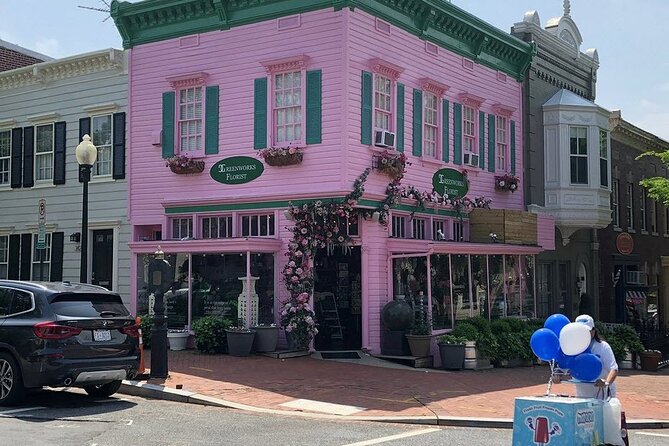
As you move into Georgetown, you’ll quickly see why the area draws visitors. Cobblestone streets, historic homes and gardens, plus the modern shopping and dining feel create a “park-like” atmosphere that’s easy to enjoy.
What changes with a guided walk is the interpretation. Instead of treating these homes as just pretty backdrops, you’ll learn who lived nearby, how the neighborhood developed, and what kinds of decisions got made in places that are now quiet and residential. That’s where the tour’s gossip-style storytelling becomes useful. You get names and context, not just vague legends.
This is also where you’ll likely start spotting architectural cues you’d otherwise overlook. Doorways, window styles, building materials, and the feel of the streets all make sense once the guide tells you what to look for.
C&O Canal: the working lock and the industrial side of town
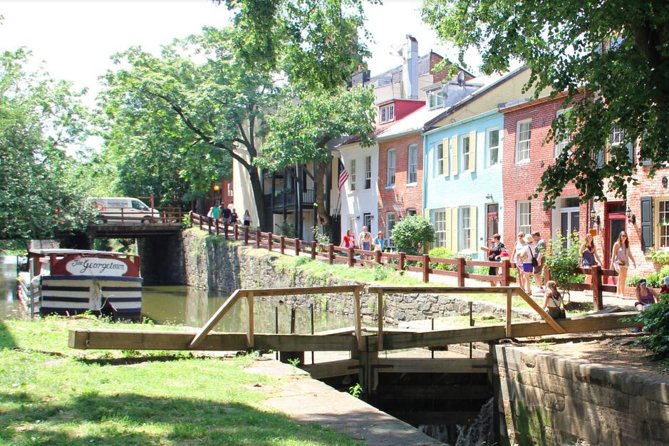
A major moment is the stop along the C&O Canal, especially the working lock (gate) you can see during the walk. This is one of the best ways to understand how boats moved through elevation changes along the canal system.
You’ll learn about canal boats and how the locks helped them travel between sections. Even if you’ve read canal basics before, the guide’s emphasis on the practical mechanics helps it click. Georgetown was not only elite homes and university spires. It had an industrial working face too, and the canal is the clearest link.
Time here is short, but it’s the kind of short stop that changes how you understand the rest of the neighborhood. When you later pass older structures, you’ll have the canal context in your head, and suddenly you know why certain parts of Georgetown matter.
Old Stone House: built in 1766, preserved for a reason
One of my favorite stops on this route is the Old Stone House, one of the oldest buildings in Washington DC. It’s run by the National Parks Service, and there’s a garden you can sit in for a brief reset.
This building’s timeline is part of what makes it interesting. It was built in 1766, and at some point it was used as a car dealership through 1953, before preservation took over. That sequence, from early settlement-era construction to mid-century commercial use, shows how cities reinvent older spaces instead of always starting over.
The guide also helps you connect the house to nearby port activity, where everyday people and famous figures could be part of the same local stories. It’s a quick stop, but it carries a lot of meaning because you can actually rest here for a moment, instead of only walking nonstop.
Hedin House Apartments and Georgetown’s family connections
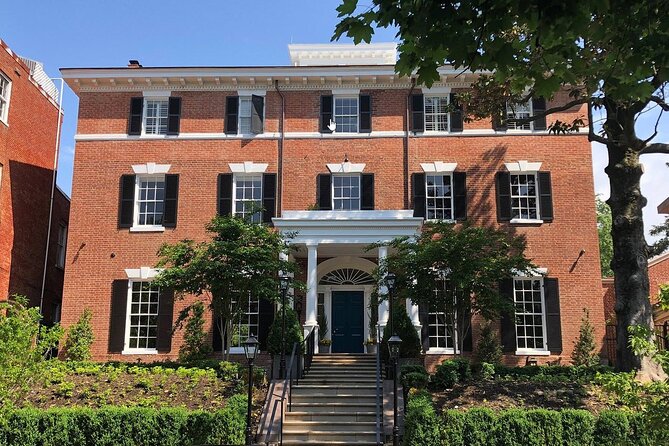
Next you’ll see the Hedin House Apartments area, connected to the Kennedy family. The tour focuses on how prominent families had a web of homes in Georgetown and how those homes shaped the neighborhood’s identity over time.
This stop works well if you like architectural storytelling with a human angle. You’re not just hearing famous names. You’re learning how Georgetown’s residential streets tied into national stories. The guide frames the neighborhood as a place where powerful people weren’t only visiting, they were living, choosing, and forming routines like anyone else.
You also get a reminder that Georgetown wasn’t only about the famous institutions. It was about who stayed near where, and how those choices left traces in the built environment.
Elsewhere under Historical Tours across Washington DC





Georgetown University spires, John Carroll, and Patrick Healy
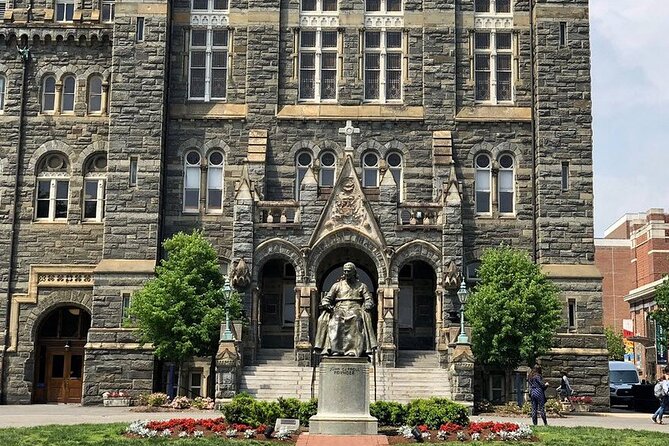
As the walk continues, you’ll reach Georgetown University, founded in 1789 as a Jesuit institution. You’ll hear about its medical, legal, and undergraduate programs, then you’ll shift your attention to the campus landmarks.
Two specific sights stand out on this part of the route. You’ll see the towering Patrick Healy building spires, and you’ll also spot the statue of founder John Carroll. On a warm day, the guide points out how students use the grassy space outside the building area, with people reading, socializing, and throwing frisbees.
Even if you don’t plan to tour the campus buildings, this stop gives you something you can’t get from a quick photo. The guide’s commentary helps you understand why these details became symbolic. It’s also a good moment to slow down slightly, since the tour is otherwise moving at a steady walking pace.
Exorcist Steps and Martin’s Tavern for the ending you’ll remember
The tour continues to the Exorcist Steps, the historic stairway that became famous through the 1970s film. The guide uses this as a contrast point. Georgetown can feel like old Washington, but pop culture has layered itself onto the streets too. It’s a reminder that place and story travel together.
Then the walk ends at Martin’s Tavern, a Georgetown institution locally owned since 1933. The stop is short, but it’s the right kind of ending: a place that still feels lived-in. Expect dark wood paneling, black and white photos on the walls, and a vibe shaped by long-time regulars at the bar.
The food is classic American fare, and there’s indoor and outdoor seating. When your tour wraps up near Georgetown University, this is exactly where you can continue with something simple. It’s a nice way to turn the history walk into a real Georgetown afternoon.
Pace, terrain, and what small-group really means
This tour runs about 2 hours and caps at 15 travelers, so it stays conversational. That size matters because Georgetown’s streets can be crowded at peak times. With a smaller group, you can usually keep moving without feeling like you’re trapped in a slow parade.
The pace is generally manageable for most people, but it is a true walking route. The terrain includes hills, brick sidewalks, and cobblestones, so plan for more foot fatigue than you’d expect from a typical flat DC stroll. If you’re visiting in sneakers that look good but don’t feel good, switch to shoes that give real grip and cushioning.
Because it’s a walking tour, weather matters. It requires good weather, and if it gets canceled due to poor conditions, you’re offered another date or a full refund. That’s a big deal in DC, where a small storm can change everyone’s comfort level fast.
Price and value: why $49 can make sense here
At $49 per person for about 2 hours, the value comes from what you get per minute. You’re paying for a professional, licensed guide, and the guide is handling the difficult part: turning architecture and neighborhood details into context you can remember.
You also get multiple high-impact stops with no admission fees at each listed site, including the canal area and the Old Stone House. When your time is limited, the math usually works out. A guided walk also helps you avoid the common Georgetown mistake, which is spending an hour admiring buildings without understanding why they matter.
If you enjoy architecture, local lore, and the slightly gossipy side of history, this price feels fair. It’s also a good value for couples and solo travelers who want DC orientation without spending a whole day in transit.
Who should book this Georgetown walking tour
This tour is a strong fit if you want:
- A guided Georgetown orientation that turns landmarks into stories
- Lots of architecture-focused commentary, not only sightseeing checkmarks
- A friendly group size where you can ask questions
It’s also a great choice if you’re the type who likes learning names and connections, like when prominent families show up through specific buildings. Even if you already know Georgetown superficially, guides on past departures, including Vicky, Becca, Wayne, Joseph, Eli, Ingeborg, and Georgia, have a reputation for bringing structure and energy to the walk, plus humor and room for questions.
Should you book Historic Georgetown: History, Gossip, & Architecture?
I’d book it if you have a morning or early afternoon free and you care about the meaning behind the buildings. For $49, you get a guided storyline that helps Georgetown feel like a place with logic, not a pretty backdrop.
Skip it only if you want fully flexible time for sitting down often, or if cobblestones and hills are a hard no for you. If your feet are good and you like guided storytelling, this tour gives you a fast way to “get” Georgetown, then continue exploring on your own with better instincts.
FAQ
What are the meeting point and end point?
You meet at C&O Canal Lock 3 in Washington, DC 20007. The tour ends near Georgetown University at the intersection of 37th and O St NW (also listed as 3625 O St NW).
How long is the walking tour?
The tour is about 2 hours.
How big is the group?
The group is capped at a maximum of 15 travelers.
What language is the tour in, and do I get a ticket on my phone?
The tour is offered in English, and you use a mobile ticket.
Do the stops require paid admission?
The stops listed are marked Admission Ticket Free, so you should not need paid entry tickets for these parts of the walk.
What if the weather is bad or I need to cancel?
This experience requires good weather. If it’s canceled due to poor weather, you’ll be offered a different date or a full refund. You can cancel up to 24 hours in advance for a full refund.
Still working through Walking Tours in Washington DC
- Arlington National Cemetery Walking Tour & Changing of the Guards★ 5.0 · 2,566 reviews
- Ghosts of Georgetown & The Exorcist Steps Walking Tour★ 5.0 · 610 reviews
- Georgetown Foodie Culinary Tour & Neighborhood Walk★ 5.0 · 437 reviews
- Gastronomic Georgetown Walking Food Tour★ 4.5 · 373 reviews
- Ghosts of D.C. – Walking Tour★ 4.5 · 344 reviews
Tours: the rest of the Washington DC file
- DC Memorials Night Tour: Glass-Roof Convertible Upgrade Option★ 4.5 · 6,933 reviews
- National Mall Monuments Night Tour with 10+ Stops, Entry Tickets★ 4.5 · 4,863 reviews
- Washington DC Monuments by Moonlight Tour by Trolley★ 4.5 · 3,956 reviews
- Hop-on Hop-off Sightseeing Tour by Open-top Bus with 18 Stops★ 3.5 · 3,848 reviews
- Washington DC in One Day: Guided Sightseeing Tour★ 4.5 · 3,360 reviews
Tour Reviews: more from our Washington DC desk
- DC Memorials Night Tour: Glass-Roof Convertible Upgrade Option★ 4.5 · 6,933 reviews
- National Mall Monuments Night Tour with 10+ Stops, Entry Tickets★ 4.5 · 4,863 reviews
- Washington DC Monuments by Moonlight Tour by Trolley★ 4.5 · 3,956 reviews
- Hop-on Hop-off Sightseeing Tour by Open-top Bus with 18 Stops★ 3.5 · 3,848 reviews
- Washington DC in One Day: Guided Sightseeing Tour★ 4.5 · 3,360 reviews
Newest Washington DC reviews added to this site
- Washington DC: Sightseeing Tour with Potomac River Cruise
★ 4.7 · 311 reviews - Washington, DC: African American History Tour & Museum Entry
★ 4.9 · 312 reviews - Washington DC: National Mall Night Bus Tour
★ 4.6 · 313 reviews - Historic Georgetown: History, Gossip, & Architecture Walking Tour
★ 5.0 · 321 reviews - Private Night-Time Monuments Tour of DC for up to 10 Guests
★ 5.0 · 326 reviews - National Mall Tour with 10 Stops & U.S. Capitol or Museum Entry
★ 4.5 · 331 reviews - George Washington’s Mount Vernon Gardens & Grounds Admission
★ 4.5 · 340 reviews - Ghosts of D.C. – Walking Tour
★ 4.5 · 344 reviews - Hop-On Hop-Off 21 Stop Trolley Tour + Arlington Cemetery Tour
★ 4.0 · 369 reviews - Gastronomic Georgetown Walking Food Tour
★ 4.5 · 373 reviews
Walking Tours, side by side.
 ★ 5.0History and Hauntings of Salem Guided Walking TourFrom $3614,564 reviews
 ★ 4.5New Orleans Premier Ghost, Voodoo and Vampire Walking TourFrom $2712,856 reviews
 ★ 5.0Little Havana Food and Walking Tour in MiamiFrom $698,882 reviews
 ★ 5.0Chicago: Gangsters and Ghosts Walking TourFrom $527,155 reviews
 ★ 5.0Boston: Freedom Trail History Small Group Walking TourFrom $356,450 reviews
 ★ 5.0Historic Charleston Guided Sightseeing Walking TourFrom $306,216 reviews
 ★ 5.0New Orleans Food Walking Tour of the French Quarter with Small-Group OptionFrom $756,118 reviews
 ★ 4.5St. Louis Cemetery No. 1 Official Walking TourFrom $253,941 reviews
This one is also listed in