
Review · MAUI ISLAND TRIPS
Deluxe Helicopter Tour of Molokai and Maui
That first view from the air hits different.
This 55-minute Maui and Molokai helicopter ride stacks two Hawaiian islands into one flight, so you get the drama of Molokai’s tallest sea cliffs and waterfalls, then a wide sweep over Maui’s river valley and mountains.
I especially like the mix of big-ticket scenery and specific landmarks you can actually point out, including Kahiwa Falls on Molokai and Iao Valley State Park on Maui. I also like the live, in-seat commentary plus a glass-window helicopter setup that makes photos easier than you’d think for a short tour.
One thing to plan for: the flight is weather-dependent and you also have to bring the right original photo ID for check-in if you’re 18 or older, no digital copies.
In This Review
- Quick hits before you book
- Two islands in one 55-minute flight
- Kahului check-in and what your helicopter ride really feels like
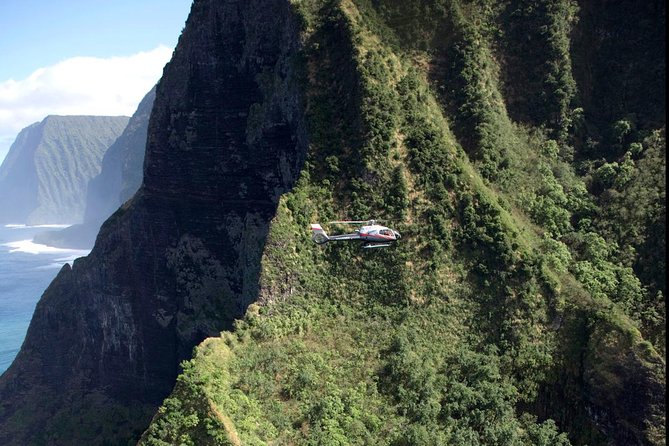
- Molokai north shore: Kahiwa Falls, Halawa Valley, and the cliff wow-factor
- Molokai south coast: reef, fishponds, and the “this place is ancient” effect
- Pailolo Channel crossing: where both islands look huge
- Back over Maui: Iao Valley State Park and the West Maui Mountains view
- Honokohau Falls and the Haleakala horizon before landing
- Price and value: what $375.64 buys you, and what it does not
- Comfort, safety, and the rules that affect your experience
- FAA photo ID for check-in
- Weight and extra-seat policy
- Capacity and what that means
- Motion sickness and vibe
- What you can bring
- Should you book this Maui and Molokai helicopter tour?
- FAQ
- How long is the Deluxe Helicopter Tour of Molokai and Maui?
- Where does the tour start and end?
- What is the price per person?
- Do I need photo ID to check in?
- Are there age requirements for children?
- Is there a weight limit?
- What type of helicopter is used?
- Is hotel pickup or drop-off included?
- What happens if the tour is canceled because of weather, or if you cancel late?
Quick hits before you book
- Two islands, one flight: Maui and Molokai in about an hour, not a multi-day plan.
- Molokai’s 3,000-foot sea cliffs: the kind of height you only understand from above.
- Waterfalls and valleys on the same route: Kahiwa Falls, Halawa Valley, plus Maui’s Honokohau Falls.
- Ancient fishponds and reef: you’ll spot the southern-coast sites including fishponds built around 800 years ago.
- Small group feel: max 7 passengers plus the pilot, with seating assigned after check-in.
Two islands in one 55-minute flight
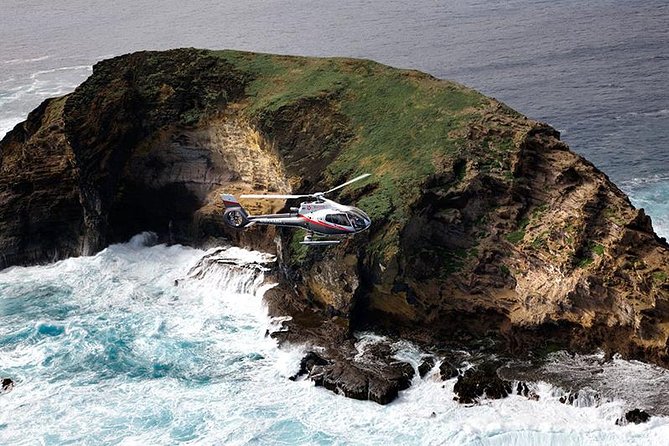
If your Maui trip is already full, this kind of tour makes sense. You trade extra driving and limited viewing spots for a straight shot from Kahului across the channel, with Molokai’s cliffs and waterfalls on one side of the trip and Maui’s interior valleys on the other.
The main value is time. In about 55 minutes, you see a lot of topography that would otherwise require multiple scenic drives, long hikes, or a boat day. It is not a replacement for everything else, but it is a concentrated hit of Hawaii’s scale.
You also get a sense of distance and geography that is hard to grasp from the ground. The horizon stretches in a way that makes the islands feel larger, and the coastline looks like a map.
Kahului check-in and what your helicopter ride really feels like
Most people start at the heliport in Kahului, Maui, meeting your expert pilot and then strapping in. From there, the helicopter takes off and you get panoramic views through windows built for sightseeing.
You should show up with comfortable clothing and shoes. The tour notes that bottled water is permitted, and cameras plus sunglasses are highly recommended. You’ll also want to dress for what the air feels like, since the ride is quick but the wind at altitude can feel cooler than you expect.
Seats matter here. Helicopter seating is assigned after check-in based on legal weight and balance, and the operator does not guarantee sitting next to or in the same row as your group. If you are picky about sightlines, do your best to coordinate your check-in timing and weight distribution with your party.
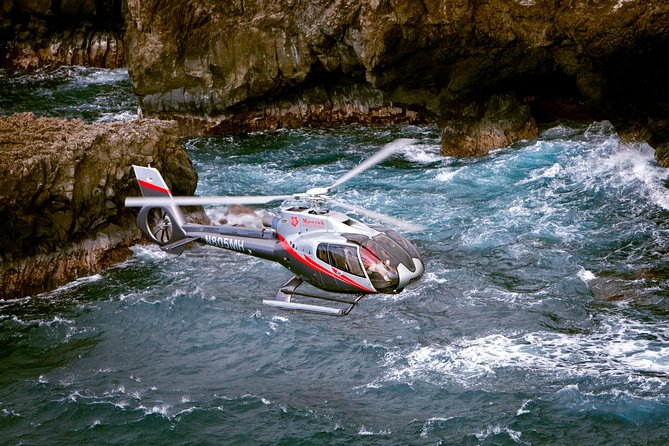
As for the aircraft, this tour uses EC130 helicopters by Airbus Helicopters. That is a modern, small helicopter type, and the small size is why the route can pack so much scenery into one flight.
Our remaining Maui Island Trips write-ups for Maui
Molokai north shore: Kahiwa Falls, Halawa Valley, and the cliff wow-factor
Molokai is the showpiece on this tour, especially the north side. After leaving Maui, you cruise past the dramatic coastline and then get your camera ready for Kahiwa Falls, listed as among the tallest waterfalls in the Hawaiian Islands.
From a viewpoint on the ground, waterfalls are often framed by vegetation and angle. From the air, you get the full vertical story and the context, like where the water drops into the terrain and how the valley shapes the view.
Then comes Halawa Valley. This is one of those places where geography does the storytelling. From overhead, the valley looks carved and layered, and you also get a bird’s-eye view of the island’s north shore patterns, which is usually hard to appreciate unless you are already on a boat or hiking a ridge.
And yes, you are flying past world’s tallest sea cliffs, over 3,000 feet (914 meters). The cliffs are the moment your brain finally understands why Molokai feels so remote from Maui. It is the kind of height that makes even frequent travelers pause.
A small practical note: cliffs and waterfalls look best when you keep your camera ready early. The tour moves quickly, and the pilot is rotating the helicopter so everyone gets sights, as some people have highlighted in their experiences.
Molokai south coast: reef, fishponds, and the “this place is ancient” effect
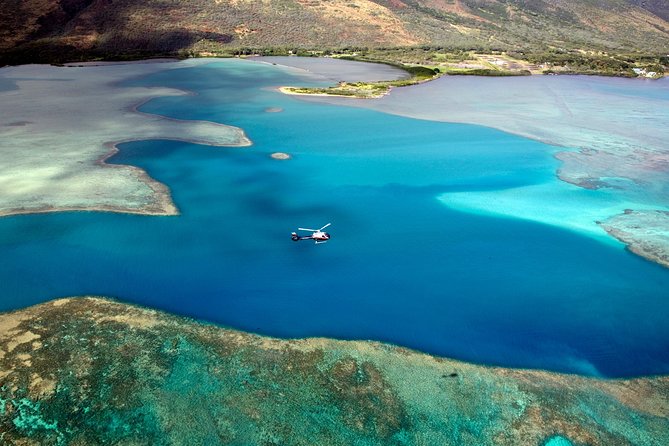
After the north-shore drama, you shift to the southern side, where the tour calls out two things: the Molokai Fringing Coral Reef and ancient fishponds.
Fishponds on Molokai are not just scenery, they are evidence. The tour describes them as built approximately 800 years ago, and from the air you can see their layout in a way that makes their purpose easier to grasp. You are not just looking at water, you are looking at how people shaped coastal life long before modern infrastructure.
The reef adds a different texture to the trip. You’ll see the water change color and clarity near the coast, and that contrast makes the shoreline feel even more crisp. If you love spotting coast detail, this part is where the photos can turn into real keepsakes.
One possible drawback here is weather glare. Helicopter flights can produce bright reflections, depending on sun angle. Sunglasses help you see clearly during the flight, and they can also reduce strain while you hold up your camera.
Pailolo Channel crossing: where both islands look huge
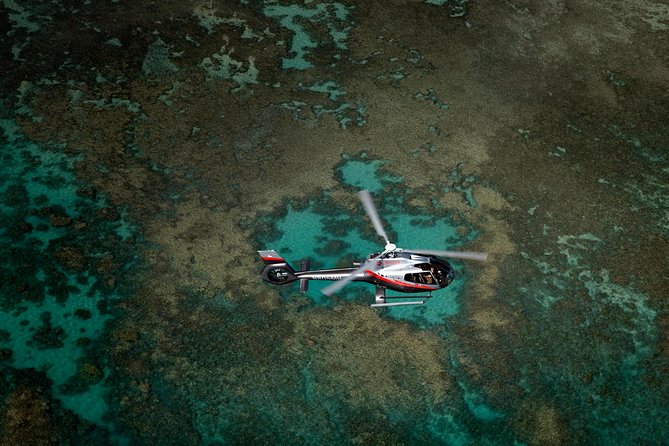
Then you fly above the Pailolo Channel, the waterway between Maui and Molokai. This is the “in-between” part of the route, but it matters. The crossing gives you a wide view of both islands at once, and it helps you connect what you saw on Maui with what you saw on Molokai.
If you are the type who likes navigation, this is where the islands start to click into place. You can spot coastline curves, offshore contours, and the way valleys feed into the sea.
Some flights also seem to include wildlife spotting, and people have reported seeing whales from the helicopter. You should not count on it, but it is a nice reminder that this is not only about waterfalls and cliffs. Hawaii wildlife shows up when it wants to.
Back over Maui: Iao Valley State Park and the West Maui Mountains view
When you head back to Maui, you sweep across the island’s western side, with the pilot pointing out key sights. The tour specifically mentions Iao Valley State Park, along with lush rainforest terrain and the West Maui Mountains.
Iao Valley is one of Maui’s signature landscapes, but from the helicopter you see it as more than a single scenic spot. You see the valley shape, how cloud and light sit in the folds, and how ridges connect. It is the difference between looking at a postcard and reading the terrain like a map.
For many people, this is the part that feels most “Maui.” Molokai can feel raw and cliff-forward. Maui, even when it is rugged, can look more structured, with valley lines you can follow from above.
A practical tip: if you have motion sensitivity, this is where you may notice it most. Keep your plan simple. Some guests have said they used Dramamine about an hour before the flight to prevent nausea. If you get carsick or seasick easily, it is worth planning ahead rather than waiting for symptoms.
Elsewhere under Helicopter Tours across Maui
Honokohau Falls and the Haleakala horizon before landing
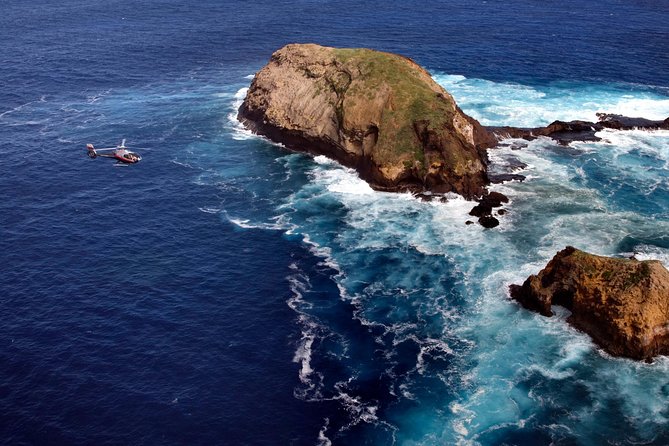
Near the end of the flight, the tour includes Honokohau Falls, described as Maui’s tallest waterfall. The timing is great because you often have more camera attention at the end, when you can anticipate the final scenic moment.
The route also notes a look for Haleakala volcano in the distance. Even if you cannot make out every detail from the air, just catching the outline across the horizon can be a satisfying connection to the rest of your Maui itinerary.
After the final sweep, you return to the heliport in Kahului and the tour ends back at the meeting point. The whole experience is quick enough that it leaves you wanting more, which is not a bad thing. It can also help you keep the rest of your day flexible.
Price and value: what $375.64 buys you, and what it does not
At $375.64 per person, this is not cheap. The question is whether it saves you time, effort, and access enough to justify the cost.
Here is the value logic I see:
- You get views that are hard to duplicate on the ground. The tour targets sea-cliff height, waterfalls, and coastal reef and fishpond layout. Those are “air-only” impressions.
- The tour compresses two islands into one about 55-minute flight, so you do not need separate days, separate transfers, and separate weather windows for each island.
- The live commentary helps you connect what you see with what it means. When you can name Kahiwa Falls, Halawa Valley, the Pailolo Channel, and Iao Valley, photos stop being just images and start becoming memories.
What it does not do: it does not replace a full day on Maui or Molokai. You will still want ground time for beaches, food, and culture. Also, seating is not guaranteed next to your group, and weight rules can affect how seats shake out.
So think of this as a high-impact “bucket list” activity that earns its cost by giving you scale and access you cannot easily cobble together another way.
Comfort, safety, and the rules that affect your experience
This tour is run with a safety-first approach, and you should treat the rules as part of the experience, not a hassle.
FAA photo ID for check-in
If you are 18 or older, you must bring original government-issued photo ID at check-in. The tour notes that digital IDs and photocopies are not accepted. If you arrive without the required ID, check-in can be denied with no refund.
Weight and extra-seat policy
There is a specific weight and balance system. The tour lists a total weight per passenger of 275 lbs. If you are over that limit, you may be required to purchase an additional seat on the day of the tour, payable directly to the operator. Seating is assigned after check-in based on these limits.
If you are close to the threshold, it is worth planning with your own party measurements in mind. It avoids last-minute surprises.
Capacity and what that means
The helicopter has a maximum capacity of 7 people per helicopter plus the pilot. That small number is part of the reason you get so much sightseeing in one flight. It also means the experience feels personal, but you still will not have private control over the route.
Motion sickness and vibe
Most people do fine, and some say the ride is smooth. Still, this is a helicopter, and wind and turns happen. If you already know you get motion sickness, plan for it. Sunglasses and hydration help, and people have recommended medication like Dramamine beforehand.
What you can bring
The tour states that only bottled water is permitted on the helicopter. Service animals are not permitted. Cameras and sunglasses are recommended.
Should you book this Maui and Molokai helicopter tour?
Book it if you want a single activity that delivers topography, waterfalls, reef, and coastline with minimal time on the road. It is a strong choice for couples, first-timers who want an efficient highlight reel, and anyone who loves photography and wants a short, high-impact day.
Consider thinking twice if:
- You are sensitive to rules and documents, because the check-in ID requirement is strict.
- Your group needs guaranteed seat adjacency, because the operator assigns seats based on weight and balance.
- Weather is a big risk for your schedule, since the flight requires good conditions and can be rescheduled.
If you do book, pick a calmer time of day for your comfort, bring your required ID early, and arrive ready to look out the window fast. The best views come in quick bursts.
FAQ
How long is the Deluxe Helicopter Tour of Molokai and Maui?
The helicopter ride is about 55 minutes.
Where does the tour start and end?
The tour starts at the heliport in Kahului, Maui, and it ends back at the meeting point.
What is the price per person?
The price is listed as $375.64 per person.
Do I need photo ID to check in?
Yes. For travelers over age 18, you must show an original government-issued photo ID such as a driver’s license or passport at check-in. Photocopies or digital IDs are not accepted.
Are there age requirements for children?
There is no minimum age to fly. Children under age two with valid paperwork are considered lap children and fly at no cost. Children 16 and under must be accompanied by an adult.
Is there a weight limit?
Yes. The tour notes a total weight per passenger of 275 lbs. Passengers over 275 lbs may be required to purchase an additional seat on the day of the tour due to comfort and weight/balance limits.
What type of helicopter is used?
The tour uses EC130 helicopters by Airbus Helicopters.
Is hotel pickup or drop-off included?
No. Hotel pickup and drop-off are not included.
What happens if the tour is canceled because of weather, or if you cancel late?
The experience requires good weather. If it is canceled due to poor weather, you’ll be offered a different date or a full refund. If you cancel your booking, you can cancel up to 3 days in advance for a full refund. Within 3 days, the amount paid is not refunded.
Maui Island Trips: more we have covered in Maui
- Maui Pineapple Farm Tour in Haliimaile★ 5.0 · 2,855 reviews
- Maui Eco-Raft Tour: Eye-Level Whale or Dolphin Watching – Lahaina★ 5.0 · 2,482 reviews
- Maui Snorkeling Adventure to Molokini and Turtle Town★ 4.5 · 2,221 reviews
- Maui: Haleakala Sunrise Spectacular with Local Breakfast★ 4.5 · 2,155 reviews
- Maui Snorkeling Adventure From Ma’alaea Harbor to Molokini★ 4.5 · 1,997 reviews
Tours: the rest of the Maui file
- Maui Pineapple Farm Tour in Haliimaile★ 5.0 · 2,855 reviews
- Maui Eco-Raft Tour: Eye-Level Whale or Dolphin Watching – Lahaina★ 5.0 · 2,482 reviews
- Road to Hana Adventure Maui Tour with Lunch★ 5.0 · 1,832 reviews
- From Maalaea: Whale Watching Tour Aboard the Quicksilver★ 4.5 · 1,461 reviews
- Lahaina: Maui Ku’ia Estate Guided Cacao Farm Tour and Tasting★ 5.0 · 1,103 reviews
Tour Reviews: more from our Maui desk
- Maui Pineapple Farm Tour in Haliimaile★ 5.0 · 2,855 reviews
- Maui Eco-Raft Tour: Eye-Level Whale or Dolphin Watching – Lahaina★ 5.0 · 2,482 reviews
- Maui Snorkeling Adventure to Molokini and Turtle Town★ 4.5 · 2,221 reviews
- Maui: Haleakala Sunrise Spectacular with Local Breakfast★ 4.5 · 2,155 reviews
- Maui Snorkeling Adventure From Ma’alaea Harbor to Molokini★ 4.5 · 1,997 reviews
Newest Maui reviews added to this site
- Deluxe Helicopter Tour of Molokai and Maui
★ 5.0 · 324 reviews - Turtle Reef Kayak Tour of Makena, Maui
★ 4.5 · 328 reviews - Maui Family and Couple Beach Photo Session
★ 5.0 · 333 reviews - Maui by Storm: Epic Private Luxury Road to Hana Adventure Tour
★ 5.0 · 337 reviews - Maui: Turtle Town Kayak and Snorkel Tour
★ 4.7 · 345 reviews - From Ma’alaea: ‘Alihilani Sunset Sail Catamaran Tour
★ 4.8 · 348 reviews - Small Group Coral Gardens Snorkel & Waterslide Adventure
★ 4.5 · 351 reviews - Water Bike Tour in South Maui
★ 5.0 · 372 reviews - Maui Premium Dinner Cruise: Four Course Dining Experience
★ 4.5 · 373 reviews - Cycle to the Sea with Maui Bombers
★ 5.0 · 406 reviews
Maui Island Trips, side by side.
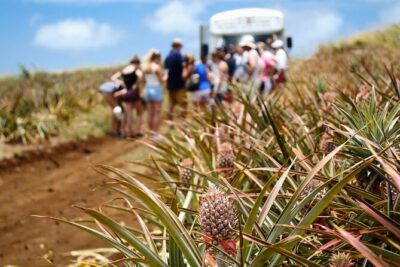 ★ 5.0Maui Pineapple Farm Tour in HaliimaileFrom $992,855 reviews
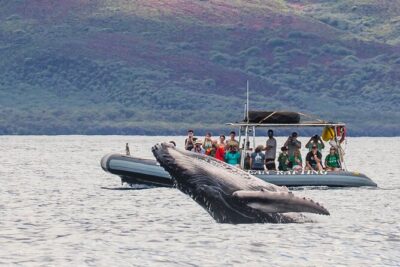 ★ 5.0Maui Eco-Raft Tour: Eye-Level Whale or Dolphin Watching – LahainaFrom $852,482 reviews
 ★ 4.5Maui Snorkeling Adventure to Molokini and Turtle TownFrom $1592,221 reviews
 ★ 4.5Maui: Haleakala Sunrise Spectacular with Local BreakfastFrom $2542,155 reviews
 ★ 4.5Maui Snorkeling Adventure From Ma’alaea Harbor to MolokiniFrom $1851,997 reviews
 ★ 5.0Maui: Turtle Town Snorkel with Photo and VideoFrom $1291,916 reviews
 ★ 5.0Road to Hana Adventure Maui Tour with LunchFrom $2761,832 reviews
 ★ 4.57-Line Maui Zipline on the North ShoreFrom $1551,648 reviews
This one is also listed in