
Review · SANTA BARBARA AND PALM SPRINGS
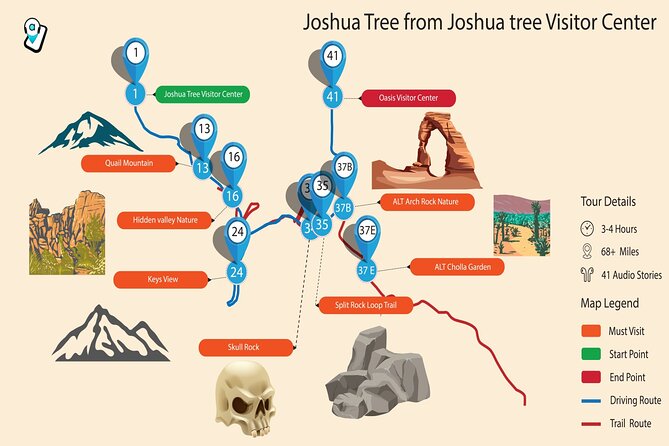
Joshua Tree National Park Self-Guided Driving Audio Tour
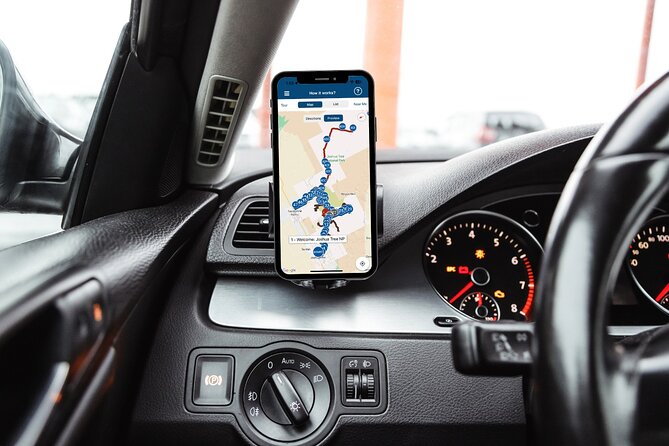
You drive, the park talks back. I love the hands-free GPS audio that plays as you reach each stop, and I love the offline maps for when cell service disappears. The one real drawback is you must download the tour before you get into the park.
This is a self-guided, car based route built around major sights and short walks, with enough flexibility to pause for photos and snacks. You start at the Joshua Tree Visitor Center area, follow a recommended route through the park, and end back where you started.
If you like the idea of learning the how and why behind the scenery, this kind of audio tour can turn a drive into a story loop. The bonus Hidden Valley Nature Trail component is a nice extra if you want one easy hike without extra planning.
In This Review
- Key points before you go
- Joshua Tree by car: what this self guided route gives you
- How the audio tour works: GPS cues, offline maps, and sound setup
- Tour length and timing: fitting 66 miles into 3 to 4 hours
- Entering Joshua Tree Visitor Center to Samuelsons Rock: start with context
- Willow Hole and Hemingway Buttress: desert mirage vibes and climbing icons
- Hidden Valley Nature Trail plus Intersection and Cap Rock: short walks, big payoff
- Lost Horse Valley and the mine loop: history in the dust, shade in the summer
- Skull Rock and Sky’s The Limit: roadside access and stargazing potential
- Oasis Visitor Center and the southern gate option
- Price and value: $16.99 per group, and why that can work well
- Who this tour is best for (and who should skip it)
- Should you book this Joshua Tree self-guided driving audio tour?
- FAQ
- How much is the Joshua Tree National Park Self-Guided Driving Audio Tour?
- How long does the driving audio tour take?
- Where does the tour start?
- Do I need to buy park admission?
- Will the audio tour work if there is no cell service?
- Can I reuse the tour on future trips?
- How do I get the audio playing in my car?
Key points before you go
- Offline first, no signal stress: The app uses offline maps and location based audio, so you are not stuck searching for Wi Fi.
- Designed for a half day by car: Expect about 3 to 4 hours for the full route, with a total drive of over 66 miles.
- 60+ audio stories, not just directions: You get more than quick stop names, including natural history and Wild West style tales tied to the landscape.
- A bonus for Hidden Valley: You get the Hidden Valley Nature Trail experience alongside the main driving route.
- One purchase per carload: The price is per group up to 4, which can be better value than paying per person for guided time.
- Hike lengths are manageable: Many optional walks are short, but a couple trail options are longer, so you can choose your effort.
Joshua Tree by car: what this self guided route gives you
Joshua Tree can feel intimidating when you arrive with no plan. Roads look endless, distances can surprise you, and you miss things when you are hunting for parking and trailheads on the fly. This kind of tour helps you keep moving while still slowing down at the right moments.
The best part is the audio timing. You do not have to babysit your phone screen. Stories play based on your location, so you can keep your eyes on the road and your hands on the wheel, then step out when the audio cues tell you it is time.
You also get a practical rhythm for planning a desert day. Some stops are quick roadside breaks, and others are real walks where you will want decent shoes and a little water sense. That mix is what makes the drive feel complete instead of rushed.
How the audio tour works: GPS cues, offline maps, and sound setup
The tour runs through the Action’s Tour Guide App. After booking, you receive a password via email and text instructions, and you enter that when you launch the app onsite. The tour itself is designed to work offline, but you have to download it while you still have strong Wi Fi or cellular.
In the park, signal can be poor, so plan ahead. Download both the app and the specific tour before you go in. If you wait until you are already parked inside, you can end up stuck with an app that cannot load the tour content.
For audio in your car, you can connect your phone to your stereo using Bluetooth, USB, or AUX. If you plan to walk a lot, headphones can help you hear clearly without turning your car up to unsafe levels. The tour is compatible with Apple CarPlay, and Android Auto support is listed as coming soon.
One more practical tip: the audio is location triggered and can feel confusing if you start in a different direction than the app expects. When you launch the tour, choose the version that matches your planned starting point and direction.
Not settled on one yet? These are other Palm Springs trips our reviewers have been through.

Tour length and timing: fitting 66 miles into 3 to 4 hours
The full route is about 66 miles long and typically takes 3 to 4 hours. That time window is realistic if you treat it as a drive with frequent short stops, not a full day of hiking.
You also have flexibility. You can start anytime within the day, pause when you want, and come back later, which matters if you find a spot you want to revisit. Some stops can turn into longer breaks because photo opportunities in Joshua Tree are never quick.
Timing tip that helps in real life: start early. One review specifically pointed out that popular viewpoints such as Keys View can get crowded, so earlier arrival gives you better light and more breathing room. If you are chasing sunset, plan extra time to reach your viewing area before the lines and the golden hour crush.
Entering Joshua Tree Visitor Center to Samuelsons Rock: start with context
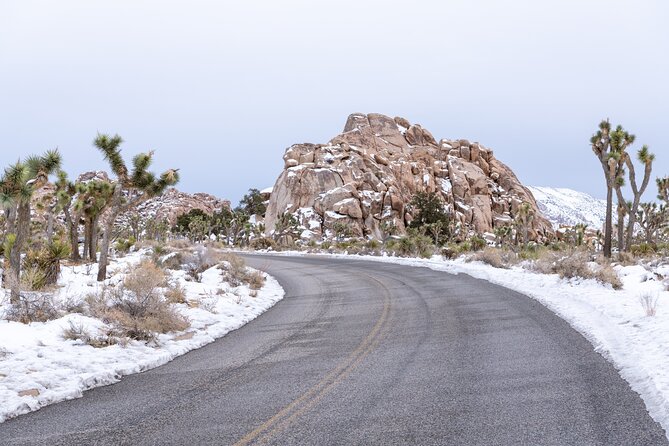
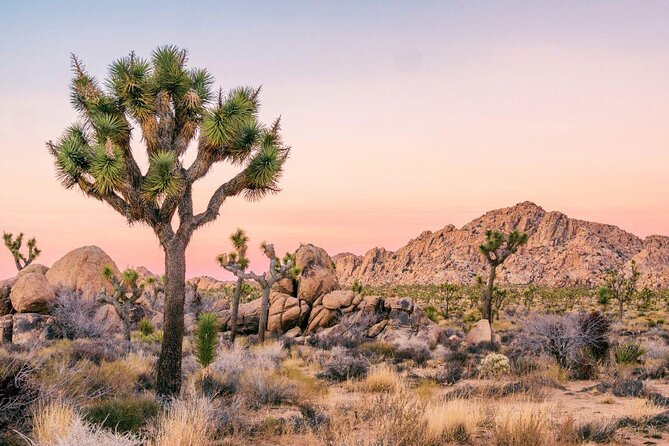
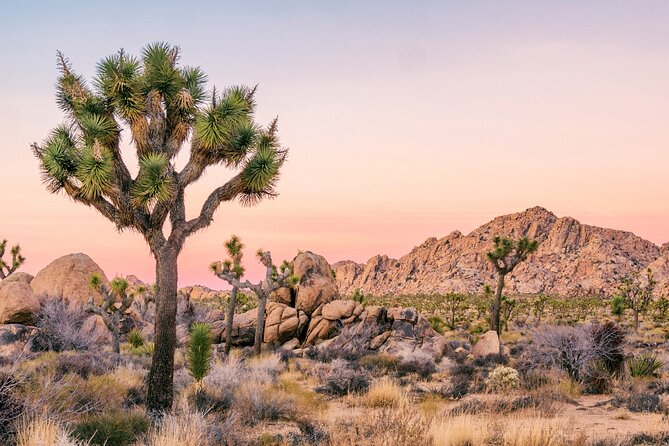
Your drive begins near the Joshua Tree Visitor Center. Right away, the tour frames what you are seeing: this is a place where desert worlds meet, and the famous Joshua trees are the signature you will keep noticing throughout the drive.
Then the route moves you toward quick landmark stops. Samuelsons Rock is one of the first standouts. You can access it via a moderate 3.3 mile trail, and it is tied to John Samuelson, who etched messages into the rock decades ago. Even if you do not make it on every trail, the audio story helps you understand why people make a point of seeking this place out.
What I like about this early portion is that it sets your brain to the right mode. You start looking for details instead of just admiring shapes. The park becomes more than an Instagram backdrop.
The main drawback is effort variability. Samuelsons Rock is not a five minute walk for most people. If you want the tour experience but you are short on time or energy, you may choose to do only the roadside parts at some stops.
Willow Hole and Hemingway Buttress: desert mirage vibes and climbing icons
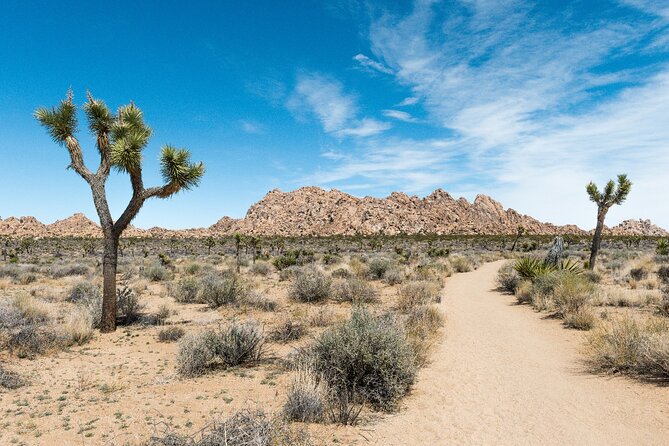
Willow Hole is the “how can water exist here” stop. The route includes a 7 mile trail to a surprising oasis surrounded by willows, and the audio helps set expectations so your first reaction does not feel like a trick of the light.
This is one of those experiences where the hike length matters as much as the destination. A 7 mile trail is a real commitment, so decide before you get there whether you want the workout or a shorter viewing moment. If you skip the full hike, the payoff is still the story context, plus the chance to see how visitors describe the area.
Next up is Hemingway Buttress, a popular climbing spot that towers dramatically from the ground. You can scramble around boulders, and climbers of different skill levels use it, so the area is active during the day. Even if you do not climb, the scale reads instantly from the right viewpoints.
Two things you can do with your time here: linger for photos and watch how the rock shapes the climbing lines. The audio helps you notice the cues you would otherwise miss.
Hidden Valley Nature Trail plus Intersection and Cap Rock: short walks, big payoff
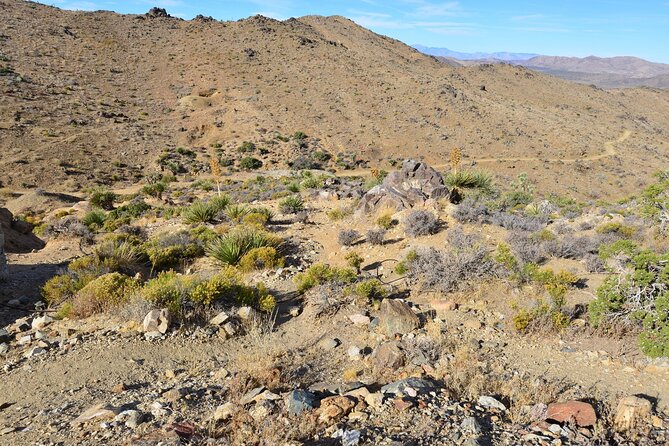
The tour includes a bonus for Hidden Valley Nature Trail, described as an easy trek of about a mile. This is a great “stretch your legs” option during a driving day because you can enjoy a real trail without losing half your day.
If you like easy wins, this is where it happens. Hidden Valley is a Wild West style counterpoint to the big roadside formations, and the audio cues give you a narrative thread as you move through the trail.
Intersection Rock and Cap Rock are also worth the stop because you get a clear sense of how Joshua Tree hides and reveals interest. Intersection Rock is treated as a hub, with towering presence visible from a distance and a famous climbing reputation. Cap Rock is smaller and more intimate, with a quick quarter mile trail and information about local flora.
Here is the practical consideration. These are “stop and look” places, but they still involve getting out, walking to the right spot, and managing your time. If you are traveling with kids or anyone who needs frequent breaks, this portion is a good place to plan a short hike and then return to the car before you run out of daylight.
Other National Parks we have written up across Palm Springs

Lost Horse Valley and the mine loop: history in the dust, shade in the summer

Lost Horse Valley is where the Wild West stories roll into view again. The audio ties the valley’s name to McHaney Gang misdeeds, and it adds a tale about a miner who tried to recover stolen horses. Even if you are not a history person, the storytelling format makes the park feel like a living timeline.
Then you get the Lost Horse Mine Loop Trail. The trail is described as four miles, with remains of one of the most successful gold mines in the region. You also get desert flora and strong vistas, so this is a stop with multiple rewards.
In summer, the warning matters. The tour notes a lack of shade on this trail. That is not a small detail in Joshua Tree. If you are visiting in warmer months, this is where you should bring extra water, start earlier, and consider whether a full loop is smart for your group.
Queen Valley adds another layer with an abandoned mine and dark local lore, tied to murder and other events. The value here is the angle. Joshua Tree is not just geology and plants. It is also human stories of boom, risk, and survival.
Skull Rock and Sky’s The Limit: roadside access and stargazing potential
Skull Rock is one of the most iconic forms in the park, an easily accessible granite shape that looks remarkably like a human skull. It is a roadside stop, and it also marks the trailhead for an easy 2 mile trail that is among the most popular hiking routes in Joshua Tree.
This is a good place to decide how much you want to do on your day. If you are pressed for time, you can enjoy the formation without committing to the trail. If you have the energy, that 2 mile option gives you movement and a chance to experience the park on foot at a manageable length.
Then there is Sky’s The Limit Observatory and Nature Center. This is where the tour shifts from land stories to star and science context. Joshua Tree is a dark sky area, so stargazing can be genuinely impressive if you stay after dark.
Even if you do not do a nighttime stop, the audio still helps you look at plants and animals with better awareness. You start spotting details that feel invisible on a first pass.
Practical drawback to keep in mind. Nighttime plans depend on weather and daylight, and some visitors will not want to stay late. Still, the fact that stargazing is an option makes this stop more than a normal quick pull off.
Oasis Visitor Center and the southern gate option
The Oasis Visitor Center is the last stop along the main route. It sits in the town of Twenty-Nine Palms, not far from where you begin, and it gives you a clean end point before you head back to the rest of your day.
If you want to keep exploring beyond the main loop, there is a detour route option that proceeds south through the rest of the park and exits out the southern gate. This matters if you are building your own itinerary around where you are sleeping that night.
One small but important point: the tour works best when you follow the route and speed limit as directed. Some reviews describe confusion when entrance closures changed the drive plan. If you hit a closure, your best move is to check the official Joshua Tree National Park website before you start and adjust expectations.
Price and value: $16.99 per group, and why that can work well
At $16.99 per group up to 4, this tour is priced for people who want structure without paying per person like you might on a classic guided tour. The tour is sold per carload, which you can feel in the math fast if you travel as a small group.
The value logic is simple. You get offline maps, location triggered audio, and a full route with 60+ stories that you can replay. That means you are not paying for a single guided moment, you are paying for a set of content you can use again on future trips.
Plus, you get a bonus Hidden Valley Nature Trail experience built into the package. For many visitors, that reduces the need to stack on extra planning just to justify getting out and walking.
The one price related consideration is this: you still need a Joshua Tree entrance pass. The tour does not include park admission, and the audio will not replace your need for that entry ticket.
Who this tour is best for (and who should skip it)
This is a strong choice if you want a guided feel but prefer to travel at your own pace. If you have a group of up to 4 in one car, the per group pricing is also a nice fit.
It is also a great option for first time Joshua Tree visitors who do not want to study maps all day. The GPS based prompts help you avoid getting lost, and the stories add meaning to what you see.
A good fit for families too, especially when kids still enjoy spotting formations and listening to interesting facts in short bursts. One review highlighted how the tour kept a family engaged, and that is exactly the sweet spot for this format.
You might want a different approach if your group hates apps and pre planning. The tour depends on downloading in strong Wi Fi or cellular before you reach the park. If you show up without the download done, you can lose time and energy fast.
Should you book this Joshua Tree self-guided driving audio tour?
If you are planning a half day in Joshua Tree and want help navigating the highlights, I think this is an easy yes. The mix of offline audio, hands-free location cues, and stop variety makes it a practical value for a car based day.
Book it if you want to learn while you drive, and if you are the type who likes short walks like Hidden Valley plus a couple of bigger optional trails. The lifetime access also means you can return and run the route again as seasons change.
Skip it or plan differently if you are not willing to download ahead, or if you are traveling during a period with known entrance closures and you have no flexibility to reroute. In Joshua Tree, conditions and road access can change, so your best safety net is checking the park website before you start.
FAQ
How much is the Joshua Tree National Park Self-Guided Driving Audio Tour?
It costs $16.99 per group, up to 4 people.
How long does the driving audio tour take?
The route typically takes about 3 to 4 hours to complete.
Where does the tour start?
Your tour begins at the Joshua Tree Visitor Center.
Do I need to buy park admission?
Yes. An entrance pass is required to visit Joshua Tree National Park, and it is not included with this tour.
Will the audio tour work if there is no cell service?
Yes, after you download the app and the tour while you have strong Wi Fi or cellular. The tour also supports offline maps.
Can I reuse the tour on future trips?
Yes. You get new lifetime access with no expiry, and you can use it on any trip as many times as you want.
How do I get the audio playing in my car?
Open the Action’s Tour Guide App onsite and launch the correct tour version. You can connect your phone to your car stereo using Bluetooth, USB, or AUX, or use headphones if you are doing walking portions.
Tours: the rest of the Palm Springs file
- San Andreas Fault Jeep Tour from Palm Desert★ 5.0 · 751 reviews
- Joshua Tree National Park Scenic Tour★ 4.5 · 499 reviews
- Joshua Tree National Park Offroad Tour★ 5.0 · 427 reviews
- Palm Springs Modernism Architecture & History Bike Tour★ 5.0 · 359 reviews
- San Andreas Fault Offroad Tour★ 5.0 · 320 reviews
Tour Reviews: more from our Palm Springs desk
- Palm Springs Aerial Tramway Admission Ticket★ 4.5 · 1,798 reviews
- Palm Springs: Aerial Tramway Round-Trip Ticket★ 4.6 · 1,122 reviews
- San Andreas Fault Jeep Tour from Palm Desert★ 5.0 · 751 reviews
- Bank Heist Escape Room Game for Private Group★ 5.0 · 519 reviews
- Joshua Tree National Park Scenic Tour★ 4.5 · 499 reviews
Newest Palm Springs reviews added to this site
- San Andreas Fault Offroad Tour
★ 5.0 · 320 reviews - Vampire’s Lair Escape Room Game for Private Group
★ 5.0 · 324 reviews - Palm Springs Modernism Architecture & History Bike Tour
★ 5.0 · 359 reviews - Joshua Tree Open Air Hummer Adventure
★ 5.0 · 408 reviews - Joshua Tree National Park Offroad Tour
★ 5.0 · 427 reviews - Joshua Tree National Park Scenic Tour
★ 4.5 · 499 reviews - Bank Heist Escape Room Game for Private Group
★ 5.0 · 519 reviews - San Andreas Fault Jeep Tour from Palm Desert
★ 5.0 · 751 reviews - Joshua Tree National Park Self-Guided Driving Audio Tour
★ 4.5 · 762 reviews - Palm Springs: Aerial Tramway Round-Trip Ticket
★ 4.6 · 1,122 reviews
Santa Barbara and Palm Springs, side by side.
 ★ 5.0Full-Day LA Tour: Santa Monica, Hollywood and Beverly HillsFrom $952,431 reviews
 ★ 4.5Palm Springs Aerial Tramway Admission Ticket1,798 reviews
 ★ 4.5Perfect 5 ½ Hour LA & Hollywood Tour from Santa MonicaFrom $751,124 reviews
 ★ 4.6Palm Springs: Aerial Tramway Round-Trip TicketFrom $341,122 reviews
 ★ 5.0Best of LA: Hollywood, Griffith, Santa Monica, Venice, and RodeoFrom $98788 reviews
 ★ 4.5Santa Barbara Trolley Tour787 reviews
 ★ 5.0Temecula Valley Wine Tour with Tastings & Lunch IncludedFrom $109686 reviews
 ★ 5.0Santa Barbara Electric Bike TourFrom $85557 reviews
This one is also listed in