
Review · SANTA BARBARA AND PALM SPRINGS
Palm Springs Aerial Tramway Admission Ticket
Sun to snow in about 15 minutes.
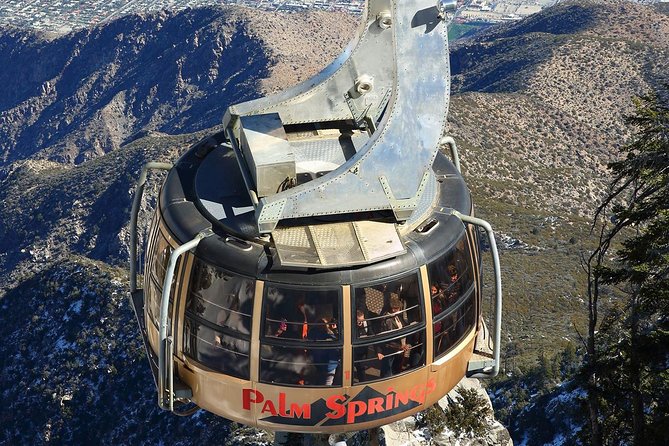
What makes the Palm Springs Aerial Tramway so interesting is the quick change of world, you start in hot Sonoran Desert air and climb into the cooler alpine zone above. I love the spectacular views from the rotating tram cars, and you get a built-in break once you arrive with a short film on how the tram was made. One thing to plan for is the crowd and the wait, because even with a timed voucher you still need to line up to exchange it for your tram time.
Two details I like a lot: the ride is standing-room only on tram cars that hold 80 people, and the top has real hangout options like observation decks plus a cocktail lounge and dining. I also appreciate that you’re not stuck on a viewpoint for long, once you’re at Mountain Station you can head into Mt San Jacinto State Park and Wilderness Area for hikes on 54 miles of trails. The main drawback to keep in mind is that the tram is run on a first-come, first-served timed system and can have periodic shutdowns, so flexibility helps.
If you want an easy win in Palm Springs, this is it.
But if you hate lines and tight timing, go in with realistic expectations and a “plan B” mindset for weather or delays.
In This Review
- Key highlights you should know before you go
- The ride: world-class views with a big altitude jump
- Standing room on the rotating tram cars (and why it matters)
- Valley Station to your tram time: how the voucher process really works
- Parking and getting there: the small fee that changes the math
- Mountain Station: film, decks, and that lounge-and-dining payoff
- San Jacinto State Park time: hiking options with cool-air reward
- Best timing for fewer lines and more room to breathe
- What to pack: layers, water, and footwear that can stand up to elevation
- Food and drinks at the top: a full reset, not just a snack
- Service, families, and who this tram day trip fits best
- Price and value: included ride time versus real-life wait times
- Should you book the Palm Springs Aerial Tramway?
- FAQ
- What hours does the Palm Springs Aerial Tramway run?
- How long is the tram experience?
- Does the ticket include the round-trip tram ride?
- Do I choose my exact tram time when I book?
- Is parking included?
- Are there seats in the tram cars?
- Can I bring a stroller or service animal?
- Is the experience dependent on good weather?
Key highlights you should know before you go
- Fast altitude change from Sonoran Desert heat to cool mountain air, with a major vertical ascent
- Rotating tram experience with big views from the ride and photo-friendly angles at the top
- Mountain Station perks like observation decks, a short history film, and a cocktail lounge plus dining
- Real park time once you arrive, with access to Mt San Jacinto State Park and its hiking trails
- Standing tram cars with no seats, so wear comfortable shoes and plan for a slower boarding flow
- Parking is extra and is a common budget surprise, with weekend shuttles available from nearby lots
The ride: world-class views with a big altitude jump
The tram climbs about 5,873 feet vertically, and the one-way ride time is roughly 15 minutes. That may sound short, but it is exactly the point: you go from desert heat that can reach around 120 degrees Fahrenheit down low, to cool alpine air at about 8,516 feet. The change feels immediate, and it helps you understand why this place is such a popular Palm Springs day trip.
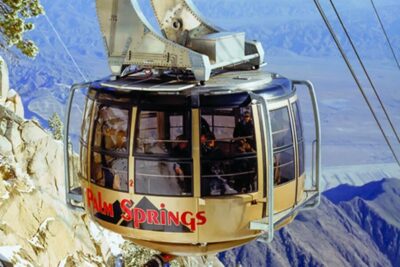
You’ll also notice the tram’s “moving viewpoint” feeling because the cars are large and the system is designed to keep the experience smooth and stable. Each tram car stays on its cable pair system and rotates in the sense that it provides those changing angles and views as you travel. For photos, that constant angle shift is a gift, even if you do not consider yourself a photographer.
One more practical note: people sometimes forget that altitude changes can make you feel a little different. If you have blood pressure issues, it is smart to take it easy on the stairs later and keep hydrated.
Standing room on the rotating tram cars (and why it matters)
There are no seats on the tram cars, and the capacity is about 80 people per car. That means your comfort plan matters more than you might expect. Wear shoes you can stand in for the boarding and the ride, and consider bringing a light layer even if it is scorching in the valley.
Also, because boarding happens in batches, you should expect a little friction at each end of the trip. At the top, you may want to linger on the observation decks or pause for food, so leave room in your schedule for that extra “just one more view” time. The good part is that the tram ride itself is quick, so standing is mostly about being ready for the moment, not endurance racing.
If you have mobility concerns, the standing setup can be a deal-breaker. On the plus side, strollers are permitted and service animals are allowed, so families and many animal companions can still join.
More from our Tickets coverage in Palm Springs
Valley Station to your tram time: how the voucher process really works
Your ticket gets timed for the next available tram car, and it runs on a first-come, first-served flow. In plain terms, you can show up at your booked window, but you should still assume you’ll wait for your turn to be processed and loaded.
There is a key practical rhythm to follow:
- Go to the ticket office with your voucher ready
- Expect the ticket office line if you arrive during a peak travel window
- Be ready to move when your tram boarding group is called
This is also why I recommend arriving with buffer time rather than trying to “perfectly” match every minute. If you arrive right on the edge of your patience level, crowds and boarding delays can turn what should be a relaxed ride into a stress test.
If delays or periodic shutdowns happen due to unforeseen circumstances, the tramway is not responsible for refunds or for being unable to redeem a voucher. Weather also matters, and the experience requires good weather, so you may be offered another date or a full refund if it gets canceled.
Parking and getting there: the small fee that changes the math
Parking is not included, and it costs $15.00 per vehicle. That detail matters because it is an easy thing to forget when you focus on the tram ticket itself. If you are traveling with a group in one vehicle, the parking fee spreads out and feels more reasonable. If you’re solo and driving in, it can feel like a bigger hit.
There are 13 paved lots near Valley Station. On weekends and during holiday periods, there’s a free shuttle from parking lots to the Valley Station entrance, which can save you energy when the lots get full.
Bottom line, build your budget for the tram and the car. Then build your time for the parking and the quick move from the entrance to the ticket exchange.
Mountain Station: film, decks, and that lounge-and-dining payoff
Once you reach Mountain Station, you step out into a built-up space with real amenities instead of just a chilly platform. You’ll find observation decks for views, plus a cocktail lounge and dining facilities to refuel.
One of the smartest parts of the experience is the short film on the history and construction of the tramway. It gives context fast, so when you look out at the mountain terrain and think about the engineering, it lands with more meaning than a random video would. Even if you only watch it briefly, it helps you appreciate what you’re standing next to.
Food up there is also part of the value. People often do a quick meal after the ride, then either do a short nature walk or head onto the trails. The top can feel cooler than you expect, so warm drinks and hot food tend to go over well.
San Jacinto State Park time: hiking options with cool-air reward
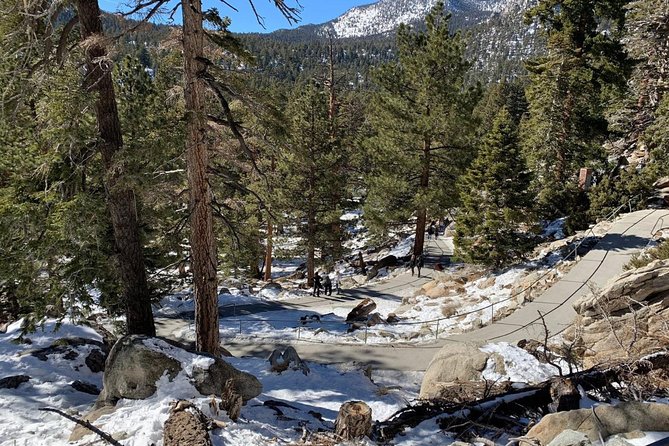
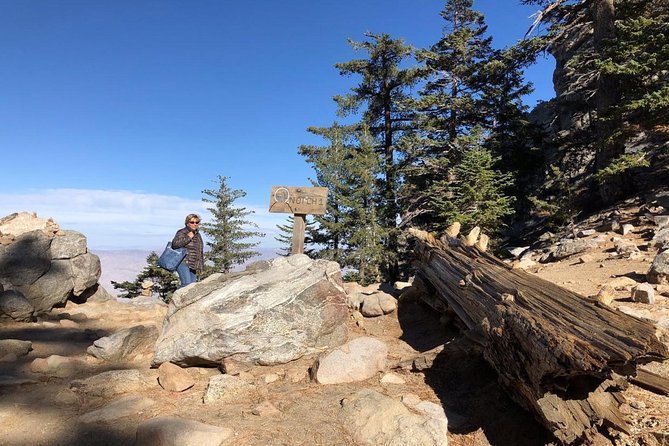
After Mountain Station, you can explore Mt San Jacinto State Park and Wilderness Area. You’re dealing with a large area, about 14,000 acres, and access to 54 miles of hiking trails. In summer, hiking is the obvious choice, and in winter you may find routes suited to snowshoeing or cross-country skiing.
What I like about the park time is that it lets you control the intensity. You can keep it casual, do a shorter walk near the station area, and still get the “I’m really on the mountain” feeling. Or you can plan a longer hike if you want more time on foot and more sweeping views.
The weather can change fast at elevation, even in months when Palm Springs feels almost too hot. You’ll have to dress for the top, not for the valley. Reviews often call out that it is 20 to 30 degrees cooler at the summit area, and that makes a huge difference in comfort when you stop walking and just enjoy the decks.
Our remaining Santa Barbara and Palm Springs write-ups for Palm Springs

Best timing for fewer lines and more room to breathe
The tram operates throughout the day, so you can choose when you ride up and when you return. The main scheduling problem is crowds. Holiday periods can bring long lines, and waiting is the most common complaint that shows up around this kind of popular attraction.
If you want the calm version of the day, aim for a time that is not the peak rush. Early in the day often helps, and mid-afternoon can also work depending on the season and local flight and hotel patterns.
Even so, I wouldn’t treat waiting as a rare exception. Plan time for:
- getting through the ticket exchange at Valley Station
- waiting to board if you’re traveling at a popular time
- waiting to exit at the top, especially when groups pile in around you
That’s also why I like planning the day around the tram rather than squeezing it between other tight appointments.
What to pack: layers, water, and footwear that can stand up to elevation
You’re starting near desert heat and ending in cool mountain air, sometimes with wind and shade depending on the day. Bring layers. Even if you think you can tough it out, you’ll be happier with a jacket you can put on after the ride.
Water matters because you’re climbing and then walking. It’s simple, but people still forget it. If you plan a longer hike, pack a small snack as well, because dining at the top can be a nice treat, not a guaranteed “I’m covered all day” plan.
Comfort items that pay off:
- sturdy footwear for short hikes and uneven paths
- a warm layer for waiting and sitting at the observation decks
- a hat or sun protection for the valley side
- a small bag you can manage while standing in line
If you’re someone who gets lightheaded with altitude changes, take it slow right after you arrive at the top and give yourself a few minutes before you speed-walk any trail.
Food and drinks at the top: a full reset, not just a snack
Mountain Station isn’t only for scenery. There’s a cocktail lounge and dining facilities, and that matters because it helps you shape your experience. If you want a relaxed day, you can eat, watch the film, and do a shorter walk that still feels like real adventure.
Hot drinks are especially popular. People talk about hot chocolate up at the Peak Restaurant, and if you like comfort food on cool mountain days, it’s a nice way to warm up without turning your day into a complicated meal search.
If you want lunch, treat it as part of the plan rather than an afterthought. When crowds surge, food lines and seating demand can make your “lunch break” take longer than you’d expect.
Service, families, and who this tram day trip fits best
This is a strong choice for a lot of people because it mixes a signature attraction with flexible hiking. Most travelers can participate, and the stroller-friendly policy helps families travel without needing to give up the mountain day.
It also works well for mixed groups. You can keep it light at the top with decks, a short nature walk, and dining, while more active folks can stretch out onto trails for a longer hike. You do not have to turn it into a fitness mission to enjoy it.
For kids and grandparents, the tram ride is the big draw because it is a rare “from desert to mountain” transformation that does not require technical climbing. The main consideration is still standing during the ride, and that can influence how comfortable very young kids and adults with leg fatigue will be.
If you’re traveling with a service animal, you’re allowed to bring one, and that reduces anxiety for many visitors who need those accommodations.
Price and value: included ride time versus real-life wait times
Even without quoting exact numbers, the value case is clear. Your ticket includes the round-trip tram ride, and your time slot is set for the next available tram car once you check in. That is a lot of built-in “transport” value, because you are paying to go up and back via the tram without having to drive into the mountain.
Where value can shrink is in what you still have to manage yourself: parking costs extra, and you may spend time waiting to exchange your voucher and to board. That is why I think the most fair way to judge value is to include your own comfort with lines.
Booking online can sometimes save a few dollars compared with buying on site, and it can be easy to change your date if plans shift. Just know that a voucher still needs to be presented for processing, so do not expect it to work like an automatic scan with zero human interaction.
So is it a “great deal”? For many people, yes, because it’s a one-of-a-kind ride plus mountain access. But if you absolutely hate wait time, or if your schedule cannot handle delays, it may feel expensive for what is mostly patience.
Should you book the Palm Springs Aerial Tramway?
Book this if you want a simple, high-impact day in Palm Springs: big views, a dramatic change in temperature, and mountain time without complicated transportation. It’s also a good fit if your group has mixed activity levels, because the top gives you options for decks, film, food, and hiking.
Skip or reconsider if you’re very sensitive to standing, if your schedule is rigid, or if you’re heading in during peak holiday crowds and cannot tolerate possible long waits. Also think twice if you know you do poorly with altitude changes, since it’s a real vertical climb and you’ll be on your feet for at least parts of the day.
If you’re flexible and willing to plan for layers and time buffers, this is one of those experiences that keeps earning its reputation. You’ll leave with the feeling that you saw something real, not just another view from a parking lot.
FAQ
What hours does the Palm Springs Aerial Tramway run?
For the period 07/01/2025 to 06/30/2026, it runs Monday through Friday from 10:00 AM to 8:00 PM.
How long is the tram experience?
Plan about 1 to 2 hours in total, with the tram ride taking about 15 minutes one way.
Does the ticket include the round-trip tram ride?
Yes. Your admission ticket includes a round-trip tram ride.
Do I choose my exact tram time when I book?
You get tickets timed for the next available tram car after you present your voucher. The process works on a first-come, first-served basis for the next departing car.
Is parking included?
No. Parking costs $15.00 per vehicle. There are 13 paved lots near Valley Station, plus a free shuttle from parking lots to the Valley Station entrance on weekends and holiday periods.
Are there seats in the tram cars?
No. Tram cars hold about 80 people each and there are no seats, so you stand during the journey.
Can I bring a stroller or service animal?
Service animals are allowed, and strollers are permitted.
Is the experience dependent on good weather?
Yes. The tramway experience requires good weather. If it is canceled due to poor weather, you are offered a different date or a full refund.
Santa Barbara and Palm Springs: more we have covered in Palm Springs
- Palm Springs: Aerial Tramway Round-Trip Ticket★ 4.6 · 1,122 reviews
- Joshua Tree National Park Self-Guided Driving Audio Tour★ 4.5 · 762 reviews
- Joshua Tree National Park Scenic Tour★ 4.5 · 499 reviews
- Joshua Tree National Park Offroad Tour★ 5.0 · 427 reviews
- Joshua Tree Open Air Hummer Adventure★ 5.0 · 408 reviews
Tickets: further reviews from Palm Springs
- Palm Springs: Aerial Tramway Round-Trip Ticket★ 4.6 · 1,122 reviews
Tour Reviews: more from our Palm Springs desk
- Palm Springs: Aerial Tramway Round-Trip Ticket★ 4.6 · 1,122 reviews
- Joshua Tree National Park Self-Guided Driving Audio Tour★ 4.5 · 762 reviews
- San Andreas Fault Jeep Tour from Palm Desert★ 5.0 · 751 reviews
- Bank Heist Escape Room Game for Private Group★ 5.0 · 519 reviews
- Joshua Tree National Park Scenic Tour★ 4.5 · 499 reviews
Newest Palm Springs reviews added to this site
- San Andreas Fault Offroad Tour
★ 5.0 · 320 reviews - Vampire’s Lair Escape Room Game for Private Group
★ 5.0 · 324 reviews - Palm Springs Modernism Architecture & History Bike Tour
★ 5.0 · 359 reviews - Joshua Tree Open Air Hummer Adventure
★ 5.0 · 408 reviews - Joshua Tree National Park Offroad Tour
★ 5.0 · 427 reviews - Joshua Tree National Park Scenic Tour
★ 4.5 · 499 reviews - Bank Heist Escape Room Game for Private Group
★ 5.0 · 519 reviews - San Andreas Fault Jeep Tour from Palm Desert
★ 5.0 · 751 reviews - Joshua Tree National Park Self-Guided Driving Audio Tour
★ 4.5 · 762 reviews - Palm Springs: Aerial Tramway Round-Trip Ticket
★ 4.6 · 1,122 reviews
Santa Barbara and Palm Springs, side by side.
 ★ 5.0Full-Day LA Tour: Santa Monica, Hollywood and Beverly HillsFrom $952,431 reviews
 ★ 4.5Perfect 5 ½ Hour LA & Hollywood Tour from Santa MonicaFrom $751,124 reviews
 ★ 4.6Palm Springs: Aerial Tramway Round-Trip TicketFrom $341,122 reviews
 ★ 5.0Best of LA: Hollywood, Griffith, Santa Monica, Venice, and RodeoFrom $98788 reviews
 ★ 4.5Santa Barbara Trolley Tour787 reviews
 ★ 4.5Joshua Tree National Park Self-Guided Driving Audio TourFrom $16762 reviews
 ★ 5.0Temecula Valley Wine Tour with Tastings & Lunch IncludedFrom $109686 reviews
 ★ 5.0Santa Barbara Electric Bike TourFrom $85557 reviews
This one is also listed in