
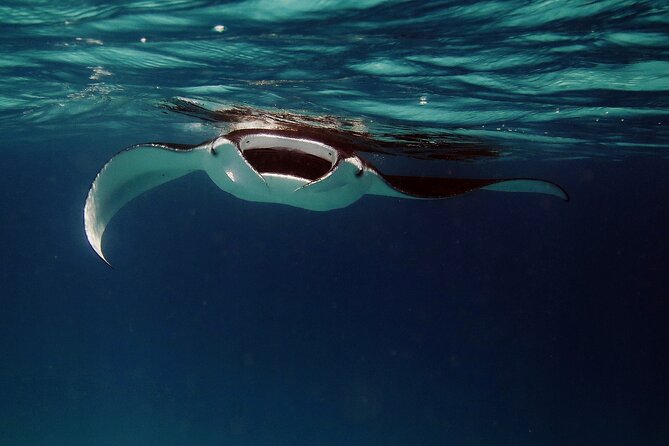
Review · BIG ISLAND VOLCANOES AND KONA
Manta Ray Night Snorkel Kona – Coral Reef Snorkel Adventures
Manta rays in the dark are pure Hawaii magic. This tour runs after sunset with a guide-led small-group feel, plus you float at a lightboard where plankton draws the animals in close. I like the high manta sighting odds and the expert coaching that helps you snorkel without crowding or startling marine life.
The biggest thing to consider is the ocean ride. The boat ride can be bumpy, and some people feel cold or get motion sickness, especially early on the way out.
In This Review
- The key points that make this tour worth your time
- Honokohau to the manta spot, what the night feels like
- The lightboard setup, gear, and how you actually swim
- In-water time at night, spotting mantas feeding close up
- Boat ride realities, choppy seas, cold returns, and motion sickness
- Small group feel, guides on the water, and what makes it safer
- Snacks, drinks, and the in-between moments you might forget
- Value check for $125, what you’re really buying
- Who should book, and who should reconsider
- My decision advice, should you book this manta ray night snorkel?
- FAQ
- Where does the tour start and end?
- How long is the manta ray night snorkel tour?
- What does the tour cost?
- What are the chances of seeing manta rays?
- What snorkeling equipment is provided?
- Do I need to bring a towel?
- What physical requirements should I be ready for?
- Is the tour suitable for people with neck problems?
- What is the cancellation policy?
The key points that make this tour worth your time
- More than a 90% manta sighting chance, so this is not a guess-and-hope plan
- Lightboard viewing, with mantas feeding on plankton that gathers where the light attracts it
- Small-group style access, including guide supervision while you’re holding on at the board
- Snacks and non-alcoholic drinks included, so you are not stuck waiting hungry after the swim
- Real-world guide coaching, with names like Jacob, Jeff, Erika, Kody, and Captain Alexis showing up in guest notes for clear in-water instruction
- Bring a towel, because you’ll want something dry and warm after the chilly return ride
Honokohau to the manta spot, what the night feels like
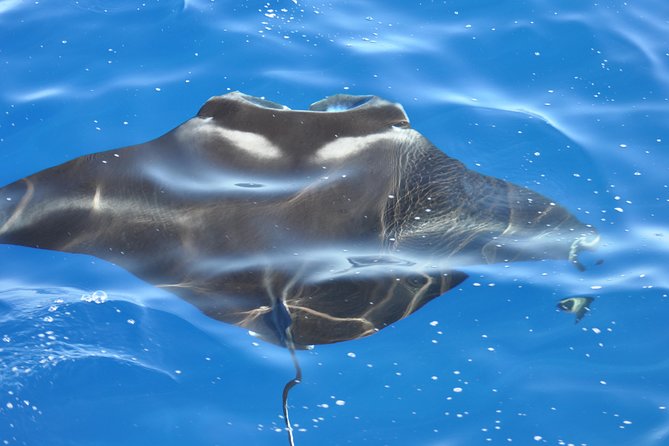
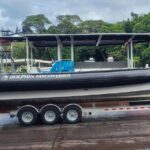
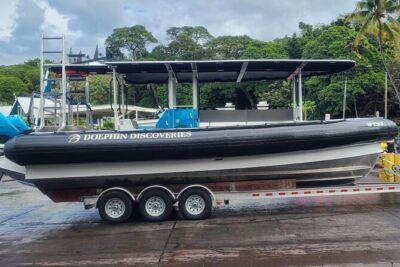
Your evening starts at Coral Reef Snorkel Adventures on Kealakehe Pkwy, near Kailua-Kona. From there, a guide meets you and brings you to the small boat at Honokohau Small Boat Harbor.
Once you’re aboard, you head out after dark. That timing matters because manta rays tend to be more active at night, and the lightboard setup is built for nighttime feeding behavior.
You should expect an ocean ride that feels like part of the adventure. One common theme is that the first stretch can be speedy and a bit rough, and the return ride can be cold, even if you start the day in warm weather.
The lightboard setup, gear, and how you actually swim
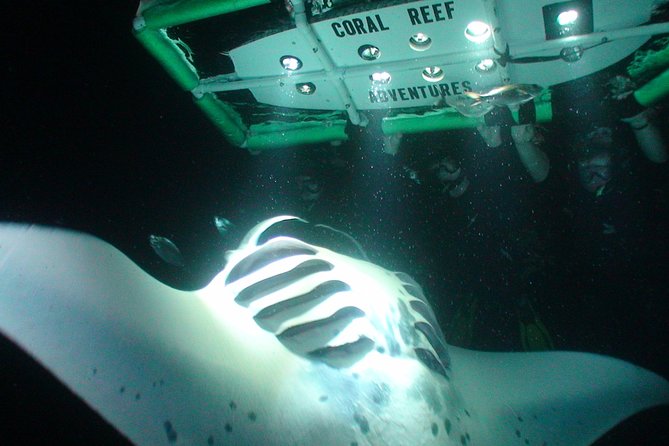
The tour provides snorkeling gear, and you’ll also put on a wetsuit during the experience. People note that belongings can stay in a dry cabinet on the boat, and you may remove shoes or aquasocks before getting into the water.
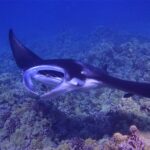
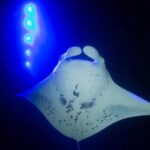
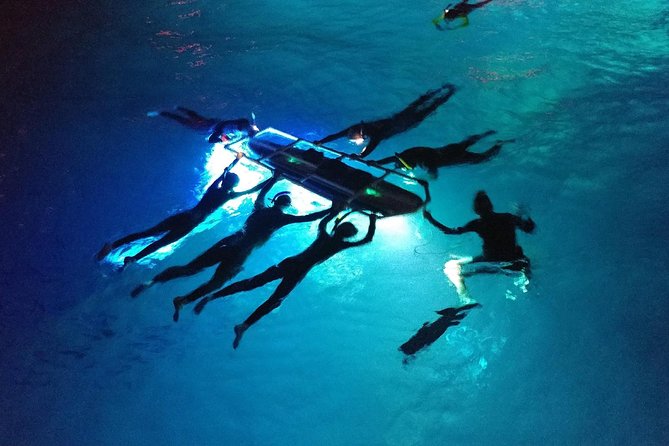
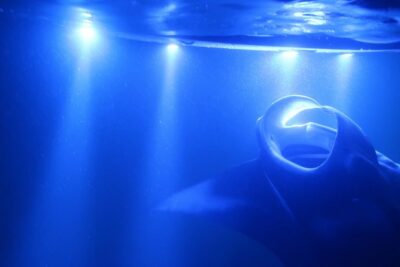
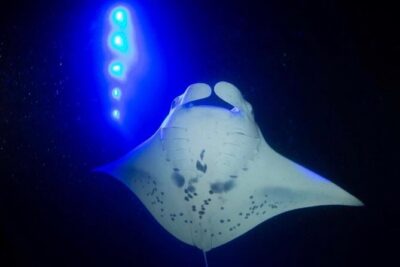
At the manta spot, the core experience happens at a lightboard. The board attracts plankton, and mantas move in to feed, sometimes coming very close and gliding under you.
The technique is simple but specific. You’ll get instruction on safe swimming and how to position yourself so you do not disturb the rays. Several guests describe holding onto the lightboard bars in a Superman-like float, and that you’ll be in that position long enough to feel it in your shoulders and arms.
A practical tip: keep your head up and your breathing steady. If you keep your face fully submerged, you might miss the guide’s facts, but if you lift your head too much, you can lose the wide view of what is passing under you. It’s a balance, and your guide will help you find it quickly.
Evening Experiences we have also been through in Big Island of Hawaii
In-water time at night, spotting mantas feeding close up
Once you’re in the water, you settle in for your main manta viewing window, often described around 30 to 45 minutes. That’s long enough to watch mantas repeat patterns, not just make a one-time pass and vanish.
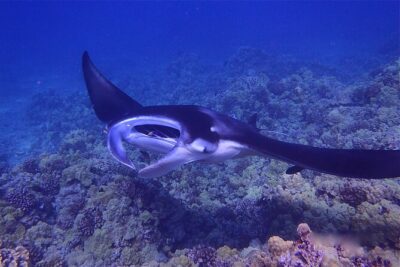
What you’re looking for is movement under the board as plankton concentrates. In guest notes, mantas are seen spinning, rolling, and gliding beneath the light, sometimes just inches away from where people are holding on.
This is also where small behavior details become your best friend. If people around you are kicking hard, you may notice mantas keep their distance. It’s not that they disappear, but gentleness helps, and the tour’s instruction is aimed at keeping the interaction calm and respectful.
You’ll likely see not just manta rays, but also the broader nighttime marine scene. A few people mention bioluminescence and lots of fish around the area, which makes the water feel alive even when the first manta takes a moment to arrive.
Boat ride realities, choppy seas, cold returns, and motion sickness
Let’s talk about the parts that can make or break your night: the ride and the temperature.
1) Choppy water risk
Multiple guests describe a rougher, bouncier ride out to the best viewing area. Some people even decide not to get in because they feel shaken. If you are sensitive to motion, plan for that possibility.
2) Seasickness is personal
A few guests point out seasickness can be an issue, even though it is not always about boat size. Night snorkeling can feel more intense because you are in open water and time outside varies by conditions.
3) Cold is real
Even with wetsuits, people mention getting cold, especially on the way back. Wet suit jackets help, but a thinner person in cool ocean air might still shiver.
My best advice: prepare like you’ll stay wet and exposed for a while. Bring layers you can change into quickly after you’re back on the boat, and do not forget that you need your own towel.
Small group feel, guides on the water, and what makes it safer
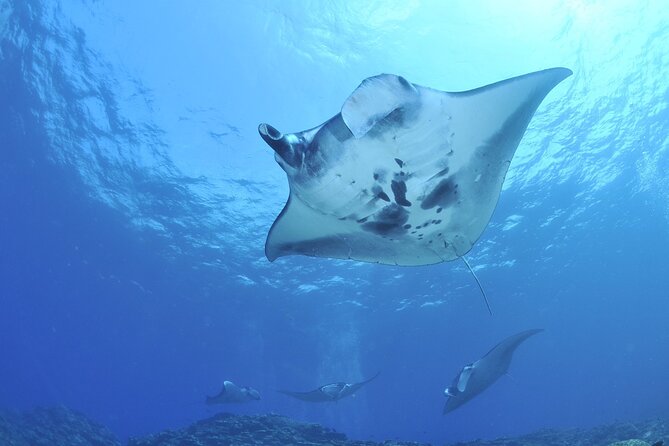
This tour is designed for a tighter, more guided experience. The highlights say a maximum of six people, but the operator also lists a maximum of 12 travelers. In real life, that matters because more bodies on the boat can affect how crowded it feels while you wait and while you transition in and out.
That said, the in-water coaching is where the experience gets its edge. Guests repeatedly praise the guides for manta behavior education and for calm, clear instruction.
Names that come up include Jacob, Jeff, Erika, Kody, Cody, Dustin, and Captain Louie. You’ll hear guide cues on safety, proper snorkeling technique, and how to position yourself at the lightboard so you can see rays up close without pressuring them.
If you want a less chaotic vibe, choose your timing wisely. Some notes suggest going a little later in the evening can improve your chances, because it can line up better with when mantas are most active.
Snacks, drinks, and the in-between moments you might forget
This is one of those tours where you are out at night, in the ocean, and then suddenly back on land. The good news is that snacks and non-alcoholic drinks are included with the tour.
Timing varies by evening and by conditions, and some guests mention sodas served after the excursion. Either way, having food and drink ready takes the edge off a cold return, and it also helps if you worked up energy in the water.
Also, you’ll move through quick transitions: wetsuits on, gear handled, then in-water time, then climbing back aboard. People mention the ladder climb can be tricky, especially if you have knee issues.
If you have mobility limitations, go in with honesty and plan to take your time. A slower pace is better than forcing it.
The rest of our Big Island Volcanoes and Kona notes for Big Island of Hawaii
Value check for $125, what you’re really buying
At $125 per person for about 1.5 hours, you’re paying for three things that are hard to replicate on your own.
First, you’re buying access to a spot where manta rays reliably feed. The tour advertises more than a 90% chance of spotting mantas in their natural habitat, and that probability shifts this from a novelty outing to a realistic goal.
Second, you’re buying guidance. Snorkeling at night with mantas requires technique, and the coaching you get helps you stay safe and respectful. That matters because close-up viewing only happens when people handle the situation well.
Third, you’re buying convenience. Snorkeling gear is included, you get wetsuit setup, and snacks and drinks are part of the package. Plus, one benefit that shows up in guest notes is a redo option if you do not see mantas, which lowers the risk of paying and ending with no memorable moments.
The drawback on the value side is the chance of discomfort. If you are prone to seasickness, have shoulder fatigue easily, or run cold fast, this might feel overpriced. For the right person, though, the payoff is huge: mantas close enough to change how you understand these giants.
Who should book, and who should reconsider
This tour fits best if you meet the physical and comfort requirements.
You should be ready for a moderate fitness level. You must be able to swim without a floatation device, and there are limits like a maximum weight of 280 pounds per traveler. It also says the tour is not recommended for travelers with neck problems.
Here’s who I think will love it:
- Families and couples who want a once-in-a-trip nature encounter
- People who can handle gentle swimming, holding position, and mild upper body effort
- Swimmers who can stay calm in dark water and follow guide instructions
Here’s who should reconsider or plan carefully:
- Anyone with a history of strong seasickness, because conditions can be rough
- People who get cold fast, since the return ride may feel chilly
- Anyone with knee concerns who might struggle with the ladder back onto the boat
- Anyone with neck issues, since it is not recommended
My decision advice, should you book this manta ray night snorkel?
If manta rays are high on your list, I’d book this. The combination of a lightboard feeding setup, strong manta sighting odds, and close guide coaching is exactly what you want for a night encounter you can actually count on.
Book it with your eyes open about the tradeoffs. Expect possible bumpy water, be ready for arm effort while holding on, and plan for a cold, wet finish. If you handle those realities well, this tour is the kind that turns your “someday I’ll do it” into a real memory.
FAQ
Where does the tour start and end?
The tour meets at Coral Reef Snorkel Adventures, 74-425 Kealakehe Pkwy, Kailua-Kona, HI 96740, USA. The activity ends back at the meeting point.
How long is the manta ray night snorkel tour?
It runs about 1 hour 30 minutes, approximately.
What does the tour cost?
The price is $125.00 per person.
What are the chances of seeing manta rays?
The highlights state you have more than a 90% chance of spotting manta rays in their natural habitat.
What snorkeling equipment is provided?
The tour includes the use of snorkeling equipment.
Do I need to bring a towel?
Yes. You should bring your own towel.
What physical requirements should I be ready for?
You need a moderate physical fitness level. You must be able to swim without a floatation device, and there is a maximum weight limit of 280 pounds per traveler.
Is the tour suitable for people with neck problems?
No. The tour is not recommended for travelers with neck problems.
What is the cancellation policy?
Free cancellation is available. You can cancel up to 24 hours in advance for a full refund, and cutoff times are based on the experience’s local time. If canceled due to poor weather, you will be offered a different date or a full refund.
Big Island Volcanoes and Kona reviewed right across Big Island of Hawaii
- Big Island in a Day: Volcanoes Waterfalls Sightseeing and History★ 5.0 · 6,569 reviews
- Big Island Manta Ray Night Snorkel★ 5.0 · 5,656 reviews
- Big Island: Kona Manta Ray Snorkel Tour in Keauhou Harbor★ 4.5 · 2,465 reviews
- Hilo Shore Excursion: Volcanoes National Park & Black Sand Beach★ 4.5 · 2,338 reviews
- Big Island: Captain Cook Snorkel On A Power Catamaran With Lunch★ 5.0 · 2,232 reviews
Elsewhere under Evening Experiences in Big Island of Hawaii
- Big Island Manta Ray Night Snorkel★ 5.0 · 5,656 reviews
- KONA Manta Ray Night Snorkel – FREE re-ride if no Sightings★ 5.0 · 2,212 reviews
- Manta Ray Night Snorkel at Kona, Big Island★ 5.0 · 1,758 reviews
- Big Island GOAT Experience: Mauna Kea Summit, Sunset & Stars★ 5.0 · 1,706 reviews
- Big Island: Mauna Kea Summit Tour with Free Night Star Photo★ 5.0 · 1,449 reviews
Tour Reviews: more from our Big Island of Hawaii desk
- Big Island in a Day: Volcanoes Waterfalls Sightseeing and History★ 5.0 · 6,569 reviews
- Big Island Manta Ray Night Snorkel★ 5.0 · 5,656 reviews
- Big Island: Kona Manta Ray Snorkel Tour in Keauhou Harbor★ 4.5 · 2,465 reviews
- Hilo Shore Excursion: Volcanoes National Park & Black Sand Beach★ 4.5 · 2,338 reviews
- Big Island: Captain Cook Snorkel On A Power Catamaran With Lunch★ 5.0 · 2,232 reviews
Newest Big Island of Hawaii reviews added to this site
- Luxury Kona Coast Snorkel Tour Including Lunch
★ 5.0 · 309 reviews - Kona Cloud Forest Sanctuary Montane Jungle Tour (2.5 hrs)
★ 5.0 · 322 reviews - Kona Shore Excursion: Sea Turtles, Historic Kona & Coffee
★ 4.5 · 324 reviews - Deluxe Morning Snorkeling Adventure
★ 5.0 · 325 reviews - Kohala Waterfalls Small Group Adventure Tour
★ 5.0 · 335 reviews - Volcano National Park Adventure From Kona
★ 5.0 · 339 reviews - Small-Group Big Island Tour: Hawaii Volcanoes National Park and Kona Coffee Farm
★ 5.0 · 343 reviews - Two Reef Snorkel Trip-See Captain Cook Monument & Sea Caves
★ 5.0 · 347 reviews - Big Island Parasailing Experience
★ 5.0 · 353 reviews - Hilo Shore Excursion: Volcano Safari Lava Caves & Black Sand
★ 4.5 · 363 reviews
Big Island Volcanoes and Kona, side by side.
 ★ 5.0Big Island in a Day: Volcanoes Waterfalls Sightseeing and HistoryFrom $2646,569 reviews
 ★ 5.0Big Island Manta Ray Night SnorkelFrom $845,656 reviews
 ★ 4.5Big Island: Kona Manta Ray Snorkel Tour in Keauhou HarborFrom $252,465 reviews
 ★ 4.5Hilo Shore Excursion: Volcanoes National Park & Black Sand BeachFrom $1592,338 reviews
 ★ 5.0Big Island: Captain Cook Snorkel On A Power Catamaran With LunchFrom $852,232 reviews
 ★ 5.0KONA Manta Ray Night Snorkel – FREE re-ride if no SightingsFrom $492,212 reviews
 ★ 5.0Manta Ray Night Snorkel at Kona, Big IslandFrom $441,758 reviews
 ★ 5.0Big Island GOAT Experience: Mauna Kea Summit, Sunset & StarsFrom $2891,706 reviews
This one is also listed in