
Review · CHICAGO ARCHITECTURE AND RIVER CRUISES
Skip-the-line: Art Institute of Chicago Guided Tour
Skip the maze, see the classics. This Art Institute guided tour is interesting because you get skip-the-line entry and a tight small group (12 or fewer) that keeps you moving with purpose. I also like that the guide points out what to notice in real time, not just dates and names, and the tour stays upbeat even when you are walking. The one possible drawback, it is a highlights sprint, so if you want long, quiet time with every favorite, you may wish you had an extra hour on your own.
This is a great way to connect the dots across art eras, with stops built around major works like Van Gogh’s The Bedroom, Georgia O’Keefe’s Sky Above Clouds, Edward Hopper’s Nighthawks, and Grant Wood’s American Gothic. You’ll also see modern standouts like Warhol’s Four Mona Lisas and Pollock’s Greyed Rainbow, plus older masterworks and design like Tiffany Studios’ Hartwell Memorial Window. Guides such as Joel and Bernie are repeatedly praised for turning the galleries into a story you can actually follow.
At $71.40 per person for about 2 hours 30 minutes, the value is less about paying for a lecture and more about paying for time saved. You are not stuck figuring out where to go, and admission fees are included, so you can keep exploring after the tour if you want to return to something that really grabbed you. Also, this tour is often booked around 20 days ahead, so plan ahead if you travel in peak season.
In This Review
- Key highlights you should know before you go
- Getting in at the Art Institute, without losing your morning
- Skip-the-line pace, semi-private group size, and what it means for your experience
- Tiffany to the Post-Impressionists: how the tour sets up your visual journey
- Van Gogh’s The Bedroom: the moment the tour really clicks
- Georgia O’Keefe’s Sky Above Clouds, and Hopper’s Nighthawks in the same breath
- American Gothic to Marc Chagall: symbolism and imagination, explained without homework
- Picasso’s The Old Guitarist and Albright’s A Picture of Dorian Gray
- Warhol’s Four Mona Lisas and Pollock’s Greyed Rainbow, a fun way to end strong
- What the guide does best: storytelling, Chicago context, and question time
- How to use your included admission ticket after the tour
- Price and value for a 2.5-hour skip-the-line overview
- Who should book this guided Art Institute of Chicago tour
- Should you book the skip-the-line highlights tour?
- FAQ
- How long is the Art Institute of Chicago skip-the-line guided tour?
- How much does the tour cost?
- What is included in the ticket price?
- How big is the group?
- What language is the tour offered in?
- Where does the tour start?
- Does the tour include skip-the-line entry?
- Is a mobile ticket used?
- Is it okay if I have only moderate physical fitness?
- Is free cancellation available?
Key highlights you should know before you go
- Small group, up to 12 travelers, which makes it easier to ask questions and keep the tour flowing
- Skip-the-line, semi-private format that reduces the usual museum start-up chaos
- Two and a half hours focused on major works, including van Gogh, O’Keefe, Hopper, and more
- Admission included, so you are not locked into only what you see during the tour
- English-language tour with a guide who can explain art in plain terms
Getting in at the Art Institute, without losing your morning
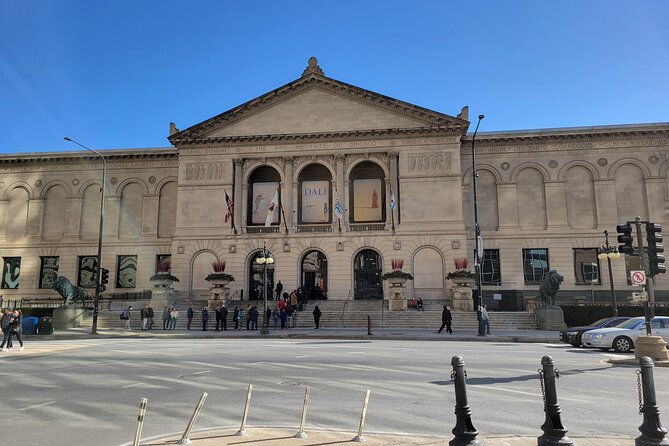
The meeting point is simple: 111 S Michigan Ave, at the Art Institute of Chicago. The tour starts at 10:30 am, and it ends back where you began, so you do not have to guess how to retrace your steps at the end.
What makes this practical is the entry strategy. If you have ever walked into a huge museum and spent your first 20 minutes just trying to get oriented, you know how quickly that eats your energy. Here, the guide helps you start in the right direction, so you spend more of your limited time actually looking at art.
One more small but important detail: you get a mobile ticket. That means less fumbling with paper, which is handy when you are matching your phone to security checks and group gathering.
Skip-the-line pace, semi-private group size, and what it means for your experience
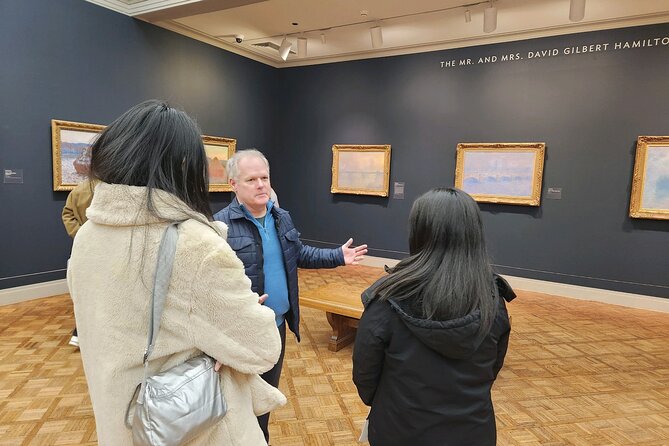
This tour is designed to be efficient. It is a semi-private museum tour with a group size of 12 or less, which keeps you out of the “stampede through the room” vibe. You still see a lot, but you are not glued to a long line or shoved into a big group where questions get lost.
Duration matters here. At about 2 hours 30 minutes, the guide can cover major highlights and still leave breathing room to talk about why the works matter. Guides are also praised for being friendly and prompt, and for helping the group land in the right places quickly, then get pointed toward what to do next once the tour ends.
The pace does create a tradeoff. Because it is a highlights route, you will not linger for 30 minutes in every room. If your idea of museum heaven is slow viewing and deep reading, you may find the tour feels fast, and you will want to plan a follow-up self-guided visit.
The rest of our Guided notes for Chicago


Tiffany to the Post-Impressionists: how the tour sets up your visual journey
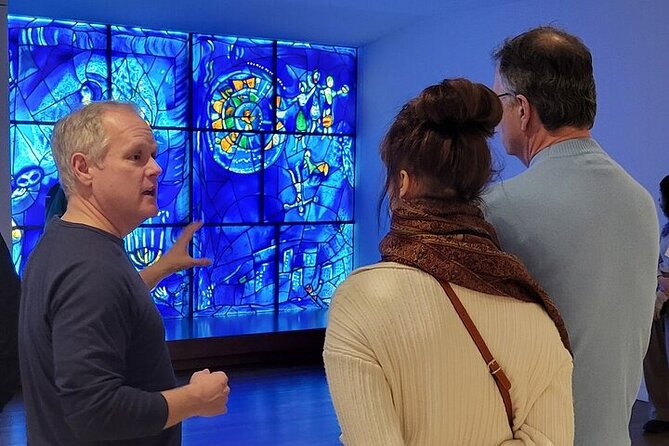
The tour starts with a guided overview of the Art Institute’s most important pieces, and it does a smart job of setting context as you go. One of the first standouts on the route is Tiffany Studios’ Hartwell Memorial Window. This is not just pretty glass, the guide’s job is to explain how the design, color, and craftsmanship fit into its time, so you know what you are looking at beyond the surface beauty.
Next, you get a Paris street scene with Gustave Caillebotte’s Paris Street; Rainy Day. Works like this are perfect for a guided look because you can learn how an artist uses perspective, mood, and urban detail to create a believable space. Even if you only casually like art, you start seeing composition choices the way the artist intended.
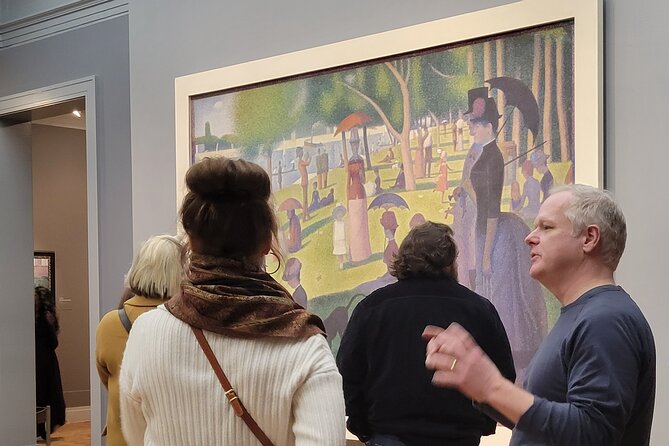
Then comes Georges Seurat’s Sunday on La Grande Jatte, a key pivot toward pointillism and the look of modern life. This kind of work rewards a guide because you need a few framing facts to understand the method, then you can actually enjoy what your eyes notice. Instead of feeling like you are staring at dots, you start seeing structure and intention.
Van Gogh’s The Bedroom: the moment the tour really clicks
Vincent van Gogh’s The Bedroom is one of those paintings people recognize, even if they have not studied art history. The value of a guided stop here is that you get a way to look, not just a catalog entry.
Van Gogh often works through emotion and emphasis, so when you pause here with a guide, you can tune in to what stands out, why certain shapes feel restless or intense, and how the scene feels personal rather than neutral. If you came to the museum for one or two famous names, this is a strong payoff moment.
Also, the guide helps you connect how this work sits inside broader themes you might see later in the tour. That matters because the Art Institute is so large that without a road map, you can leave feeling like you saw a bunch of separate masterpieces, not a connected story.
Georgia O’Keefe’s Sky Above Clouds, and Hopper’s Nighthawks in the same breath
One of the best tricks this tour uses is pairing artists so your eye does not get bored. You move from Van Gogh’s inward intensity to Georgia O’Keefe’s Sky Above Clouds. O’Keefe is known for making familiar subjects feel iconic, and a guided discussion helps you notice how the scale, shapes, and contrast push your interpretation.
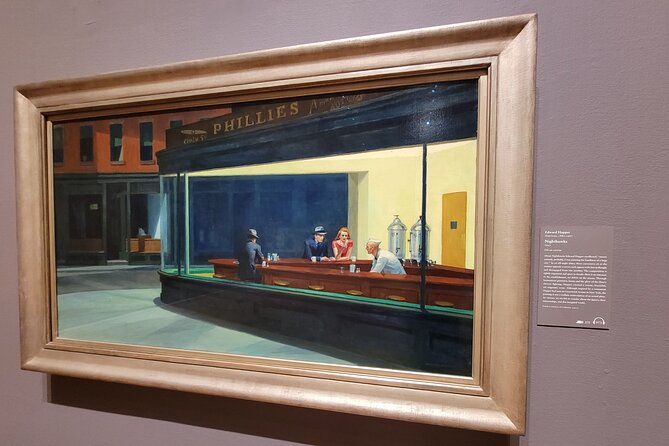
Then you shift to Edward Hopper’s Nighthawks. This painting is famous, but it can still feel flat if you only look for style. A guide’s storytelling helps you see the atmosphere more clearly, the tension in the scene, and how Hopper uses light and emptiness to create a mood.
This is where the “ask questions” part shines. If you are the kind of person who wonders what you are supposed to be noticing, you are not stuck guessing. You can ask, and the guide can translate the why into something you can use while you look.
American Gothic to Marc Chagall: symbolism and imagination, explained without homework
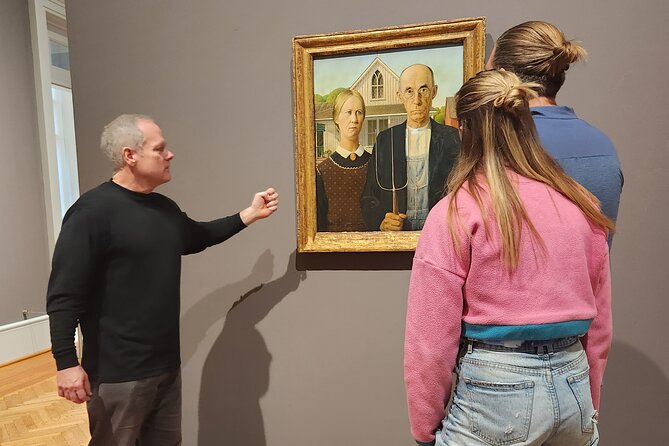
Grant Wood’s American Gothic is a must-see stop, and it works well in a guided tour because you need just enough context to make the image click. The guide can explain how the painting’s details, posture, and expressions contribute to its message, so you do not just register two figures in a famous frame.
Then the tour moves into imaginative storytelling with Marc Chagall’s America Windows. Chagall can feel like a dream at first glance, so the guide’s job is to help you connect symbols and themes without drowning you in trivia. That balance is exactly what makes a two and a half hour tour worthwhile for a first visit.
If you have ever stood in front of a symbol-heavy work and thought, I get that it is important, but what am I missing, you will appreciate having a guide hold the thread for you.
More filed under Chicago Architecture and River Cruises in Chicago






Picasso’s The Old Guitarist and Albright’s A Picture of Dorian Gray
Modern art can be polarizing, but this tour gives you handles to grab. Pablo Picasso’s The Old Guitarist helps you see how a familiar object or subject can be transformed through form and viewpoint. With a guide, you can focus on how the artist reshapes reality to communicate something more than a literal scene.
Then there is Ivan Albright’s A Picture of Dorian Gray, which can feel like a controlled drama. Again, a guided explanation helps because this is not just about what the painting depicts, it is about how the painting creates meaning, mood, and interpretation. You are less likely to walk past it thinking, I know the title, and more likely to actually notice why the approach is effective.
Warhol’s Four Mona Lisas and Pollock’s Greyed Rainbow, a fun way to end strong
Andy Warhol’s Four Mona Lisas is a perfect late-tour stop because it connects art to culture and repetition. A guide can show you how Warhol transforms a classic image into something about media, identity, and reproduction. Even if you think you do not like pop art, you will likely find at least one angle to enjoy.
Then the route heads into Jackson Pollock territory with Greyed Rainbow. Abstract works are a harder sell without context, but a guide can help you understand what you are looking at, especially the idea that the method is part of the message. You might still have your own opinion, but you will have more tools than if you were standing alone.
This is also where the tour’s “why it matters” approach is most noticeable. If you want to see modern and contemporary art without feeling lost, ending on these big names is a smart move.
What the guide does best: storytelling, Chicago context, and question time
The most praised part of this tour is not the list of artists, it is the guide delivery. Guides like Joel are credited with passion and enthusiasm, plus stories about the city and the museum that make the experience feel alive. Bernie is repeatedly praised for organization and for bringing the galleries to life with clear explanations.
Several guides also get high marks for mixing in small, useful context, not just art facts. That can include Chicago history in a way that helps you understand the museum as part of a larger place, not just a building full of frames.
If you are new to art, this matters. You do not need to memorize anything, you just need a framework so your eyes know what to pay attention to. The guides also answer questions, and that is often what turns a good tour into a memorable one.
How to use your included admission ticket after the tour
Admission is included, which is a big deal. You are not limited to the highlight route only, and you can return to rooms that sparked your curiosity during the tour.
Here is the practical strategy I suggest when you do this kind of museum visit. While you are on the guided section, think of it as getting a map and a set of pointers. After the tour, go back to one or two works that you felt pulled toward, then linger long enough to decide what you actually think, not what you were told to notice.
Also, because the tour is designed to avoid the worst of the crowd chaos, you may find some rooms feel calmer during your return. That gives you the best of both worlds: guided clarity first, then your own pace.
Price and value for a 2.5-hour skip-the-line overview
Let’s talk money honestly. At $71.40 per person for about 2 hours 30 minutes, you are paying for two things: access without the usual start-up friction and guided time that compresses a first visit.
Is it cheap? No. But it can be good value if you do not want to spend your limited vacation hours plotting museum routes and reading wall text without a guide’s context. The “small group” part also helps, because you are buying the chance to ask questions and get the explanation aimed at what you see, not a generic lecture.
One more value boost: this tour often runs as a “highlights” introduction. That is ideal if you are also doing other Chicago things and cannot afford a full day in the museum.
Who should book this guided Art Institute of Chicago tour
This tour fits best if you want an efficient first pass through a world-class museum. If you like art but you do not want to spend hours deciding where to go, this is a clean solution.
It is also a good pick for:
- First-time Art Institute visitors who want a “greatest hits” overview
- People who enjoy learning through stories, not just dates
- Anyone traveling with limited time, especially if you are juggling Chicago neighborhoods the same day
- Families and couples who like a structured plan with room to ask questions
If you are an ultra-fan who wants to study one artist for hours, you might find the highlights route too fast. In that case, consider using the tour as a launchpad, then follow up with your own slower museum time where your interests are more specific.
Should you book the skip-the-line highlights tour?
I think you should book this tour if your priority is reducing stress and seeing the museum’s key works in a smart order. The combination of skip-the-line, a small group, and a guide-led overview around famous paintings like Nighthawks, American Gothic, The Bedroom, and Warhol’s Four Mona Lisas is a strong first-visit formula.
You might skip it if your ideal museum day is long and quiet with deep, uninterrupted viewing. This tour is built for motion and explanations, not for extended solo time in one room.
My practical advice: book early, since it is commonly reserved about 20 days in advance. Then plan to stay at least a little after the tour, so you can revisit one or two works that really land for you.
FAQ
How long is the Art Institute of Chicago skip-the-line guided tour?
The tour runs for about 2 hours 30 minutes.
How much does the tour cost?
The price is $71.40 per person.
What is included in the ticket price?
It includes all admission fees and a skip-the-line semi-private guided museum tour. Admission ticket is included.
How big is the group?
The tour has a maximum of 12 travelers.
What language is the tour offered in?
The tour is offered in English.
Where does the tour start?
The meeting point is the Art Institute of Chicago, 111 S Michigan Ave, Chicago, IL 60603, USA.
Does the tour include skip-the-line entry?
Yes. It is a skip-the-line semi-private guided museum tour.
Is a mobile ticket used?
Yes, the tour includes a mobile ticket.
Is it okay if I have only moderate physical fitness?
The tour notes a moderate physical fitness level. You should be prepared for walking through the museum.
Is free cancellation available?
Yes, free cancellation is available. You can cancel up to 24 hours in advance for a full refund.
Guided reviewed right across Chicago
- Chicago River: 1.5-Hour Guided Architecture Cruise★ 4.8 · 8,046 reviews
- Chicago: Gangsters and Ghosts Guided Walking Tour★ 4.7 · 1,697 reviews
- Medieval Torture Museum Ticket with Audio Guide and Ghost Hunting★ 5.0 · 962 reviews
- 2-Hour Guided Segway Tour of Chicago★ 5.0 · 442 reviews
Tours: the rest of the Chicago file
- Chicago River 90-Minute Architecture Tour★ 4.5 · 9,629 reviews
- Chicago: Gangsters and Ghosts Walking Tour★ 5.0 · 7,155 reviews
- Chicago Crime and Mob Bus Tour★ 4.5 · 3,186 reviews
- Chicago River 45-Minute Architecture Tour from Magnificent Mile★ 4.5 · 2,924 reviews
- Chicago Lake and River Architecture Tour★ 4.5 · 2,308 reviews
Tour Reviews: more from our Chicago desk
- Chicago Architecture River Cruise★ 5.0 · 15,756 reviews
- Chicago River 90-Minute Architecture Tour★ 4.5 · 9,629 reviews
- Chicago River: 1.5-Hour Guided Architecture Cruise★ 4.8 · 8,046 reviews
- Chicago: Gangsters and Ghosts Walking Tour★ 5.0 · 7,155 reviews
- Chicago Architecture Center River Cruise aboard First Lady★ 5.0 · 5,536 reviews
Newest Chicago reviews added to this site
- Chicago: Museum of Ice Cream Entry Ticket
★ 4.2 · 325 reviews - Chicago Architecture and True Crime Tour
★ 5.0 · 326 reviews - The Escape Game Chicago: Epic 60-Minute Adventures in River North
★ 5.0 · 332 reviews - Lake Michigan 30-Minute Speedboat Ride
★ 4.0 · 333 reviews - City Cruises Chicago: Premier Lunch or Dinner Cruise
★ 4.3 · 334 reviews - Chicago Craft Brewery Barrel Bus Tour
★ 5.0 · 339 reviews - Chicago Premier Dinner Cruise on Lake Michigan
★ 3.5 · 344 reviews - 2-Hour Chicago Lakefront & Museum Campus Segway Tour
★ 5.0 · 345 reviews - City Cruises Chicago: Signature Lunch Cruise on Lake Michigan
★ 4.0 · 348 reviews - Chicago Explorer Pass: 35+ Things To Do – Includes 360 Chicago
★ 4.0 · 354 reviews
Chicago Architecture and River Cruises, side by side.
 ★ 5.0Chicago Architecture River CruiseFrom $3915,756 reviews
 ★ 4.5Chicago River 90-Minute Architecture TourFrom $459,629 reviews
 ★ 4.8Chicago River: 1.5-Hour Guided Architecture CruiseFrom $448,046 reviews
 ★ 5.0Chicago: Gangsters and Ghosts Walking TourFrom $527,155 reviews
 ★ 5.0Chicago Architecture Center River Cruise aboard First LadyFrom $575,536 reviews
 ★ 4.6Chicago: Willis Tower Skydeck and The Ledge TicketFrom $424,350 reviews
 ★ 4.8Chicago: Architecture River Cruise Skip-the-Ticket LineFrom $394,325 reviews
 ★ 4.5Chicago Crime and Mob Bus TourFrom $493,186 reviews
This one is also listed in