
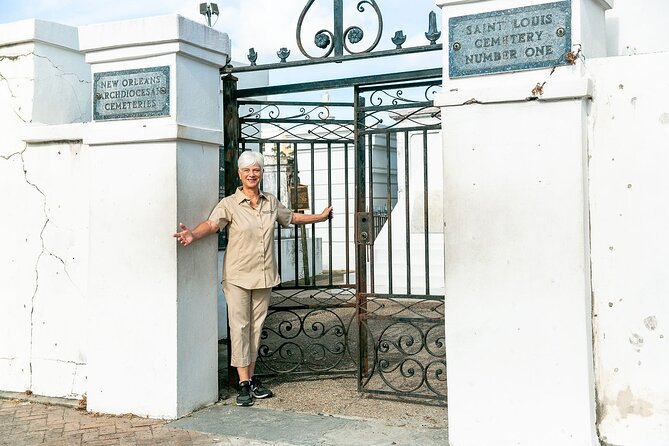
Review · CEMETERY AND VOODOO TOURS
St. Louis Cemetery No. 1 Official Walking Tour
Tomb doors open only with a guide. This official St. Louis Cemetery No. 1 tour is set up for limited entry, yet it still feels personal, because the small group size helps your guide keep everyone together and listening. I especially like how the tour pins you to the key figures, including Voodoo Queen Marie Laveau and the notorious Delphine LaLaurie, instead of doing a vague drive-by.
One possible drawback: it is a walking visit on uneven historic ground, and the tour runs on a schedule, so you cannot wander freely or linger as long as you might want for photos and close-ups. If you are sensitive to strong smells or you struggle to hear soft speakers, do plan to be near the guide and keep your expectations realistic about pacing.
Still, this is one of the most efficient ways to experience New Orleans above-ground tomb culture, with the added comfort of clear rules, photo-friendly stops, and a guide trained to explain what you are seeing.
In This Review
- Key points at a glance
- Why St. Louis Cemetery No. 1 is special, and why you can’t just stroll in
- Basin St. Station check-in: where your tour really begins
- Entering the cemetery: what the guide helps you notice
- The Marie Laveau moment, and why it’s not just a spooky stop
- Delphine LaLaurie and the darker New Orleans side
- Timing, pacing, and how long you’ll really be on your feet
- What to wear, what to bring, and what not to bring
- Group size, meeting rhythm, and why official tours feel smoother
- Price value at $25, and why tipping matters
- Where this tour fits best in your New Orleans plan
- Should you book the St. Louis Cemetery No. 1 Official Walking Tour?
- FAQ
- Where does the St. Louis Cemetery No. 1 Official Walking Tour meet?
- How early should I arrive for the tour?
- How long is the cemetery walking tour?
- Is photography allowed during the tour?
- Can I touch tombs or markers during the tour?
- Can I visit the cemetery without a tour?
- Are strollers and wheelchairs allowed?
Key points at a glance
- Official access: St. Louis Cemetery No. 1 is not open to the public, so this is your practical ticket in.
- Limited groups: Max 20 people per departure, which keeps the tour from feeling crowded.
- Two heavy hitters: Marie Laveau and Delphine LaLaurie are built into the route and commentary.
- Clear on-the-ground rules: You get real guidance on what not to do, including no touching and no leaving items.
- Photo time, with boundaries: Photography is encouraged, but you still stay off tombs and structures.
- Basin St. Station start: You begin at a real visitor hub with exhibits, restrooms, and a map area.
Why St. Louis Cemetery No. 1 is special, and why you can’t just stroll in
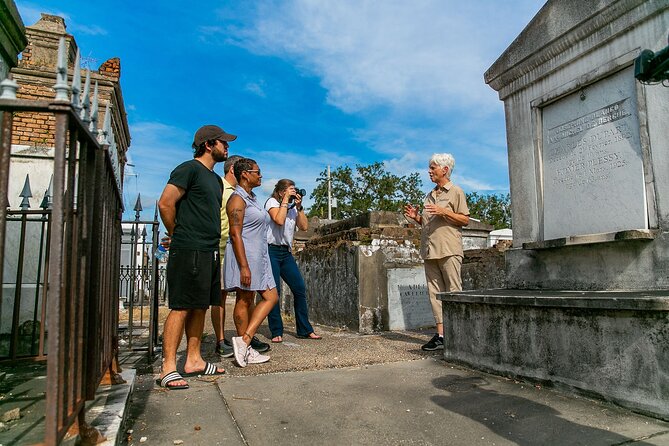
St. Louis Cemetery No. 1 is often called one of New Orleans’ most iconic sites for a reason. It opened in 1789, and it is deeply tied to the city’s Catholic burial traditions, architecture, and the stories people tell about fame, scandal, and survival.
Here is the catch: this cemetery is not open for casual walk-in visits. Access is controlled, and visitors can only enter as part of authorized guided tours. That restriction does not just protect the site, it also protects your experience, because you are not fighting for space at the same gate as random foot traffic. The tour format also means your guide can explain context as you move from one notable area to the next.
You also get something that matters when you are dealing with old cemeteries: rules. You will be guided on what is allowed and what is not, including no touching, no leaning or sitting on tombs or fences, and no rubbing or marking the markers. There is also a clear prohibition on leaving things behind, like candles, beans, coins, shells, rocks, or other items.
That guidance is part of the value. It keeps you focused on the people and the architecture, instead of wondering what the boundaries are and worrying you might accidentally break a rule.
Basin St. Station check-in: where your tour really begins
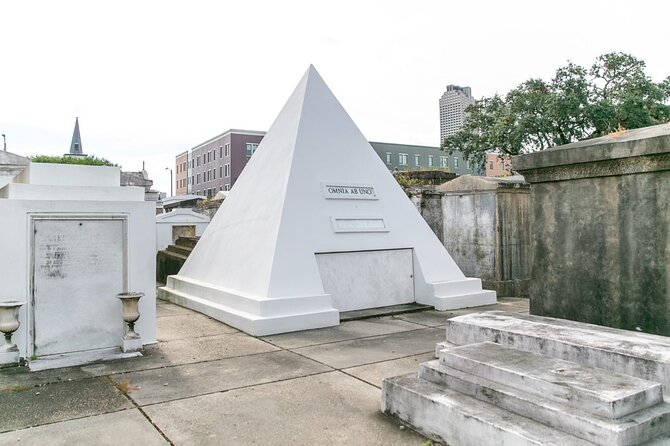
Your tour starts at Basin St. Station, 501 Basin St, and you meet inside the station. This is not a random corner. It is a visitors center with exhibits, an interactive map about Hurricane Katrina floodwaters, a café, pristine restrooms, and a gift shop.
I like this setup because it buys you time to get your bearings before you enter the cemetery area. It also gives you a chance to grab water with a lid (water is encouraged, but eating is not allowed once you are inside the cemetery). If you are arriving on foot from the French Quarter, the station makes a clear landmark.
Plan to arrive early. The tour instructions say 10 to 15 minutes before departure so you can collect tickets and tour stickers and be ready to start on time. The FAQ repeats this in a slightly different way, recommending at least 15 minutes for a smooth check-in. If you are late, you can lose the benefit of a tour that moves steadily.
One practical note: parking near the station and cemetery exists, with a public lot adjacent to Basin St. Station. If you drive, pay attention to where you park. The station visitor lot is reserved for short-term temporary parking, so you do not want to guess and end up in the wrong spot.
Additional Walking Tours on the review pile in New Orleans

Entering the cemetery: what the guide helps you notice
Once your group is together, you walk across the street to the cemetery gates. From there, your official guide leads an in-depth walk that typically runs around 45 minutes inside the grounds, and the full outing can last longer depending on weather and timing.
A big reason this works well is that the guide is not just reading off names. The hosts are locally licensed and specially trained to explain the cemetery for New Orleans Catholic Cemeteries, which matters because these places are full of symbolism and architectural details that a generic guide might skip.
You can also count on a few practical benefits that make the walk easier:
- Photography is allowed and encouraged, so you are not stuck with one quick look and done.
- You are kept in a regulated route, which helps you avoid getting lost in a maze of tomb styles and family plots.
- The group size stays capped at 20, which helps the guide keep control without racing everyone.
The drawback is the walking. Expect uneven surfaces. More than one guide story from real-world visits highlights that some tours can feel brisk, especially when the cemetery needs to accommodate other groups on a schedule. So if you love slow wandering, build that into your expectations by treating the tour as the guided story pass, not as free roam time.
Also, note the strict do-not-do list. No touching tombs or markers. No leaning on fences or structures. No rubbing, marking, or depositing anything in the cemetery. Those are not suggestions. They are part of how the site stays respectful and intact.
The Marie Laveau moment, and why it’s not just a spooky stop
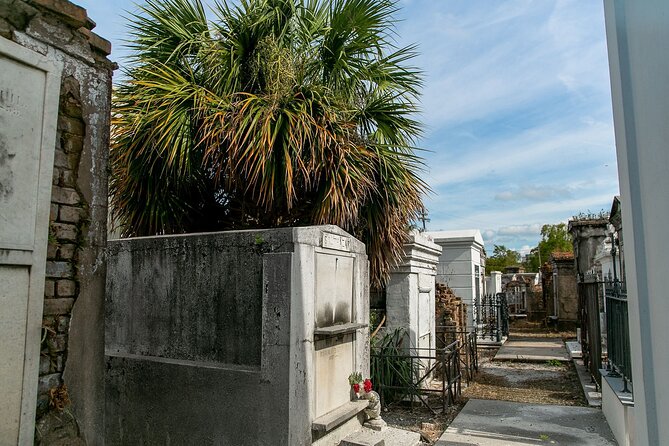
The tour’s headline connections include the final resting place of Marie Laveau, often described as the Voodoo Queen. This stop matters because it pulls you from the general idea of “old tombs” into a specific thread of New Orleans identity, where religion, folklore, and neighborhood memory overlap.
In a guided format, you also tend to hear the stories in a way that makes them easier to place. Rather than treating the Marie Laveau connection as a standalone myth, your guide can connect it to what the cemetery represents in New Orleans, and how notable figures are remembered through burial grounds.
What I like about this kind of stop is that it gives you a reason to slow down mentally even if your feet keep moving. You can look longer at the tomb architecture while your guide talks about who this person was in the city’s cultural imagination.
One practical tip: if you want photos, position yourself early. Since the tour is timed, the best picture chances usually happen while the group is stopped at key points. If you wait until the last second, you may be stuck behind someone taller or you may miss the angle.
Delphine LaLaurie and the darker New Orleans side
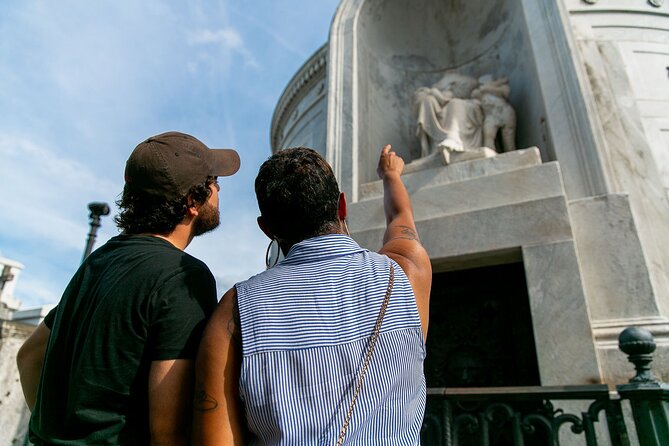
The other major highlight on this tour is Delphine LaLaurie, one of New Orleans’ most notorious residents. This is the part of the story that often turns the volume up, because it links famous names to the harsher realities that people associate with the city’s past.
It is important, though, to treat this section as historical interpretation, not sensational entertainment. In a good tour, the guide uses the cemetery as a lens, not as a stage. That means you do not just hear who she was, you hear how her story became part of New Orleans lore, and why her presence in this burial landscape stands out.
You will likely find that the guide balances the macabre curiosity with explanation of how families, status, and city structures intersect. That helps you leave with more than a single spooky anecdote. You get a clearer map of how New Orleans “remembers,” including through who gets memorialized and how.
As with Marie Laveau, the stop is time-limited. So plan for a quick look, a few photos, and then listen. If you go quiet and focused, the story lands harder and the cemetery stops feel less random.
Timing, pacing, and how long you’ll really be on your feet
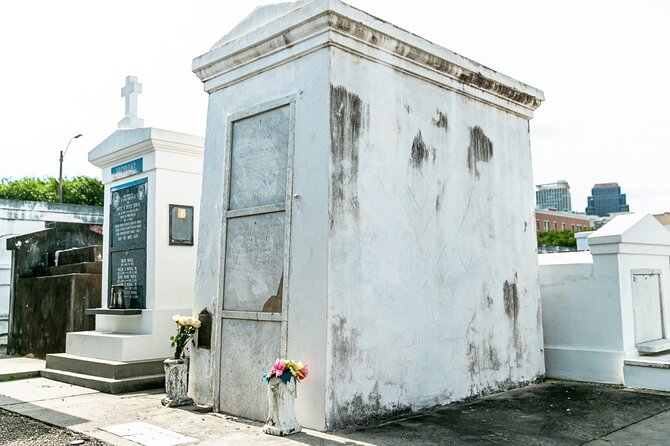
The tour summary lists about 55 minutes total. The cemetery portion is about 45 minutes, with the surrounding time taken up by meeting, walking from the station, and staying on schedule.
Most people will be fine with this length, but it can feel fast if your group likes to linger. Some tours are praised for being engaging and funny, while others note that guides can talk quickly or that hearing can be a challenge if you end up farther away. This is not something you can fully control, but you can help yourself by staying close to the front and choosing an ear position where you are not trying to listen over the guide’s back.
If you travel with kids, this duration is usually a good fit. The tour is structured, with stops that make for quick “look and learn” moments. That said, if your child needs constant movement or if you need frequent breaks to sit down, the uneven cemetery ground might make the overall experience harder.
Mobility matters. The tour is walk-based, and one of the clear considerations is that there are uneven surfaces and no wandering freely option. The good news is that wheelchairs and scooters are allowed, and strollers are allowed too. The pathways are described as easy to maneuver, but that still does not remove the reality of historic ground. If you are using a mobility aid, go into it knowing you will still need patience and careful footing.
What else we logged under Cemetery and Voodoo Tours in New Orleans






What to wear, what to bring, and what not to bring
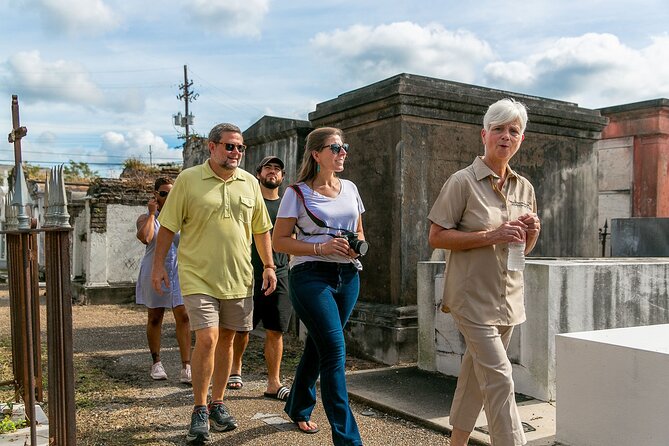
This is where you can prevent most problems before they happen. Comfortable shoes are the top recommendation. The cemetery has many uneven surfaces, and you want grip and stability. If you are visiting in summer, go with light layers that breathe. In cooler months, bring a jacket and hats as needed.
For your supplies:
- Water bottles with lids are encouraged.
- Skip food inside the cemetery. No eating is allowed once you enter the grounds.
For your behavior:
- No touching. No sitting or leaning on tombs, fences, or structures.
- Do not mark or rub markers.
- Do not leave items behind, like candles, coins, or anything decorative.
This matters not just for rule-following. It also changes how you experience the cemetery. When everyone keeps distance and hands off, you get cleaner views. You also avoid the awkwardness of having to back away from something you might not realize is off-limits.
And yes, some tour experiences can be affected by the human details. One negative note from a guide’s personal scent and being hard to hear shows up in real feedback. That is not guaranteed for every departure, but it is a good reminder to arrive prepared to adjust your position, keep a respectful distance when needed, and stay aware if you have strong sensitivities.
Group size, meeting rhythm, and why official tours feel smoother

A max of 20 travelers per tour departure makes a big difference. It is small enough to keep your place in line, and it is large enough that you are not stuck waiting forever for a single person’s questions.
That size also supports a particular type of guide performance. Many departures are praised for guides who are funny, engaging, and fast-moving with clear commentary. Names like Spooky Rob, Alan, Richie, Emi, Denise, Jimmy, and Buddy show up as examples of guides who bring the site to life.
You may also notice that the best tours tend to have a good rhythm. The group stays together. Stops are clear. The guide answers questions without turning the walk into a debate club. If your goal is a focused, story-driven cemetery visit, this is the format that supports it.
If your goal is slow and private, you may feel constrained. Since all guests must stay with the guide while in the cemetery, you will not get that independent wander time after the main route. Some people want a little extra meandering and end up feeling rushed.
My take: think of this as your guided entry plus your photo capture window, not as a self-paced museum.
Price value at $25, and why tipping matters
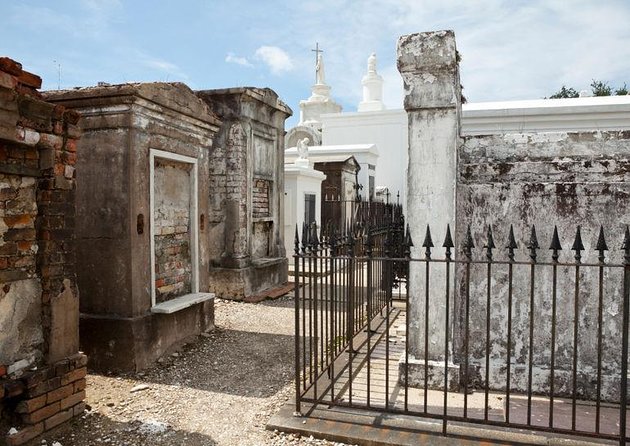
At $25 per person, this tour is in the category of “worth it if you care about context.” You are paying for controlled access, a regulated route, and a guide trained by New Orleans Catholic Cemeteries. You are also not just paying for the cemetery itself. You are paying for the storytelling that helps the site make sense.
This is especially true because the cemetery is not open to the public. Without this type of guided access, you would miss one of the city’s most famous above-ground burial spaces.
One practical thing to factor in: gratuity is not included. If this is your one guided activity in New Orleans that you truly value, you may want to plan a tip in your budget. The guide experience seems to be a major driver of satisfaction, so it is fair to pay attention to that.
So is it a bargain? If you want the key names, the rules, and a guided explanation in a short, manageable time, $25 can feel like good value. If you hate walking or you need lots of free roaming time, you may decide you want a different type of cemetery option.
Where this tour fits best in your New Orleans plan
This tour works best when you want:
- A focused cemetery visit that does not require guesswork.
- A guided narrative that hits famous names like Marie Laveau and Delphine LaLaurie.
- A short outdoor outing that fits into a day already packed with French Quarter sights.
It might not be the best choice if:
- You want to roam independently without staying with a group.
- You need lots of sitting time, or you are not steady on uneven surfaces.
- You struggle to hear in group settings and cannot move closer to the guide.
One helpful planning idea: go in with a small shot list. Decide on a couple of photos you truly care about, so you do not lose track while listening to the guide.
Should you book the St. Louis Cemetery No. 1 Official Walking Tour?
Yes, if you want the practical way into New Orleans’ most famous cemetery experience. The guided-only access is not just a limitation, it is a feature that keeps the visit controlled, organized, and focused. I also like the structure, because you get the big names and clear guidance on what you can and cannot do.
If you are booking with mobility issues, know that strollers and wheelchairs are allowed, but the ground is still historic and uneven. If you are booking with a strong preference for slow wandering, remember the tour is regulated and you will be kept with your guide.
My final advice: book this tour if you want a story-driven, time-efficient visit that turns cemetery architecture into something you can understand quickly. If you want freedom first, you may be happier saving your energy for a different kind of New Orleans outing.
FAQ
Where does the St. Louis Cemetery No. 1 Official Walking Tour meet?
The tour meets at Basin St. Station, 501 Basin St, New Orleans, LA 70112, and it gathers inside the station.
How early should I arrive for the tour?
Arrive at least 10 to 15 minutes early to collect tickets and tour stickers and be ready for an on-time departure. The FAQ also recommends at least 15 minutes.
How long is the cemetery walking tour?
The walking tour normally lasts about 45 minutes, and the overall experience may run longer depending on weather and other events.
Is photography allowed during the tour?
Yes. Photography is allowed and encouraged during the visit.
Can I touch tombs or markers during the tour?
No. You cannot touch, sit on, or lean on tombs, fences, or other structures. You also cannot mark or rub on tombs.
Can I visit the cemetery without a tour?
No. The cemetery is not open to the public and may only be accessed by authorized tours. Private family visitation can be arranged through the Archdiocese of New Orleans for family members of people interred there.
Are strollers and wheelchairs allowed?
Yes. Strollers are allowed, and wheelchairs and scooters are allowed as well. The pathways in the cemetery are described as easy to maneuver.
Still working through Walking Tours in New Orleans
- New Orleans Premier Ghost, Voodoo and Vampire Walking Tour★ 4.5 · 12,856 reviews
- New Orleans Food Walking Tour of the French Quarter with Small-Group Option★ 5.0 · 6,118 reviews
- New Orleans French Quarter, Voodoo and Culture Walking Tour★ 4.5 · 2,961 reviews
- New Orleans Garden District History Walking Tour★ 5.0 · 2,879 reviews
- French Quarter Historical Sights and Stories Walking Tour★ 5.0 · 2,724 reviews
Tours: the rest of the New Orleans file
- New Orleans Premier Ghost, Voodoo and Vampire Walking Tour★ 4.5 · 12,856 reviews
- Adults-Only New Orleans Ghost, Crime, Voodoo, and Vampire Tour★ 5.0 · 6,545 reviews
- New Orleans Food Walking Tour of the French Quarter with Small-Group Option★ 5.0 · 6,118 reviews
- New Orleans Swamp and Bayou Boat Tour with Transportation★ 5.0 · 5,399 reviews
- New Orleans City Sightseeing Hop-On Hop-Off Bus Tour★ 4.5 · 4,943 reviews
Tour Reviews: more from our New Orleans desk
- New Orleans Premier Ghost, Voodoo and Vampire Walking Tour★ 4.5 · 12,856 reviews
- New Orleans Steamboat Natchez Jazz Cruise with Dinner Option★ 4.0 · 7,533 reviews
- Adults-Only New Orleans Ghost, Crime, Voodoo, and Vampire Tour★ 5.0 · 6,545 reviews
- New Orleans Food Walking Tour of the French Quarter with Small-Group Option★ 5.0 · 6,118 reviews
- New Orleans Swamp and Bayou Boat Tour with Transportation★ 5.0 · 5,399 reviews
Newest New Orleans reviews added to this site
- Adults-Only Uncensored Ghost, Vampire, and Voodoo Walking Tour
★ 4.5 · 311 reviews - Seven Three Distilling Tour and Tasting
★ 5.0 · 319 reviews - Private Transfer in New Orleans MSY/Home/Hotel/Work
★ 5.0 · 325 reviews - New Orleans: 2-Hour 15-Minute City and Cemetery Tour by Bus
★ 4.7 · 326 reviews - French Quarter True Crime Walking Tour
★ 5.0 · 327 reviews - New Orleans Combo Tour: Voodoo, Vampire, and Ghost Tour
★ 4.5 · 327 reviews - New Orleans Spirits & Spells: Witchcraft, Voodoo, and Ghost Tour
★ 5.0 · 329 reviews - Private Arrival Transfer from Louis Armstrong New Orleans Airport
★ 4.5 · 334 reviews - Hands-on Cajun Roux Cooking Class in New Orleans
★ 5.0 · 356 reviews - Honey Island Swamp Boat Tour with Transportation from New Orleans
★ 5.0 · 361 reviews
Cemetery and Voodoo Tours, side by side.
 ★ 4.5New Orleans Premier Ghost, Voodoo and Vampire Walking TourFrom $2712,856 reviews
 ★ 5.0Adults-Only New Orleans Ghost, Crime, Voodoo, and Vampire TourFrom $376,545 reviews
 ★ 5.0New Orleans Adults-Only Ghost, Voodoo and Vampire TourFrom $293,291 reviews
 ★ 4.5New Orleans French Quarter, Voodoo and Culture Walking TourFrom $272,961 reviews
 ★ 4.5New Orleans Haunted Ghost, Voodoo & Vampire Walking TourFrom $322,731 reviews
 ★ 4.5Cemetery and Ghost BYOB Bus Tour in New OrleansFrom $302,685 reviews
 ★ 4.5New Orleans City Tour: French Quarter, Garden District & CemeteryFrom $402,209 reviews
 ★ 4.5New Orleans Dead of Night Ghosts and Cemetery Bus TourFrom $552,068 reviews
This one is also listed in