
Review · BOSTON FREEDOM TRAIL AND HISTORY
Walk the Historic Freedom Trail with Costumed Guide
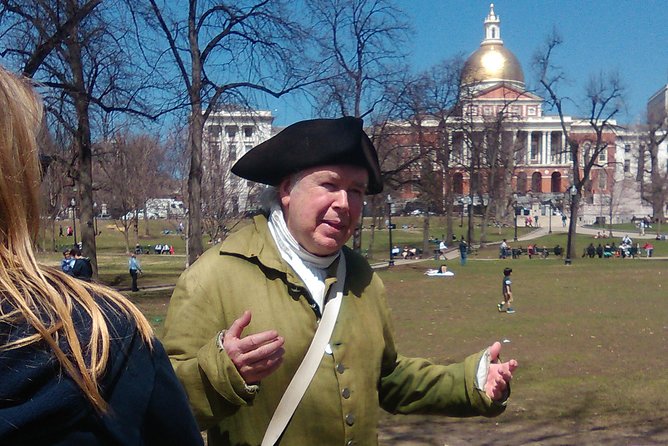
Period dress makes Boston history feel personal. This costumed Freedom Trail walk is a timed stroll through the story of the city, with a guide speaking as you move. You get a period-costumed narrator and a manageable 90-minute pace that still hits the big names.
I especially like that the walk is built for time-strapped days, with morning or afternoon departures so you can still explore on your own afterward. I also like that the tour includes admission tickets for the major sites on the route, so you are not hunting for separate entrances.
One thing to plan for, because it shows up in real city life, is that street noise and traffic can make it harder to catch every word in busier stretches. If you care about hearing every detail, position yourself closer to the guide.
In This Review
- Key highlights before you go
- A costumed Freedom Trail walk that stays manageable
- Price and time value: what $30 buys on this route
- The stop-by-stop route, from Park Street to Faneuil Hall
- Park Street Church: Puritan roots and shifting beliefs
- Boston Common: Boston’s early story, told outside
- Massachusetts State House: government and consent
- Granary Burying Ground: patriots in one place
- King’s Chapel: an old Church of England footprint
- Boston Latin School: America’s early public-school idea
- Old South Meeting House: protest meetings before the Tea Party
- Old State House: British control, then American control
- Boston Massacre site: the event and its image
- Faneuil Hall Marketplace: the walk’s ending point
- Why the guide’s costumed style actually helps
- Walking logistics: pace, distance, and where you will feel it
- Group size, hearing, and how to get the best experience
- Who should book this Freedom Trail walk
- Should you book? My decision guide
- FAQ
- How long is the Freedom Trail walk?
- What does the tour cost?
- Where does the tour start and end?
- Are admission tickets included?
- Is the tour offered in English?
- What is the cancellation and weather policy?
Key highlights before you go
- Costumed guide storytelling: You hear the era as you walk, not just after you sit down.
- Short route, big coverage: You cover 11 of 16 classic Freedom Trail stops instead of the full longer walk.
- Admission tickets included: Multiple stops come with entry included, built into the tour price.
- Easy downtown strolling: Expect a gentle pace, with lots of standing and some walking.
- Smaller group feel: Limited group size, with a miked guide to help you stay on track.
- Weather-aware planning: Dress for the outdoors and bring comfortable shoes.
A costumed Freedom Trail walk that stays manageable
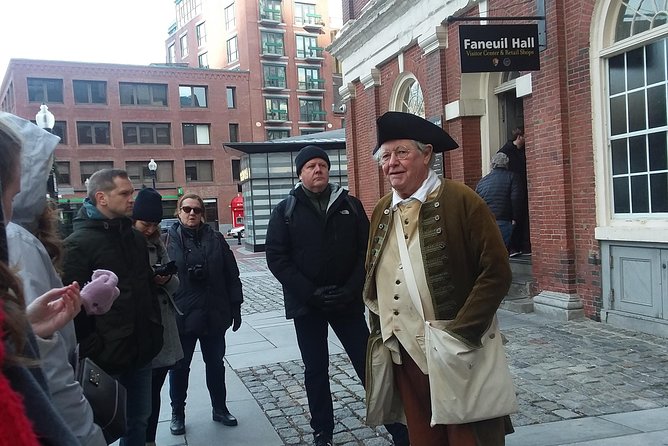
If you only have a day (or a few hours) in Boston, the Freedom Trail can feel like a lot. This version keeps it tight: about 1 hour 30 minutes, with a route designed to give you a clean overview without turning your schedule into an endurance test.
The biggest value is not just the list of famous places. It is the way the guide frames each site with period-style commentary, so the stops feel connected. You are walking a straight line through major themes like government, dissent, protest, and revolution, then ending at the marketplace where the revolution story is always visible in the public square.
The practical side matters too. You start near 139 Tremont St, and the tour ends at Faneuil Hall Marketplace, which is convenient if you want to keep wandering afterward. And because it runs on mobile ticket format and includes English commentary, it is easy to slot into a normal sightseeing day.
Price and time value: what $30 buys on this route
At $30 per person for about 90 minutes, the deal is strongest if you care about two things at once: guided interpretation and included site entry. The tour includes admission tickets for the stops on the route, so you pay once and then move from one historic setting to the next.
You are also getting a format that suits people who do not want a long walking day. Many tours on the Freedom Trail go on for hours. This one intentionally stays shorter, while still covering the most “you cannot miss this” parts of the downtown segment.
One more scheduling detail I like: the tour is often booked around 17 days in advance, which suggests it can fill up during peak travel times. If you are traveling in busy seasons, I would not wait until the last minute.
The rest of our Guided notes for Boston

The stop-by-stop route, from Park Street to Faneuil Hall
Here is what you will actually experience as you walk. The pacing is designed around short viewing windows, so you get context without spending your whole trip inside a museum.
Park Street Church: Puritan roots and shifting beliefs
You start at Park Street Church, where the tour frames the site as a marker of early religious change in Boston, moving from Puritan foundations toward later Protestant developments. It is a strong opener because it sets the tone: Boston starts as a place of strict belief, then grows into a place where politics and protest get loud.
Boston Common: Boston’s early story, told outside
Next comes Boston Common, Boston’s early civic center. The guide uses this stop to anchor what Boston looked like in the early days, so the rest of the walk lands with more clarity. If you want a simple “where are we in the timeline” moment, this is it.
Massachusetts State House: government and consent
At the Massachusetts State House, built in 1795, the commentary focuses on legitimacy and consent, with the idea that government needs people’s agreement to be valid. This stop helps shift the walk from local religious roots into political principles you will keep seeing in later revolution sites.
Additional Walking Tours on the review pile in Boston
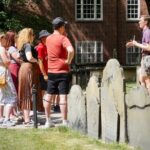



Granary Burying Ground: patriots in one place
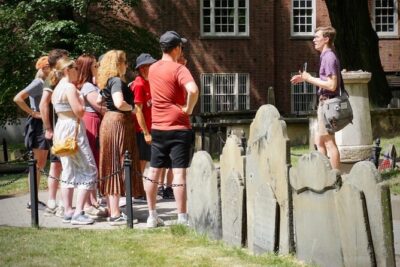
Then you reach Granary Burying Ground, which the tour describes as over 350 years old. It also emphasizes how many U.S. Constitution signers are connected to this cemetery, more than anywhere else in America.
This is one of those stops where time feels different. You are standing in an actual historic resting place, so the tone tends to slow down. If you are prone to feeling “graveyard fatigue,” plan for it, and take your time with the guide’s key points rather than trying to read everything on your own.
King’s Chapel: an old Church of England footprint
At King’s Chapel, you hear how the building connects to the Church of England, originally constructed around 1688. The value here is seeing how different cultural and religious influences lived side by side in early Boston, before the city became the symbol of American resistance we remember today.
Boston Latin School: America’s early public-school idea
The walk then includes a view tied to Boston Latin School, described as the oldest public school in the United States, founded in 1635. It is a quick stop, but it adds a useful angle: revolution-era Boston was not only about conflict, it was also about education and institutions that shaped citizens.
Old South Meeting House: protest meetings before the Tea Party
At Old South Meeting House, you get a direct link to political organizing. The tour calls out meetings held there, including one held just before the Boston Tea Party in 1773. This is the part of the route where you can practically feel how ideas turned into actions.
Old State House: British control, then American control
At Old State House, built in 1713, the story turns to shifting authority. The tour explains that the building first came under British control, then moved into American control in 1775. That sequence matters, because it helps you understand the revolution as a process, not a single day in history.
Boston Massacre site: the event and its image
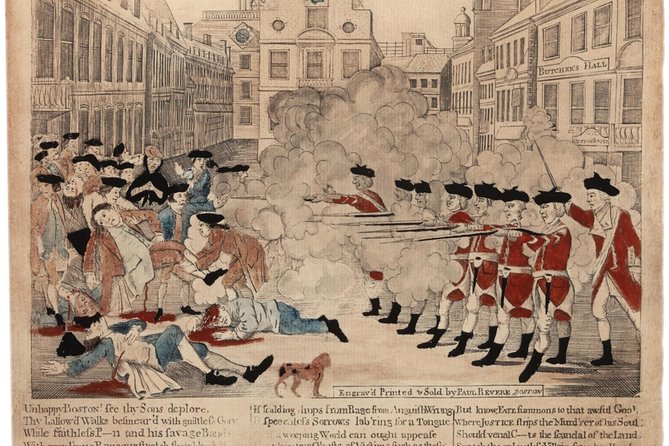
Then you reach the Boston Massacre Site, described as the spot where five Americans were killed by British soldiers in 1770. The tour also notes that Paul Revere created a famous engraving of the site, tying the event to how people learned about it and how it spread.
This is a strong “why the public cared” stop. Even if you have seen the name before, hearing it framed in a live walk makes it feel less like a textbook phrase.
Faneuil Hall Marketplace: the walk’s ending point
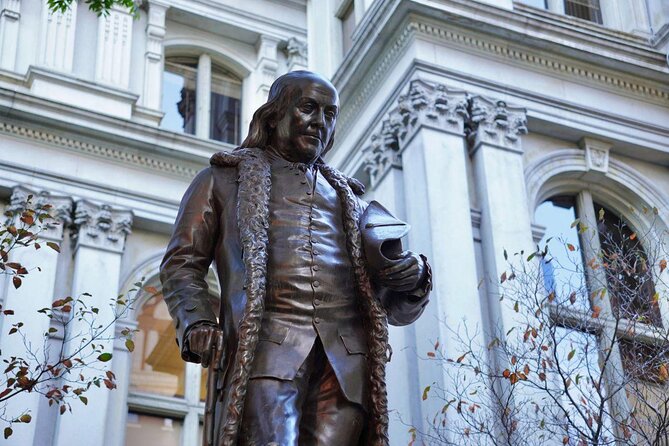
The tour concludes at Faneuil Hall Marketplace. The guide points out key details here, including a famous statue of Samuel Adams, described as a founder of the revolution. It is a fitting end, because this is where Boston’s public life and political symbolism overlap in plain sight.
Why the guide’s costumed style actually helps
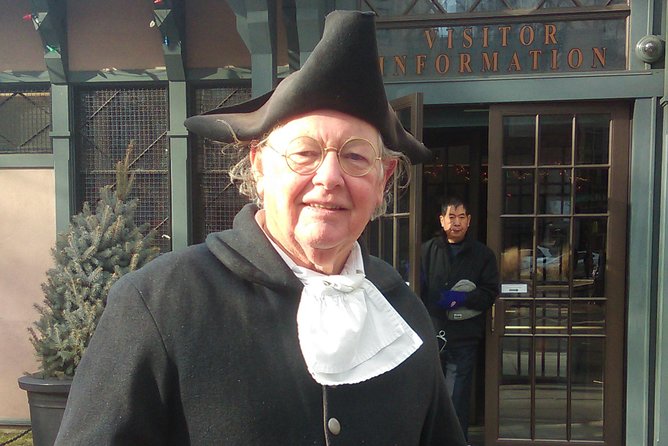
Costumes can be gimmicky. On this tour, the period dress works because it signals tone and focus. You are not just hearing facts in a monotone. You are getting staged delivery that keeps the timeline moving from stop to stop.
In addition, the guiding style aims to be entertaining but grounded. You also get humor that helps you remember the main ideas without turning the session into a lecture. The effect is that even short stops feel worth your time.
One more practical point: the guide uses a microphone system. When street conditions get loud, that makes a difference. If you have any hearing challenges, get closer to where the guide is speaking.
Walking logistics: pace, distance, and where you will feel it
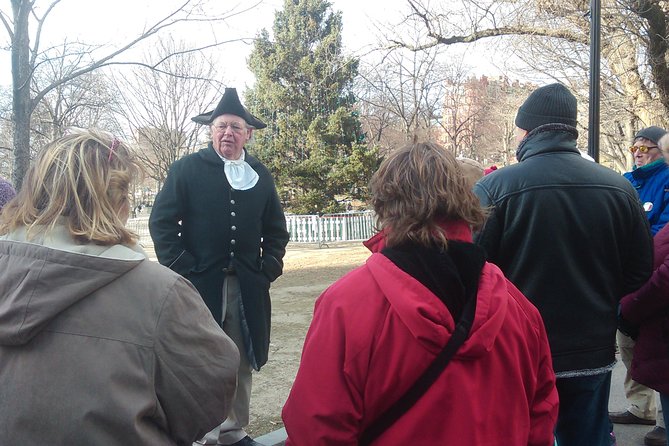
This is described as a gentle 90-minute stroll with lots of walking and standing. It also comes with the advantage of being downtown and not overly hilly. One note I trust: the route is described as less than 1 mile, and you are covering 11 of the 16 classic sites in that shorter span.
That means the tour is not for you if you want lots of seating time. It is more for you if you want steady movement, quick context at each stop, and a guided “big picture” of the Freedom Trail.
Also plan for weather. The tour specifically asks you to dress for the weather. If it is cold or rainy, bring a jacket and shoes that handle wet pavement. Comfortable shoes are not optional here.
Group size, hearing, and how to get the best experience
Group size is part of the success here. The tour lists a maximum of 45 travelers, and the experience also uses microphones so you can still follow along.
Still, city walking has unavoidable friction. You may notice that some stretches get loud due to traffic and construction. That is not a failure of the guide. Boston is just Boston.
So here is your move: be early, and when you arrive, take a spot closer to the speaker. If you need help hearing, staying nearer the front is encouraged. And if you have questions, ask them quickly, because the tour keeps a moving schedule.
Who should book this Freedom Trail walk
This tour is a great match if you want:
- A history-focused introduction to downtown Boston without overcommitting your day
- A shorter Freedom Trail option that still covers key sites
- A guide delivery style that mixes costumed period storytelling with modern clarity
- Included admissions at multiple stops
It is also a solid fit for people traveling as a couple or family unit who want structure but not a full-day marathon.
If you are the type who likes to wander on your own after a tour, this route is smart because it ends at a high-energy place where you can keep going. And because it starts near public transportation, you can fit it into a typical city route without extra headaches.
Should you book? My decision guide
Book it if you want a practical, time-smart way to connect the Freedom Trail dots. At $30 for about 90 minutes, with admission tickets included at the stops on the route, this is a strong value for people who want guided history without spending hours and hours walking.
Skip it or consider a different option if you are very sensitive to noise and standing in busy public areas. The tour is miked and capped, but street life still happens, and you will be outside for the full route.
If you are on the fence, think about your day plan. If you need the Freedom Trail to be a chapter, not the whole book, this is the right size.
FAQ
How long is the Freedom Trail walk?
It runs for about 1 hour 30 minutes (approximately). The pace includes walking and standing while you stop at multiple historic sites.
What does the tour cost?
The price is $30.00 per person.
Where does the tour start and end?
The meeting point is 139 Tremont St, Boston, MA 02111. The tour ends at Faneuil Hall Marketplace, Boston, MA 02109.
Are admission tickets included?
Yes. Admission tickets are included for the listed stops on the route.
Is the tour offered in English?
Yes. The tour is offered in English.
What is the cancellation and weather policy?
You can cancel for a full refund if you cancel up to 24 hours in advance. The experience requires good weather, and if it is canceled due to poor weather, you are offered a different date or a full refund.
If you want, tell me what month you’re going and whether you prefer morning or afternoon, and I’ll suggest the smoothest way to build the rest of your Boston day around this walk.
Still working through Walking Tours in Boston
- Boston: Freedom Trail History Small Group Walking Tour★ 5.0 · 6,450 reviews
- Harvard University Campus Guided Walking Tour★ 4.5 · 3,632 reviews
- Boston Freedom Trail Walking Tour with Costumed Guide★ 4.5 · 2,531 reviews
- The Full Revolutionary Story Epic Small Group Boston Walking Tour★ 5.0 · 2,356 reviews
- Boston’s Freedom Trail: A Revolutionary Walking Tour★ 4.9 · 1,748 reviews
Guided reviewed right across Boston
- Harvard University Campus Guided Walking Tour★ 4.5 · 3,632 reviews
- Boston Fenway Park: Guided Ballpark Tour with Options★ 4.8 · 3,606 reviews
- Boston Freedom Trail Walking Tour with Costumed Guide★ 4.5 · 2,531 reviews
Tour Reviews: more from our Boston desk
- Boston Duck Boat Sightseeing City Tour with Cruise Along Charles River★ 4.5 · 9,378 reviews
- Boston: Freedom Trail History Small Group Walking Tour★ 5.0 · 6,450 reviews
- Boston Hop-On Hop-Off Trolley Tour with 13 Stops★ 4.5 · 5,576 reviews
- Boston Duck Tour: The Original and World-Famous★ 4.6 · 3,935 reviews
- Harvard University Campus Guided Walking Tour★ 4.5 · 3,632 reviews
Newest Boston reviews added to this site
- Cocktails & Cannoli: Boston’s North End Dessert Tour
★ 5.0 · 309 reviews - View Boston Observation Deck Admission Tickets
★ 4.5 · 314 reviews - Walk the Historic Freedom Trail with Costumed Guide
★ 4.5 · 329 reviews - 90-Min Narrated Trolley Tour of Lexington and Concord, MA
★ 4.5 · 358 reviews - Boston Pass: 40+ Things To Do – Includes Franklin Park Zoo
★ 4.0 · 359 reviews - Boston: City Cruises Sunset Skyline Cruise with Commentary
★ 4.6 · 381 reviews - Boston to Plymouth Day-Trip including Quincy, Plimoth Patuxet and Mayflower II
★ 5.0 · 407 reviews - Martha’s Vineyard Day Trip with Optional Island Tour from Boston
★ 4.5 · 407 reviews - City Cruises Boston 90-Minute Harbor Sunset Sightseeing Cruise
★ 4.5 · 411 reviews - Sunset Sailing Cruise on a Tall Ship in Boston Harbor
★ 4.5 · 414 reviews
Boston Freedom Trail and History, side by side.
 ★ 5.0Boston: Freedom Trail History Small Group Walking TourFrom $356,450 reviews
 ★ 4.8Boston Fenway Park: Guided Ballpark Tour with OptionsFrom $203,606 reviews
 ★ 4.5Tour of Historic Fenway Park, America’s Most Beloved BallparkFrom $453,013 reviews
 ★ 4.5Boston Freedom Trail Walking Tour with Costumed GuideFrom $262,531 reviews
 ★ 4.5Boston Tea Party Ships and Museum AdmissionFrom $352,512 reviews
 ★ 4.8Boston: Boston Tea Party Ships and Museum Interactive TourFrom $351,926 reviews
 ★ 5.0Boston Food & History: Pizza, North End & Freedom TrailFrom $901,772 reviews
 ★ 4.9Boston’s Freedom Trail: A Revolutionary Walking TourFrom $311,748 reviews
This one is also listed in