
Review · BOSTON FREEDOM TRAIL AND HISTORY
Boston: Freedom Trail History Small Group Walking Tour
Boston’s Revolution story is easier on foot. This small-group walk threads through the Freedom Trail and lets you see all 16 official landmarks with a guide who turns dates into street-level scenes. I like the clear small-group feel, and I especially like the ending at Copp’s Hill Terrace with views toward USS Constitution and Bunker Hill. One consideration: you do walk roughly 2 miles on a steady route, so plan for real pavement time.
You start at Boston Common, right by the Boston Foundation Monument, then work your way from Puritan roots to the American Revolution. Along the way you pass major sites like Granary Burying Ground, the Old South Meeting House, the Boston Massacre Site, Faneuil Hall, and Paul Revere House. The tour ends in the North End, steps from Old North Church, where it’s easy to segue straight into a meal.
In This Review
- Key takeaways before you go
- Starting at Boston Common, the Freedom Trail handshake moment
- The 2-mile pacing, small-group size, and practical walking tips
- Granary Burying Ground and the revolution in stone
- Old South Meeting House, the Boston Massacre site, and the argument that turned to politics
- Old State House to Faneuil Hall, where public speech meets public emotion
- Quincy Market break, then Paul Revere House with the details people miss
- Hanover Street to Old North Church, the city’s message in walking form
- Copp’s Hill Burying Ground and the Copp’s Hill Terrace finale over Charlestown
- Small-group history, with room for questions (and less cookie-cutter pacing)
- What $35 buys, and why this beats self-guided guesswork
- Who should book this Freedom Trail walk, and who should skip it
- Should you book this Freedom Trail walking tour?
- FAQ
- Where is the meeting point?
- How long is the tour?
- What is the price per person?
- How far do you walk?
- How many Freedom Trail landmarks do you see?
- Where does the tour finish?
- Is this a small-group tour?
- Is museum admission included?
- Is video recording allowed?
- Is the tour suitable for children or mobility needs?
Key takeaways before you go
- Small-group format (15 max) means you can actually hear the guide and move at a human pace
- 16 Freedom Trail stops covered from Boston Common to Copp’s Hill Terrace
- Granary Burying Ground + Old State House connect patriot stories to the politics behind them
- A built-in break around Quincy Market gives you a short reset mid-walk
- Old North Church and Copp’s Hill land you in one of Boston’s most atmospheric neighborhoods
Starting at Boston Common, the Freedom Trail handshake moment

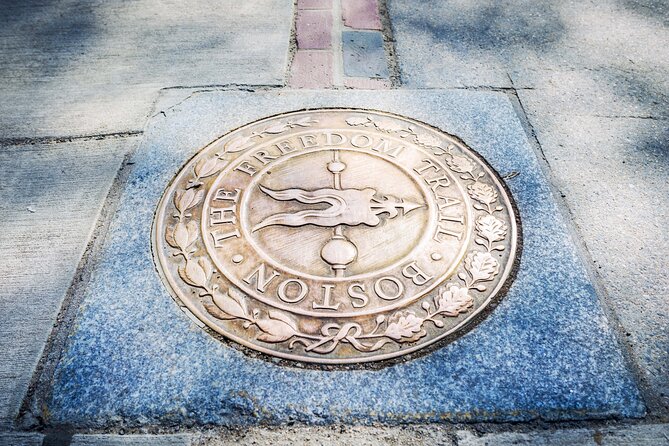
The Freedom Trail begins at Boston Common, at the Boston Foundation Monument on the northern boundary of the park. This granite memorial has a bronze relief showing two men shaking hands, referencing the Puritans’ arrival in 1630. It’s a smart first stop because it frames the whole walk as a story about decisions, not just monuments.
The tour also makes the first move easy. You meet inside Boston Common at a clear, landmark-sized point, opposite 50 Beacon Street. From there, you’re not hunting for tiny markers. You’re walking with the guide and the story from the first minutes.
The 2-mile pacing, small-group size, and practical walking tips
This is listed as a 150-minute tour, and it’s designed not to run past 3 hours. You’ll cover about 2.0 miles (3.2 km) total, which sounds manageable until you remember it’s Boston, you’re stopping often, and you’re hearing details at each location.
The small-group limit is 15 guests. That matters. Big city history tours can feel like a human conveyor belt. Here, the group stays tight enough that questions do not get lost, and the guide can keep everyone moving together without sprinting.
Practical notes that actually help:
- Wear comfortable shoes. You’re on downtown sidewalks for the better part of the tour.
- Bring weather-appropriate clothing. Even short pauses feel longer in wind.
- Keep your hands free and your bag light. Luggage or large bags are not allowed, and video recording is not allowed.
If you’re the type who likes to keep track, consider making a quick checklist on your phone notes app. There are 16 landmarks, and once you’re hearing stories at every corner, it’s easy to lose track of which stop is which.
Additional Walking Tours on the review pile in Boston
Granary Burying Ground and the revolution in stone
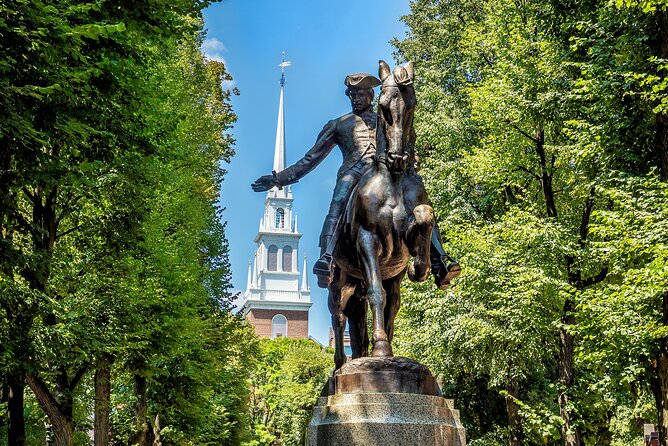
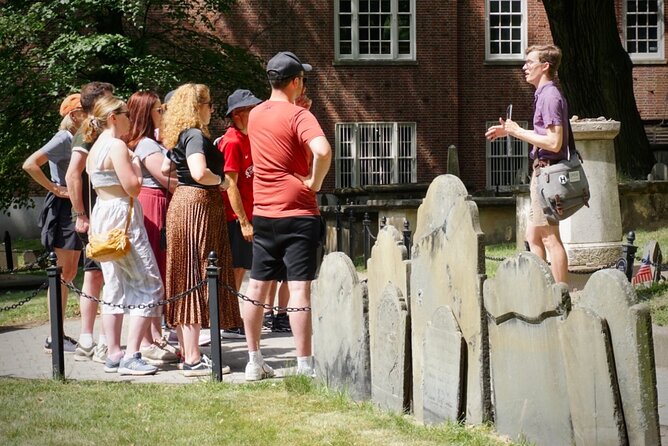
Granary Burying Ground is where the walk starts to feel personal. Instead of only thinking about speeches and battles, you’re looking at the people left behind. The site pulls you from the idea of revolution into the reality of real families and real public lives.
This is also a stop where you can learn how Boston’s community memory works. You’re not just viewing graves. You’re seeing how a city chooses what to remember, and how those choices shape what visitors think “the Revolution” was.
One nice bonus from how guides teach this portion: you often get extra context and not just a date list. In recent tours, guides such as Mark, Amir, and Alejandro have been praised for adding story bits that stick, even in cold weather. That tends to matter most at stops like Granary, where the scene can feel quiet unless someone gives it a narrative thread.
Old South Meeting House, the Boston Massacre site, and the argument that turned to politics
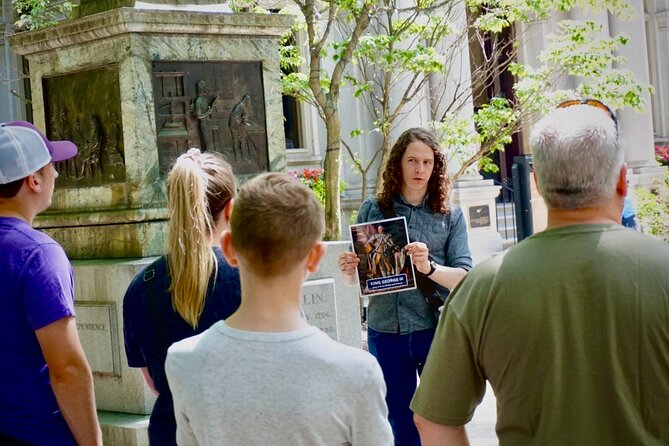
Old South Meeting House is one of the places that makes the Revolution feel less like a distant war and more like a growing conflict. You stand in a space tied to protest and public persuasion. It’s easier to understand why colonial leaders used meeting rooms and crowds to push policy when you can picture the physical setting.
Then you move toward the Boston Massacre Site, and that shift is important. This is where the tour helps you notice cause and effect. What starts as tension around loyalty, taxation, and crown authority develops into something more dangerous.
The stop at Old State House adds extra weight because it’s tied to the symbolic power of government. One of the most helpful things you might hear from your guide is context around terminology. For example, some guides emphasize that the “massacre” label is complicated, and they discuss how self-defense and confusion can get turned into a headline. That kind of careful framing gives you a more honest picture of how stories about events spread.
Old State House to Faneuil Hall, where public speech meets public emotion
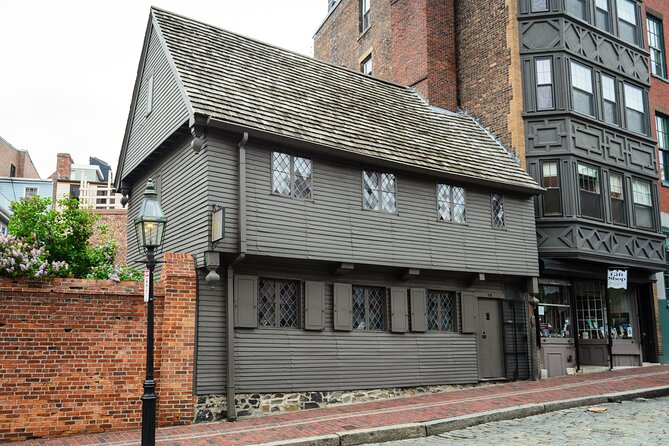
Faneuil Hall is famous for a reason. Even if you’ve seen photos, it hits differently when you’re standing there as part of a sequence of tension. The guide’s job here is to connect the dots between civic life and political pressure.
You’ll get a quick stop at Faneuil Hall before the tour shifts into a short break. This timing is practical. Your legs and your attention both need a reset. It’s also a reminder that this Revolution story is not only dramatic. It’s also daily life, waiting, debating, walking, and deciding.
Quincy Market break, then Paul Revere House with the details people miss
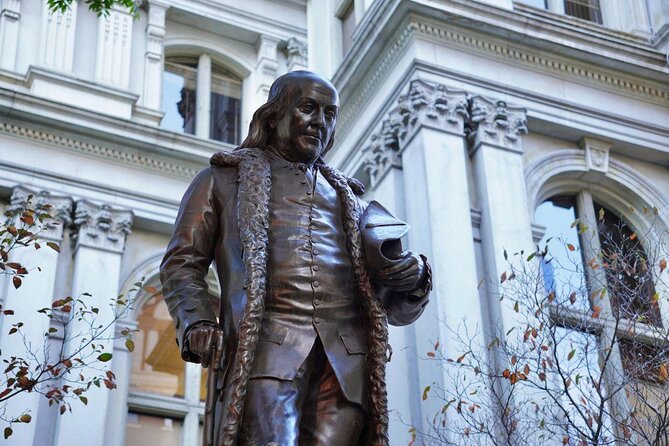
Right after Faneuil Hall, you hit Quincy Market for a break. It’s short, about 10 minutes, but it’s enough to grab a drink and use facilities if you need it. That small breathing space matters, because the rest of the walk toward the North End is packed with major scenes.
Paul Revere House is the next anchor point. This is where the tour does well for first-time visitors. The “midnight ride” idea is everywhere. What you want from a good guide is the human version: who Revere was, what he was trying to do, and how communication and rumor traveled through Boston.
If you hear corrections to the popular story, like the idea that Revere did not complete the full ride as the myth says, that’s exactly the kind of detail worth paying attention to. These nuances change how you understand the time period, because they highlight uncertainty and limitation, not just heroism.
After that, the walk continues through the North End streets where the atmosphere helps you picture how quickly the city’s mood could change.
Elsewhere under Historical Tours across Boston





Hanover Street to Old North Church, the city’s message in walking form
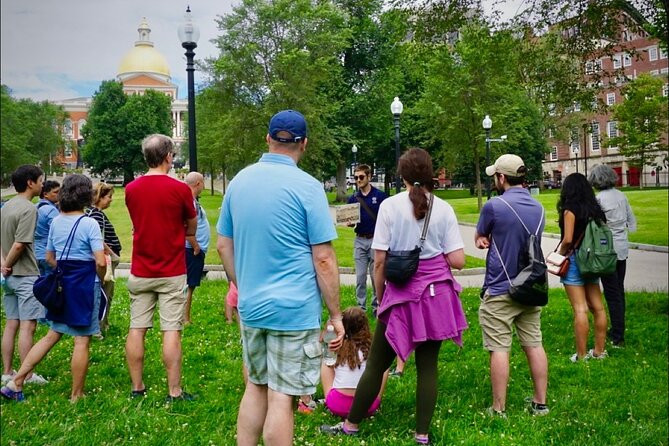
Hanover Street is one of those stretches where you can feel how Boston’s old neighborhoods still function as neighborhoods. The tour uses this kind of street-level pacing well. Instead of moving too fast between landmarks, you get a sense of the geography that connects the people and events.
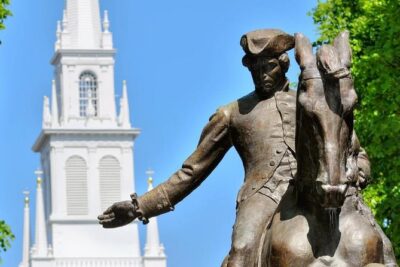
You also see the Paul Revere Statue before reaching Old North Church. The statue is a quick moment, but it helps you visually connect the earlier Revere House stop to the later church-related story. You’re building a mental route, and your guide is guiding your attention to what each stop adds.
Old North Church is a key moment for this tour. You get a guided look while you’re still fresh from the Revere portion. That means the story lands while it’s still connected to what you just learned.
If your guide is strong on myths and context, this is often where you feel it most. The best teaching approach here is balanced: describe what happened, explain why it mattered, and point out how later retellings can clean up the messy parts.
Copp’s Hill Burying Ground and the Copp’s Hill Terrace finale over Charlestown

The tour ends with a guided walk through Copps Hill Burying Ground and then a guided finale at Copps Hill Terrace. This is a great place to close because it’s not just about one building. It’s about sightlines.
From Copps Hill Terrace, you get scenic views toward USS Constitution and the Bunker Hill Monument over in Charlestown. You also get a sense of why the Freedom Trail’s story reaches beyond the North End and Boston Common. It’s a reminder that “Boston” in the Revolution era included nearby strategic ground.
The tour is designed so you see all 16 official landmarks during the walk. Ending here helps make the whole sequence feel complete. You’ve checked the boxes, but you’ve also gained an intuitive sense of where the city points, where the history sits, and where the next chapter stretches out.
And yes, ending in the North End is practical. Old North Church is nearby, and Italian restaurants are close enough that you don’t have to plan a separate night activity.
Small-group history, with room for questions (and less cookie-cutter pacing)
The most praised part across guide examples is storytelling that stays organized. People repeatedly highlight guides who are energetic, clear, and able to answer questions. You may meet guides like Toby, Eric, Nick, Cyrus, Zoe, or Maura, and the thread in their comments is similar: the tour keeps moving, but it does not feel rushed.
It also helps that guides are described as fair in how they present the events. One guide example specifically calls out balancing facts and letting listeners draw conclusions instead of pushing a single viewpoint. Even if you already know some American Revolution basics, that approach can refresh your understanding.
One more subtle advantage: because groups are smaller, you’re less likely to lose the guide at a crowded corner. You still share sidewalks with Boston traffic and pedestrians, but your group stays together instead of getting swallowed by a larger crowd.
What $35 buys, and why this beats self-guided guesswork
At $35 per person for about 150 minutes, you’re paying for three things: access to the guide, a structured route, and the confidence that you are seeing the right landmarks in the right order.
If you try to self-guide, you can absolutely do it. The Freedom Trail is marked. But the hard part is that most of the value of this particular tour is in the narration. You’re not just passing places. You’re learning how the pieces connect over a tough stretch of years that leads to revolution.
Also, the tour includes the Freedom Trail covering all 16 official landmarks. That’s a big deal for value. A cheaper plan might cover fewer stops, or you might end up spending extra time backtracking to “complete” the trail.
A heads-up on what’s not included: admission into museums. This is a walking tour focused on seeing and learning outside. That can be a good fit if you want history without committing to indoor ticket lines.
Who should book this Freedom Trail walk, and who should skip it
This tour is best for you if:
- You want a guided overview of Boston’s Revolutionary-era landmarks
- You like learning through real places, not only through books
- You prefer smaller groups so you can hear the guide and ask questions
- You are visiting for the first time and want a route that covers major sites efficiently
It may not be the right fit if:
- You have low fitness and do not want steady walking for the full route
- You need the tour to be tailored for mobility needs. The activity lists a wheelchair accessible route with an approximate 2.0-mile distance, but it also states it is not suitable for people with mobility impairments. That conflict is worth checking directly before booking.
- Your child is under 6. The tour is not suitable for children under 6.
Should you book this Freedom Trail walking tour?
If you want the Freedom Trail done right, this is a strong booking choice. The small-group size, the fact that it covers all 16 official landmarks, and the way it ends in the North End with Charlestown views make it feel like a complete arc, not a scattered checklist.
I’d especially recommend it if you care about context, not just famous names. The guide-led storytelling approach, plus the short break around Quincy Market, keeps the energy up while still giving the story time to land. Book it early in your Boston trip if you can. It gives you a framework that makes the rest of the city’s history easier to notice.
If you’re hoping for a low-effort stroll with lots of sitting, this is probably not that tour. It’s history on your feet. Bring good shoes, dress for the weather, and you’ll get a much sharper understanding of how Boston turned disagreement into revolution.
FAQ
Where is the meeting point?
Meet your guide inside Boston Common at the Boston Foundation Monument on the northern boundary of the park, opposite 50 Beacon Street (02108).
How long is the tour?
The duration is listed as 150 minutes, and it varies by day but will not be more than 3 hours.
What is the price per person?
The price is $35 per person.
How far do you walk?
The accessible route is listed as approximately 2.0 miles (3.2 km).
How many Freedom Trail landmarks do you see?
The tour covers all 16 official landmarks that make up the Freedom Trail.
Where does the tour finish?
The tour finishes at Copps Hill Terrace.
Is this a small-group tour?
Yes. Small groups are limited to 15 guests max.
Is museum admission included?
No. Admission inside museums is not included.
Is video recording allowed?
No, video recording is not allowed.
Is the tour suitable for children or mobility needs?
The tour is not suitable for children under 6. It is listed as wheelchair accessible, but it also notes it is not suitable for people with mobility impairments, so you should consider your needs carefully before booking.
Still working through Walking Tours in Boston
- Boston: Freedom Trail History Small Group Walking Tour★ 5.0 · 6,450 reviews
- Harvard University Campus Guided Walking Tour★ 4.5 · 3,632 reviews
- Boston Freedom Trail Walking Tour with Costumed Guide★ 4.5 · 2,531 reviews
- The Full Revolutionary Story Epic Small Group Boston Walking Tour★ 5.0 · 2,356 reviews
- Boston’s Freedom Trail: A Revolutionary Walking Tour★ 4.9 · 1,748 reviews
Tours: the rest of the Boston file
- Boston Duck Boat Sightseeing City Tour with Cruise Along Charles River★ 4.5 · 9,378 reviews
- Boston: Freedom Trail History Small Group Walking Tour★ 5.0 · 6,450 reviews
- Boston Hop-On Hop-Off Trolley Tour with 13 Stops★ 4.5 · 5,576 reviews
- Boston Duck Tour: The Original and World-Famous★ 4.6 · 3,935 reviews
- Harvard University Campus Guided Walking Tour★ 4.5 · 3,632 reviews
Tour Reviews: more from our Boston desk
- Boston Duck Boat Sightseeing City Tour with Cruise Along Charles River★ 4.5 · 9,378 reviews
- Boston: Freedom Trail History Small Group Walking Tour★ 5.0 · 6,450 reviews
- Boston Hop-On Hop-Off Trolley Tour with 13 Stops★ 4.5 · 5,576 reviews
- Boston Duck Tour: The Original and World-Famous★ 4.6 · 3,935 reviews
- Harvard University Campus Guided Walking Tour★ 4.5 · 3,632 reviews
Newest Boston reviews added to this site
- Cocktails & Cannoli: Boston’s North End Dessert Tour
★ 5.0 · 309 reviews - View Boston Observation Deck Admission Tickets
★ 4.5 · 314 reviews - Walk the Historic Freedom Trail with Costumed Guide
★ 4.5 · 329 reviews - 90-Min Narrated Trolley Tour of Lexington and Concord, MA
★ 4.5 · 358 reviews - Boston Pass: 40+ Things To Do – Includes Franklin Park Zoo
★ 4.0 · 359 reviews - Boston: City Cruises Sunset Skyline Cruise with Commentary
★ 4.6 · 381 reviews - Boston to Plymouth Day-Trip including Quincy, Plimoth Patuxet and Mayflower II
★ 5.0 · 407 reviews - Martha’s Vineyard Day Trip with Optional Island Tour from Boston
★ 4.5 · 407 reviews - City Cruises Boston 90-Minute Harbor Sunset Sightseeing Cruise
★ 4.5 · 411 reviews - Sunset Sailing Cruise on a Tall Ship in Boston Harbor
★ 4.5 · 414 reviews
Boston Freedom Trail and History, side by side.
 ★ 5.0Boston: Freedom Trail History Small Group Walking TourFrom $356,450 reviews
 ★ 4.8Boston Fenway Park: Guided Ballpark Tour with OptionsFrom $203,606 reviews
 ★ 4.5Tour of Historic Fenway Park, America’s Most Beloved BallparkFrom $453,013 reviews
 ★ 4.5Boston Freedom Trail Walking Tour with Costumed GuideFrom $262,531 reviews
 ★ 4.5Boston Tea Party Ships and Museum AdmissionFrom $352,512 reviews
 ★ 4.8Boston: Boston Tea Party Ships and Museum Interactive TourFrom $351,926 reviews
 ★ 5.0Boston Food & History: Pizza, North End & Freedom TrailFrom $901,772 reviews
 ★ 4.9Boston’s Freedom Trail: A Revolutionary Walking TourFrom $311,748 reviews
This one is also listed in