
Review · COOKING CLASSES
New Orleans Demonstration Cooking Class with Meal
Roux lessons come with dinner. In a converted 19th-century molasses warehouse, you watch a chef break down gumbo and jambalaya and the spice logic behind Creole comfort food. I love the roux walk-through and the generous tasting portions, but the room can get full (up to 68), so you will want a seat with a clear view and decent sound.
What makes this experience especially appealing is that you get a proper meal right after the demo, not just a few bites. You also leave with a printed recipe set, and there is even a playful diploma idea for cooking at home with photos. The only real catch is that it is demonstration-only, so if you want to hands-on cook, you will need a different kind of class.
In This Review
- Key Points at a Glance
- Entering the Converted 19th-Century Molasses Warehouse Classroom
- How the Chef Teaches Gumbo, Jambalaya, and the Roux That Changes Everything
- The Meal Itself: What You Eat After the Demo (And Why It Feels Like Value)
- How Spiciness Works Here (And How to Fix It If You Want More Heat)
- Desserts, a Flaming Finale, and the Sweet Side of Creole Cooking
- What the French Quarter Stop Adds to Your Food Learning
- Recipes, the Take-Home Copy, and the Diploma Challenge
- Price and Logistics: Is $43 a Fair Deal for a 2-Hour Class?
- Who This Class Suits Best (And Who Might Want a Different Style)
- Should You Book This New Orleans Cooking Demonstration?
- FAQ
- How long is the New Orleans cooking demonstration with meal?
- Is this a hands-on cooking class?
- What food is included in the meal?
- Are drinks included, and do I get beer?
- Do I receive recipes to take home?
- Is there a French Quarter stop during the experience?
- Can dietary restrictions be accommodated?
- What if it is canceled due to weather, or I need to cancel?
Key Points at a Glance
- Converted molasses warehouse setting that feels like a warm food event, not a classroom lecture
- Step-by-step Creole fundamentals like the importance of a good roux and spice blending
- Full meal sampling of multiple mains plus desserts, paired with coffee, iced tea, water, and one local beer
- Take-home recipes plus a diploma option by submitting photos of your home-cooking
- Cajun vs Creole explained (ask your chef, they seem happy to talk it through)
- Dietary substitutions available for an extra $5, with limitations on what gets demonstrated
Entering the Converted 19th-Century Molasses Warehouse Classroom
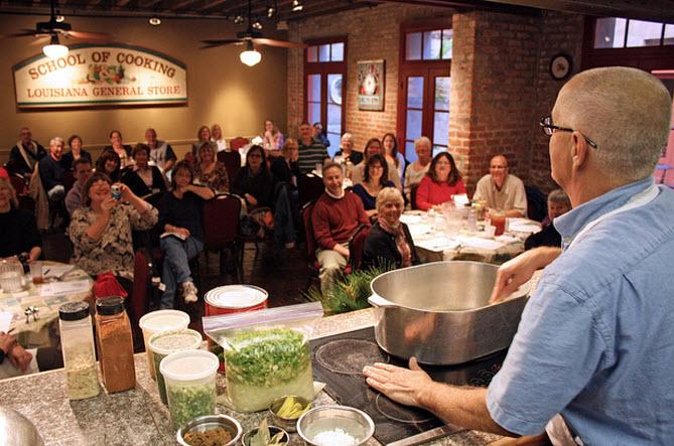
The first thing you notice is the vibe. This is not a sterile kitchen studio. It is in a converted 19th-century molasses warehouse, and that matters, because the space makes the whole experience feel communal. You sit among other food lovers, settle in, and the chef takes over the room like a friendly show host who also happens to be cooking for a living.
The location is the New Orleans School of Cooking at 524 St Louis St. It is central, and the tour notes it is near public transportation, which is handy if you are planning around parade routes, Bourbon Street crowds, or just want an easy ride.
This is also a timing win. You are looking at about 2 hours total. That is long enough to learn the basics, then actually eat, without turning your day into a half-project. And if you are trying to pack New Orleans in, a short, structured food experience can help you hit the highlights without wandering hungry.
One more practical note. The group size can be up to 68 travelers. That does not automatically make it bad, but it means you should show up ready to listen from your seat. In bigger rooms, sound can be uneven, and you do not want to spend the demo straining.
How the Chef Teaches Gumbo, Jambalaya, and the Roux That Changes Everything
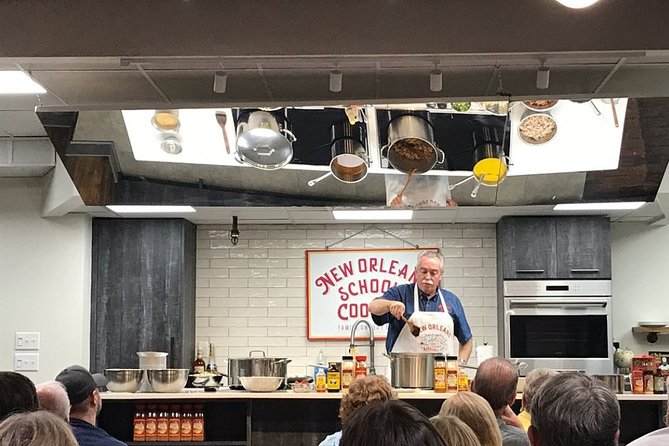
The demo centers on classic Louisiana staples, and the teaching style is built around real fundamentals. You will watch your chef prepare Creole dishes such as gumbo and jambalaya, and you will hear how Cajun and Creole cooking traditions differ. Your chef also talks about the historical mix of influences that shaped Louisiana food, which turns the recipes from random instructions into something you understand.
If you are a beginner, you will learn why certain steps exist. A big one is roux. In gumbo, roux is not just a thickener. It is flavor. The chef explains that the time and attention you give to roux drives taste, color, and texture. You may already know that gumbo has roux, but this is where the lesson becomes usable at home.
If you are already cooking at home, you still get value. The pacing is designed so you can pick up small process ideas, like how spices fit into the order of cooking, or when you need to think about thickness and balance. From what people highlight, the best chefs in this format keep the room engaged while still talking through technique, not just moving through recipes.
And yes, you will get plenty of talking and Q and A. Several recent classes are praised for energetic instructors who weave in New Orleans stories while they cook. You might encounter instructors like Lynn, Chef Eric, Chef Dianne, or Chef Terri, and the common thread is clear: they explain what they are doing and why it matters. That is a big deal, because a lot of cooking demos show you motion without meaning. This one aims for both.
What else we logged under Workshops in New Orleans
The Meal Itself: What You Eat After the Demo (And Why It Feels Like Value)
Here is where the class earns its keep. After the live cooking, you eat a generous sampling of what was prepared. The included meal covers multiple courses, and that is what makes the $43 price feel more like a lunch event than a paid lecture.
The menu can vary, but the sample menu includes:
- Starter: corn and crab bisque
- Mains: gumbo, jambalaya, shrimp or chicken creole, and crawfish etouffée
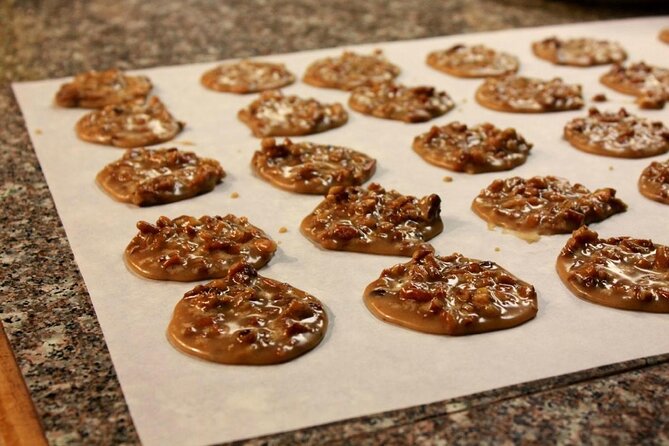
- Desserts: bread pudding, bananas foster, pralines, and pecan pie
The key detail is that menu items may include any of the classics above, not necessarily every item every day. Even so, the format is consistent: you get a sampling of all items prepared during your class. That means you should plan to leave full, and you can.
What I like about this structure is that it removes the guessing game. You are not paying hoping the food will be good. You watch it made, you learn the reasoning, and then you taste it while it is still fresh in your mind.
Also, the drink pairing helps. Included drinks are coffee, iced tea, water, and one local beer. For many people, that one beer is a perfect match for the savory dishes, while iced tea keeps things light if you are taking the pace easy.
How Spiciness Works Here (And How to Fix It If You Want More Heat)
Louisiana cooking can mean a lot of things at once. Some people expect everything to arrive fiery. This class is not set up that way.
There is a practical approach offered with the meal. The dining setup includes condiments on the table (Joe’s Stuff in different blends, including Original, Bayou Blend, and Hot) so you can doctor the food to your preferred heat level. That matters because it means the core dishes can stay balanced for a broad audience, while you still have control.
If you are traveling with a spice sensitivity, that is good news. If you chase heat, it helps to know the option is there. Instead of hoping the chef aims at your exact comfort zone, you can adjust after tasting.
Either way, taste first, then add. The roux-forward base in gumbo and the layered spice style in jambalaya can be really enjoyable even without extra heat. You are learning technique. The condiments let you make it personal.
Desserts, a Flaming Finale, and the Sweet Side of Creole Cooking
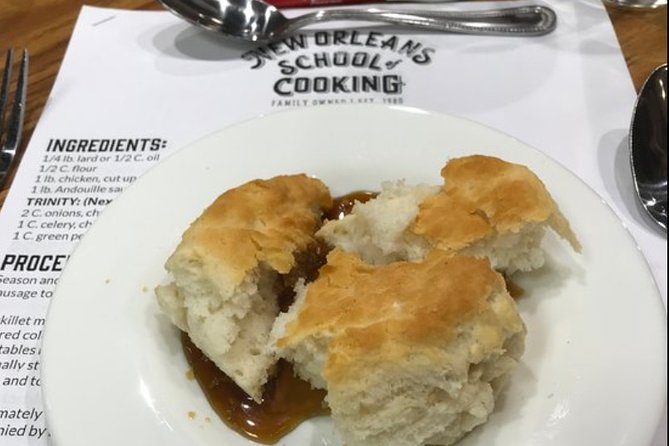
Dessert in New Orleans is not an afterthought. It is part of the point. Here, the dessert menu leans into that tradition with bread pudding, bananas foster, pralines, and pecan pie.
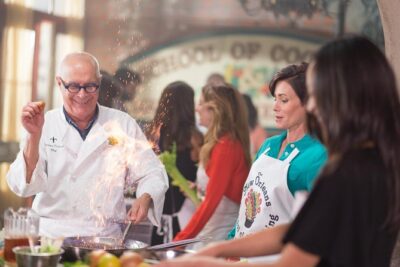
You may see bananas foster and other sweets discussed with a little showmanship, because the staff and chefs seem to treat this as a combined food and story experience. People also mention dishes like flaming dessert as a fun highlight, which makes sense in a class that already feels like a show.
Pralines and pecan pie are a great pairing with the savory items because they bring sweetness and nuttiness that reset your palate. Bread pudding ties in well too, especially if you are learning how comfort food desserts work in Louisiana cooking. Even if you do not plan to cook desserts often at home, tasting multiple styles gives you a sense for what makes them distinct.
What the French Quarter Stop Adds to Your Food Learning
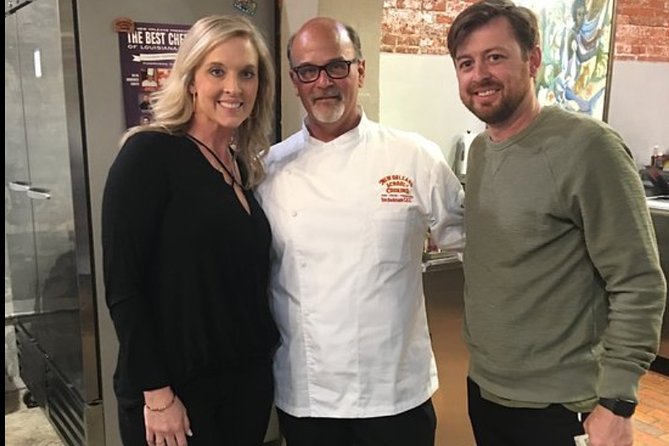
Your outing includes a stop in the French Quarter after the cooking portion. The provided details do not spell out a long walking tour, but the stop makes a simple kind of sense.
Food in New Orleans is never only about kitchens. It is about neighborhoods, history, and where people ate. After you learn about Creole roots and Cajun influences in the classroom, stepping into the French Quarter area helps connect the flavors to the place. It is the practical way to turn an indoor meal into real travel memory.
If you plan to do other French Quarter activities the same day, this stop can work as a gentle bridge between your food learning and your later wandering. If you prefer a quieter pace, you may still find it useful just for orientation.





Recipes, the Take-Home Copy, and the Diploma Challenge

One of the most appreciated parts is that you do not just leave full, you leave prepared. You receive a copy of the class recipes. That is what lets you recreate the basics at home instead of forgetting everything the moment you get back to your hotel.
There is also a fun follow-up tied to a diploma. The class says you can receive a diploma by submitting photos from cooking the recipes at home. It is not required, but it is a clever way to nudge you from tasting to actually practicing.
I think that is one of the best ways to make cooking demos worth it. If you only get the meal, you are enjoying a good lunch and a show. If you also get recipes, you can translate that experience into future dinners. Even if you only make one dish, you get your money back in satisfaction because you can keep the class alive at home.
Price and Logistics: Is $43 a Fair Deal for a 2-Hour Class?
Let us talk value. At $43 per person for about 2 hours, you are paying for:
- A live cooking demonstration of multiple classics
- A full meal with generous samples of what you watched
- Coffee, iced tea, water, plus one local beer
- Take-home recipe copies
- A history and food culture explanation, including Cajun vs Creole context
- A large group experience in a central location
When you break it down, you are basically buying a structured food event with education attached. In a city where a decent lunch can disappear quickly, having a multi-course tasting with drinks included pushes the value in your favor.
Should you expect fine dining plating? Not really. This is a cooking school experience designed for learning and eating in a group. But based on what people emphasize, the portions are enough to feel like a true meal, not a snack.
The only pricing consideration is group size. With up to 68 people, some of the detail depends on your ability to hear and see. If you have trouble with loud rooms or audio, pick your seat carefully.
Who This Class Suits Best (And Who Might Want a Different Style)
This works well if you fit any of these situations:
- You want a fun New Orleans food experience that is also educational
- You are curious about Creole and Cajun influences and want the basics explained
- You want to eat a lot without spending time planning multiple stops
- You like cooking at home and want real recipes to try
It is especially good for mixed groups. Several instructors are praised for explaining clearly and keeping the mood light, so it does not require you to be a hardcore food nerd. You do not need to be a chef to enjoy it. You just need an appetite and a willingness to listen.
The main mismatch is if you want to cook yourself. The class is demonstration only, no hands-on training. You can ask questions, but you are not taking over a burner. If that is your dream, look for a hands-on workshop instead.
Also consider your tolerance for crowds. If you dislike big groups or you have difficulty hearing in lively rooms, the up-to-68 size might be a factor. Still, many people love it because the energy stays high and the food keeps flowing.
Should You Book This New Orleans Cooking Demonstration?
I would book it if your goal is to learn the basics of Louisiana cooking while leaving with a full meal and recipes. The combination is the selling point: watch the cooking, then eat what you watched, with drinks included and a clear culinary theme.
I would think twice if you want a quiet, small group experience or you need hands-on cooking. The demo format and large-room setup are real. But even then, it is hard to argue with the value when you consider the multi-course tasting, the recipe handout, and the chance to understand roux, spice, and the Creole-Cajun connection.
If you are in New Orleans for a short time, or you want one food-focused anchor you can count on, this is a strong pick. Show up hungry, sit where you can see and hear, and treat it like your own personal crash course in gumbo, jambalaya, and New Orleans comfort food.
FAQ
How long is the New Orleans cooking demonstration with meal?
The experience runs about 2 hours (approx.).
Is this a hands-on cooking class?
No. It is a demonstration class only, so there is no hands-on training.
What food is included in the meal?
You get a full meal with generous samples from the dishes prepared during your class. The menu can include items like corn and crab bisque, gumbo, jambalaya, shrimp or chicken creole, crawfish etouffée, bread pudding, bananas foster, pralines, and pecan pie.
Are drinks included, and do I get beer?
Yes. The class includes coffee, iced tea, water, and one local beer.
Do I receive recipes to take home?
Yes. You receive a copy of the class recipes.
Is there a French Quarter stop during the experience?
Yes. The experience includes a stop in the French Quarter.
Can dietary restrictions be accommodated?
Yes. Dietary restrictions can be accommodated. For a $5 up charge payable at check-in, you receive substitutions with gumbo z’herbes (soup) and creole z’herbes (entree), which are vegan, gluten-free, and nut-free. Note that these substitution dishes are discussed, not demonstrated, and you should inform the stewards upon check-in.
What if it is canceled due to weather, or I need to cancel?
It has a free cancellation option. You can cancel up to 24 hours in advance for a full refund, and if it is canceled due to poor weather, you will be offered a different date or a full refund.
Cooking Classes: further reviews from New Orleans
- New Orleans Hands-On Cooking Class with Meal★ 5.0 · 1,183 reviews
- New Orleans: Cajun and Creole Cooking Class★ 4.9 · 730 reviews
- Hands-on Cajun Roux Cooking Class in New Orleans★ 5.0 · 356 reviews
Workshops: what else we logged in New Orleans
- New Orleans Hands-On Cooking Class with Meal★ 5.0 · 1,183 reviews
- New Orleans: Cajun and Creole Cooking Class★ 4.9 · 730 reviews
- Hands-on Cajun Roux Cooking Class in New Orleans★ 5.0 · 356 reviews
Tour Reviews: more from our New Orleans desk
- New Orleans Premier Ghost, Voodoo and Vampire Walking Tour★ 4.5 · 12,856 reviews
- New Orleans Steamboat Natchez Jazz Cruise with Dinner Option★ 4.0 · 7,533 reviews
- Adults-Only New Orleans Ghost, Crime, Voodoo, and Vampire Tour★ 5.0 · 6,545 reviews
- New Orleans Food Walking Tour of the French Quarter with Small-Group Option★ 5.0 · 6,118 reviews
- New Orleans Swamp and Bayou Boat Tour with Transportation★ 5.0 · 5,399 reviews
Newest New Orleans reviews added to this site
- Adults-Only Uncensored Ghost, Vampire, and Voodoo Walking Tour
★ 4.5 · 311 reviews - Seven Three Distilling Tour and Tasting
★ 5.0 · 319 reviews - Private Transfer in New Orleans MSY/Home/Hotel/Work
★ 5.0 · 325 reviews - New Orleans: 2-Hour 15-Minute City and Cemetery Tour by Bus
★ 4.7 · 326 reviews - French Quarter True Crime Walking Tour
★ 5.0 · 327 reviews - New Orleans Combo Tour: Voodoo, Vampire, and Ghost Tour
★ 4.5 · 327 reviews - New Orleans Spirits & Spells: Witchcraft, Voodoo, and Ghost Tour
★ 5.0 · 329 reviews - Private Arrival Transfer from Louis Armstrong New Orleans Airport
★ 4.5 · 334 reviews - Hands-on Cajun Roux Cooking Class in New Orleans
★ 5.0 · 356 reviews - Honey Island Swamp Boat Tour with Transportation from New Orleans
★ 5.0 · 361 reviews
Cooking Classes, side by side.
 ★ 5.0New Orleans Hands-On Cooking Class with MealFrom $1621,183 reviews
 ★ 5.0Undiscovered Charleston: Half Day Food, Wine & History Tour with Cooking Class948 reviews
 ★ 4.9New Orleans: Cajun and Creole Cooking ClassFrom $40730 reviews
 ★ 5.0Hands-on Cajun Roux Cooking Class in New OrleansFrom $163356 reviews
This one is also listed in