
Review · CITY TOURS
New York City Slavery and Underground Railroad Tour
New York has a hidden slavery trail. This 2.5-hour walk traces the Underground Railroad through key Manhattan landmarks and ends at the African Burial Ground.
I love how the route connects the big national story to very specific street-level sites, with abolitionist context and names like Frederick Douglass. I also like that you are not just staring at plaques, in guides such as Maya and Sean can explain what you are seeing and why it mattered.
One thing to consider: this is an outdoor walking tour with lots of standing, so cold wind or heavy construction detours can make it less comfortable, especially if you hate long pauses.
In This Review
- Key things to know before you go
- The big idea: slavery, escape routes, and how NYC remembers
- Bowling Green meeting point and the National Museum of the American Indian exterior
- Battery Park: newcomers, ports, and why escape happened in a major city
- Fraunces Tavern exterior: Revolution-era New York’s layered streets
- Wall Street and the early wall built by enslaved people
- Foley Square’s Triumph of the Human Spirit memorial
- African Burial Ground National Monument: the free visit that lands hardest
- After the main walk: the former site of New York’s first African-American church
- Guides make or break it, and these ones have strong reputations
- Price and value: is $49 worth 2.5 hours?
- What to wear and what to expect on foot
- Should you book this NYC slavery and Underground Railroad tour?
- FAQ
- How long is the Underground Railroad tour?
- Where does the tour start and end?
- How much does the tour cost?
- What is included in the tour?
- Is hotel pickup included?
- Is admission required for the stops?
- What happens if the weather is bad?
Key things to know before you go
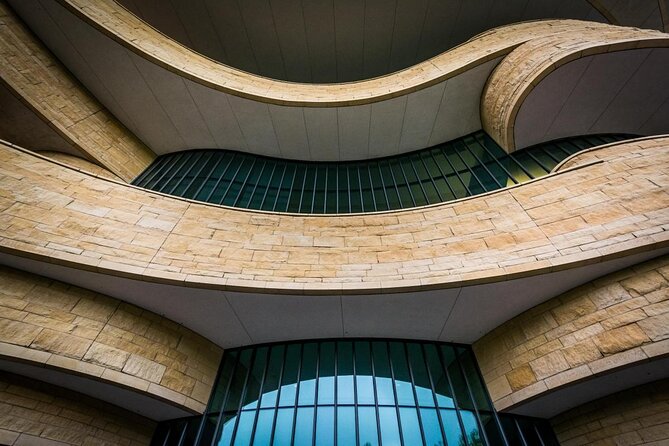
- Start at Bowling Green (near the National Museum of the American Indian exterior), then head into the city’s colonial-to-19th-century storyline
- Wall Street gets serious context, including the idea that a wall once stood there, built by enslaved people
- Foley Square adds a visible memorial note, with the Triumph of the Human Spirit sculpture pointing to enslaved presence in New York
- African Burial Ground National Monument is the emotional anchor, and it is free to visit
- You will finish at the African Burial Ground area, then continue on foot to the former site of New York’s first African-American church, tied to Underground Railroad stops
- Small group size (max 30) helps you hear your guide and keep the discussion moving
The big idea: slavery, escape routes, and how NYC remembers
This is a history walk focused on the painful truth of slavery in New York and the Underground Railroad network that helped people seek freedom. What makes it interesting is the way it uses Manhattan landmarks as evidence, not just background. You start in Lower Manhattan and work toward the African Burial Ground, so the tour naturally moves from public, political space to sacred memory.
The guide’s job is to explain how people used the city, and how abolitionists and allies supported escape. You do not just hear a timeline. You get a sense of geography, risk, and community effort, which is what makes the topic stick.
Bowling Green meeting point and the National Museum of the American Indian exterior
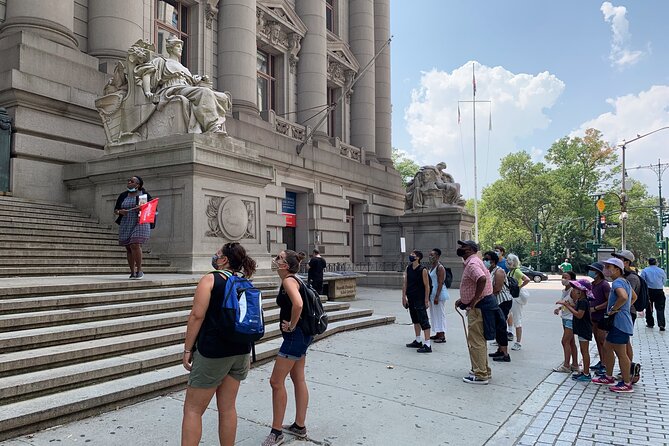
You meet at 1 Bowling Green, just outside the National Museum of the American Indian. Even though the stop itself is an exterior visit, it is a smart place to start because you are looking at a historic Beaux-Arts building that dates to 1907, known as the Alexander Hamilton Custom House. That matters because Lower Manhattan has always been about movement: people, goods, and power.
From a practical standpoint, this starting point is also easy to find and reachable by public transportation. The early minutes are mostly set-up, but it helps if you arrive a few minutes early so you can get oriented and settle your cold-weather layers.
What you might find slightly awkward here: the tour is a walking route with short stops. If you expect a long museum-style experience at the first stop, you will not get that.
What else we logged under City Tours in New York City

Battery Park: newcomers, ports, and why escape happened in a major city
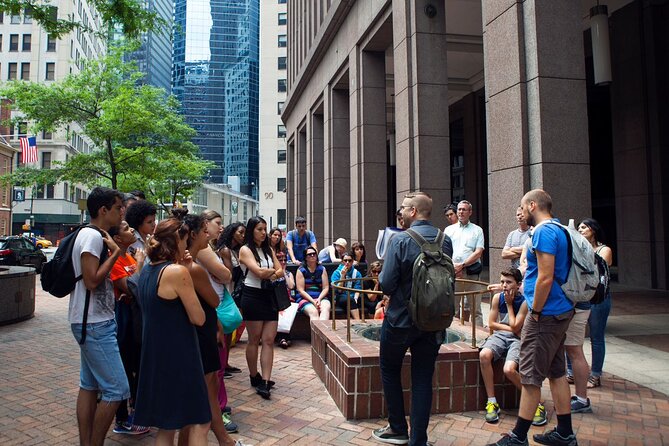
Next comes Battery Park. The emphasis here is on New York as a gateway, long before Ellis Island and the Statue of Liberty became the icons you see today. Battery Park sits in the story of how millions of newcomers arrived by sea, and that same global flow connects to why slavery and resistance also took root in a city that was constantly changing.
This is a brief stop, about 10 minutes, so it is not the place for deep reading time. Instead, the guide uses it to frame the city context: why large cities can become both a trap and a path, depending on who has help and where people can hide.
If you prefer tours with lots of time at each site, this portion may feel quick. Still, it works as a necessary bridge.
Fraunces Tavern exterior: Revolution-era New York’s layered streets
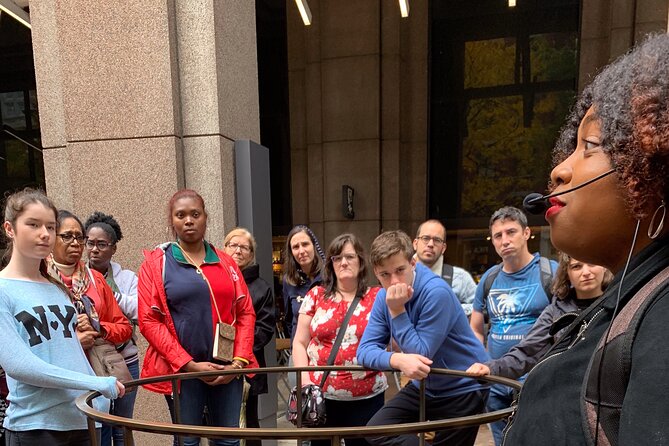
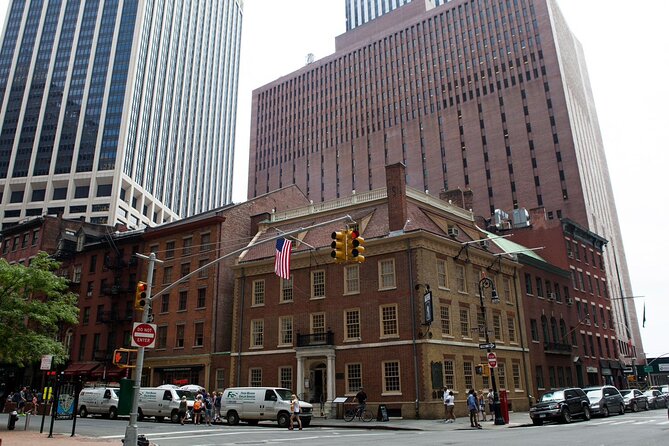
You then pass by Fraunces Tavern Museum from the outside. Fraunces Tavern matters in this story because it played a prominent role before, during, and after the American Revolution. That lets the guide connect contradictions in American freedom, from political promises to who was denied liberty.
This is another exterior stop, about 15 minutes. I like this approach for two reasons. First, you get the historical frame without waiting in ticket lines at every turn. Second, street-level history feels more real when you are standing right where decisions were made.
The only caution: if the street or surrounding areas are closed for maintenance, you may have a reduced view of what you want to photograph, so keep your expectations flexible.
Wall Street and the early wall built by enslaved people
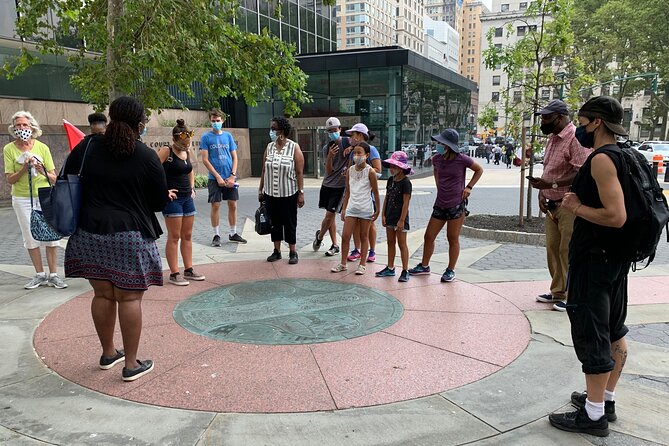
One of the most striking parts of the walk is Wall Street, where you spend about 30 minutes. Here, the tour zooms in on the idea that there was an actual wall on the street from 1685 to 1699. More importantly, you learn that the heart of New York’s financial system had early ties to enslaved labor.
The guide also brings in the Underground Railroad angle, describing places where people who escaped might have hidden while moving toward free states, with help from abolitionists. This is where the tour becomes less abstract. You start seeing the city’s most famous streets as part of a broader human story, not just a business district.
This portion also tends to be “information heavy.” If you are prone to fatigue from long standing and listening, bring a calm mindset and plan to wear comfortable shoes.
Foley Square’s Triumph of the Human Spirit memorial
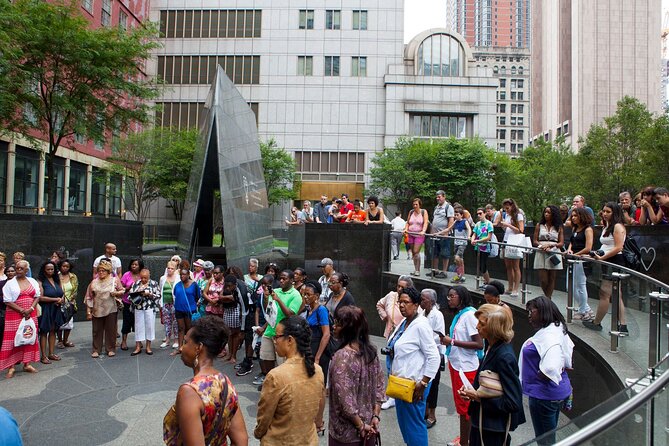
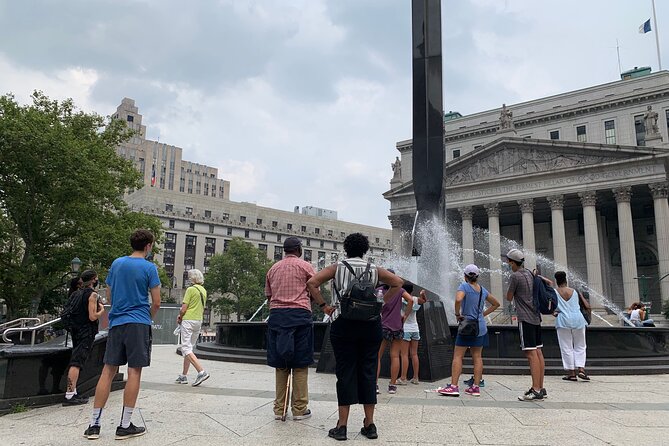
Foley Square gives you a shift from street-corner storytelling to public commemoration. You spend about 15 minutes here, at the sculpture called the Triumph of the Human Spirit. The key point is that it honors the presence of enslaved people in New York.
I like this stop because it shows how memory can be built into public space. It is not only about what happened in the past. It is about what the city chooses to mark, and how that marking affects people who walk through the square every day.
If you are sensitive to emotional content, it can hit harder than you expect, but that is also the point. It is a respectful reminder that enslaved presence was part of New York’s everyday reality.






African Burial Ground National Monument: the free visit that lands hardest
The tour finishes with a visit to African Burial Ground National Monument, with about 10 minutes on site. This is the oldest and largest known excavated burial ground in New York documenting the lives of enslaved people. It is also free, and that makes it one of the best “value per minute” stops in the whole walk.
This is the emotional anchor, and you can feel that in how the guide frames it: sacred space, remembrance, and historical weight. People often describe this site as solemn and powerful, and it makes sense. You are not looking at a story from a distance. You are standing at a place where history is literally buried and honored.
A practical note: even though the time is short, expect it to feel dense. If you want photos, plan quickly, because the guide will likely keep you moving.
After the main walk: the former site of New York’s first African-American church
After you reach the African Burial Ground National Monument area, the route continues on foot toward the former site of New York’s first African-American church. This location is also connected to Underground Railroad stops.
I appreciate including this because it expands the story beyond escape routes into community institutions. Churches were often about more than worship. They could serve as support networks, meeting points, and places where information traveled.
Because the information provided here does not include a specific address for the former church site, you should rely on your guide for the exact direction and what you are looking for. In a neighborhood built on layers of change, that guidance matters.
Guides make or break it, and these ones have strong reputations
This tour is powered by the local guide, and the teaching style seems to be a major reason people recommend it. Named guides you may encounter include Maya, Maia, Sean, Shawn, and Ludy, and multiple guides are praised for connecting history to real people.
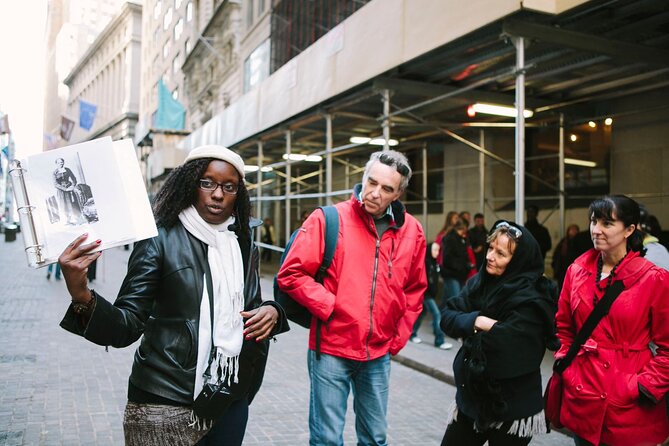
For example, Ludy is noted for using a binder with photographs of historical figures and places, which helps you track names and understand who is being discussed. Sean is praised for adding context about symbols carved into the monument area, which can turn a quick stop into something you carry with you after.
Whether your guide is using visuals, stories, or careful symbolism, you should expect an approach that is not sugar-coated. The tour is designed to explain, not to blame the listener, and that balance helps the content feel grounded.
Price and value: is $49 worth 2.5 hours?
At $49 per person for about 2 hours 30 minutes, this tour is priced like a solid city guided experience. The value comes from what you get packed into that time, especially the pairing of key Lower Manhattan landmarks with the African Burial Ground, which is free to visit.
You are also paying for synthesis. Slavery and the Underground Railroad can feel like separate topics when you read about them alone. With a guide, the same facts get organized into a route-based story, including New York’s role and how people used the city during escape.
One practical value check: a lot of your stops are exterior visits. That can be a drawback if you want lots of museum time. But it keeps the tour moving and helps you see more of the route without buying extra admissions for every stop.
What to wear and what to expect on foot
This is a walking tour with moderate physical fitness needed. It is outdoors, so your comfort will depend heavily on weather. The tour requires good weather, and cancellations can happen if conditions could impact safe travel and walking.
My advice:
- Wear comfortable shoes you can stand in for long stretches
- Dress in layers for wind off the water
- Bring a warm hat or gloves, especially in colder months
- Bring patience if you hit construction or blocked-off outdoor viewing areas
Also remember, the maximum group size is 30. That is not tiny, but it is small enough to feel like a real group walk rather than a crowd.
Should you book this NYC slavery and Underground Railroad tour?
I’d book this tour if you want a focused, guided route through real Manhattan locations tied to slavery, abolitionist activity, and the Underground Railroad. It is especially worth it if you like history that turns into street-level understanding, not just facts on a page.
Skip it or consider it carefully if you struggle with cold weather, do not like standing for long periods while listening, or expect lots of indoor museum time at each stop. The experience is built around walking and context, with the African Burial Ground as the emotional centerpiece.
If you are willing to do a steady, thoughtful walk, this is one of the best ways to connect New York’s famous streets to the truth of what happened there and who fought for freedom.
FAQ
How long is the Underground Railroad tour?
The tour lasts about 2 hours 30 minutes.
Where does the tour start and end?
You start outside the National Museum of the American Indian at 1 Bowling Green, New York, NY 10004. The tour ends at African Burial Ground National Monument at 290 Broadway, New York, NY 10007.
How much does the tour cost?
It costs $49.00 per person.
What is included in the tour?
The tour includes a local guide and content such as slavery in historical context, New York’s role in slavery, history of the Underground Railroad, and visits tied to the African Burial Ground and Fraunces Tavern, plus the site of New York’s first slave market.
Is hotel pickup included?
No, hotel pickup and drop-off are not included.
Is admission required for the stops?
Some stops are exterior visits with admission not included (like the National Museum of the American Indian exterior). Foley Square is free, and the African Burial Ground National Monument stop is free.
What happens if the weather is bad?
The experience requires good weather. If it is canceled due to poor weather, you will be offered a different date or a full refund.
City Tours: what else we logged in New York City
- New York City: Statue of Liberty & Ellis Island with Ferry★ 4.6 · 18,683 reviews
- New York City: American Museum of Natural History Ticket★ 4.5 · 15,447 reviews
- New York City: Manhattan Helicopter Tour★ 4.7 · 7,076 reviews
- Top of the Rock Observation Deck New York City Ticket★ 4.5 · 4,556 reviews
- From New York City: Washington and Philadelphia 1-Day Tour★ 4.5 · 2,877 reviews
Tours: the rest of the New York City file
- Statue of Liberty and Ellis Island Tour: All Options★ 5.0 · 13,571 reviews
- New York in One Day Guided Sightseeing Tour★ 5.0 · 13,166 reviews
- Central Park Pedicab Guided Tours★ 5.0 · 7,108 reviews
- New York City: Manhattan Helicopter Tour★ 4.7 · 7,076 reviews
- Private Central Park Pedicab Tour★ 5.0 · 6,981 reviews
Tour Reviews: more from our New York City desk
- NYC: SUMMIT One Vanderbilt Tickets★ 4.7 · 51,195 reviews
- NYC: Empire State Building Tickets – Observatory & Museum★ 4.7 · 25,757 reviews
- New York City: Statue of Liberty & Ellis Island with Ferry★ 4.6 · 18,683 reviews
- New York City: American Museum of Natural History Ticket★ 4.5 · 15,447 reviews
- Statue of Liberty and Ellis Island Tour: All Options★ 5.0 · 13,571 reviews
Newest New York City reviews added to this site
- NYC: Whitney Museum Ticket
★ 4.2 · 315 reviews - NYC: Manhattan & Statue of Liberty Cruise with Shuttle Bus
★ 4.6 · 316 reviews - 60-Minute Statue of Liberty Sightseeing Cruise
★ 3.0 · 317 reviews - True Crime New York: NYPD-Guided Mafia Walking Tour w/ Food
★ 4.6 · 318 reviews - New York City Cocoa and Carols Holiday Cruise
★ 4.5 · 318 reviews - Harlem Wednesday Morning Gospel Tour
★ 4.5 · 320 reviews - Central Park Bike Rental: Quality Bikes with Map, Helmet, Lock
★ 4.0 · 324 reviews - New York City Harlem Highlights w/ Gospel Concert & Transfer
★ 4.5 · 326 reviews - 9/11 Memorial Tour with Optional Museum and One World Access
★ 5.0 · 330 reviews - New York City Sunset Cruise on a Yacht
★ 5.0 · 331 reviews
City Tours
 ★ 4.6New York City: Statue of Liberty & Ellis Island with FerryFrom $1918,683 reviews
 ★ 4.5New York City: American Museum of Natural History TicketFrom $3715,447 reviews
 ★ 4.6New York City: Top of the Rock Observation Deck TicketFrom $4414,488 reviews
 ★ 4.5Boston Duck Boat Sightseeing City Tour with Cruise Along Charles RiverFrom $599,378 reviews
 ★ 4.7New York City: Manhattan Helicopter TourFrom $2997,076 reviews
 ★ 4.7New York City: The FRIENDS™ Experience Entry TicketFrom $486,234 reviews
 ★ 4.5New Orleans City Sightseeing Hop-On Hop-Off Bus TourFrom $514,943 reviews
 ★ 5.0Pearl Harbor, USS Arizona Memorial & Honolulu City TourFrom $944,866 reviews
This one is also listed in