
Review · PHILADELPHIA HISTORIC TOURS
Revolution and the Founders: History Tour of Philadelphia
One of the best parts is the pace. I love how this Revolution and the Founders walk turns Philadelphia’s famous landmarks into a clear story, from the Liberty Bell to Independence Hall and beyond. The history-degree guides keep you moving while the year 1776 comes into focus in a way that feels practical, not just scenic.
I especially like the mix of big national symbols plus smaller, specific stops tied to real people.
The guide lineup is a big reason I recommend it: every guide has a history degree, and many are history teachers and American history professors. That shows in how they connect events, names, and political ideas you hear about in textbooks.
One consideration: it is an outdoor walking tour, so you will likely spend time standing around, including when crowds are heavy or when you are waiting for quick access inside major sites.
In This Review
- Quick hits before you go
- Start at Grim Philly Twilight Tours and get oriented fast
- Liberty Bell: what you learn outside the pavilion, plus the optional inside time
- Independence Hall and the East Wing pit-stop with timed entry reality
- The President’s House era: Washington and Adams where the city once ran
- Congress Hall: inaugurations and the short run of capital-city politics
- Franklin Court and the Revolutionary brain: ideas made visible
- Benjamin Franklin Post Office & Museum: a small stop with a specific twist
- Carpenters’ Hall: the meeting place behind French support
- Hamilton’s banks and the early money lessons on foot
- American Philosophical Society and the Library Company: where learning got organized
- Dolley Madison’s house and the middle-class Philadelphia viewpoint
- Finish near the Merchant Exchange: your next-step plan
- Price and value: what $29 buys you in the real world
- Who this walking tour fits best
- Should you book Revolution and the Founders in Philadelphia?
- FAQ
- FAQ
- How long is the Revolution and the Founders history tour?
- Where does the tour start and where does it end?
- Does the tour run in bad weather?
- Do I need timed entry tickets for Independence Hall?
- Is the Liberty Bell interior included?
- Is the tour offered in a specific language?
- How many people are in the group?
- What is the cancellation window?
Quick hits before you go
- History-degree guides who tell the story in an organized, easy-to-follow way.
- Most major founding sites covered in about 2 hours, with the rest of your day left open.
- Liberty Bell and Independence Hall are the headline moments, with optional extra time for interiors.
- Franklin stops that actually explain him, not just his name on plaques.
- Small group size capped at 24, which helps questions and interaction.
- Runs morning and afternoon, and it goes rain or shine.
Start at Grim Philly Twilight Tours and get oriented fast
The tour begins at Grim Philly Twilight Tours, 523 Market St. You check in and get a quick revolutionary-history introduction before the real walking starts, which matters more than you might think. Philadelphia’s downtown can feel like a maze of streets and buildings, so this first chunk helps you understand what you are seeing and why it mattered.
This is not a sit-down museum date. It is a guided walk that uses the street-level layout of Old City to connect dots: where power sat, where debates happened, and how people moved through the city during the Revolution.
Group size is kept to a maximum of 24 travelers, and the tour is in English with a mobile ticket. If you prefer a tour that keeps you active and focused, this structure works well.
The tour ends at the Merchant Exchange Building, 143 S 3rd St, near City Tavern and close to the area where the Continental Congress met every Saturday.
Liberty Bell: what you learn outside the pavilion, plus the optional inside time
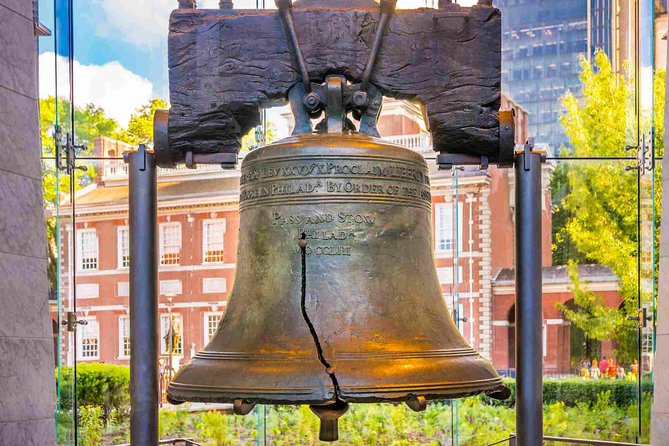
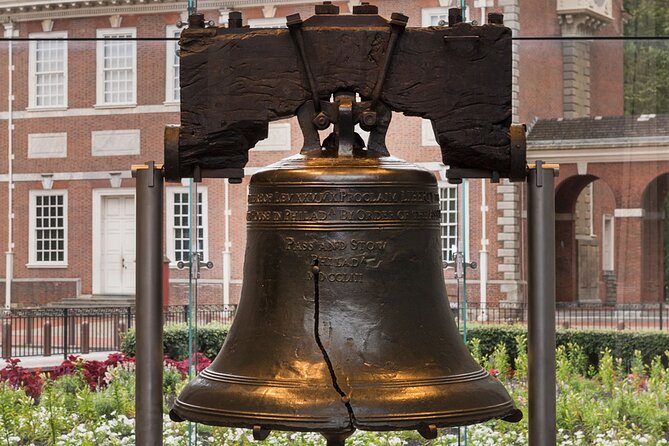
You start with The Liberty Bell inside the National Historic Park area. During peak seasons, lines can stretch, and the listing also notes it can take close to an hour just to traverse the line. The tour’s focus is on the essentials you need, with key details explained from the exterior of the Liberty Bell pavilion.
Here is what you’ll want to know before you decide on extra time: commissioned in 1752, the bell cracked on its first test ring, then it was recast two years later by local workmen John Pass and John Stow. The lettering reflects a biblical jubilee theme: the bell’s text points to proclaiming liberty to all inhabitants, tied to the idea of freedom and debt forgiveness every fifty years.
Optional interior time is there if you want it. The tour provides clear instructions for how to enter the interior if you choose to invest that extra hour on your way back. If you are short on time, you can stay with the main plan and still leave with the story.
Practical tip: wear layers. This stop is fixed, you cannot “pace” around the bell, so weather matters.
Elsewhere under Historical Tours across Philadelphia
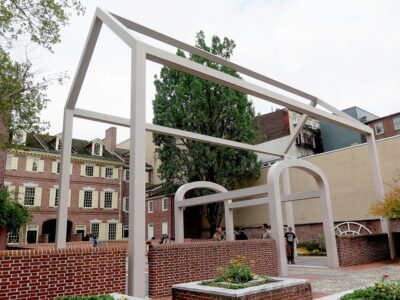
Independence Hall and the East Wing pit-stop with timed entry reality
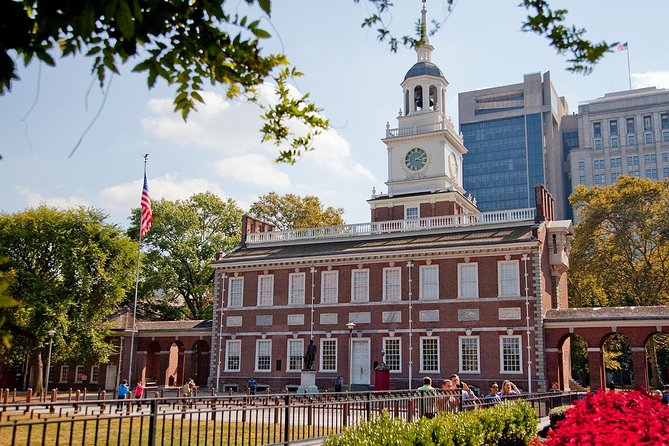
Next is Independence Hall, where both the Declaration of Independence and the Constitution were debated and adopted. This is the moment most people picture when they hear Philadelphia founders.
One key logistical point: Independence Hall requires free timed entry passes, and the park recommends extra time beyond what the tour allows if you want to explore the complex interior chambers. Since this is a walking tour built to cover a lot in about two hours, the guide keeps it efficient. The plan is a quick on-site experience, with subject matter highlighted so you understand what you’re looking at.
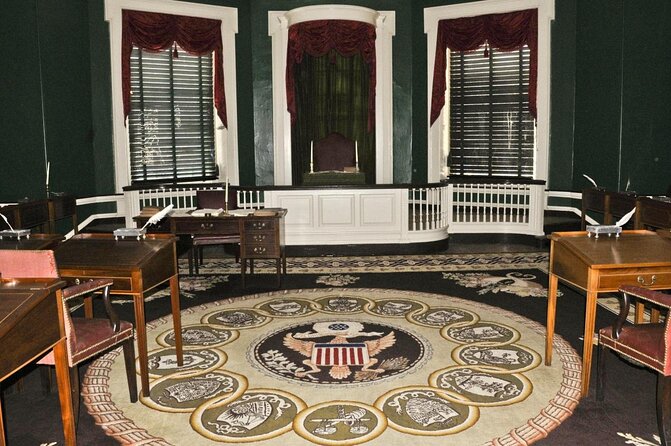
The tour also includes a quick interior stop, subject to crowds and closures: a pit-stop inside the East Wing, described as the oldest and most historic part of the structure, which served as Supreme Court chambers while Philadelphia was our nation’s capital.
If your main goal is big-room interiors and lingering photos, you may feel the time pressure. But if your goal is to get your bearings and understand the political story, this format is solid.
The President’s House era: Washington and Adams where the city once ran

After Independence Hall, you will walk past the area known as America’s first “white house” era. This is the structure where George Washington and John Adams both served while Philadelphia was the national capital from 1790 to 1800.
This stop isn’t just about famous faces. It also helps you picture what government looked like in daily terms: foreign dignitaries, members of Congress, and members of the Senate all frequented the President House for official and unofficial business. You get a sense that power was negotiated in rooms and hallways, not only in speeches.
There’s also a darker footnote you should be ready for. Benedict Arnold lived in the structure after the British evacuation of Philadelphia, when he served as military governor.
This part of the walk is a reminder that the Revolution was not only idealism. It was strategy, access, and contested loyalty.
Congress Hall: inaugurations and the short run of capital-city politics

You’ll also visit Congress Hall, a major companion stop to Independence Hall. The listing notes it hosted two presidential inaugurations, for Washington and Adams, and it served as the home of U.S. Congress from 1790 to 1800, the period when Philadelphia was the capital.
What I like about including Congress Hall is how it connects the “founding words” with the “founding work.” The Declaration and Constitution debates feel abstract until you see the physical context where Congress operated.
If you’re the kind of traveler who likes the bridge between politics and place, this stop does that job. And since it happens before the Franklin-focused stretch, it also helps you reset your brain from national symbolism to daily governance.
Franklin Court and the Revolutionary brain: ideas made visible
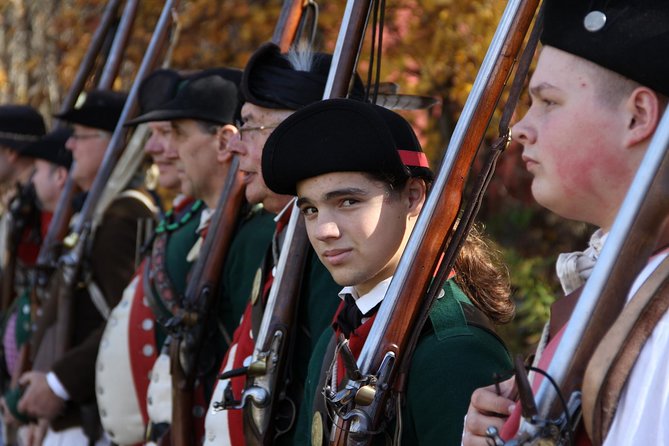
Then the tour shifts into a Franklin-heavy stretch through Franklin Court, which is within Independence National Historical Park and connected to Benjamin Franklin’s life during the Constitutional Convention.
This is where the guide’s history background becomes practical for you. Instead of treating Franklin like a statue, you will get a clear thread of his life: electrical experiments, printing and publishing, and his role as a statesman. You will also get the idea Franklin urged Americans to stick together rather than fracture, because the consequences of division were real.
In this section, you will likely spend time walking within the park area and stopping at points tied to Franklin’s world. The emotional effect can be strong, but the real value is that you leave with a mental map: who Franklin was, what he did, and why his influence shows up again and again in the founding era.
Further Philadelphia Historic Tours covered by our reviewers in Philadelphia


Benjamin Franklin Post Office & Museum: a small stop with a specific twist
Another stop that deserves your attention is the Benjamin Franklin Post Office & Museum. The tour frames it as the only Colonial-themed post office operated by the United States Postal Service, and that alone makes it memorable.
Two details make this place feel like time travel without being cheesy:
- It is still an active post office, and it does not fly the American flag because there was not yet one in 1775, when Franklin was appointed Postmaster General.
- The postmark, noted as B. Free Franklin, is still used to cancel stamps.
On the second floor, there are displays of postal history and memorabilia. It’s a reminder that the Revolution ran on communication: letters, delivery, and the systems that keep a country talking to itself.
If your group likes practical history, this is a great breather between the larger political sites.
Carpenters’ Hall: the meeting place behind French support
Next up: Carpenters’ Hall, tied to the First Continental Congress in 1774. This is a “how decisions got made” stop, and the tour explains why it mattered.
The listing highlights secret meetings in December 1775 where Franklin met with John Jay, Fancis Daymon, and a French spy named Julien Achard de Bonvouloir. These discussions connected to negotiations for French support for the colonists.
That last part is the key context. The Revolution was not only fought by the colonies. External help shaped the odds.
There is also a reminder of what occupation looked like. British forces occupied this building over the winter of 1777, while the capital was under British control.
Hamilton’s banks and the early money lessons on foot
The financial story comes in two related stops: the First Bank of the United States and the Second Bank of the United States, both tied to big names.
First, you’ll see the First Bank, founded in 1797 and championed by Alexander Hamilton. The listing points to architectural design as part of its significance, which is a nice reminder that ideology and buildings often travel together.
Then you’ll move to the Second Bank, chartered in 1816 by President James Madison. Its story takes a turn in 1834, when Andrew Jackson’s presidency led to the bank losing its charter. The tour also connects both Hamilton and Jackson to famous duels, which helps you connect 18th-century political debate with 19th-century personal and institutional conflict.
If you have ever wondered why money and power feel inseparable in American history, these stops make that link fast.
American Philosophical Society and the Library Company: where learning got organized
As you walk by the American Philosophical Society, you get another kind of founding story, one built around ideas and institutions. The listing says it was founded in 1743 by Benjamin Franklin, two years after the University of Pennsylvania. It also notes early members included George Washington, John Adams, Thomas Jefferson, Alexander Hamilton, Thomas Paine, David Rittenhouse, Nicholas and Owen Biddle, Benjamin Rush, James Madison, and others.
This stop matters because it shows “founders” were not just politicians. They built clubs, research networks, and public-facing institutions that shaped how Americans thought.
Nearby, the tour also points out the Library Company, founded by Franklin in 1731. The listing says it is the first institution in the world to lend materials to members of the public. That detail helps you see libraries as civic infrastructure, not just reading rooms.
Dolley Madison’s house and the middle-class Philadelphia viewpoint
You’ll also see the home of future First Lady Dolley Madison, where she lived with her first husband John Todd from 1791 to 1793. The listing places this Dolley Todd House within the story of middle-class life in 18th-century Philadelphia.
This stop is helpful if you feel like most “founders” tours focus only on the loudest men in official settings. Dolley’s time here is a different angle: the Revolution happened inside families and neighborhoods too.
Finish near the Merchant Exchange: your next-step plan
After the last walking segment, the tour ends behind City Tavern and near the Merchant Exchange Building area at 143 S 3rd St. The listing connects this general area to the Continental Congress meeting every Saturday, which makes a neat final loop back to the founding theme.
Now you have something rare for a history tour: time. You should be able to keep exploring at your own rhythm since the tour is designed to leave the rest of your day open.
If you want deeper interiors, this is the time to use what you learned. The guide gives enough context to help you choose where you want to spend more time, especially around places tied to the timed-entry system.
Price and value: what $29 buys you in the real world
At $29 per person for about 2 hours, this is good value for a few reasons.
First, you are not paying just for sites. You are paying for interpretation at multiple layers: Revolution-era politics, key figures, and the city’s built environment. The stops cover symbols like the Liberty Bell and Independence Hall, then they branch into Franklin, postal life, meetings, banking, and learning institutions.
Second, key interiors can be added without paying the tour price again. The listing notes free timed entry passes for Independence Hall and free interior time at the Liberty Bell pavilion if you choose to invest the extra hour. The tour is structured so you get the headlines and direction, not a long queue experience.
Third, it runs morning and afternoon, rain or shine. Weather in Philadelphia can make you hesitate on outdoor plans. This tour doesn’t pretend the outdoors are optional, it plans around it, and you still get a full idea of Old City.
If you are visiting Philadelphia for the first time, this tour is especially efficient. It does not try to replace the major museums. It helps you prioritize them.
Who this walking tour fits best
This works best if you:
- Want a quick, organized introduction to Revolutionary Philadelphia
- Like learning through street-level context, not just plaques
- Enjoy getting connections between people, like Franklin, Hamilton, Madison, and the politics around them
- Prefer a small group walk capped at 24 people
- Are okay with a walking pace and time spent outdoors
If you only care about interiors, you might find the schedule tight. The tour does include a quick interior moment at Independence Hall’s East Wing, and it explains optional interior time for the Liberty Bell pavilion, but the format is built for covering many points.
Should you book Revolution and the Founders in Philadelphia?
I think you should book it if you want a high-value primer that makes the big sights feel understandable, not random. The history-degree guides and the “year 1776” focus give the walk a clear backbone, and the Franklin and banking stops help you leave with more than just photos.
Book with realistic expectations about how much you can do in two hours outdoors. If it is very cold or very crowded, you will spend time standing and moving between fixed locations. Still, the tour is designed for exactly that: it keeps the story going while the day stays simple for you.
If you want a tour that turns Philadelphia’s founding-era sites into a coherent path you can follow, this is a very solid choice.
FAQ
FAQ
How long is the Revolution and the Founders history tour?
It runs for about 2 hours.
Where does the tour start and where does it end?
It starts at Grim Philly Twilight Tours, 523 Market St, Philadelphia, PA 19106 and ends at the Merchant Exchange Building, 143 S 3rd St, Philadelphia, PA 19106.
Does the tour run in bad weather?
Yes, it runs rain or shine.
Do I need timed entry tickets for Independence Hall?
Yes. Independence Hall requires free timed entry passes. The tour notes it provides instructions for continuing exploration after the guided portion.
Is the Liberty Bell interior included?
The Liberty Bell interior is described as optional. The pavilion interior is free, with the listing stating an additional 1 hour if you choose to enter.
Is the tour offered in a specific language?
The tour is offered in English.
How many people are in the group?
The tour has a maximum of 24 travelers.
What is the cancellation window?
There is free cancellation up to 24 hours in advance for a full refund. Canceling less than 24 hours before the start time is not refunded.
Historical Tours we have also been through in Philadelphia
- Philadelphia Old City Historic Walking Tour with 10+ Top Sites★ 5.0 · 2,020 reviews
- 2.5 Hour Philadelphia History Tour with Washington War Tent Show★ 5.0 · 924 reviews
- Philadelphia: Revolution and The Founders History Tour★ 4.6 · 450 reviews
- True Crime Philadelphia and History Tour★ 5.0 · 416 reviews
- Philadelphia: History, Highlights & Revolution Walking Tour★ 4.9 · 317 reviews
Tours: the rest of the Philadelphia file
- Dark Philly Adult Night Tour★ 5.0 · 4,241 reviews
- Philadelphia Hop-On Hop-Off City Tour★ 4.0 · 2,347 reviews
- Philadelphia Old City Historic Walking Tour with 10+ Top Sites★ 5.0 · 2,020 reviews
- 2.5 Hour Philadelphia History Tour with Washington War Tent Show★ 5.0 · 924 reviews
- The Constitutional Walking Tour of Philadelphia★ 4.5 · 902 reviews
Tour Reviews: more from our Philadelphia desk
- Dark Philly Adult Night Tour★ 5.0 · 4,241 reviews
- Philadelphia Hop-On Hop-Off City Tour★ 4.0 · 2,347 reviews
- Philadelphia Old City Historic Walking Tour with 10+ Top Sites★ 5.0 · 2,020 reviews
- 2.5 Hour Philadelphia History Tour with Washington War Tent Show★ 5.0 · 924 reviews
- The Constitutional Walking Tour of Philadelphia★ 4.5 · 902 reviews
Newest Philadelphia reviews added to this site
- Philadelphia: History, Highlights & Revolution Walking Tour
★ 4.9 · 317 reviews - Classic Philadelphia City Bike Tour
★ 5.0 · 323 reviews - Philadelphia: Double-Decker Sightseeing Bus Tour
★ 4.2 · 332 reviews - Inside Philadelphia’s Italian Market: Chef-Led Tasting Journey
★ 5.0 · 354 reviews - City Cruises Philadelphia: Signature Dinner Cruise with Buffet
★ 4.0 · 372 reviews - True Crime Philadelphia and History Tour
★ 5.0 · 416 reviews - Philadelphia: Revolution and The Founders History Tour
★ 4.6 · 450 reviews - Flavors of Philly Food Tour
★ 5.0 · 505 reviews - Double Decker Hop-On Hop-Off City Sightseeing Philadelphia (1, 2, or 3-Day)
★ 4.0 · 562 reviews - Philadelphia 2 Hour Electric Cart Tour
★ 5.0 · 633 reviews
Philadelphia Historic Tours, side by side.
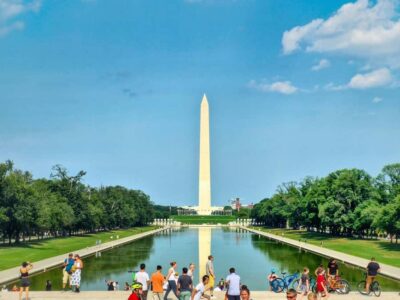 ★ 4.5From New York City: Washington and Philadelphia 1-Day TourFrom $1042,877 reviews
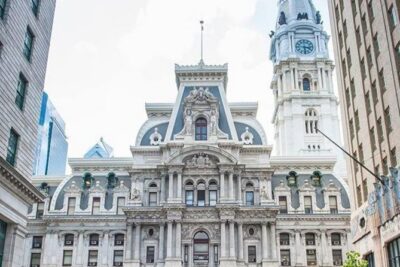 ★ 4.0Philadelphia Hop-On Hop-Off City TourFrom $392,347 reviews
 ★ 5.0Washington DC & Philadelphia 1-Day Guided Tour from NYCFrom $1282,109 reviews
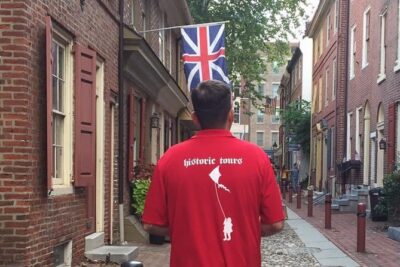 ★ 5.0Philadelphia Old City Historic Walking Tour with 10+ Top SitesFrom $432,020 reviews
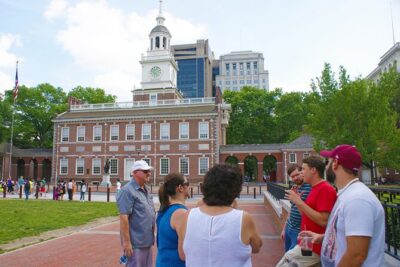 ★ 5.02.5 Hour Philadelphia History Tour with Washington War Tent ShowFrom $45924 reviews
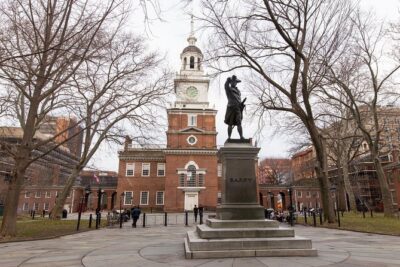 ★ 4.5The Constitutional Walking Tour of PhiladelphiaFrom $30902 reviews
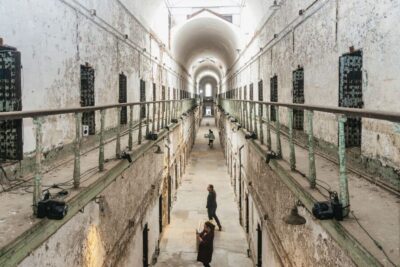 ★ 4.7Philadelphia: Eastern State Penitentiary AdmissionFrom $21894 reviews
 ★ 4.4Philadelphia: Double-Decker Hop-on Hop-off Sightseeing TourFrom $39868 reviews
This one is also listed in