
Review · PHILADELPHIA HISTORIC TOURS
The Constitutional Walking Tour of Philadelphia
History can be loud in Philadelphia. This Constitutional Walking Tour turns that noise into context, guiding you past the big names and the lesser-known power spots tied to America’s earliest days. I love that you get an efficient, street-level loop of 20+ historic sites focused on the ideas behind the Constitution and Declaration, not just photo stops. I also like that it runs rain or shine with a small group size, so your day plan does not implode. One possible drawback: it stays outdoors, so you are not going inside the buildings, including places you may hope to enter.
You meet at the National Constitution Center and then move along the Independence National Historical Park area in a steady, brisk rhythm. Expect short stops for stories, then time to look around before the next location. If you want in-depth access inside sites, you can plan those separately after the tour so this walk can do what it does best: get your bearings fast.
In This Review
- Key points to know before you go
- Why This 75-Minute Walk Works So Well in Philadelphia
- Meeting at the National Constitution Center, then Walking the Founders’ Neighborhood
- Stop by Stop: The Founding-Era Landmarks You See From the Street
- National Constitution Center: the starting signal
- The President’s House: America before the White House
- Declaration House (Graff House): the room where ideas became a document
- Liberty Bell Center: the icon, explained
- Independence Hall: the birthplace site, viewed properly
- Congress Hall: where government actually met
- Old City Hall: the Supreme Court predecessor story
- The Signer: a statue that adds meaning
- American Philosophical Society Museum: learning as a power source
- Library Hall: the first public library and an earlier Library of Congress
- Second Bank of the United States: finance meets public life
- Carpenters’ Hall: identity building in a meeting place
- New Hall Military Museum: the military side of independence
- First Bank of the United States: the constitutional debate in plain sight
- Franklin Court: Ben Franklin at home, and the post office angle
- Christ Church: the Nation’s Church
- Betsy Ross House: the flag story people remember
- Arch Street Meeting House: Society of Friends roots
- Christ Church Burial Ground: Franklin’s final resting place
- Independence Hall and the Liberty Bell: What You Can Expect on This Tour
- Pace, Hearing, and What to Wear When It Rains
- Price and Value: How $30 Stacks Up for a First-Timer
- Who This Walking Tour Fits Best
- My Booking Verdict: Should You Do It?
- FAQ
- Is admission to the historic sites included?
- Does the tour include Liberty Bell and Independence Hall?
- Can I go inside Independence Hall or the Liberty Bell Center during the tour?
- How long is the tour?
- How far do you walk?
- Where does the tour start?
- What time should I arrive to check in?
- Does the tour run in bad weather?
- What language is the tour offered in?
- What is the group size limit?
- Can I cancel for a full refund?
Key points to know before you go
- Tight route, big payoff: a 1.25-mile walk that hits 20+ founding-era stops in about 75 minutes
- Outside-only orientation: you’ll see major landmarks from the street, with admissions typically not included
- Rain or shine: the tour is built for real weather, so dress for it and bring the basics
- Short, story-led stops: many stops are around 2 to 5 minutes, with quick facts plus guided context
- Small group cap: up to 40 people, which keeps the pace manageable and questions encouraged
- Guides with strong follow-through: names mentioned include PJ, John, Will, Avi, Connor, Abby, Viv, and Michael
Why This 75-Minute Walk Works So Well in Philadelphia
Philadelphia’s Independence area can feel like a history theme park, even when the facts are real. This tour keeps it human. You get a guided sense of what mattered, who was involved, and how the new country tried to run itself day to day.
I like the balance of big headlines and practical context. You see the famous icons, but you also get the surrounding institutions, meeting places, and civic buildings that explain how the system took shape. The goal is clear: help you understand the founding story without turning the day into a museum marathon.
Also, it is a good first move. If you are new to the city, this is a fast way to connect names to locations. If you have been before, it can still sharpen your focus, because it frames what you are looking at in Constitution terms, not just “old building” terms.
Meeting at the National Constitution Center, then Walking the Founders’ Neighborhood
You start right outside the National Constitution Center at 525 Arch St. Check in about 15 minutes early and look for the meeting spot outside the main entrance, by the three large stone benches.
From there, you walk through the Independence National Historical Park area, with the guide pacing the group along a route that is about 1.25 miles total. The tour lasts roughly 1 hour 15 minutes, and it is built around lots of short stops rather than long museum-style time.
This is not a sit-down experience. It is a “walk, stop, learn, move on” format. And because it operates rain or shine, you should treat it like an outdoor activity first. If it is windy, cold, or wet, plan for that reality instead of hoping the weather will cooperate.
Additional Walking Tours on the review pile in Philadelphia
Stop by Stop: The Founding-Era Landmarks You See From the Street
The tour’s biggest strength is how it stitches together major milestones with the daily infrastructure around them. Here is what you will get as you move through the area, plus what to pay attention to at each stop.
National Constitution Center: the starting signal
You begin at the National Constitution Center, where the guide sets the tone and frames what you are about to see. This is a practical start point because it is central to the whole theme of the Constitution story.
Even though admission to sites is not included, the value here is orientation. The guide helps you understand why this area mattered and how later stops fit into that bigger picture.
The President’s House: America before the White House
Next up is the President’s House, an open-air site that commemorates the predecessor to the White House. Here, President George Washington and President John Adams lived while Philadelphia was the capital city from 1790 to 1800.
Look at this as a reminder that the capital was not always Washington, DC. America’s early leadership had to work with the real buildings available at the time, and Philadelphia was the address.
Declaration House (Graff House): the room where ideas became a document
At Declaration House, also called the Graff House, you stand on the site where Thomas Jefferson lived while he wrote the Declaration of Independence. It is one of those stops that makes a document feel less like a distant text and more like a product of a specific place.
This stop works best if you listen for the guide’s connections between living, writing, and political urgency.
Further Philadelphia Historic Tours covered by our reviewers in Philadelphia





Liberty Bell Center: the icon, explained
Then you reach the Liberty Bell Center, home to the quintessential icon of American freedom. You will see it as part of the broader civic landscape, not as a standalone postcard.
A useful expectation here: this tour is outside-focused, so you will not get a deep, inside experience like you would with separate admissions and security time.
Independence Hall: the birthplace site, viewed properly
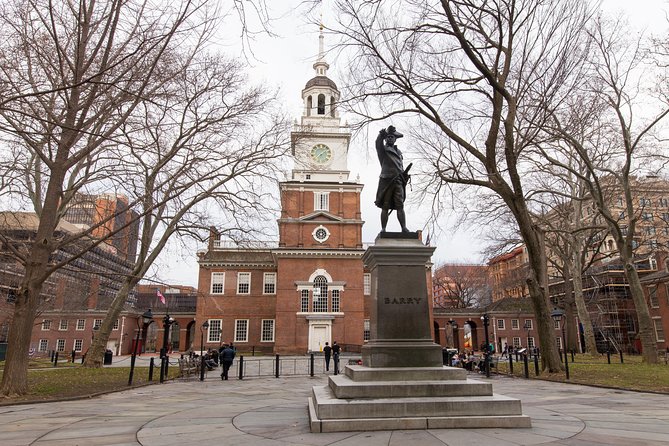
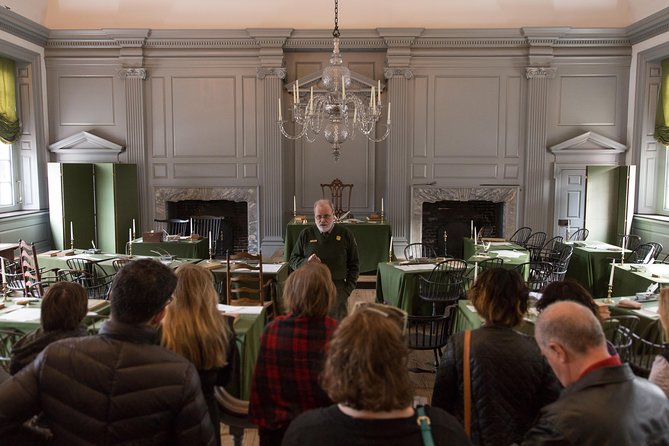
Independence Hall is next. Built in 1732 as the Pennsylvania State House, it became the place where major foundational events unfolded, so it is always worth your attention.
On this walk, you mainly view it from the outside and learn how it functioned in the early federal era. If you want to go inside, you will need to plan that separately.
Congress Hall: where government actually met
At Congress Hall, you are stepping into a building that served as the United States Capitol from 1790 to 1800. It was constructed between 1787 and 1789 as the Philadelphia County Court House, and then it took on a new job as the seat of Congress.
I like this stop because it underlines how flexible early government had to be. The “capitol” was not a purpose-built symbol yet. It was repurposed space doing real work.
Old City Hall: the Supreme Court predecessor story
Old City Hall is your next reference point. It was the former home to the U.S. Supreme Court, which gives you a clear marker of how the legal system also took root in this city.
This is the kind of stop where the guide’s commentary matters, because the building’s layers can be easy to miss if you are rushing.
The Signer: a statue that adds meaning
You will see The Signer statue, inspired by George Clymer. It is a short stop, but it adds a human face to the idea of signing and representation.
If you like connecting art and civic memory, pause for a moment and see how the statue reinforces the identity of this place.
American Philosophical Society Museum: learning as a power source
Next is the American Philosophical Society Museum, described as the oldest scholarly society in the U.S. This stop helps explain something people often forget: the founding era was not only politics and law. It was also study, debate, and networks of thought.
If you are the type who enjoys “why they knew what they knew,” this is a good spot to lean in.
Library Hall: the first public library and an earlier Library of Congress
Library Hall is tied to the nation’s first public library and the former Library of Congress. Again, it is a reminder that institutions built for access to ideas were part of the national project.
Listen for how the guide frames information and public learning as part of governance, not just education.
Second Bank of the United States: finance meets public life
At the Second Bank of the United States, you will see a building that once played an outsized role in early U.S. financial systems. Today it is used as a portrait gallery, but the location still tells a story about economic power.
This is a stop that helps the Constitution story make sense in a practical way. A government can argue big ideas, but it also needs money that works.
Carpenters’ Hall: identity building in a meeting place
Carpenters’ Hall is described as the birthplace of American identity. That is a strong claim, and the best tours make it understandable by tying meetings to legitimacy, unity, and shared political language.
Even if you do not love the topic, this stop usually lands because it connects “identity” to actual gatherings, not just abstract ideas.
New Hall Military Museum: the military side of independence
New Hall Military Museum brings the military angle into the founding story. The guide’s focus here helps you see that “independence” was not only signed on paper, it was also built under pressure.
This is also a good palate cleanser if the route is starting to feel like too many documents and buildings in your head.
First Bank of the United States: the constitutional debate in plain sight
At the First Bank of the United States stop, the key point is that it sparked the first great Constitutional debate. That connection makes this walk more than a sightseeing loop, because it shows the Constitution being tested in real life.
If you like moments where theory collides with policy, this is one of the most interesting stops on the route.
Franklin Court: Ben Franklin at home, and the post office angle
Franklin Court connects Ben Franklin’s home with the detail that it is the only Colonial-themed Post Office. This is a stop that often feels fun because Franklin was not only a symbol, he was practical.
If you are thinking about how communication shaped politics, do not skip the moment here.
Christ Church: the Nation’s Church
Christ Church is an active parish since 1695, often called the Nation’s Church. This stop adds the religious and community layer that shows up in early American public life.
You will likely notice the guide connecting religious institutions to civic identity and historical continuity.
Betsy Ross House: the flag story people remember
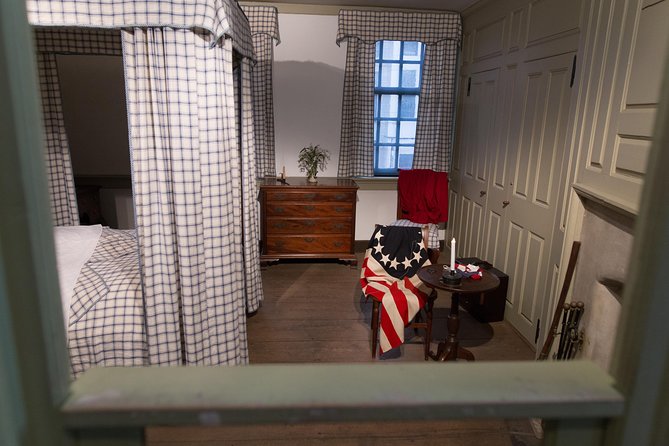
Betsy Ross House is where the tour points you toward the claim that Betsy Ross sewed the first Stars and Stripes. Even if you know only the basics, this stop works well because it ties a popular symbol back to its place on the map.
It is one of the better stops for mixing adult curiosity with kid-friendly story appeal.
Arch Street Meeting House: Society of Friends roots
At Arch Street Meeting House, you are at the home of the Society of Friends. This adds another crucial thread, since early America held different beliefs about authority, community, and responsibility.
This stop can be a quiet one, but it is important for understanding how diverse the founding world really was.
Christ Church Burial Ground: Franklin’s final resting place
You end with Christ Church Burial Ground, the final resting place of Benjamin Franklin. The tour treats it as a wrap-up moment, linking the story back to a person whose influence shows up across multiple stops.
It is a fitting way to end: you see the documents, institutions, and meetings, then return to the human legacy.
Independence Hall and the Liberty Bell: What You Can Expect on This Tour
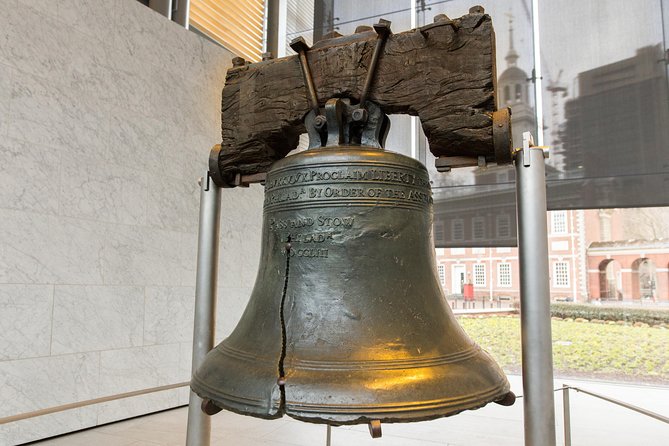
The Liberty Bell and Independence Hall are central to the walk, but you should plan for an outside-view experience on this specific tour. The tour is designed as an overview, not an inside-all-day program.
That matters because both sites have security and timed entry realities that can eat up time. This is why the route focuses on seeing the locations and hearing context, then encouraging you to go back later if you want to stand inside and soak up the exhibits at a slower pace.
If your number one goal is inside access, you might consider pairing this walk with separate tickets for the sites that interest you most. That gives you the best of both worlds: guided orientation from the street, then deeper time where you want it.
Pace, Hearing, and What to Wear When It Rains
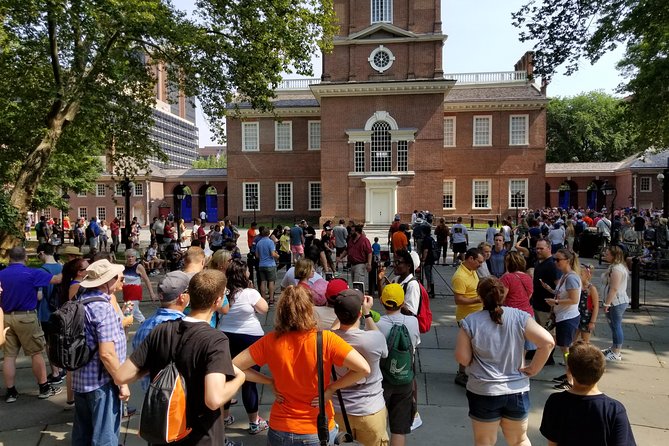
The tour moves briskly. Many stops are only a couple minutes, so you are not meant to wander off or take a long detour at each location.
From past experiences described, a common practical tip is to wear comfortable walking shoes and plan for weather. On colder days, layers help. On sunny days, bring a hat and stay light. If it is rainy, you want traction, not fashion.
Hearing can also be tricky. Traffic noise, wind, and the open-air setting can make the guide harder to catch at times. I recommend you keep your attention up front, and if you lose a sentence, do not panic. The guide usually repeats key themes as you move to the next stop.
Price and Value: How $30 Stacks Up for a First-Timer
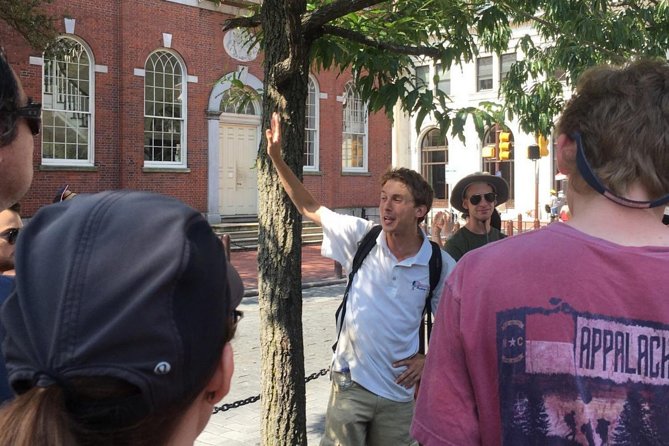
At $30 per person for about 75 minutes, this tour is positioned as an affordable way to cover a concentrated area without having to design a mini itinerary on your own. The value is not in buying admission bundled into the ticket, because it is not. The value is in spending that money on getting the relationships between places explained out loud.
Also, with a maximum group size of 40, it does not feel like an endless herd. That matters when you are trying to hear stories at each stop and ask questions.
The main cost you should expect afterward is optional. If you choose to go inside some of the major sites, you will likely pay admission separately. Still, this walk can save you from picking the wrong things to see first. It helps you decide what is worth your extra time.
Who This Walking Tour Fits Best
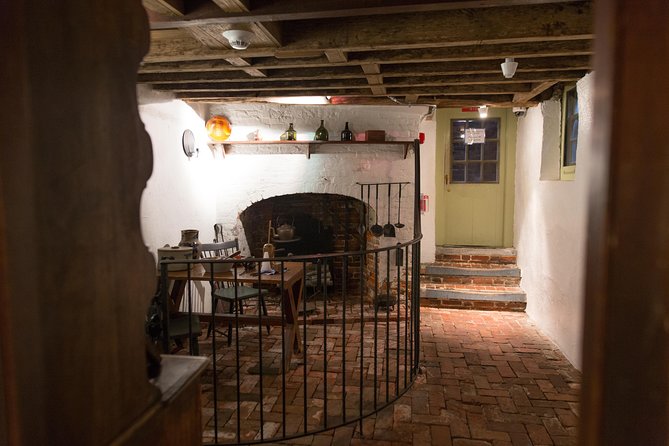
This is a strong choice for:
- First-time visitors who want a guided map of the Independence area fast
- Families with kids who can handle a brisk walk and enjoy short stories tied to big symbols
- History lovers who like seeing how government, money, religion, and community spaces connect
- Anyone who has a day schedule and needs a high-value activity that still works in bad weather
If you want a quiet, slow museum experience, this is not that. If you want inside access at multiple sites, you will need a different plan or additional tickets. But if your goal is to understand what you are looking at while you are looking at it, this walk is a smart move.
My Booking Verdict: Should You Do It?
I think you should book this tour if you want an efficient orientation to Philadelphia’s founding ground. It is affordable, structured, and focused on the ideas that shaped the country, not just dates on a plaque. The outside-only format is also a feature, not a flaw, because it gives you a coherent story without security line roulette.
Just go in with the right expectations. You are buying guided context and a route through key landmarks. Then you pick your follow-up sites for deeper inside time.
If that matches your style, you will likely walk away feeling like you understand the neighborhood instead of just collecting stops.
FAQ
Is admission to the historic sites included?
No. The tour ticket covers the guided walking experience, while admission to historic sites is not included.
Does the tour include Liberty Bell and Independence Hall?
Yes, both are part of the route, with stops made outside them as part of the walking tour overview.
Can I go inside Independence Hall or the Liberty Bell Center during the tour?
This tour is described as an outdoor walking tour, so you should expect to view the sites from outside rather than enter them during the tour.
How long is the tour?
The tour runs about 1 hour 15 minutes (approximately).
How far do you walk?
The walk is about 1.25 miles total.
Where does the tour start?
You start at the National Constitution Center, 525 Arch St, Philadelphia, PA 19106, outside the main entrance by 3 large stone benches.
What time should I arrive to check in?
Check in is recommended 15 minutes before the tour starts.
Does the tour run in bad weather?
Yes. The tour operates rain or shine.
What language is the tour offered in?
The tour is offered in English.
What is the group size limit?
The maximum group size is 40 travelers.
Can I cancel for a full refund?
Yes, free cancellation is available. You must cancel at least 24 hours before the experience start time for a full refund.
Still working through Walking Tours in Philadelphia
- Philadelphia Old City Historic Walking Tour with 10+ Top Sites★ 5.0 · 2,020 reviews
- Philadelphia: History, Highlights & Revolution Walking Tour★ 4.9 · 317 reviews
Tours: the rest of the Philadelphia file
- Dark Philly Adult Night Tour★ 5.0 · 4,241 reviews
- Revolution and the Founders: History Tour of Philadelphia★ 5.0 · 2,944 reviews
- Philadelphia Hop-On Hop-Off City Tour★ 4.0 · 2,347 reviews
- Philadelphia Old City Historic Walking Tour with 10+ Top Sites★ 5.0 · 2,020 reviews
- 2.5 Hour Philadelphia History Tour with Washington War Tent Show★ 5.0 · 924 reviews
Tour Reviews: more from our Philadelphia desk
- Dark Philly Adult Night Tour★ 5.0 · 4,241 reviews
- Revolution and the Founders: History Tour of Philadelphia★ 5.0 · 2,944 reviews
- Philadelphia Hop-On Hop-Off City Tour★ 4.0 · 2,347 reviews
- Philadelphia Old City Historic Walking Tour with 10+ Top Sites★ 5.0 · 2,020 reviews
- 2.5 Hour Philadelphia History Tour with Washington War Tent Show★ 5.0 · 924 reviews
Newest Philadelphia reviews added to this site
- Philadelphia: History, Highlights & Revolution Walking Tour
★ 4.9 · 317 reviews - Classic Philadelphia City Bike Tour
★ 5.0 · 323 reviews - Philadelphia: Double-Decker Sightseeing Bus Tour
★ 4.2 · 332 reviews - Inside Philadelphia’s Italian Market: Chef-Led Tasting Journey
★ 5.0 · 354 reviews - City Cruises Philadelphia: Signature Dinner Cruise with Buffet
★ 4.0 · 372 reviews - Guided Day Trip to Amish Country from Philadelphia
★ 5.0 · 412 reviews - True Crime Philadelphia and History Tour
★ 5.0 · 416 reviews - Philadelphia: Revolution and The Founders History Tour
★ 4.6 · 450 reviews - Flavors of Philly Food Tour
★ 5.0 · 505 reviews - Double Decker Hop-On Hop-Off City Sightseeing Philadelphia (1, 2, or 3-Day)
★ 4.0 · 562 reviews
Philadelphia Historic Tours, side by side.
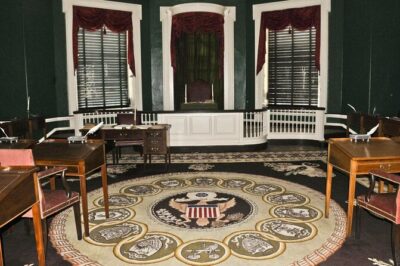 ★ 5.0Revolution and the Founders: History Tour of PhiladelphiaFrom $292,944 reviews
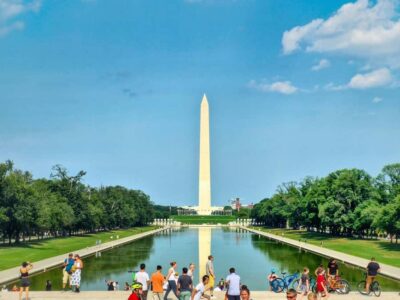 ★ 4.5From New York City: Washington and Philadelphia 1-Day TourFrom $1042,877 reviews
 ★ 4.0Philadelphia Hop-On Hop-Off City TourFrom $392,347 reviews
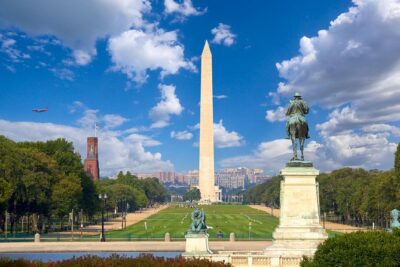 ★ 5.0Washington DC & Philadelphia 1-Day Guided Tour from NYCFrom $1282,109 reviews
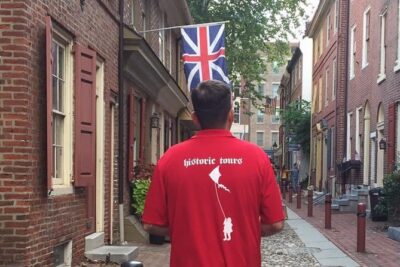 ★ 5.0Philadelphia Old City Historic Walking Tour with 10+ Top SitesFrom $432,020 reviews
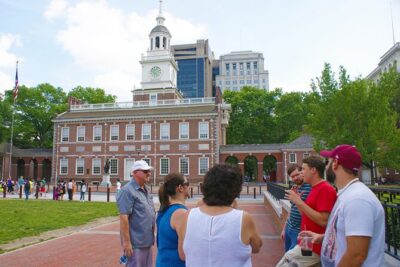 ★ 5.02.5 Hour Philadelphia History Tour with Washington War Tent ShowFrom $45924 reviews
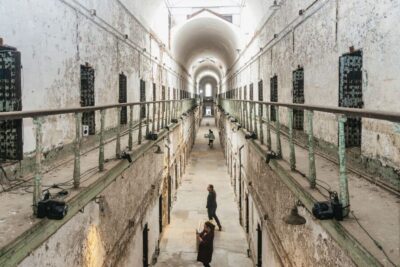 ★ 4.7Philadelphia: Eastern State Penitentiary AdmissionFrom $21894 reviews
 ★ 4.4Philadelphia: Double-Decker Hop-on Hop-off Sightseeing TourFrom $39868 reviews
This one is also listed in