
Review · WALKING TOURS
San Francisco LGBTQ Walking Tour with Local Guide
Castro sidewalks tell stories you can walk. This 2-hour LGBTQ walking tour tracks the neighborhood’s activism through real landmarks, with local resident historian Kathy guiding you to places tied to Harvey Milk.
I love two things most, Kathy’s personal, lived-in storytelling, and the way the route pairs pride with remembrance at major sites like the Castro’s landmark memorials.
The only drawback to plan for is focus. This is history-led walking, not a casual “see what looks cool” stroll, so you’ll want comfortable shoes and your attention switched on for the full 2 hours.
In This Review
- Key points to know before you go
- The Castro, where walking feels like reading public history
- Meet at 400 Castro St, then settle in for a tight 2-hour route
- Stop 1: The Castro and Castro Theatre, plus the story behind the neighborhood
- Rainbow Honor Walk and Pink Triangle Memorial Park, pride and remembrance on the same route
- Harvey Milk Plaza: the first openly gay politician and the rainbow flag story
- Human Rights Campaign Action Center: where a political office became a present-day mission
- Why Kathy’s long-time local perspective makes the story stick
- Pace, walking comfort, and who this tour suits best
- Price and value: what $40 buys beyond a casual walk
- Should you book this Castro LGBTQ walking tour?
- FAQ
- How long is the San Francisco LGBTQ walking tour?
- Where do you meet for the tour?
- Is the tour offered in English?
- Is the tour wheelchair accessible?
- What is included in the $40 price?
- What happens if it rains, or if you cancel?
Key points to know before you go
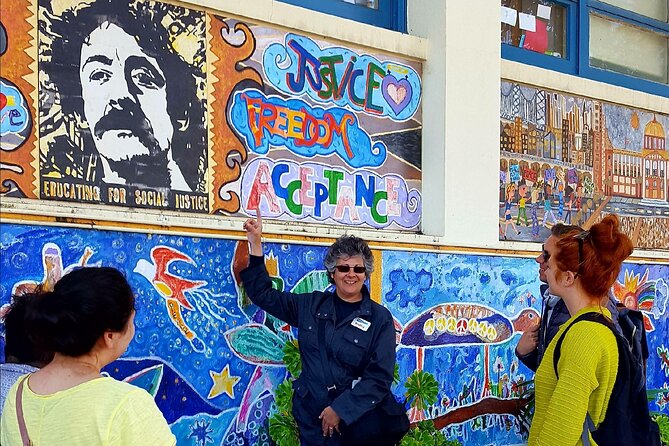
- Local guide Kathy runs the show, with long-time neighborhood perspective and a tone that keeps people engaged.
- Harvey Milk stops are the spine of the tour, including his home and the campaign hub that later became the Human Rights Campaign Action Center.
- You’ll see the Pink Triangle Memorial Park, a powerful reminder of persecution and resilience.
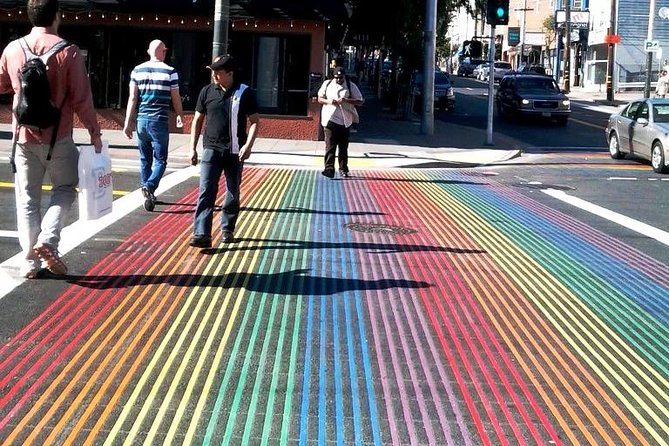
- The Rainbow Honor Walk Project is part of the walk, turning community milestones into something you can literally follow street by street.
- The AIDS Quilt Names Project original site is included, bringing the AIDS epidemic into the story with names and meaning.
- It’s a small group, max 2 travelers, which makes Q and A feel normal, not rushed.
The Castro, where walking feels like reading public history
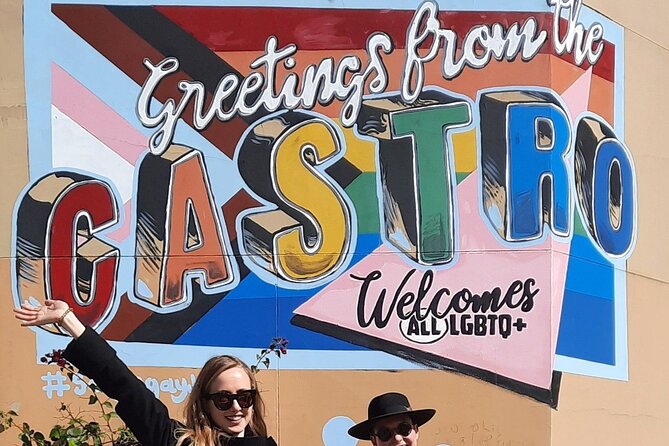
San Francisco’s Castro is one of those places where the streets do double duty: they’re everyday sidewalks, and they’re also a living timeline. This tour is built to help you make sense of what you see, from the neighborhood identity to the political fight that helped shape LGBTQ rights.
I like that the experience is anchored in specific, walk-to locations instead of vague big ideas. You’re not just hearing that people organized, you’re standing near the sites where organizing happened, and that changes how the story lands.
You should also know the tour’s tone is practical and human. It’s moving when it needs to be, but it stays grounded in how activism worked, who pushed it forward, and what consequences followed when rights were denied. If you want a meaningful “first taste” of the Castro without needing a full day of research, this is an efficient way to start.
Meet at 400 Castro St, then settle in for a tight 2-hour route
The tour starts at 400 Castro St and ends at the same place. It begins at 10:00 am, so it’s a nice option if you want to get your bearings early in your San Francisco day.
The group size is intentionally small, with a maximum of 2 travelers. That matters more than it sounds. In a tiny group, you can ask questions, pause for photos, and actually hear the guide explain what you’re looking at without feeling squeezed.
You’ll also get a mobile ticket, which makes the check-in step simple. There’s no hotel pickup, so plan to make your way to the meeting point on your own, and keep it rain-friendly since the tour runs rain or shine.
One more real-world note: the tour route uses public walkways that are wheelchair accessible, and service animals are allowed. If you’re thinking about bringing someone who needs mobility support, this is a point worth factoring in.
The rest of our Guided notes for San Francisco
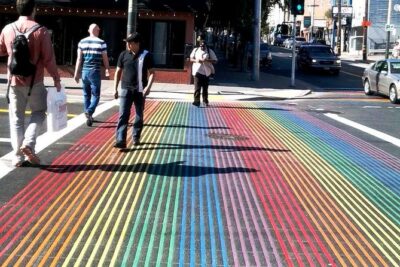

Stop 1: The Castro and Castro Theatre, plus the story behind the neighborhood
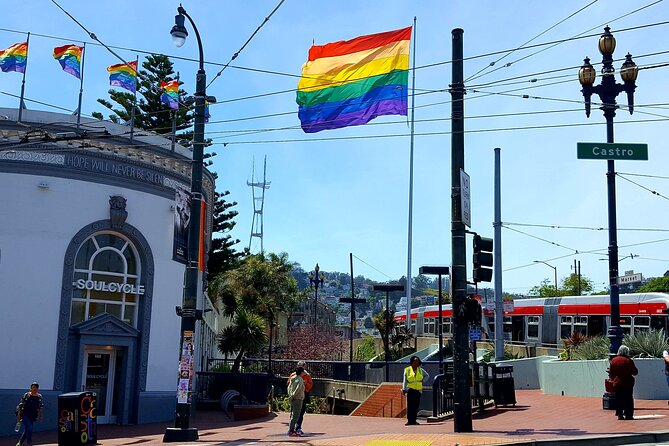
The core “walk engine” of the tour covers the Castro itself. You’ll be guided past major landmarks and historical sites, with a focus on how the neighborhood shaped LGBTQ culture and activism while also reflecting the wider struggle for civil rights.
A highlight here is the Castro Theatre, known for its Spanish Colonial Baroque architecture. Even if you’ve seen the Castro from the outside before, the theater adds a strong sense of place, because it signals how entertainment, community, and identity have been intertwined in this neighborhood for a long time.
You’ll also hear how the district got its name, and you’ll move through a timeline that spans big eras, from the Gold Rush period and World War II into the civil rights movement, then landing hard on the era of Harvey Milk and the AIDS epidemic. The tour company notes that the walk includes over 20 historical sites, and that’s the kind of detail that turns the Castro into a map you can understand, not just a neighborhood you pass through.
One practical consideration: with a 2-hour length, you’ll cover a lot of ground and you’ll want to stay with the group. The pace makes sense for the format, but it’s not built for slow wandering.
Rainbow Honor Walk and Pink Triangle Memorial Park, pride and remembrance on the same route

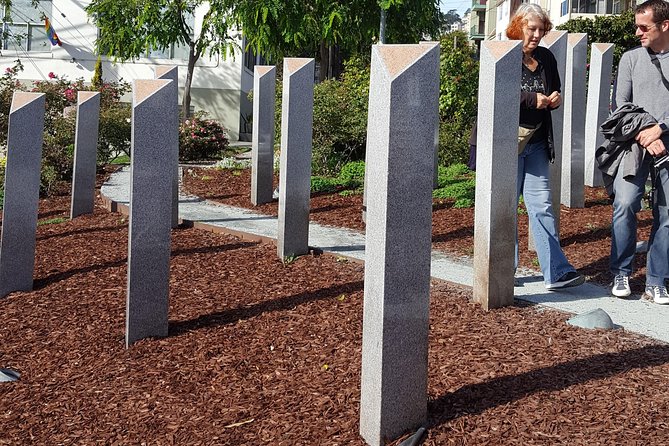
Two of the most meaningful parts of this tour are the memorial stops, because they show how the Castro holds both joy and grief in public space.
You’ll see the Pink Triangle Memorial Park, a site tied to historical persecution and the communities that survived it. Standing there with a guide helps, because it turns a memorial from something you might quickly photograph into something you can actually understand.
You’ll also visit the Rainbow Honor Walk Project. The value here is that it’s not just about one person or one moment. It frames recognition as community memory, so you get a sense of how many people contributed, even when the mainstream narrative left them out.
And then there’s the AIDS epidemic portion of the story. The tour includes the AIDS Quilt Names Project original site, which brings the AIDS crisis into the Castro narrative in a direct, personal way. This isn’t a distant history segment. It’s a visible reminder that real people were lost, and real communities responded.
If you’re the type who wants your travel to leave something behind in your head, these stops do that. They also help you connect the activism story to outcomes, not just slogans.
Harvey Milk Plaza: the first openly gay politician and the rainbow flag story
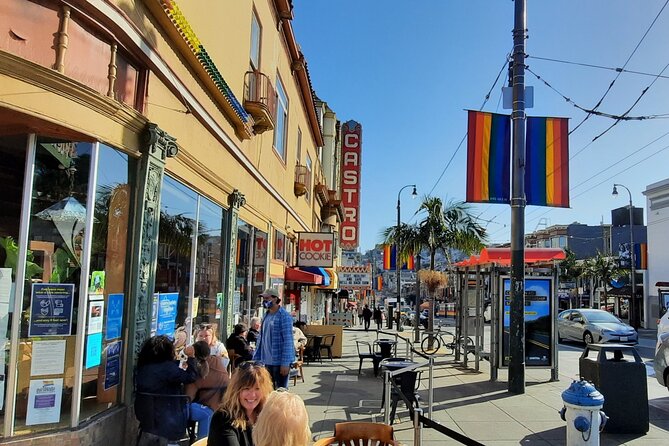
Harvey Milk is a central figure in the Castro identity, and the tour makes sure you don’t just see the name. At Harvey Milk Plaza, you learn how he arrived in San Francisco, rose into public office, and became the first openly gay male politician to serve in the United States. That detail sets the stakes for everything else you’re hearing on the walk.
This stop also covers how the rainbow flag was created. I like that this part is included, because it connects symbols to history. You’re not just looking at colorful street art, you’re learning why the symbol matters and where it came from.
You’ll spend about 20 minutes at this portion of the walk, and that timing is useful. It gives the guide enough room to explain the political context and the community response without dragging.
If your interest leans toward politics, culture, or both, this section is where the Castro clicks into focus. Milk’s story isn’t presented as isolated hero worship. It’s framed as activism tied to civil rights, community organizing, and real barriers people faced.
Human Rights Campaign Action Center: where a political office became a present-day mission
The final stop shifts from the past into what still needs doing.
You’ll visit the Human Rights Campaign Action Center and Store. The tour explains that this is the place of Harvey Milk’s original camera shop, campaign headquarters, and residence, and that it now operates as the HRC Action Center and Store. That continuity matters. It shows how a neighborhood center can change function while keeping the same purpose of pushing for rights.
From there, the guide ties the historical campaign work to current realities, including that LGBTQ people have not always had equal rights in employment, housing, and public accommodations. The tour keeps this grounded, so you don’t walk away thinking activism is only something that happened in the past.
Time-wise, this stop is about 10 minutes. It’s shorter than the Plaza and Castro segments, but it serves a clear role: a hard line from history to ongoing impact.
Additional Walking Tours on the review pile in San Francisco

Why Kathy’s long-time local perspective makes the story stick
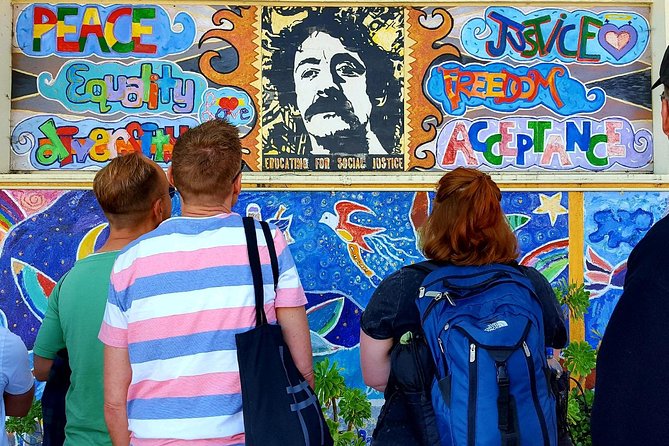
A tour can show you sites, but the guide decides what the sites mean. Kathy is repeatedly praised for being funny, passionate, and deeply involved in the community. People also highlight that her information comes from living with the neighborhood over decades, not just reading facts.
In practice, that shows up as specificity. Instead of general statements, she’s able to connect what you’re looking at to how people lived, organized, and pushed back against exclusion. That’s why the tour tends to feel personal even when the history is big.
Kathy also seems to manage different group energies well. If you’re traveling solo, you still get time for questions and context. If you’re with family, the tone is direct and inclusive. If you’re on a couples trip, the stories work because they’re human-scale, not just dates on a timeline.
The other thing I appreciate is that the tour isn’t trying to win you over with hype. It’s more like, Here’s what happened, and here’s why it matters. Then you walk to the next location and you see the evidence.
Pace, walking comfort, and who this tour suits best
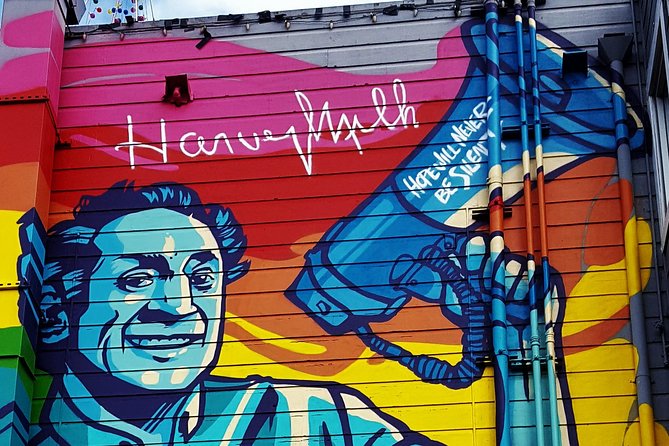
This is a 2-hour walking tour of the Castro. The structure includes multiple short stops, including roughly 20 minutes at Harvey Milk Plaza and about 10 minutes at the HRC Action Center. That gives you a rhythm: listen, look, move, listen again.
You should expect a moderate walking experience. It’s still a walking tour, so plan for time on your feet, and wear footwear that can handle city sidewalks comfortably. If you’re used to strolling between attractions, you’ll be fine.
Accessibility is handled as a practical expectation: public walkways are wheelchair accessible. Service animals are also allowed. That said, the tour is still outdoors, and since it runs rain or shine, you’ll want a plan for weather.
This tour fits best if you want an informed orientation to LGBTQ activism in San Francisco without turning it into homework. It’s also a strong choice for first-time visitors who want to understand why the Castro is what it is, not just what it looks like.
Price and value: what $40 buys beyond a casual walk
At $40 per person, the tour is priced like a focused, guided experience rather than a generic “walk and talk.” The value comes from three specific things you get for your money.
First, there’s the guide. A local guide who can translate streets into context is the whole point, and that’s included.
Second, there’s the density of stops. The tour description emphasizes over 20 historical sites, and the stops named include major memorial projects and landmark locations tied to Harvey Milk, the AIDS epidemic, and continuing civil rights struggles.
Third, there’s ticket value. The tour notes admission ticket included for key parts of the experience, including Stop 2. One stop related to the Human Rights Campaign Action Center is listed as admission ticket free, which can feel like a bonus.
So you’re paying for time with a local, plus access to interpretive context at important sites, all in a compact 2-hour window. For many visitors, that’s the sweet spot between “too short to matter” and “too long to stay focused.”
Should you book this Castro LGBTQ walking tour?
Book this if you want a smart first-time grounding in Castro LGBTQ activism, with stops tied to Harvey Milk, major memorial projects like the Pink Triangle and Rainbow Honor Walk, and the AIDS Quilt Names Project. I’d also recommend it if you like small-group experiences. A max of 2 travelers changes the feel fast.
Skip it or consider an alternate style if you’re looking for a relaxed, slow neighborhood stroll with minimal politics. This tour is designed to connect places to civil rights and activism, and it does not treat those topics as optional background.
If you want a 2-hour walk that helps you understand why the Castro matters, this is an easy yes. Just show up ready to listen, and you’ll leave with a much clearer map of the neighborhood’s meaning.
FAQ
How long is the San Francisco LGBTQ walking tour?
The tour runs for about 2 hours.
Where do you meet for the tour?
You meet at 400 Castro St, San Francisco, CA 94114, and the tour ends at the same location.
Is the tour offered in English?
Yes, it is offered in English.
Is the tour wheelchair accessible?
Public walkways are wheelchair accessible.
What is included in the $40 price?
The price includes a local guide, and admission ticket coverage is listed for parts of the tour (including Stop 2). The Human Rights Campaign Action Center and Store stop is listed as admission ticket free.
What happens if it rains, or if you cancel?
The tour operates rain or shine. If it is canceled due to poor weather, you are offered a different date or a full refund. If you cancel, the amount you paid is non-refundable and cannot be changed.
Guided reviewed right across San Francisco
- San Francisco: Alcatraz Ticket, Ferry, & Self-Guided App★ 4.5 · 2,460 reviews
- Golden Gate Bridge Guided Bicycle or E-Bike Tour from San Francisco to Sausalito★ 5.0 · 679 reviews
- From San Francisco: Guided Tour to Muir Woods and Sausalito★ 4.5 · 599 reviews
- From San Francisco: Guided Muir Woods Excursion★ 4.6 · 504 reviews
- From San Francisco: Guided Muir Woods Tour★ 4.5 · 400 reviews
Tours: the rest of the San Francisco file
- Big Bus SF: Hop-on Hop-off Tour with 17 Stops and Sunset Option★ 4.0 · 4,539 reviews
- Napa and Sonoma Wine Country Full-Day Tour from San Francisco★ 4.5 · 4,455 reviews
- San Francisco: Hop-On Hop-Off Sightseeing Tour with 17 Stops★ 4.5 · 3,600 reviews
- Yosemite Highlights & Giant Sequoias Day Tour from San Francisco★ 4.5 · 3,455 reviews
- San Francisco Love Tour★ 5.0 · 2,830 reviews
Tour Reviews: more from our San Francisco desk
- Muir Woods and Sausalito (Return by Bus or Ferry)★ 4.5 · 5,098 reviews
- Big Bus SF: Hop-on Hop-off Tour with 17 Stops and Sunset Option★ 4.0 · 4,539 reviews
- Napa and Sonoma Wine Country Full-Day Tour from San Francisco★ 4.5 · 4,455 reviews
- Small Group Yosemite and Giant Sequoias Day Trip from San Francisco★ 5.0 · 3,671 reviews
- San Francisco: Golden Gate Bay Cruise★ 4.7 · 3,644 reviews
Newest San Francisco reviews added to this site
- San Francisco Bay Cruise
★ 4.5 · 311 reviews - San Francisco Hop-on Hop-off Deluxe Tour 20 Stops 1 to 2 days
★ 3.0 · 320 reviews - San Francisco Fire Engine Tour
★ 5.0 · 322 reviews - San Francisco: Hop-On Hop-Off Bus with Ferry & Alcatraz Tour
★ 4.5 · 324 reviews - The Escape Game San Francisco: Epic 60-Minute Adventures Downtown
★ 5.0 · 334 reviews - Official Alcatraz Island Prison Tour with Free App Audio Packages
★ 4.5 · 337 reviews - San Francisco Bay Adventure Sightseeing Cruise
★ 5.0 · 339 reviews - Big Bus San Francisco: Sightseeing Sunset Tour by Open-Top Bus
★ 4.0 · 339 reviews - City Cruises San Francisco: Premier Brunch Cruise
★ 5.0 · 342 reviews - San Francisco: Golden Gate Bridge and Lombard GoCar Tour
★ 4.5 · 355 reviews
Walking Tours, side by side.
 ★ 5.0History and Hauntings of Salem Guided Walking TourFrom $3614,564 reviews
 ★ 4.5New Orleans Premier Ghost, Voodoo and Vampire Walking TourFrom $2712,856 reviews
 ★ 5.0Little Havana Food and Walking Tour in MiamiFrom $698,882 reviews
 ★ 5.0Chicago: Gangsters and Ghosts Walking TourFrom $527,155 reviews
 ★ 5.0Boston: Freedom Trail History Small Group Walking TourFrom $356,450 reviews
 ★ 5.0Historic Charleston Guided Sightseeing Walking TourFrom $306,216 reviews
 ★ 5.0New Orleans Food Walking Tour of the French Quarter with Small-Group OptionFrom $756,118 reviews
 ★ 4.5St. Louis Cemetery No. 1 Official Walking TourFrom $253,941 reviews
This one is also listed in