
Review · SAVANNAH HISTORIC DISTRICT
Savannah Stroll: Guided Sightseeing & History Walking Tour of Savannah
Savannah’s story walks right beside you. This 1.5-hour guided stroll in the Historic District starts at Reynolds Square and follows the city’s colonial government roots, then swings into the American Revolution and Civil War era through the squares and historic buildings you can actually see.
I love how it turns postcard Savannah into something you can picture and remember, and I also like the free admission angle at the stops, which keeps the experience budget-friendly. One drawback to plan for: the tour is history-forward, so if you want a full, hard look at slavery and Civil Rights, you may find coverage lighter than you hoped.
In This Review
- Key things to know before you go
- Reynolds Square: where the whole town’s story begins
- A 90-minute route with a max group size of 30
- The squares circuit: Johnson, Warren, Oglethorpe, and Chippewa
- Stop by stop: cathedral, cemetery, and the Savannah Historic District
- Historic homes and the story behind the buildings
- Juliette Gordon Low Birthplace and Independent Presbyterian Church
- How the guide ties it all together: port city strategy and war years
- Value and what to plan for, no hotel pickup, mobile ticket, English
- The one thing to match to your expectations: history depth
- Should you book Savannah Stroll with Savannah Walks?
- FAQ
- How long is the Savannah Stroll walking tour?
- Where does the tour start?
- Does the tour end at the starting location?
- What language is the tour offered in?
- Is there admission cost for the stops?
- What should I bring or wear?
- Is the tour wheelchair or stroller friendly?
- Can I cancel and get a full refund?
Key things to know before you go
- Reynolds Square first: colonial government ground, including the setting for Georgia’s Declaration of Independence reading moment
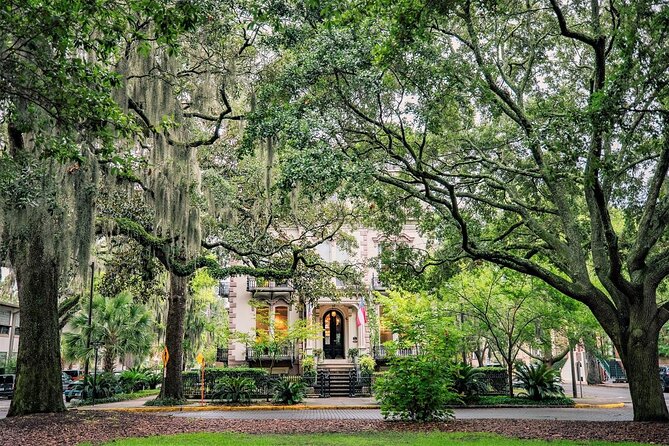
- A “squares first” route: Johnson Square, Warren Square, Oglethorpe Square, and Chippewa Square, all with that classic garden-city feel
- Revolution and Civil War focus: the guide connects Savannah to the port city strategy behind both eras
- Short and manageable: about 90 minutes on foot, with a max group size of 30
- Guide quality matters: names like Brad, William Spinks, Bill, and Zach show up repeatedly in praise for clear storytelling
Reynolds Square: where the whole town’s story begins
Reynolds Square is a smart place to start because it puts you at the center of Savannah’s colonial power. Here, the guide sets the scene, including how this square functioned as the hub of colonial government in the 1700s. You’ll also hear the detail that the House of Assembly held the first reading of the Declaration of Independence in Georgia.
That matters for your walk. Instead of seeing buildings as pretty backdrops, you start placing them on a timeline. You can look up at the architecture and understand why the square mattered to the people running the colony.
The vibe is also very Savannah. Think tree canopy, open-air squares, and a slow rhythm to the streets. This is a town built for strolling, and the tour leans into that with a “saunter and learn” pace.
A 90-minute route with a max group size of 30
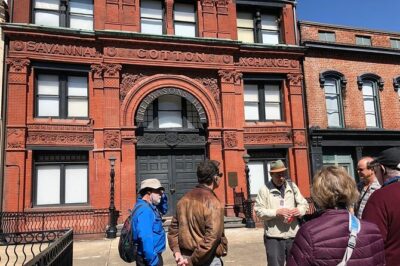
This tour runs about 1 hour 30 minutes. For most people, that’s a sweet spot. It gives you enough time to feel like you’ve gotten oriented, without wearing you out before you can explore on your own.
Group size is capped at 30, so it generally stays in that workable range where you can hear the guide and still look around without getting lost in a crowd.
Practical note: you will walk. Comfortable shoes help. The route also spends time in shaded areas, and on warm days a quick break in conditioned space has been mentioned as a helpful reset point during the middle of the tour.
One more logistics thing you should know up front. There’s no hotel pickup. You start at the meeting point in Savannah, and you’ll end back near where you started. In the past, there have been finish-point variations, but the consistent idea is that you’ll be given straightforward walking directions back.
The rest of our Guided notes for Savannah


The squares circuit: Johnson, Warren, Oglethorpe, and Chippewa
If you want Savannah in miniature, the squares are it. They’re not just pretty parks. They’re the city’s social rooms, and the guide uses them like chapters.
Johnson Square is one of the stops on the circuit. You’ll slow down there and get help reading the space: where streets open up, where the trees create shade, and how the square layout shaped how people moved and gathered.
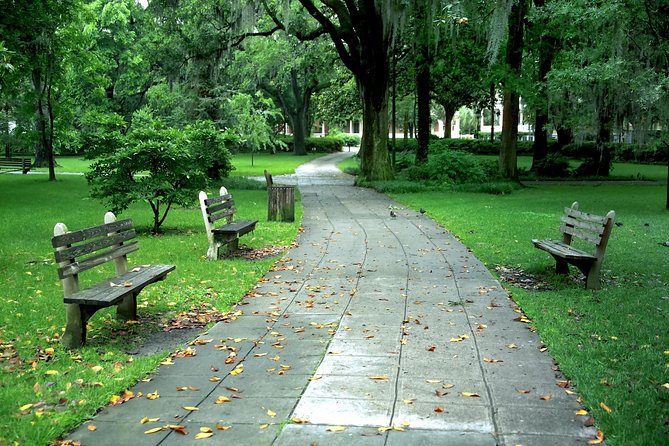
Warren Square and Oglethorpe Square add more texture to that same idea. By the time you reach them, the tour stops feeling like a list of landmarks. You start seeing patterns in the city plan. It also helps that these squares are described as park-like with canopies of trees and floral landscapes, which means you’re not trudging through a long stretch of sun-soaked pavement.
Then comes Chippewa Square. This is a key finishing point used in the tour flow. Even if you are eager to get moving again, chip away at the urge to rush. This is where the guide wraps up the big-picture story and ties it back to the Revolutionary War and Civil War themes you heard earlier.
Stop by stop: cathedral, cemetery, and the Savannah Historic District
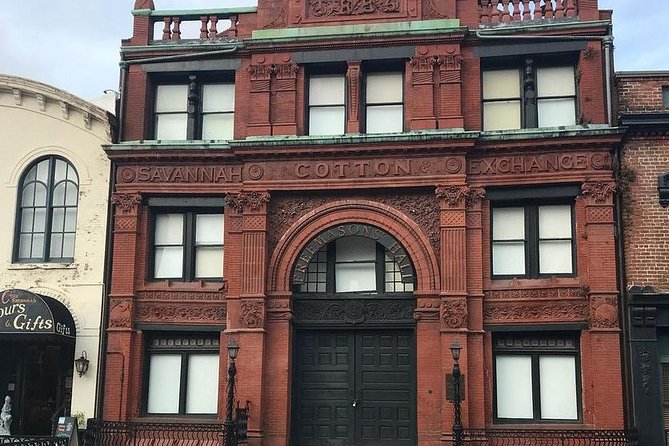
After Reynolds Square, the walk typically moves into the wider Historic District orbit, where you’ll see how “old Savannah” holds together.
Cathedral of St. John the Baptist is listed as the first named stop after Reynolds Square. Even if you don’t spend a long time inside (it depends on time and what the group can do), you’ll still get the value of understanding the surrounding history and why this part of town feels like the city’s center of gravity.
Next is Colonial Park Cemetery. A cemetery stop can sound heavy, but on a walking tour like this, it usually lands as a moment to slow down and connect names and eras to place. It also fits the theme of learning how Savannah grew and changed over time.
Then you move into the Savannah Historic District, which the tour frames as one of the largest National Historic Landmark Districts in the United States. That phrase alone can sound abstract, but the walking format makes it concrete. You’re not reading about preservation. You’re seeing the architecture and streetscapes that survived and shaped modern-day Savannah.
Historic homes and the story behind the buildings
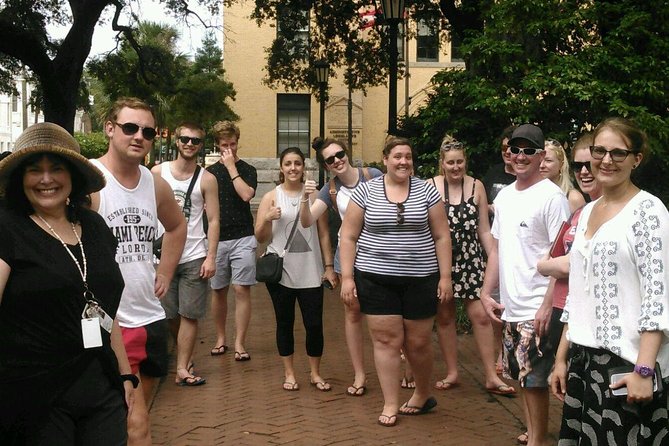
Part of the appeal of Savannah Walks style tours is that you get architecture with context. You’re not just looking at pretty facades. You’re getting reasons.
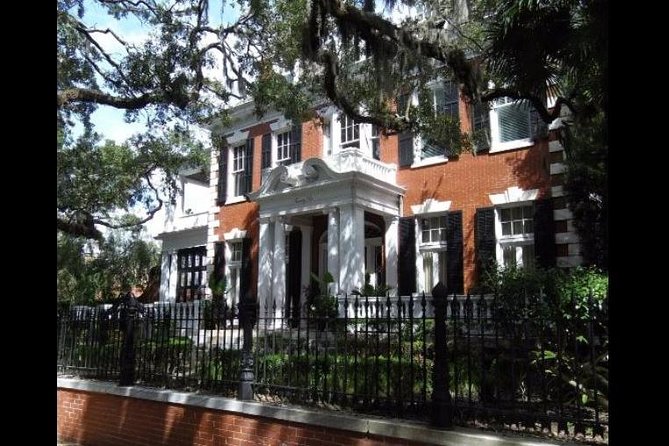
Green-Meldrim House is one of the listed stops. This is the kind of stop where you’ll notice how the city’s grand homes sit near civic spaces and squares, making it easy to understand how wealth and governance worked side by side.
Owens-Thomas House & Slave Quarters is also on the route. This stop is one of the places where the tour’s historical themes can feel more difficult, because it sits directly in the orbit of slavery-era Savannah. Here’s the honest heads-up based on the tour’s own feedback pattern: some people were disappointed that the walk’s Civil War and slavery coverage did not go as far as they expected, especially around slavery and later Civil Rights era topics. If that is your top priority, you’ll likely want a dedicated tour focused specifically on those subjects.
Still, the value of this stop for many visitors is that it gives you a named place tied to the realities of the city’s past, rather than leaving you with only broad Revolutionary era talk.
The Olde Pink House adds another flavor. It’s a distinctive name and a recognizable stop for first-time visitors. On this kind of walk, it also functions as a reminder that Savannah history continues beyond the 1700s. You’ll get a sense of what’s still standing and how the city keeps showing you its timeline in layers.
Andrew Low House Museum is another listed stop. Like the other homes, it gives you a chance to look closely at how Savannah’s elite domestic architecture sits within the same walking world as churches, squares, and civic sites.
Juliette Gordon Low Birthplace and Independent Presbyterian Church
Juliette Gordon Low Birthplace Museum appears on the route. Even if you just glance at the area and hear the guide’s framing, this stop helps broaden the tour beyond colonial government and war-era strategy. It gives you a second kind of Savannah story, one tied to later chapters of American history.
Independent Presbyterian Church is another important named stop. Churches matter in Savannah for the same reason they mattered across the South. They anchor communities, and they reflect the priorities of the people who built and maintained them. On a walking tour, these stops also work well because they’re easy waypoints, and the guide can connect them to the broader timeline the walk is building.
If you’re the type who likes your history with locations, these named places are what make the whole experience feel real.
Additional Walking Tours on the review pile in Savannah




How the guide ties it all together: port city strategy and war years
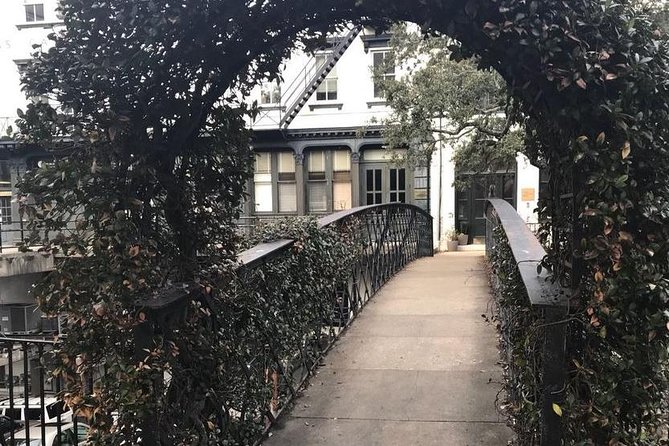
This tour is built around Savannah’s role in the American Revolution and the Civil War. The guide doesn’t treat these as distant dates. Instead, you hear why Savannah mattered as a strategic port city and how that shaped what happened here.
That approach is valuable even if you’ve read about the wars before. You get to associate the conflict with a geography: squares, streets, and buildings you can point to. It makes the history feel less like a textbook and more like cause-and-effect in a real place.
Also, you’ll hear stories about Georgia’s colonial history. One practical benefit: your guide often helps you connect the dots for future sightseeing. If the tour includes pointers to the city’s best shopping and dining spots, treat that as bonus value. A good guide helps you turn a historic walk into a useful game plan for the rest of your day.
Value and what to plan for, no hotel pickup, mobile ticket, English
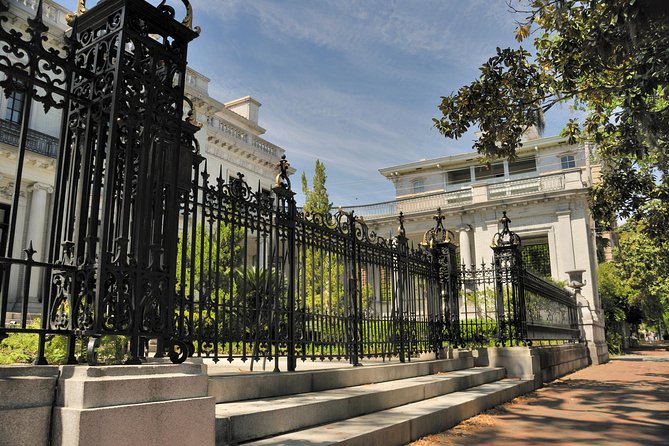
Here’s why this tour tends to feel like good value. You’re paying for a live guide and a focused orientation, not a long bus ride. The stops listed are marked as free admission in the tour details, which helps keep additional costs down while you’re moving through historic areas.
You’ll also get a mobile ticket, which is convenient. No one wants to fuss with printed vouchers while trying to find Reynolds Square.
In terms of planning, the key items are simple:
- Wear walking shoes, because you are out for about 90 minutes
- Plan to start at 24 Habersham St in Savannah, and expect to finish back near that meeting area
- Come ready for English narration, since that’s the offered language
Pets are welcome, and service animals are allowed. The tour is also described as near public transportation, which makes it easier to fit into a tight itinerary.
The one thing to match to your expectations: history depth
I’ll say this plainly: the walk is more history than roaming. It’s not a “mostly scenery” tour where you mostly look around and the guide provides occasional facts. You’ll be learning, and in a fairly concentrated way.
What you might love:
- You like colonial and war-era Savannah explained through actual places
- You want an easy first pass at how the city plan works, especially its squares
- You want a guide who can answer questions and keep the pacing friendly
What you should consider:
- If you want a very detailed, modern lens on slavery, Civil War aftermath, and Civil Rights, you may feel the coverage is limited. One consistent disappointment was that the walk leaned toward Revolutionary War and founding Georgia, with less emphasis on slavery and Civil Rights era history than expected.
If your priority is the hardest parts of the story in more depth, it’s worth looking for a tour explicitly focused on those topics. In other words, do not assume one walking tour will cover every chapter equally well.
Should you book Savannah Stroll with Savannah Walks?
Book it if you’re a first-timer or you want a fast, memorable way to get oriented. This is a strong option for building your mental map of Savannah’s Historic District, its park squares, and its colonial and war-era connections. The stop selection, especially Reynolds Square plus the squares circuit, makes it easier to explore independently afterward.
Skip or choose differently if:
- You only have time for a short outdoor wander with minimal lecture
- You are specifically seeking in-depth coverage of slavery and Civil Rights history
- You need absolute certainty that every named sight will be handled in the same way each time, since walking tours can vary slightly with pacing and group needs
If you do book, show up with comfortable shoes and curiosity. You’ll leave with a clearer sense of why Savannah looks the way it does, and how its big historical moments connect to the streets you just walked.
FAQ
How long is the Savannah Stroll walking tour?
It runs about 1 hour 30 minutes.
Where does the tour start?
The meeting point is 24 Habersham St, Savannah, GA 31401, USA, in the area of Reynolds Square.
Does the tour end at the starting location?
This activity ends back at the meeting point, though the exact finish area can be near the squares on the route.
What language is the tour offered in?
The tour is offered in English.
Is there admission cost for the stops?
The tour details list admission as free for the sights included on the route.
What should I bring or wear?
Comfortable walking shoes are recommended. Plan to walk for the full 90 minutes.
Is the tour wheelchair or stroller friendly?
The tour details say most travelers can participate, and a guide can handle groups that include strollers, but you should still expect real walking.
Can I cancel and get a full refund?
Yes. You can cancel up to 24 hours in advance for a full refund. If you cancel less than 24 hours before the start time, the amount paid is not refunded.
Guided reviewed right across Savannah
- Historic Savannah Guided Walking Tour★ 5.0 · 2,918 reviews
- 1-Hour Bonaventure Cemetery Golf Cart Guided Tour in Savannah★ 5.0 · 1,371 reviews
- 60-Minute Guided Segway History Tour of Savannah★ 5.0 · 1,163 reviews
- Guided Savannah Civil War History Walking Tour★ 5.0 · 492 reviews
- Savannah Slavery to Freedom Guided History Tour★ 5.0 · 407 reviews
Tours: the rest of the Savannah file
- Savannah Hop-On Hop-Off Trolley Tour★ 4.5 · 6,527 reviews
- Savannah History and Haunts Candlelit Ghost Walking Tour★ 5.0 · 3,235 reviews
- Savannah First Squares Culinary & Cultural Walking Food Tour★ 5.0 · 3,229 reviews
- Historic Savannah Guided Walking Tour★ 5.0 · 2,918 reviews
- Savannah Ghosts & Gravestones Trolley Tour★ 4.0 · 2,723 reviews
Tour Reviews: more from our Savannah desk
- Savannah Hop-On Hop-Off Trolley Tour★ 4.5 · 6,527 reviews
- 90-Minute Savannah Riverboat Sightseeing Cruise★ 4.0 · 3,367 reviews
- Savannah History and Haunts Candlelit Ghost Walking Tour★ 5.0 · 3,235 reviews
- Savannah First Squares Culinary & Cultural Walking Food Tour★ 5.0 · 3,229 reviews
- Historic Savannah Guided Walking Tour★ 5.0 · 2,918 reviews
Newest Savannah reviews added to this site
- Civil War Savannah!! Guided Walking Tour
★ 4.0 · 314 reviews - Welcome to Savannah Guided Walking Tour
★ 5.0 · 329 reviews - Historical Bike Tour of Savannah and Keep Bikes After Tour
★ 5.0 · 345 reviews - Savannah Stroll: Guided Sightseeing & History Walking Tour of Savannah
★ 4.5 · 350 reviews - Golf Cart Tours, Bonaventure Cemetery Savannah Cruzers
★ 5.0 · 356 reviews - Savannah: Tybee Island Dolphin Tour
★ 4.7 · 359 reviews - 90-Minute Segway History Tour of Savannah
★ 5.0 · 365 reviews - Savannah Yes, Queen! Drag Queen Pub Crawl
★ 4.5 · 367 reviews - Savannah Midnight in the Garden of Good & Evil Narrated Walking Tour
★ 5.0 · 370 reviews - Narrated Harbor Luncheon Riverboat Cruise
★ 4.5 · 371 reviews
Savannah Historic District, side by side.
 ★ 4.5Savannah Hop-On Hop-Off Trolley TourFrom $446,527 reviews
 ★ 4.090-Minute Savannah Riverboat Sightseeing CruiseFrom $413,367 reviews
 ★ 5.0Savannah History and Haunts Candlelit Ghost Walking TourFrom $393,235 reviews
 ★ 5.0Savannah First Squares Culinary & Cultural Walking Food TourFrom $963,229 reviews
 ★ 5.0Historic Savannah Guided Walking TourFrom $302,918 reviews
 ★ 4.0Savannah Ghosts & Gravestones Trolley TourFrom $392,723 reviews
 ★ 4.5Savannah’s Ghost City “Dead of Night” Walking Night TourFrom $342,482 reviews
 ★ 4.5Narrated Historic Savannah Sightseeing Trolley TourFrom $352,375 reviews
This one is also listed in