

Review · CIVIL WAR BATTLEFIELDS
Civil War Savannah!! Guided Walking Tour
Savannah’s Civil War story hides in plain sight. This guided walking tour threads the conflict through the city’s famous blocks, architecture, and landmarks, starting at Warren Square and ending at Sherman’s Green-Meldrim House. You get the military timeline, plus what Savannah residents faced during hard times.
Two things I love: the way the tour builds context (colonial government, Independence Day moments, and the street plan) and then turns that backdrop into Civil War strategy and local hardship. Another win is the storytelling style, with guides like Will, Zack, and Brad mixing humor and quick facts so the hour and a half does not drag.
One possible drawback: because Savannah’s fighting was limited compared with other places, the tour may spend a good chunk of time on Savannah history and geography, not nonstop battle action.
In This Review
- Civil War Savannah walking tour highlights at a glance
- Warren Square start: Sherman’s telegram meets Savannah’s street plan
- The Savannah Historic District: why the war story fits the blocks
- Fort Pulaski before Fort Sumter: the timeline the tour actually explains
- Generals’ homes and military strategy on foot
- Sherman’s headquarters ending at Green-Meldrim House
- How long it takes, what to wear, and who should book
- Tips for getting the most from this Civil War Savannah walk
- So, should you book Civil War Savannah!! with Savannah Walks?
- FAQ
- How long is the Civil War Savannah walking tour?
- Where does the tour start and end?
- What language is the tour offered in?
- Do I need a printed ticket?
- Is admission free at the Warren Square start?
- Is the tour good for families or most travelers?
- Are pets allowed?
- Is there a cancellation policy?
Civil War Savannah walking tour highlights at a glance
- Warren Square start: Sherman’s message to Lincoln is part of the opening scene, right where you can see how the city functioned.
- Savannah Historic District scale: You explore one of the largest National Historic Landmark Districts in the US, so the walk is basically a living textbook.
- General-linked architecture: You pass homes tied to the South’s most prominent generals and see how power sat in neighborhoods.
- Strategy and hardships, not just dates: The focus includes how Northern and Southern plans played out and what locals endured.
- Sherman’s headquarters ending: The tour finishes at the Green-Meldrim House, where Sherman stayed and penned his famous missive.
- Small group feel: Maximum of 30 travelers, with a professional guide and a walk that fits most people who can handle city sidewalks.
Warren Square start: Sherman’s telegram meets Savannah’s street plan
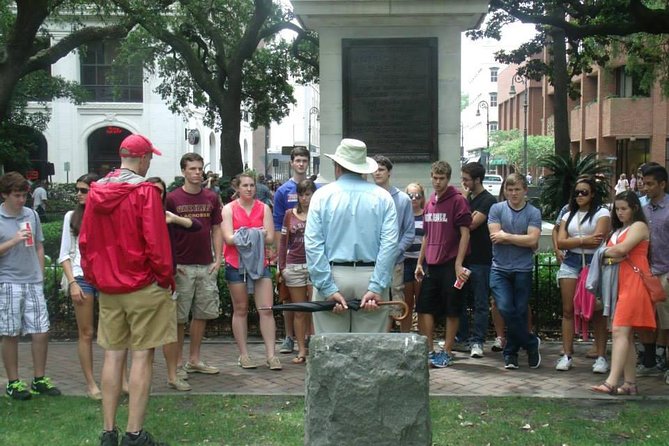
The tour begins at 22 Habersham St near Warren Square, and right away you get the “why here, why now” feeling. You start with the Civil War endgame mood, including the opening lines of General Sherman’s telegram to President Lincoln from December 22, 1864, after the occupation of Savannah. That sets the tone: this is not just about who fought, it is about what the war meant to the city and how power moved.
From there, the guide points you to the built environment around the square. Savannah’s historic district was the center of colonial government in the 1700s, and it is also where the first reading of the Declaration of Independence took place in Georgia. That might sound like a detour, but it actually helps you understand the stakes. When you walk these blocks, you start seeing why the Union and Confederacy both cared about administration, supply, and control of space.
If you like your history grounded, this start works. You are outside, looking at streets and buildings that still hold the shapes of old decisions. Just note that you will be on foot from the first minutes, so comfortable shoes are not optional in a practical sense.
The Savannah Historic District: why the war story fits the blocks
Savannah’s Historic District is huge, and the tour uses that scale in a smart way. You are not just hopping between “pretty spots.” You are walking through a layout where colonial government, commerce, and neighborhoods all overlap with later conflict.
Here is the key idea I like: the tour shows how the Civil War was not something that only happened at distant forts. In Savannah, the war arrived through logistics, planning, and the civilian squeeze that comes when armies and supplies shift. The guide connects the military story to the city’s geography so you can follow the logic instead of memorizing names.
You also get the architecture angle, which matters more than it sounds. Seeing historic homes and public structures helps you understand how leaders lived and how influence looked on the street level. Passing houses tied to the South’s prominent generals makes this real. You start to notice who had the resources to live well during unstable times, and who did not.
One more practical note: the pace keeps you moving, but the stops are frequent enough that you can ask questions. With maximum group size at 30 travelers, you usually get a human conversation, not a lecture you cannot reach.
The rest of our Guided notes for Savannah



Fort Pulaski before Fort Sumter: the timeline the tour actually explains
A common Civil War timeline lesson goes, Fort Sumter gets attention, then everything else falls into place. This tour adds a Georgia-flavored sequence that helps the story feel less distant.
According to the tour’s framing, the Civil War begins in January of 1860 with the seizing of Fort Pulaski by Georgian troops, which happens about three months before the attack on Fort Sumter in Charleston. That shift matters because it makes the war feel regional and local, not just a headline from another state.
The guide uses that timeline to talk about how Northern and Southern strategies developed, and how those strategies collided with Savannah’s reality as a major place with people who had to keep living. It is not just “who won.” It is about why certain moves were made and what those moves did to the ground truth of daily life.
You can also expect the tour to address myths. One discussion point that comes up in the tour narrative is the idea that people expect Sherman to behave like a cartoon villain. The guide explains that the story of Sherman burning Savannah is not matched by the actual actions attributed to him, and it compares the cities that were set on fire to separate cases elsewhere. Even if you already know some of this, it is a useful correction because it changes how you interpret the outcome in Savannah.
Generals’ homes and military strategy on foot
A major draw is that you literally walk past places tied to prominent Civil War leaders. That is not a gimmick. It gives you a visible sense of how the war leadership network sat inside a real town.
The tour route focuses on the Savannah Historic District, and along the way you see sites tied to the South’s most prominent generals. The guide connects those stops to themes like planning, command, and control. You learn how Savannah fit into Confederate priorities and how Union planning treated the city as a target worth capturing.
Then comes the part I think makes this tour more than trivia: civilian hardship. The guide talks about how locals handled scarcity, uncertainty, and the consequences of military decisions. When you hear about hardships during the war, it is not presented as vague suffering. It is tied to the city’s role and what occupation and strategic movement tend to do to ordinary routines.
I also like that humor shows up in a way that keeps the tone light without erasing the seriousness. Guides like Will and Zack are called out for being funny and engaging, and Brad is praised for being an engaging, personable guide. That combination matters on a walking tour, because you need the guide to keep your brain awake while you walk.
One consideration: a few people expect constant Civil War battle talk. If you are looking for nonstop combat detail, you might feel the balance tilts toward Savannah history because the war story is woven into the city itself. That said, the tour keeps coming back to the war themes, including strategy and the Savannah angle on events that other cities get more credit for.
Sherman’s headquarters ending at Green-Meldrim House
The tour ends at 14 W Macon St, at the Green-Meldrim House, also known as Sherman’s headquarters. The location is described as the west side of Madison Square at the intersection of Bull and Harris St. Ending here is satisfying because the war story reaches a physical climax.
The Green-Meldrim House stop is framed as the place where Sherman was invited to stay and penned his famous missive. That matters because it takes you beyond abstract history. You are standing at a building tied to the moment when the occupation outcome became written command and public consequence.
This is also where you can look back at what you learned along the route. The tour started with a telegram to Lincoln, it explained earlier Georgia developments like the Fort Pulaski timeline, and it connected military strategy to how Savannah’s streets and neighborhoods functioned. Ending at Sherman’s headquarters ties it into a clear arc.
If you enjoy leaving a tour with a strong final image, this one delivers. It gives you a concrete stop you can point to later when you tell friends you did a Civil War walking tour in Savannah that did more than pose for photos.
How long it takes, what to wear, and who should book
The tour runs about 1 hour 45 minutes. That duration is long enough to feel like a real walk through the historic district, but short enough that you can still use the afternoon or evening for museums, river views, or dinner. The stop at Warren Square is set up as the opening scene and then the route continues from there to the final headquarters location.
What you wear matters here. You are on foot through historic streets, so comfortable shoes are the practical rule. If you are visiting in summer heat, take it seriously. One review specifically calls out that July heat can be brutal, which is sensible for Savannah.
Good fit for:
- People who like American history, especially Civil War era stories with city geography
- Families with older kids who enjoy learning about causes and effects in a structured way
- Anyone who already loves Savannah architecture and wants a war layer added
Also good to know: pets are welcome, and the tour is near public transportation. Most travelers can participate, so you are not dealing with extreme hiking conditions, but you do need to be comfortable walking city blocks.
Additional Walking Tours on the review pile in Savannah




Tips for getting the most from this Civil War Savannah walk

To enjoy this tour fully, I suggest you show up ready to connect dots. Do not treat each stop as a standalone photo opportunity. Treat it like a sequence: colonial Savannah, then the war timeline, then military strategy, then civilian hardship, then Sherman’s written message.
Arrive with one question in mind, like:
- What did capturing Savannah change?
- How did the city’s geography shape strategy?
- Why does the timeline start with Fort Pulaski, not Fort Sumter?
Then let the guide do the rest. The guides for this route have earned praise for being engaging and for packing in a lot of accurate detail without turning it into a march of dates. In at least one case, a guide even extended the tour a bit, and that kind of attention usually means you should expect follow-up answers when you ask questions.
One more “real-world” tip: the tour includes a mobile ticket. Have your phone charged enough to show it quickly at the start. That sounds obvious, but it is an easy way to avoid a stressed minute at check-in.
So, should you book Civil War Savannah!! with Savannah Walks?
If you want a guided Civil War walking experience that is tied directly to Savannah’s historic district, this is a strong choice. You get a focused route from Warren Square to Green-Meldrim House, and you learn how the city’s role shaped the war, including strategy and civilian hardships. Ending at Sherman’s headquarters makes the story feel complete.
I would especially recommend it if you like history that connects to place, not just names on a page. And if you are the type who enjoys architecture as evidence, the homes and buildings along the way will give you something to look at besides street corners.
If you only want battle action and dense military operations on every block, you may want to set expectations. The tour’s approach explains why Savannah’s story is about the war arriving through control, planning, and impacts on everyday life, not constant front-line fighting.
If that sounds like your kind of learning, book it, wear good shoes, and plan your next stop nearby so the walk flows naturally into the rest of your Savannah day.
FAQ
How long is the Civil War Savannah walking tour?
The tour lasts about 1 hour 45 minutes.
Where does the tour start and end?
It starts at 22 Habersham St, Savannah, GA 31401. It ends at 14 W Macon St, Savannah, GA 31401, at the Green-Meldrim House area near Madison Square (west side, intersection of Bull and Harris St).
What language is the tour offered in?
The tour is offered in English.
Do I need a printed ticket?
No. You use a mobile ticket.
Is admission free at the Warren Square start?
The tour summary notes the Warren Square stop has admission ticket free.
Is the tour good for families or most travelers?
Most travelers can participate, and it is a walking tour with a group size capped at 30.
Are pets allowed?
Yes, pets are welcome.
Is there a cancellation policy?
You can cancel for a full refund up to 24 hours before the experience starts. The tour has minimum numbers, so it could be canceled if those requirements are not met, with an alternative date or a full refund.
Guided reviewed right across Savannah
- Historic Savannah Guided Walking Tour★ 5.0 · 2,918 reviews
- 1-Hour Bonaventure Cemetery Golf Cart Guided Tour in Savannah★ 5.0 · 1,371 reviews
- 60-Minute Guided Segway History Tour of Savannah★ 5.0 · 1,163 reviews
- Guided Savannah Civil War History Walking Tour★ 5.0 · 492 reviews
- Savannah Slavery to Freedom Guided History Tour★ 5.0 · 407 reviews
Tours: the rest of the Savannah file
- Savannah Hop-On Hop-Off Trolley Tour★ 4.5 · 6,527 reviews
- Savannah History and Haunts Candlelit Ghost Walking Tour★ 5.0 · 3,235 reviews
- Savannah First Squares Culinary & Cultural Walking Food Tour★ 5.0 · 3,229 reviews
- Historic Savannah Guided Walking Tour★ 5.0 · 2,918 reviews
- Savannah Ghosts & Gravestones Trolley Tour★ 4.0 · 2,723 reviews
Tour Reviews: more from our Savannah desk
- Savannah Hop-On Hop-Off Trolley Tour★ 4.5 · 6,527 reviews
- 90-Minute Savannah Riverboat Sightseeing Cruise★ 4.0 · 3,367 reviews
- Savannah History and Haunts Candlelit Ghost Walking Tour★ 5.0 · 3,235 reviews
- Savannah First Squares Culinary & Cultural Walking Food Tour★ 5.0 · 3,229 reviews
- Historic Savannah Guided Walking Tour★ 5.0 · 2,918 reviews
Newest Savannah reviews added to this site
- Civil War Savannah!! Guided Walking Tour
★ 4.0 · 314 reviews - Welcome to Savannah Guided Walking Tour
★ 5.0 · 329 reviews - Historical Bike Tour of Savannah and Keep Bikes After Tour
★ 5.0 · 345 reviews - Savannah Stroll: Guided Sightseeing & History Walking Tour of Savannah
★ 4.5 · 350 reviews - Golf Cart Tours, Bonaventure Cemetery Savannah Cruzers
★ 5.0 · 356 reviews - Savannah: Tybee Island Dolphin Tour
★ 4.7 · 359 reviews - 90-Minute Segway History Tour of Savannah
★ 5.0 · 365 reviews - Savannah Yes, Queen! Drag Queen Pub Crawl
★ 4.5 · 367 reviews - Savannah Midnight in the Garden of Good & Evil Narrated Walking Tour
★ 5.0 · 370 reviews - Narrated Harbor Luncheon Riverboat Cruise
★ 4.5 · 371 reviews
Civil War Battlefields
 ★ 4.5Fort Sumter Admission and Self-Guided Tour with Roundtrip FerryFrom $433,343 reviews
 ★ 4.7Charleston: Fort Sumter Entry Ticket with Roundtrip FerryFrom $432,879 reviews
 ★ 4.52-Hour Gettysburg Battlefield Guided History Bus Tour with a National Park GuideFrom $432,201 reviews
 ★ 4.5Civil War Ghosts: Echoes of the Fallen Gettysburg Ghost TourFrom $32913 reviews
 ★ 4.5Gettysburg Battlefield Self-Guided Driving Audio TourFrom $16910 reviews
 ★ 4.8Gettysburg: Horse-Drawn Carriage Battlefield TourFrom $74896 reviews
 ★ 4.5Gettysburg: Ghost Hunt Tour with Ghost Hunting EquipmentFrom $28589 reviews
 ★ 5.0Civil War Tour with Lotz House, Carter House & Carnton Admission from NashvilleFrom $101522 reviews
This one is also listed in