
Review · CITY TOURS
Tabernacle Choir Performance + Salt Lake City Guided Bus Tour
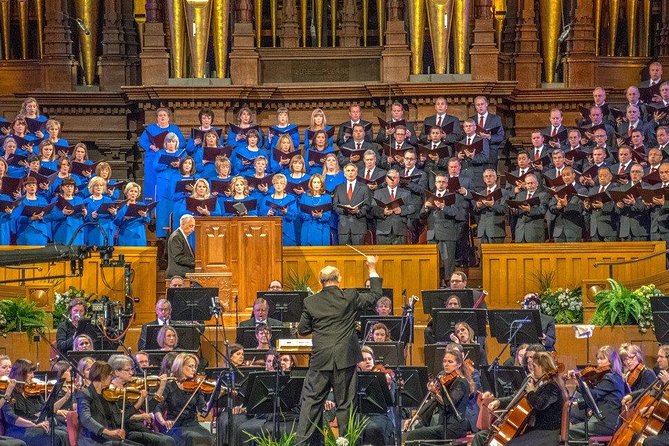
Salt Lake City hits different when the choir is live. This 3.5-hour experience pairs a performance at Temple Square with an efficient guided bus tour that shows you the city’s major sights, from Capitol Hill to pioneer landmarks. I especially like how the day blends iconic architecture with real stories you can connect to what you are seeing.
Two things I would not skip here: the Thursday rehearsal access (or the full Sunday concert/broadcast), and the way the guide ties together places like the Utah State Capitol, This is the Place Heritage Park, and Temple Square. You also get an air-conditioned ride and professional narration, and the group is kept to a maximum of 30 people, so it does not feel like a giant cattle call.
One consideration is pacing. The city loop packs in lots of stops, and a few people say it can feel rushed, especially if you want linger time. If you are traveling with kids, note that Sunday performances seat children under age 8 in a separate area due to acoustics and sound recording.
In This Review
- Key things to know
- Why This Choir + Bus Combo Works in 3.5 Hours
- Choir Day, Thursday Rehearsal vs Sunday Concert (What Changes)
- Where the performance happens
- The Bus Route: How You See the City Without a Car
- Capitol Hill Highlights, From Utah State Capitol to Council Hall
- Utah State Capitol, with the rotunda and views
- City and County Building, plus quick civic stops
- Council Hall, moved brick-by-brick
- Pioneer Story Stops, This Is the Place Heritage Park to Temple Square Grounds
- This is the Place Heritage Park
- Mormon Pioneer Trail markers
- Temple Square: the spiritual and historic heart
- Temple Square Meets Other Faiths, Cathedral, Temple Exterior, and Family History
- Salt Lake Temple, mostly exterior
- Cathedral of the Madeleine, Gothic Revival in the Avenues
- FamilySearch Library and genealogy perspective
- Modern Salt Lake and the Olympics: From Olympic Cauldron Park to City Creek Center
- Olympic Cauldron Park and the 2002 legacy
- Gateway and downtown transformation
- Delta Center, Rice-Eccles Stadium, and arts venues
- Guides, Q&A, and Why Names Like Todd, Matthew, and Mark Matter
- Practical Pacing Tips, So You Do Not Feel Rushed
- Value: Is $89 Worth It for Music Plus City Sights?
- Who Should Book, and Who Should Skip
- Final Call: Should You Book This Tabernacle Choir + Salt Lake Tour?
- FAQ
- FAQ
- What is included in this tour?
- How long is the tour?
- What is the difference between Thursday and Sunday?
- Where do the choir performances take place?
- Are there any seating rules for children on Sunday?
- What does the tour show at the Salt Lake Temple?
- Where does the tour start and end?
- Do I need to tip?
Key things to know
- Choose your music day: Thursday is rehearsal time, Sunday is the big concert and broadcast experience
- Acoustics are the star: you get famous venues like the Salt Lake Tabernacle and the 11,632-pipe organ
- Temple Square is more than photos: you also learn the symbolism of the Salt Lake Temple and the surrounding historic buildings
- Pioneer stops matter: This is the Place Heritage Park, pioneer trail markers, and sites tied to Brigham Young’s early settlement
- Modern Salt Lake shows up too: Olympics landmarks, shopping at City Creek Center, and major sports and arts venues
- Guides can make it click: past choir members, plus guides like Todd, Matthew, and Mark bring extra context
Why This Choir + Bus Combo Works in 3.5 Hours
This tour is built for one goal: help you get oriented fast. Salt Lake City can feel very “one district equals one story,” especially if you arrive expecting just downtown sights. Here, you get a guided route that jumps between Utah’s civic center, pioneer-era landmarks, major religious sites, and even some modern points tied to the 2002 Winter Olympics.
The value is in the pairing. The choir performance is the emotional payoff. The bus tour is the map and the context. When you later wander on your own, you will understand why people care about Temple Square, why the Capitol looks the way it does, and how Salt Lake City developed as a planned community rather than a random collection of buildings.
Choir Day, Thursday Rehearsal vs Sunday Concert (What Changes)
The Tabernacle Choir experience is the headline, and the day you pick changes how it feels.
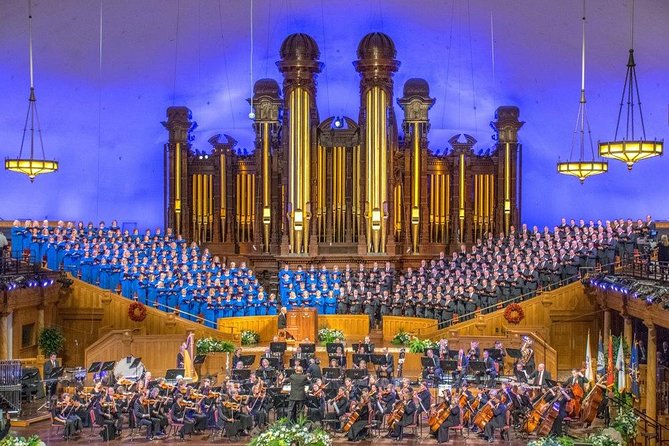
On Thursday, you get a chance to watch the weekly rehearsal. That means you hear more than a finished performance. You see how the conductor works with the ensemble, you get a behind-the-scenes look, and you can experience the building’s legendary sound.
On Sunday, you choose the full concert experience. The Sunday option described here includes attendance at the live broadcast of Music and the Spoken Word, the long-running show that has been on the air since 1929. For many first-time visitors, this feels like the choir is part of Salt Lake City’s daily heartbeat, not just a one-off tourist event.
The rest of our Guided notes for Salt Lake City
Where the performance happens
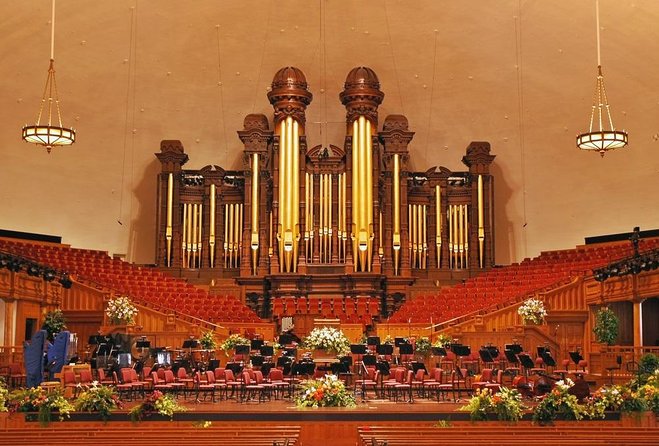
Depending on the season, the performance is held either at the Historic Salt Lake Tabernacle or the LDS Conference Center. The Tabernacle is known for its 1867 pioneer-era construction and famous acoustics, including the pin-drop description at distance. It also features the iconic 11,632-pipe organ. In summer months, performances move to the LDS Conference Center, a modern auditorium that seats 21,000 and is noted for its massive 7,667-pipe organ.
If you are choosing between rehearsal and concert purely on vibe, I would tilt toward rehearsal when you want “how it comes together.” Pick Sunday if you want the polished, big broadcast moment.
The Bus Route: How You See the City Without a Car
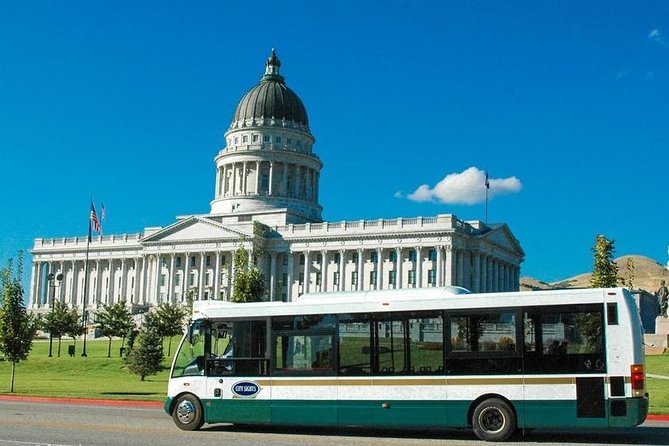
Your day starts at the Radisson Hotel Salt Lake City Downtown on West South Temple Street, and it ends back at the same meeting point. You ride an air-conditioned bus, and the group stays under 30 people. That matters in real life because it keeps stops more manageable, especially around busy downtown areas.
The route is structured like a tour of themes. You begin around Capitol Hill, then you shift into pioneer landmarks and Temple Square, then you widen out to civic buildings, religious architecture, and modern Salt Lake points tied to the Olympics and local culture.
One practical tip that shows up in feedback: plan on a full camera day. I would bring a water bottle, and I would keep your camera fully charged, because you will be making quick stops where the best photos are a matter of timing.
Capitol Hill Highlights, From Utah State Capitol to Council Hall
The tour spends real time in the civic core, and that is a smart choice. Salt Lake City’s identity is not only religious. It also shows up in the way the city built its government buildings and public spaces.
Utah State Capitol, with the rotunda and views
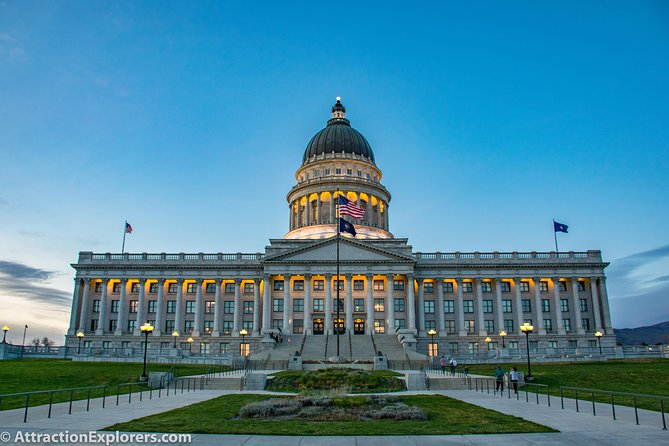
You start at the Utah State Capitol, completed in 1916, with a copper dome that rises 285 feet. You see the rotunda, marble columns, and murals that depict Utah history. The payoff is not only the building itself, it is the high vantage point for photos of the Salt Lake Valley and the Wasatch Mountains.
This is one of those stops where the guide’s narration helps you see design choices as symbols, not just decoration.
What else we logged under City Tours in Salt Lake City

City and County Building, plus quick civic stops
You also view the City and County Building, a Romanesque Revival sandstone structure finished in 1894, with a clock tower listed at 256 feet and ornate stonework. It is the kind of building that looks like it belongs in a bigger city, which is exactly why it is worth a quick look from the outside and the grounds.
Other civic stops you may get included on the loop include the Salt Lake City Public Library by Moshe Safdie, with its curved glass and rooftop garden vibe, plus the Governor’s Mansion exterior and Federal Heights setting.
Council Hall, moved brick-by-brick
The Council Hall stop has a preservation story baked in. It served as Utah’s territorial capitol from 1866 to 1896 and was saved by being moved to its current Capitol Hill location brick-by-brick in 1963. If you care about how cities protect their past, this is the kind of detail you will remember later when you notice other older buildings around downtown.
Pioneer Story Stops, This Is the Place Heritage Park to Temple Square Grounds
If the choir is the music, pioneer Salt Lake is the plot. The tour does a good job building the story step by step, so Temple Square does not feel like random sightseeing.
This is the Place Heritage Park
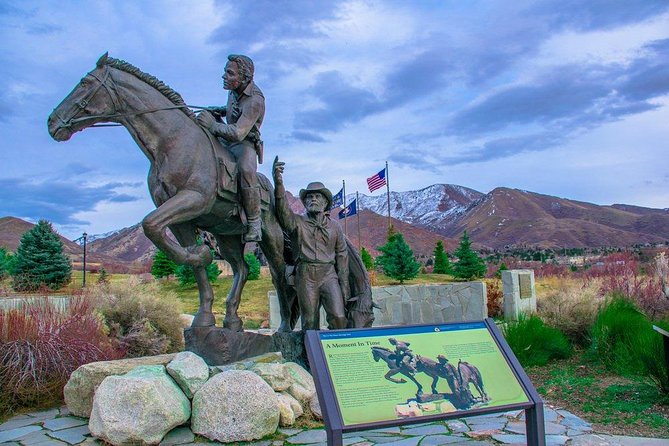
You visit This is the Place Heritage Park, tied to the moment Brigham Young declared this is the right place in 1847, ending the 1,300-mile trek from Illinois. You also get the kind of living-history setting that makes the story feel physical. The park described includes a Mormon monument, train rides, a petting zoo, and a Native-American village.
Even if you are not a history superfan, these stops work because they give context before you head into the most famous religious complex in the West.
Mormon Pioneer Trail markers
You also see sections of the Mormon Pioneer National Historic Trail. This is where you connect the distances and the scale. The trail is linked to migration by more than 70,000 pioneers across 1,300 miles between 1846 and 1869, with handcarts and wagons. The guide’s role is to keep it from becoming a list of dates. It becomes a story about community and endurance.
Temple Square: the spiritual and historic heart
Temple Square is where the tour earns its biggest attention. You explore the 10-acre Temple Square complex that is Utah’s top tourist attraction, then you get pointed stories about the Salt Lake Temple and the surrounding buildings.
You also see specific landmarks tied to pioneer-era life, including:
- Eagle Gate, a historic gateway rebuilt in steel and topped by a large bronze eagle
- The Brigham Young Monument and Meridian Marker, which connects the city’s layout to land surveying
- The Assembly Hall, built in 1882 with Gothic-style architecture using leftover Salt Lake Temple granite
- The Beehive House, Brigham Young’s residence, known for the beehive symbol
- The Deuel Pioneer Log Home, a simple cabin that anchors the earliest settlement period
A nice part of this section is that many stops are brief. You are not trapped for hours on a single site. You get quick orientation, then you carry it with you when you explore on your own.
Temple Square Meets Other Faiths, Cathedral, Temple Exterior, and Family History
Salt Lake City has a “main character” in Temple Square. But the city also makes room for other faith stories and architectural styles. This tour reflects that.
Salt Lake Temple, mostly exterior
You admire the Salt Lake Utah Temple from the outside. The interior is reserved exclusively for Church members, so plan for exterior viewing and photo opportunities. Still, it is a powerful sight: granite craftsmanship took 40 years to complete, there are six spires, and the Angel Moroni statue crowns the central spire. The tallest is noted at 210 feet.
If you are hoping for interior access, adjust expectations in advance. Exterior is still worth it because the building’s details are part of why people photograph it nonstop.
Cathedral of the Madeleine, Gothic Revival in the Avenues
You also visit the Cathedral of the Madeleine, the only Catholic cathedral in Utah. It is a Gothic Revival building finished in 1909, with stained glass highlighted as a standout feature. It sits in the Avenues neighborhood, surrounded by Victorian homes, which gives you that strong “different Europe, different America” contrast.
FamilySearch Library and genealogy perspective
On the Temple Square side, the tour includes the Family History Library area and FamilySearch related sites. The big point here is scale: it is described as the largest genealogical library on earth, housing billions of ancestral records. Even if genealogy is not your thing, the mission explains why Salt Lake City became known globally for family history research.
Modern Salt Lake and the Olympics: From Olympic Cauldron Park to City Creek Center
After pioneer and civic stops, the tour shifts gears toward modern Salt Lake City. This is where the city stops feeling like a museum and starts feeling like a living place with current identity.
Olympic Cauldron Park and the 2002 legacy
You see the Olympic Cauldron Park, with the 72-foot glass and steel cauldron. It is a visible reminder of the 2002 Winter Games and a way to talk about why Salt Lake City still talks Olympics, even years later.
The value of this stop is that it connects sport, architecture, and community pride into one easy-to-grasp story.
Gateway and downtown transformation
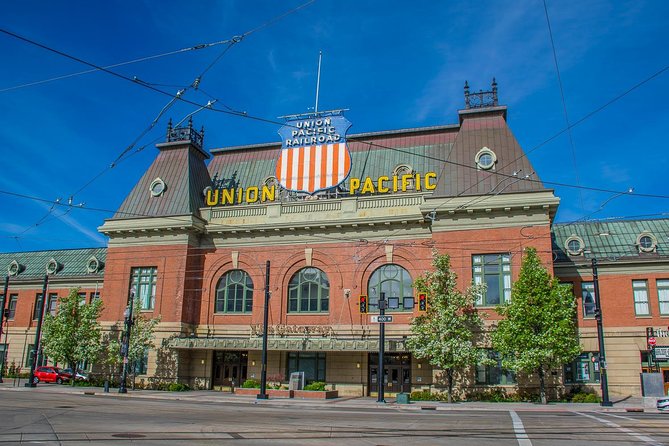
The Gateway is part of the same “modern renewal” theme. It is presented as a district built as the gathering place for the Olympics, replacing rail yards with an outdoor plaza, art, dining, and public energy.
Delta Center, Rice-Eccles Stadium, and arts venues
Depending on timing, you will also see major sports and arts markers, including the Delta Center (home of the Utah Jazz), plus Rice-Eccles Stadium tied to the University of Utah Utes and Olympics ceremonies. You may also get a view of Abravanel Hall and Kingsbury Hall, both linked to the city’s concert and performing arts scene.
You will also ride by or stop for a look at City Creek Center, a large downtown shopping and dining complex opened in 2012, described with a retractable glass roof and a restored creek running through the property.
Guides, Q&A, and Why Names Like Todd, Matthew, and Mark Matter
The most consistently praised part of this experience is not just the choir. It is the way the guide makes it understandable.
In feedback tied to this tour, I noticed recurring names: Todd, Matthew, and Mark. People describe them as organized, fun, and able to connect facts to the places you are viewing. One reviewer even mentioned that a former choir member, Bob, joined the group to add behind-the-scenes perspective before the rehearsal or performance.
That kind of personal connection changes the day. It turns the music from a ticket into a story about how the choir works, what the rehearsals are like, and why the architecture matters for sound.
If you want to get more out of it, ask one simple question during bus stops. You only need one. A good guide can usually turn one question into a five-minute mini-lesson that makes several later sights click.
Practical Pacing Tips, So You Do Not Feel Rushed
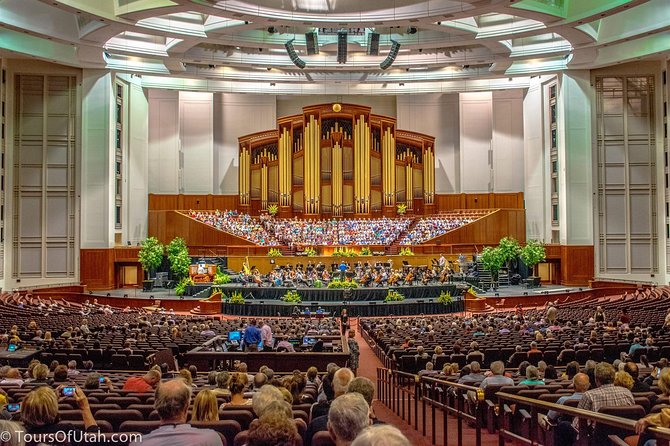
The schedule is designed to fit a lot into a half-day. That is the tradeoff.
If you hate being rushed, you can still make this work by adjusting how you move through each stop:
- Treat each photo stop as a moment, not a wandering session
- Keep expectations realistic about Temple Square walking time, because multiple stops are close together but not “all-day” slow
- Bring water and wear comfortable shoes, because you will be getting on and off the bus and walking short distances often
Also, consider the choir day you pick. Thursday rehearsal can feel more intimate, and Sunday can feel more formal and broadcast-focused. If you are sensitive to crowds and sound recording, Sunday’s setup matters.
One age note to plan around: on Sunday performances, children under age 8 are seated in a separate location due to sensitive acoustics and sound recording equipment.
Value: Is $89 Worth It for Music Plus City Sights?
At $89 per person for about 3.5 hours, this tour is priced like a “do it once, do it right” experience. The biggest reason it can feel like good value is that the choir part is the expensive emotional draw, and the city tour becomes the bonus that helps you understand what you just heard and where it belongs.
If you tried to build this alone, you would pay for transport and timing headaches, and you would still risk ending up at Temple Square without context. Here, you get a guided circuit with air-conditioned comfort, a set number of stops, and commentary that ties architecture, pioneer stories, and modern Salt Lake points together.
This is also a strong pick if you do not have a car. Multiple reviews highlighted that the tour works well for travelers without their own transportation because it handles the movement for you.
Who Should Book, and Who Should Skip
Book it if you:
- Love the idea of hearing the Tabernacle Choir live, especially if you want the rehearsal access on Thursday
- Want a first-day overview that helps you plan what to revisit later
- Like architecture and civic buildings, not just quick downtown photos
- Are short on time and still want pioneer context, Temple Square storytelling, and a modern Olympics angle
Skip or rethink it if you:
- Hate packed itineraries and want hours of unstructured wandering
- Are traveling specifically to go inside the Salt Lake Temple, because the tour described here focuses on exterior viewing
- Are extremely dependent on slow, detailed museum-style stops, since several sights are quick looks
Final Call: Should You Book This Tabernacle Choir + Salt Lake Tour?
For most first-time visitors, I think this is a smart booking. You get the main event, the choir, plus a guided route that gives you the why behind Salt Lake City’s most recognizable landmarks. The choir venues are famous for a reason, and the bus tour helps you connect that sound and those buildings to the city’s bigger story.
If you can handle a schedule with lots of brief stops, this is excellent value. If you want a leisurely pace and lots of time to linger, you might feel squeezed.
FAQ
FAQ
What is included in this tour?
You get the Tabernacle Choir live experience, air-conditioned vehicle transportation, and professional guided tour commentary.
How long is the tour?
The duration is about 3 hours 30 minutes.
What is the difference between Thursday and Sunday?
Thursday includes an intimate evening rehearsal. Sunday includes a full concert experience tied to the live broadcast of Music and the Spoken Word.
Where do the choir performances take place?
Depending on the time of year, performances happen at either the LDS Conference Center or the Historic Salt Lake Tabernacle in Temple Square.
Are there any seating rules for children on Sunday?
Yes. Children under age 8 on Sunday concerts are seated in a separate location due to sensitive acoustics and sound recording equipment.
What does the tour show at the Salt Lake Temple?
The tour includes exterior viewing and photo opportunities. The interior is reserved for Church members.
Where does the tour start and end?
It starts at the Radisson Hotel Salt Lake City Downtown, and it ends back at the same meeting point.
Do I need to tip?
Tips are appreciated but optional.
Guided reviewed right across Salt Lake City
- Salt Lake City Guided Bus Tour★ 4.5 · 1,355 reviews
Tours: the rest of the Salt Lake City file
- Salt Lake City Guided Bus Tour★ 4.5 · 1,355 reviews
- 45 Minute Great Salt Lake Boat Tour★ 4.5 · 829 reviews
- Salt Lake City Trolley Tour with 3 Theatrical Guides & Live Show★ 5.0 · 527 reviews
Tour Reviews: more from our Salt Lake City desk
- Salt Lake City Guided Bus Tour★ 4.5 · 1,355 reviews
- 45 Minute Great Salt Lake Boat Tour★ 4.5 · 829 reviews
- Salt Lake City Trolley Tour with 3 Theatrical Guides & Live Show★ 5.0 · 527 reviews
- Great Salt Lake Wildlife Experience★ 5.0 · 392 reviews
Newest Salt Lake City reviews added to this site
- Salt Lake City Trolley Tour with 3 Theatrical Guides & Live Show
★ 5.0 · 527 reviews - Tabernacle Choir Performance + Salt Lake City Guided Bus Tour
★ 4.5 · 597 reviews - 45 Minute Great Salt Lake Boat Tour
★ 4.5 · 829 reviews - Salt Lake City Guided Bus Tour
★ 4.5 · 1,355 reviews
City Tours, side by side.
 ★ 4.6New York City: Statue of Liberty & Ellis Island with FerryFrom $1918,683 reviews
 ★ 4.5New York City: American Museum of Natural History TicketFrom $3715,447 reviews
 ★ 4.6New York City: Top of the Rock Observation Deck TicketFrom $4414,488 reviews
 ★ 4.5Boston Duck Boat Sightseeing City Tour with Cruise Along Charles RiverFrom $599,378 reviews
 ★ 4.7New York City: Manhattan Helicopter TourFrom $2997,076 reviews
 ★ 4.7New York City: The FRIENDS™ Experience Entry TicketFrom $486,234 reviews
 ★ 4.5New Orleans City Sightseeing Hop-On Hop-Off Bus TourFrom $514,943 reviews
 ★ 4.5Boston: City Cruises Whale Watching CruiseFrom $854,710 reviews
This one is also listed in