
Review · MAUI ISLAND TRIPS
Whale Watching Maui: 2-Hour Small Group Raft Tour from Lahaina
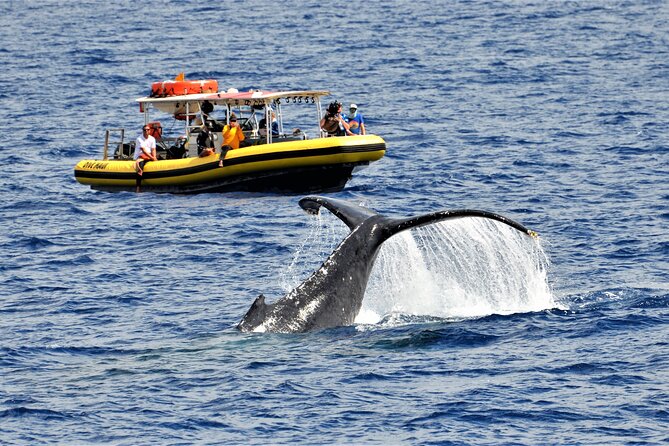
Winter whales in Maui feel close enough to count. This small-group raft trip from Lahaina aims for the Maui Nui whale sanctuary, where humpbacks come to mate and give birth, and it adds something most boats skip: a hydrophone so you can hear whale song. I also like that you get a small group experience with lots of scanning time from nearly every direction, not a cattle-herd shuffle.
The best part for me is how the crew runs this like a true wildlife hunt with real teaching. Captains such as Will or Joe focus the boat quickly when whales pop up, while naturalists like Renee or Brian share what to look for, from tails and breaches to mother-and-calf behavior. It is the kind of guided spotting that makes you leave knowing what you just saw.
One possible drawback to keep in mind: whale activity changes day to day, and weather can force a reschedule or cancellation. Also, even on a smaller raft, you do not get to control how close whales choose to be.
In This Review
- Key things that make this whale watch worth your time
- Entering the Maui Nui whale zone from Lahaina
- Meeting at 1223 Front St, then getting kitted up
- The 2-hour raft ride: comfortable scanning, not a long slog
- How whale-spotting works when the crew actually teaches
- The “small boat is closer” question, answered honestly
- Hearing whale song through the hydrophone and speakers
- What you likely see in Maui Nui during whale season
- Value check: $80.60, what you get for it, and what makes it fair
- Eco-minded touches that matter more than you think
- Weather and sea conditions: the reality of whale watching
- Who this raft tour is best for
- Should you book this Lahaina whale watch on a small raft?
- FAQ
- How long is the whale watching tour?
- Where does the tour start in Lahaina?
- What is the maximum group size?
- What if I do not see whales?
- What is included on board?
- Do you provide rain gear?
- Are kids allowed?
- Is alcohol included?
- What are the rules about pregnancy?
Key things that make this whale watch worth your time
- Small group size (max 20), which usually means fewer people blocking your view
- Hydrophone and speakers so you can hear humpback whale song while you watch
- Maui Nui whale sanctuary target area, where humpbacks gather for mating and calving
- Custom inflatable raft with 360-degree sightlines, so scanning the ocean feels easy
- Rain ponchos and reef-safe sunscreen to keep the day comfortable and practical
- Whale guarantee, with another trip if you do not see whales on your outing
Entering the Maui Nui whale zone from Lahaina
This is a winter-focused humpback whale trip. Each season, humpbacks migrate to warm waters around Maui to mate and to give birth, and the Maui Nui area is one of the key places they show up.
You board in Lahaina and set out toward that sanctuary zone. From there, the whole rhythm is simple: look, listen, and wait for the horizon to pay off. The “small raft” format matters because it makes it easier to keep moving your eyes around without constantly turning your body like you are in a crowded bus window.
Meeting at 1223 Front St, then getting kitted up
Your start is at the office at 1223 Front St, Lahaina, HI 96761. This matters because you can plan around a straightforward check-in near the harbor area, and the tour ends back at the same place.
Once you arrive, you are set up for what is basically a short boat expedition in open water. You should expect the usual essentials: life jacket use, sun protection, and rain gear if the sky is doing its thing. Ponchos are provided on rainy days, and the crew also includes reef-safe sunscreen and water so you are not scrambling for basics once you are out there.
Our remaining Maui Island Trips write-ups for Maui
The 2-hour raft ride: comfortable scanning, not a long slog
This outing runs about 2 hours total. On the water, the goal is not speed, it is positioning and watch time. The raft itself is built for closeness and visibility, with a layout designed so people can see in many directions at once.
A big practical advantage of the inflatable raft design is stability and a lower profile compared with bigger vessels. That helps when you are watching for the “tell” moments: a tail slap, a spout, a breach, or a calf surfacing near mom. You do not just stare at one point. You cycle your attention across the horizon, and that makes it far more likely you catch activity as it happens.
How whale-spotting works when the crew actually teaches
What makes or breaks whale watching is not the marketing, it is who is holding the map and scanning in real time. This trip is led by a captain plus a whale-focused naturalist, and that pairing shows up in the details.
In particular, the crew tends to prioritize the behaviors that make humpbacks so memorable:
- mothers and calves
- escort males that hang around breeding activity
- moments when the whales get more surface-active, including breaches and sprays
Captains and naturalists with names like Will, Joe, Renee, and Brian show up in real-day stories, and the consistent theme is how quickly they respond once whales appear. When you see a spout or fin, they work to bring the raft into a viewing position while keeping the tour calm and organized.
The “small boat is closer” question, answered honestly
One negative note you should consider: smaller does not automatically mean closer. Federal and state rules limit how close boats can approach whales, so a raft can help with maneuvering and sightlines, but it cannot force whales to swim within a certain distance.
That means your results depend on whale behavior that day, not just your vessel size. The plus is that the raft format makes it easier for you to track what the whales are doing, even when they are not putting on a constant show.
Hearing whale song through the hydrophone and speakers
This is the signature add-on here. You get a hydrophone and speakers, which lets you listen to humpback vocalizations while you are watching.
To me, this turns whale watching from purely visual into something more complete. When a whale is singing underwater, you are not just imagining the soundscape. You can actually connect what you see above the surface to what is happening below.
If you are sensitive to noise, this is not like a concert blasting music. It is designed for whale audio, so it feels like part of the observation, not a gimmick.
The rest of our Whale Watching notes for Maui


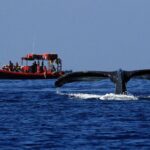
What you likely see in Maui Nui during whale season
When conditions line up, humpback sightings can include multiple whales at once. A common best-case scenario is a mix of:
- mother and calf pairs
- adult males in the area
- active surface behavior like breaches or repeated surfacings
You should also expect the “up close, then move, then scan again” pattern. Whale watching is not one fixed moment. Even if you find a group quickly, the sea can shift their surface times, and the crew’s job is to keep you in the zone.
Value check: $80.60, what you get for it, and what makes it fair
At $80.60 per person for about 2 hours, you are paying for three main things:
- a guided small-group format (max 20)
- a raft experience with wide viewing angles
- whale audio tech plus practical comfort extras
Most whale tours include the basics like water and navigation. This one adds several “small but meaningful” items that reduce friction: filtered water and paper cups to cut down plastic waste, reef-safe sunscreen, rain ponchos, and the marine naturalist plus hydrophone setup.
Then there is the guarantee: if you do not see whales, you can take another trip for free. No guarantee can eliminate the reality of wildlife, but it does change the risk. It says the operator is confident they will put you in the right areas and manage the hunt well.
Eco-minded touches that matter more than you think
This tour is set up to be practical outdoors, not just a pretty excursion.
- Filtered water and paper cups help reduce disposable plastics
- Reef-safe sunscreen signals that they are thinking about more than just your comfort
- Ponchos mean you do not lose your day to light rain
- Mobile ticket keeps check-in smoother
These are not flashy. They are exactly the kinds of details that make a short trip feel easy.
Weather and sea conditions: the reality of whale watching
Whale season is busy, and the ocean can get moody. This experience requires good weather, so if conditions are unsafe or poor, you should expect a reschedule or cancellation.
If you have flexible time in your Maui schedule, this is easier to manage. If you are on a tight itinerary, you may want to plan this earlier in your stay so you have room for a second shot if the sea does not cooperate.
Who this raft tour is best for
This is a strong match if you:
- want small-group attention instead of a crowded deck
- care about learning, not just sightseeing
- like hands-on natural history touches like whale song via hydrophone
- are traveling with family members who can handle open water for about two hours
It is also a good option for people who get impatient staring from one angle. The raft layout supports active scanning, and the crew aims to keep you moving with the sightings.
Just note the limits: no children under age 3 and no pregnant persons. Service animals are allowed.
Should you book this Lahaina whale watch on a small raft?
Book it if you want a guided, small-group experience that treats whales like living animals, not a timed photo stop. The standout perks for me are the hydrophone for whale song, the small-group viewing, and the combination of captain + marine naturalist teaching that helps you understand what you are seeing.
Skip it or rethink it if your top priority is guaranteed “closer than bigger boats.” Even with a smaller raft, legal distance rules and whale behavior control the outcome. Also, if your schedule is razor tight and you cannot absorb a weather reschedule, plan carefully.
If you are ready to trade perfection for a real wildlife experience, this one gives you a lot for the price and focuses on the moments that make humpbacks special.
FAQ
How long is the whale watching tour?
The tour is about 2 hours.
Where does the tour start in Lahaina?
You meet at 1223 Front St, Lahaina, HI 96761.
What is the maximum group size?
The tour/activity has a maximum of 20 people.
What if I do not see whales?
This experience includes a guarantee to see whales or take another trip for free.
What is included on board?
Included items listed are hydrophone and speakers (to listen to whales), filtered water and paper cups to reduce plastic waste, a whale loving marine naturalist, and reef safe sunscreen.
Do you provide rain gear?
Yes. Rain ponchos are provided on rainy days.
Are kids allowed?
No children under the age of 3.
Is alcohol included?
Alcoholic beverages are not included. BYO is allowed, and no glass is allowed.
What are the rules about pregnancy?
The tour says no pregnant persons can participate.
Maui Island Trips: more we have covered in Maui
- Maui Pineapple Farm Tour in Haliimaile★ 5.0 · 2,855 reviews
- Maui Eco-Raft Tour: Eye-Level Whale or Dolphin Watching – Lahaina★ 5.0 · 2,482 reviews
- Maui Snorkeling Adventure to Molokini and Turtle Town★ 4.5 · 2,221 reviews
- Maui: Haleakala Sunrise Spectacular with Local Breakfast★ 4.5 · 2,155 reviews
- Maui Snorkeling Adventure From Ma’alaea Harbor to Molokini★ 4.5 · 1,997 reviews
Tours: the rest of the Maui file
- Maui Pineapple Farm Tour in Haliimaile★ 5.0 · 2,855 reviews
- Maui Eco-Raft Tour: Eye-Level Whale or Dolphin Watching – Lahaina★ 5.0 · 2,482 reviews
- Road to Hana Adventure Maui Tour with Lunch★ 5.0 · 1,832 reviews
- From Maalaea: Whale Watching Tour Aboard the Quicksilver★ 4.5 · 1,461 reviews
- Lahaina: Maui Ku’ia Estate Guided Cacao Farm Tour and Tasting★ 5.0 · 1,103 reviews
Tour Reviews: more from our Maui desk
- Maui Pineapple Farm Tour in Haliimaile★ 5.0 · 2,855 reviews
- Maui Eco-Raft Tour: Eye-Level Whale or Dolphin Watching – Lahaina★ 5.0 · 2,482 reviews
- Maui Snorkeling Adventure to Molokini and Turtle Town★ 4.5 · 2,221 reviews
- Maui: Haleakala Sunrise Spectacular with Local Breakfast★ 4.5 · 2,155 reviews
- Maui Snorkeling Adventure From Ma’alaea Harbor to Molokini★ 4.5 · 1,997 reviews
Newest Maui reviews added to this site
- Deluxe Helicopter Tour of Molokai and Maui
★ 5.0 · 324 reviews - Turtle Reef Kayak Tour of Makena, Maui
★ 4.5 · 328 reviews - Maui Family and Couple Beach Photo Session
★ 5.0 · 333 reviews - Maui by Storm: Epic Private Luxury Road to Hana Adventure Tour
★ 5.0 · 337 reviews - Maui: Turtle Town Kayak and Snorkel Tour
★ 4.7 · 345 reviews - From Ma’alaea: ‘Alihilani Sunset Sail Catamaran Tour
★ 4.8 · 348 reviews - Small Group Coral Gardens Snorkel & Waterslide Adventure
★ 4.5 · 351 reviews - Water Bike Tour in South Maui
★ 5.0 · 372 reviews - Maui Premium Dinner Cruise: Four Course Dining Experience
★ 4.5 · 373 reviews - Cycle to the Sea with Maui Bombers
★ 5.0 · 406 reviews
Maui Island Trips, side by side.
 ★ 5.0Maui Pineapple Farm Tour in HaliimaileFrom $992,855 reviews
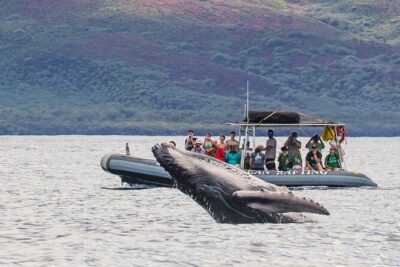 ★ 5.0Maui Eco-Raft Tour: Eye-Level Whale or Dolphin Watching – LahainaFrom $852,482 reviews
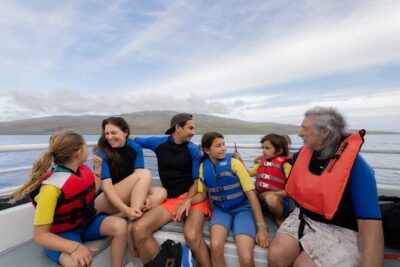 ★ 4.5Maui Snorkeling Adventure to Molokini and Turtle TownFrom $1592,221 reviews
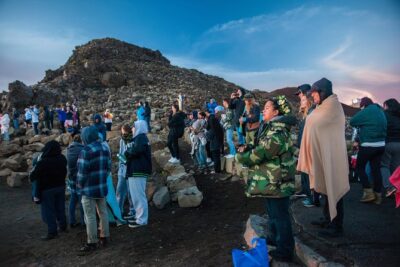 ★ 4.5Maui: Haleakala Sunrise Spectacular with Local BreakfastFrom $2542,155 reviews
 ★ 4.5Maui Snorkeling Adventure From Ma’alaea Harbor to MolokiniFrom $1851,997 reviews
 ★ 5.0Maui: Turtle Town Snorkel with Photo and VideoFrom $1291,916 reviews
 ★ 5.0Road to Hana Adventure Maui Tour with LunchFrom $2761,832 reviews
 ★ 4.57-Line Maui Zipline on the North ShoreFrom $1551,648 reviews
This one is also listed in