
Review · MUSEUMS
American Prohibition Museum Admission
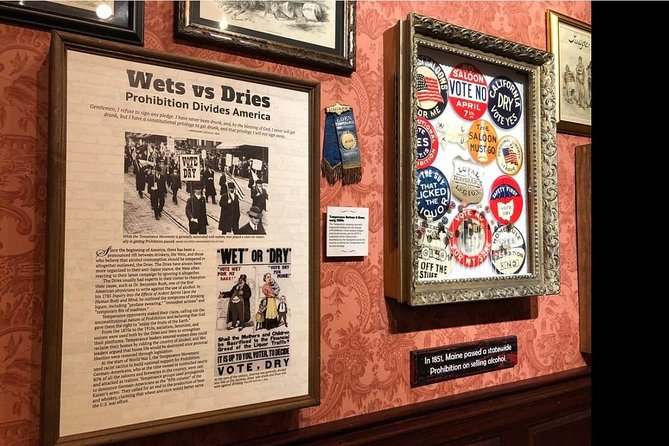
Prohibition sounds simple, then this museum gets weird in the best way. You get your ticket to the American Prohibition Museum, the only one of its kind in the world, and it tells the story through artifacts, set pieces, and characters that feel straight out of the era. I especially like the way the displays connect laws to everyday life, not just dates on a timeline.
Two big wins for me are the 200+ historical artifacts (including dry propaganda and moonshine-brewing gear) and the costumed docents who keep the energy up from room to room. One possible drawback: parts can feel crowded and a bit loud, so if you are sensitive to noise or plan on lots of listening, build in extra time.
In This Review
- Highlights You Should Not Miss
- American Prohibition Museum Admission: What You’re Really Paying For
- First Steps In: Layout, Atmosphere, and Timing That Works
- The Big Story: Prohibition From Temperance to Everyday Life
- Recreated 1918 Street Scene: Anywhere, USA
- Tent Revival and Reverend Billy Sunday: Morality on Display
- Carry Nation’s Hatchetations: When Activism Turned Physical
- The Moonshine Scene: Backwoods Reality and the Black-Market Pull
- The 200+ Artifacts: Dry Propaganda and Brewing Equipment
- Docents and Storytelling: Why the Human Pieces Make It Click
- Speakeasy Finale: Period Cocktails, ID Rules, and Sunday Reality
- Bathrooms, Crowds, and Other Real-Life Notes
- Price and Value: How $19.78 Makes Sense Here
- Who This Museum Fits Best
- Should You Book This Admission Ticket?
Highlights You Should Not Miss
- 200+ artifacts that show Prohibition from every angle, including propaganda and moonshine equipment
- Period set scenes like a recreated 1918 Street Scene and a Tent Revival moment with Reverend Billy Sunday
- Carry Nation details like her hatchet influence on temperance culture and even a demolished bar setting
- Moonshine Scene that shifts the story into the wilderness and backrooms
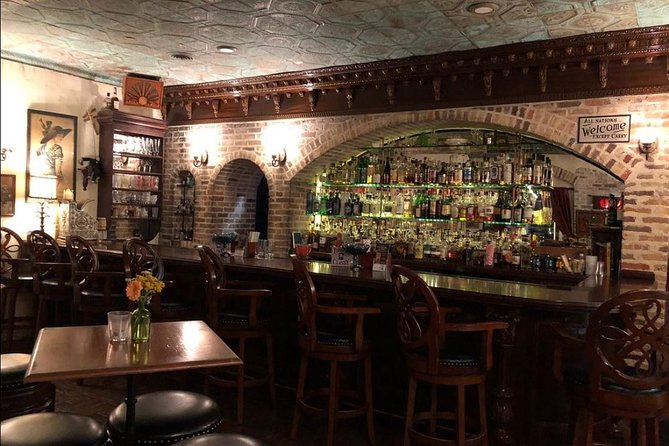
- Speakeasy finale with period-style cocktails (own expense, age rules apply)
- Photo-friendly museum time with phone and video use allowed for personal viewing
American Prohibition Museum Admission: What You’re Really Paying For
Savannah’s American Prohibition Museum is not a sleepy, white-wall museum where you read placards for an hour and hope it sticks. Your ticket gets you an hour to two (depending on pace and crowds) inside a guided, story-driven exhibit flow, built around dioramas, photos, murals, videos, and a lot of hands-on theme moments.
The price, $19.78 per person for museum admission, is pretty fair if you like experiences that mix history with entertainment. Think of it as pay-for-the-setup. You are paying for the recreated scenes, the costumed characters, and the technology, not just the artifacts behind glass.
One more practical note: the museum includes the galleries, but the speakeasy drinks are not automatically included. If you want the full 1920s arc, plan to spend extra on your cocktail at the end.
First Steps In: Layout, Atmosphere, and Timing That Works
The museum is located next to Ellis Square in City Market, and it is blocks from the Robinson Parking Garage. It is also near public transportation, which matters because you do not want your evening to turn into a parking hunt right before your entry time.
Plan your timing like this:
- Aim to arrive with enough buffer that you are not rushing when the doors open.
- Give yourself time to slow down in the interactive and set-piece areas, because those are where people naturally cluster.
Also, pay attention to the calendar. The museum is closed on St. Patrick’s Day, March 17. If you are traveling around that date, do not assume it will be open.
Not settled on one yet? These are other Savannah trips our reviewers have been through.


The Big Story: Prohibition From Temperance to Everyday Life
The museum follows Prohibition and Temperance across more than two hundred years of American thinking and culture. The trick is that it does not just argue that Prohibition happened. It shows how the ideas built momentum, then how the rules collided with real people trying to live, drink, argue, and make money.
You will see the rise and fall of Prohibition explained through:
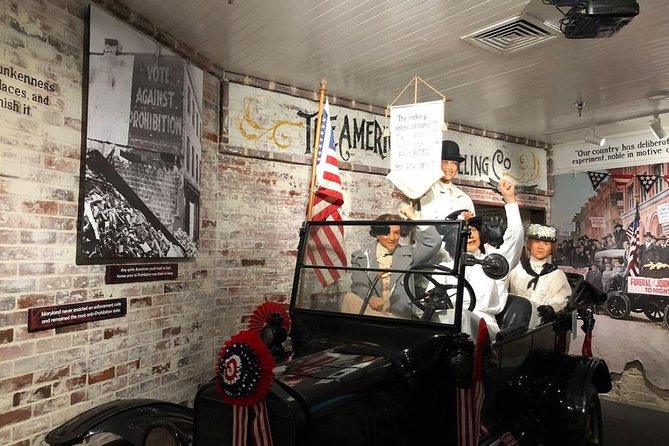
- State-of-the-art dioramas and recreated settings
- High-tech visual moments with videos, photos, and murals
- Costumed docents who add context and humor instead of dry lectures
If you like history that has human faces, not just headlines, you will get a lot more from this museum than you would from a purely text-based stop.
Recreated 1918 Street Scene: Anywhere, USA
One of the first set pieces you can expect is a recreated 1918 Street Scene, designed as Anywhere, USA. This is where the museum does a good job of making Prohibition feel like a lived environment, not a faraway law.
What to watch for here:
- How public space and community pressure get portrayed.
- How propaganda and moral messaging are used to shape behavior.
- The general mood shift, like the town is being pushed toward compliance.
This part works well for first-time visitors because it gives you a baseline. Once you understand the street-level tone, the rest of the exhibit makes more sense.
Tent Revival and Reverend Billy Sunday: Morality on Display
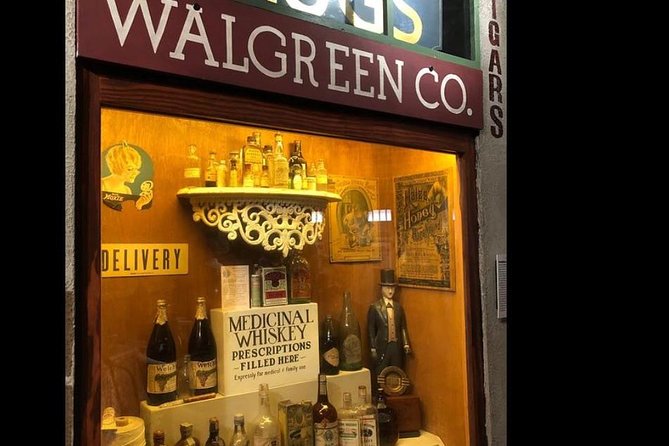
Another standout scene is the Tent Revival, featuring Reverend Billy Sunday. The museum uses this moment to show how faith-driven activism became a public performance.
You are not just learning that temperance leaders existed. You are seeing how the message was staged, amplified, and spread. The result is a clearer picture of why Prohibition had so much momentum, even among people who did not see it as political.
If you tend to remember history best when it has dramatic characters, this is one of your anchor stops.
Carry Nation’s Hatchetations: When Activism Turned Physical
The museum also highlights Carry Nation and her hatchet influence, including Carry Nation’s Hatchetations and even the idea of a bar demolished by her signature hatchet. It is one of those history moments that is hard to forget because it is so visual.
This section helps you connect the dots between:
- temperance belief
- public confrontation
- the culture of moral enforcement
It can feel a little loud and theatrical, but that is kind of the point. Prohibition was not a quiet policy change. It was a public fight.


The Moonshine Scene: Backwoods Reality and the Black-Market Pull
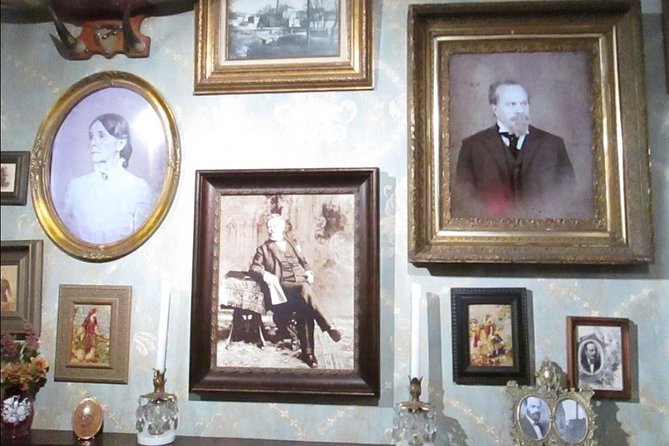
Then the exhibit swings into a dimly lit Moonshine Scene, described as tucked back into the heart of America’s wilderness. This is where the museum shifts from temperance messaging to what happened on the ground.
You are likely to spot period details and items tied to moonshine brewing. And you get to see how Prohibition fueled production and distribution outside the law.
If you like the economics of behavior, this is a smart section. It quietly shows how supply follows demand, and how people adapt when enforcement meets resistance.
The 200+ Artifacts: Dry Propaganda and Brewing Equipment
A major reason this museum gets strong marks is that it backs up the story with tangible objects. You can browse more than 200 historical artifacts, including dry propaganda and equipment associated with moonshine brewing.
Here is why that matters for you:
- Artifacts keep the story grounded when scenes start to feel theatrical.
- Propaganda shows the arguments on both sides, not just the law’s outcome.
- Equipment connects the idea of moonshine with real tools people used.
If you are a museum reader, you will enjoy the time spent tracking details across rooms. If you are not, you can still follow the storyline by watching the set pieces and letting the docents point out what matters.
Docents and Storytelling: Why the Human Pieces Make It Click
The museum uses costumed docents to inform and entertain from start to finish. That live storytelling is a big deal here, because the exhibit includes a lot of moving parts: visuals, sounds, characters, and interactive moments.
In my experience with museums like this, the difference between an okay visit and a great one is whether someone helps you notice the key threads. With docents, you get that help. Guides like Casey and Tommy have been called out for being especially memorable, and other names such as Marcie, Stephen, Blake, Elijah, Eric, and Chandler show up as examples of staff who combine history with personality.
A practical tip: if you use hearing aids, wear them. The museum can have competing noises, especially around interactive areas. If you are near the back or in a crowded cluster, turn your body toward the guide, not just your eyes toward the set.
Speakeasy Finale: Period Cocktails, ID Rules, and Sunday Reality
The museum’s finale is a hidden speakeasy bar with period-style cocktails. The drink part is not included in the museum admission price, but it is clearly part of the intended experience arc.
Two rules matter a lot before you plan your evening:
- Photo ID is required at the door to receive a wristband for speakeasy admittance.
- Guests under 21 are not permitted in the speakeasy.
There is also a day-of-week limitation. By Georgia State Law, there is no speakeasy service on Sundays, so you get mocktails instead. If you are hoping for a real cocktail, plan your visit for Wednesday through Saturday.
Speakeasy hours (when service is offered) are listed as:
- Wednesday: 5:30 pm to 10 pm
- Thursday: 5:30 pm to 11 pm
- Friday and Saturday: 5:30 pm to 1:00 am
What I like about this setup is that it forces you to think of the museum plus bar as a two-part plan. Do the galleries first, then lean into the drama.
Bathrooms, Crowds, and Other Real-Life Notes
A couple of practical points can save you time:
- The bathroom is at the very end of the tour, so if you think you might need it, plan ahead before you commit to the last big section.
- Some areas can feel rushed when the museum is full, and interactive moments can get crowded.
- Toward the end, you may notice staff prompting for tips. That is not rare in themed experiences, but if it makes you uncomfortable, keep it in mind.
If you want a calmer visit, go earlier in your day window and avoid peak times when possible. Your goal is simple: enjoy the set pieces without constantly moving around other groups.
Price and Value: How $19.78 Makes Sense Here
At $19.78 for museum admission, you are paying for a packaged experience with:
- a large artifact set (200+ items)
- multiple recreated scenes
- costumed docents and guided-style interpretation
- photos, murals, videos, and tech-based exhibits
For value, the math is not only about what you pay. It is about what you get to do in your time window. If you are touring Savannah and only have a limited amount of time, this can be a strong use of your day because it is dense with content and easy to follow.
The only cost surprise to watch for is the speakeasy portion. Cocktails are own expense. If you budget for one drink and you respect the age and ID rules, it feels like a satisfying finale rather than an add-on bill you forgot about.
Who This Museum Fits Best
This is a great match if you like:
- American history with stories, characters, and conflict
- museums that use scenes and tech instead of only text
- themed stops that are fun without being shallow
It can also work for couples and groups, because it gives everyone something to look at and then a docent helps connect it.
Two notes for families and mixed groups:
- Guests of all ages are allowed in the museum during operating hours.
- The speakeasy part is 21-plus, so younger visitors will need to wait outside or stay with the museum galleries.
And if you are traveling with a disabled friend, keep an eye on elevator status. A past visitor reported an elevator issue that affected their friend’s ability to enjoy the tour. If mobility is a factor for your group, it is worth checking day-of conditions.
Should You Book This Admission Ticket?
Yes, if you want an organized, story-forward Prohibition experience in Savannah. This is the kind of museum that makes the history feel concrete, especially because of the set scenes and costumed docents plus the large artifact display.
I would book it if:
- you are curious about how Prohibition shaped American culture
- you want more than a basic history stop
- you are willing to add the speakeasy drink later (and you have your ID)
I would think twice if:
- you need a super quiet museum experience
- you are worried about crowds or fast pacing
- you are planning a Sunday visit expecting cocktail service, since Sunday speakeasy service is not offered and you will get mocktails instead
If you do book, I suggest building your day so you are not rushing through the last rooms. Give yourself enough time to see the key scenes, then finish strong with your speakeasy moment.
Tour Reviews: more from our Savannah desk
- Savannah Hop-On Hop-Off Trolley Tour★ 4.5 · 6,527 reviews
- 90-Minute Savannah Riverboat Sightseeing Cruise★ 4.0 · 3,367 reviews
- Savannah History and Haunts Candlelit Ghost Walking Tour★ 5.0 · 3,235 reviews
- Savannah First Squares Culinary & Cultural Walking Food Tour★ 5.0 · 3,229 reviews
- Historic Savannah Guided Walking Tour★ 5.0 · 2,918 reviews
Newest Savannah reviews added to this site
- Civil War Savannah!! Guided Walking Tour
★ 4.0 · 314 reviews - Welcome to Savannah Guided Walking Tour
★ 5.0 · 329 reviews - Historical Bike Tour of Savannah and Keep Bikes After Tour
★ 5.0 · 345 reviews - Savannah Stroll: Guided Sightseeing & History Walking Tour of Savannah
★ 4.5 · 350 reviews - Golf Cart Tours, Bonaventure Cemetery Savannah Cruzers
★ 5.0 · 356 reviews - Savannah: Tybee Island Dolphin Tour
★ 4.7 · 359 reviews - 90-Minute Segway History Tour of Savannah
★ 5.0 · 365 reviews - Savannah Yes, Queen! Drag Queen Pub Crawl
★ 4.5 · 367 reviews - Savannah Midnight in the Garden of Good & Evil Narrated Walking Tour
★ 5.0 · 370 reviews - Narrated Harbor Luncheon Riverboat Cruise
★ 4.5 · 371 reviews
Museums, side by side.
 ★ 4.7NYC: Empire State Building Tickets – Observatory & MuseumFrom $4725,757 reviews
 ★ 4.5New York City: American Museum of Natural History TicketFrom $3715,447 reviews
 ★ 4.6NYC: Museum of Modern Art (MoMA) Entry TicketFrom $3012,540 reviews
 ★ 4.7NYC: Intrepid Museum Entry TicketFrom $384,687 reviews
 ★ 4.9San Diego: USS Midway Museum Entry TicketFrom $413,896 reviews
 ★ 4.3NYC: Museum of Ice Cream Entry TicketFrom $402,619 reviews
 ★ 4.5Boston Tea Party Ships and Museum AdmissionFrom $352,512 reviews
 ★ 5.0JFK Assassination and Museum Tour with Lee Harvey Oswald Rooming HouseFrom $792,480 reviews
This one is also listed in