

Review · BOSTON FREEDOM TRAIL AND HISTORY
Boston’s Freedom Trail: A Revolutionary Walking Tour
A revolution story you can walk. This guided Freedom Trail tour strings together 16 official sites into one 2.5-hour storyline, with a mobile ticket so you can just show up and listen. I like how the guide turns big names like Paul Revere and John Hancock into real people, and I like that the tour goes beyond battles to touch Boston’s roles in abolition, women’s rights, education, and immigration.
One thing to watch: this is a full walk, and the pace can feel brisk, especially around cemetery stops. Guides like Kenny, Alfred, and Alissa get praised for storytelling and clear explanations, so you’ll likely be fine if you can keep moving.
By the end, you’re not just looking at monuments. You finish at Copp’s Hill Terrace with a view toward Bunker Hill and the USS Constitution, and that last stretch makes the whole day feel like one continuous chapter.
In This Review
- Key highlights to look for
- Why this Freedom Trail tour works better than winging it
- Price and timing: what $31 gets you (and what it doesn’t)
- Meeting at The Embrace and starting with purpose
- Stop 1 to State House: how Boston’s political machine got its start
- Abolition, Anglican roots, and the Puritan spark for civil disobedience
- The 1809 red brick church tied to abolition
- Granary-style burying ground with Patriot graves
- The 1754 Anglican church and what lies beneath
- The 1729 Puritan meeting house and the Boston Tea Party origins
- Ticknor and Fields publishing connections
- Old State House to Bloody Massacre: power, rumor, and raw violence
- Old State House with British symbols
- The marker for the Bloody Massacre of 1770
- Faneuil Hall and the Cradle of Liberty vibe
- Revere’s world: Paul Revere House and the lantern signal
- Paul Revere House, the oldest home, and family life
- The 1723 church and the meaning of the lanterns
- Copp’s Hill and the USS Constitution finish: a satisfying ending
- The 1660 burying ground tied to Bunker Hill
- The 221-foot obelisk and the militia defense story
- Ending with Bunker Hill Monument and Old Ironsides
- Practical tips so the 2.5-hour pace stays fun
- Who should book this Freedom Trail walk?
- Should you book this tour?
- FAQ
- How long is the Boston Freedom Trail walking tour?
- Where does the tour start and end?
- How much does the tour cost?
- Is the tour offered in English?
- Do I need to print anything, or is there a mobile ticket?
- How large is the group?
- Are service animals allowed?
- What happens if the weather is poor or I need to cancel?
Key highlights to look for
- Check off 16 official Freedom Trail sites in a single guided loop through central Boston
- A guide-led story that connects redcoats, midnight riders, and real political fights
- Small group size, up to 25 people, which helps keep questions possible
- End at Copp’s Hill Terrace, with views toward Bunker Hill and USS Constitution
- Real pacing tradeoff, you cover a lot in about 2.5 hours, so bring your walking legs
Why this Freedom Trail tour works better than winging it
The Freedom Trail is easy to recognize on a map, but it’s hard to make it click in your head. This tour does that work for you. Instead of reading plaques one by one, you get a guided timeline with human stakes, sharper cause and effect, and plenty of context for what you’re actually looking at.
I also like that the guide doesn’t treat Boston history like a museum. The stories jump from revolutionary events to later social progress, so you get a sense of how ideas traveled, changed, and kept colliding. That matters because the trail is not only about 1775. It’s also about how a city argues with itself across centuries.
And at $31 for about 2 hours 30 minutes, it’s priced like a value tour for a major downtown route. You’re paying for someone to keep the plot straight, not just to point at buildings.
Price and timing: what $31 gets you (and what it doesn’t)
At $31 per person, you’re paying for guided interpretation across a dense slice of Boston. The duration is about 2 hours 30 minutes, and you’ll be on your feet much of the time. There’s no slow stroll here, so if you want a long, relaxed look at every nook, you may find this tour a bit fast.
The good news is that the route is built for a first visit. You hit the headline places tied to the American Revolution, plus the parts that explain why colonists acted the way they did. For first-timers, that’s a strong use of time because you leave with your bearings, not just photos.
You’ll also get a mobile ticket and the tour runs in English. Reviews show a lot of guides are strong at storytelling and clear speaking, but one recurring note is that sound can be harder to catch when you’re not facing the guide. If you have hearing challenges, it’s worth getting yourself near the front early.
Additional Walking Tours on the review pile in Boston
Meeting at The Embrace and starting with purpose
Your tour begins at The Embrace, right by the Boston Common Visitor Information Center, at 139 Tremont Street. The statue honors Martin Luther King Jr. and Coretta Scott King, and that’s a smart opening. It quickly reminds you that Boston’s “freedom” story didn’t end in the 1700s.
From there, you move into the heart of Massachusetts political power. If you’ve ever felt that early American history is too abstract, this start helps anchor the tour in real people and real movements.
Practical tip: give yourself a few extra minutes near Boston Common. The meeting point is easy to find, but the area is busy, and you want to start the walk with your group.
Stop 1 to State House: how Boston’s political machine got its start
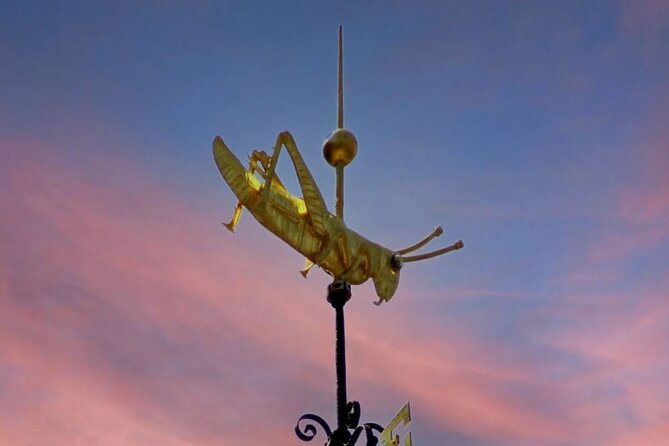
Next up is the Massachusetts State House, the golden-domed centerpiece of state government. You’ll hear how Samuel Adams laid the cornerstone back in 1795, which gives you a line of continuity from revolutionary leadership into later governance.
What I like here is the way the guide frames government as a living thing, not a dead artifact. You’re not just looking at architecture. You’re getting a story about how public authority was built, contested, and symbolized.
Then the tour keeps the tension going by layering in voices that challenged systems, not just kings. That becomes the theme as you walk.
Abolition, Anglican roots, and the Puritan spark for civil disobedience
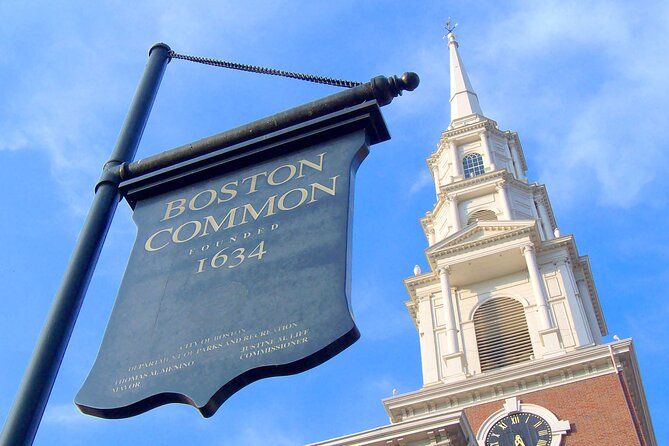
One of the tour’s best strengths is how it widens the lens. After the State House, you move through sites tied to anti-slavery activism, early religious communities, and the kinds of gatherings that made resistance possible.
The 1809 red brick church tied to abolition
You’ll stop at a red brick church built in 1809 that hosted an abolitionist congregation. The guide connects this to anti-slavery speeches, some of the earliest given in America. This is where the tour starts feeling like Boston history as social change, not only national founding.
If you care about the “why” behind the Revolution, this section helps. You see that arguments about freedom were already loud long before 1776.
More filed under Boston Freedom Trail and History in Boston




Granary-style burying ground with Patriot graves
Then you reach a burying ground dating to 1660, with major Patriot connections. The guide brings you to the graves of John Hancock, Paul Revere, and Samuel Adams and explains their stories.
Here’s the drawback to consider: cemetery pacing can feel rushed to some people. If you’re the type who wants time to read and wander, you may need to stay mentally flexible and listen closely rather than stopping to study every detail. A walking stick can help, but you’ll still want to keep up with the group.
The 1754 Anglican church and what lies beneath
Next is a stone church built in 1754, described as the first Anglican church in Boston. Expect stories about its construction, the burying ground nearby, and the crypts beneath.
This is a good stop for people who like “how things were built” history. The Revolution story stays in the background while you learn how Boston organized community life, worship, and burial.
The 1729 Puritan meeting house and the Boston Tea Party origins
At the Puritan meeting house built in 1729, the tour points to how the famous Boston Tea Party began. You’ll learn how this act of civil disobedience got started and why it mattered.
I appreciate this framing because it turns the Tea Party into a political event with intent, not just a famous night. Still, if you want a blow-by-blow of that specific evening, you might wish for more detail here. The tour’s structure gives you breadth, not a single-event deep dive.
Ticknor and Fields publishing connections
You’ll also see a 1718 brick building that started as a colonial apothecary, then later became the home of the publishing house Ticknor & Fields. The guide connects it to literary giants who were published there.
This stop is small, but it gives the tour emotional texture. The Revolution wasn’t only muskets and speeches. It was printing, persuasion, and the spread of ideas.
Old State House to Bloody Massacre: power, rumor, and raw violence
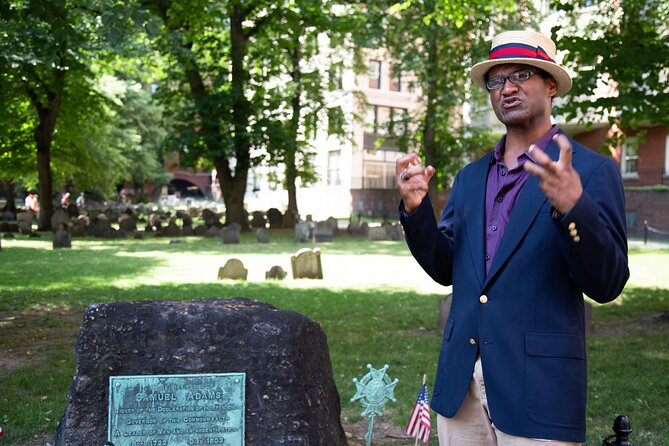
Now you shift toward the drama that often feels hardest to picture from a distance.
Old State House with British symbols
At the Old State House, built in 1713, you’ll hear how it served as the center of British government in Massachusetts. The building includes symbols of Great Britain, including a lion and unicorn, and the guide explains why that mattered to locals.
You also get stories of confrontations and speeches tied to the power struggle. This is where Boston starts feeling like a pressure cooker, not a calm harbor town.
The marker for the Bloody Massacre of 1770
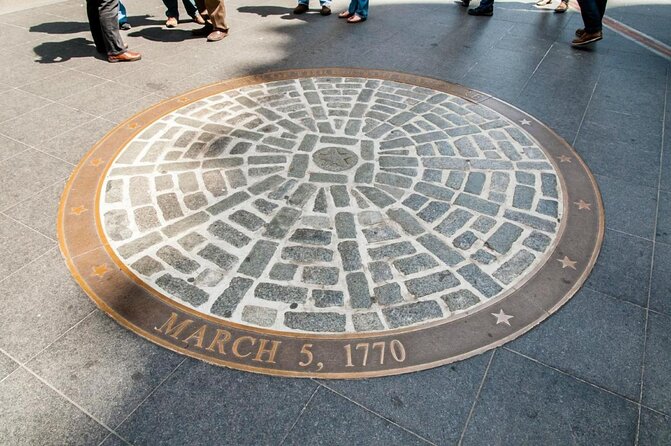
You’ll pause at a circle of stones marking the official site of the Bloody Massacre of 1770. The guide provides a moment-by-moment account of the night when redcoat musket fire left five colonists dead.
This is heavy history, but it’s delivered in a way that helps you visualize what could have been happening in the street. It’s also a reminder that escalation can be fast, and rumor and authority do not always mix well.
If you’re sensitive to intense stories, take it at your own pace. You don’t have to sprint through this segment just because the group is moving.
Faneuil Hall and the Cradle of Liberty vibe
Next, you reach Faneuil Hall. The tour highlights the meeting hall on the second floor, often called The Cradle of Liberty, where incendiary speeches were delivered.
This is one of the most satisfying stops for people who like political theater. You’re standing in a place where language was treated like a weapon.
Revere’s world: Paul Revere House and the lantern signal
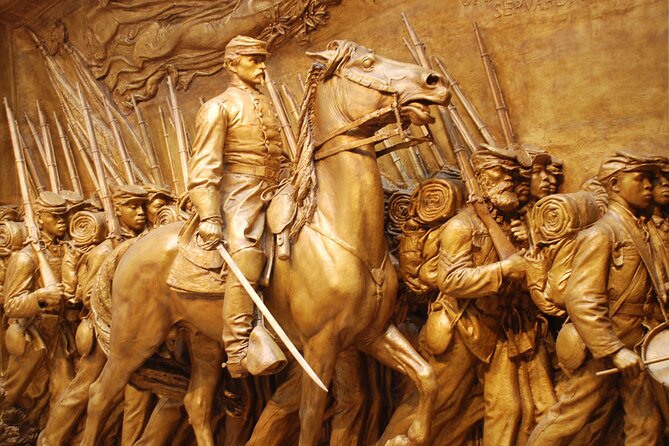
From here, the tour becomes more personal. You’re walking through spaces tied directly to the people who carried messages and helped make action happen.
Paul Revere House, the oldest home, and family life
At the Paul Revere House, you’ll see a wooden building dating to 1680 and described as the oldest building in Boston. The guide tells you about Paul Revere’s life there with his family and how his house connected to the events that shaped early American history.
I like this part because it breaks the myth. You don’t just hear heroic moments. You hear that history happened inside ordinary rooms and routines too.
The 1723 church and the meaning of the lanterns
Then you reach a 1723 church where, on April 18, 1775, lanterns signaled important movement. The guide explains the meaning of the signal, tied to one if by land, two if by sea, and describes how it was arranged by Paul Revere.
This stop does two things well. It explains the plan, and it shows the tension in the hours before the Revolution. Even if you think you know the story already, the guide’s pacing and explanation can make it feel fresh.
One practical note from real-world experience during the tour season: construction or crowding can happen around the trail. The better guides adapt, redirecting the route enough that you still get the story without losing the group.
Copp’s Hill and the USS Constitution finish: a satisfying ending
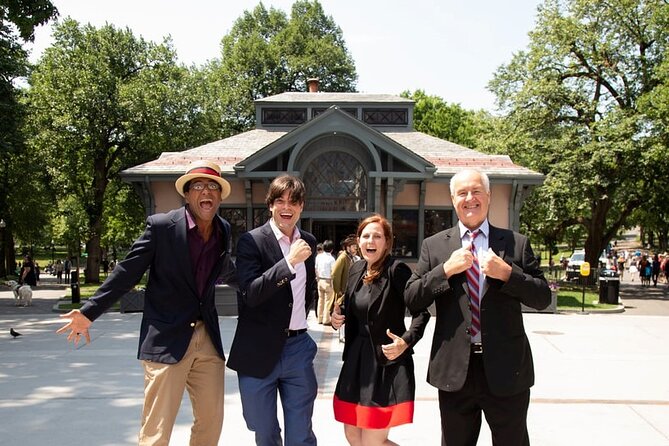
The last stretch sets you up for views, not just facts.
The 1660 burying ground tied to Bunker Hill
At another 1660 burying ground associated with Bunker Hill, you’ll learn that British cannon emplacements were built there during the Battle of Bunker Hill. The guide connects that physical geography to the battle itself and the notable Bostonians interred within.
This is another segment where time can feel tight because you’re in a cemetery and the tour has a lot to cover. If you find it hard to keep up in quiet spaces, stand near the guide, listen first, then read what you can after.
The 221-foot obelisk and the militia defense story
Next is the view from Copp’s Hill Terrace, where you’ll see a 221-foot obelisk marking the spot where colonial militia defended hastily made earthworks and repelled two redcoat charges before retreating.
This is where the tour stops being only narrative and turns into visual geography. You can look out and understand how terrain affected outcomes. It’s a good reward for putting in the walking time.
Ending with Bunker Hill Monument and Old Ironsides
You finish at Copp’s Hill Terrace with views of Bunker Hill Monument and the USS Constitution in Charlestown. The tour highlights the masts and rigging of the ship, described as Old Ironsides, a victor of pitched battles in the War of 1812 and the oldest warship afloat anywhere.
I love finishes like this because it locks the trip in your memory. You walk through the Revolution, then you end by seeing a ship that represents later American confidence.
Practical tips so the 2.5-hour pace stays fun
This tour is a great value, but it’s not a sit-and-read experience. It’s designed as one cohesive walk, so a few choices matter.
- Wear comfortable walking shoes. The tour covers several miles and includes cemetery stops.
- Plan for a brisk rhythm. If you’re prone to slowing down, you’ll want to stay close to the group and listen for the key points.
- If you have hearing needs, start near the front. There have been notes that sound can be hard to catch when you are not facing the guide.
- Bring your curiosity for connections. The tour mixes revolution with abolition and other social themes, so you’ll enjoy it more if you’re open to ideas beyond battles.
One more thought: this tour is capped at 25 travelers, and many reviews praise guides for keeping attention on everything from first-time visitors to teenage kids. Still, a large group can make audio tricky, so your placement matters.
Who should book this Freedom Trail walk?
Book it if you:
- are visiting Boston for the first time and want your bearings fast
- enjoy story-driven history that connects famous figures with lesser-known context
- like the American Revolution, but also want the social backdrop of Boston’s abolitionist and civic life
Skip or adjust your expectations if you:
- want a slow, photo-first pace with lots of quiet time to read every sign
- need every specific Tea Party detail spelled out minute by minute
- are very sensitive to pace and audio in group settings
Should you book this tour?
Yes, if you want a high-impact way to experience the Freedom Trail in one morning or afternoon. The guide-led storytelling, the sweep across Boston’s long timeline, and the strong end view toward USS Constitution make the time feel worth it.
I’d recommend booking this tour early in your Boston trip, not as a final day activity. You’ll understand the city better right away, and you’ll spot more details on your later walks.
FAQ
How long is the Boston Freedom Trail walking tour?
The tour lasts about 2 hours 30 minutes.
Where does the tour start and end?
It starts at The Embrace, 139 Tremont Street, Boston, MA 02108. It ends at Copp’s Hill Terrace in Boston’s North End, with an area reference of 520 Commercial St and a street address listed as 7 Jackson Ave, Boston, MA 02113.
How much does the tour cost?
The price is $31.00 per person.
Is the tour offered in English?
Yes, it is offered in English.
Do I need to print anything, or is there a mobile ticket?
You get a mobile ticket.
How large is the group?
The tour has a maximum of 25 travelers.
Are service animals allowed?
Yes, service animals are allowed.
What happens if the weather is poor or I need to cancel?
The experience requires good weather. If it is canceled due to poor weather, you will be offered a different date or a full refund. Free cancellation is available up to 24 hours in advance for a full refund.
Still working through Walking Tours in Boston
- Boston: Freedom Trail History Small Group Walking Tour★ 5.0 · 6,450 reviews
- Harvard University Campus Guided Walking Tour★ 4.5 · 3,632 reviews
- Boston Freedom Trail Walking Tour with Costumed Guide★ 4.5 · 2,531 reviews
- The Full Revolutionary Story Epic Small Group Boston Walking Tour★ 5.0 · 2,356 reviews
- Boston’s Freedom Trail: A Revolutionary Walking Tour★ 4.9 · 1,748 reviews
Tours: the rest of the Boston file
- Boston Duck Boat Sightseeing City Tour with Cruise Along Charles River★ 4.5 · 9,378 reviews
- Boston: Freedom Trail History Small Group Walking Tour★ 5.0 · 6,450 reviews
- Boston Hop-On Hop-Off Trolley Tour with 13 Stops★ 4.5 · 5,576 reviews
- Boston Duck Tour: The Original and World-Famous★ 4.6 · 3,935 reviews
- Harvard University Campus Guided Walking Tour★ 4.5 · 3,632 reviews
Tour Reviews: more from our Boston desk
- Boston Duck Boat Sightseeing City Tour with Cruise Along Charles River★ 4.5 · 9,378 reviews
- Boston: Freedom Trail History Small Group Walking Tour★ 5.0 · 6,450 reviews
- Boston Hop-On Hop-Off Trolley Tour with 13 Stops★ 4.5 · 5,576 reviews
- Boston Duck Tour: The Original and World-Famous★ 4.6 · 3,935 reviews
- Harvard University Campus Guided Walking Tour★ 4.5 · 3,632 reviews
Newest Boston reviews added to this site
- Cocktails & Cannoli: Boston’s North End Dessert Tour
★ 5.0 · 309 reviews - View Boston Observation Deck Admission Tickets
★ 4.5 · 314 reviews - Walk the Historic Freedom Trail with Costumed Guide
★ 4.5 · 329 reviews - 90-Min Narrated Trolley Tour of Lexington and Concord, MA
★ 4.5 · 358 reviews - Boston Pass: 40+ Things To Do – Includes Franklin Park Zoo
★ 4.0 · 359 reviews - Boston: City Cruises Sunset Skyline Cruise with Commentary
★ 4.6 · 381 reviews - Boston to Plymouth Day-Trip including Quincy, Plimoth Patuxet and Mayflower II
★ 5.0 · 407 reviews - Martha’s Vineyard Day Trip with Optional Island Tour from Boston
★ 4.5 · 407 reviews - City Cruises Boston 90-Minute Harbor Sunset Sightseeing Cruise
★ 4.5 · 411 reviews - Sunset Sailing Cruise on a Tall Ship in Boston Harbor
★ 4.5 · 414 reviews
Boston Freedom Trail and History, side by side.
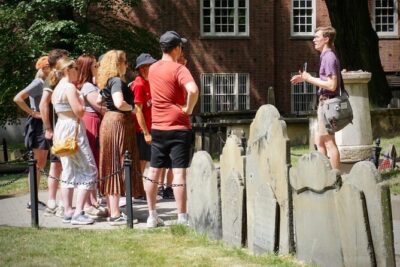 ★ 5.0Boston: Freedom Trail History Small Group Walking TourFrom $356,450 reviews
 ★ 4.8Boston Fenway Park: Guided Ballpark Tour with OptionsFrom $203,606 reviews
 ★ 4.5Tour of Historic Fenway Park, America’s Most Beloved BallparkFrom $453,013 reviews
 ★ 4.5Boston Freedom Trail Walking Tour with Costumed GuideFrom $262,531 reviews
 ★ 4.5Boston Tea Party Ships and Museum AdmissionFrom $352,512 reviews
 ★ 4.8Boston: Boston Tea Party Ships and Museum Interactive TourFrom $351,926 reviews
 ★ 5.0Boston Food & History: Pizza, North End & Freedom TrailFrom $901,772 reviews
 ★ 4.9Boston’s Freedom Trail: A Revolutionary Walking TourFrom $311,748 reviews
This one is also listed in