
Review · CHARLESTON HISTORIC TOURS
Charleston’s Old South Carriage Historic Horse & Carriage Tour
Charleston moves at a slower pace. This horse-drawn tour threads you through historic streets with Belgian and Percheron draft horses and a certified guide who makes the city’s past click fast.
I especially love two things: you get a ton of sighting time in just about an hour (30 blocks, roughly 2.5 miles), and you hear stories that connect mansions, churches, gardens, and Civil War era Charleston into one clear route. The photo stops outside wrought iron gates and old homes are also a big win.
One thing to keep in mind: your exact route can vary because Charleston assigns tour zones, so you cannot guarantee you will pass a specific landmark like Rainbow Row or the Battery.
In This Review
- Key highlights
- 14 Anson Street, where the ride starts and the horses steal the show
- Belgian and Percheron draft horses, why this tour feels different
- The city controls the route, and that is a feature, not a bug
- Churches, gardens, wrought iron gates, and piazzas, the photo loop you actually use
- A pause outside major homes, like the Gov. William Aiken House
- How the certified guides tell Civil War era Charleston without turning it into a lecture
- Getting the most out of your seat: small group comfort and smart timing
- Weather reality: covered carriages, ponchos for purchase, and what not to ignore
- Value for $50: what you get in one hour that walking cannot replace
- Who this tour suits best, and who might want a different plan
- Should you book Old South Carriage in Charleston?
- FAQ
- Where does the tour depart from?
- How early do I need to check in?
- How long is the carriage tour?
- Are the tours narrated, and are guides certified?
- Does the route stay the same every time?
- Can I bring a stroller?
- Can I bring snacks or drinks, and are ponchos available?
- Are service animals or dogs allowed?
Key highlights
- 14 Anson Street check-in lets you meet the draft horses before you board
- Certified narration turns churches, gardens, and mansions into a connected story
- 30 blocks, 300+ years covered in about 50 to 60 minutes
- Historic home stop includes the Gov. William Aiken House on many routes
- Photo-friendly gardens and custom wrought iron gates are frequent along the way
14 Anson Street, where the ride starts and the horses steal the show
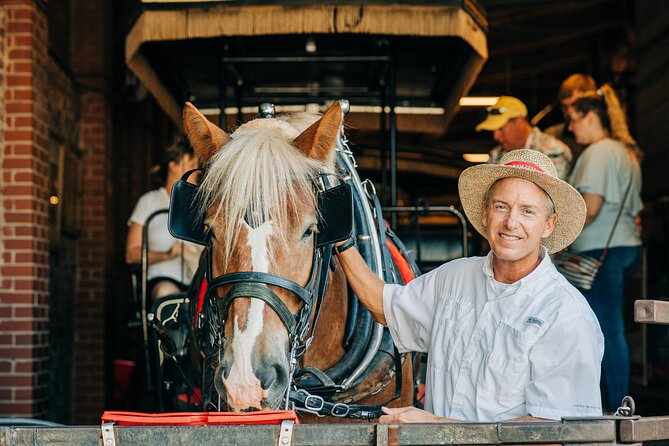
Your tour begins at 14 Anson Street, at the stable for Old South Carriage. It is right by the City Market area, so you are close to the action, but you still start in a more comfortable setting than you would at a street corner. Plan to check in 15 minutes early, because boarding starts right at your assigned time and they can cancel reservations if you are late.
Before you climb on, you can usually watch an educational video, use the restroom, and buy bottled water. The stable setup is also practical: you are waiting under shelter instead of standing out in the weather. Then comes the fun part, meeting the horses up close.
Boarding is easy for most people because they use an inclined ramp or loading platform. You also get a good first glimpse of what kind of carriage you are riding in. The seating depends on the carriage style, including surrey-style setups that seat up to 16 passengers, and wagonette styles that can be smaller. In general, the tour run keeps groups limited, with a maximum of 16 travelers per departure.
Belgian and Percheron draft horses, why this tour feels different
There are two reasons the horses matter here. First, the horses are the practical engine that slows everything down. You are not wrestling with parking or traffic, and you are not rushing from stop to stop like a checklist tourist. Second, the tour leans into authenticity, using Belgian and Percheron draft horses that match the type of workhorse you would have seen in early American farm life.
You might also notice how the day-to-day horse routine shapes the experience. One guide talk I found especially interesting is that you can learn how the company sources and manages horses, including a story about Belgian draft horses coming from Amish farms when they are no longer needed as working horses. You may also hear that these horses get a break on the farm between routes and are limited to a set number of working days.
And yes, the horses themselves can be characters. In recent rides, I’ve seen names like Jordan, Aiken, Bob, Arthur, and Curtis pop up, along with stories about how well-trained they are. Even if your horse is different, the vibe is the same: calm, steady, and built for visitors who want that old-southern carriage feel without chaos.
Elsewhere under Historical Tours across Charleston
The city controls the route, and that is a feature, not a bug
Here’s the real deal about what you will see: after you leave the stable, your carriage stops near the City gate by the Market area. From there, your route is assigned using a system set by the City of Charleston to spread carriage traffic more evenly.
So your route is not a fixed script. You are guaranteed the overall experience: about 30 blocks and 300+ years of history. But the exact landmarks can vary depending on the zone you are assigned. This is why two people can book the same tour and feel like they rode two different streets.
If you have a must-see like Rainbow Row, do not assume it is guaranteed on your hour. Instead, treat the tour like a guided sampler of historic downtown Charleston. The tradeoff is worth it for most people because you still get the signature sights the city is known for, just in the order and combination that fits your assigned zone.
Churches, gardens, wrought iron gates, and piazzas, the photo loop you actually use
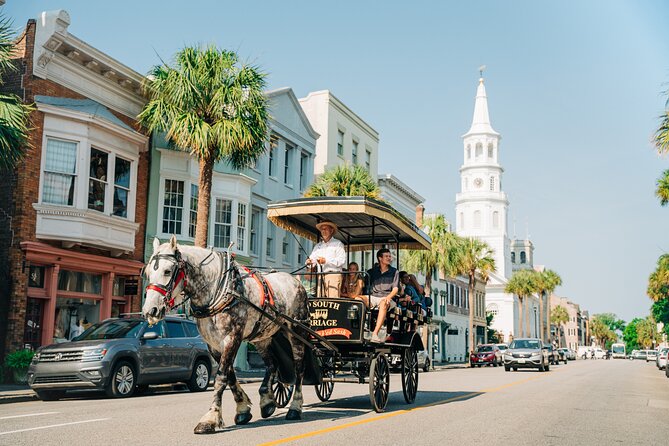
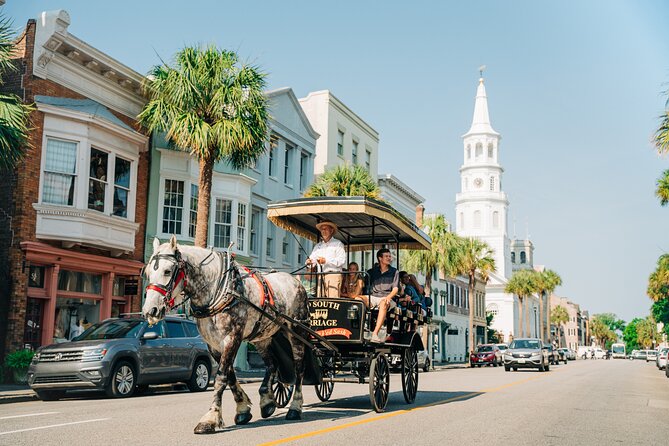
Charleston is famous for its architecture and street character, and this tour is built to help you see it without constantly stopping and starting. Expect frequent passes by old churches, along with the look of steeples that define Charleston’s skyline. You will also see the kind of residential streets where the front yards and gates matter as much as the buildings.
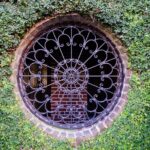
A big part of the visual payoff is the wrought iron. Many of the gates you will pass are custom and decorative, and the carriages give you a stable vantage point for photos without you stepping into the roadway. It is one of those rare “just sit there and it comes to you” sightseeing formats.
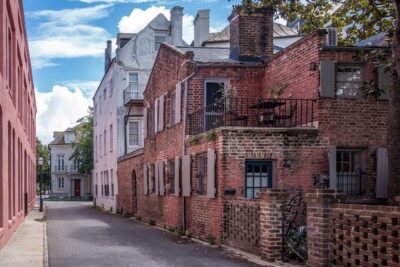
You will also notice the rhythm of mansion streets and garden areas with lush, well-kept landscaping. That combo, ironwork plus gates plus gardens, is what makes the tour feel like you are gliding through the postcard version of Charleston.
A pause outside major homes, like the Gov. William Aiken House
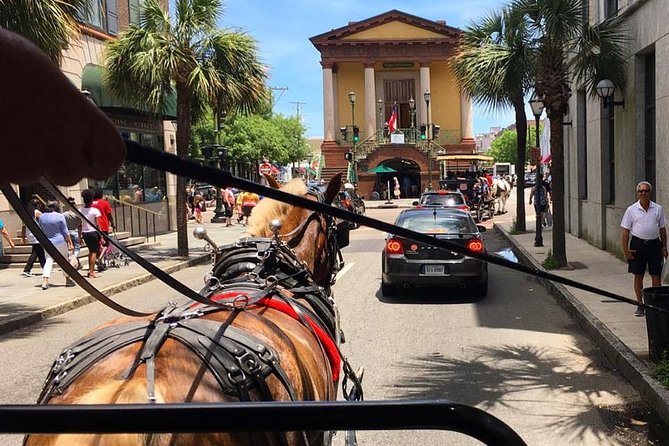
One of the best moments is the scheduled stop outside historic residences. Not every departure is identical, but many routes include stops such as the Gov. William Aiken House, the former home of South Carolina Governor William Aiken, Jr. This property was listed on the National Register of Historic Places in 1977.
Why does a stop outside a home feel better than just passing it? Because you get a clearer chance to see details and to hear the story in context. When you are simply moving through town, you often catch only the front facade. At a stop, you have time to focus on the layout and surroundings, and your guide can connect it to the period the city is referencing during that portion of the ride.
Also, if you enjoy hearing about the people behind the buildings, this is where the narrative starts to feel less like dates on a timeline and more like real Charleston life.
How the certified guides tell Civil War era Charleston without turning it into a lecture
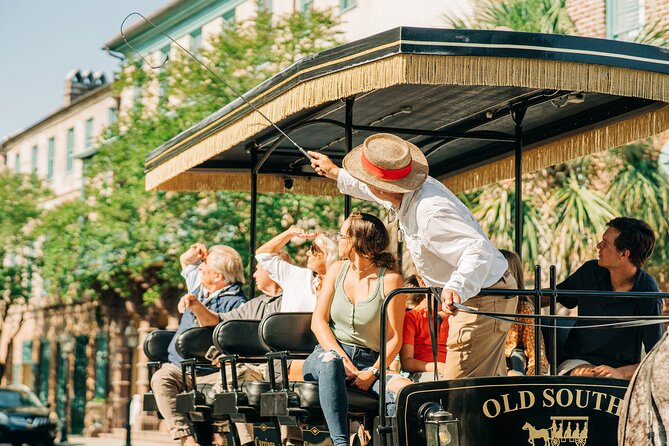
The narration is a major reason this tour works for first-time visitors and repeat visitors alike. Guides are certified, and the historic tour guides are required to be members of the Palmetto Guild, meaning they pass a comprehensive examination on Charleston history.
What I look for in any guided tour is clarity. You want the story to connect, not just dump facts. This is the kind of tour where you can follow along because the guide ties what you are seeing in front of you to what they are explaining.
In recent rides, names like Wendy, Carrie, Ro, Carol, and Maddie show up as standout guides, along with teams like Noel and Tucker. A theme in these accounts is that guides use humor and keep the pace lively. Some rides also mention a guide balancing older and younger passengers, which matters because Charleston history can go heavy fast if the guide does not adjust.
You do not have to study beforehand. You just need to pay attention during the slower segments, especially near churches and gardens where the guide’s story helps you notice details you would otherwise miss.
More filed under Charleston Historic Tours in Charleston




Getting the most out of your seat: small group comfort and smart timing
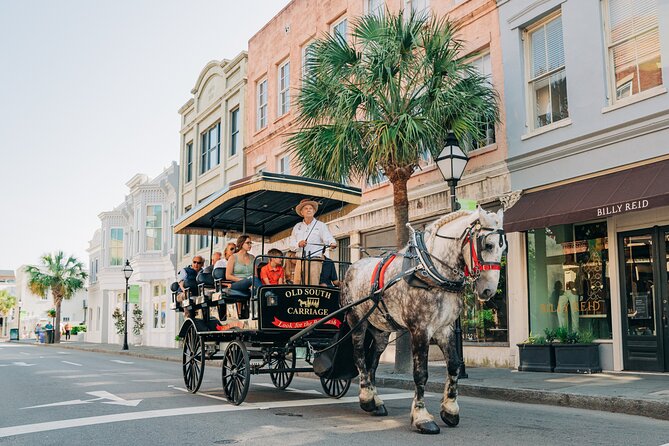
This is an hour-long experience, so you will feel every minute. The good news is that the structure makes it efficient.
- You board after checking in, so you are not wandering around waiting for an unclear start.
- You stay in a small group (up to 16 people), which usually means more room to settle in and hear your guide clearly.
- You have time at the stable before departure, including the chance to ask questions or just watch the horses.
A practical tip: bring a phone with enough battery because the wrought iron gates and garden fronts are easy to photograph while you are moving. If it is cold, expect the ride to feel chilly at times. Many carriages have a roof for shade and some rain protection, but you will still feel outdoor weather.
Also, food is not allowed on the carriage. Drinks are allowed, and bottled water is sold at the offices near where you board. If you like to snack during transit, this tour is more about the ride and the stories than eating on board.
Weather reality: covered carriages, ponchos for purchase, and what not to ignore
This is a good plan for many days in Charleston, but you need to respect the weather. Tours run in rain, but they do not run during thunderstorms. Carriages have a roof that offers shade and some protection from rain, but you may still get wet if the rain is coming down hard.
If showers are in the forecast, you can buy lightweight ponchos right at 14 Anson Street. That is better than trying to improvise with a plastic bag and hoping it does not blow away.
My advice: dress like you are going to be outside for an hour, not like you are inside a museum. If it is cold, you will likely want a warm layer since you are outside and moving slowly through the historic district.
Value for $50: what you get in one hour that walking cannot replace
At $50 per person, this tour is not a budget bargain, but it often feels like good value because you are paying for a bundle.
You get:
- Horse-drawn transport through about 30 blocks in roughly 50 to 60 minutes
- A certified guide who narrates what you are seeing
- Frequent passes of Charleston’s signature sights, including churches, gardens, and historic mansions
- Photo-friendly viewing angles that do not require constant stopping
If you tried to recreate this as a self-guided walk, you would lose time. You would also risk missing context, like why a gate matters or how a home ties into the city’s Civil War era story. This tour saves you those mental steps, which is valuable when you only have a day or two in town.
Where the value can feel weaker is if you are chasing one specific landmark, and you are the type who wants control. Since Charleston assigns route zones, you might not see exactly what you hoped for. But if your goal is to get your bearings and experience the old downtown feel, this price usually makes sense.
Who this tour suits best, and who might want a different plan
I think this is a strong choice for:
- Couples who want a relaxed intro to historic downtown
- Solo visitors who like guided storytelling and easy movement without logistics stress
- Families with kids who can handle an hour outside, especially when the guide keeps things lively
- People who want a first pass through Charleston’s look, before deciding what to explore on foot later
It may not fit as well if:
- You need a guaranteed exact route featuring one landmark in particular
- You have a very low tolerance for outdoor weather, since the ride is still outside
- You want deep museum-style detail rather than street-level history tied to what you see in real time
Should you book Old South Carriage in Charleston?
I would book this if you want an efficient, charming way to see a lot of historic Charleston in one sitting. The combination of draft horses, certified narration, and repeated chances for great photos is exactly the sort of experience that sticks in your memory more than another app-based walking route.
Book with two expectations: you will enjoy the city’s signature sights, and your exact stops may vary based on Charleston’s assigned zones. If you can live with that, this is a $50 hour that tends to deliver far more than the length suggests.
FAQ
Where does the tour depart from?
Carriages board and depart from the stable at 14 Anson St, Charleston, SC 29401, one block north of the City Market. The stable provides protection from the elements while you wait.
How early do I need to check in?
You must check in 15 minutes prior to your scheduled tour time. If you do not, your reservation may be canceled without a refund.
How long is the carriage tour?
The tour lasts approximately 1 hour, usually about 50 to 60 minutes.
Are the tours narrated, and are guides certified?
Yes. Tours are narrated by a certified guide, and historic tour guides are required to be members of the Palmetto Guild.
Does the route stay the same every time?
Not exactly. After boarding, a route is assigned by the City of Charleston. Your tour covers about 30 blocks, but specific landmarks can vary by route.
Can I bring a stroller?
Strollers cannot be accommodated on the carriage, but you may store your stroller at the stable while you are on tour.
Can I bring snacks or drinks, and are ponchos available?
Food is not allowed on the carriage, but you may bring drinks. Lightweight ponchos are available for purchase at 14 Anson Street where you board your carriage.
Are service animals or dogs allowed?
Service animals are allowed. Dogs are also welcome if they are well-behaved, with smaller dogs able to sit on your lap and larger dogs able to sit in the front row.
Historical Tours we have also been through in Charleston
- Historic Charleston Guided Sightseeing Walking Tour★ 5.0 · 6,216 reviews
- Charleston Horse-Drawn Carriage Tour: Explore Historic Charleston★ 5.0 · 3,561 reviews
- Charleston Harbor History Day-Time or Sunset Boat Cruise★ 4.5 · 2,788 reviews
- Hidden Alleyways and Historic Sites Small-Group Walking Tour★ 5.0 · 2,335 reviews
- Charleston: Daytime or Sunset Historic Harbor Cruise★ 4.5 · 1,352 reviews
Tours: the rest of the Charleston file
- Historic Charleston Guided Sightseeing Walking Tour★ 5.0 · 6,216 reviews
- Haunted Evening Horse and Carriage Tour of Charleston★ 4.5 · 3,678 reviews
- Charleston Horse-Drawn Carriage Tour: Explore Historic Charleston★ 5.0 · 3,561 reviews
- Fort Sumter Admission and Self-Guided Tour with Roundtrip Ferry★ 4.5 · 3,343 reviews
- Ghosts of Charleston Night-Time Walking Tour with Unitarian Church Graveyard★ 4.5 · 2,835 reviews
Tour Reviews: more from our Charleston desk
- Historic Charleston Guided Sightseeing Walking Tour★ 5.0 · 6,216 reviews
- Haunted Evening Horse and Carriage Tour of Charleston★ 4.5 · 3,678 reviews
- Charleston Horse-Drawn Carriage Tour: Explore Historic Charleston★ 5.0 · 3,561 reviews
- Fort Sumter Admission and Self-Guided Tour with Roundtrip Ferry★ 4.5 · 3,343 reviews
- Ghosts of Charleston Night-Time Walking Tour with Unitarian Church Graveyard★ 4.5 · 2,835 reviews
Newest Charleston reviews added to this site
- Paranormal Investigation: YOU are the Ghost Hunter
★ 5.0 · 310 reviews - Charleston History and Hops Tour: Bar and History Walk
★ 5.0 · 316 reviews - Middleton Place Admission with Self Guided Tour and Lunch
★ 4.5 · 326 reviews - Sip History in The Sun Cabana Covered Cocktail Class
★ 5.0 · 332 reviews - Private Daytime Horse-Drawn Carriage Tour of Charleston
★ 5.0 · 340 reviews - Charleston’s Historic Downtown Food Tour
★ 4.5 · 349 reviews - Charleston: History and Architecture Guided Walking Tour
★ 4.8 · 349 reviews - The Death and Depravity Ghost Tour in Charleston
★ 4.5 · 371 reviews - Charleston in a Nutshell Private Tours
★ 5.0 · 375 reviews - Charleston History Tour /
★ 5.0 · 388 reviews
Charleston Historic Tours, side by side.
 ★ 5.0Historic Charleston Guided Sightseeing Walking TourFrom $306,216 reviews
 ★ 4.5Haunted Evening Horse and Carriage Tour of CharlestonFrom $503,678 reviews
 ★ 5.0Charleston Horse-Drawn Carriage Tour: Explore Historic CharlestonFrom $493,561 reviews
 ★ 4.5Ghosts of Charleston Night-Time Walking Tour with Unitarian Church GraveyardFrom $352,835 reviews
 ★ 4.5Charleston Harbor History Day-Time or Sunset Boat CruiseFrom $442,788 reviews
 ★ 5.0Highlights of Charleston Guided Walking Tour2,206 reviews
 ★ 5.0Charleston Eco Boat Cruise with stop at Morris Island Lighthouse2,111 reviews
 ★ 5.0Charleston French Quarter or Brunch Food Tour with 7+ TastingsFrom $1081,853 reviews
This one is also listed in