
Review · CHARLESTON HISTORIC TOURS
Charleston in a Nutshell Private Tours
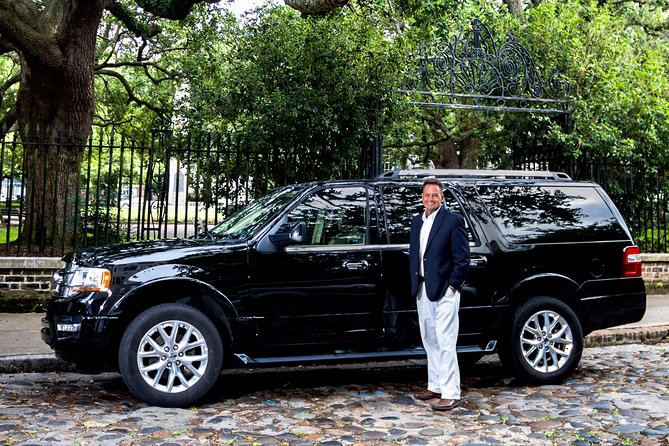
Charleston in 2 hours is a fast way to get oriented. This private drive is built for first-time visitors who want the big sights without burning all their energy. You ride with Jeff Zimmerman, and the route is designed to show you Charleston’s shape, beauty, and history in a way that actually helps you plan the rest of your trip.
I especially like the hotel pickup and drop-off in downtown Charleston. It removes the logistical hassle, so you start sightseeing right away and stay in comfortable control of your day. You also get a local, give-and-take style of guiding, with stops that let you look closely instead of just zipping past.
One thing to consider is the pickup limits. The tour does not pick up or drop off at the airport or most areas outside downtown, so you may need to plan around where you can meet.
In This Review
- Key highlights you should care about
- Entering Charleston by car, with the right kind of pacing
- Pickup in downtown Charleston, and how to not lose time
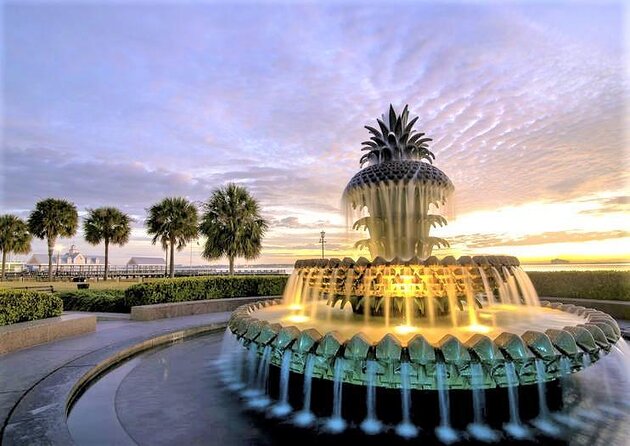
- Waterfront Park: the harbor view that sets the mood
- Dock Street Theater: a quick history stop with real atmosphere
- The Citadel: campus scale, cadet life, and the Ashley River
- Rainbow Row: how to see the colors like a local
- Battery and White Point Gardens: where the peninsula reaches the sea
- St. Michael’s Church: an old landmark with named significance
- City Hall and the old First Bank building: civic design on a prime corner
- Hampton Park: live oaks, magnolias, and a former race course
- The James Hoban style building: a Charleston-to-White House connection
- What makes the guide matter, and how to get more from the stops
- Price and value: what you are really paying for
- Who should book this Charleston overview by car
- Should you book Charleston in a Nutshell Private Tours?
- FAQ
- How long is the Charleston in a Nutshell Private Tours experience?
- Is this a private tour?
- Do you offer hotel pickup and drop-off in Charleston?
- Where do you not pick up or drop off?
- What language is the tour offered in?
- Is there an admission fee for Dock Street Theater?
- Does the tour use a mobile ticket?
- Are service animals allowed?
- Does the tour require good weather?
- What is the cancellation policy?
Key highlights you should care about
- Private group only: just your party in the vehicle
- Downtown pickup and drop-off to save time and walking
- Waterfront Park views of Ravenel Bridge and Fort Sumter area
- Rainbow Row orientation so you can recognize what you see later
- Citadel drive-by time plus a slow look at campus grounds
- Four Corners of Law stops around landmark civic buildings
Entering Charleston by car, with the right kind of pacing
Charleston can feel like a lot at once. Streets curve, neighborhoods change fast, and the best views are often at the exact moments you do not want to park and hunt for tickets. This tour solves that by keeping you moving at a comfortable pace in a private vehicle.
In my view, the best part of a short guided drive is that it turns wandering into decision-making. You will learn what to return to, and you will know why that spot matters, so your next walk around town feels purposeful. You also get an overview that helps you understand where the peninsula, harbor, and main historic sights connect.
The tour lasts about 2 hours, which is long enough for a real orientation and short enough to keep your day flexible. If you have a tight schedule, you can still fit this in early and then build from there, not around it.
Pickup in downtown Charleston, and how to not lose time
This experience offers complimentary pickup and drop-off at downtown Charleston locations. That is a big value play, because you avoid the two biggest sightseeing killers: waiting around and adding extra travel time. It also means you can come straight from your morning routine, then step into a guided route right away.
The flip side is the coverage area. Pickup is not available from Charleston International Airport, North Charleston, Summerville, Folly Beach, Isle of Palms, Sullivan’s Island, Daniel Island, John’s Island, Goose Creek, or Kiawah Island. If you are staying out in those areas, plan for the logistics early, because the tour does not shift to your neighborhood.
If you are booking, you will get confirmation at the time of booking. You will also have a mobile ticket, which keeps things simple on the day. Service animals are allowed, and the tour is near public transportation, in case you need an alternate plan.
Further Private covered by our reviewers in Charleston
Waterfront Park: the harbor view that sets the mood
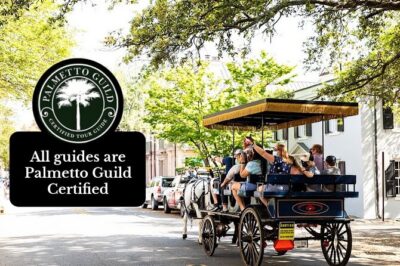
You start at Waterfront Park, a place built for panoramic looks over Charleston harbor. This stop is not just pretty. It gives you the visual framework you will keep using all trip long.
From here you can take in clear sightlines, including the Ravenel Bridge, the U.S.S. Yorktown at Patriots Point, and Fort Sumter. Even if you only spend a short time taking photos, you get a mental map of where the water, landmarks, and the peninsula fit together.
The biggest benefit is that this is an orientation stop. When you later stand near the harbor or see buildings from a different angle, you will recognize the “where are we?” feeling in your head. That makes Charleston less confusing and more fun.
Dock Street Theater: a quick history stop with real atmosphere
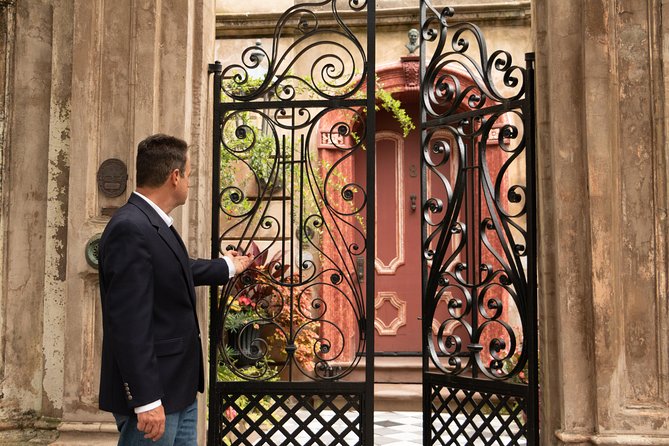
Next up is Dock Street Theater, with a special highlight: it opened in 1736 and was the first American building constructed exclusively for theatrical performances. That is the kind of detail you would miss if you are only skimming plaques.
The stop time is around 15 minutes, and admission is free for this portion. Use that time to look at the building’s role in the city’s cultural life, not just the structure itself.
Practical tip: take your photos quickly, then listen to the guide’s framing of why the theater mattered. It tends to change how you see Charleston’s old squares and meeting places later, because you start thinking of the city as a living stage, not a museum.
The Citadel: campus scale, cadet life, and the Ashley River
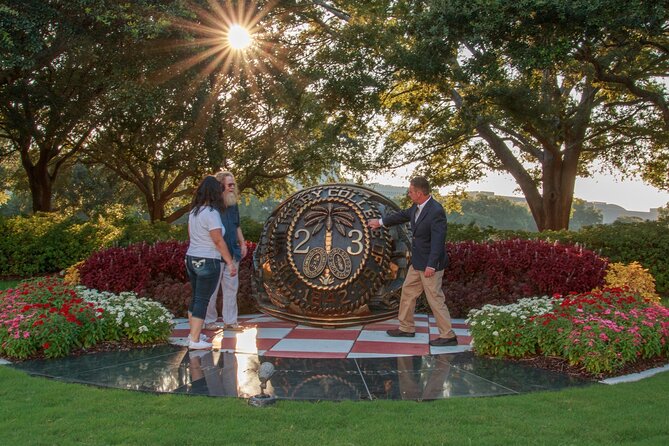
Then you get The Citadel, one of the six senior military colleges in the United States. It sits on roughly 300 acres along the banks of the Ashley River, and the South Carolina Corps of Cadets brings it to life with over 2,300 cadets in uniform.
Even if you are not a military history person, this stop helps you understand Charleston’s institutions. The Citadel is a major presence in the region, and it explains why certain streets and views feel structured and formal in a way that matches the city’s architecture and civic planning.
The tour includes time that can include a slow drive through campus grounds. That matters because it turns a one-liner landmark into something you can actually place on your mental map. You will come away with a better sense of how the Ashley River edge shapes the city.
Rainbow Row: how to see the colors like a local
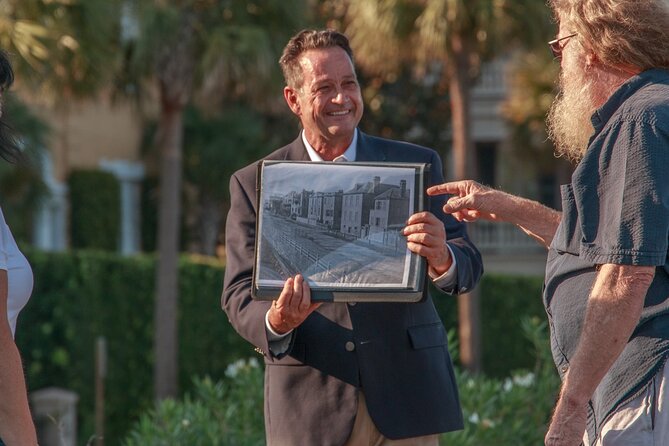
Next comes Rainbow Row, known as the longest continuous cluster of intact Georgian row houses in America. It is famous for pastel facades, but the real value is learning how to look at what you see.
When you stand here (or view it from the road stops), it helps to know that these are not just pretty walls. They are Georgian housing blocks preserved in a way that keeps the historic street rhythm intact. That is why the area is so heavily photographed, and why seeing it early on helps you spot similar patterns elsewhere.
The stop is designed to let you understand the layout and then move on without wasting your whole day on one photo moment. If you are planning to return later, you will know what to target. If you are not, you still leave with the key Charleston identity marker done.
More filed under Charleston Historic Tours in Charleston




Battery and White Point Gardens: where the peninsula reaches the sea

After Rainbow Row, you head to the Battery & White Point Gardens, which sit right near the tip of the peninsula. Locals describe this as where the Ashley and Cooper rivers meet and become the Atlantic.
That line may sound poetic, but on the ground it is a geography lesson. You get harbor views and a sense of how currents, land shape, and sightlines work together. This is also the view-side that helps you understand why Fort Sumter draws attention from almost every direction.
Also, you will see the kind of southern mansions that define Charleston’s skyline from across the water. The stop time here is about 10 minutes, and admission is free, so it is efficient. The main idea is to take your photos, then soak in the “tip of the peninsula” feeling before moving on.
St. Michael’s Church: an old landmark with named significance
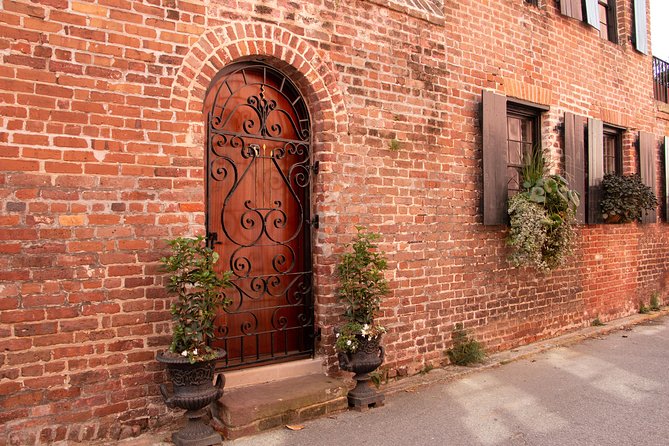
Next is St. Michael’s Church, dating to around 1761. It is the oldest church in downtown Charleston, and it plays a role connected to the city’s Four Corners of Law layout.
This is one of those stops where the churchyard matters as much as the building itself. The guide points out that two signers of the U.S. Constitution are resting there: John Rutledge and Charles Cotesworth Pinckney.
Even with a short stop, it changes the way you read Charleston’s downtown corners. You stop seeing random intersections and start seeing structure, governance, and long-term planning written into the city’s geography.
Practical tip: dress for shade and keep water handy. Churches and historic sites can be cooler inside, but the surrounding streets and sidewalks can bake quickly in summer.
City Hall and the old First Bank building: civic design on a prime corner
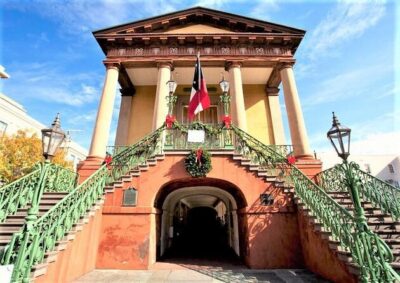
You then shift to a landmark building that once served as The First Bank of the United States. Founded in 1818, it later became City Hall, and it is constructed between 1801 and 1804 on a civic square site tied to the Grand Modell, the city’s 17th-century plan.
This stop is a great example of why a guided drive works. If you are walking alone, you might notice the building and move on. Here, you get the civic story, meaning you understand why the city would invest in this kind of structure and how it fits the Four Corners of Law concept.
It is the same idea as with the theater and church. Charleston is not just about pretty buildings. It is about how the city organized public life around them.
Hampton Park: live oaks, magnolias, and a former race course
Now you’ll head to a big green space: a 60-acre park that is the largest on the peninsula. It was once the Washington Race Course, and today it feels like a long pause in the day, surrounded by centuries-old live oaks and southern magnolia trees.
The value here is contrast. After churches and civic buildings, you get a breathing moment. It also helps you see Charleston beyond architecture, because the city’s outdoor feel is part of its identity.
Time-wise, this is a stop that gives you the chance to step out, look for shade, and reset. If you are visiting in warmer months, this type of break can make the rest of your sightseeing feel easier.
The James Hoban style building: a Charleston-to-White House connection
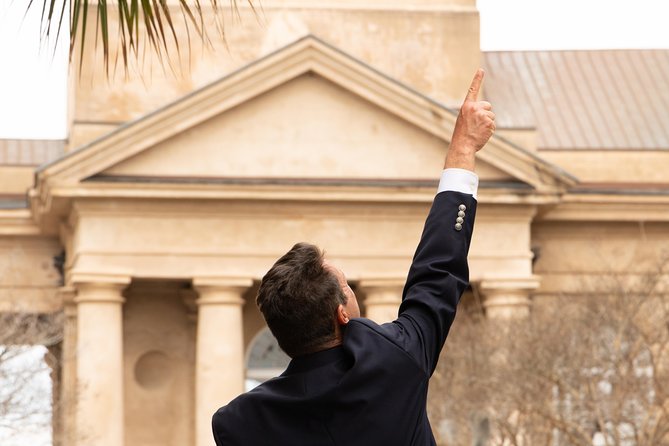
You end with a neoclassical building tied to Irish architect James Hoban. The key detail here is that it is likely the model for Hoban’s later, most famous building, the U.S. White House. It also connects to Leinster House in Dublin as a modeling reference.
That is a fascinating link to learn during a short tour. It gives you a way to see Charleston’s influence and planning reach beyond its own borders. Even if you are not an architecture person, you will recognize the theme as soon as you start spotting the style cues the guide points out.
If you like comparing buildings, this final stop is a strong closer. You can carry that comparison mindset into whatever you see next in the city.
What makes the guide matter, and how to get more from the stops
The tour is private, and the guide is the main reason it rises above a simple route. I like that Jeff Zimmerman brings a clear, organized way of explaining what you are looking at, including how Charleston’s architecture connects to the city’s rules and institutions.
You will also get a sense that the guide pays attention to your questions. The tour works best when you treat it like a conversation, not a checklist. Ask about where you should walk afterward, and ask which sights are worth returning to, versus which ones are best seen once for context.
Here are a few things you can do to get more value in those limited stop times:
- Bring a couple of questions ready, like how Charleston’s layout works or why certain buildings are protected.
- Take photos, then listen for the story behind the building, because that is what you will remember later.
- If it is hot, lean into the driving time, and use each free stop to step out for short photo bursts.
Price and value: what you are really paying for
Even without seeing a specific price listed here, you can judge value by what’s included. This tour combines private guiding with transportation, and the big plus is hotel pickup and drop-off in downtown. That means you are not paying for a bus ride and then guessing where to go.
You also get free admission for certain stops listed in the route, like Dock Street Theater and Battery & White Point Gardens. That helps you keep the day from turning into an add-on expense schedule.
For first-time visitors, the real value is efficiency. You are paying for orientation, direction, and a local frame that turns random streets into a city you can navigate with confidence.
Who should book this Charleston overview by car
This tour makes sense if you:
- Are visiting Charleston for the first time and want a clear overview fast
- Prefer comfortable driving over long walks in the heat
- Want to see the key sights, then choose your own pace afterward
- Enjoy history and architecture, but do not want to spend all day reading plaques
It is also a strong fit if you are traveling as a couple, family group, or small party that wants attention and timing that matches your needs. Since only your group participates, you avoid the push-and-go rhythm that can feel stressful on crowded days.
If you are staying outside downtown Charleston or planning to start near the airport or islands, you should double-check pickup coverage first. This is not a tour that automatically solves every area issue.
Should you book Charleston in a Nutshell Private Tours?
I would book it if you want a smart first look at Charleston with real orientation and a route that connects harbor views, classic streets, and civic landmarks. The structure is tight enough to cover the essential highlights in about two hours, and the guiding style adds meaning, not just motion.
I would skip it or rethink the plan if your lodging is outside the downtown pickup area listed, because you may end up dealing with extra logistics. Also, remember that the experience requires good weather, so have a backup mindset if you are traveling in a rainy stretch.
If you choose to book, do it early in your trip. That way the tour becomes the map for the rest of your time, not just a one-time ride.
FAQ
How long is the Charleston in a Nutshell Private Tours experience?
It is about 2 hours.
Is this a private tour?
Yes. It is private, and only your group participates.
Do you offer hotel pickup and drop-off in Charleston?
Yes. There is complimentary pickup and drop-off at downtown Charleston locations.
Where do you not pick up or drop off?
Pickup and drop-off are not offered at Charleston International Airport, North Charleston, Summerville, Folly Beach, Isle of Palms, Sullivan’s Island, Daniel Island, John’s Island, Goose Creek, or Kiawah Island.
What language is the tour offered in?
The tour is offered in English.
Is there an admission fee for Dock Street Theater?
No. Dock Street Theater is listed as free admission.
Does the tour use a mobile ticket?
Yes. A mobile ticket is provided.
Are service animals allowed?
Yes. Service animals are allowed.
Does the tour require good weather?
Yes. The experience requires good weather, and if it is canceled due to poor weather you will be offered a different date or a full refund.
What is the cancellation policy?
You can cancel for free up to 24 hours in advance for a full refund. If you cancel less than 24 hours before the start time, the amount you paid will not be refunded.
More logged under Private in Charleston
- Private Luxury Yacht Charters, BYOB & Dolphins★ 5.0 · 395 reviews
- Private Daytime Horse-Drawn Carriage Tour of Charleston★ 5.0 · 340 reviews
Tours: the rest of the Charleston file
- Charleston’s Old South Carriage Historic Horse & Carriage Tour★ 5.0 · 10,023 reviews
- Historic Charleston Guided Sightseeing Walking Tour★ 5.0 · 6,216 reviews
- Haunted Evening Horse and Carriage Tour of Charleston★ 4.5 · 3,678 reviews
- Charleston Horse-Drawn Carriage Tour: Explore Historic Charleston★ 5.0 · 3,561 reviews
- Fort Sumter Admission and Self-Guided Tour with Roundtrip Ferry★ 4.5 · 3,343 reviews
Tour Reviews: more from our Charleston desk
- Charleston’s Old South Carriage Historic Horse & Carriage Tour★ 5.0 · 10,023 reviews
- Historic Charleston Guided Sightseeing Walking Tour★ 5.0 · 6,216 reviews
- Haunted Evening Horse and Carriage Tour of Charleston★ 4.5 · 3,678 reviews
- Charleston Horse-Drawn Carriage Tour: Explore Historic Charleston★ 5.0 · 3,561 reviews
- Fort Sumter Admission and Self-Guided Tour with Roundtrip Ferry★ 4.5 · 3,343 reviews
Newest Charleston reviews added to this site
- Paranormal Investigation: YOU are the Ghost Hunter
★ 5.0 · 310 reviews - Charleston History and Hops Tour: Bar and History Walk
★ 5.0 · 316 reviews - Middleton Place Admission with Self Guided Tour and Lunch
★ 4.5 · 326 reviews - Sip History in The Sun Cabana Covered Cocktail Class
★ 5.0 · 332 reviews - Private Daytime Horse-Drawn Carriage Tour of Charleston
★ 5.0 · 340 reviews - Charleston’s Historic Downtown Food Tour
★ 4.5 · 349 reviews - Charleston: History and Architecture Guided Walking Tour
★ 4.8 · 349 reviews - The Death and Depravity Ghost Tour in Charleston
★ 4.5 · 371 reviews - Charleston in a Nutshell Private Tours
★ 5.0 · 375 reviews - Charleston History Tour /
★ 5.0 · 388 reviews
Charleston Historic Tours, side by side.
 ★ 5.0Charleston’s Old South Carriage Historic Horse & Carriage TourFrom $5010,023 reviews
 ★ 5.0Historic Charleston Guided Sightseeing Walking TourFrom $306,216 reviews
 ★ 4.5Haunted Evening Horse and Carriage Tour of CharlestonFrom $503,678 reviews
 ★ 5.0Charleston Horse-Drawn Carriage Tour: Explore Historic CharlestonFrom $493,561 reviews
 ★ 4.5Ghosts of Charleston Night-Time Walking Tour with Unitarian Church GraveyardFrom $352,835 reviews
 ★ 4.5Charleston Harbor History Day-Time or Sunset Boat CruiseFrom $442,788 reviews
 ★ 5.0Highlights of Charleston Guided Walking Tour2,206 reviews
 ★ 5.0Charleston Eco Boat Cruise with stop at Morris Island Lighthouse2,111 reviews
This one is also listed in