
Review · CHARLESTON HISTORIC TOURS
Charleston History Tour /
Charleston can feel like a postcard, until you learn the stories behind it. This 2-hour history tour strings together the city’s key landmarks without wasting your day. I especially liked how it mixes big national moments with local culture, then points out architectural details you would miss on your own.
Two things I really enjoyed: first, the stop-by-stop pacing with short, focused visits keeps you moving and prevents the usual long lecture spiral. Second, I loved the way the guide explained what you were seeing, including cultural context like the Gullahs of Charleston. When my group had a tiny headcount, the guide, Joyce, made it feel like a friendly, small-town walk where you can ask questions.
One drawback to consider is the format: with quick visits at each stop, you need to be okay with a fast pass through major sights. Also, the tour is weather dependent, so plan on checking conditions the day you go.
In This Review
- Key highlights you should care about
- A 2-hour Charleston route that keeps your feet moving
- Starting at 80 Broad St, then getting your bearings fast
- Constitution ratification (built 1771) and the Gullahs of Charleston
- Dock Street Theater (circa 1810): ornate woodwork and a courtyard break
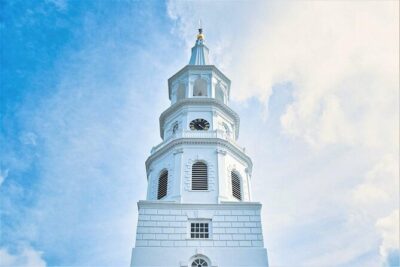
- St. Michael’s Church (circa 1764): oldest religious building in the city
- Rainbow Row: nine attached buildings, and the one oddholdout
- The Battery and White Point Gardens: harbor defenses and a seawall promenade
- French Huguenot Church (built 1844): oldest Gothic Revival in SC
- How the tour pacing really feels on the ground
- Weather, footwear, and the not-so-hidden practical stuff
- Value check: why “all admissions included” matters
- Small group experience, and what to do with the rare hiccup
- Should you book the Charleston History Tour?
- FAQ
- How long is the Charleston History Tour?
- Where does the tour start and where does it end?
- Do I need to pay extra for the stops?
- What attractions are included on the tour?
- Is food or drink included?
- How many people are in a group?
- Is the tour suitable if I have limited mobility?
- What happens if the weather is poor?
- What is the cancellation policy?
Key highlights you should care about
- Small group (up to 10 people), which makes the explanations easier to follow
- Included entry at every stop, so you do not scramble for tickets mid-walk
- Constitution ratification site (1771) plus a dedicated Gullahs segment
- Five stops with built-in time for photos and short walks, not a long bus ride
- Mobile ticket for smoother check-in
- A mix of architecture across eras, from 1760s churches to 1800s religious buildings
A 2-hour Charleston route that keeps your feet moving
This is the kind of tour that works when you have limited time but still want more than surface-level sightseeing. In about two hours, you bounce between the most photo-famous parts of Charleston and the pieces that explain why those photos matter.
You are also not stuck with just one theme. You get the national story angle through the 1771 Constitution ratification site, then you shift into local cultural learning with the Gullahs of Charleston. That mix is a big part of why this feels more satisfying than a pure architecture walk.
Finally, the group size matters. With a maximum of 10 travelers, the tour feels controlled, and it is easier to hear what the guide is pointing out at each stop.
Starting at 80 Broad St, then getting your bearings fast
Your tour begins at 80 Broad St, Charleston, SC 29401, and it ends back at the same point. That is a practical setup if you want to keep the rest of your day flexible, since you can plan dinner or other activities without worrying about where you get dropped off.
The tour uses a mobile ticket, which reduces friction when you arrive. You can spend your time looking up at buildings instead of hunting through papers.
One practical note: the tour lists moderate physical fitness as a requirement. The stops are short, but you are still walking the city streets for about two hours, so comfortable shoes are not optional.
Elsewhere under Historical Tours across Charleston
Constitution ratification (built 1771) and the Gullahs of Charleston
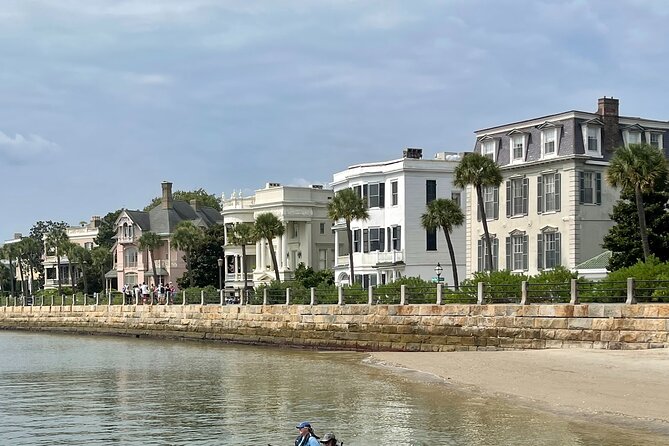
The tour opens with a major historical anchor: a home built in 1771, tied to the ratification of the United States Constitution. Even if you know the basics, it helps to connect the moment to a specific place in Charleston. In a city like this, the “where” makes the story feel real.
Then you shift into the local cultural layer with a stop focused on the Gullahs of Charleston. The value here is not just learning a topic, it is understanding how Charleston’s identity is shaped by communities and history that are still part of the city today. This is the kind of stop that changes how you look at everything after it.
If you like tours that give you context rather than just facts, this two-part setup is a strong start. You are not just collecting dates, you are building a mental map of how the city became what it is.
Dock Street Theater (circa 1810): ornate woodwork and a courtyard break

Next up is Dock Street Theater, a circa 1810 playhouse known for its ornate woodwork and courtyard setting. The tour schedule gives you about 5 minutes here, which sounds brief until you remember what this format is doing. It is giving you enough time to notice details, take photos, and absorb the key “why this matters” points without turning the stop into a half-hour detour.
Because admission is included, you do not waste your energy asking where to buy tickets or whether anything is open. You can simply show up and look.
What I like about this stop is the contrast. Charleston history can be heavy, and then you get a place built for performance and public gathering. It is a reminder that the city’s past included entertainment, not just ceremonies and churches.
Potential drawback: if you are the type who loves lingering in interiors, 5 minutes may feel short. You’ll get the essentials, but this is not a slow museum experience.
St. Michael’s Church (circa 1764): oldest religious building in the city
Then you head to St. Michael’s Church, dated to around 1764 and described as the oldest religious building in Charleston. Again, you get roughly 5 minutes at the stop, and entry is included.
This is one of those landmarks where the context changes your attention. Instead of just seeing a church, you start seeing it as an anchor point for the city’s timeline. When you get the “oldest in the city” framing, your eyes naturally go to what has endured.
The tour also keeps this site from becoming overwhelming. You get just enough time to look closely and understand significance, then you move on. If your goal is to see many highlights in a single outing, this works.
Rainbow Row: nine attached buildings, and the one oddholdout
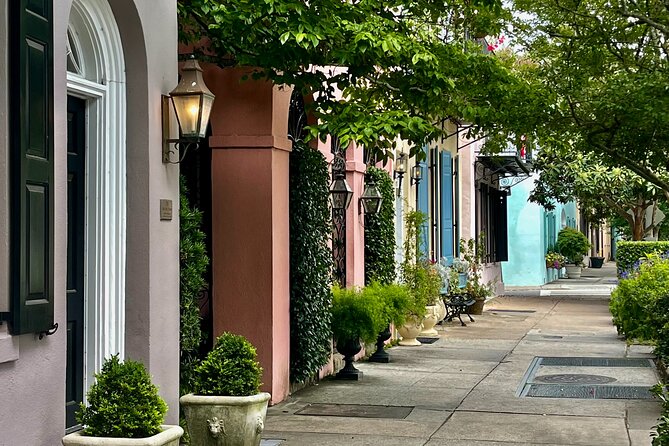
Next comes Rainbow Row, made up of 9 attached buildings. The tour notes that all but one predate the American Revolution, which gives this row a built-in sense of drama: you are looking at survivors of a critical era.
This stop is another quick hit at 5 minutes, with admission included. If you enjoy photographing iconic places, this is where you will likely pause for a few extra moments once you understand what you are looking at.
One practical tip: since attached buildings create repeating lines and angles, plan your photo setup before you rush. Take one wider shot for context, then one or two tighter frames to show the “attached” idea.
More filed under Charleston Historic Tours in Charleston




The Battery and White Point Gardens: harbor defenses and a seawall promenade
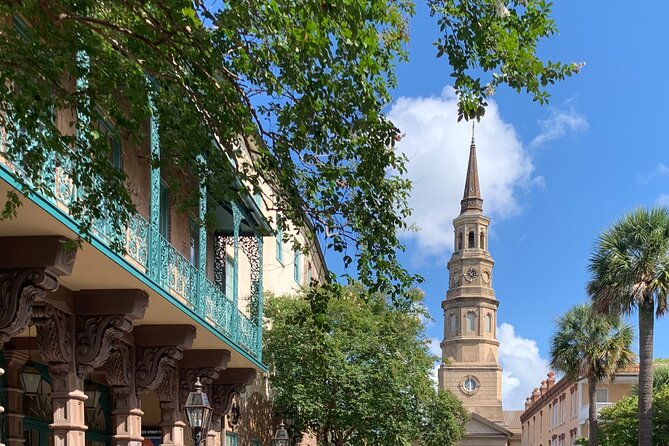
The tour then shifts to outdoors with Battery & White Point Gardens. The Battery is described as a defensive seawall and promenade on Charleston Harbor.
This stop is valuable because it connects architecture and defense to the geography of the city. The sea is not just scenery here, it is part of how Charleston protected itself and how people moved and gathered.
The time is still about 5 minutes, which is enough to orient yourself and appreciate the big picture without turning it into a long walk. If you want longer lingering later, this stop also gives you a natural place to return on your own.
French Huguenot Church (built 1844): oldest Gothic Revival in SC
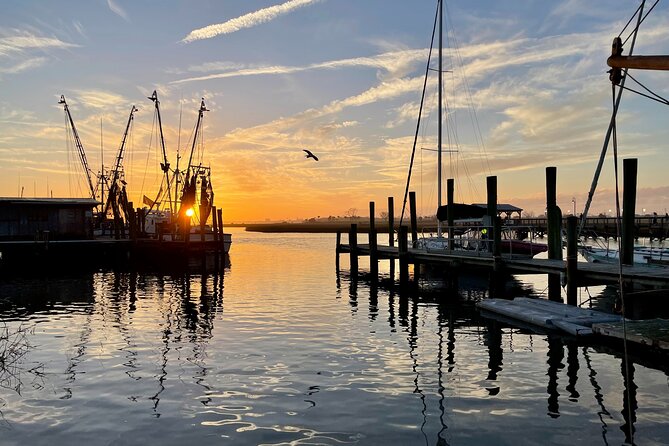
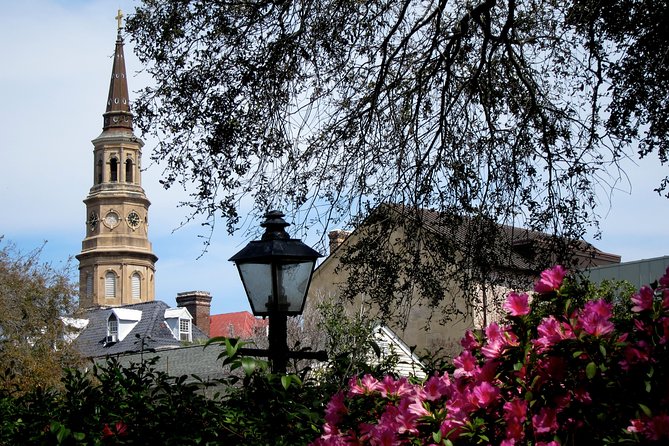
Last is French Huguenot Church, built in 1844. The tour highlights two big distinctions: it is the oldest Gothic Revival church in South Carolina, and it is the only independent Huguenot Church in the country.
This is a strong ending because it ties design style to a specific community story. Gothic Revival is an architectural label you can spot visually, but the tour’s added context gives it meaning beyond looks.
As with other indoor or ticketed stops, admission is included, so you are not juggling logistics at the finish line. By the time you reach this church, you have already collected multiple timelines, so this becomes the “how the city kept evolving” moment.
How the tour pacing really feels on the ground
The schedule is built around short visits, with many stops listed at about 5 minutes each. That means you are not going to get a deep museum-style experience at every location. Instead, you get a guided “scan” that helps you recognize what is important and what to notice.
This pacing is ideal when:
- you want highlights without spending half a day
- you like guided context more than quiet wandering
- you are traveling with kids or anyone who gets restless
- you want a first pass to build a checklist for later solo visits
It can be less ideal if you are the type who reads every placard and wants time to soak in one site. In that case, you might use the tour as your overview, then return on another day for longer time at the places you liked most.
Weather, footwear, and the not-so-hidden practical stuff
The tour specifies good weather. If conditions are poor, it may be canceled, and you will be offered a different date or a full refund. That is a big deal in Charleston, because one rainy morning can change your plans fast.
Wear shoes that work on uneven sidewalks. Even without huge distances between stops, you will be doing steady street walking for about two hours. Bring sunglasses and a hat if the sun is strong, since at least parts of the route include outdoor harbor views.
If you are visiting during peak tourist season, start your day with your most flexible plan. The tour is short, but it still depends on timing and the open status of sites during the day.
Value check: why “all admissions included” matters
What makes this tour feel like a good deal is not that it squeezes in a lot of landmarks, it is that all sites seen will not require additional payments. That includes the stops with listed admission, like Dock Street Theater, St. Michael’s Church, and French Huguenot Church.
On many city tours, you pay once for the guide, then hit you with extra tickets when you arrive. Here, you avoid that friction. It helps you budget your day and keeps you from having to decide on the fly whether a ticket is worth it.
Also, the time efficiency is real. In about two hours, you cover multiple eras: 1760s religious architecture, a circa 1810 theater stop, a Constitution-linked site from 1771, the iconic Rainbow Row, and the 1844 Gothic Revival church. That blend is exactly what you want for a first or “light” history day.
Small group experience, and what to do with the rare hiccup
The tour has a stellar reputation, with 4.9 stars and 98% recommending it. One review example highlighted Joyce, where the guide was very engaging and the tour became almost private when only two people joined.
There is also one unhappy report about a guide absence and a failure to get in touch right away. The provider response included an explanation involving a hospital emergency. That sounds rare, but it is a useful reminder to keep a little buffer in your schedule and make sure your contact details are correct at booking.
If you run a tight itinerary, consider leaving a little breathing room after the tour, just in case.
Should you book the Charleston History Tour?
I think you should book if you want a guided, high-coverage day that still feels human. This is a good choice for first-time visitors who want the big names, but also want cultural grounding through the Gullahs of Charleston stop and the Constitution-linked site.
Book it if you like structure: start at 80 Broad St, hit major landmarks in about two hours, get included admission at each stop, and end right back where you started. It is also a solid option for groups of friends or families who would rather walk than wait for a bus.
Skip it if you prefer long time inside buildings or you expect a slow, detailed museum pace at every stop. And, if weather is a wildcard during your trip, keep your plans flexible because the tour depends on good weather.
If you want one practical strategy: after the tour, go back to the two stops that clicked for you, not all of them. With this format, the guide gives you the map, and you choose your favorites for a deeper second look.
FAQ
How long is the Charleston History Tour?
The tour lasts about 2 hours.
Where does the tour start and where does it end?
The tour starts at 80 Broad St, Charleston, SC 29401, USA, and it ends back at the same meeting point.
Do I need to pay extra for the stops?
No. All sites seen will not require additional payments, and the tour includes admission for the listed locations.
What attractions are included on the tour?
The tour includes stops connected to a 1771 Constitution ratification site, a segment on the Gullahs of Charleston, and visits to Dock Street Theater, St. Michael’s Church, Rainbow Row, Battery & White Point Gardens, and French Huguenot Church.
Is food or drink included?
No. Food and drinks are not included.
How many people are in a group?
The tour has a maximum of 10 travelers.
Is the tour suitable if I have limited mobility?
The tour requires moderate physical fitness. It is best if you are comfortable walking during the route.
What happens if the weather is poor?
The experience requires good weather. If it is canceled due to poor weather, you will be offered a different date or a full refund.
What is the cancellation policy?
You can cancel for free up to 24 hours in advance for a full refund. If you cancel less than 24 hours before the experience starts, the amount paid is not refunded.
Historical Tours we have also been through in Charleston
- Charleston’s Old South Carriage Historic Horse & Carriage Tour★ 5.0 · 10,023 reviews
- Historic Charleston Guided Sightseeing Walking Tour★ 5.0 · 6,216 reviews
- Charleston Horse-Drawn Carriage Tour: Explore Historic Charleston★ 5.0 · 3,561 reviews
- Charleston Harbor History Day-Time or Sunset Boat Cruise★ 4.5 · 2,788 reviews
- Hidden Alleyways and Historic Sites Small-Group Walking Tour★ 5.0 · 2,335 reviews
Tours: the rest of the Charleston file
- Charleston’s Old South Carriage Historic Horse & Carriage Tour★ 5.0 · 10,023 reviews
- Historic Charleston Guided Sightseeing Walking Tour★ 5.0 · 6,216 reviews
- Haunted Evening Horse and Carriage Tour of Charleston★ 4.5 · 3,678 reviews
- Charleston Horse-Drawn Carriage Tour: Explore Historic Charleston★ 5.0 · 3,561 reviews
- Fort Sumter Admission and Self-Guided Tour with Roundtrip Ferry★ 4.5 · 3,343 reviews
Tour Reviews: more from our Charleston desk
- Charleston’s Old South Carriage Historic Horse & Carriage Tour★ 5.0 · 10,023 reviews
- Historic Charleston Guided Sightseeing Walking Tour★ 5.0 · 6,216 reviews
- Haunted Evening Horse and Carriage Tour of Charleston★ 4.5 · 3,678 reviews
- Charleston Horse-Drawn Carriage Tour: Explore Historic Charleston★ 5.0 · 3,561 reviews
- Fort Sumter Admission and Self-Guided Tour with Roundtrip Ferry★ 4.5 · 3,343 reviews
Newest Charleston reviews added to this site
- Paranormal Investigation: YOU are the Ghost Hunter
★ 5.0 · 310 reviews - Charleston History and Hops Tour: Bar and History Walk
★ 5.0 · 316 reviews - Middleton Place Admission with Self Guided Tour and Lunch
★ 4.5 · 326 reviews - Sip History in The Sun Cabana Covered Cocktail Class
★ 5.0 · 332 reviews - Private Daytime Horse-Drawn Carriage Tour of Charleston
★ 5.0 · 340 reviews - Charleston’s Historic Downtown Food Tour
★ 4.5 · 349 reviews - Charleston: History and Architecture Guided Walking Tour
★ 4.8 · 349 reviews - The Death and Depravity Ghost Tour in Charleston
★ 4.5 · 371 reviews - Charleston in a Nutshell Private Tours
★ 5.0 · 375 reviews - Charleston History Tour /
★ 5.0 · 388 reviews
Charleston Historic Tours, side by side.
 ★ 5.0Charleston’s Old South Carriage Historic Horse & Carriage TourFrom $5010,023 reviews
 ★ 5.0Historic Charleston Guided Sightseeing Walking TourFrom $306,216 reviews
 ★ 4.5Haunted Evening Horse and Carriage Tour of CharlestonFrom $503,678 reviews
 ★ 5.0Charleston Horse-Drawn Carriage Tour: Explore Historic CharlestonFrom $493,561 reviews
 ★ 4.5Ghosts of Charleston Night-Time Walking Tour with Unitarian Church GraveyardFrom $352,835 reviews
 ★ 4.5Charleston Harbor History Day-Time or Sunset Boat CruiseFrom $442,788 reviews
 ★ 5.0Highlights of Charleston Guided Walking Tour2,206 reviews
 ★ 5.0Charleston Eco Boat Cruise with stop at Morris Island Lighthouse2,111 reviews
This one is also listed in