

Review · BOSTON FREEDOM TRAIL AND HISTORY
Entire Freedom Trail Walking Tour: Includes Bunker Hill and USS Constitution
Boston history turns into footsteps. This Freedom Trail walk strings together the arguments, protests, and flashpoints that led to American independence, and it finishes with the USS Constitution in Charlestown. You start downtown and keep moving until the story clicks into place across the whole 2.8-mile route.
I especially like two things. First, the tour packs in a big chunk of Boston’s major Revolutionary sites in one 4-hour outing, without you needing to plan a scavenger hunt. Second, the ending at the USS Constitution gives the finale real physical weight, not just facts on a plaque.
One thing to consider: this is a walking tour, and you should be ready for a steady pace for about four hours. It is flat in many stretches, but it still adds up, so bring good shoes and don’t treat it like a casual stroll.
In This Review
- Key highlights to look forward to
- Freedom Trail in one pass, from downtown to Charlestown
- Starting at Massachusetts State House and Park Street Church
- Granary Burying Ground and King’s Chapel: names and power shifts
- Old City Hall, Old South Meeting House, and Old State House
- Faneuil Hall Marketplace and the Blackstone Block connections
- Paul Revere House and Old North Church, how warnings traveled
- Copp’s Hill Burying Ground to Bunker Hill Monument
- USS Constitution: the ending that makes the Revolution feel physical
- Price and value: what $79 buys you for a 4-hour walk
- Who this tour is best for (and who should skip it)
- Practical tips so you enjoy every stop
- Should you book this Freedom Trail plus Bunker Hill and USS Constitution tour?
Key highlights to look forward to
- All the major markers, plus Bunker Hill and USS Constitution in a single tour route
- Small group size (up to 16), so it stays interactive instead of a lecture
- A guide-led story with maps and cause-and-effect linking from start to finish
- Stop-by-stop context that goes beyond the names on tourist signs
- Plenty of outdoor viewing, with interiors mostly left to optional tickets
Freedom Trail in one pass, from downtown to Charlestown
This is the kind of tour that makes Boston feel organized. You start at Beacon Street at Park Street, right in the downtown flow, and you end at the USS Constitution Museum area in Charlestown Navy Yard. The route follows the Freedom Trail theme from the Massachusetts State House zone all the way to the Bunker Hill area, then over to Old Ironsides.
The best part is that you are not just seeing a chain of famous spots. You are getting the “why this matters” for each one as you walk. That turns the city into a timeline you can actually hold in your head.
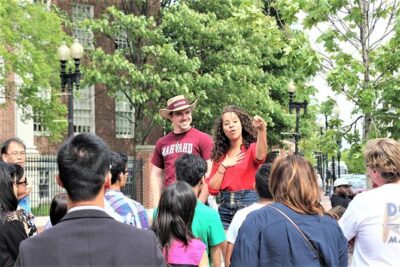
It also helps that the group is limited to 16 people. That size keeps the guide’s attention on the whole walk, including time for questions.
Starting at Massachusetts State House and Park Street Church
You begin with the seat of Massachusetts government, at the Massachusetts State House. The building itself is part of the lesson, since it was designed by Charles Bulfinch, known as a major figure in early American architecture. Even if you skip interiors, standing there anchors the idea that the Revolution was not only about battle, it was also about governance.
A short walk later, Park Street Church adds a different kind of history. The story here connects the abolition movement to the pulpit. You will also hear about the old nickname Brimstone Corner, tied to fiery sermons and a surprising cellar use. This stop is a good example of why a guide matters, because the background turns the church into something bigger than a photo spot.
Practical note: several major buildings on this route list interiors as not included. Plan to appreciate the exteriors and exterior details during the tour, and treat any indoor exploration as optional add-ons.
Additional Walking Tours on the review pile in Boston
Granary Burying Ground and King’s Chapel: names and power shifts
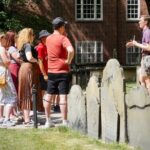
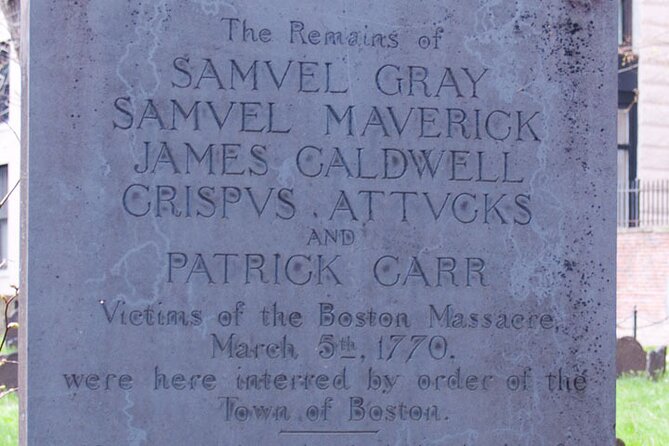
Granary Burying Ground is where history becomes personal fast. This is the resting place for key Revolution-era figures such as Samuel Adams, Paul Revere, and John Hancock, plus victims associated with the Boston Massacre. You also get quick context for what each person represented, which makes it easier to follow the political arguments you hear later.
Then the walk takes a church you might not expect to matter as much as it does. King’s Chapel, built in 1749, ties directly to the religious tensions between Puritans and the British crown. The key idea is land and control, when the king placed an unwanted church in Boston, sparking conflict. That kind of detail matters, because it shows how anger brewed long before the first shots.
If you like understanding the “cause” behind the “event,” these two stops do a lot of work.
Old City Hall, Old South Meeting House, and Old State House
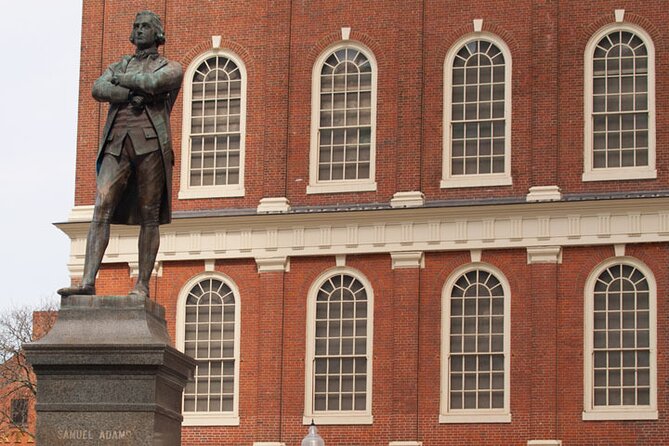
After Granary, the tour leans into the civic and political machinery of the time.
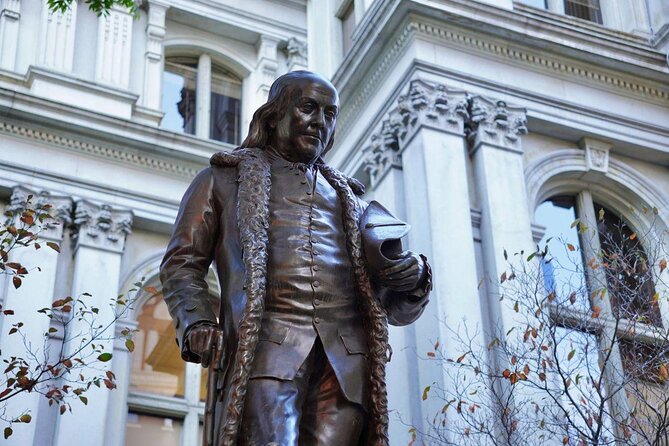
Old City Hall is anchored by a statue of Benjamin Franklin and a marker noting the oldest and still-operating school in the colony. Franklin’s name is familiar, but the context here helps you see him as part of a wider network of politics, education, and influence.
Old South Meeting House is where conversation becomes action. This was a major colonial meeting space, and it is specifically tied to Samuel Adams and the Boston Tea Party. The point is not just that it happened, it is that ideas, speeches, and organized talk helped make a confrontation almost inevitable.
Old State House follows with a harsher edge. You will hear about a 1761 court battle showing how Colonial rights were treated, and then the site’s role in the 1770 Boston Massacre. The guide also raises the question of whether the story played out exactly as people repeat it. That approach keeps this stop from turning into a simple morality play, and it makes you listen more closely.
Faneuil Hall Marketplace and the Blackstone Block connections
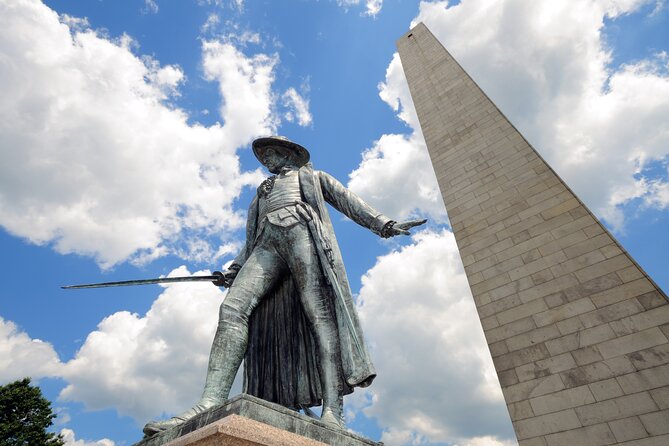
Faneuil Hall is a must, but what makes this tour feel better than a quick stop is the way the speakers are used to explain the movement. You will hear about famous voices tied to anti-taxation arguments, including Samuel Adams and the famous line about No taxation without representation. The stop also points to Frederick Douglass, connecting abolition and civil rights themes to the same long tradition of public speaking.
Right after that, the walk shifts to the Blackstone Block area with the Ebenezer Hancock House. The name is the start, but the surrounding details are what you remember. You will get context for the Massachusetts Spy newspaper offices and the idea of Revolution headquarters being part of the local everyday landscape. There is also a story about money sent from the French to support the Revolution and how it tied into this home.
This section is one of the reasons people rave about the tour approach. It is not only about what happened, it is about how information moved and how people coordinated.
Paul Revere House and Old North Church, how warnings traveled
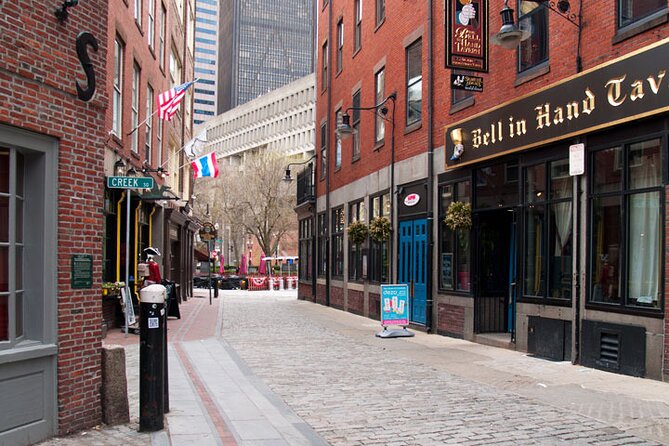
Paul Revere House is one of the most recognizable names on the Freedom Trail, and it does not need a hard sell. Revere purchased this 1680 post-medieval home in 1770. You will hear a personal angle too, about his family and how many children he had with two wives. That human layer helps you stop thinking of him as a single legend and start thinking of him as an actual person navigating risk.
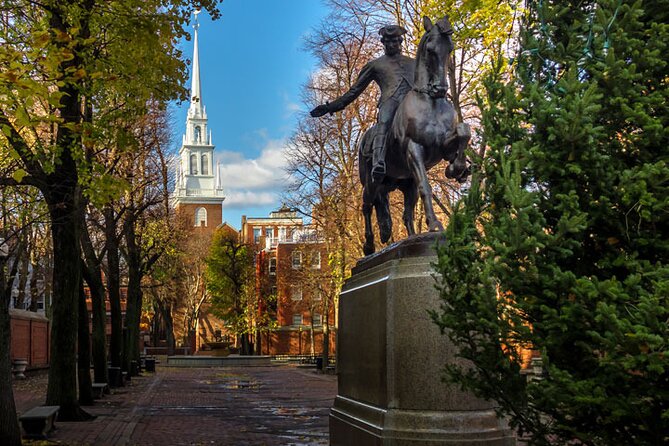
Old North Church then changes the scale again. This is the church tied to the famous signal story across narrow waters in Charlestown. Patriots were notified that the British Regulars would pass through Cambridge on their march toward Lexington and Concord. Even if you already know the basics, a good guide makes the geometry and timing feel real, like you can picture where people stood and what they were waiting for.
This duo of stops is especially good if you are traveling with teenagers. It gives the story a practical rhythm: plan, warn, move.
More filed under Boston Freedom Trail and History in Boston




Copp’s Hill Burying Ground to Bunker Hill Monument
Copp’s Hill Burying Ground keeps the tour grounded in terrain. You get a brief visit that helps you understand the geography of the Battle of Bunker Hill. The key is that the battle involved Breed’s Hill, so the landscape details matter, and the guide uses the burying ground area to make the positioning easier to imagine.
Then comes Bunker Hill Monument. The focus here is the battle itself, including the basic takeaway that even though the Patriots lost, British losses were triple those of the Americans. That detail is part of the larger lesson of this era. A Revolution is not only won by victory in one day. It is also won by proving you can withstand the pressure.
Also, if you are the type who likes photos with a purpose, this is a strong moment. The monument area gives you clear visual context, which helps the earlier “talk and planning” stops connect to the later “war and consequences” story.
USS Constitution: the ending that makes the Revolution feel physical

The last stop is the USS Constitution, the oldest commissioned warship in the world. The ship is often called Old Ironsides, and here the takeaway is simple: it served the US Navy for many years in both US and foreign waters.
This is a smart final move, because it shifts from founding-era drama into the long-term result of independence. You are not only hearing about political change. You are ending at the kind of institution independence helped create and sustain.
The tour concludes at Old Ironsides, in the Charlestown Navy Yard area by the USS Constitution Museum Building 22. It is a good time to pause, look around, and let the full walking timeline settle.
Price and value: what $79 buys you for a 4-hour walk
At $79 per person for about four hours, the value comes from compression and focus. You are paying for a guide to connect roughly the whole Freedom Trail arc in one go, plus the extension to Bunker Hill and USS Constitution. If you tried to do that yourself, you would spend time figuring out routes, deciding what matters, and piecing the story together.
You also get something that is hard to price: the guide’s approach. In past groups, guides have been praised for strong energy, humor, and clear explanations using maps. People also highlight that the guide avoids boredom and instead keeps you moving to the next stop with a clear reason.
One more detail that affects value: interiors are not included. So if you want museums or building interiors, you may need separate tickets. On the other hand, this tour still covers a lot through exterior viewing, markers, and historical context, which is often the most efficient way to see Boston.
Who this tour is best for (and who should skip it)
This works well for history lovers who want a full pass without making tough planning decisions. It is also a good fit for families with children in their teens, since the story leans into personalities, politics, and cause-and-effect.
It is a bit of a commitment for anyone who hates walking or struggles with steady outdoor time. Even with a manageable pace, you are still on your feet for a long stretch, roughly matching the 2.8-mile trail distance.
If you are traveling with seniors, you should feel encouraged if you can handle a few hours outside, because people have noted the pace can be comfortable. Just remember that the day still adds up physically.
Practical tips so you enjoy every stop
Here are the habits that will help you get more out of the tour:
- Wear comfortable, supportive shoes. This is not a quick in-and-out.
- Bring a water bottle and keep an eye on weather. The tour requires good weather, and the walk is outdoors.
- Come with at least a basic interest in the Revolution. The tour gets you beyond the surface list of names.
- If you like asking questions, do it. A lot of people appreciate that the guide can handle queries without derailing the flow.
- For food after the tour, consider James Hook & Co, since one guide recommendation that came up in these walks is their lobster rolls.
Should you book this Freedom Trail plus Bunker Hill and USS Constitution tour?
Book it if you want the Freedom Trail experience in one structured outing, and you care about understanding why each place mattered. The finishing stop at USS Constitution is a big payoff, and the small group size helps the experience stay human.
Skip it if you want mostly indoor time, or if you only want to sample a few famous sites without committing to a longer walking day. And if walking is a dealbreaker for you, this is the wrong format.
If you are excited by the idea of turning Boston into a story you can walk through, this is a solid pick at $79.
Still working through Walking Tours in Boston
- Boston: Freedom Trail History Small Group Walking Tour★ 5.0 · 6,450 reviews
- Harvard University Campus Guided Walking Tour★ 4.5 · 3,632 reviews
- Boston Freedom Trail Walking Tour with Costumed Guide★ 4.5 · 2,531 reviews
- The Full Revolutionary Story Epic Small Group Boston Walking Tour★ 5.0 · 2,356 reviews
- Boston’s Freedom Trail: A Revolutionary Walking Tour★ 4.9 · 1,748 reviews
Tours: the rest of the Boston file
- Boston Duck Boat Sightseeing City Tour with Cruise Along Charles River★ 4.5 · 9,378 reviews
- Boston: Freedom Trail History Small Group Walking Tour★ 5.0 · 6,450 reviews
- Boston Hop-On Hop-Off Trolley Tour with 13 Stops★ 4.5 · 5,576 reviews
- Boston Duck Tour: The Original and World-Famous★ 4.6 · 3,935 reviews
- Harvard University Campus Guided Walking Tour★ 4.5 · 3,632 reviews
Tour Reviews: more from our Boston desk
- Boston Duck Boat Sightseeing City Tour with Cruise Along Charles River★ 4.5 · 9,378 reviews
- Boston: Freedom Trail History Small Group Walking Tour★ 5.0 · 6,450 reviews
- Boston Hop-On Hop-Off Trolley Tour with 13 Stops★ 4.5 · 5,576 reviews
- Boston Duck Tour: The Original and World-Famous★ 4.6 · 3,935 reviews
- Harvard University Campus Guided Walking Tour★ 4.5 · 3,632 reviews
Newest Boston reviews added to this site
- Cocktails & Cannoli: Boston’s North End Dessert Tour
★ 5.0 · 309 reviews - View Boston Observation Deck Admission Tickets
★ 4.5 · 314 reviews - Walk the Historic Freedom Trail with Costumed Guide
★ 4.5 · 329 reviews - 90-Min Narrated Trolley Tour of Lexington and Concord, MA
★ 4.5 · 358 reviews - Boston Pass: 40+ Things To Do – Includes Franklin Park Zoo
★ 4.0 · 359 reviews - Boston: City Cruises Sunset Skyline Cruise with Commentary
★ 4.6 · 381 reviews - Boston to Plymouth Day-Trip including Quincy, Plimoth Patuxet and Mayflower II
★ 5.0 · 407 reviews - Martha’s Vineyard Day Trip with Optional Island Tour from Boston
★ 4.5 · 407 reviews - City Cruises Boston 90-Minute Harbor Sunset Sightseeing Cruise
★ 4.5 · 411 reviews - Sunset Sailing Cruise on a Tall Ship in Boston Harbor
★ 4.5 · 414 reviews
Boston Freedom Trail and History, side by side.
 ★ 5.0Boston: Freedom Trail History Small Group Walking TourFrom $356,450 reviews
 ★ 4.8Boston Fenway Park: Guided Ballpark Tour with OptionsFrom $203,606 reviews
 ★ 4.5Tour of Historic Fenway Park, America’s Most Beloved BallparkFrom $453,013 reviews
 ★ 4.5Boston Freedom Trail Walking Tour with Costumed GuideFrom $262,531 reviews
 ★ 4.5Boston Tea Party Ships and Museum AdmissionFrom $352,512 reviews
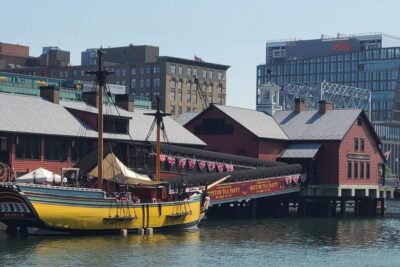 ★ 4.8Boston: Boston Tea Party Ships and Museum Interactive TourFrom $351,926 reviews
 ★ 5.0Boston Food & History: Pizza, North End & Freedom TrailFrom $901,772 reviews
 ★ 4.9Boston’s Freedom Trail: A Revolutionary Walking TourFrom $311,748 reviews
This one is also listed in