
Review · BOSTON FREEDOM TRAIL AND HISTORY
Freedom Trail Walking Tour 250
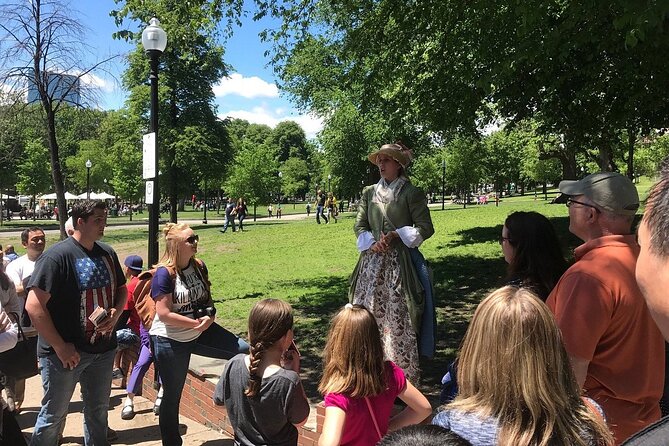
Colonial Boston comes alive fast. A costumed guide walks you through key stops on Boston’s Freedom Trail, with Founding Fathers and Revolution stories packed into about 1.2 miles.
I love how short and practical this is for a busy day, and I love that many of the key stops are free to view, so your money goes mostly toward the guide and the storytelling. Guides like Ben and Elizabeth were singled out for keeping the flow clear and the pace moving.
One possible drawback is that the tour is theatrical, not strictly classroom history. If you prefer a more serious, quiet lecture, or if you end up in a crowded spot at a cemetery or meeting house, hearing and attention can become a factor.
In This Review
- Key things to know before you go
- Why This 1.2-Mile Freedom Trail Walk Fits Real Boston Time
- The Role of a Costumed Guide, and What Makes It Worth It
- Stop by Stop: A Colonial Boston Route You Can Follow
- Massachusetts State House to Park Street Church
- Granary Burying Ground: Where Stories Stay Put
- King’s Chapel and Boston’s Oldest English Burial Ground
- Boston Latin School, Benjamin Franklin, and Old Corner Bookstore
- Old South Meeting House and the Tea Party Moment
- The Oldest Standing Government Building in Boston
- Boston Massacre Site, Sam Adams, and Faneuil Hall Marketplace
- Paul Revere House at the End: Why This Stop Clicks
- Timing, Crowds, and How to Make Sure You Hear the Guide
- Who This Tour Is Best For (and Who Might Want Something Else)
- Should You Book This Freedom Trail Walking Tour?
- FAQ
- How long is the Freedom Trail walking tour?
- How far do you walk?
- Is the tour offered in English?
- What ticket type do I get?
- Do I need to buy tickets for Old South Meeting House?
- Are there different start times?
- Does the tour run in bad weather?
Key things to know before you go
- Costumed, in-character guides bring the Revolution era to life with story-driven narration
- About 1.2 miles in 1 hour 45 minutes, so it’s a strong first-day option in Boston
- Many free stops, which helps the value at $26
- Major turning points in compact form, from the Tea Party to the Boston Massacre site
- Mobile ticket + multiple start times, making it easier to slot in around your day
- Up to 50 people, which usually keeps the group manageable, but popular sites still feel busy
Why This 1.2-Mile Freedom Trail Walk Fits Real Boston Time
This tour works because it’s not trying to be the whole Freedom Trail hike. You get a tight highlight reel, around 1.2 miles (about 2 kilometers), in roughly 1 hour 45 minutes. That matters in Boston, where you can easily burn half your day on transit, lines, and detours.
The price, $26 per person, is also easier to justify when you’re not paying for a stack of paid attractions. A lot of the stops are listed with free admission, so you’re mainly paying for a live guide plus the story glue that turns separate landmarks into one connected narrative.
Also, the tour runs in all weather conditions, so you’re not stuck waiting for perfect skies. That said, Boston weather can be rude, so dress like you’ll be outside for the full walk.
The Role of a Costumed Guide, and What Makes It Worth It
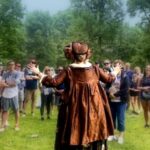
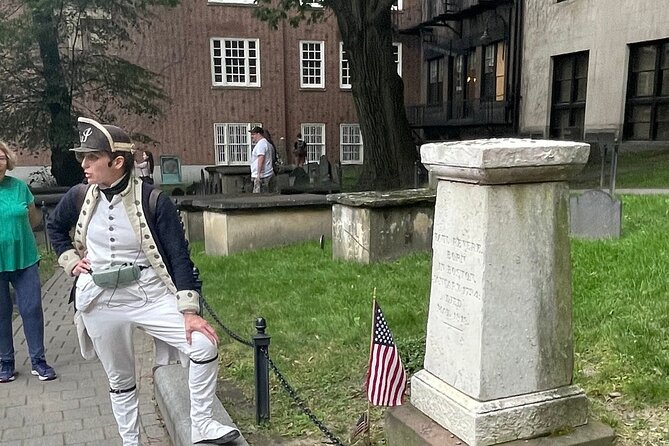
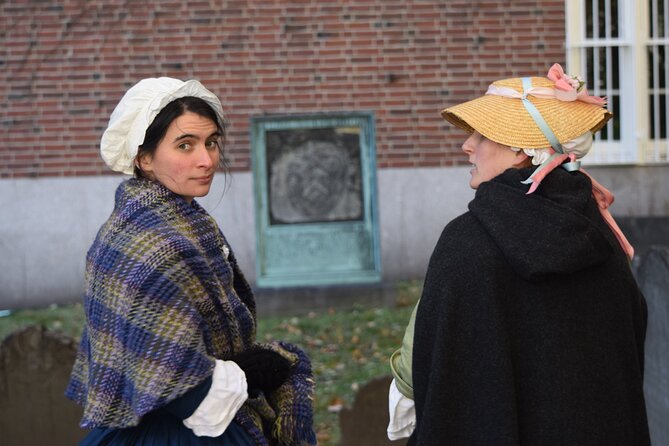
The core experience here is the guide. This is a walking tour where the guide stays in character and uses real historical details to shape the story. In the best moments, that turns “I read about this” into “I get why people cared.”
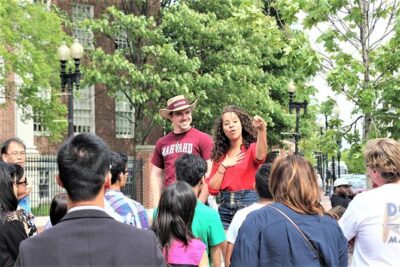
You’ll see how different guide styles can change the vibe. Ben and Elizabeth were praised for making the stories flow together and for keeping people listening even in cold weather. Catherine and Mark were noted for wit, pacing, and handling questions. Elaina was specifically recommended for energy and for working well with a younger kid (a 4-year-old in one account), which tells you this can work for families when the guide knows how to hold attention.
But it’s also fair to say this kind of tour can be hit or miss if you want purely academic history. Some people felt the humor or casual nicknaming crossed a line. If you’re sensitive to that, I’d mentally prepare for theatrical storytelling and decide in advance that a little humor comes with the package.
Additional Walking Tours on the review pile in Boston
Stop by Stop: A Colonial Boston Route You Can Follow

The day starts in the civic heart of Massachusetts, then moves into churches, schools, burial grounds, meeting places, and public squares. A quick tour like this means you’re mostly looking from the sidewalk and learning through narration, not roaming for long inside museums.
Massachusetts State House to Park Street Church
You begin at the Current Massachusetts State House. Even if you’re just seeing it from the outside, it sets the tone: government and public life are the backbone of the Freedom Trail story.
Next is Park Street Church, where My Country ’Tis of Thee was first performed. That’s a great stop because it connects patriotism to a specific place and a specific moment, not just a vague idea of national pride. It’s short, about 5 minutes, so don’t expect a deep musical history lesson, but you’ll get the “why this matters” angle.
Tip: For short stops, your best strategy is to listen first, then look second. The guide’s explanation is what makes the stonework and signage click.
Granary Burying Ground: Where Stories Stay Put
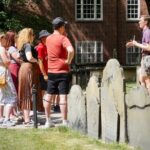
At Granary Burying Ground, you’ll spend about 20 minutes in one of Boston’s most powerful historical spaces. This is where the tour leans into personal history, with stories tied to America’s founding figures resting there.
Cemeteries can be uneven for people. They’re quiet, cold (in winter), and everyone tries to gather at the same sight lines. If you’re with a group member who needs frequent breaks, this is the stop that may feel long, simply because you’re not moving much.
Still, when the guide connects the names to the political ideas of the era, the place starts to feel less like a list of dates and more like a community remembering its own stakes.
King’s Chapel and Boston’s Oldest English Burial Ground
Then you head to King’s Chapel, described as America’s first Anglican church. This is a smart change of pace after Granary because it broadens the story from politics into everyday religious life, and from “who argued” into “where people worshiped.”
After that, you’ll see Boston’s oldest English burial ground. Like Granary, it’s a moment built for reflection and storytelling. The benefit of having two cemetery stops close together is that you get a sense of how memory and identity were literally carved into the city.
More filed under Boston Freedom Trail and History in Boston




Boston Latin School, Benjamin Franklin, and Old Corner Bookstore
The tour hits Boston Latin School, described as America’s first public school. For many people, that’s a surprise. It reframes the Revolution era as not only about protests and battles, but also about education, literacy, and who gets access to learning.
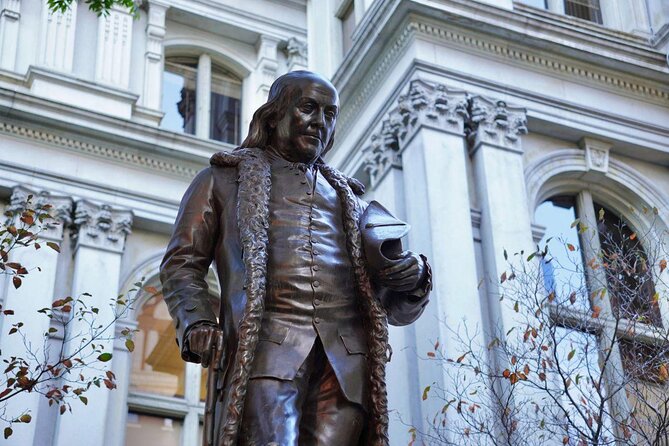
Next, there’s a statue of Benjamin Franklin. The Franklin angle becomes practical here because the guide can connect him back to Boston Latin School as a major alumnus, and that’s the kind of detail that makes a walking tour feel like more than a photo walk.
Then you stop at Old Corner Bookstore, described as America’s oldest commercial building. You’ll hear that Midnight Ride of Paul Revere was published here. This is a standout kind of stop for me, because it ties the Revolution era to the spread of information, not just to the dramatic ride itself.
Practical note: These stops are quick, often around 5 minutes each. If you want to take photos, do it efficiently while the guide is talking, then stay still and keep listening. Otherwise you’ll miss the connections.
Old South Meeting House and the Tea Party Moment
At Old South Meeting House, you’ll hear about the Boston Tea Party. This is one of the big emotional peaks of the route. The meeting house also helps you visualize how public action worked, crowds gathered, decisions got made, and messages spread.
Important detail: admission isn’t included here. So if the interior access matters to you, budget a little extra time and money for whatever entry works best on the day you go.
The Oldest Standing Government Building in Boston
Next comes the oldest standing government building in Boston. The tour uses this as a bridge between the political arguments of the time and the built environment that still shapes Boston’s identity. Since the stop is framed by location, not museum time, expect explanation from the guide more than hands-on exploration.
If you’re the type who enjoys government systems, this stop is likely to land well. If you’re more interested in specific events, you may find it slightly abstract compared to the Tea Party or Massacre sites.
Boston Massacre Site, Sam Adams, and Faneuil Hall Marketplace
At Boston Massacre Site, you’ll hear about the massacre and protest that became a battle cry across the Revolutionary War. This is another “short but meaningful” stop, around 10 minutes, where the guide should connect the incident to the larger reason it mattered.
Then you get a tale of Sam Adams. The exact framing depends on the guide, but the purpose is consistent: show how ordinary political talk, organizing, and persuasion turned into a movement.
Finally, you end at Faneuil Hall Marketplace, described as the most iconic historical attraction in Boston. It’s short here, about 5 minutes, but it’s also a good finish because it’s the kind of place you can picture as a meeting point, where ideas moved from speeches to action.
Paul Revere House at the End: Why This Stop Clicks
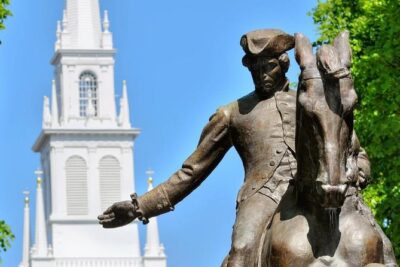
Near the end, the route includes the Paul Revere House, built in 1680 and described as the oldest residential building in Boston. This is a different kind of emotional payoff. You’ve been hearing about events and institutions, and then you land on a lived-in, ordinary human scale.
This is a great ending because it helps you picture what daily life may have looked like for someone living through the same city that hosted the big political moments. Even if your visit is brief, it’s the kind of stop that makes the era feel tangible.
Timing, Crowds, and How to Make Sure You Hear the Guide
This tour usually runs with a group limit of 50 people, and you can choose from a few start times. That’s useful, because choosing a slightly earlier slot can mean less waiting and fewer people clustered at each landmark.
Cemeteries and meeting houses can feel tight because everyone wants the same sight line. In practical terms: wear warm layers if it’s cold, and position yourself where you can see the guide’s face and body language, not just the back of someone’s coat. If you’re in the middle or toward the rear, you can lose details fast on a quick route.
Also, this is an all-weather walk. Plan for wind, rain, or cold. You’ll be outside long enough that being uncomfortable will distract you from the stories.
Who This Tour Is Best For (and Who Might Want Something Else)
This is a strong fit if you want a high-signal introduction to Boston’s founding-era sites without committing to a long walking day. It’s also a good family option, especially if your kids respond to humor and performance. The guide names mentioned in recent tours, like Elaina and Ben, were repeatedly linked to keeping young people engaged.
If you’re a history purist who wants a strictly academic pace, you might find the theatrical style distracting. And because some stops are brief, you won’t get the deep time you’d get from a museum-focused plan.
Still, for most people, this tour hits the sweet spot: short enough to fit, detailed enough to orient you, and story-driven enough to make the city feel connected.
Should You Book This Freedom Trail Walking Tour?

I’d book it if you want a guided, costumed Freedom Trail overview that connects the dots from churches and schools to major Revolutionary flashpoints. The $26 price feels fair for an hour-and-a-half-plus experience centered on a professional guide, especially with many stops offering free admission.
I’d think twice if you strongly dislike humor-forward storytelling, or if you need lots of quiet time and question pauses. If that’s you, look for a departure time when you can get closer to the guide and settle in before the walking begins.
If you’re unsure, this is one of those tours where choosing it is more about your style of learning than about the facts themselves. The sites are real. The difference is how the guide frames them, and that’s where the best value shows up.
FAQ
How long is the Freedom Trail walking tour?
It runs for about 1 hour 45 minutes.
How far do you walk?
The tour covers approximately 1.2 miles (about 2 kilometers).
Is the tour offered in English?
Yes, it is offered in English.
What ticket type do I get?
You receive a mobile ticket.
Do I need to buy tickets for Old South Meeting House?
Admission to Old South Meeting House is not included.
Are there different start times?
Yes, there are a few start times you can choose from.
Does the tour run in bad weather?
It operates in all weather conditions, and if it is canceled due to poor weather you will be offered a different date or a full refund.
Still working through Walking Tours in Boston
- Boston: Freedom Trail History Small Group Walking Tour★ 5.0 · 6,450 reviews
- Harvard University Campus Guided Walking Tour★ 4.5 · 3,632 reviews
- Boston Freedom Trail Walking Tour with Costumed Guide★ 4.5 · 2,531 reviews
- The Full Revolutionary Story Epic Small Group Boston Walking Tour★ 5.0 · 2,356 reviews
- Boston’s Freedom Trail: A Revolutionary Walking Tour★ 4.9 · 1,748 reviews
Tours: the rest of the Boston file
- Boston Duck Boat Sightseeing City Tour with Cruise Along Charles River★ 4.5 · 9,378 reviews
- Boston: Freedom Trail History Small Group Walking Tour★ 5.0 · 6,450 reviews
- Boston Hop-On Hop-Off Trolley Tour with 13 Stops★ 4.5 · 5,576 reviews
- Boston Duck Tour: The Original and World-Famous★ 4.6 · 3,935 reviews
- Harvard University Campus Guided Walking Tour★ 4.5 · 3,632 reviews
Tour Reviews: more from our Boston desk
- Boston Duck Boat Sightseeing City Tour with Cruise Along Charles River★ 4.5 · 9,378 reviews
- Boston: Freedom Trail History Small Group Walking Tour★ 5.0 · 6,450 reviews
- Boston Hop-On Hop-Off Trolley Tour with 13 Stops★ 4.5 · 5,576 reviews
- Boston Duck Tour: The Original and World-Famous★ 4.6 · 3,935 reviews
- Harvard University Campus Guided Walking Tour★ 4.5 · 3,632 reviews
Newest Boston reviews added to this site
- Cocktails & Cannoli: Boston’s North End Dessert Tour
★ 5.0 · 309 reviews - View Boston Observation Deck Admission Tickets
★ 4.5 · 314 reviews - Walk the Historic Freedom Trail with Costumed Guide
★ 4.5 · 329 reviews - 90-Min Narrated Trolley Tour of Lexington and Concord, MA
★ 4.5 · 358 reviews - Boston Pass: 40+ Things To Do – Includes Franklin Park Zoo
★ 4.0 · 359 reviews - Boston: City Cruises Sunset Skyline Cruise with Commentary
★ 4.6 · 381 reviews - Boston to Plymouth Day-Trip including Quincy, Plimoth Patuxet and Mayflower II
★ 5.0 · 407 reviews - Martha’s Vineyard Day Trip with Optional Island Tour from Boston
★ 4.5 · 407 reviews - City Cruises Boston 90-Minute Harbor Sunset Sightseeing Cruise
★ 4.5 · 411 reviews - Sunset Sailing Cruise on a Tall Ship in Boston Harbor
★ 4.5 · 414 reviews
Boston Freedom Trail and History, side by side.
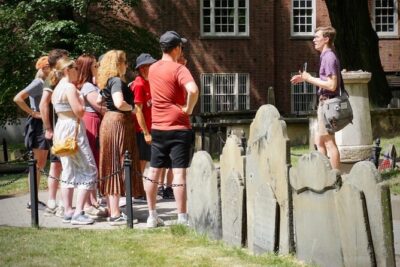 ★ 5.0Boston: Freedom Trail History Small Group Walking TourFrom $356,450 reviews
 ★ 4.8Boston Fenway Park: Guided Ballpark Tour with OptionsFrom $203,606 reviews
 ★ 4.5Tour of Historic Fenway Park, America’s Most Beloved BallparkFrom $453,013 reviews
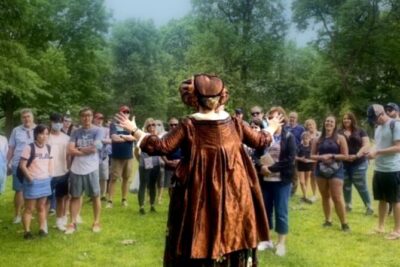 ★ 4.5Boston Freedom Trail Walking Tour with Costumed GuideFrom $262,531 reviews
 ★ 4.5Boston Tea Party Ships and Museum AdmissionFrom $352,512 reviews
 ★ 4.8Boston: Boston Tea Party Ships and Museum Interactive TourFrom $351,926 reviews
 ★ 5.0Boston Food & History: Pizza, North End & Freedom TrailFrom $901,772 reviews
 ★ 4.9Boston’s Freedom Trail: A Revolutionary Walking TourFrom $311,748 reviews
This one is also listed in