
Review · HISTORICAL TOURS
African American History Tour with Museum of African American History Ticket
History hits different here. This half-day small-group tour threads African American stories through major DC landmarks and neighborhoods, then hands you museum entry. You meet at the US Navy Memorial Plaza at 9:30 am, and you end at the museum, so your day stays focused.
I especially like the way the guide connects big national sites to specific people and turning points, from the NCNW story to Marian Anderson’s Constitution Hall controversy. I also like the lineup that blends monuments, memorials, and real places tied to community life, so you don’t just look, you understand what you’re seeing.
One heads-up: there’s walking and sometimes stairs, and access to the Frederick Douglass house depends on the day of the week.
In This Review
- Key highlights you will feel on this tour
- Meeting at US Navy Memorial Plaza, then jumping into DC’s African American map
- The NCNW Headquarters stop that anchors the day
- Standing near the U.S. Capitol and hearing how history shaped policy
- The White House stop, plus the long line of African American contribution
- Constitution Hall to the Lincoln Memorial: Marian Anderson’s 1939 turning point
- Lincoln Memorial and MLK Jr. Memorial, where speeches turn into stone
- Frederick Douglass National Historic Site: when you go inside matters
- LeDroit Park, integrated beginnings, and the Black Broadway connection
- Dunbar High School and the Howard Theatre for context beyond monuments
- Howard University, plus Woodson and Bethune as living institutions
- The African American Civil War Memorial Museum and the museum ticket finale
- Price and pacing: how $90 turns into real value
- What to expect from the walking and the inside-home rules
- Who this tour fits best
- Should you book this African American History Tour?
- FAQ
- What time does the tour start, and how long is it?
- Where does the tour start and where does it end?
- Is the National Museum of African American History and Culture ticket included?
- Can I tour the Frederick Douglass house inside on every day?
- Does the tour include any vehicle or water?
- How big is the group?
- Is the tour dependent on weather?
Key highlights you will feel on this tour
- NCNW Headquarters on Pennsylvania Avenue, a National Historic Landmark tied to Mary McLeod Bethune and African American women’s organizing
- Marian Anderson’s 1939 Constitution Hall clash, and how it led to a historic Easter Sunday performance at the Lincoln Memorial steps
- Lincoln Memorial and MLK Jr. Memorial context, with stories of speeches, inscriptions, and the meaning of the design
- Frederick Douglass National Historic Site varies by day, with an inside walking tour only on select days
- LeDroit Park and the Howard Theatre era, including the area’s early integration and the Black Broadway entertainment scene
- Museum of African American History and Culture ticket with same-day entry, giving you time to keep exploring after the tour ends
Meeting at US Navy Memorial Plaza, then jumping into DC’s African American map
Your day starts at the US Navy Memorial Plaza at 701 Pennsylvania Ave NW at 9:30 am. From there, you’ll move by air-conditioned vehicle, and you’ll get bottled water, which matters because the stops are both outdoors and emotionally heavy. The tour is capped at 21 travelers, so it stays personal without feeling like you’re stuck in a crowded bus.
This format is smart for first timers. You get a tight hit of the National Mall and surrounding neighborhoods without trying to stitch together directions on your own. And because you end at the museum, you can stay in that zone of learning rather than scrambling to plan the second half of your day.
The NCNW Headquarters stop that anchors the day
One early stop is the Headquarters of the National Council of Negro Women (NCNW) at 633 Pennsylvania Avenue NW. The building matters because the NCNW was founded in 1935 by Mary McLeod Bethune, and it has been headquartered in the same building since 1953. It’s also designated as a National Historic Landmark.
I like this opening because it sets a tone: you’re not only looking at monuments. You’re seeing institutions that helped families, created leadership, and built power over time. The story here is also rooted in the real mechanics of the era, including the fact that in 1942 the organization purchased the building with help from a loan from the Federal Housing Administration.
More from our Tickets coverage in Washington DC
Standing near the U.S. Capitol and hearing how history shaped policy
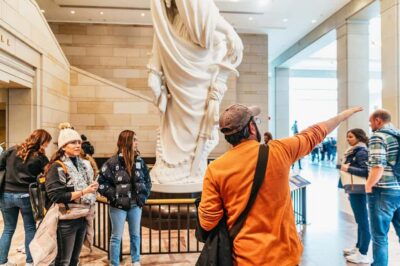
Next you’ll be able to stand where the inauguration of President Obama took place. That alone is a memorable moment, but the guide also connects the site to earlier realities, including how enslaved people helped build the Capitol and the White House.
You’ll also hear about Supreme Court decisions made in the Capitol that affected people of color for decades. That detail is the reason this stop works. You’re not just seeing a famous skyline. You’re being taught to notice how law, power, and physical buildings overlap in Washington.
The White House stop, plus the long line of African American contribution
You’ll make a stop at the White House. The key point you’ll hear is how African Americans played important roles around the residence, including enslaved workers who helped build it, and later the fact that Barack Obama became the first African American president of the United States.
This is a short stop, about 15 minutes, so treat it like a pause. Take your photos, but let the guide do the work. The value here is context, not just the iconic view.
Constitution Hall to the Lincoln Memorial: Marian Anderson’s 1939 turning point
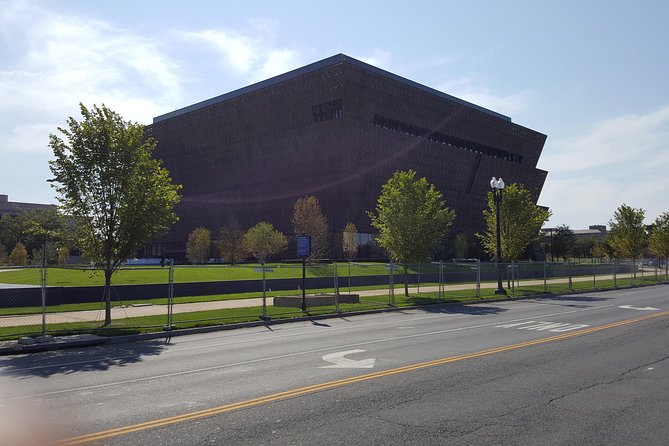
A standout moment on this route is the Constitution Hall story tied to Marian Anderson, the renowned African American contralto. In 1939, Anderson was scheduled to perform at Constitution Hall, but the DAR, which owned the hall at the time, refused her because of her race.
The incident sparked national controversy. Then, with help from First Lady Eleanor Roosevelt, Anderson performed on the steps of the Lincoln Memorial on Easter Sunday, April 9, 1939, in front of an estimated 75,000 people. You don’t just get the facts. You get the cause and effect, how one refusal escalated into national attention and pressure.
Lincoln Memorial and MLK Jr. Memorial, where speeches turn into stone
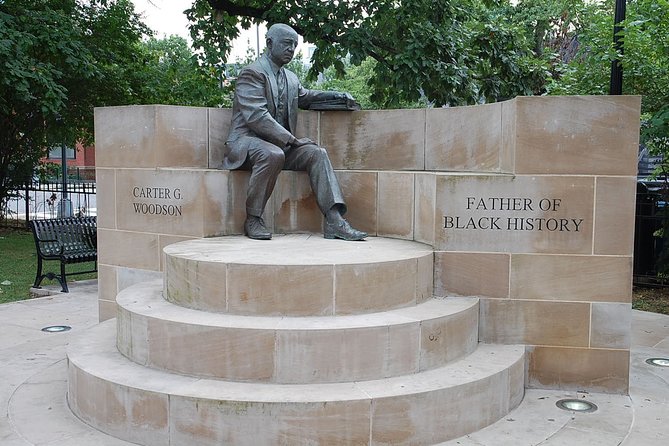
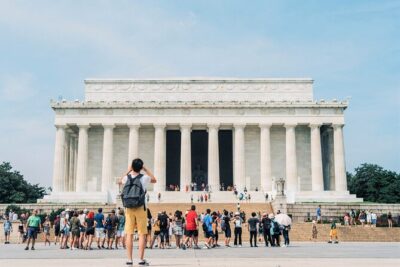
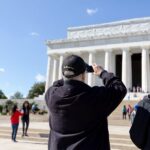
At the Lincoln Memorial stop, your guide shares information about the memorial itself and connects it to historic African American events. You’ll hear stories tied to the March on Washington, the Marian Anderson concert, and Robert Moten giving the dedication speech for the opening of the Lincoln Memorial.
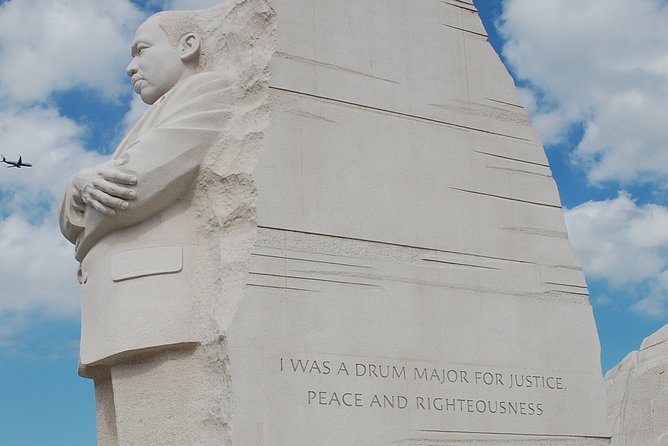
Then you move on to the Martin Luther King, Jr. Memorial. This stop is around 15 minutes, but it has big visual points to focus on. You’ll see and learn about the inscription wall with 14 quotes and statements, the Mountain of Despair, and the Stone of Hope. You’ll also hear interesting facts about how the memorial was made, so the design stops feeling like just art and starts feeling like an argument.
Elsewhere under Historical Tours across Washington DC
Frederick Douglass National Historic Site: when you go inside matters
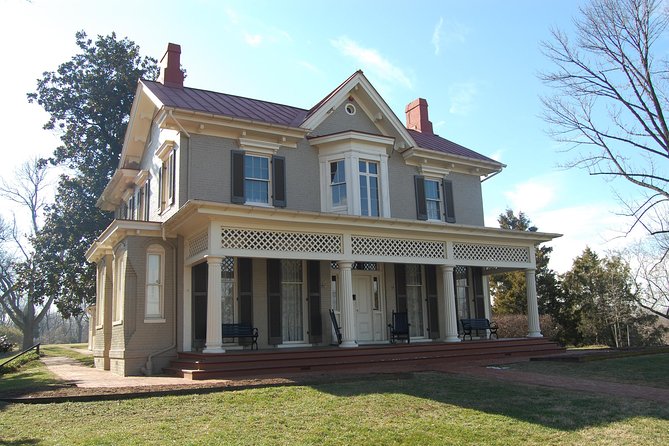
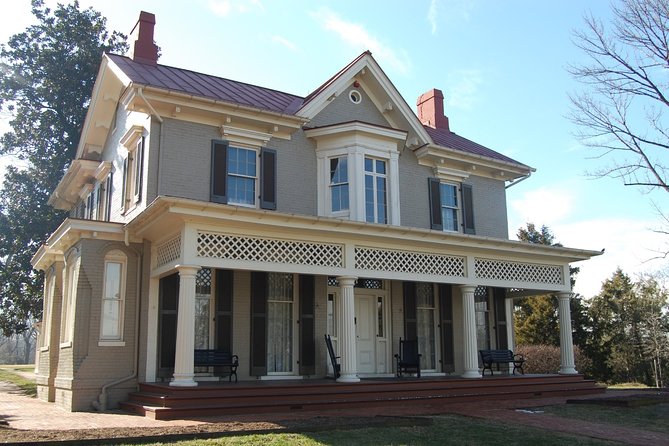
This is one of the most important stops of the day, but it depends on which day you’re touring. The plan includes a walking tour of inside the Frederick Douglass house on Tuesdays, Wednesdays, and Saturdays. On other days, you may drive past the home and the guide shares the history from the outside.
The reason I think this stop is worth centering in your planning is simple: the house is where the history becomes specific. It is harder to keep things abstract after you’ve seen where life unfolded.
A related practical note: some days swap in another home. On Thursdays and Fridays, the tour visits the Mary McLeod Bethune House instead of the Douglass House. So if Frederick Douglass is the priority for your group, check your tour date before you set expectations.
LeDroit Park, integrated beginnings, and the Black Broadway connection
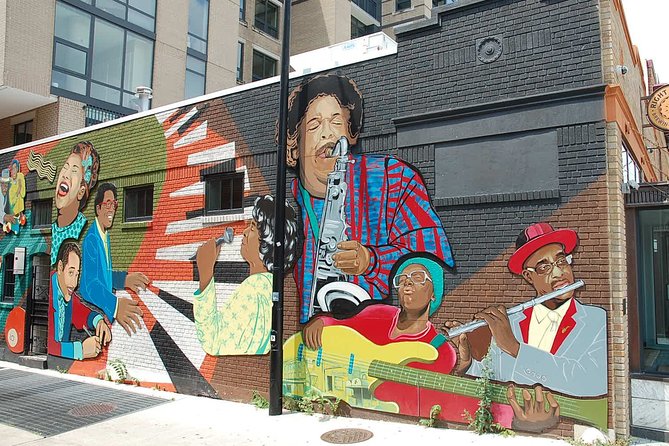
LeDroit Park is one of those DC neighborhoods you might miss if you only stick to the National Mall. The neighborhood’s story starts with how it was built for white professors of Howard University, then how homes were sold to both Black and white buyers, making it one of the first integrated neighborhoods in the city.
You’ll also hear that LeDroit Park became a center for cultural and intellectual activity. Prominent African American leaders lived there, including Mary Church Terrell, the first president of the National Association of Colored Women. Duke Ellington is also connected to the area, and in the early 20th century, the neighborhood was known as Black Broadway for entertainment like nightclubs, theaters, and music venues.
What I love about stops like this is how they expand the definition of history. It is not only protests and speeches. It is also everyday life, music, and community spaces.
Dunbar High School and the Howard Theatre for context beyond monuments
As you keep moving, the tour spotlights education and the performing arts, two lanes that show up again and again in African American history.
You’ll hear about Dunbar High School, founded in 1870 as the first public high school for African Americans in the United States. The school is described as having a proud history of academic excellence, and it has been connected to notable figures including Mary McLeod Bethune and poet Paul Laurence Dunbar.
Then there’s the Howard Theatre. It opened in 1910 and was designed and operated by African Americans, which made it a key destination during segregation. It also played a pivotal role in African American music and culture. The tour includes examples of famous performers who played there, including Duke Ellington, Billie Holiday, Ella Fitzgerald, and Marvin Gaye. You’ll also hear about comedians and the Chitlin’ Circuit shows, which featured African American comedians and performers.
These stops help you see the city as a network of culture, not just a set of landmarks.
Howard University, plus Woodson and Bethune as living institutions
You’ll drive past Howard University, established in 1867, with 13 schools. The guide shares examples of notable graduates including Thurgood Marshall and Elijah Cummings. Also included are entertainers and writers tied to Howard, such as Taraji Henson and Toni Morrison. Hearing these names while looking at the campus area gives the institution a human footprint.
You’ll also drive past the Carter G. Woodson House, described as the home of the Father of Black History. Woodson is credited with creating Black History Month. Again, this isn’t just name-dropping. It’s pointing to the origin story of something you may already think of as an annual calendar event.
Then you’ll see the Mary McLeod Bethune Council House. The house was bought by Mrs. Bethune in 1943, and the guide shares that the design is second French Empire. Depending on the day, the tour may stop and tour the house Thursday through Saturday, time permitting.
This stretch works because it turns history into a map of people who built systems, created education pathways, and shaped how the country remembers.
The African American Civil War Memorial Museum and the museum ticket finale
You’ll make a stop at the African American Civil War Memorial Museum. This is a compact visit of about 10 minutes, but it’s packed with specific facts. You’ll learn about the 209,000 African American troops and sailors who fought during the Civil War. The memorial was dedicated in 1998.
You’ll also have time to read plaques with the names of the U.S. Colored Troops (USCT) across the 166 regiments, and you’ll be shown the statue Spirit of Freedom created by Ed Hamilton.
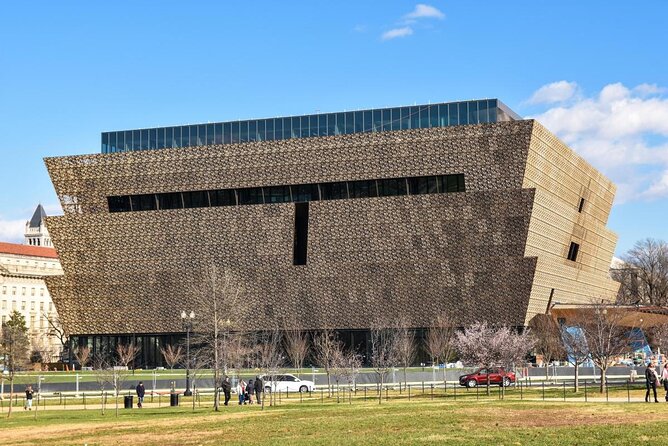
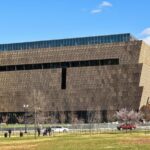
After this, the tour ends at the National Museum of African American History and Culture. Here’s how the museum piece works: at the end of your tour, you receive tickets for same-day entry. The museum closes at 5:30, so you can keep exploring until then. Important detail, you need to take the tour in order to get those museum tickets, so don’t treat this as a drop-off with no tie-in.
If you are the kind of traveler who likes structure, this is a good deal. The guided portion helps you know what to look for, and then the museum gives you freedom to go at your own pace after the tour. It’s a clean way to stop the day from becoming information chaos.
Price and pacing: how $90 turns into real value
At $90 per person for about 3 hours 30 minutes, this tour is not the cheapest way to fill a morning in Washington DC. But it is better than it looks on paper because you’re paying for guided interpretation, not just transport.
You’re also getting a museum ticket to the National Museum of African American History and Culture that is included, plus bottled water and an air-conditioned vehicle. For a city where many visitors end up paying for multiple tickets or scrambling for two separate plans, that inclusion lowers the friction cost.
Pacing is another big part of the value. The stops are timed so you get enough time for photos and brief learning, without turning it into a 6-hour marathon. The guided segments on the Capitol, Lincoln Memorial, and MLK Jr. Memorial are designed to make the outdoor spaces easier to read. Then the day swaps in neighborhood stories and specific sites, so the learning doesn’t stay locked to famous architecture.
What to expect from the walking and the inside-home rules
This tour involves some walking, and there can be steps. For example, the inside walking tour of the Frederick Douglass house is offered only on Tuesdays, Wednesdays, and Saturdays. On other days, you may drive past the home instead and hear the story from the curb.
Similarly, the tour can swap the home you focus on based on day of week, with Mary McLeod Bethune House being visited on Thursdays and Fridays. So if you hate surprises, pick your travel day based on which site matters most to you.
If you’re traveling with older family members or anyone who prefers minimal stairs, plan for a slower pace at the stops. Comfortable shoes are the simplest upgrade you can make for this day.
Who this tour fits best
This is a great choice if you want an organized way to understand African American history and culture in Washington DC without building a self-guided route yourself. It is also a strong option for families who can handle a mix of outdoor monuments and short indoor moments.
You’ll likely enjoy it most if you like learning through stories, not just facts. The guide style is described as engaging, with humor mixed into serious topics. That combination can make the history easier to hold onto when you get back to your hotel.
Should you book this African American History Tour?
I’d book it if your goal is a half-day spine of African American DC history, ending with a museum visit you can actually use that same day. The included museum entry and the strong stop selection make the $90 feel more like a guided value bundle than a random excursion.
I would think twice only if your top priority is a specific inside-home visit like the Frederick Douglass house and your dates do not line up with the days it is offered. Also, if you strongly dislike stairs and walking, you’ll want to plan for that up front.
If you want DC history that connects monuments to real people and real communities, this tour is a solid start.
FAQ
What time does the tour start, and how long is it?
The tour starts at 9:30 am. The duration is approximately 3 hours 30 minutes.
Where does the tour start and where does it end?
You start at US Navy Memorial Plaza, 701 Pennsylvania Ave NW, Washington, DC 20004. The tour ends at the National Museum of African American History and Culture, 1400 Constitution Ave NW, Washington, DC 20560.
Is the National Museum of African American History and Culture ticket included?
Yes. You receive tickets for same-day entry to the National Museum of African American History and Culture at the end of the tour, and you can stay until 5:30 when the museum closes.
Can I tour the Frederick Douglass house inside on every day?
No. A walking tour inside the Frederick Douglass house is offered on Tuesdays, Wednesdays, and Saturdays. On other days, you may drive past the home and hear the history from outside.
Does the tour include any vehicle or water?
Yes. The tour includes bottled water and an air-conditioned vehicle.
How big is the group?
This tour has a maximum of 21 travelers.
Is the tour dependent on weather?
Yes. The tour requires good weather. If it is canceled due to poor weather, you will be offered a different date or a full refund.
Tickets: further reviews from Washington DC
- National Mall Monuments Night Tour with 10+ Stops, Entry Tickets★ 4.5 · 4,863 reviews
- National Mall Tour with 10+ Stops, Boat Cruise, Entry Tickets★ 4.5 · 1,212 reviews
- DC: Capitol Hill and Library of Congress Tour with Tickets★ 4.7 · 1,125 reviews
- Washington DC: Arlington Nat. Cemetery Ticket & Tram Tour★ 4.6 · 544 reviews
- No-Wait Washington Monument Direct Entry Tickets & Guidebook★ 4.5 · 465 reviews
Tours: the rest of the Washington DC file
- DC Memorials Night Tour: Glass-Roof Convertible Upgrade Option★ 4.5 · 6,933 reviews
- National Mall Monuments Night Tour with 10+ Stops, Entry Tickets★ 4.5 · 4,863 reviews
- Washington DC Monuments by Moonlight Tour by Trolley★ 4.5 · 3,956 reviews
- Hop-on Hop-off Sightseeing Tour by Open-top Bus with 18 Stops★ 3.5 · 3,848 reviews
- Washington DC in One Day: Guided Sightseeing Tour★ 4.5 · 3,360 reviews
Tour Reviews: more from our Washington DC desk
- DC Memorials Night Tour: Glass-Roof Convertible Upgrade Option★ 4.5 · 6,933 reviews
- National Mall Monuments Night Tour with 10+ Stops, Entry Tickets★ 4.5 · 4,863 reviews
- Washington DC Monuments by Moonlight Tour by Trolley★ 4.5 · 3,956 reviews
- Hop-on Hop-off Sightseeing Tour by Open-top Bus with 18 Stops★ 3.5 · 3,848 reviews
- Washington DC in One Day: Guided Sightseeing Tour★ 4.5 · 3,360 reviews
Newest Washington DC reviews added to this site
- Washington DC: Sightseeing Tour with Potomac River Cruise
★ 4.7 · 311 reviews - Washington, DC: African American History Tour & Museum Entry
★ 4.9 · 312 reviews - Washington DC: National Mall Night Bus Tour
★ 4.6 · 313 reviews - Historic Georgetown: History, Gossip, & Architecture Walking Tour
★ 5.0 · 321 reviews - Private Night-Time Monuments Tour of DC for up to 10 Guests
★ 5.0 · 326 reviews - National Mall Tour with 10 Stops & U.S. Capitol or Museum Entry
★ 4.5 · 331 reviews - George Washington’s Mount Vernon Gardens & Grounds Admission
★ 4.5 · 340 reviews - Ghosts of D.C. – Walking Tour
★ 4.5 · 344 reviews - Hop-On Hop-Off 21 Stop Trolley Tour + Arlington Cemetery Tour
★ 4.0 · 369 reviews - Gastronomic Georgetown Walking Food Tour
★ 4.5 · 373 reviews
Historical Tours, side by side.
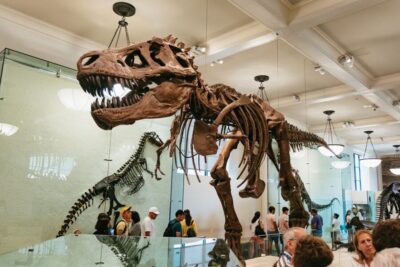 ★ 4.5New York City: American Museum of Natural History TicketFrom $3715,447 reviews
 ★ 5.0History and Hauntings of Salem Guided Walking TourFrom $3614,564 reviews
 ★ 5.0Charleston’s Old South Carriage Historic Horse & Carriage TourFrom $5010,023 reviews
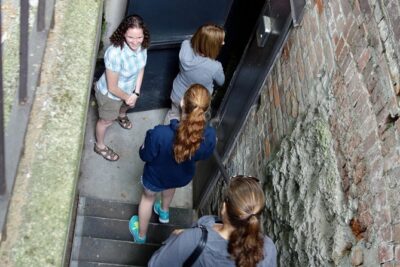 ★ 4.5Beneath The Streets Underground History TourFrom $298,006 reviews
 ★ 5.0Big Island in a Day: Volcanoes Waterfalls Sightseeing and HistoryFrom $2646,569 reviews
 ★ 5.0Boston: Freedom Trail History Small Group Walking TourFrom $356,450 reviews
 ★ 5.0Historic Charleston Guided Sightseeing Walking TourFrom $306,216 reviews
 ★ 4.6NYC: Starship Landmark 90 Minute Sightseeing CruiseFrom $343,666 reviews
This one is also listed in